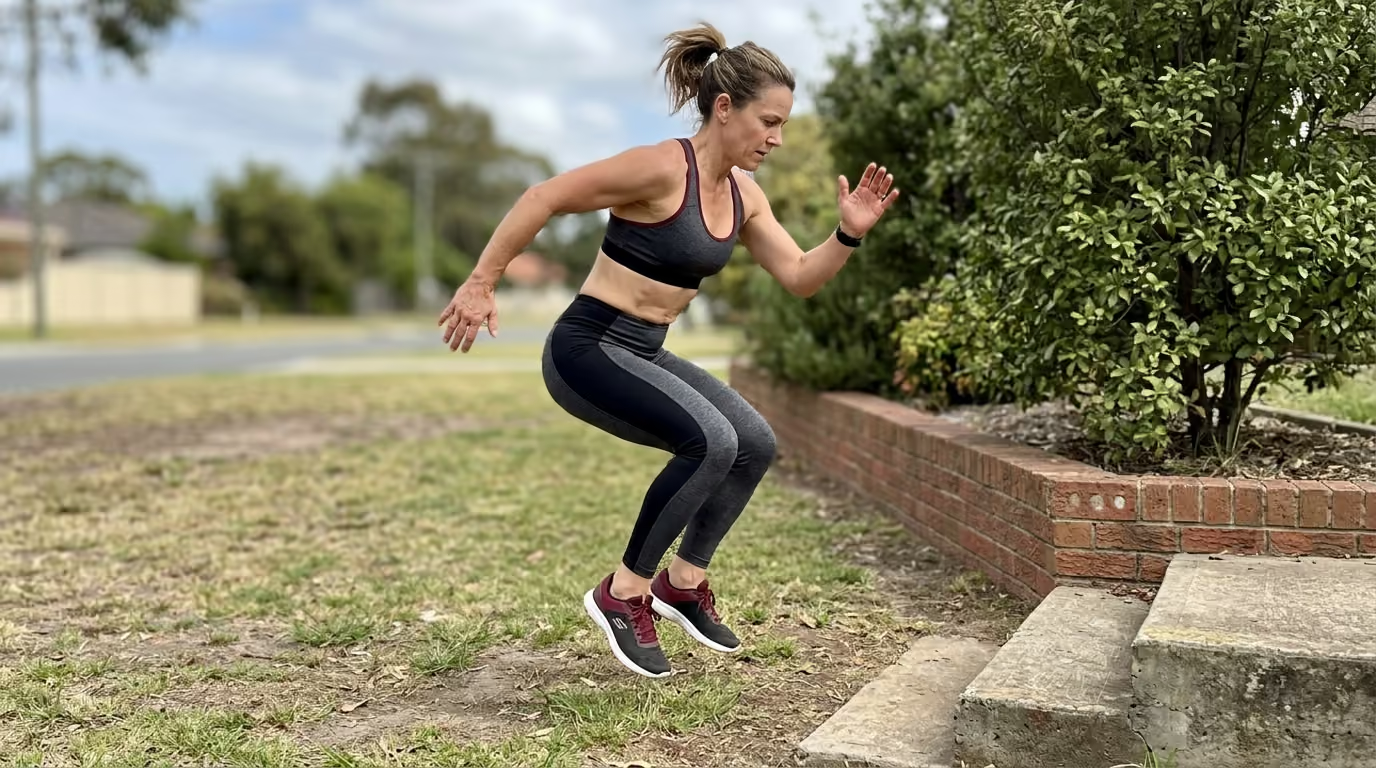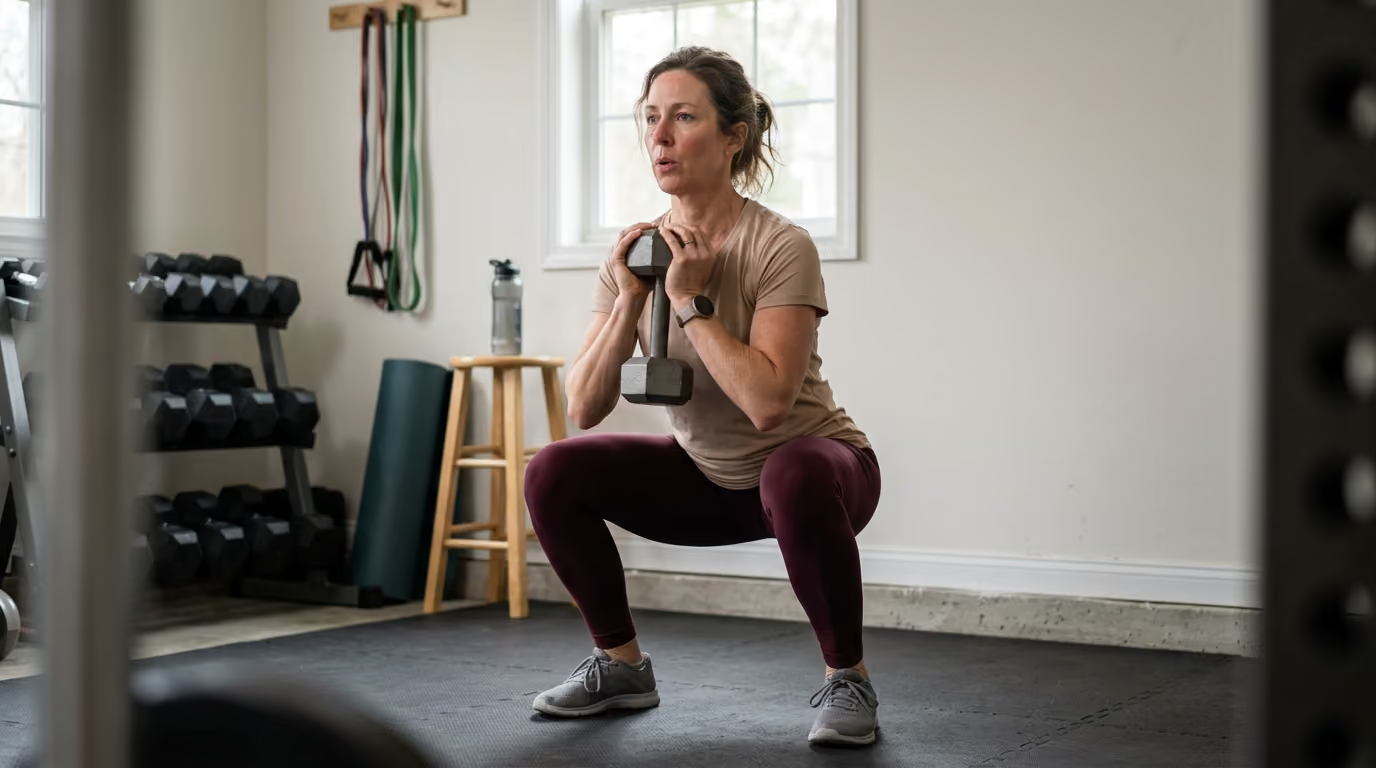

Lower-body strength training after forty requires functional movement patterns that build muscular power, protect joint longevity.





Most fitness advice tells adults over 40 that building strong legs requires chasing heavy barbell numbers in the gym. If you enjoy barbell back squats, they can certainly serve a purpose. However, measuring lower-body capability purely by how much weight you can move across two flat feet misses how the body functions outside the gym.
Real-world capability requires stepping across mountain scree, absorbing force on a steep ski run, and catching your balance on a wet train platform. When we train the lower body through middle age and beyond, our goal is not just muscle size. We are building a resilient system that produces force rapidly, controls deceleration, stabilizes the joints, and preserves athletic freedom for decades.
Aging changes the neuromuscular system in ways that go far beyond simple muscle shrinkage. While many people worry about losing muscle mass, the true loss of physical capability happens through a separate process called dynapenia. Dynapenia refers to the age-related decline in muscle strength and neuromuscular efficiency that occurs independently of muscle size.
Research shows that muscle mass decreases by roughly 1 to 2 percent per year after the age of 50. However, strength declines at two to five times that rate, accelerating to around 3 to 4 percent annually in men and 2.5 to 3 percent in women around age 75. Even more critical is the loss of muscle power, which is the ability to generate force quickly. Longitudinal studies indicate that muscle power declines at roughly 6 percent per year in healthy older adults.
This rapid drop in power occurs because high-threshold motor units and fast-twitch muscle fibers atrophy faster than slow-twitch endurance fibers. When you trip on an uneven cobblestone, your nervous system does not have two seconds to recruit slow-twitch fibers to save you. It needs rapid, reflexive force production within a fraction of a second.
A comprehensive program for strength and physical performance must target multiple physiological adaptations. You need maximum force production to lift heavy loads, rapid rate of force development for agility, eccentric braking strength to protect your joints, and local muscular endurance for long days on your feet.
To build comprehensive athleticism without wearing out your joints, organize your training around foundational movement patterns rather than isolated muscle groups. This ensures balanced joint loading and functional transfer to everyday movement.
The squat pattern trains knee extension, hip extension, and torso stiffness under load. It develops the quadriceps, gluteus maximus, and adductors while demanding adequate mobility from the ankles and hips.
Rather than forcing yourself into a rigid barbell back squat, match the variation to your current mobility and joint comfort.
Focus on keeping your entire foot rooted to the floor. Distribute pressure evenly across the base of your big toe, the base of your pinky toe, and your heel.
The hip hinge is the primary engine of the posterior chain. It loads the gluteus maximus, hamstrings, and spinal extensors through deep hip flexion while keeping the knees relatively quiet.
Maintaining a strong hip hinge protects your lower back during lifting tasks and provides the propulsion needed for sprinting, climbing, and jumping.
Always initiate the movement by pushing your pelvis backward rather than bending forward at the waist.
Climbing stairs, stepping onto high ledges, and hiking uphill require unilateral vertical force. The step pattern demands significant gluteus medius and pelvic control to keep the hips level as you transfer your center of mass upward.
Avoid using momentum to bounce off the bottom foot. The working leg should perform all the lifting and lowering work.
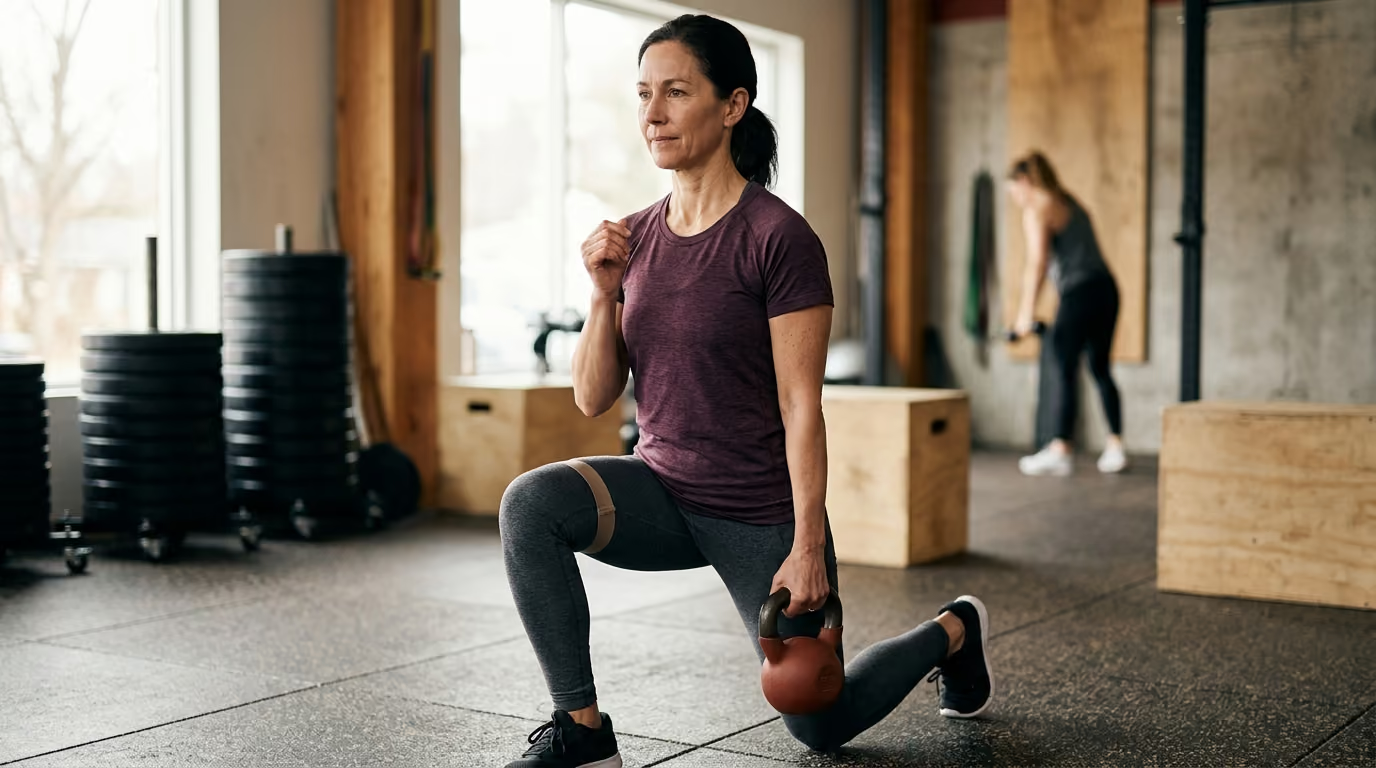
Split-stance movements train deceleration, hip mobility, and directional stability under asymmetrical loads. They force the front leg to absorb force while the back leg stretches through the hip flexors.
Lower yourself under complete control, lightly touching your back knee to an exercise mat rather than letting it crash into the floor.
Your feet and lower legs are the only contact point between your body and the ground. Without strong calves and mobile ankles, forces cannot transfer efficiently to the hips, increasing stress on the knees and lower back.
The calf complex consists of two primary muscles that require different training angles.
Pause for two full seconds at the bottom of each calf raise to eliminate the elastic stretch reflex of the Achilles tendon, ensuring the muscle fibers perform the work.
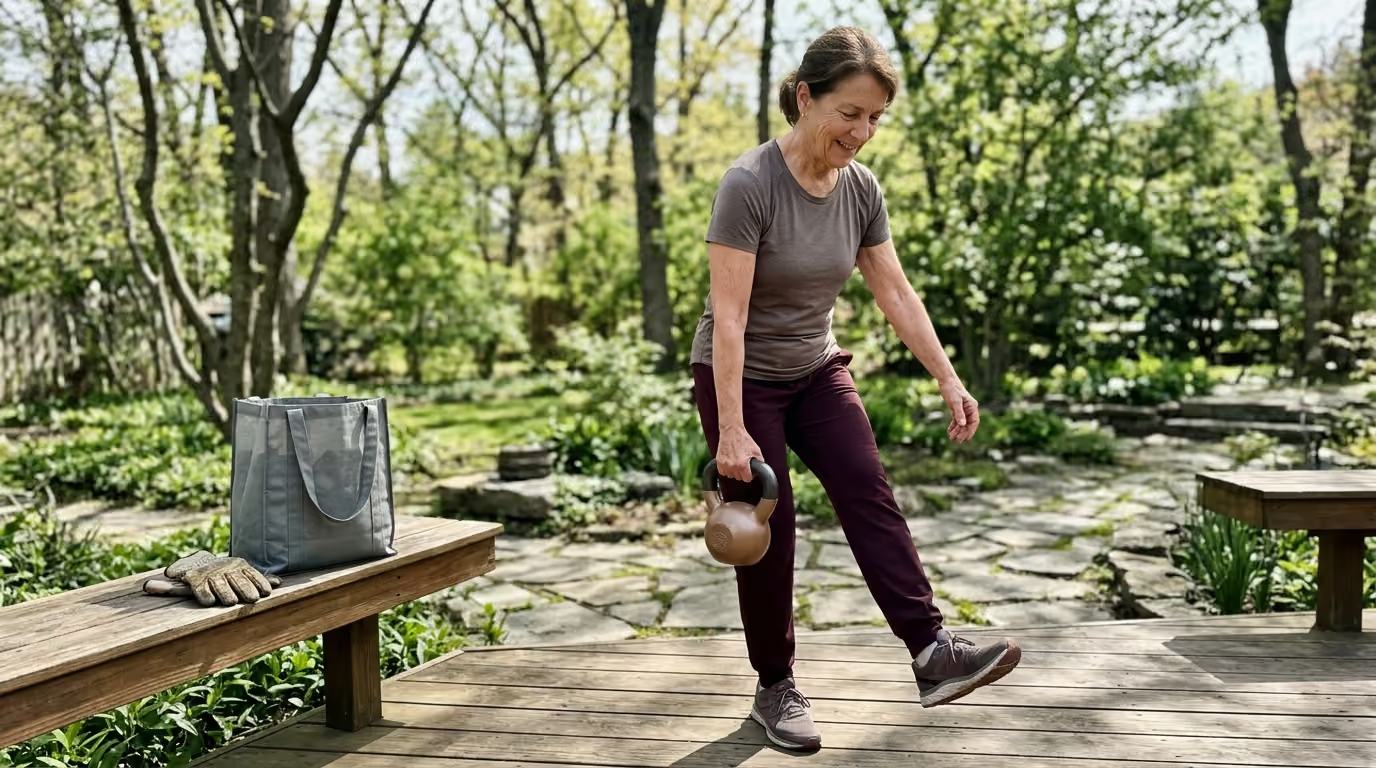
A powerful lower body is useless if your trunk cannot transfer force. Carrying heavy objects while walking builds anti-rotation strength, improves grip, and teaches your pelvis to remain stable during single-leg support.
Walk with smooth, deliberate steps without leaning sideways or letting the weight rest against your thigh.
Lower-body training after 40 must translate directly into the activities you love. Gym strength provides the foundation, but adapting that strength to specific environmental demands is what keeps you athletic.
Skiing demands continuous isometric quadriceps endurance, rapid lateral force transfer, and eccentric deceleration through deep knee flexion. When you make high-speed turns, your legs must absorb vibrating forces while maintaining a stable edge.
Recreational alpine skiers with poor lower-extremity balance face a significantly higher risk of knee injury. Systematic reviews of snow-sport preparation show that structured exercise programs emphasizing agility, eccentric strength, and balance can reduce injury risk by nearly 48 percent.
Prepare for ski season at least eight weeks in advance by adding wall-sit intervals, lateral lunges, and controlled step-downs to your routine. Focus on sustained isometric holds in a half-squat position to mimic the burn of long downhill runs.
Running is a series of single-leg plyometric hops. Each footstrike requires your lower leg and hip to absorb two to three times your body weight within milliseconds.
Strength training improves running economy by 2 to 8 percent in trained adults by increasing tendon stiffness and neuromuscular coordination. A stiffer Achilles tendon and a stronger soleus allow you to store and return elastic energy with each stride, reducing the metabolic cost of running.
Incorporate single-leg Romanian deadlifts, heavy standing calf raises, and bent-knee soleus raises into your weekly routine to protect your Achilles tendons and improve pacing.
Hiking steep trails with a loaded backpack requires high hip flexion, single-leg balance on unstable surfaces, and sustained eccentric braking during long descents. Downhill hiking is often where unconditioned knees become painful, as the quadriceps must continually fight gravity to slow your fall.
Train for the mountains by performing high step-ups onto an eighteen-inch box, deficit reverse lunges, and heavy suitcase carries. Add slow, five-second eccentric lowerings on your step-downs to build bulletproof quadriceps for steep descents.
Joint stiffness or past injuries should not prevent you from strength training. In fact, targeted resistance exercise is the single most effective intervention for managing joint discomfort and preserving cartilage health.
The American College of Rheumatology strongly recommends exercise as a core therapy for knee and hip osteoarthritis. Movement circulates synovial fluid throughout the joint capsule, delivering nutrients to cartilage while strengthening the surrounding muscles that absorb shock.
Knee discomfort during squats or lunges is rarely a reason to stop training entirely. Instead, modify the variables that create excess joint shear while continuing to train the surrounding muscles.
Clinical guidelines for patellofemoral knee pain emphasize combining knee exercises with targeted hip strengthening. Strengthening the gluteus medius and deep hip external rotators prevents the femur from collapsing inward, directly reducing pressure behind the kneecap.
If deep knee flexion is uncomfortable, temporarily limit your range of motion by squatting to a comfortable box height. Shift your focus toward hip-dominant movements like Romanian deadlifts and glute bridges while gradually rebuilding knee flexion tolerance over time.
Lower back fatigue often occurs when the hips lack mobility or when the trunk fails to brace properly during heavy lifting. You can maintain lower-body intensity without placing heavy compressive loads on the lumbar spine.
Swap out heavy conventional floor deadlifts for elevated trap-bar deadlifts or single-leg Romanian deadlifts. Holding dumbbells at your sides or using a trap bar keeps the weight closer to your center of gravity, drastically reducing the shear force on your lower back.
Avoid rushing the lowering phase of any lift. Lower the weight under control, maintain a steady abdominal brace without holding your breath excessively, and stop sets two repetitions before technical breakdown.
As we accumulate desk hours and old injuries, our bodies develop subtle movement compensations. Identifying and correcting these mechanical flaws restores power transfer and keeps your joints moving cleanly.
During squats, step-downs, or landings, one or both knees may dive inward toward the midline. While a minor inward movement can be normal for some anatomies, a sudden, uncontrolled collapse often indicates weakness in the lateral hip muscles or limited ankle mobility.
When the ankle cannot bend forward properly, the foot tends to overpronate, causing the lower leg and knee to rotate inward. Address this by mobilizing the calves, strengthening the gluteus medius with side-lying abductions, and cueing yourself to screw your feet into the floor during squats.
When standing on one leg, the opposite side of the pelvis should remain level. If your unsupported hip drops downward, your stance-leg gluteus medius is failing to stabilize your pelvis.
This compensation, known as a Trendelenburg sign, places excessive strain on the iliotibial band and lower back during walking and running. Correct it by performing controlled lateral step-downs and single-leg balance drills next to a mirror to ensure your hips stay level.
Many people mistake arching their lower back for extending their hips. When performing glute bridges, hip thrusts, or standing lockouts, they flare their ribs and hyperextend the lumbar spine instead of driving through the gluteal muscles.
To correct this pattern, keep your lower ribs pulled down toward your pelvis and maintain a neutral spine. Focus on squeezing your glutes at the top of the movement without letting your belly push upward toward the ceiling.
If your heels lift off the floor as you descend into a squat, your ankle dorsiflexion is likely restricted. Your body compensates by shifting your weight onto your toes, which increases shear stress on the front of your knees.
While you work on calf flexibility and ankle mobility, place a small five-pound weight plate under your heels. Elevating the heels allows you to achieve a deep, comfortable squat with an upright torso while you gradually restore natural ankle range.
Long-haul flights, prolonged sitting, and changing time zones take a heavy toll on lower-body mobility and systemic energy. Hip flexors become shortened, glutes become neurologically inhibited, and lower legs pool fluid after hours in cramped airplane seats.
After a grueling thirty hour transit to Tokyo, I realized my old strategy of just powering through was no longer working. I felt foggy for three days, and my hips felt completely locked up when walking through the city. I started digging into circadian biology and realized that timing my light exposure and fasting during the flight could completely shift my recovery. Now, I never board a long haul flight without a precise schedule for when to eat and when to put on an eye mask. It is the difference between losing a week of your trip and hitting the ground running.
When you arrive at a destination, use this quick hotel-room sequence to reactivate your lower body before exploring:
Incorporating these targeted movements ensures your hips and joints remain supple, helping you stay capable and ready for adventure anywhere in the world. For more tools to optimize your post-trip routine, review our dedicated guide on recovery and regeneration.
Mainstream fitness culture is filled with rigid dogmas that cause active adults over 40 to either train recklessly or avoid effective exercises altogether. Dispelling these myths helps you build a smarter, more sustainable routine.
Many adults believe that lifting anything heavier than a light pink dumbbell will ruin their joints after 40. In reality, controlled progressive resistance training is exactly what maintains bone density, strengthens connective tissue, and prevents age-related muscle loss.
The danger does not lie in the weight itself, but in poor technical execution, excessive volume, and inadequate recovery. Training with moderate to heavy loads within a 6 to 10 repetition range is completely safe and highly effective when progressed sensibly.
For decades, trainers warned that allowing your knees to travel past your toes during squats or lunges would destroy your patellar tendons. This outdated rule ignores human biomechanics and daily movement demands.
Every time you walk down a flight of stairs or hike down a mountain, your knees naturally travel past your toes. Training this specific position under controlled loads strengthens the patellar tendon and quadriceps through their full functional range, making your knees more resilient to injury.
Functional fitness purists often dismiss leg presses, seated leg curls, and chest-supported machines as useless for real life. While free-standing movements are essential for balance and coordination, machines provide a valuable training tool.
Resistance machines allow you to train specific muscle groups to near-failure without demanding balance or loading an irritated lower back. Utilizing a leg press or hamstring curl machine is an excellent way to maintain training volume when fatigue or joint sensitivity makes free weights impractical.
Many people believe that balance is simply a matter of strengthening the small muscles of the feet and ankles. While foot mechanics matter, balance is a complex neurological skill that relies on input from your eyes, your inner ear, your spinal proprioceptors, and rapid force production from your hips.
Standing on an unstable foam pad will not prevent falls if your glutes lack the power to catch you when you stumble. A complete balance program must combine heavy strength, rapid power production, and dynamic multi-directional stepping drills.
You do not need to spend hours in the gym every day to build exceptional lower-body strength. Applying the minimal effective dose allows you to achieve maximum physiological adaptations while leaving plenty of energy for outdoor recreation, sport, and daily life.
The World Health Organization recommends muscle-strengthening activities involving all major muscle groups on at least two days per week for older adults. Furthermore, incorporating multicomponent balance and functional exercises on three or more days per week significantly improves physical capacity and protects against accidental falls.
To ensure you are training with sufficient intensity without risking burnout, use the Repetitions in Reserve (RIR) framework. This method measures how many more clean repetitions you could have performed before reaching technical failure.
This structured weekly plan provides everything needed to build strength, power, and stability in two efficient forty-minute sessions.
To customize your overall schedule and integrate upper-body work, consult our broader library of healthy aging and performance resources.
Building lower-body strength after 40 is not a matter of guesswork. Leading sports medicine and health organizations worldwide agree on several foundational principles for maintaining long-term physical independence.
The American College of Sports Medicine recommends that healthy adults incorporate progressive resistance training at approximately 70 to 85 percent of their one-repetition maximum for pure strength, alongside lighter loads of 30 to 70 percent moved with rapid intent to preserve explosive power.
Clinical guidelines from the World Guidelines for Falls Prevention and Management state that balance-challenging and functional resistance exercises should be individualized, progressively intensified, and sustained for at least 12 weeks to achieve lasting neuromuscular changes.
By anchoring your training in proven scientific principles, you ensure that every workout builds real capability. You protect your joints, sharpen your physical reactions, and maintain the strength required to live an active, adventurous life on your own terms.
Commit to two focused lower-body strength sessions each week to maintain the power, balance, and physical independence necessary to enjoy your favorite sports and adventures for decades to come.
Stay connected for research and practical guidance on longevity, strength, recovery, energy and active living. New ideas to help you stay capable, curious and ready for more.


Explore practical guidance on strength, recovery, energy, travel and longevity for a life that stays active.
explore the Blog