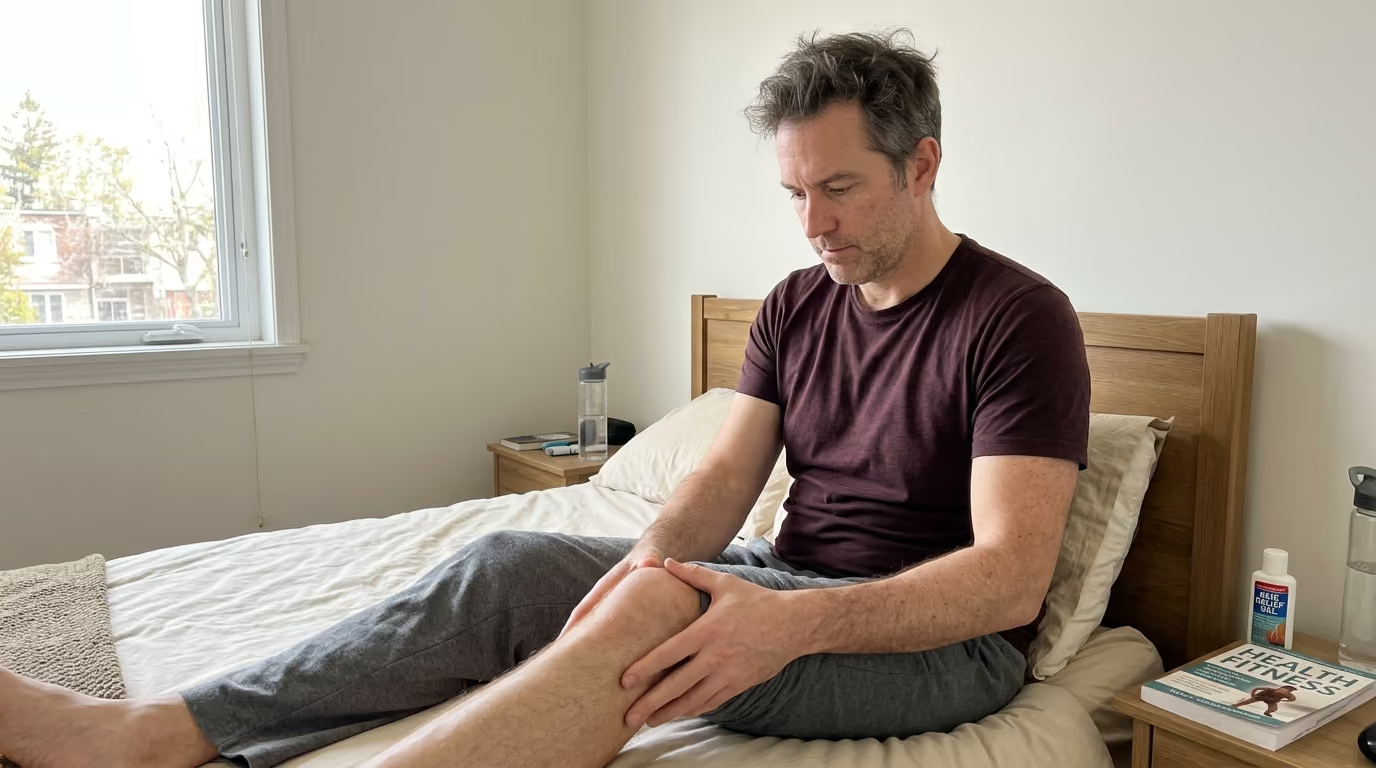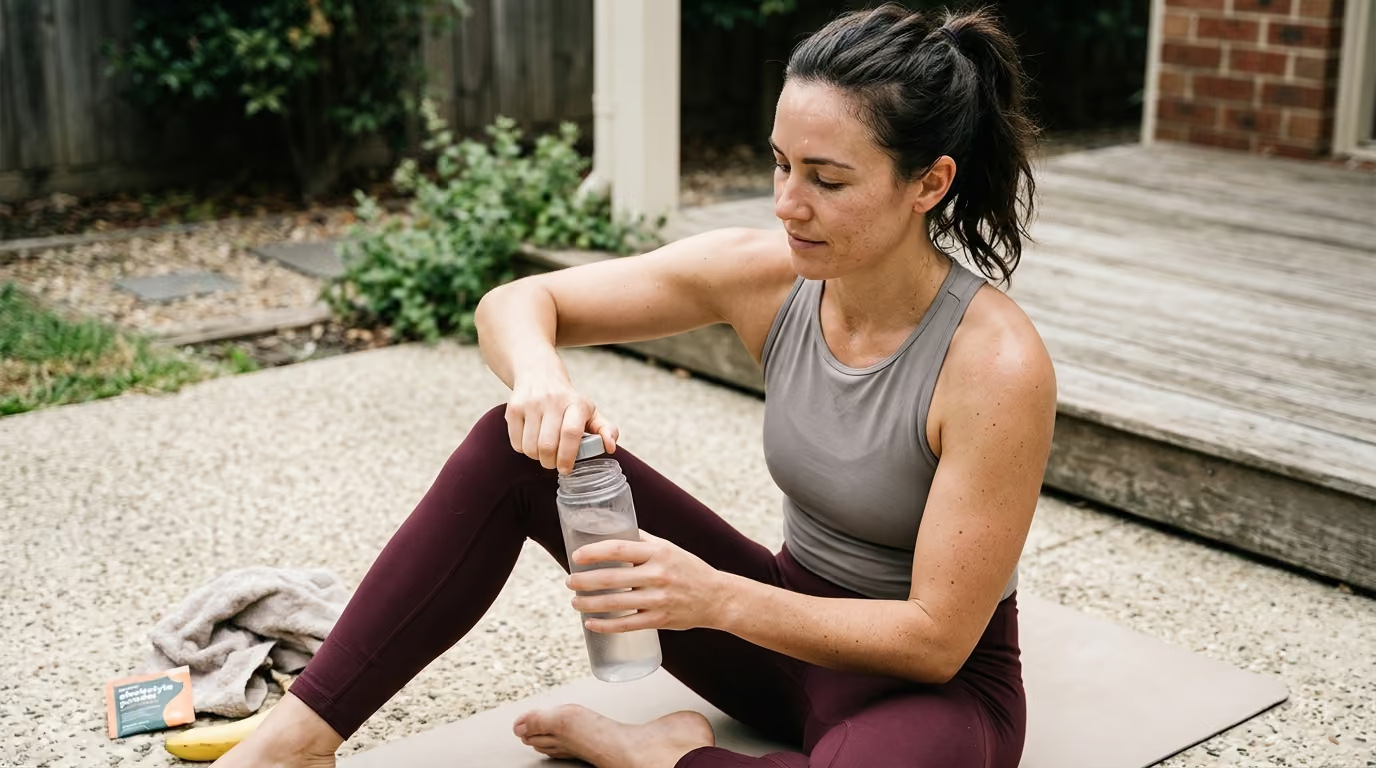

Faster muscle recovery and sustained daily energy depend on balancing targeted electrolyte intake with fluid replacement after workouts and travel.





Why do you still feel exhausted, brain-fogged, and prone to muscle cramps despite drinking huge volumes of water every day?
You have likely searched for answers to persistent post-workout fatigue, heavy legs after long flights, or sluggish morning energy. Most mainstream advice tells you to drink eight glasses of water daily or carry a massive jug wherever you go.
That generic advice is fundamentally flawed. True physical restoration requires a precise balance of fluid volume and essential minerals tailored to your body size, sweat rate, training environment, and personal physiology.
This guide delivers a definitive, research-backed framework for managing fluid and mineral balance. You will learn how to measure your actual fluid losses, replace key electrolytes without excessive supplementation, and maintain physical capability across demanding climates and active travel.
Hydration is not simply a matter of drinking plain water until your urine runs clear. Real fluid balance depends on the precise equilibrium between water and charged minerals called electrolytes across cellular membranes. When you sweat, you lose both water and solutes, primarily sodium and chloride.
Replacing sweat losses with plain water alone dilutes your remaining blood sodium. This triggers your kidneys to dump excess water, leaving you functionally dehydrated despite high fluid intake. To recover efficiently, your body requires both fluid volume and adequate sodium to restore extracellular fluid compartments.
Individual fluid requirements vary dramatically based on body composition, metabolic rate, ambient temperature, humidity, and exercise intensity. A single daily intake target cannot account for a cool morning mobility session versus a hot ninety-minute tennis match.
Modern recovery science emphasizes a structured approach: start near normal hydration, measure real-world fluid losses, replace a sensible portion during activity, and complete rehydration afterward with food and electrolytes. This strategy supports cellular recovery, cardiovascular stability, and mental clarity while protecting against the genuine dangers of overdrinking.
Total body water accounts for roughly fifty to sixty-five percent of an adult's body mass. This water is divided into two primary zones: the intracellular fluid inside your cells and the extracellular fluid surrounding them. Extracellular fluid includes both the interstitial fluid between tissues and the blood plasma within your circulatory system.
Each compartment relies on specific minerals to maintain osmotic pressure. Potassium is the dominant mineral inside your cells, while sodium is the primary mineral in the extracellular space. Water moves freely across cell membranes toward whichever compartment has a higher concentration of solutes.
When you exercise or spend time in hot environments, your sweat glands draw water and minerals from your extracellular fluid. Although sweat is hypotonic, meaning it contains a lower concentration of salt than blood plasma, substantial sweat loss still depletes total body sodium.
If you attempt to rehydrate using only pure water after heavy sweating, plasma sodium concentration drops. Research published in the Journal of Applied Physiology indicates that maintaining extracellular sodium concentrations is essential for sustaining blood volume and cardiovascular stability during thermal stress. Without adequate sodium in your recovery fluids or meals, your body cannot retain the water you consume.
A classic review in the European Journal of Applied Physiology demonstrated that effective post-exercise fluid restoration requires consuming a volume greater than total sweat loss combined with adequate sodium. Sodium stimulates thirst, promotes fluid retention in the vascular space, and supports intestinal water absorption via sodium-glucose cotransporters in the gut.
Carbohydrates also play a valuable secondary role in fluid uptake. A systematic review in Sports Medicine confirmed that solutions containing modest carbohydrate concentrations accelerate intestinal fluid absorption and assist in post-exercise recovery. However, electrolyte replacement and carbohydrate fueling serve different physiological functions and must be adjusted independently based on your training goals.
Relying on generic hydration guidelines often leads to under-drinking in heavy sweaters or dangerous fluid overload in lighter individuals. The most accurate way to determine your fluid requirements is to calculate your personal sweat rate under realistic conditions.
You can calculate your sweat rate with a simple bathroom scale test. Weigh yourself in minimal clothing immediately before a workout, record all fluid consumed during the session, and weigh yourself again immediately afterward.
The mathematical relationship is straightforward:
Sweat Loss in Kilograms = (Pre-Exercise Body Mass - Post-Exercise Body Mass) + Fluid Consumed - Urine Produced
Because one kilogram of body mass corresponds closely to one liter of water, you can easily convert the result into volume. To find your hourly sweat rate, divide your total sweat loss by the duration of your workout in hours.
Consider an active fifty-year-old runner weighing 75 kilograms who completes a seventy-five-minute trail run. The runner drinks 0.5 liters of water during the run, does not urinate, and weighs 74.1 kilograms at the finish.
The calculation shows:
This runner remained well within safe physiological parameters because total fluid deficit did not exceed two percent of baseline body mass. Comprehensive reviews in Sports Medicine note that sweat rates vary widely between individuals, ranging from 0.5 liters to over 2.5 liters per hour depending on work rate and climate.
You should repeat this simple assessment across distinct settings to build a realistic personal hydration profile:
Perform the assessment during a moderate workout in temperatures below 18 degrees Celsius. This provides your baseline metabolic sweat rate when thermal stress is minimal.
Repeat the measurement during an outdoor session in high heat or humidity. Evaporative cooling becomes less efficient in humid air, often causing your body to increase sweat output significantly.
Measure your losses during a hard interval session or sustained tempo effort. Higher metabolic work rates generate more internal heat, driving higher sweat production than easy recovery sessions.
Test your sweat losses during mountain sports or high-altitude excursions. Dry air accelerates sweat evaporation, making it easy to underestimate fluid losses because your clothing may remain relatively dry.
Proper fluid management begins hours before physical exertion starts. Arriving at a training session in a hypohydrated state increases cardiovascular strain, elevates core body temperature, and impairs perceived effort.
Official guidelines from the American College of Sports Medicine recommend consuming roughly 5 to 7 milliliters of fluid per kilogram of body weight at least four hours prior to exercise. For a 70-kilogram adult, this equals approximately 350 to 490 milliliters of fluid.
If you produce no urine or your urine remains dark two hours before training, consume an additional 3 to 5 milliliters per kilogram. This measured window allows your kidneys sufficient time to process the fluid and excrete any excess before you begin moving.
During exercise lasting less than sixty minutes in mild conditions, drinking plain water according to natural thirst is entirely sufficient. Your body maintains adequate mineral reserves to handle short-duration losses without specialized electrolyte products.
For prolonged training sessions or heavy sweating in the heat, your target during exercise should not be replacing one hundred percent of sweat losses. Attempting to match high sweat rates milliliter for milliliter often causes gastrointestinal distress, sloshing, and nausea.
A practical during-exercise target is to replace roughly forty to seventy percent of your measured hourly sweat losses while relying on natural thirst mechanisms. If your measured sweat rate is 1.0 liter per hour, drinking 400 to 600 milliliters per hour will comfortably keep your net fluid deficit below two percent without overloading your stomach.
Never force fluid intake to the point where your body weight increases during exercise. Gaining weight over the course of a run, ride, or hike is a clear warning sign that you are overdrinking and diluting your blood sodium.
Integrating structured hydration into your comprehensive recovery and regeneration strategies ensures consistent physical readiness for demanding training cycles.
Once your workout ends, the recovery window begins. Your post-exercise hydration strategy should be guided by how quickly you need to perform again.
When you have twenty-four hours or more before your next demanding physical effort, standard rehydration is straightforward. Consuming normal, balanced meals alongside regular water intake will naturally restore fluid and mineral balance without complicated supplementation routines.
Whole foods provide an exceptional matrix of water, electrolytes, and macronutrients. A recovery meal containing salted rice with lean protein, a bowl of vegetable soup, or a baked potato paired with grilled fish delivers substantial sodium, potassium, and carbohydrates.
Research highlighted in Nutrients confirms that solid foods significantly enhance fluid retention compared to drinking plain water alone. The macronutrients in food slow gastric emptying, providing a steady release of nutrients and preventing the rapid drop in plasma osmolality that triggers excess urination.
When you face multiple training sessions in a single day, such as a morning interval run followed by an afternoon tennis match, rapid rehydration protocols become necessary. In these compressed scenarios, you should aim to consume roughly 125 to 150 percent of your net body-mass deficit over the two to four hours following exercise.
The extra volume compensates for ongoing sweat and urinary losses during the recovery period. To ensure the body retains this fluid, your recovery beverage should contain a meaningful dose of sodium, roughly 50 millimoles per liter, equivalent to approximately 1,150 milligrams of sodium per liter.
You can achieve this concentration by adding a quarter teaspoon of regular table salt to a liter of water or fruit juice, or by utilizing specialized oral rehydration solutions. Pair your fluid intake with sound nutritional strategies for daily energy to replenish muscle glycogen stores alongside fluid compartments.
Commercial electrolyte powders offer portability and convenience for travel or backcountry days. However, always check product labels carefully; many mass-market products contain minimal sodium combined with excessive artificial sweeteners or unnecessary fillers.
Generic hydration myths remain widespread in modern fitness culture, leading many active adults to adopt inefficient or counterproductive habits.
The recommendation to drink eight glasses of water daily ignores metabolic reality. A sedentary individual working in an air-conditioned office requires vastly different fluid volumes than a master athlete training for a mountain marathon. Fluid needs are governed by body size, diet, environmental heat, and metabolic output.
Fitness marketing frequently claims that if you feel thirsty, you are already dangerously dehydrated. Extensive consensus statements in the Clinical Journal of Sport Medicine emphasize that thirst is an exquisitely sensitive evolutionary mechanism designed to protect against cellular dehydration. For most endurance activities, drinking according to thirst is the most reliable defense against overdrinking.
Many people force fluid intake until their urine is completely transparent, believing this represents peak cellular health. In reality, clear urine often indicates that your kidneys are rapidly excreting excess water to prevent blood dilution. Healthy, normal hydration typically produces pale straw-colored urine throughout the day.
Exercise-associated muscle cramps are frequently blamed entirely on low sodium or potassium levels. However, clinical research indicates that cramping is primarily a neuromuscular phenomenon driven by muscle fatigue, altered spinal reflex activity, and unaccustomed loading. While severe electrolyte deficits can exacerbate cramping, consuming extreme amounts of salt will not prevent fatigue-induced muscle spasms.
Single-session sweat testing has become popular in endurance circles, but sweat sodium concentration is not a fixed genetic metric. As your body acclimatizes to warmer weather, your sweat glands become significantly more efficient at reabsorbing sodium. A sweat test performed in early spring will show much higher sodium losses than a test conducted after two weeks of consistent summer training.
Extreme or changing environments alter fluid dynamics through unique physiological pathways. Understanding these mechanisms allows you to adapt your strategy during travel and outdoor adventure.
Exercising in high ambient temperatures increases blood flow to the skin to facilitate cooling, placing greater demands on your cardiovascular system. Over ten to fourteen days of repeated heat exposure, your body undergoes remarkable physiological adaptations.
Research in the Journal of Applied Physiology demonstrates that heat acclimation increases overall sweating capacity while substantially reducing sweat sodium concentration. Your sweat glands adapt by reabsorbing sodium chloride more aggressively, producing more dilute sweat. Consequently, an athlete who has spent two weeks training in the heat loses more total fluid volume per hour but significantly less sodium per liter of sweat.
Public health advisories from the Centers for Disease Control and Prevention emphasize continuous fluid access during severe heat waves, particularly for older adults whose thirst perception may be attenuated. When training in high heat, measure your body weight regularly to ensure you are maintaining fluid equilibrium across consecutive days.
Traveling to elevations above 8,000 feet (2,400 meters) introduces low barometric pressure, lower ambient humidity, and cooler temperatures. Your body compensates for lower oxygen availability by increasing its resting ventilation rate.
Breathing more frequently in dry mountain air dramatically increases insensible water loss through your respiratory tract. Furthermore, cold temperatures blunt normal thirst sensations, making it easy to fall into a fluid deficit during alpine skiing or high-altitude trekking.
Guidance from the Centers for Disease Control and Prevention Yellow Book recommends avoiding alcohol and strenuous overexertion during your first forty-eight hours at high altitude. Maintain steady fluid intake alongside balanced meals, but do not force excessive water consumption. Symptoms of acute mountain sickness, such as headache, nausea, and fatigue, mimic dehydration and cannot be cured simply by overdrinking.
When planning demanding mountain travel and outdoor pursuits, structuring your acclimatization pace is just as critical as managing your daily fluid intake.
Long-haul air travel often leaves passengers feeling parched, leading many to believe that flying causes rapid, severe whole-body dehydration. Controlled aerospace studies show that aircraft cabin humidity frequently drops below ten percent within two hours of departure.
However, clinical reviews on aerospace physiology confirm that this extreme dryness primarily affects exposed mucous membranes, your eyes, throat, and nasal passages, rather than causing massive systemic fluid loss. Total additional water loss across an eight-hour flight amounts to roughly 100 to 150 milliliters, an amount easily replaced with a single glass of water.
Rather than force-drinking liters of water before or during a flight, which merely causes frequent disruptions to rest, follow a calm, measured approach. Drink moderately with onboard meals, limit alcohol intake, and focus on moving your legs periodically to maintain healthy peripheral blood flow.
A celebratory drink after a hard round of golf or a day on the ski slopes is a common social tradition, but alcohol directly affects fluid retention and sleep architecture. Alcohol suppresses the release of arginine vasopressin, the pituitary hormone that signals your kidneys to conserve water.
A classic trial in the Journal of Applied Physiology established that stronger alcoholic beverages with concentrations above thirteen percent produce a noticeable diuretic effect. Interestingly, when an individual is already hypohydrated from heavy exercise, this diuretic response is partially blunted by the body's powerful survival mechanisms.
Nevertheless, alcohol remains an ineffective recovery beverage because it displaces nutritious food, impairs muscle protein synthesis, and disrupts deep restorative sleep stages. When you enjoy a drink while traveling or socializing, pair it with a balanced, sodium-rich meal and a glass of water to support natural overnight recovery.
You can learn more about protecting your nightly restoration by exploring our dedicated sleep and restoration protocols.
You do not need complicated tracking applications, wearable fluid sensors, or clinical laboratory equipment to manage hydration effectively. A streamlined, high-leverage routine fits smoothly into an active lifestyle without unnecessary obsession.
Weigh yourself once or twice a week upon waking and after using the bathroom. If your morning body weight is stable within one percent and your first morning urine is a pale straw color, your baseline hydration is on track. Drink a large glass of water with your normal breakfast to start your daily fluid balance.
For standard gym workouts under an hour, drink water normally throughout your day. For long runs, cycling, or intense court sports, consume roughly 400 milliliters of fluid two to four hours before your session. This provides adequate hydration without leaving fluid sloshing in your stomach.
Carry a water bottle during prolonged sessions, especially in warm weather. Sip when your mouth feels dry or when natural thirst signals arise, targeting roughly 400 to 600 milliliters per hour. Trust your thirst cues and never force fluid to the point of feeling heavy or bloated.
After exercising, enjoy a balanced meal containing natural sodium, such as eggs with toast, a warm bowl of soup, or a protein-rich grain bowl. The combination of food, salt, and water will re-establish cellular fluid volume far more effectively than chugging plain water. Reserve commercial electrolyte packets for long backcountry expeditions, hot-weather tournaments, or when solid food is unavailable.
Aligning these basic habits with your broader strength and physical performance targets ensures resilient recovery across every phase of your training.
The broader sports science and medical communities agree on the fundamental mechanics of fluid balance, even as marketing claims often exaggerate individual needs. Leading organizations, including the American College of Sports Medicine and the Wilderness Medical Society, share a clear consensus on several foundational points.
First, sweat losses vary widely between people and across environments, making universal daily fluid targets scientifically invalid. Second, post-exercise rehydration requires both fluid and sodium to restore extracellular volume and prevent premature urinary excretion. Third, drinking according to thirst remains a safe, effective strategy for most endurance activities in moderate climates.
A critical safety issue in endurance sports is Exercise-Associated Hyponatremia (EAH). Defined as a blood sodium concentration falling below 135 millimoles per liter, EAH occurs when fluid intake exceeds the body's rate of sweat and urinary loss, diluting the extracellular space.
The Wilderness Medical Society published clinical guidelines in the Wilderness & Environmental Medicine Journal highlighting the primary danger of overdrinking. When blood sodium drops precipitously, water moves osmotically into body cells, causing swelling in muscle tissues and the brain.
Symptoms of mild hyponatremia include:
Severe hyponatremia is a medical emergency that leads to confusion, ataxia, seizures, pulmonary edema, and coma. If an athlete collapses, shows severe confusion, or vomits repeatedly during or after a long endurance event, never give them additional plain water. If they have gained weight or over-drank during the race, providing more water can cause fatal cerebral edema.
Immediate medical management in a clinical setting requires urgent blood sodium assessment and the administration of concentrated hypertonic saline solutions.
Special health considerations also apply to individuals with pre-existing medical conditions. Those managing kidney dysfunction, congestive heart failure, liver disease, or endocrine disorders, as well as anyone taking prescribed diuretic medications, should never follow generic athletic fluid recommendations.
The Centers for Disease Control and Prevention explicitly advises individuals on medical fluid restrictions to consult their personal physician regarding precise daily fluid limits during hot weather.
Transform these scientific principles into clear daily habits with this actionable implementation checklist:
Stay connected for research and practical guidance on longevity, strength, recovery, energy and active living. New ideas to help you stay capable, curious and ready for more.


Explore practical guidance on strength, recovery, energy, travel and longevity for a life that stays active.
explore the Blog