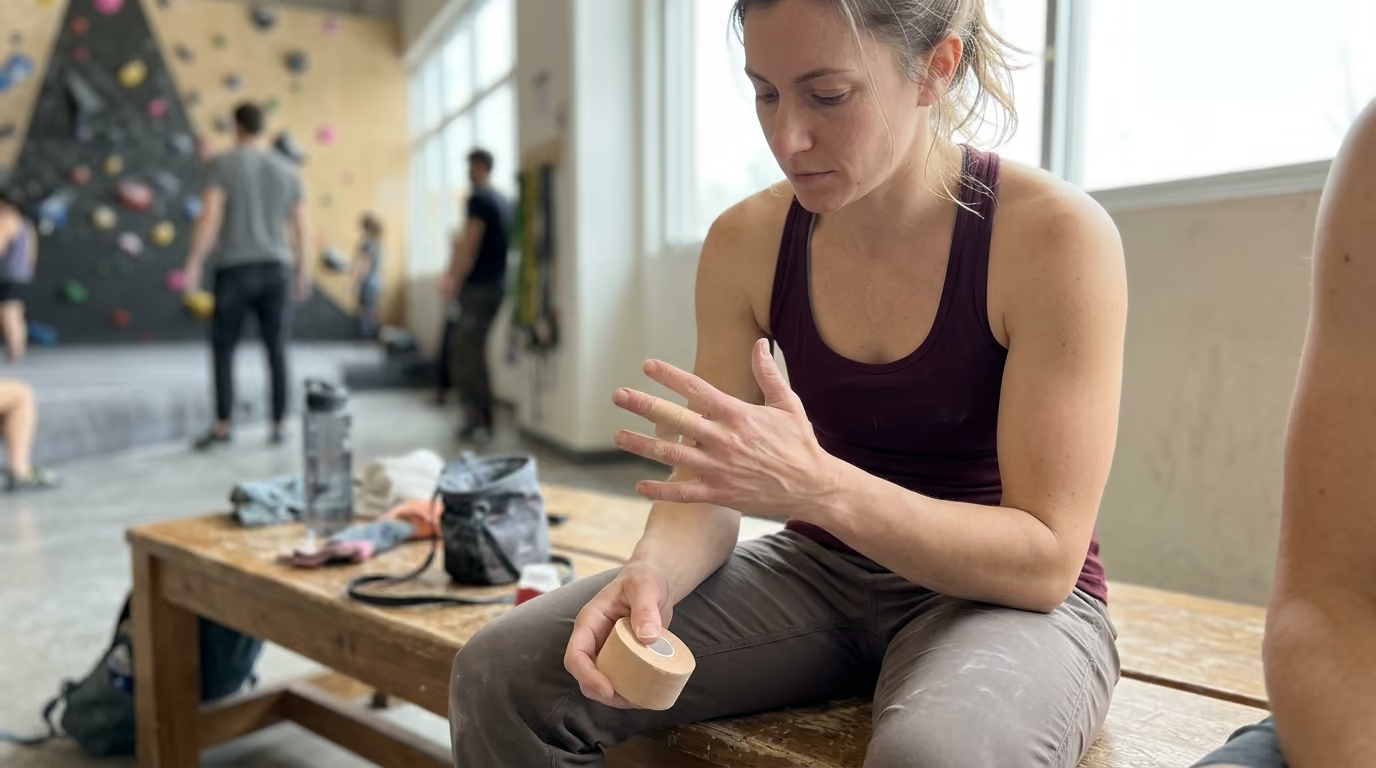

Maximum lifting power and lifelong joint mobility develop through structured training routines that turn hand health into a powerful asset for daily physical resilience.





Grip strength is not a single isolated physical capacity. It is the coordinated interaction of finger flexor strength, thumb opposition, wrist stability, forearm musculature, connective tissue capacity, and shoulder stability. It is also not merely a number produced on a hand dynamometer. A complete understanding of grip requires examining how the hand interacts with heavy loads, sporting equipment, and daily environments across the lifespan.
This comprehensive guide examines the biological mechanisms of hand strength, how to assess your capacity accurately, and how to train for sports like climbing, tennis, paddling, lifting, and trekking. It also covers connective tissue preservation and the real relationship between grip metrics and long-term health.
Whether you want to climb steeper routes, handle heavy deadlifts without pain, or maintain total functional independence in your later decades, building resilient hands requires a structured approach. True capability in the upper extremity combines high force production with refined force control, tendon resilience, and joint mobility. By understanding how your hands function as the final link in the kinetic chain, you can target your training to stay capable, injury-free, and athletic for life.
In clinical and longevity research, maximum voluntary grip strength is widely used as a proxy for whole-body muscular strength, physical reserve, and biological age. Research pooling data from over 2.4 million adults across 69 countries highlights how grip capacity changes across a lifetime, peaking in early adulthood and declining with age. A systematic review and meta-analysis of adults aged 60 and older published in sports and clinical literature revealed that lower handgrip strength is strongly associated with cognitive decline, functional limitations, mobility loss, and all-cause mortality. When comparing high and low grip strength categories, the pooled hazard ratio for mortality was 1.79.
An umbrella review of systematic reviews further confirmed that higher baseline handgrip strength correlates with a 28% reduction in all-cause mortality, a 16% reduction in cardiovascular mortality, and a 24% reduction in incident disability. Furthermore, a meta-analysis of 30 studies involving nearly 200,000 older adults demonstrated that each standardized increment of preserved grip strength was associated with an 18% decrease in all-cause mortality. These numbers show that hand strength provides a clear snapshot of an individual's overall neuromuscular vitality.
However, observational data must be interpreted carefully. Squeezing a hand gripper will not automatically protect you from cardiovascular disease or cognitive decline. Grip strength serves as an external indicator of total skeletal muscle quantity, muscle quality, nervous system integrity, and lifetime physical activity. When an active adult maintains high muscular strength throughout their body, their grip strength naturally reflects that broader systemic capacity.
Declining hand strength is often the first visible sign of sarcopenia, frailty, or subclinical chronic illness. In our work with healthy aging and functional longevity, we view grip tracking as a primary screening metric. A persistent drop in grip force signals that deeper physiological factors, such as systemic inflammation, insufficient protein intake, hormonal shifts, or reduced physical training volume, require immediate attention.
It is important to distinguish between having a low grip strength score and receiving a clinical diagnosis. A low score on a dynamometer simply indicates that your isometric squeezing capacity falls below established demographic percentiles. Sarcopenia is a broader clinical condition characterized by the progressive loss of skeletal muscle mass, quality, and physical performance. Frailty represents an advanced state of vulnerability where multiple physiological systems lose their functional reserve.
Grip strength alone cannot diagnose sarcopenia or frailty. It serves as an accessible, non-invasive initial screening tool that prompts a deeper review of movement quality, lower-body power, and nutritional status. When paired with functional movements like chair rises, walking speed assessments, and loaded carries, hand dynamometry offers invaluable insight into biological aging.
Aging alters hand function through several neuromuscular pathways. Motor units in the intrinsic muscles of the hand decrease in number over time, while muscle fibers undergo gradual atrophy. Connective tissues within the palm, fingers, and wrist lose hydration and elasticity, reducing mechanical compliance and grip security.
Targeted resistance training directly counteracts these age-related declines. Systematic reviews indicate that progressive resistance exercise enhances motor unit recruitment, improves manual dexterity, and stimulates connective tissue remodeling in older adults. Maintaining forceful neural drive from the motor cortex down to the hand muscles preserves fine motor control alongside raw strength.
Many people treat hand strength as a single quality, but human hands interact with objects through multiple distinct movement patterns. True athletic capability and manual resilience require developing four primary functional grip categories.
Crush grip is the capacity to close your fingers and thumb tightly around an object, compressing it firmly into the palm. You rely on crush grip when shaking hands, squeezing a dynamometer, using hand grippers, or grasping thick handles. This grip type depends heavily on the deep flexor muscles of the forearm, specifically the flexor digitorum profundus and superficialis, assisted by the thenar muscles of the thumb.
Crush grip is the most commonly measured form of hand strength in clinical settings. However, possessing high crush strength does not guarantee proficiency in holding heavy barbells or pinching flat surfaces. Crush strength provides raw squeezing power, but it must be paired with other grip variations to build balanced upper-extremity resilience.
Pinch grip describes force generated between the thumb and the opposing fingers without resting the object against the palm. This grip pattern relies extensively on the intrinsic muscles of the hand, particularly the adductor pollicis, thenar group, and dorsal interossei. Pinch strength is critical when picking up weight plates, holding narrow climbing holds, opening containers, or manipulating precise mechanical tools.
Pinch grip can be subdivided into specific configurations:
Pinch grip places unique isometric demands on the thumb musculature. Because modern daily life rarely demands high-force pinching, the intrinsic muscles of the thumb are often the first to lose conditioning. Dedicated pinch training restores balance between the powerful forearm flexors and the smaller hand muscles.
Support grip is the capacity to maintain a secure hold on an external load over an extended period where the fingers wrap completely or partially around a handle. Classic examples include performing heavy deadlifts, holding farmer's carries, executing pull-ups, and carrying heavy travel luggage. Support grip requires sustained isometric contractions from the finger flexors while the wrist extensors contract statically to maintain an optimal force-transfer angle.
Support grip is frequently the weak link in full-body resistance training. If your fingers open during a heavy deadlift or row, your posterior chain misses out on valuable training volume. Building exceptional support grip allows the larger muscle groups of the back, hips, and legs to be overloaded fully without relying constantly on lifting straps.
Grip endurance refers to the ability to sustain repeated submaximal contractions or long-duration isometric holds without experiencing technical failure, severe force decay, or excessive forearm pump. Grip endurance is the deciding factor in endurance sports such as rock climbing, whitewater kayaking, cross-country trekking, and long racquet sport matches.
Endurance grip relies heavily on local aerobic capacity, efficient capillarization within the forearm compartments, and intramuscular pressure regulation. When you grip an object at high percentages of your maximal voluntary contraction, blood flow to the forearm muscles is occluded. Athletes with superior grip endurance excel at regulating force output, squeezing only as hard as necessary to maintain control while allowing blood flow to return during brief relaxation phases.
Beyond the four foundational categories, athletic endeavors demand specialized hand positions and force vectors. Rock climbers rely heavily on the open-hand grip, where the first knuckle joints remain extended, and the half-crimp, where the first knuckle is flexed to 90 degrees. These positions create distinct stress patterns across the flexor tendons and annular pulley ligaments.
Rotational grip strength involves resisting or producing torque through forearm pronation and supination while gripping an implement. Tennis players, paddlers, and martial artists require high levels of rotational wrist and forearm strength to absorb rapid impacts and maintain joint alignment under high dynamic loads. Developing strength across all planes of motion protects the delicate structures of the wrist and elbow.
Assessing grip strength requires standardizing testing procedures to obtain reliable and repeatable data. A standardized protocol eliminates variables like wrist flexion, body position, and fatigue, ensuring that changes in your score reflect genuine alterations in physical capacity.
The American Society of Hand Therapists established the gold standard protocol for measuring isometric grip force using a calibrated hydraulic dynamometer. Following this exact setup ensures your numbers can be accurately compared against international normative data.
To execute the standardized test:
Research reviewing grip measurement protocols in clinical literature indicates that subtle changes in body posture alter results significantly. Standing up, allowing the elbow to fully extend, or bending the wrist backward can artificially inflate scores by 10 to 15 percent. When tracking your health and performance over time, maintain the exact same seated testing position for every assessment.
Rather than relying on arbitrary cutoff numbers, your results should be evaluated against international demographic percentiles. A global analysis pooling 100 observational studies across 2.4 million adults established five distinct functional tiers based on age and biological sex:
Tracking your percentile trend over months and years provides far more actionable insight than obsessing over a single day's peak number. If your score steadily drops across multiple quarters despite consistent training, it warrants a closer examination of your recovery, sleep, systemic inflammation, or joint health.
Multiple external and internal factors can skew your dynamometer measurements. Testing immediately after a heavy upper-body workout, experiencing local joint discomfort, or feeling dehydrated will temporarily suppress force output. Even the time of day matters, as spinal compression, nervous system readiness, and tendon stiffness fluctuate between morning and evening.
Familiarity with the testing device also creates a minor learning effect over the first few sessions. Ensure your dynamometer is calibrated periodically, maintain identical verbal encouragement during trials, and record testing conditions accurately. Standardizing your approach transforms a basic grip squeeze into a highly reliable window into your physiological health.
In athletic performance, hand strength is rarely used in isolation. The hands serve as the direct contact point through which kinetic energy generated by the legs, hips, and torso is transferred into an implement, rock face, or load. A weak or poorly conditioned grip acts as a physical bottleneck, dissipating force and forcing surrounding joints to compensate.
Rock climbing places unique biomechanical demands on the human hand. Climbers must support substantial percentages of their total body weight on tiny rock edges, sloping holds, and shallow pockets. This sport requires high open-hand strength, half-crimp capacity, and exceptional force control.
In climbing, high crush grip on a dynamometer correlates poorly with performance on rock. Climbers depend on tendon stiffness and the load-bearing capacity of the flexor digitorum profundus and superficialis tendons sliding through the A2, A3, and A4 annular pulleys. Over-gripping is a major technical flaw among newer climbers, leading to premature forearm pump and rapid energy depletion. Skilled climbers generate maximum contact force instantaneously upon grabbing a hold, then relax their grip to the minimum threshold necessary to prevent slipping.
Conditioning for climbing must prioritize graded, long-term connective tissue adaptation. Finger tendons and annular pulleys adapt to mechanical stress far more slowly than skeletal muscle tissue due to limited blood supply. Adding high-intensity hangboard sessions to a heavy climbing schedule without adequate recovery is a primary cause of pulley ruptures and chronic tenosynovitis.
Racquet sports require an intricate balance between high-velocity impact absorption, rapid forearm rotation, and fine neuromuscular touch. During a tennis serve or aggressive forehand, the hand must stabilize the racquet handle against significant torsional forces within milliseconds of ball contact.
Athletes suffering from lateral elbow pain, commonly termed tennis elbow, frequently demonstrate reduced pain-free grip strength. Research in sports physical therapy shows that lateral elbow tendinopathy is rarely caused by isolated hand weakness. Instead, it stems from repetitive overload of the extensor carpi radialis brevis tendon, often caused by late ball striking, improper grip size, or inadequate kinetic transfer from the hips and trunk.
Training for racquet sports must include eccentric wrist extensor loading, forearm pronation and supination resistance, and dynamic force regulation. Players must practice transitioning from a relaxed hand during the backswing to a firm, stable grip at impact, immediately followed by soft-tissue relaxation during the follow-through.
Paddling disciplines demand hours of continuous support grip combined with rhythmic wrist deviation and forearm rotation. A paddler's hands must remain securely anchored to the paddle shaft while the large muscles of the latissimus dorsi, core, and hips drive the boat forward.
A common error among paddlers is maintaining a continuous white-knuckle hold on the shaft throughout both the drive and recovery phases of the stroke. This constant isometric squeeze restricts capillary blood flow, accelerates forearm fatigue, and increases the risk of wrist extensor tenosynovitis. Elite paddlers utilize an active grip cycle, maintaining a firm anchor on the pulling side while fully relaxing and opening the pushing hand to allow blood reperfusion.
Conditioning for paddlers should focus on support grip endurance, forearm extensor balance, and rotational stability under fatigue. Integrating high-repetition kettlebell carries, thick-bar holds, and banded wrist mobility drills ensures the forearm musculature can endure multi-hour journeys on the water.
In the gym, your grip dictates how effectively you can recruit the larger musculature of your posterior chain. When performing deadlifts, heavy rows, and pull-ups, the nervous system uses feedback from sensory receptors in the hands to regulate motor output. If your grip begins to slip, neural drive to the lats, glutes, and hamstrings is downregulated through protective neuromuscular inhibition.
To build maximum pulling power, lifters must train support grip deliberately while knowing when to use supportive gear. Using lifting straps during your heaviest working sets allows you to overload the back and hips without being limited by hand fatigue. You can then train your raw grip capacity separately through heavy farmer's carries, fat-grip holds, and paused double-overhand deadlift holds.
Our comprehensive resources on strength and physical performance emphasize that a secure grip stabilizes the entire upper body. Squeezing a barbell tightly creates a phenomenon known as muscular irradiation, where intense contraction of the hand and forearm muscles reflexively increases tension in the rotator cuff, deltoids, and upper back. This muscular stiffness protects the shoulder joint and reinforces spinal stability under heavy spinal loads.
Trekking over rugged alpine terrain places prolonged, submaximal demands on the hands and wrists. Using trekking poles over high-mileage descents absorbs significant ground reaction forces, sparing the knees while transferring repeated low-level shocks into the palms and forearms. Carrying heavy multi-day backpacks also requires durable support strength to manage gear, adjust straps, and scramble across exposed rock sections.
In mountainous terrain, hand capacity intersects directly with environmental exposure. Cold temperatures decrease nerve conduction velocity and reduce manual dexterity, making simple survival tasks like pitching a tent or operating a stove challenging. Trekking preparation must focus on long-duration grip endurance, cold-weather skin care, and preserving the fine motor skills required for wilderness safety.
Misinformation regarding hand strength often leads to wasted training time or avoidable soft-tissue injuries. Addressing these common myths helps active adults build smarter, more durable training regimens.
Standard spring-loaded hand grippers train only one movement pattern: crush grip through a limited range of finger flexion. They completely neglect the extensor muscles that open the hand, the intrinsic muscles that power the thumb for pinch grip, and the rotational strength of the wrist. Relying entirely on grippers creates severe muscular imbalances, leading to chronic forearm tightness and elbow tendon irritation.
While epidemiology shows clear statistical links between low dynamometer scores and increased mortality, a grip score is not a comprehensive health diagnostic. It cannot detect cardiovascular blockages, metabolic dysfunction, or neurological disease on its own. It is simply a functional biomarker that reflects overall muscularity and physiological reserve.
The burning sensation known as a pump occurs when metabolic byproducts accumulate in the muscle tissue due to capillary occlusion. While metabolic stress plays a minor role in hypertrophy, excessive pump during grip training degrades movement mechanics and increases connective tissue strain. Building durable strength and tendon capacity requires progressive mechanical tension with adequate rest, not chasing exhaustion in every session.
Many athletes believe that clamping down with maximum force on a racquet, paddle, or bar makes the joint safer. In reality, over-gripping causes excessive co-contraction of opposing forearm muscles, increasing joint compression at the wrist and elbow. Fluid athletic performance relies on force regulation, using the exact amount of tension required for the task while staying relaxed between efforts.
A popular guideline suggests the dominant hand should be ten percent stronger than the non-dominant hand. Modern measurement studies show this rule is highly inconsistent. In athletes, climbers, and individuals with symmetrical manual occupations, side-to-side differences are often minimal. A noticeable or widening asymmetry is far more informative as a sign of unilateral nerve compression, joint pain, or past injury than as a normal baseline.
Building durable grip strength and preserving hand health does not require hours of complex isolation exercises. Applying the minimal effective dose through a few targeted, high-yield movements delivers substantial physical improvements while fitting smoothly into an active lifestyle.
A well-rounded hand and forearm routine addresses four primary mechanical functions:
You do not need dedicated grip days. The most efficient approach integrates grip work directly into the end of your existing strength training sessions twice per week.
To ensure continuous adaptation without irritating your joints, progress variables gradually. Focus on increasing one variable at a time:
Always prioritize joint comfort over rapid load increases. Tendons and ligaments adapt over months, not weeks. If you experience aching at the medial or lateral elbow, pause progression and reduce training volume until symptoms settle.
Remote travel, alpine expeditions, and long transit days introduce unique physical stressors that challenge upper-extremity capacity. Navigating international airports with heavy luggage, enduring multi-hour flights, and handling outdoor gear in variable climates require both physical resilience and intelligent fatigue management.
During extended transit, carrying heavy duffel bags and rolling luggage through massive terminals places high isometric demands on the support grip and shoulder girdle. When paired with hours of seated immobility in pressurized airline cabins, fluid shifts can cause mild peripheral swelling in the hands and feet. This swelling reduces joint mobility and temporarily diminishes tactile sensitivity.
After a grueling thirty hour transit to Tokyo, I realized my old strategy of just powering through was no longer working. I felt foggy for three days. I started digging into circadian biology and realized that timing my light exposure and fasting during the flight could completely shift my recovery. Now, I never board a long haul flight without a precise schedule for when to eat and when to put on an eye mask. It is the difference between losing a week of your trip and hitting the ground running.
When traveling for alpine trekking or water sports, hand care becomes a matter of field safety. Cold weather reduces blood flow to the extremities, slowing nerve conduction velocity and impairing fine motor skills. Operating safety carabiners, setting up wilderness shelters, or lighting camp stoves with numb fingers can quickly escalate into hazardous situations.
Maintaining hand readiness during remote journeys requires proactive habits:
In our guide to travel and human performance, we highlight how physical capability extends beyond the gym walls. Keeping your hands conditioned, protected, and mobile ensures you can embrace demanding itineraries, rugged outdoor environments, and spontaneous adventures with absolute confidence.
Hand and forearm injuries can be frustratingly slow to heal if managed incorrectly. Because the hands contain numerous intricate bones, small joints, and dense fibrous pulleys, soft-tissue structures require precise load management and early symptom recognition to remain resilient.
Skeletal muscle tissue adapts relatively quickly to physical training due to rich vascular networks and rapid protein turnover. Tendons, ligaments, and the annular pulleys of the fingers adapt much more slowly. These dense collagen structures rely on indirect fluid movement and passive diffusion for nutrient delivery.
When an active adult increases their training volume too quickly, muscular force output often outpaces connective tissue capacity. This imbalance is the primary cause of flexor tendinopathy and annular pulley sprains. Protecting your tendons requires gradual progression, avoiding sudden spikes in weekly training volume, and giving connective tissues adequate time to remodel.
Pain provides critical information about tissue tolerance. However, not all discomfort requires total rest. Complete immobilization weakens tendons and reduces their load-bearing capacity, making them more vulnerable to re-injury upon returning to activity.
Use the 24 to 48 hour symptom response rule to guide your training:
For reactive or irritated tendons, research in physical therapy shows that pain-free isometric holds can provide an immediate analgesic effect. Performing static, submaximal holds helps desensitize the nervous system and stimulates collagen alignment without creating the shear stress associated with heavy dynamic loading.
Lateral elbow tendinopathy (tennis elbow) and medial elbow tendinopathy (golfer's elbow) are common overuse conditions among active adults. Successful recovery requires identifying and correcting movement errors in your sport, adjusting equipment parameters like racquet string tension or grip size, and progressively loading the wrist extensors and flexors through their full ranges of motion.
For individuals managing hand osteoarthritis, exercise programming must be tailored carefully. A systematic review published in rheumatology literature revealed that high-intensity resistance training does not always improve raw dynamometer scores in arthritic hands, but gentle mobility and progressive, pain-free strengthening provide meaningful symptom relief. Maintaining joint range of motion, performing gentle finger opposition drills, and using warm-water soaking before movement help preserve manual dexterity and daily comfort.
Not all hand issues stem from muscular or tendon strain. Sensations of numbness, tingling, burning, or sudden loss of motor coordination typically indicate nerve compression along the cervical spine, thoracic outlet, elbow, or carpal tunnel. If you experience persistent tingling in the fingers, wake up with numb hands, or drop objects unexpectedly, seek a comprehensive clinical evaluation rather than attempting to train through the symptoms.
The broader scientific and medical communities share a clear consensus regarding grip strength, human performance, and biological aging:
First, researchers agree that maximum isometric grip force serves as one of the most reliable, cost-effective biomarkers of overall muscular strength, biological reserve, and health status in adult populations. Decades of large-scale epidemiological research confirm that higher preserved grip strength is consistently associated with lower all-cause mortality, reduced cardiovascular events, and greater functional independence.
Second, the scientific consensus emphasizes that grip strength is a surrogate marker, not a single target. Artificially inflating your dynamometer score with hand grippers will not confer systemic longevity benefits if the rest of your body remains weak and deconditioned. The true health value of grip strength lies in what it reflects: a lifelong commitment to comprehensive resistance exercise, adequate nutrition, active outdoor pursuits, and preserved neuromuscular health.
Finally, exercise scientists and physical therapists agree that hand and forearm resilience requires balanced, multi-planar training. Developing a strong, capable grip demands training crush, pinch, support, and rotational capacities while protecting connective tissues through progressive overload and adequate recovery. When approached thoughtfully, grip training ensures your hands remain capable tools for sport, adventure, and daily life for decades to come.
For most active adults, two targeted grip sessions per week provide an ideal stimulus for strength and connective tissue adaptation. Performing two to three focused exercises at the conclusion of your regular workouts delivers excellent results without overtaxing your forearm tendons.
Compound pulling exercises develop excellent support grip, but they neglect pinch strength, open-hand finger capacity, and extensor balance. Adding specific pinch holds and banded finger extensions ensures your hands remain balanced and resilient across all movement patterns.
Sharp or lingering pain at the inner or outer elbow indicates tendon irritation that requires attention. Temporarily reduce heavy dynamic gripping, avoid painful movement ranges, and incorporate gentle, pain-free isometric wrist holds. If discomfort persists for more than two weeks, consult a physical therapist for a targeted rehabilitation plan.
Yes. Clinical trials confirm that combining progressive hand strengthening with fine motor tasks, such as pegboard manipulation, ball rolling, and finger opposition drills, significantly improves manual dexterity and coordination in older adults. Maintaining strong neural drive to the intrinsic hand muscles preserves fine motor control alongside raw strength.
Stay connected for research and practical guidance on longevity, strength, recovery, energy and active living. New ideas to help you stay capable, curious and ready for more.


Explore practical guidance on strength, recovery, energy, travel and longevity for a life that stays active.
explore the Blog