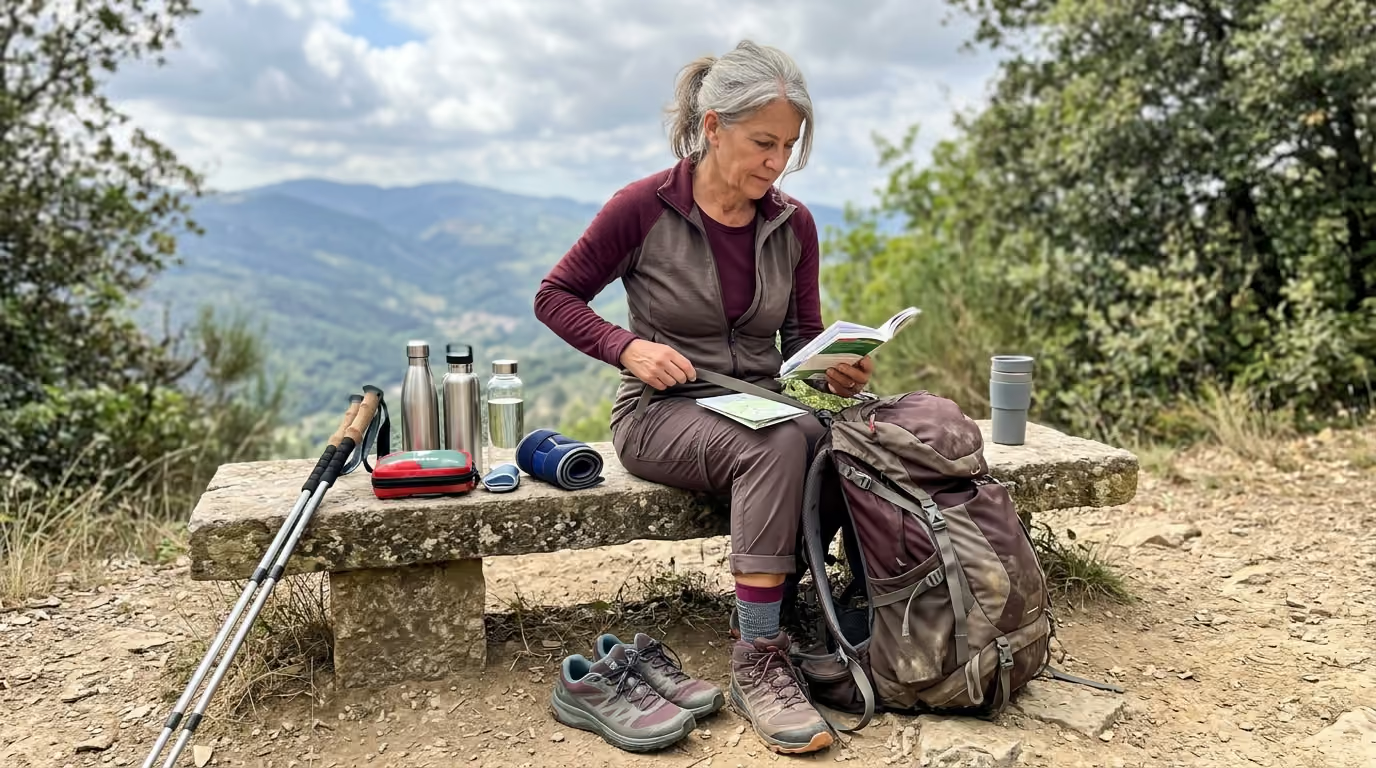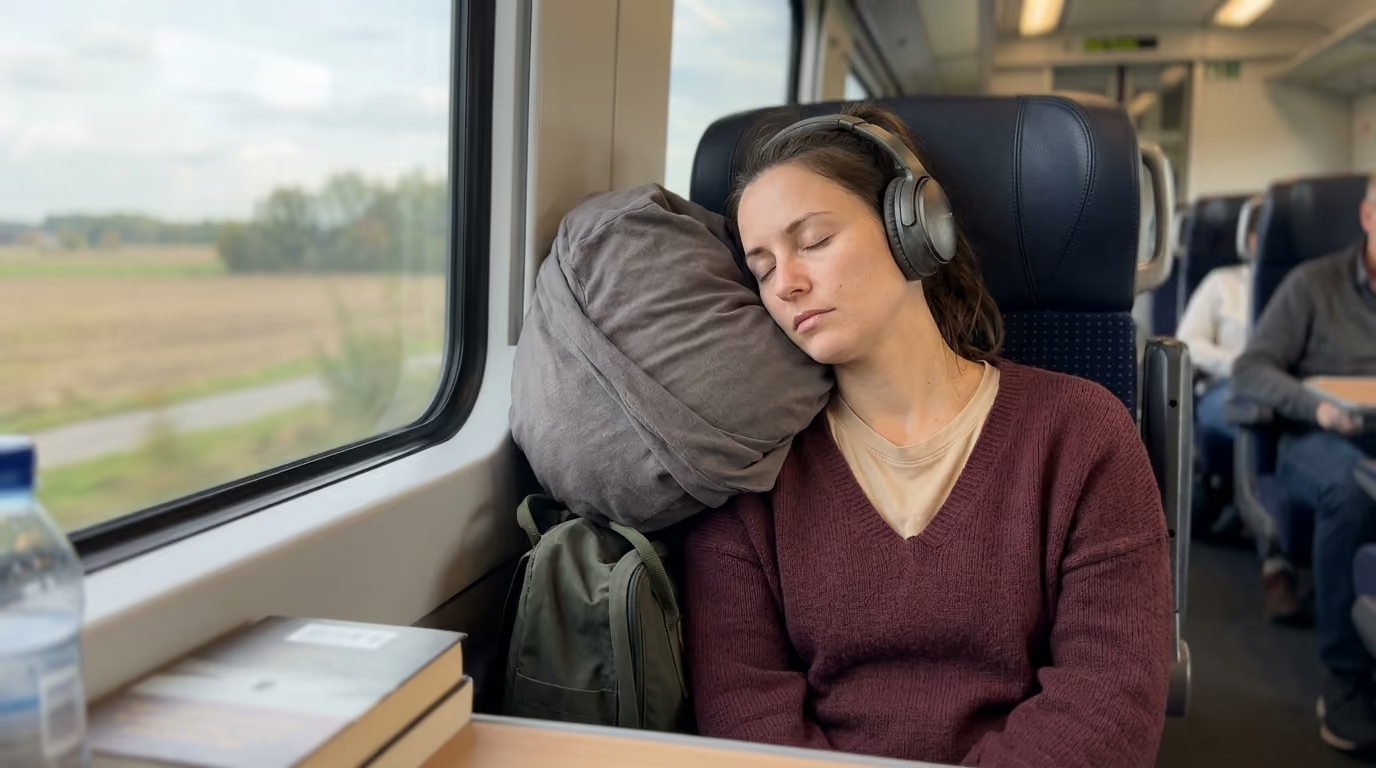

Three biological mechanisms disrupt your rest on trips, but systematic adjustments to your environment and schedule restore deep recovery in any hotel.





Why can you never sleep well in hotel rooms? It is one of the most common questions active travelers ask after waking up exhausted before an early morning meeting, a high-altitude hike, or a day on the slopes.
The short answer is straightforward. Travel disrupts your sleep through three distinct mechanisms at the same time: reduced opportunity, degraded environment, and circadian misalignment. When you solve each variable systematically, restorative rest follows naturally anywhere in the world.
This comprehensive guide provides an evidence-based roadmap for protecting your sleep quality across hotels, private rentals, long-haul flights, and cruise cabins.
Maintaining peak physical capacity and mental clarity away from home requires a clear mental model. We look at sleep during travel through five interrelated components: sleep pressure, circadian timing, sleep environment, personal behavior, and psychological expectations.
Sleep opportunity represents the total window of time available between your evening obligations and your morning alarm. Sleep quality describes the depth and continuity of your rest once your eyes close. Circadian alignment defines whether your internal 24-hour biological clock matches the local day and night cycle.
A single night of travel can attack all three factors at once. An evening flight reduces your total sleep opportunity. An unfamiliar mattress or noisy corridor degrades your sleep quality. Crossing multiple time zones forces your biology out of rhythm with the sun.
True travel fatigue is not always jet lag. You can suffer from broken sleep without crossing a single time zone due to dehydration, physical strain, or poor indoor air. Understanding these distinct variables allows you to apply the correct operational fix instead of guessing.
Your sleep drive is governed by two independent biological forces known as Process S and Process C. Process S represents homeostatic sleep pressure. Adenosine accumulates in your brain during every waking hour, creating an increasing biological drive to sleep. Extended travel days, delayed flights, and physical activity rapidly increase this pressure.
Process C is your internal circadian rhythm, controlled by the suprachiasmatic nucleus in the hypothalamus. This master clock regulates hormone secretion, core body temperature, alertness, and cellular repair across a roughly 24-hour cycle.
When you travel across long distances, your homeostatic sleep pressure remains high while your circadian clock remains anchored to your home departure city. This creates an internal conflict. You feel exhausted at 3:00 PM in London because your sleep pressure is high, yet you wake up at 2:00 AM because your internal clock signals that it is only 9:00 PM in New York.
At the same time, the brain displays an evolutionary vigilance response in unfamiliar environments known as the first-night effect. Marine mammals and certain birds can keep one hemisphere of the brain awake while the other rests. Human research shows that sleeping in a new hotel room keeps the left hemisphere of your brain more alert to ambient sounds, leading to fragmented slow-wave rest and micro-arousals.
Understanding the principles of recovery and sleep gives you the tools to calm this neurological alertness quickly.
Jet lag disorder occurs when your internal biological time falls out of sync with external environmental time. Your master biological clock does not reset automatically when you adjust your watch.
The human circadian clock runs on a cycle slightly longer than 24 hours. Because of this, expanding your day by traveling westward is biologically easier for most adults than compressing your day by traveling eastward. Westward journeys require a phase delay, where you push your sleep and wake times later. Eastward journeys require a phase advance, where you force your biological systems to advance earlier.
Light is the primary environmental cue that sets your internal clock. Exposing your eyes to bright light shifts your circadian rhythm in different directions depending on when the light is received.
To manipulate your circadian rhythm effectively, you must understand your circadian temperature minimum. This physiological marker occurs approximately three hours before your habitual wake time, when your core body temperature hits its lowest daily level.
Light exposure received after your temperature minimum produces a phase advance, shifting your internal clock earlier. Light exposure received before your temperature minimum produces a phase delay, shifting your clock later.
When traveling eastward across multiple time zones, your objective is to advance your circadian clock. Seek bright natural sunlight during the local morning after your estimated temperature minimum.
Simultaneously, protect yourself from bright light during the local evening. Use dark sunglasses during afternoon departures or while walking through bright terminals to prevent delaying your clock further.
Shift your bedtime and wake times earlier by 30 to 60 minutes per day for three days before departure when your schedule permits. This gentle advance reduces the total biological shock upon arrival.
When traveling westward, your objective is to delay your circadian clock to match a later local evening. Maximize your exposure to natural daylight and bright indoor lighting during the late afternoon and early evening.
Avoid bright light in the early morning at your destination, as this can pull your clock backward. If you wake up at 4:00 AM, stay in a dark room with minimal stimulation until local daylight begins.
Gradually shift your bedtime and wake times 30 to 60 minutes later for several days prior to departure. This simple routine prepares your biological clock for the extended day ahead.
Every journey requires a distinct operational plan based on its duration and your performance goals. Applying a single rigid approach to all trips leads to unnecessary stress and fatigue.
For trips lasting less than two days, complete biological adaptation is impossible and counterproductive. Research guidelines recommend maintaining your home time zone for ultra-short trips.
If you fly from Chicago to London for a 36-hour business negotiation, keep your biological clock close to Chicago time. Sleep in a dark room during your regular home sleep window, conduct demanding business during your normal peak hours, and return home without forcing your internal clock through two conflicting shifts.
Use short tactical naps to sustain alertness during social obligations. Avoid broad daylight during windows when you would normally be sleeping at home.
For medium-length journeys, you must actively shift your biological clock to preserve daily performance. Begin integrating with the local time zone immediately upon landing.
Align your meal schedules, physical activity, and light exposure with local patterns from day one. You can learn more about managing demanding travel schedules in our guide to travel and human performance.
Prioritize outside movement in natural sunlight during destination mornings. Avoid using high-dose caffeine late in the day to compensate for midday slumps.
On long trips, full circadian adaptation is the optimal strategy. Commit completely to local bedtimes and wake times.
Keep your wake time consistent every morning, even if you had a fragmented night. A consistent wake time anchors your daily circadian phase and builds sufficient sleep pressure for the following night.
Allow your biology several days to adjust fully. Support this transition with stable evening routines, moderate physical activity, and proper hydration.
Your sleeping space is a controllable system. The quality of your rest depends heavily on room location, light elimination, acoustic management, and temperature stability.
The best room is rarely the largest suite. The best room is the one that shields you from predictable mechanical and human noise.
When booking or checking in, ask for a room on an upper floor away from elevators, stairwells, housekeeping closets, and service corridors. Request a room positioned away from busy street intersections, hotel restaurants, loading docks, and exterior mechanical units.
Ask the front desk staff whether the hotel is hosting large conferences, wedding parties, or athletic groups. Request placement on a designated quiet floor whenever available.
Perform a rapid five-minute inspection immediately after receiving your room keys before unpacking your bags.
Step inside and stand silently for sixty seconds. Listen closely for low-frequency ventilation hums, plumbing noises, elevator motor whirs, and corridor footsteps.
Inspect the window treatments to ensure the curtains seal tightly without central gaps. Test the thermostat interface to verify that the fan can run continuously rather than cycling loudly on and off throughout the night.
Check the mattress support and pillow density. If you discover major noise hazards, broken climate controls, or poor curtains, walk back to the front desk immediately and request a room change.
Changing rooms before you unpack takes five minutes. Trying to solve an unbearable noise issue at 1:00 AM ruins your night.
Human sleep initiation requires a drop in core body temperature. A room that is too warm prevents this natural thermoregulatory cooling, leading to restless, shallow sleep.
Set the room thermostat between 65 and 68 degrees Fahrenheit (18 to 20 degrees Celsius). This range provides the optimal thermal environment for the human body under standard hotel bedding.
If the room air feels stagnant or overly dry, run the climate control fan continuously to promote airflow and create a soothing acoustic floor. Open an exterior window slightly if ambient outdoor noise and weather conditions permit.
Sudden, intermittent noises cause rapid transitions out of deep slow-wave sleep. Even if you do not wake up fully, these micro-arousals elevate heart rate and fragment recovery.
Pack high-grade, comfortable earplugs made of soft silicone or memory foam. Carry a portable travel sound machine or use an offline white noise application on your smartphone to create a continuous acoustic buffer.
Continuous white or brown noise effectively masks unpredictable corridor doors, elevator dings, and street traffic. Keep the volume at a safe, moderate level throughout the night.
Light penetrating your eyelids suppresses the nocturnal release of melatonin and signals alertness to the master clock.
Hotel rooms are filled with aggressive light sources, including illuminated smoke detectors, digital clock radios, television power lights, and hallway door gaps. Pack an ultralight, contoured sleep mask that applies zero pressure to your eyes while blocking all incoming light.
Use a simple clothes hanger with clips from the hotel wardrobe to pinch window curtains shut at the center. Place a rolled bath towel along the base of the entry door to block bright hallway illumination and muffle corridor noise.
Long-haul transit spaces present unique environmental challenges that require specific behavioral adaptations.
Aircraft cabins combine dry air, cramped postures, engine vibrations, ambient cabin lighting, and passenger movement. Expecting a perfect eight hours of deep sleep in a standard aircraft seat is unrealistic.
Focus instead on resting comfortably and reducing sensory input. A dedicated transit rest kit should include high-fidelity noise-canceling headphones, soft earplugs, an ergonomic neck support pillow, an eye mask, and breathable layers of clothing.
Hydrate regularly with water and electrolytes while avoiding carbonated beverages that expand at cruising altitudes. Avoid relying on heavy in-flight meals that disrupt digestive rhythms.
Determine whether you should sleep on the plane based on your arrival time. If you land in the early morning, rest as much as possible on the aircraft. If you arrive in the late evening, stay awake during the flight to ensure strong sleep pressure upon checking into your hotel.
Cruise travel offers unique sleep advantages and distinct challenges. Ship cabins eliminate street traffic but introduce low-frequency engine hums, structural vibrations, and vessel motion.
If you are sensitive to motion, select a cabin located mid-ship on a lower deck where pitch and roll forces are minimal. Travelers sensitive to noise should avoid cabins directly beneath pool decks, fitness centers, or late-night entertainment lounges.
Interior cabins provide complete, cavernous darkness that supports uninterrupted nighttime rest. However, the lack of natural morning daylight can make waking difficult and delay circadian adjustment.
If you stay in an interior room, turn on warm cabin lighting immediately upon waking. Head directly up to the open deck for early morning sunlight and ocean air to anchor your daytime energy. You can discover more strategies for active travel in our collection on travel and adventure.
Strategic behavioral choices during the day dictate the depth and quality of your nighttime sleep.
Daytime naps are a valuable tool for restoring alertness after short travel nights. However, poorly timed naps destroy nighttime sleep drive.
Keep tactical naps between 20 and 30 minutes in length. A 20-minute nap provides light stage-two restoration without allowing you to enter deep slow-wave sleep.
Entering slow-wave sleep during a daytime nap produces sleep inertia, leaving you feeling groggy, disoriented, and unable to fall asleep at bedtime. Schedule all daytime naps for the early afternoon before 2:00 PM or 3:00 PM local time.
Never take long, two-hour naps in the late afternoon or evening upon arriving at a destination. Pushing through temporary fatigue preserves your sleep pressure for a consolidated local night.
Caffeine is an effective tool for sustaining mental acuity, but its long biological half-life can silently ruin your sleep architecture. The average half-life of caffeine is roughly five to seven hours, meaning a quarter of the compound remains active in your brain twelve hours after consumption.
Use caffeine strategically in the morning to support daytime alertness and reinforce your local wake rhythm. Cut off all caffeine intake at least six to eight hours before your scheduled local bedtime.
Avoid consuming massive doses of caffeine to mask severe exhaustion when operating vehicles or performing safety-critical tasks. You can optimize your daily performance by reviewing our resources on energy and focus.
Cabin environments and air-conditioned hotel rooms accelerate insensible water loss. Dehydration causes headaches, muscle cramping, and nasal dryness, all of which disturb sleep quality.
Drink consistent amounts of clean water throughout your travel days. Keep a water bottle beside your bed to soothe dry throat tissues during the night.
Avoid eating large, rich, or heavily spiced meals within three hours of bedtime. Digesting high-fat foods elevates your core body temperature and metabolic rate, directly opposing the physical conditions required for deep sleep.
Opt for light, balanced dinners that combine lean proteins with complex carbohydrates to support natural serotonin and melatonin production.
Many common travel habits intended to improve sleep actually produce the opposite result.
A frequent travel mistake is using alcohol as an in-flight sedative or a hotel sleep aid. Alcohol is a central nervous system depressant that induces relaxation and accelerates sleep onset.
However, as your liver metabolizes alcohol during the night, it triggers severe sleep fragmentation, suppresses restorative rapid eye movement sleep, elevates resting heart rate, and worsens sleep-disordered breathing.
The result is unrefreshing, broken sleep followed by morning fatigue and dehydration. Limit alcoholic drinks to early evening hours and drink plenty of water before going to bed.
Many travelers treat over-the-counter melatonin as an herbal sleeping pill and consume massive doses ranging from five to ten milligrams. Melatonin is not an hypnotic sedative; it is a chronobiotic hormone that signals biological darkness to your circadian clock.
Taking large doses at the wrong time of day can shift your circadian rhythm in the wrong direction, making jet lag worse. If you choose to use melatonin under medical guidance, micro-doses ranging from 0.5 to 3.0 milligrams taken 30 to 90 minutes before your target local bedtime are far more effective for circadian phase shifting.
You cannot store excess sleep in advance like funds in a bank account. Sleeping twelve hours on a Sunday will not protect you from three consecutive five-hour nights during a mid-week trip.
What you can do is eliminate existing sleep debt before departing. Arriving at the airport fully rested provides a physiological buffer that helps you tolerate short travel disruptions without severe cognitive decline.
A reader recently asked me if they needed to start a complicated, three-hour morning routine they saw online to stay energetic while traveling. In our experience, the answer is absolutely not.
When our team analyzed the underlying longevity and recovery science, the actual benefits of elaborate routines were marginal compared to simply getting seven to eight hours of solid sleep and lifting heavy things twice a week. It is easy to get distracted by extreme optimization and forget that fundamental habits deliver all the real performance gains.
Wearing a biometric tracker can provide valuable data on broad rest trends across months. However, obsessively checking your sleep stage scores while traveling often creates orthosomnia, an unhealthy anxiety about achieving perfect rest.
Consumer wearables cannot diagnose clinical sleep disorders or measure sleep stages with laboratory precision. If you wake up feeling energetic and capable, your night was successful regardless of what an application score suggests.
You do not need an entire suitcase of expensive sleep gadgets to achieve excellent rest while exploring the world. Focus your energy on the foundational tiers of the sleep protection hierarchy.
Reserve a minimum seven-hour sleep opportunity in your daily travel schedule. Ensure you do not begin your trip in a state of severe sleep debt.
Establish a consistent local wake-up time every morning of your stay. Keep your sleeping space dark, quiet, and comfortably cool.
Always pack a high-grade contoured sleep mask and comfortable earplugs. Audit your hotel room within five minutes of arrival and switch rooms immediately if mechanical noise is present.
Use continuous white noise on your phone to mask intermittent hallway sounds. Set your room climate control to 65 to 68 degrees Fahrenheit.
Expose your eyes to bright natural daylight during local morning hours. Time your meals, physical movement, and social interactions according to the destination clock.
Cut off caffeine consumption six to eight hours before local bedtime. Keep daytime naps under 30 minutes and complete them before 2:00 PM.
Create a simple, ten-minute portable routine that signals safety to your nervous system in any hotel room:
Leading clinical institutions, including the American Academy of Sleep Medicine, the Sleep Research Society, and the Centers for Disease Control and Prevention, share clear consensus on healthy human sleep parameters.
Adults require seven or more hours of consolidated sleep per night on a regular basis to maintain metabolic health, immune resilience, emotional stability, and cognitive performance. While an occasional short night during transit is harmless, chronic sleep restriction below six hours impairs motor coordination, increases systemic inflammation, and elevates accident risks.
Clinical authorities agree that light is the primary environmental synchronizer of the human circadian system. Appropriately timed natural daylight, strategic meal scheduling, disciplined caffeine cutoffs, and controlled sleeping spaces form the gold standard for managing jet lag and travel fatigue.
Medications, whether prescription sedatives or over-the-counter supplements, are secondary tactical tools that should never replace fundamental behavioral and environmental discipline.
Before you pack your bags for your next journey, execute these straightforward preparation steps to safeguard your rest:
Mastering sleep while traveling is a practical skill that transforms your journeys. By taking control of your environment and working in harmony with your biological rhythms, you will arrive at any destination ready to perform, explore, and thrive.
Stay connected for research and practical guidance on longevity, strength, recovery, energy and active living. New ideas to help you stay capable, curious and ready for more.


Explore practical guidance on strength, recovery, energy, travel and longevity for a life that stays active.
explore the Blog