
Sustained mobility and injury resilience on demanding trips come from managing mechanical load, blister care, dynamic movement prep, and environmental risks.





Injury prevention during active travel is not an exercise in bubble-wrapping your itinerary. It is not about eliminating physical challenges or relying solely on passive protective equipment. Instead, travel injury prevention is a structured system of load management, movement preparation, and environmental risk control.
Active vacations place unique demands on the body. You are exposed to sudden spikes in daily volume, unfamiliar terrain, rented gear, and shifting climates, often while operating with less sleep. Whether navigating high-volume cobblestone walking, multi-day alpine trekking, gravel cycling, or open-water paddling, physical resilience requires proactive planning.
This guide delivers an evidence-based framework designed to keep you capable, mobile, and uninjured across demanding itineraries. By understanding how mechanical stress accumulates and implementing precise field protocols, you can protect your physical capacity and make the most of every adventure.
Preventing injuries away from home requires looking beyond simple physical fitness. An active adult may possess excellent cardiovascular conditioning from road running yet remain vulnerable on rocky descents. Injury risk during travel is best understood through a three-part framework: exposure, susceptibility, and consequence.
Exposure represents the external demands of your itinerary. It encompasses daily mileage, total elevation change, pack weight, water conditions, ambient temperature, and technical complexity. When you double your normal daily step count or carry a heavy daypack for eight consecutive hours, your exposure spikes dramatically.
Susceptibility reflects your internal readiness to absorb that exposure. This includes your recent movement history, prior joint injuries, sleep quality, hydration, footwear familiarity, and baseline mobility. Age-related changes in tendon elasticity and joint recovery also influence susceptibility. A lack of specific conditioning increases your vulnerability to mechanical failure under stress.
Consequence defines the potential fallout when an incident occurs. Factors include trail remoteness, local emergency infrastructure, cell coverage, weather severity, and whether you are traveling solo. A minor ankle sprain on a city street is an inconvenience. The exact same sprain on an isolated mountain pass becomes a serious evacuation scenario.
Effective risk management addresses all three variables. You reduce exposure by moderating sudden volume spikes. You lower susceptibility through targeted pre-trip conditioning and smart daily habits. Finally, you mitigate consequence by carrying appropriate safety gear, establishing communication protocols, and maintaining clear turnaround criteria.
To organize this approach, our comprehensive guides in travel and human performance treat injury prevention across three distinct operational layers:
The most common cause of travel-related musculoskeletal breakdown is unmanaged load. In sports science, load extends far beyond the number of miles recorded on a GPS watch. To protect your body, you must account for external, internal, mechanical, and novelty loads simultaneously.
External load consists of objective physical work. This includes kilometers walked or cycled, total vertical ascent and descent, hours spent paddling, and pack weight. Internal load is how your physiology responds to that work. It is reflected in your heart rate, rate of perceived exertion, muscle soreness, systemic fatigue, and heat strain.
Mechanical load refers to the specific physical forces placed on your joints, connective tissues, and muscles. Walking downhill creates intense eccentric muscle contractions in the quadriceps and calves, generating significant tissue damage if you are unconditioned. Repetitive braking on a rental road bicycle stresses the wrists, forearms, and cervical spine.
Novelty load is the hidden stressor of active travel. It includes using unfamiliar rental equipment, walking in new footwear, adapting to unstable gravel, or learning a new sport like stand-up paddleboarding. Novel movements recruit stabilizing muscles in unaccustomed ways, leading to rapid muscular fatigue. When stabilizing muscles fatigue, joint mechanics degrade and injury risk climbs.
A primary rule of travel conditioning is to increase only one stressor at a time. Do not combine an abrupt increase in daily distance with a heavier pack, technical terrain, and high heat on the same day.
Research demonstrates the significant impact of external load on physical durability. In a study conducted at Philmont Scout Ranch examining backpackers, every 1-percentage-point increase in the backpack-weight-to-body-weight ratio was associated with an 11% increase in the odds of injury. The researchers highlighted that maintaining total pack weight below 25% to 30% of body weight represents a prudent guideline.
Similarly, a study of long-distance hikers found a clear link between pack weight and neurological symptoms. Hikers carrying packs between 10 and 20 pounds reported a 35% rate of paresthesias, which is numbness or tingling caused by nerve compression. That figure climbed to 50% for packs weighing 21 to 30 pounds, and reached 69% when packs exceeded 31 pounds.
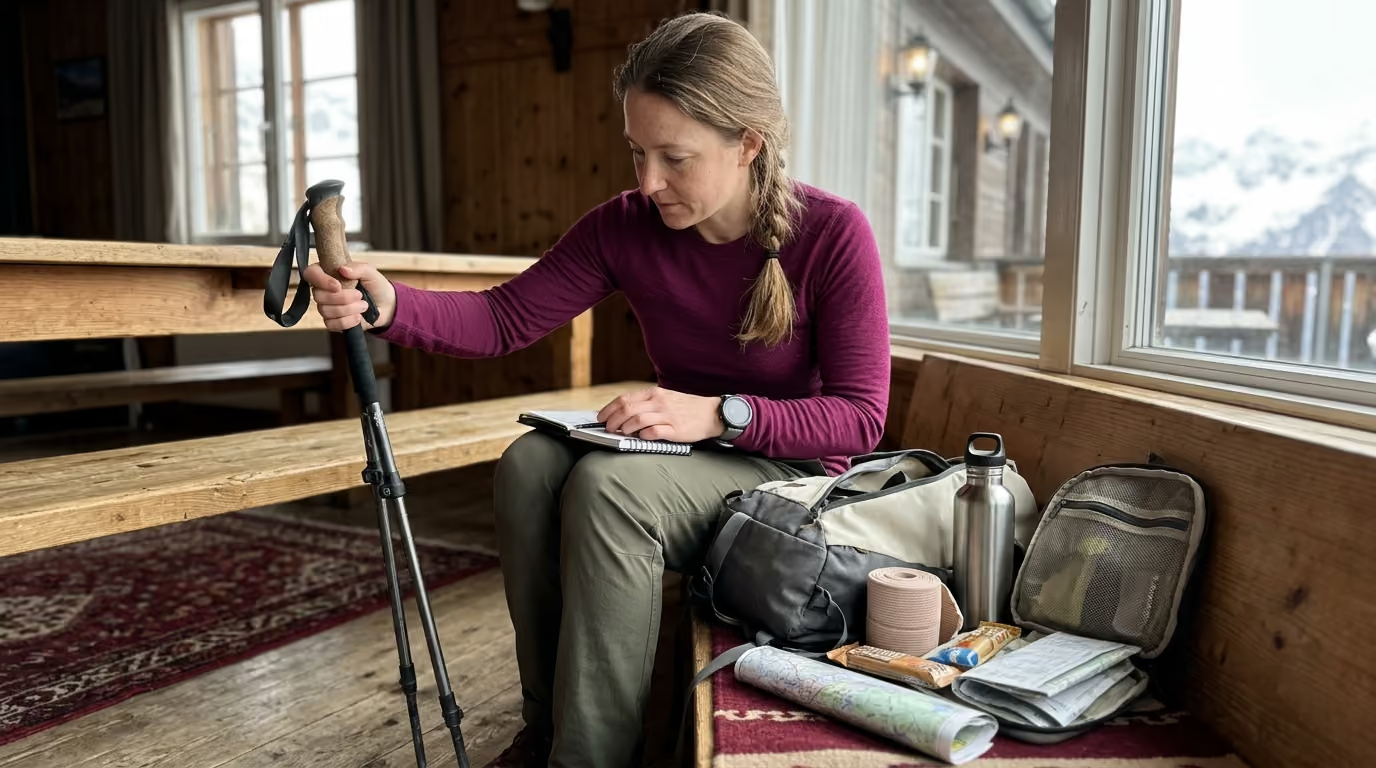
To manage these compounding stressors, build a structured trip load budget before departure. Evaluate each day of your itinerary across several key variables:
If an itinerary features three consecutive high-load days, insert a planned deloading day. A deload day involves lower mileage, minimal technical demand, and active recovery. This strategic pause allows microtrauma in tendons and muscles to resolve before functional breakdown occurs.
Footwear selection for active travel is frequently oversimplified. Many travelers believe that the stiffest, most heavily cushioned boot offers the greatest protection. However, rigid footwear can restrict natural ankle mechanics, increase knee strain, and cause severe blister problems if not matched to the terrain and your personal biomechanics.
Footwear must balance four distinct factors: traction, protection, stability, and ventilation. On rocky, uneven trails with a heavy pack, a structured trail shoe or supportive hiking boot provides essential stability. For urban walking tours covering miles of hard pavement, a flexible, well-cushioned road or walking shoe reduces joint impact far better than a rigid hiking boot.
Never introduce brand-new footwear during a demanding trip. All shoes, socks, and custom orthotics must be thoroughly tested across real-world conditions weeks before departure. This testing should include prolonged walks, steep downhill descents, and hot weather to identify friction points and pressure zones early.
A common failure mode is ignoring how feet change during travel. Feet naturally swell by a half-size or more during long flights, in hot climates, or after hours of continuous walking. Footwear that fits snugly at home can become restrictive and painful by day three of an active journey. Ensure your travel footwear has sufficient room in the toe box to accommodate natural foot splay and swelling.
Friction blisters are among the most common conditions that can cut a trip short. A systematic review on outdoor injuries reported blister incidence rates between 54% and 86% among long-distance hikers and backpackers. Blisters alter your walking gait, causing compensatory loading that rapidly triggers secondary knee, hip, or lower-back pain.
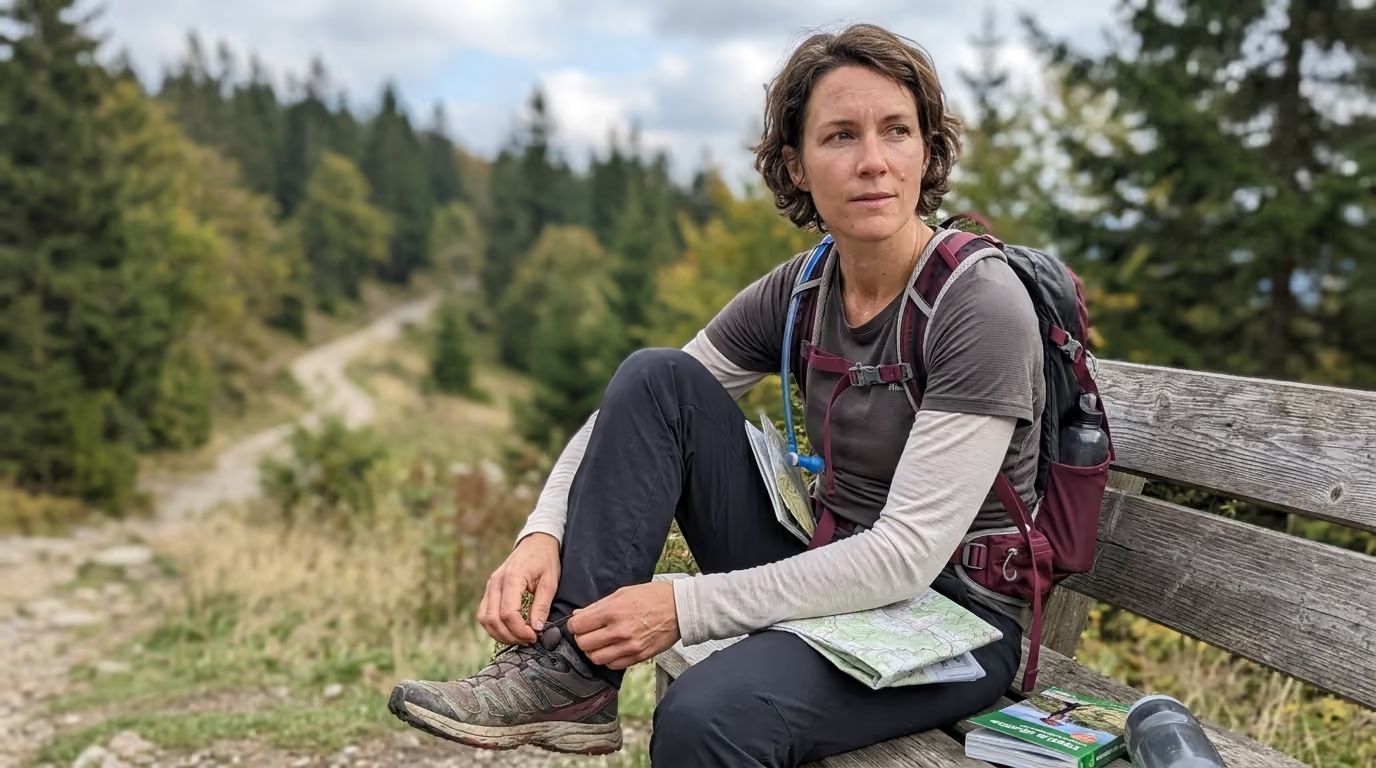
While clinical studies show mixed results for specific antiperspirant sprays or specialized sock materials, proactive skin management remains vital. The moment you feel a localized "hot spot" or friction point, stop immediately. Do not wait until the end of the trail or the scheduled rest break to address the issue.
Follow this practical protocol for foot care and blister mitigation:
Be mindful of the tradeoff between waterproof footwear and breathability. Shoes with waterproof membranes are valuable in continuous cold rain or wet snow. However, in warm or arid environments, they trap sweat and heat against the skin. This constant moisture softens the outer layers of skin, significantly increasing your risk of deep friction blisters.
For decades, static stretching was promoted as the ultimate warm-up to prevent athletic injury. Modern sports science paints a much more nuanced picture. Holding static stretches before unaccustomed physical activity does little to protect tendons from acute strains and can temporarily reduce muscular power output.
To prepare the body for demanding activity, replace static stretching with an intentional, dynamic warm-up. A dynamic warm-up serves three critical physiological functions:
Dynamic warm-ups also serve as a daily readiness screen. The first five minutes of movement tell you how your joints, tendons, and muscles are tolerating the cumulative load of your trip. If a warm-up reveals sharp joint pain, marked weakness, or poor coordination, you receive an early warning to adjust the day's intensity.
Tailor your pre-activity preparation directly to your sport. Before a day of hiking or city walking, perform three to five minutes of easy walking. Follow this with controlled ankle rotations, twenty bodyweight calf raises, ten deep bodyweight squats, and ten controlled step-downs per leg on a curb or step. This sequence activates the stabilizing muscles of the lower leg and hips while preparing the knees for braking forces.
Before cycling, spend five minutes spinning in an easy gear at a high cadence on flat terrain. Practice smooth, progressive braking with both hands and perform gentle seated torso twists to release spinal tension.
Before kayaking, canoeing, or paddleboarding, focus on the upper body and core. Perform arm circles, controlled shoulder internal and external rotations, standing torso rotations, and ten unweighted hip hinges. This routine wakes up the rotators of the shoulder and engages the core musculature, preventing overreliance on the smaller muscles of the arms during paddling.
Use this warm-up routine as a practical decision tool. If you notice any of the following warning signs during movement preparation, modify or delay your activity:
Active travel often involves participating in sports you do not practice regularly at home. Unfamiliar movement patterns, combined with changing outdoor environments, create distinct injury mechanisms that require specific tactical adjustments.
The vast majority of hiking injuries occur during descent rather than ascent. While climbing challenges cardiovascular endurance, descending places heavy eccentric braking loads on the quadriceps, patellar tendons, and knees. Fatigue late in the day degrades foot-placement accuracy, significantly increasing the likelihood of an ankle sprain or slip.
To protect your joints on steep downhill trails, shorten your stride length and increase your step cadence. Keep your center of mass slightly forward over your feet rather than leaning backward onto your heels. Bend your knees slightly on every foot strike to allow the musculature to absorb impact rather than passing the force directly into the joint capsule.
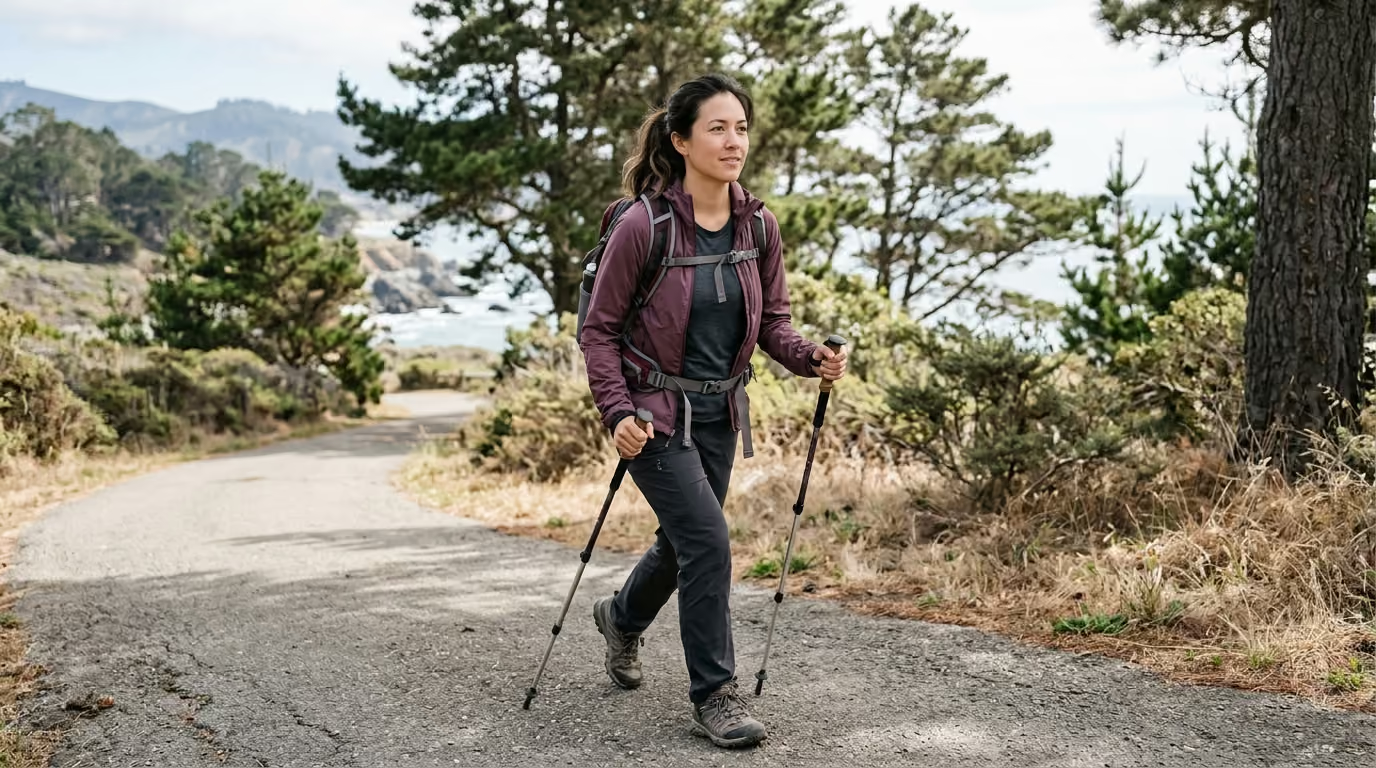
Trekking poles provide immense support for joint health during prolonged walking. Observational research in long-distance hikers shows that using trekking poles or walking sticks is associated with fewer self-reported musculoskeletal complaints. Poles distribute mechanical forces into the upper body and provide an extra point of contact on loose gravel, wet rocks, and muddy descents.
Renting a bicycle introduces several equipment variables. A poorly fitted bicycle can cause acute knee pain, lower-back spasm, or severe neck strain within hours. Unfamiliar brake setups can lead to loss of control on fast descents.
According to guidance from the Centers for Disease Control and Prevention, properly fitted bicycle helmets reduce the risk of traumatic brain and head injuries during a crash. Data linked to CDC evaluations demonstrates that bicycle helmet policies are associated with a 20% to 55% reduction in bicycle-related head injuries. Never ride a bicycle without a securely fastened, undamaged helmet that sits level across your forehead.
Before rolling away from a rental shop, conduct a systematic five-point mechanical check:
Be especially careful with electric bicycles. E-bikes allow riders to reach higher speeds with less physical effort, but they weigh significantly more than traditional bikes. This added weight lengthens your braking distance and demands greater upper-body control on tight corners and steep descents.
Water activities require respecting the marine environment rather than just focusing on the sport itself. The World Health Organization reported more than 300,000 drowning deaths globally in 2021, emphasizing that drowning remains a major cause of preventable mortality.
A substantial portion of water-related incidents occur among competent swimmers who underestimate currents, wind, cold water shock, or fatigue. According to a 2024 WHO report, mandatory life-jacket regulations for recreational boating exist in only 66% of countries worldwide. Do not rely on local operators to enforce basic safety standards.
Always wear an approved, properly fitted personal flotation device when kayaking, rafting, or stand-up paddleboarding, regardless of surface conditions. Cold water rapidly saps physical strength and impairs finger dexterity, making it surprisingly difficult to climb back onto an overturned board or boat.
Establish clear operational boundaries before entering the water:
Environmental stressors amplify physical fatigue and degrade physical coordination. When hiking or cycling in hot climates, your body directs substantial blood flow to the skin for cooling, which reduces oxygen delivery to working muscles. Follow clinical guidance from the Wilderness Medical Society by pacing your output, seeking shade, and monitoring hydration rather than relying on sheer willpower.
Altitude presents another physiological challenge. The CDC Yellow Book advises travelers against ascending from low altitude to a sleeping altitude above 2,750 meters (approximately 9,000 feet) in a single day. Above 3,000 meters, limit the increase in your sleeping altitude to no more than 500 meters per day, and add a dedicated acclimatization day for every 1,000 meters of elevation gain.
Physical conditioning at sea level does not protect you from altitude illness. Keep physical exertion mild during your first 48 hours at high altitude, and avoid alcohol during this initial window. Never ascend to a higher sleeping elevation if you are experiencing symptoms of acute mountain sickness, such as persistent headache, nausea, unusual fatigue, or dizziness. If symptoms worsen despite rest, immediate descent to a lower altitude is the most reliable medical treatment.
Widespread myths about training and recovery lead many active adults to make preventable mistakes. Correcting these assumptions will help you build a safer, more resilient itinerary.
Cardiovascular fitness does not equal tissue resilience. A marathon runner or indoor cycling enthusiast possesses an efficient aerobic engine. However, their joints, bones, and stabilizing tendons may lack the specific conditioning required for eight hours of carrying a pack down uneven mountain trails. General fitness must always be supported by movement-specific tissue preparation.
Overly rigid boots do not automatically prevent lower-limb injuries. While structured boots provide mechanical support on rugged terrain, they can shift braking forces upward into the knee and hip joints. If footwear is too heavy or stiff for the terrain, it accelerates muscular fatigue in the lower leg, increasing the likelihood of a trip or stumble.
Holding prolonged static stretches before demanding movement does not reduce injury rates and may temporarily reduce muscle responsiveness. As highlighted in our guides to performance and fitness, active warm-ups featuring dynamic mobility and progressive movement rehearsals prepare tissues for load far more effectively than static stretching.
A glassy lake or calm bay can create a false sense of security. Offshore winds, cold water temperatures, subsurface currents, and sudden fatigue can quickly turn an easy paddle into an emergency. Calm water should be treated with the same safety discipline, flotation gear, and communication planning as open ocean swells.
Ignoring progressive joint or tendon pain during a multi-day trip is a recipe for serious injury. Differentiating between normal exertional fatigue and warning pain is a vital travel skill. Pain that alters your natural gait, sharpens during movement, causes joint swelling, or persists after rest demands immediate route modification or medical evaluation.
You do not need to overhaul your entire lifestyle or spend hours in the gym every day to build physical durability for travel. Focusing on a minimal effective dose of movement-specific preparation will deliver substantial injury protection.
Prioritize three foundational exercises twice a week for four to six weeks leading up to your departure:
Combine this targeted strength work with progressive walking volume. If your vacation itinerary involves walking 15,000 steps a day, do not remain at a sedentary baseline of 4,000 steps until the day you fly. Gradually build your daily baseline by 1,000 to 1,500 steps per week in the month leading up to your trip, using the exact footwear and socks you plan to pack.
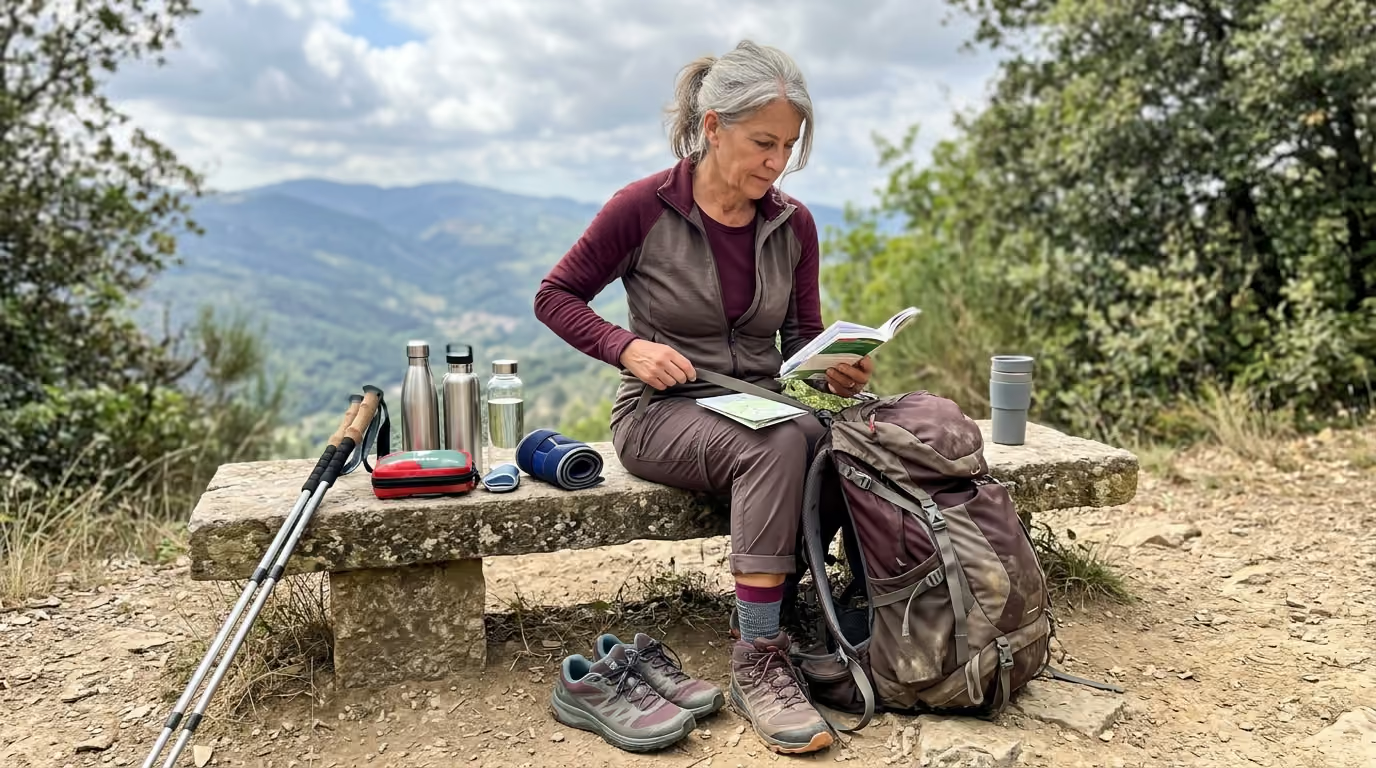
When packing, make room for a few lightweight, high-impact items that can save an active itinerary:
The physiological stress of getting to your destination directly impacts your injury susceptibility on day one. Long-haul flights, prolonged car rides, and significant time-zone shifts leave the musculoskeletal system stiff, dehydrated, and poorly coordinated.
Sitting for hours in compressed airplane seats shortens the hip flexors, reduces blood circulation in the lower legs, and causes deep spinal stiffness. Rushing straight from an international red-eye flight into a strenuous hike or aggressive cycling tour dramatically increases your risk of acute muscle strains and joint sprains.
Mitigate travel stiffness during transit by standing and walking the aisle every two hours during long flights. Perform seated ankle pumps, seated knee extensions, and gentle glute squeezes to encourage venous blood flow. Drink plenty of water during transit, as the low humidity of aircraft cabins accelerates dehydration, making connective tissues less pliable and more prone to irritation.
When building your itinerary, treat travel days as structural transition windows. Dedicate your first afternoon on the ground to active recovery, light mobility, and local exploration rather than max-effort physical excursions.
Integrating targeted strategies from our recovery and sleep guides can help reset your circadian rhythm, restore restorative sleep stages, and clear systemic fatigue before you tackle technical terrain. Prioritizing seven to eight hours of quality sleep during the first two nights abroad significantly improves reaction time, balance, and tissue repair throughout the rest of your trip.
The broader scientific and medical communities share a clear consensus on injury prevention in outdoor and travel settings. Research consistently supports five foundational principles:
Applying these consensus principles ensures that your enthusiasm for adventure is matched by a sound, science-backed risk management strategy.
The most critical safety tool you carry is an objective, pre-established turnaround plan. Human psychology is vulnerable to the "sunk-cost fallacy" on vacation. When you have spent significant money, planned for months, and traveled thousands of miles, there is intense pressure to push through unsafe conditions, severe fatigue, or progressive pain.
To protect yourself and your travel companions, define strict "go/no-go" decision points before leaving your hotel or base camp each morning. An objective decision point eliminates emotional bargaining when conditions deteriorate in the field.
Establish firm operational boundaries for every excursion:
Ensure you carry essential contingency documentation on your person at all times, rather than leaving it in your hotel room luggage. The CDC Yellow Book advises travelers to keep their identification, insurance cards, emergency contact details, and critical medical history in a secure, waterproof pocket.
Confirm that your travel insurance policy explicitly covers the specific activities on your itinerary. Standard travel insurance often excludes high-altitude trekking above 3,000 meters, white-water sports, mountain biking, or remote search-and-rescue evacuations. Review your policy fine print before departure, and verify local emergency phone numbers for the specific regions you are visiting.
Turning around is not a failure of will. Making an intentional decision to modify a route, deload a demanding day, or retreat from worsening conditions is the hallmark of an experienced, capable traveler who intends to stay active for decades to come.
If you develop acute knee pain while descending, stop immediately to adjust your equipment and mechanics. Shorten your stride length, slow your pace, and increase your use of trekking poles to transfer load into your upper body. If carrying a heavy pack, unclip the hip belt momentarily to adjust the shoulder straps, ensuring the weight is carried close to your spine. You can also lace your footwear more securely over the instep to prevent your toes from sliding forward into the front of the shoe.
Do not ignore the area. Stop in a safe, dry location and remove your shoe and sock. Clean the area gently with an antiseptic wipe and let it dry. If the blister is intact, do not pop it, as the skin roof provides a sterile biological barrier against infection. Cover the blister with a hydrocolloid bandage or a smooth layer of blister tape extending at least an inch beyond the edges of the friction zone, ensuring there are no wrinkles in your sock when putting your shoe back on.
E-bikes offer fantastic accessibility, allowing riders to conquer steep climbs and cover greater distances with less cardiovascular strain. However, they carry specific mechanical risks. E-bikes are substantially heavier than standard bicycles and accelerate rapidly, which can catch riders off guard. This extra mass increases stopping distances and requires greater upper-body control during hard braking. Riders should always wear a properly fitted helmet, practice low-speed braking in a safe area, and maintain conservative speeds on descents.
For a two-week itinerary featuring demanding physical activities, aim to schedule at least two to three dedicated low-load or active recovery days. Placing an easy day after every two or three consecutive days of high-volume walking, hiking, or cycling allows microtrauma in tendons and muscles to repair. Use these days for leisurely cultural tours, gentle mobility work, or resting by the water, ensuring you maintain high energy and physical capability throughout the entire journey.
Stay connected for research and practical guidance on longevity, strength, recovery, energy and active living. New ideas to help you stay capable, curious and ready for more.


Explore practical guidance on strength, recovery, energy, travel and longevity for a life that stays active.
explore the Blog