
Aging tendons do not recover through total rest as many assume, but instead rebuild resilience through structured progressive loading to handle athletic demands.





You step off a long flight, head straight to the resort tennis court or the mountain trail, and feel a sharp ache just below your kneecap or behind your heel. You might assume you pulled a muscle or simply slept awkwardly in transit. Within forty-eight hours, the familiar morning stiffness sets in, turning the first few steps out of bed into a cautious shuffle.
This scenario is common for active adults over forty. Tendons are living, dynamic tissues that connect muscle to bone. They adapt continuously to the physical demands placed upon them, but their margin for error narrows as the decades advance.
A sudden spike in activity after a period of lower volume often triggers tendinopathy. Tendons do not need absolute rest to recover. Instead, they require structured, progressive mechanical loading that systematically rebuilds tissue capacity.
By understanding how connective tissue responds to force, you can protect your joint health and maintain your physical freedom. This guide outlines the science of tendon remodeling, practical pain monitoring rules, and specific loading strategies for the most commonly stressed tissues in the body.
A tendon is far more than a passive biological rope. It is a highly specialized, load-responsive structure composed primarily of parallel collagen fibrils arranged within an extracellular matrix. Tendons transmit muscular force to bones, store and return elastic energy during movement, and absorb shock during deceleration.
To understand how to train these tissues, we must look at how they react to physical force. Mechanical tension stimulates cellular signaling pathways within tendon fibroblasts, prompting the synthesis of new collagen and remodeling of the extracellular matrix. Research on tendon remodeling shows that mechanical loading increases both tendon stiffness and material modulus while producing small increases in tendon cross-sectional area over time.
Tendon stiffness refers to the amount of force required to produce a specific amount of tissue elongation. Young's modulus describes the material stiffness of the tendon tissue itself, regardless of its thickness. A stiffer tendon transmits force more quickly and efficiently from the contracting muscle to the skeletal frame, improving athletic output and joint stability.
Tendon capacity is multifaceted. It includes peak force transmission, total volume tolerance, loading rate, and elastic energy storage. A runner might possess the strength to perform a heavy, slow leg press without discomfort. That same runner may lack the capacity to absorb the high-speed, spring-like loads of downhill trail running.
Adaptation occurs across three distinct domains that do not always move in unison:
Symptom relief often arrives before structural remodeling is complete. Resuming high-impact sports the moment pain subsides is one of the most common reasons active adults experience recurring flare-ups.
Aging brings structural and biochemical changes to connective tissues throughout the human body. Tendon modulus and ultimate tensile strength gradually decline over time, reducing the cushion between your daily physical capacity and the demands of intense sport.
Accumulated lifestyle factors and changes in vascularity also influence tissue health. A systematic review on shoulder health revealed that being over age fifty is associated with an odds ratio of 3.31 for developing rotator cuff tendinopathy. Metabolic health plays a significant role as well, with diabetes carrying an odds ratio of 2.24 for rotator cuff issues.
Tendon vulnerabilities vary across different joints and activities. Non-sport-related Achilles tendon ruptures increase with age, showing an incidence peak between ages fifty and fifty-nine. Repetitive strain from occupational tasks, racquet sports, or sudden training spikes can quickly overwhelm an underprepared tendon.
Complete rest accelerates these declines. Research demonstrates that immobilization significantly decreases tendon collagen synthesis in older adults. When you remove mechanical load entirely, the tendon loses stiffness, the surrounding muscle atrophies, and overall tissue capacity drops rapidly.
Older connective tissue retains an impressive ability to adapt when exposed to the right stimulus. A landmark study published in BMC Geriatrics examined older adults undergoing structured resistance training. The researchers discovered that heavy-load resistance training produced superior improvements in patellar tendon mechanical stiffness compared to moderate-load training or no exercise.
Tendons over forty do not require fragile handling. They require intentional, progressively heavy mechanical stimulation combined with adequate recovery windows. You can build resilient connective tissue well into your seventies by respecting biological timelines and applying force methodically.
Rebuilding or strengthening a tendon requires a systematic progression through distinct phases of force exposure. Moving too quickly to explosive, elastic movements before establishing a foundation of baseline strength is a primary cause of training setbacks.
Isometric contractions occur when a muscle generates force without changing length or moving the joint. This loading style provides a controlled entry point when dynamic joint movement is painful or irritable.
Holding a static contraction against resistance creates sustained mechanical tension across the tendon. In patellar tendinopathy protocols, clinicians often utilize five sets of 45-second isometric holds at approximately seventy percent of maximal voluntary effort. Isometric holds allow you to introduce meaningful force to the muscle-tendon unit without the shear forces associated with joint movement.
Isotonic training involves dynamic movement through concentric lifting and eccentric lowering phases. Controlled isotonic exercise builds muscular strength, improves tendon stiffness, and increases tissue modulus across the entire active range of motion.
A standard heavy slow resistance protocol begins with manageable loads around a fifteen-repetition maximum. Over several weeks, you gradually increase the resistance toward a heavier six-repetition maximum load. Lifting and lowering at a slow tempo, such as three seconds up and three seconds down, eliminates momentum and ensures continuous mechanical tension.
A randomized controlled trial conducted by Beyer and colleagues compared heavy slow resistance training against traditional eccentric training for Achilles tendinopathy. Both methods produced significant, lasting improvements in pain and function that were maintained at fifty-two weeks. Heavy slow resistance resulted in ninety-two percent participant compliance compared to seventy-eight percent for eccentric protocols, largely because it requires fewer total sessions per week.
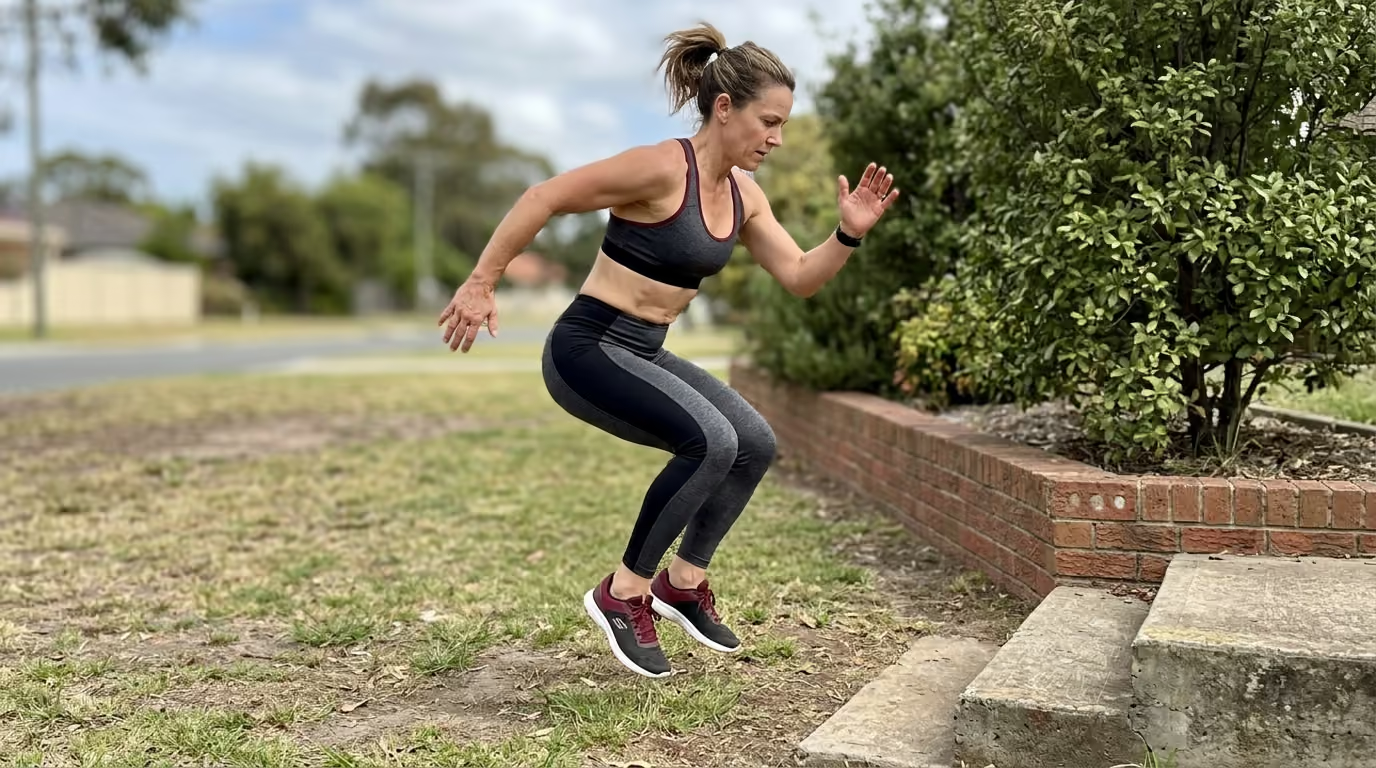
Energy storage loading involves rapid stretch-shortening cycles where the tendon acts like a biological spring. Activities such as running, jumping, skipping, and rapid direction changes require the Achilles and patellar tendons to store kinetic energy and release it instantly.
Slow resistance training alone does not fully prepare connective tissue for these high-velocity forces. Plyometric work should be introduced only after basic strength is established and daily tasks are pain-free.
Progression should always prioritize volume before intensity. You might begin with bilateral low-amplitude ankle hops on a forgiving surface, progress to single-leg hops, and eventually advance to bounding, sprinting, or sport-specific agility drills.
Pain is an imperfect indicator of tissue damage. Tendon pain often behaves unpredictably, warming up and decreasing during physical activity, only to flare up hours later.
Relying entirely on how a tendon feels during an exercise session can lead to significant overload. A more reliable method is the 24-hour response model, which assesses how the tissue reacts the following morning.
According to clinical guidelines and frameworks from the United States Olympic and Paralympic Committee, some discomfort during exercise is acceptable if it remains stable and resolves quickly. Pain up to a moderate level, roughly three to five on a ten-point scale, is generally permissible during rehabilitation sessions.
The critical variable is what happens twenty-four hours later. If morning stiffness, resting ache, or a standardized load test returns to baseline within a day, the applied load was within your current envelope of function. If symptoms remain elevated the next morning, the previous day's training volume or intensity exceeded your current capacity.
Use a simple, repeatable daily test to measure your tendon's readiness. For the Achilles tendon, this might be a single-leg calf raise on a flat floor. For the patellar tendon, use a single-leg decline squat, and for the rotator cuff, use an unweighted external rotation hold. Tracking this response keeps your training objective and prevents emotional overreactions to normal fluctuations in sensation.
Different tendons experience distinct mechanical stresses based on joint architecture and movement demands. Applying a targeted approach ensures you address the specific functional requirements of each tissue.
The Achilles tendon must handle vertical forces up to eight times body weight during running and jumping. It contains contributions from two major calf muscles: the superficial gastrocnemius, which crosses the knee, and the deeper soleus, which operates only across the ankle.
A complete Achilles strengthening program must target both muscles independently. Straight-knee calf raises emphasize the gastrocnemius, while bent-knee calf raises shift the primary workload to the soleus.
For insertional Achilles issues, where discomfort occurs directly on the heel bone, avoid dropping your heel below the level of the step during early phases. Compressing the tendon insertion against the calcaneus can irritate the tissue. Perform your raises on flat ground until baseline tolerance improves.
The patellar tendon connects the bottom of the kneecap to the shinbone, playing an essential role in knee extension and deceleration. It experiences substantial tensile stress during deep squatting, jumping, and downhill hiking.
Isometric Spanish squats or leg-extension machine holds provide effective early-stage loading. Loop a heavy resistance band behind your knees, anchor it to a sturdy post, and sit back into a shallow squat with vertical shins.
Progressing your knee flexion angle increases the mechanical demand on the patellar tendon. Move through partial ranges of motion first before loading deeply into knee flexion under heavy resistance.
The rotator cuff consists of four stabilizing muscles that center the humeral head within the shoulder socket. Unlike the thick tendons of the lower body, rotator cuff tendons frequently suffer from sustained compression when the arm is positioned at extreme overhead angles.
Shoulder tendon rehabilitation must integrate the rotator cuff with the muscles of the upper back and shoulder blade. The 2025 rotator cuff clinical practice guidelines emphasize building capacity across the entire shoulder complex rather than relying on single, isolated rotator cuff exercises.
Incorporate loaded carries into your regular progressive physical performance resources to build shoulder stability and improve grip strength without placing excessive shear stress on the rotator cuff.
Lateral elbow issues, often called tennis elbow, involve the common extensor tendon originating at the lateral epicondyle. Medial elbow issues involve the common flexor tendon on the inside of the joint.
These problems frequently stem from sudden increases in gripping, computer work, or racquet sports. The forearm muscles are small, meaning they fatigue rapidly when exposed to repetitive tasks without adequate rest.
Strengthening the muscles of the upper back, rotator cuff, and trunk reduces the compensatory mechanical load placed on the elbow during throwing and striking motions.
The proximal hamstring tendon attaches to the ischial tuberosity, commonly known as the sit bone. Gluteal tendinopathy affects the tendons inserting onto the greater trochanter on the outside of the hip.
Both tendons are sensitive to compressive loads. The proximal hamstring is compressed against the pelvis during deep hip flexion, such as deep deadlifts or long-stride running. Gluteal tendons are compressed when the leg crosses the midline of the body, such as sitting with crossed legs or standing with a dropped hip.
For proximal hamstring tendons, begin with isometric long-lever glute bridges on the floor. Progress to slow, straight-leg Romanian deadlifts through a comfortable range of motion, avoiding deep hip flexion early on.
For gluteal tendons, utilize isometric side-lying hip abduction holds or standing wall presses. Progress to controlled, heavy slow step-ups and lateral band walks while maintaining a level pelvis to avoid compressive hip adduction.
Last winter in Chamonix, I noticed something striking among the active adults on the mountain. It was not the altitude that forced my peers into the lodge by noon. It was a lack of rotational strength, poor recovery from the flight, and irritated tendons struggling with the physical demands of deep powder.
We spend so much time debating the perfect supplement stack, yet we neglect the basic foundational strength required to actually enjoy our travels. That trip changed how I approach fitness. I stopped training for aesthetics and started training exclusively for capability.
Physical preparation for active mountain travel requires robust connective tissue. Descending a rocky alpine ridge places immense eccentric deceleration stress on the patellar tendon and quadriceps. Every downhill step forces the tendon to absorb up to four times your body weight while stabilizing an unstable ankle.
If you have spent the previous six months sitting at a desk with minimal lower-body resistance training, your tendon capacity will be insufficient for five consecutive days of hiking in the Alps or the Rockies. The resulting tissue irritation can cut an adventure short.
To prepare for demanding physical travel, build a training runway of at least eight to twelve weeks. Emphasize heavy slow squats, decline squats, and single-leg calf work twice per week.
When you arrive at your destination after long-haul flights, avoid jumping directly into maximal physical exertion. Prolonged sitting reduces muscular activation and alters joint fluid dynamics. Spend your first afternoon taking a brisk flat walk, performing bodyweight isometric holds, and hydrating thoroughly before tackling steep terrain or high-impact athletics.
Prioritizing sleep quality, hydration, and nutrition while on the road supports connective tissue recovery. Incorporating systemic recovery protocols ensures that your connective tissues adapt positively to consecutive days of demanding physical activity.
Outdated beliefs regarding tendon rehabilitation often lead active adults toward ineffective treatments or unnecessary physical restriction.
Rest may quiet acute symptoms, but it simultaneously decreases the tendon's load tolerance. When you resume your sport after weeks of inactivity, the tendon is less capable than when the pain first began, virtually guaranteeing a relapse. Instead of resting completely, reduce the aggravating activity and replace it with pain-tolerable resistance training.
For decades, isolated eccentric training was viewed as the gold standard for tendon rehabilitation. Modern sports medicine demonstrates that heavy slow resistance training, which includes both lifting and lowering phases, produces equivalent long-term clinical and structural outcomes. The essential stimulus is progressive mechanical tension, not the muscle contraction style alone.
Many active individuals believe that any pain during training indicates structural injury. Research in tendon rehabilitation confirms that mild discomfort during exercise is entirely safe, provided the 24-hour response remains stable. Tendon pain is an alarm system indicating current load sensitivity, not an acute structural failure.
Magnetic resonance imaging and ultrasound scans often reveal tendon thickening, structural changes, or partial tears in completely asymptomatic, high-performing athletes. Structural changes visible on a scan do not correlate perfectly with pain levels or functional capability. Progression should be guided by your physical strength, movement tolerance, and load capacity rather than scan results alone.
High-repetition, light-weight exercise builds muscular endurance, but it does not provide the mechanical strain required to increase tendon stiffness or modulus. Tendons require substantial mechanical loads, generally above seventy percent of maximum capacity, to trigger meaningful structural remodeling. Older adults must progress cautiously, but lifting heavier weights with proper technique is essential for building resilient connective tissue.
You do not need to spend hours in the gym every day to build resilient connective tissue. Tendons respond best to focused, high-quality mechanical stimulation followed by adequate recovery windows.
Collagen turnover and cellular signaling remain elevated for up to seventy-two hours after a heavy resistance training session. Training a specific tendon group two to three times per week provides an optimal stimulus for tissue remodeling while allowing adequate recovery.
A streamlined, highly effective tendon maintenance routine can easily integrate into your broader targeted fitness and strength routines. Perform this minimal effective dose routine twice weekly:
Focus on one practical progression at a time. Increase the external load slightly from week to week while keeping your movement tempo slow, controlled, and consistent. This minimal commitment preserves joint integrity, strengthens connective tissue, and keeps you ready for any spontaneous outdoor adventure.
Review our library of comprehensive longevity resources to learn more about maintaining peak physical capacity and structural resilience throughout every decade of life.
Returning to running, court sports, or skiing after a tendon flare-up requires an objective, criteria-based approach. Progressing based on a predetermined calendar schedule often leads to premature loading and symptom recurrence.
Before introducing running, jumping, or fast agility work, ensure you meet the following objective physical benchmarks:
Transition through the return-to-sport continuum systematically:
Never increase training volume and training intensity in the same week. If you are adding downhill speed to your trail runs, maintain a stable weekly mileage. If you are increasing your weekly running distance, keep the terrain flat and the pace conversational. Manipulating one training variable at a time allows you to identify your biological thresholds and adjust your program intelligently.
The international sports medicine community shares broad consensus regarding the management of tendon health in active adults:
While progressive loading is the gold standard for managing routine tendon overuse, certain clinical situations warrant professional medical evaluation.
Stop self-directed exercise and consult a sports medicine physician or physical therapist if you experience any of the following warning signs:
Differentiating between chronic tendinopathy, an acute partial tear, or full-thickness structural disruption ensures you receive the correct clinical support and avoid complicating an acute injury.
Revisit this guide whenever you plan a significant change in your physical training, such as preparing for a marathon, booking a high-altitude trekking trip, or returning to a seasonal sport after months away. It serves as an objective reference whenever you notice the first signs of joint stiffness or localized tendon discomfort.
Consistent, progressive mechanical loading remains the most effective tool for maintaining physical capability, joint comfort, and absolute independence across your lifespan.
Stay connected for research and practical guidance on longevity, strength, recovery, energy and active living. New ideas to help you stay capable, curious and ready for more.


Explore practical guidance on strength, recovery, energy, travel and longevity for a life that stays active.
explore the Blog