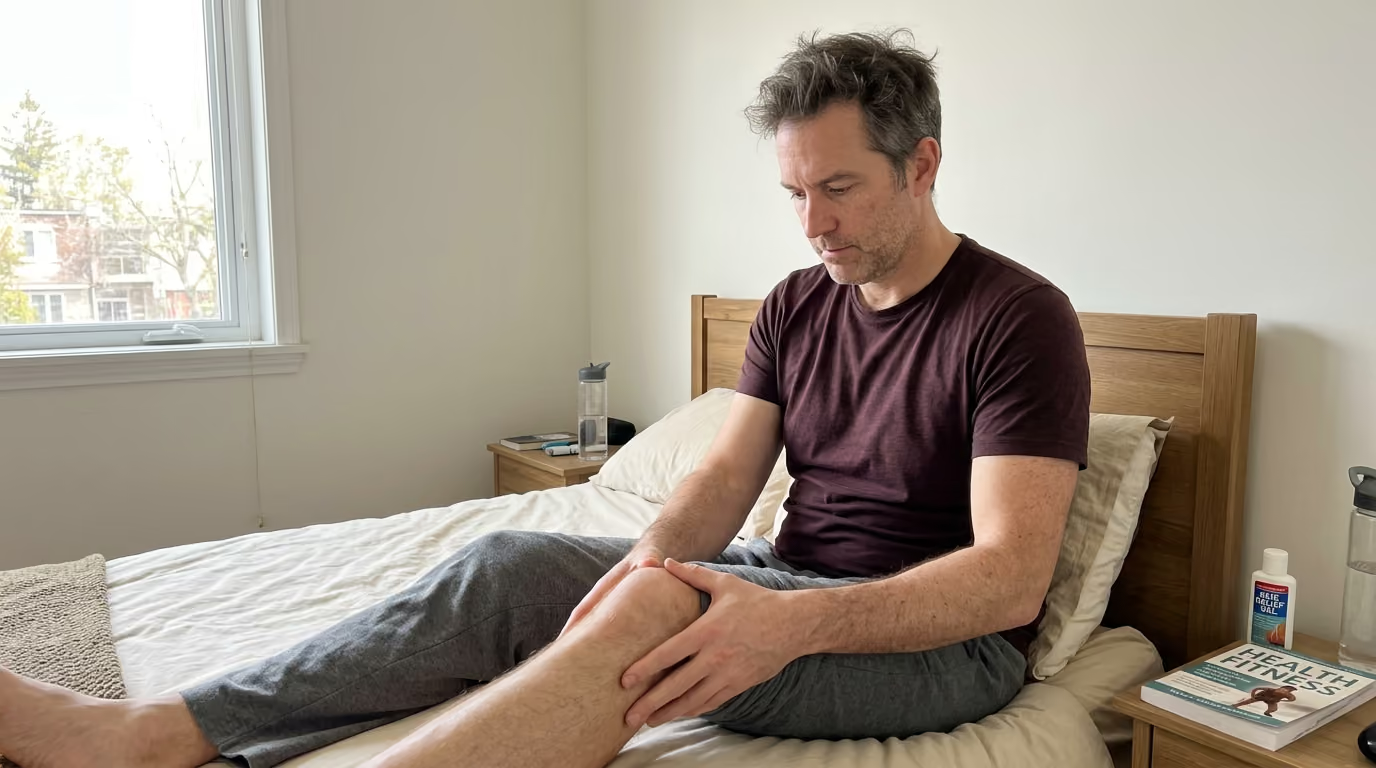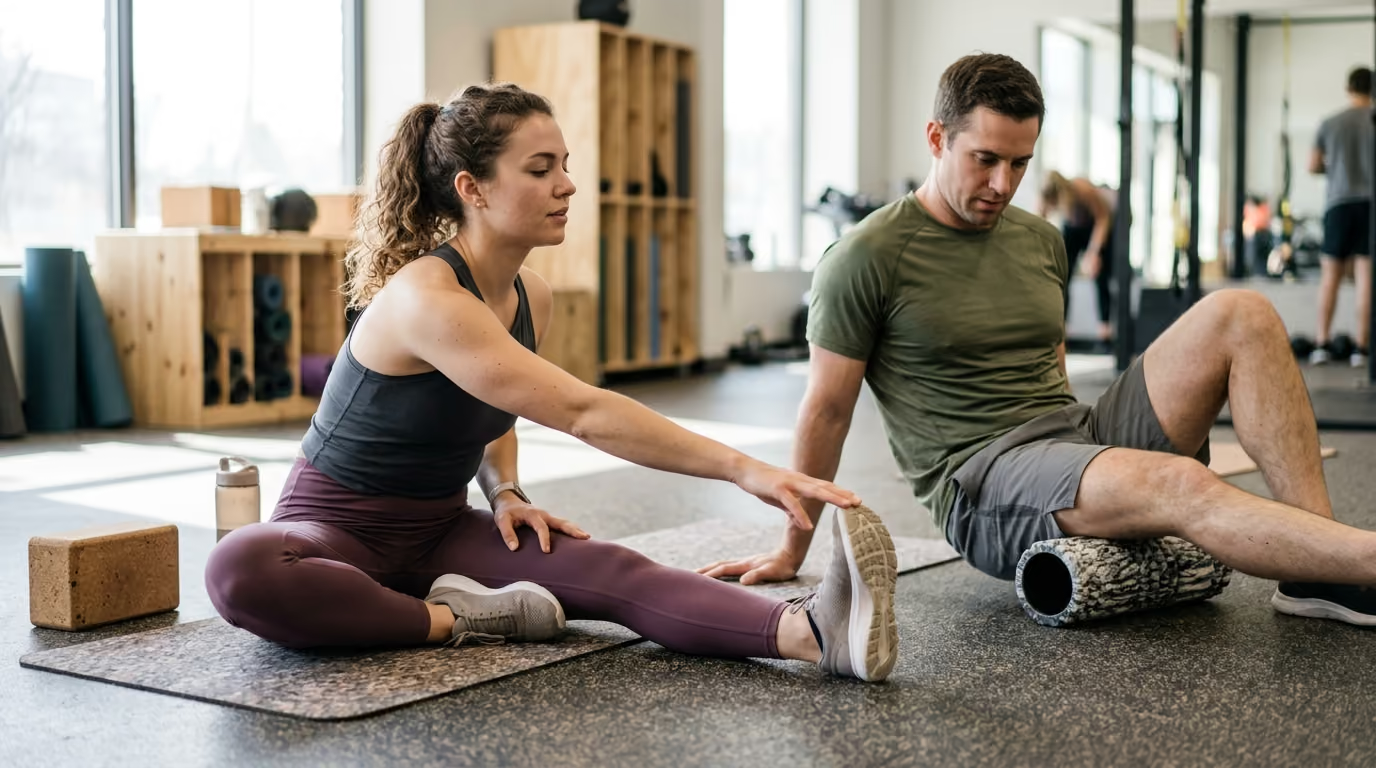

Optimal athletic recovery and joint readiness require matching static stretching, foam rolling, and loaded mobility drills to specific physical performance.





Holding a 30-second hamstring stretch after a brutal workout feels productive. For decades, athletes were told that this simple ritual prevents soreness, speeds up muscle repair, and protects against injury.
The research tells a very different story. Post-exercise static stretching does almost nothing to prevent delayed-onset muscle soreness, nor does it accelerate structural tissue healing.
Yet stretching is far from useless. The central mistake in modern fitness culture is treating static stretching, dynamic mobility drills, loaded movement, foam rolling, and massage as interchangeable solutions for recovery. Each of these tools creates a distinct neurological, mechanical, or sensory response in the body. When you apply the wrong method to the wrong problem, you waste time and can even blunt physical performance.
Recovery is not a single physiological state. It encompasses restoring joint range of motion, reducing perceived muscle tenderness, regaining muscular force output, and calming the central nervous system.
To choose the right tool, you must ask five specific questions:
This guide breaks down the scientific realities of each modality. You will learn how to match each practice to your exact physical goals, whether you are preparing for a ski trip, regaining mobility after travel, or building lasting strength after 40.
To make sense of recovery science, you must first separate flexibility from mobility. Flexibility refers to the total passive range of motion available around a joint when an external force moves you. Mobility is your ability to actively control, stabilize, and produce force throughout that range of motion.
A person may possess substantial passive hip range when lying on a treatment table. If they cannot control that same hip angle during a loaded squat or a sudden trail stumble, that passive flexibility offers little functional value. Usable mobility requires strength, coordination, balance, and motor control at the outer edges of joint movement.
Acute stretching reliably increases passive joint range. A comprehensive 2023 meta-analysis by Konrad and colleagues confirmed that stretching produces a small but real immediate improvement in range of motion compared to resting. However, this immediate looseness comes primarily from altered stretch tolerance and neural sensory modulation. It does not reflect structural tissue lengthening or accelerated cellular repair.
You must also distinguish between symptom modulation and true capacity restoration. When you use a foam roller or receive a sports massage, you alter pain pressure thresholds and downregulate local muscle tone. You feel looser and experience less discomfort.
Modulating symptoms does not mean you have restored your muscular force capacity. A tired muscle with lowered pain sensitivity is still a fatigued muscle. Understanding this distinction prevents you from confusing short-term comfort with full physical restoration.
Different recovery modalities produce wildly different outcomes. Grouping them together under the umbrella of flexibility training creates confusion and poor results.
Static stretching involves placing a target muscle group into an end-range position and holding it without movement for a designated period. It can be passive, using gravity or a strap, or active, using opposing muscle contractions.
The immediate increase in range of motion from static stretching stems from neurological relaxation and an increased tolerance to the sensation of stretch. The muscle tendon unit undergoes short-term viscoelastic deformation, but the mechanical structure of the muscle remains unchanged.
Longer static holds can build lasting flexibility when practiced consistently over weeks. A 2026 comprehensive review noted that static stretching yields moderate flexibility improvements across multi-week training programs.
That same 2026 review observed a small acute performance reduction of roughly 0.88 percent when long static stretches were performed immediately prior to explosive testing. When compared against non-stretching control groups, the overall performance difference was trivial, at roughly minus 0.07 percent. The key variable is duration. Holding a static stretch for longer than 60 seconds right before maximal sprinting, jumping, or heavy lifting temporarily reduces neural drive and tendon stiffness.
Static stretching is best reserved for dedicated flexibility sessions, evening wind-down routines, or targeted correction of chronic joint restrictions away from heavy training. Exploring our in-depth recovery and regeneration guides can help you place these dedicated sessions into your weekly schedule properly.
Dynamic stretching moves joints through an expanding, controlled range of motion using continuous movement patterns. Common examples include walking lunges with an overhead reach, leg swings, hip circles, and inchworms.
This approach serves as an active bridge between a general thermal warm-up and high-output sport. Dynamic drills elevate core temperature, stimulate the nervous system, and rehearse movement patterns while progressively widening your active range.
A 2025 meta-analysis confirmed that dynamic and ballistic stretching significantly enhances acute flexibility, demonstrating a small pooled effect size of approximately 0.372. Dynamic stretching does not induce the neural relaxation or power loss associated with long static holds.
The 2026 review highlighted that dynamic stretching produced an acute performance improvement of roughly 0.55 percent across various athletic tasks. This makes dynamic mobility the premier choice before dynamic sports, strength sessions, and outdoor recreation.
Mobility drills focus on active joint exploration and motor control rather than passive stretching. These drills include controlled articular rotations, end-range isometric holds, positional breathing exercises, and ground-based movement patterns.
The defining characteristic of a true mobility drill is active muscular engagement at joint end-ranges. Instead of letting gravity pull your joint into position, you actively pull yourself into the position using reciprocal muscle groups. This teaches the central nervous system to trust and stabilize that joint angle.
Mobility drills target several physical qualities simultaneously:
These drills require active focus and modest energy expenditure. They should be programmed thoughtfully so they do not add unwanted fatigue before demanding workouts.
Loaded stretching applies external resistance while placing a muscle near its fully lengthened position. Classic examples include Romanian deadlifts with a deep hamstring stretch, deficit split squats, and deep dumbbell chest flyes with a brief pause at the bottom.
Loaded stretching should be categorized as resistance training rather than a passive recovery modality. It places immense mechanical tension on muscle fibers while they are elongated. This mechanical tension triggers structural remodeling, increases muscle fascicle length, and builds robust strength at vulnerable joint angles.
A systematic review examining strength training versus stretching found no significant difference in range of motion improvements between the two modalities. Lifting weights through a full range of motion creates flexibility gains equivalent to conventional stretching.
A meta-analysis on resistance training ranges of motion revealed that training through a full range yields superior strength and muscle growth compared to partial-range training. Effect sizes reached 0.56 for strength and 0.88 for lower-limb muscle growth.
Loaded stretching is a potent developmental tool for building resilient joints. Because it produces high mechanical stress and muscle damage, it should never be treated as a gentle post-workout recovery technique. You can learn more about structuring strength work for lifelong joint health in our physical performance resource section.
Foam rolling uses your own body weight to apply compressive force to soft tissues with a dense foam or composite roller. It is frequently marketed as a method to break up scar tissue or manually lengthen fascia.
Research does not support the claim that foam rolling physically breaks down adhesions or changes fascial structure. The force required to deform dense human fascia exceeds what can be generated by body weight on a roller.
The real benefits of foam rolling are neurological and sensory. Compressing soft tissues stimulates mechanoreceptors, which temporarily downregulates muscle spindle sensitivity and reduces local pain perception.
A meta-analysis examining self-myofascial release confirmed that foam rolling before exercise creates a large immediate increase in joint range of motion, with a standardized effect size of 0.76. It produced a small improvement in sprint performance while leaving jumping and maximum strength unaffected.
When applied after hard exercise, foam rolling creates a modest reduction in perceived muscle soreness. It helps athletes tolerate movement without causing any loss in contractile strength. Rolling each major muscle group for 60 to 90 seconds provides the necessary sensory input without bruising tissue.
Sports massage uses hands-on techniques such as effleurage, kneading, friction, and trigger point compression administered by a trained practitioner. It creates a powerful combination of localized mechanical pressure and systemic parasympathetic relaxation.
The scientific consensus on sports massage is clear regarding what it can and cannot achieve. A rigorous systematic review and meta-analysis covering 29 clinical studies and over 1,000 participants evaluated the direct athletic benefits of massage. The researchers found no evidence that massage improved maximal strength, jump height, sprinting speed, endurance capacity, or fatigue resistance.
The study did confirm statistically significant, small-to-moderate improvements in flexibility and a meaningful reduction in delayed-onset muscle soreness. Massage lowers circulating markers of perceived stress, stimulates blood flow, and shifts the autonomic nervous system into a restorative state.
Massage is exceptionally valuable for symptom management, psychological decompression, and overall comfort. It should be valued as a restorative wellness practice rather than an immediate performance-enhancing intervention.
Movement drills involve low-intensity, rhythmic physical activity performed well below your aerobic or anaerobic threshold. Examples include easy cycling, brisk walking on flat terrain, light swimming, and unloaded movement patterns.
Active recovery relies on the muscular pump action of rhythmic contractions. This promotes venous return, circulates lymphatic fluid, and shuttles nutrients to working tissues without adding structural damage. It also keeps joints moving smoothly through full ranges without taxing the central nervous system.
A systematic review on post-exercise recovery strategies observed that low-intensity exercise does not accelerate the repair of exercise-induced muscle damage compared to simple rest. Easy movement does not magically erase microscopic muscle tears.
What it does accomplish is restoring comfortable movement patterns, maintaining motor coordination, and combating the profound physical stiffness that follows a hard training day or long period of sitting. The golden rule of movement-based recovery is strict intensity control. The moment a recovery session feels challenging, it stops acting as recovery and becomes an additional source of physical fatigue.
Selecting the right recovery technique requires matching the tool to your primary physical goal. Applying the wrong modality wastes energy and leads to frustrating plateaus.
If your primary objective is widening your joint range of motion, you have multiple validated paths forward:
A 2023 meta-analysis confirmed that combining foam rolling with static stretching provides no additional range of motion advantage over doing either modality on its own. Choose the modality that best fits your immediate schedule rather than stacking them unnecessarily.
Delayed-onset muscle soreness peaks between 24 and 72 hours after unfamiliar or intense eccentric exercise. Managing this soreness requires clear expectations regarding what modalities can deliver.
Post-exercise static stretching fails to reduce delayed muscle soreness. A systematic review evaluating stretching after exercise demonstrated no statistically significant effect on DOMS at 24, 48, or 72 hours compared to resting quietly, with trivial effect sizes between minus 0.09 and minus 0.24.
To reduce soreness and restore movement comfort, your best options are foam rolling, gentle sports massage, and light active locomotion. Foam rolling protocols performed immediately post-exercise and repeated every 24 hours have been shown to significantly reduce muscle tenderness and preserve dynamic movement patterns.
These techniques modulate pain signals and allow you to move comfortably. They do not instantly repair the muscle tissue, but they make the recovery window far more tolerable.
If your priority is maintaining your ability to generate force and speed, your mobility timing must be precise:
Physical readiness is an integrative state reflecting nervous system balance, movement quality, and psychological energy. Modalities that calm the nervous system, such as gentle massage, long static stretching, and slow positional breathing, shift your physiology toward parasympathetic dominance.
These calming modalities belong at the end of the day or after training sessions to facilitate restful sleep. For a deeper look at optimizing your nightly rest, read our guide on sleep habits for physical recovery.
Dynamic drills and active joint mobility elevate core temperature and raise neural arousal. Use dynamic methods when you need to be sharp, responsive, and ready for physical output.
The health and fitness landscape is filled with persistent misconceptions regarding mobility and tissue recovery. Correcting these myths allows you to make informed decisions backed by clinical evidence.
One of the oldest fitness myths claims that stretching after exercise helps clear lactic acid from muscles. This claim is physiologically impossible.
Lactate is an intermediate fuel source produced during intense glycolytic metabolism, and it clears from the bloodstream naturally within an hour of finishing exercise. Passive stretching has no mechanical or metabolic mechanism to accelerate lactate clearance. Light, rhythmic aerobic movement clears lactate faster than sitting or stretching, though clearance happens rapidly regardless of what you do.
The belief that a handheld roller can break down mature scar tissue or remodel human fascia is physically unfounded. Human fascia is remarkably strong, requiring thousands of pounds of force to produce even a one percent mechanical deformation.
Foam rolling works by providing sensory input to the central nervous system. The pressure stimulates mechanoreceptors, which triggers a reflex relaxation in the surrounding muscle tissue and alters your pain perception. You are changing neural tone, not ironing out biological scar tissue.
Many individuals believe that foam rolling or deep tissue massage must be painful to be effective. Aggressive, bruising pressure is counterproductive.
Excessive pain triggers a sympathetic fight-or-flight stress response, causing protective muscular guarding and local tissue inflammation. Recovery techniques should feel like a firm, tolerable release that allows you to breathe slowly and comfortably. If you must clench your jaw or hold your breath, the intensity is too high.
Decades of controlled trials have confirmed that holding static stretches after a challenging workout does not alter the progression of delayed-onset muscle soreness. DOMS is caused by microscopic disruptions in muscle fibers and the subsequent localized inflammatory repair cascade.
Placing mechanical tension on already micro-damaged muscle fibers does not reverse this biological repair process. Static stretching feels pleasant and can improve long-term flexibility, but it should not be prescribed to prevent post-workout soreness.
More flexibility is not inherently better. Hypermobility without matching muscular control increases joint instability and raises the risk of soft tissue sprains.
Your goal should be achieving optimal, controllable range of motion specific to your sports, hobbies, and daily life. A trail runner needs excellent ankle mobility and hip control, not the extreme passive hamstring flexibility of a gymnast. Seek usable control rather than extreme passive range.
Recovery strategies must adapt to the demands of real-world sports, changing environments, and demanding active lifestyles. Here is how to apply these methods effectively across common active scenarios.
A demanding mountain hike involves thousands of feet of elevation gain and steep eccentric braking on descents. Your quadriceps, calves, and lower back endure significant muscle micro-trauma.
Alpine skiing requires rapid rotational control, deep knee flexion, and sustained isometric quad endurance in cold weather.
Prolonged seated work leaves hip flexors shortened, glutes inhibited, and the thoracic spine fixed in flexion.
Long-haul flights, extended train rides, and multi-hour drives compress joints and pool fluid in the lower extremities. Navigating international travel while maintaining your physical capabilities requires a targeted approach.
Sitting in a cramped airplane seat reduces blood flow and thickens joint synovial fluid. To maintain your physical readiness when exploring global destinations, your primary travel goal should be promoting circulation and restoring spinal alignment without creating systemic fatigue. You can learn more about staying active abroad in our travel and human performance resources.
When traveling, implement these simple strategies:
This simple routine clears travel-induced stiffness, re-establishes optimal breathing mechanics, and prepares your body for active adventure the following day.
A reader recently asked me if they needed to start a complicated, three hour morning routine they saw online. I told them absolutely not. When I looked at the research they referenced, the actual benefits were marginal compared to simply getting eight hours of sleep and lifting heavy things twice a week. It is incredibly easy to get distracted by the top one percent of optimization and forget that the foundation is where all the real longevity gains are made.
You do not need an hour of daily mobility work to maintain capable, healthy joints. A focused daily routine lasting just 8 to 10 minutes delivers the vast majority of physical benefits.
This practical sequence restores joint mobility, calms the nervous system, and improves movement quality. It requires no equipment and fits effortlessly into any daily schedule.
Use this simple decision framework to select the right modality for your daily needs:
The broader sports medicine and exercise science community agrees on several core principles regarding stretching and mobility. Organizations such as the American College of Sports Medicine (ACSM) have refined their flexibility recommendations based on decades of rigorous clinical trials.
The consensus establishes that flexibility training is highly effective for increasing joint range of motion and improving movement tolerance across the lifespan. The ACSM recommends that adults engage in flexibility exercises at least two to three days per week, holding stretches for 10 to 30 seconds to accumulate a total of 60 seconds per target joint.
The scientific consensus also emphasizes that flexibility routines should be performed when muscles are warm, ideally after physical activity or during dedicated stand-alone sessions. When maximal strength, power, and athletic speed are the primary training goals, long static stretching should be minimized during the warm-up in favor of dynamic movement preparation.
Recovery is ultimately a systemic, biological process driven by adequate sleep, balanced nutrition, proper hydration, and smart training periodization. Mobility drills, stretching, foam rolling, and massage are valuable supportive tools. When applied with clear intent and scientific precision, they keep your joints moving freely, reduce daily discomfort, and support a lifetime of vigorous physical adventure.
Targeting your recovery practices to specific, scientifically proven outcomes ensures that you spend less time managing stiffness and more time enjoying physical freedom and capability.
Stay connected for research and practical guidance on longevity, strength, recovery, energy and active living. New ideas to help you stay capable, curious and ready for more.


Explore practical guidance on strength, recovery, energy, travel and longevity for a life that stays active.
explore the Blog