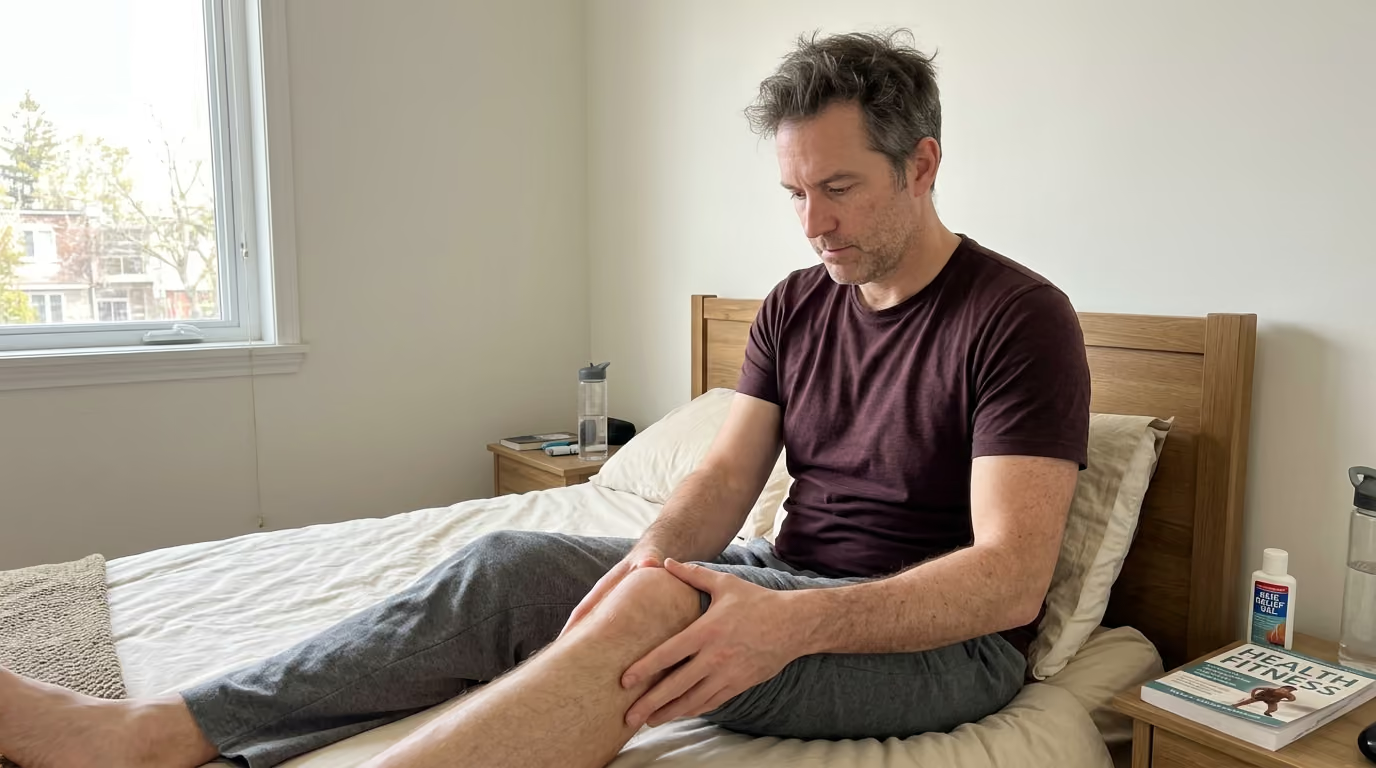

Chronic stress directly affects biological inflammation and slows tissue repair by disrupting hormonal rhythms and increasing the nervous system burden across the entire body.





You have likely searched for why an old joint flare-up lingers after a demanding work quarter, or why physical training suddenly feels exhausting despite sticking to your usual schedule. The common answers found online tend to swing between two unhelpful extremes. One camp claims that all inflammation is toxic and promises that simple breathing exercises will resolve chronic aches. The other camp dismisses mental fatigue entirely, treating physical tissue repair as an isolated mechanical process.
The human body does not operate in isolated compartments. Psychological strain, immune signaling, pain thresholds, sleep quality, and tissue repair function as a single interconnected network. When demanding life circumstances persist, the body accumulates physiological wear that alters healing rates and amplifies physical discomfort.
This guide delivers a definitive, research-grounded framework explaining how psychological strain and biological inflammation interact. You will learn how nervous system arousal alters pain perception, why tissue repair slows during periods of high strain, and how to reduce total physiological burden without resorting to extreme protocols or passive rest.
To understand why recovery stalls during demanding life periods, one must look beyond short-term fatigue. The body continuously balances internal systems to keep you alive, a baseline process known as homeostasis. When you encounter physical exertion, professional pressure, or environmental challenges, the brain initiates allostasis, which is the active process of achieving stability through physiological change. During allostasis, your cardiovascular output shifts, hormone levels adjust, immune cells reposition, and glucose enters the bloodstream to supply immediate fuel.
When challenges occur repeatedly without adequate rest, or when the nervous system remains in a heightened state of anticipation, the cost of this adaptation mounts. Scientists call this cumulative biological price allostatic load. A systematic review of 267 original investigations demonstrated that elevated allostatic load correlates directly with poorer physical and mental health outcomes across adult populations. Rather than representing a single flawed blood marker, allostatic load reflects a multi-system pattern of dysregulation across cardiovascular, metabolic, immune, and neuroendocrine pathways.
The primary drivers of this physiological shift are the sympathetic-adrenal-medullary axis and the hypothalamic-pituitary-adrenal axis. The sympathetic system acts immediately, releasing catecholamines like adrenaline and noradrenaline to elevate heart rate and sharpen vigilance. Moments later, the hypothalamic-pituitary-adrenal axis releases cortisol, a hormone vital for coordinating glucose availability, blood pressure, and immune defense.
Cortisol is frequently mischaracterized as a destructive hormone that must be suppressed at all costs. In reality, healthy cortisol production is essential for survival, energy mobilization, and resolving acute inflammation. Problems arise when cortisol rhythms lose their natural diurnal shape. In healthy adults, cortisol peaks shortly after waking and falls steadily toward nightfall. Under chronic psychological strain, this daily curve can flatten, leading to blunted morning energy, irregular immune coordination, and persistent evening arousal that prevents restorative rest.
Inflammation is a coordinated defense mechanism carried out by immune cells, signaling proteins, and local blood vessels. It is not an error of nature, nor is it inherently harmful. When you experience a physical injury or an infection, acute inflammation initiates tissue repair by clearing cellular debris and recruiting healing factors. The true challenge is chronic, low-grade systemic inflammation, where signaling proteins circulate continuously without resolving the underlying challenge.
Chronic psychological stress alters how immune cells respond to hormonal signals. Under sustained strain, immune cells can develop a reduced sensitivity to cortisol regulatory signals. As a result, pro-inflammatory transcription pathways, such as nuclear factor kappa B, become more easily activated. This leads to an increased production of circulating signaling molecules, including interleukin-6 and tumor necrosis factor.
Tissue repair occurs in distinct physiological phases: initiation, clearance, active resolution, and structural remodeling. Sustained stress disrupts the transition from active inflammation to structural remodeling. White blood cells remain active in local tissues longer than necessary, delaying the synthesis of new collagen and ground substance needed to rebuild tendons, ligaments, and muscle fibers.
The clinical reality of this dynamic is well established in medical literature. A meta-analysis examining human wound-healing studies reported a significant negative correlation (r = -0.42) between psychological stress and tissue healing rates across diverse clinical models. When systemic demand remains elevated, the body deprioritizes local tissue regeneration to keep vital organs alert and supplied with energy. For active adults managing nagging connective tissue injuries, this explains why physical therapy exercises often show limited progress during periods of severe professional or personal strain.
Sleep serves as both a biological regulator and the primary window for neuromuscular recovery. During deep, non-rapid eye movement stage N3 sleep, blood pressure drops, parasympathetic tone dominates, and growth factors support tissue repair. When psychological strain keeps the central nervous system hyper-aroused, sleep architecture fractures. You may spend eight hours in bed yet wake up feeling unrefreshed because deep stage N3 sleep was shortened.
The Centers for Disease Control and Prevention recommends that adults aged 18 to 60 aim for at least seven hours of sleep per night. For adults aged 61 to 64, guidance suggests seven to nine hours, while adults aged 65 and older generally require seven to eight hours. Despite these targets, data from public health agencies shows that more than one in three adults routinely fails to obtain sufficient sleep.
Sleep loss directly amplifies pain perception through the nervous system. In controlled clinical experiments, healthy individuals subjected to three consecutive nights of disrupted sleep showed significantly reduced pressure-pain thresholds and heightened temporal summation of pain. Temporal summation refers to the nervous system amplifying repeated sensory inputs, making standard movements feel progressively more irritating.
This heightened reactivity occurs through central sensitization, a state where neurons in the spinal cord and brain become hypersensitive. When sleep is cut short, descending pain-inhibitory pathways from the brainstem lose their effectiveness. Consequently, physical sensations that normally register as mild pressure or ordinary movement are interpreted by the brain as sharp discomfort or injury. A systematic review of 29 experimental studies confirmed that recovery sleep reliably resets this heightened pain sensitivity. A temporary flare-up in joint or muscle pain often reflects nervous system fatigue rather than fresh tissue damage.
Exercise operates as a controlled physiological stressor. When you lift weights, run mountain trails, or engage in demanding sport, you intentionally induce micro-damage in muscle fibers and temporary acute inflammation. In a well-rested body with low background tension, this temporary stress triggers positive adaptations: stronger connective tissue, greater mitochondrial density, and expanded muscular capacity. You can explore structured loading strategies in our guide to strength and physical performance.
When background life stress is already high, the physiological cost of hard training changes dramatically. The brain does not maintain separate ledgers for physical exertion, work deadlines, financial decisions, and poor sleep. Every demand draws from the exact same systemic recovery reserve. Adding high-intensity intervals or heavy lifting to an already exhausted system can push the body into non-functional overreaching, where physical performance declines and soft tissues fail to adapt.
The World Health Organization recommends that adults perform 150 to 300 minutes of moderate aerobic activity, or 75 to 150 minutes of vigorous activity weekly, combined with major muscle group strength training at least two days per week. These targets represent vital benchmarks for long-term health and cardiovascular resilience.
However, when life stressors peak, training must be modified rather than abandoned entirely. The solution is not complete sedentary bed rest, which can cause deconditioning, joint stiffness, and lower mood. Instead, shifting from exhaustive training to restorative movement allows you to preserve mobility and cardiovascular fitness without overwhelming your adaptive reserves.
To evaluate where your current physical capacity sits, review our comprehensive recovery and regeneration resources.
Examining how these physiological mechanisms unfold in real life highlights the dynamic nature of allostatic load. The following patterns illustrate common scenarios where stress, sleep disruption, and physical capacity collide.
Consider an active 48-year-old executive training for an alpine trekking expedition while navigating a complex corporate merger. Work days stretch to twelve hours, evening emails push sleep down to five and a half hours, and caffeine intake increases. Despite maintaining a disciplined four-day strength training split, the individual notices persistent knee aching, declining deadlift strength, and morning exhaustion.
The immediate reaction might be to suspect a torn meniscus or switch to an aggressive supplement routine. In reality, the body is operating under an overwhelming total load. The combination of shortened sleep and persistent mental vigilance has flattened cortisol rhythms and elevated systemic interleukin-6.
The practical intervention does not require quitting exercise. Instead, the individual temporarily reduces training intensity, shifting heavy squats to moderate bodyweight movements and low-impact zone 2 cycling. Concurrently, protecting a seven-hour sleep window allows the central nervous system to reset pain thresholds, resolving the knee ache within two weeks.
A 55-year-old individual undergoes routine elective shoulder surgery to repair a minor labral fraying. At the same time, the individual assumes primary caregiving duties for an aging parent, leading to emotional strain, irregular meals, and broken sleep. At the six-week postoperative checkup, range of motion remains restricted and local tissue swelling shows slower resolution than anticipated.
This scenario reflects the established research on wound healing and psychological strain. Glucocorticoid and catecholamine signaling disrupt early collagen synthesis and local matrix remodeling at the surgical site. The physical therapist correctly identifies that aggressive stretching is not the primary missing link.
By arranging respite care assistance two afternoons a week, stabilizing meal timing with adequate dietary protein, and implementing evening wind-down habits, systemic strain decreases. Within three weeks, shoulder mobility and local tissue tolerance improve noticeably.
A 42-year-old recreational tennis player experiences lower back stiffness after an intense match. Worrying that the ache signals a serious disc injury, the player stops playing, spends hours researching surgical outcomes online, and develops anxiety around bending forward. The fear of re-injury keeps physiological arousal high, disrupting sleep.
Within a month, the back feels more painful despite complete physical rest. This is a classic demonstration of central sensitization. The lack of movement has led to lumbar stiffness, while heightened threat appraisal and sleep deprivation have lowered pressure-pain thresholds across the lower spine.
The solution involves structured pain education and graded exposure. The player learns that soreness does not equal structural damage and begins daily ten-minute walks combined with gentle hip mobility exercises. As confidence returns and sleep stabilizes, the central nervous system dials down its pain alarm, allowing a full return to the tennis court.
Navigating recovery science requires separating biological facts from popular wellness myths. Clear distinctions help prevent unnecessary worry and ineffective practices.
A widespread misconception is that any sign of inflammation should be eliminated immediately with ice baths, high-dose non-steroidal anti-inflammatory drugs, or restrictive elimination diets. Suppressing the initial inflammatory cascade after exercise or minor strain can blunt natural muscle protein synthesis and delay long-term structural remodeling.
The objective is never the total eradication of inflammation. The goal is supporting an efficient inflammatory cycle that initiates promptly, clears cellular debris, and resolves naturally into tissue rebuilding.
Social media wellness trends frequently label cortisol as an enemy of vitality. Cortisol is essential for life; without it, the body cannot regulate vascular tone, mobilize liver glycogen, or curb excessive immune reactions.
The clinical concern is not the presence of cortisol during demanding moments. The true issue is chronic dysregulation, such as a flattened diurnal rhythm where the hormone remains elevated at midnight and depleted at dawn. Cortisol must be respected as a rhythmic conductor of daily energy, not a biological toxin.
Many active adults believe that experiencing a spike in joint or tendon pain proves that a physical structure has suffered new mechanical damage. Pain is a protective neurological output generated by the brain based on sensory input, threat evaluation, emotional state, and prior history.
When sleep is cut short or mental strain is high, central pain-processing pathways amplify standard sensory signals. You can experience noticeable physical discomfort in a tendon or spinal segment even when magnetic resonance imaging shows no acute structural change.
Mindfulness practices and structured breathing can reduce sympathetic arousal, improve heart rate variability, and support emotional regulation. However, claiming that meditation serves as a universal cure for systemic inflammation is scientifically inaccurate.
In a randomized clinical trial of older adults, an eight-week mindfulness-based stress reduction program reduced nuclear factor kappa B activity with a modest effect size (d = 0.17). Yet the same study found no significant changes in circulating interleukin-6 or C-reactive protein levels. Stress reduction practices are valuable secondary tools, but they cannot replace proper nutrition, restorative sleep, mechanical rehabilitation, or necessary medical care.
Achieving balance does not require quitting your career, adopting an ascetic lifestyle, or spending hours every day on complex recovery rituals. Sustainable health rests on small, high-leverage adjustments that integrate seamlessly into a demanding routine. You can build these into your broader lifestyle through our guide to healthy aging and living well.
Rather than trying to force eight perfect hours of sleep every night, focus on maintaining a consistent wake time seven days a week within a thirty-minute window. Pair this with getting bright outdoor sunlight into your eyes within forty-five minutes of waking.
This simple habit anchors your central suprachiasmatic nucleus, stabilizing your natural cortisol curve and priming your brain for melatonin release fourteen to sixteen hours later. For deeper insights on optimizing your nightly rest, explore our restorative sleep strategies.
When life stress spikes or an old ache returns, avoid retreating to total rest on the sofa. Gentle, rhythmic movement stimulates synovial fluid circulation in joints, lowers resting sympathetic tone, and prevents muscular stiffness.
Commit to two ten-minute walking breaks during your workday, keeping the pace brisk enough to encourage deep nasal breathing without inducing fatigue. If a specific joint feels sensitive, reduce the range of motion or external load while keeping the surrounding musculature moving.
During high-stress weeks, appetite hormones can fluctuate wildly, leading to under-eating during the day followed by evening overconsumption of processed foods. Under-fueling combined with high psychological demand signals severe resource scarcity to the brain, further elevating cortisol and blunting tissue repair.
Maintain regular meal timing with an emphasis on high-quality dietary protein (aiming for 1.2 to 1.6 grams per kilogram of body weight daily) alongside adequate hydration and complex carbohydrates. Adequate fuel provides the raw amino acids and energy necessary for connective tissue remodeling.
Immediately following a workout or a high-pressure meeting, spend three to five minutes practicing physiological down-regulation. Sit comfortably, close your eyes, and inhale through your nose for four seconds, followed by a slow, unforced exhale through your mouth for six to eight seconds.
Extending the exhalation phase stimulates the vagus nerve, rapidly slowing heart rate and transitioning the autonomic nervous system out of sympathetic dominance. This brief transition signals to the body that the acute demand has passed, initiating the recovery cascade early.
Active adults frequently encounter spikes in physiological load while pursuing international travel, mountain trekking, or endurance adventures. Crossing multiple time zones, sleeping in unfamiliar hotel rooms, and adjusting to high-altitude environments place immense acute demands on the autonomic nervous system.
Cabin air in commercial aircraft features low humidity and a barometric pressure equivalent to six to eight thousand feet above sea level. This mild hypoxia combined with sedentary sitting elevates resting heart rate and promotes mild fluid retention. When you land and immediately undertake a strenuous hike or a demanding business schedule, your baseline allostatic load is already elevated.
To maintain peak physical capability abroad, prepare your system deliberately:
For specialized frameworks tailored to international expeditions and mountain performance, consult our guide to travel and high-altitude adventures.
The broader scientific and medical community agrees on several core principles regarding stress, immune signaling, and physical recovery:
While lifestyle and stress-reduction strategies support physical resilience, certain symptoms demand prompt medical evaluation rather than self-directed recovery protocols.
If you experience joint pain accompanied by systemic symptoms, consult a qualified physician or physical therapist for a thorough clinical examination.
Managing recovery requires proactive design rather than passive waiting. Use the following checklist to evaluate and optimize your total adaptive load this week.
Take action on one practical step today. Pick a single adjustment, such as fixing your morning wake time or adding a five-minute down-regulation breathing session after your afternoon workout. By systematically managing your total allostatic burden, you will preserve physical resilience, recover faster from hard efforts, and maintain capable performance across decades of active living.
Stay connected for research and practical guidance on longevity, strength, recovery, energy and active living. New ideas to help you stay capable, curious and ready for more.


Explore practical guidance on strength, recovery, energy, travel and longevity for a life that stays active.
explore the Blog