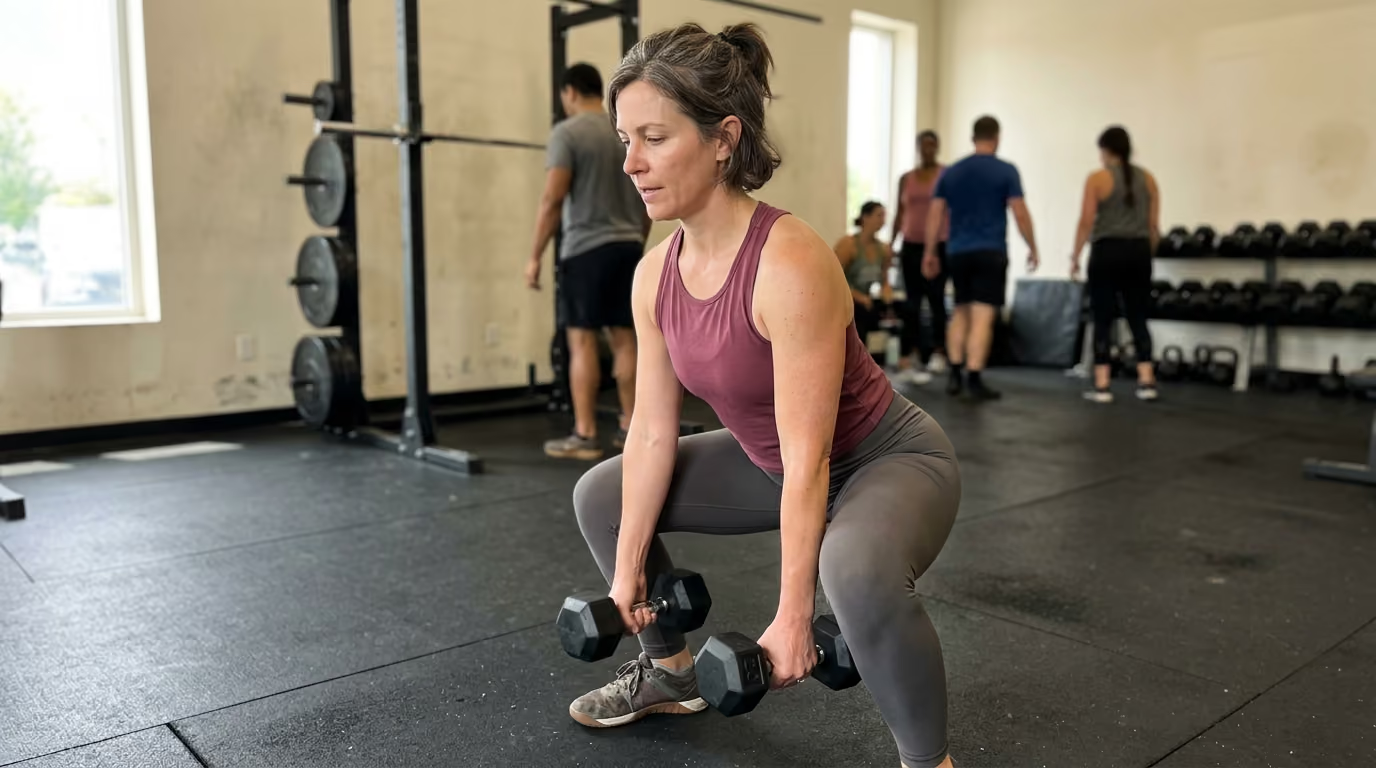

Structured resistance training preserves muscle mass, improves bone density, and enhances connective tissue health for women navigating perimenopause.





You arrive at a mountain trailhead or step onto a ski lift after a long flight. You feel capable in your mind, but your knees ache, your lower back feels tight, and the physical stamina you took for granted ten years ago seems suddenly unpredictable. Many women in their forties and fifties assume this shift is an inevitable consequence of changing hormones. They are told that declining estrogen makes maintaining muscle impossible, that heavy weights become dangerous, and that gentle cardio is the only sensible path forward.
The clinical reality is entirely different. While the menopause transition alters physiology, it does not stop the body from adapting to mechanical load. Women in perimenopause and postmenopause can build significant strength, preserve skeletal integrity, and maintain high performance well into their later decades. This guide provides a comprehensive blueprint for strength training after forty, translating clinical research into practical, sustainable habits that protect your physical independence and active lifestyle.
Strength training is the single most effective tool for maintaining physical performance, metabolic health, and musculoskeletal resilience across the menopause transition. Middle age brings real physiological shifts, including fluctuating estrogen, changes in tendon elasticity, and accelerated bone turnover. However, these changes do not prevent muscle adaptations or strength gains.
A comprehensive meta-analysis revealed that resistance training produces large, clinically meaningful strength gains in both premenopausal and postmenopausal women. The effect size in premenopausal women was a standardized mean difference of 1.50, while postmenopausal women achieved a standardized mean difference of 1.46. There was no statistically significant difference in strength adaptation between the two groups.
The primary takeaway is clear: your capacity to adapt to resistance exercise remains robust regardless of menstrual status. Effective programming does not require fragile routines or endless light repetitions. Instead, it demands structured progressive overload, targeted bone loading, deliberate tendon conditioning, and intelligent autoregulation.
By prioritizing foundational movement patterns, lifting at moderate to heavy intensities, and respecting recovery windows, you can build a resilient body that excels in sport, travel, and daily life. You can read more about strength and physical performance to understand how targeted mechanical loading preserves capacity throughout every decade.
To program effectively, one must understand what happens beneath the surface during perimenopause and postmenopause. Menopause is not a sudden cliff, but a gradual continuum. Perimenopause involves fluctuating ovarian function, erratic estrogen spikes, and declining progesterone, while postmenopause marks the permanent reduction of circulating estradiol.
Estrogen is not merely a reproductive hormone. It serves as an anabolic and anti-inflammatory signal throughout the female body. Estradiol influences muscle protein synthesis, satellite cell activation, tendon collagen synthesis, and bone turnover rates.
When estradiol levels drop, several physiological shifts take place:
Despite these hormonal shifts, the mechanotransduction pathway remains functional. When you lift a weight, mechanical tension deforms muscle fibers and bone cells called osteocytes. This strain triggers biochemical cascades that signal muscle protein synthesis and bone remodeling. Mechanical load acts as a replacement signal for the anabolic drive that systemic estrogen previously provided.
Sarcopenia refers to the clinically meaningful loss of muscle mass, strength, and physical function. Research consistently demonstrates that sarcopenia is driven far more by disuse and inadequate mechanical loading than by chronological age alone. Resistance training directly counters this process by recruiting high-threshold motor units, improving neuromuscular coordination, and increasing muscle fiber recruitment.
A 2023 systematic review and meta-analysis reported that resistance exercise effectively improves muscle mass and strength in menopausal women. The researchers identified that resistance training performed three times weekly for 20 to 90 minutes over at least six weeks was the most effective pattern among the examined interventions.
Muscle size and muscle strength are related, but they are not identical. In the initial months of a progressive lifting routine, substantial gains in strength occur through neural adaptations. Your nervous system learns to fire motor units more synchronously, coordinate antagonist muscle groups, and generate force with higher velocity. These neural adaptations occur rapidly in women over forty, providing immediate improvements in posture, balance, and physical power.
Bone health is often reduced to a single score on a dual-energy X-ray absorptiometry scan. While bone mineral density is a valuable metric, it provides an incomplete picture of skeletal integrity.
Bone strength is a composite quality determined by bone geometry, cortical thickness, trabecular microarchitecture, tissue mineralization, and the muscular forces acting on the skeleton. Fracture risk is influenced just as heavily by balance, reaction time, leg power, and movement control as it is by bone mineral density.
A woman with moderate osteopenia who possesses excellent leg strength and dynamic balance is at a lower risk of experiencing a fall-related fracture than a sedentary individual with identical bone mineral density.
Resistance training provides site-specific mechanical strain. When muscles contract forcefully against resistance, they pull on tendons, which in turn pull on their bony attachments. This localized bending and compression stimulates osteocytes to lay down new bone matrix.
A 2023 review concluded that combined resistance exercise can preserve bone mineral density at the femoral neck and lumbar spine in postmenopausal women. A network meta-analysis found that moderate-intensity resistance training was superior to normal daily activity for preserving lumbar spine and femoral neck density. In that analysis, three weekly sessions outperformed two sessions per week for lumbar spine outcomes.
A 2025 review of resistance training parameters confirmed that structured loading positively influences lumbar spine, femoral neck, and total hip bone mineral density in postmenopausal women. The International Osteoporosis Foundation notes that progressive resistance training, weight-bearing exercise, and appropriate impact can increase bone mineral density by roughly 1% to 4% per year in both premenopausal and postmenopausal women.
To stimulate bone remodeling, training must provide sufficient mechanical strain across vulnerable skeletal sites:
Compressive forces directed along the spine and long bones stimulate cortical and trabecular remodeling. Exercises include goblet squats, barbell box squats, trap-bar deadlifts, and farmer carries.
Tensile and compressive forces placed across the femoral neck and pelvis stimulate the hip structure. Movements include Romanian deadlifts, barbell hip thrusts, step-ups, and lunges.
Strengthening the posterior chain creates protective muscular tension along the vertebral column. Exercises include chest-supported rows, neutral-spine cable rows, and back extensions.
Mechanical stress applied through the wrists, forearms, and shoulders maintains upper-body skeletal strength. Movements include overhead presses, dumbbell bench presses, and push-up variations.
Preserving bone mass during a life stage characterized by natural bone loss is a major clinical victory. Even if your bone scan scores remain stable rather than rising dramatically, you are successfully preventing the age-related skeletal degradation that leads to fragility.
Tendons and ligaments connect muscle to bone and transmit force during every step, lift, and sprint. Research indicates that low estrogen concentrations alter collagen turnover, tendon morphology, and connective tissue stiffness. Postmenopausal women who do not use hormone therapy show measurable differences in tendon structure compared to those with higher systemic estradiol levels. A recent systematic review confirmed that estrogen deficiency can modify tendon repair and degeneration after menopause.
These biological changes explain why women over forty frequently encounter sudden bouts of Achilles tendinopathy, plantar fasciitis, rotator cuff irritation, or gluteal tendinopathy when they abruptly change their physical activities. It is not that connective tissue cannot adapt. Rather, tendons have a slower metabolic turnover rate than skeletal muscle, meaning they take longer to adapt to new training loads.
The solution is not to avoid intense exercise, but to manage the rate of progression. Tendons respond best to heavy, slow resistance training, which stimulates collagen synthesis and improves structural stiffness without creating excessive shear stress.
To protect your connective tissues, follow these practical rules:
Joint health also benefits directly from progressive loading. Articular cartilage has no direct blood supply and relies on the cyclical compression of joint movement to diffuse nutrients through synovial fluid. Lifting weights through safe, comfortable ranges of motion nourishes cartilage, strengthens surrounding joint capsules, and reduces symptoms of mild osteoarthritis.
Strength training in midlife is ultimately about physical freedom. It ensures you can navigate difficult terrain, carry heavy luggage, climb steep stairs in remote villages, and participate in active mountain sports without fear of injury or exhaustion.
Last winter in Chamonix, I noticed something striking. It was not the altitude that forced my peers into the lodge by noon, it was a lack of rotational strength and poor recovery from the flight. We spend so much time debating the perfect supplement stack, yet we neglect the basic foundational strength required to actually enjoy our travels. That trip changed how I approach fitness. I stopped training for aesthetics and started training exclusively for capability.
When traveling across time zones, your body faces disrupted circadian rhythms, dehydration, cramped airplane seating, and unaccustomed walking volume. If you lack physical capacity, your body operates near its absolute maximum threshold just carrying bags or navigating cobbled streets. When you build a solid strength reserve, everyday physical demands require only a fraction of your maximum output, leaving you with abundant energy to enjoy your surroundings.
Consider the physical demands of high-altitude trekking, downhill skiing, or extended coastal walking:
You can learn more about building stamina for challenging environments by reading about travel and human performance. By targeting foundational human movements in the gym, you prepare your musculoskeletal system for the real-world stresses of adventurous travel.
A great deal of fitness advice targeted at women over forty is based on outdated assumptions or commercial trends. Correcting these myths allows you to focus on the training methods that actually generate physical adaptations.
Many women are told that training in perimenopause must revolve entirely around daily hormone fluctuations. While fluctuating estrogen and progesterone can influence sleep and perceived energy, they do not invalidate the laws of progressive overload. Research confirms that postmenopausal women gain strength at rates comparable to younger women when training intensity is properly matched.
Endless sets of twenty or thirty repetitions using very light dumbbells build local muscular endurance, but they do little to stimulate bone remodeling or build maximal force capacity. High-repetition sets performed with poor form can also create repetitive joint friction. Moderate to heavy loading with fewer repetitions is often safer, more efficient, and far more effective for bone and connective tissue health.
A diagnosis of low bone density is often met with advice to avoid lifting anything heavy. Progressive resistance training is safe and clinically recommended for individuals with osteopenia. The skeleton requires progressive mechanical strain to signal bone preservation. Avoiding load accelerates the very bone loss you are trying to prevent.
It is common to believe that midlife changes in body composition are entirely hormonal and irreversible. While declining estrogen shifts fat storage toward visceral depots, resting metabolic rate is heavily influenced by total skeletal muscle mass and daily movement. Resistance training preserves metabolically active muscle tissue, improves insulin sensitivity, and helps maintain functional body composition across the menopause transition.
Many women begin strength training and become discouraged when the scale does not move downward immediately. Resistance training increases muscle density, enhances glycogen storage, and stimulates bone mineralization. A study examining postmenopausal women found significant improvements in functional capacity and bone mineral density without dramatic shifts in total body mass index or waist circumference. Track your progress through strength milestones, daily energy, and movement quality rather than scale weight alone.
Building strength does not require living in the gym or committing to complex routines. The minimal effective dose for meaningful musculoskeletal adaptation is remarkably accessible. For most women over forty, two to three well-structured full-body sessions per week provide an optimal stimulus while leaving ample time for recovery, sport, and life.
To program efficiently, use the fundamental FITT-plus framework:
The double-progression model is one of the simplest and most reliable ways to ensure progressive overload:
Below is a practical two-day full-body template designed for sustainable strength, bone health, and physical capability:
On days when fatigue is high, use an autoregulation system. Rate your daily readiness using a simple color system:
Explore our comprehensive guides on performance and fitness to discover additional movement strategies tailored for active adults.
Individual history dictates how a program must be structured. An experienced 45-year-old athlete requires different loading parameters than a 62-year-old managing osteopenia and knee osteoarthritis. Tailoring your approach ensures long-term safety and uninterrupted consistency.
If your bone scan reveals osteopenia but you have no history of fragility fractures, you can train with standard compound movements. Focus on building technical mastery in squats, hinges, carries, and presses. Progressive loading is safe and necessary to preserve your remaining bone density.
When a clinical diagnosis of osteoporosis is accompanied by a history of vertebral fracture or elevated spinal risk, training requires specific modifications. The UK clinical consensus statement recommends focusing on posture, balance, and progressive strength while avoiding high-risk spinal positions.
Key modifications for elevated spinal fracture risk include:
The International Osteoporosis Foundation highlights that explosive movements and excessive bending at the waist can be hazardous for individuals with compromised spinal integrity. Seek supervision from a qualified physical therapist when designing a routine following a spinal fracture.
Joint discomfort does not mean you must stop lifting. It simply requires selecting exercise variations that match your current anatomical structure. If a traditional back squat irritates your knees, switch to a box squat, a reverse lunge, or a leg press. If overhead pressing irritates your shoulders, use a neutral-grip landmine press. The goal is to train the underlying movement pattern without provoking sharp joint pain.
When an Achilles, patellar, or rotator cuff tendon becomes reactive, do not rest completely. Complete rest reduces the tendon's capacity to handle load. Instead, temporarily remove bouncy, high-velocity movements and introduce slow, heavy resistance training. Isometric holds and controlled tempos allow the tendon to rebuild structural tolerance without worsening irritation.
Pelvic floor dysfunction, including stress urinary incontinence or pelvic organ prolapse symptoms, can emerge or worsen during perimenopause due to changing tissue elasticity. Avoid holding your breath against a closed glottis during heavy lifts. Practice matching exhalation with the exertion phase of the movement, and consult a pelvic floor physical therapist if symptoms persist.
Lifting weights provides the stimulus for adaptation, but actual muscle remodeling and bone repair occur during recovery. Without adequate nutritional resources and restorative sleep, your body cannot rebuild the tissues stressed during training.
Muscle protein synthesis becomes less responsive to small amounts of amino acids as we age, a phenomenon known as anabolic resistance. To overcome this, distribute your protein intake across three to four balanced meals throughout the day.
Include high-quality protein sources containing adequate leucine, such as poultry, fish, eggs, Greek yogurt, or quality plant-based protein blends. The North American Menopause Society notes that adequate protein intake is also essential for minimizing bone loss across the menopause transition.
Chronic under-eating combined with hard training creates low energy availability, which impairs thyroid function, elevates cortisol, and accelerates bone resorption. Ensure you are consuming sufficient total calories to support your physical activity.
Pay close attention to calcium and vitamin D levels, which are critical for bone mineralization. Speak with your healthcare provider to test your 25-hydroxy vitamin D levels and determine whether supplementation is warranted.
Night sweats and sleep fragmentation can significantly hinder post-exercise recovery. Poor sleep impairs glucose metabolism, blunts muscle protein synthesis, and increases your perception of effort during workouts.
Prioritize sleep hygiene by keeping your sleeping environment cool, limiting evening alcohol and caffeine, and establishing a consistent wind-down routine. If sleep disruption from vasomotor symptoms is severe, consult your physician to discuss medical management options.
The North American Menopause Society confirms that hormone therapy remains an effective treatment for vasomotor symptoms and has been proven to prevent bone loss, though decisions regarding medical therapy should be individualized based on your personal health profile.
To learn more about optimizing your nightly recovery cycles, read our detailed analysis of recovery and sleep strategies.
The broader scientific and clinical community agrees that resistance training is non-negotiable for healthy aging in women. Organizations including the International Osteoporosis Foundation, the American College of Sports Medicine, and the North American Menopause Society consistently recommend progressive strength training as a foundational pillar of health.
Clinical consensus highlights several key principles:
Building strength after forty is an investment in your future autonomy. It ensures that when you reach your sixties, seventies, and beyond, you will retain the power to lift your own gear, travel anywhere in the world, and participate fully in the activities that bring you joy. To understand the broader principles of lasting vitality, read our foundational guides on longevity and living well.
Revisit this guide whenever you experience a major transition in your training schedule, such as returning to exercise after an illness, preparing for a physically demanding adventure, or navigating a new diagnosis related to bone or joint health. Adjust your exercise variations, monitor your recovery, and maintain a consistent focus on progressive capability. Strength is a renewable resource when approached with patience, knowledge, and structured execution.
Stay connected for research and practical guidance on longevity, strength, recovery, energy and active living. New ideas to help you stay capable, curious and ready for more.


Explore practical guidance on strength, recovery, energy, travel and longevity for a life that stays active.
explore the Blog