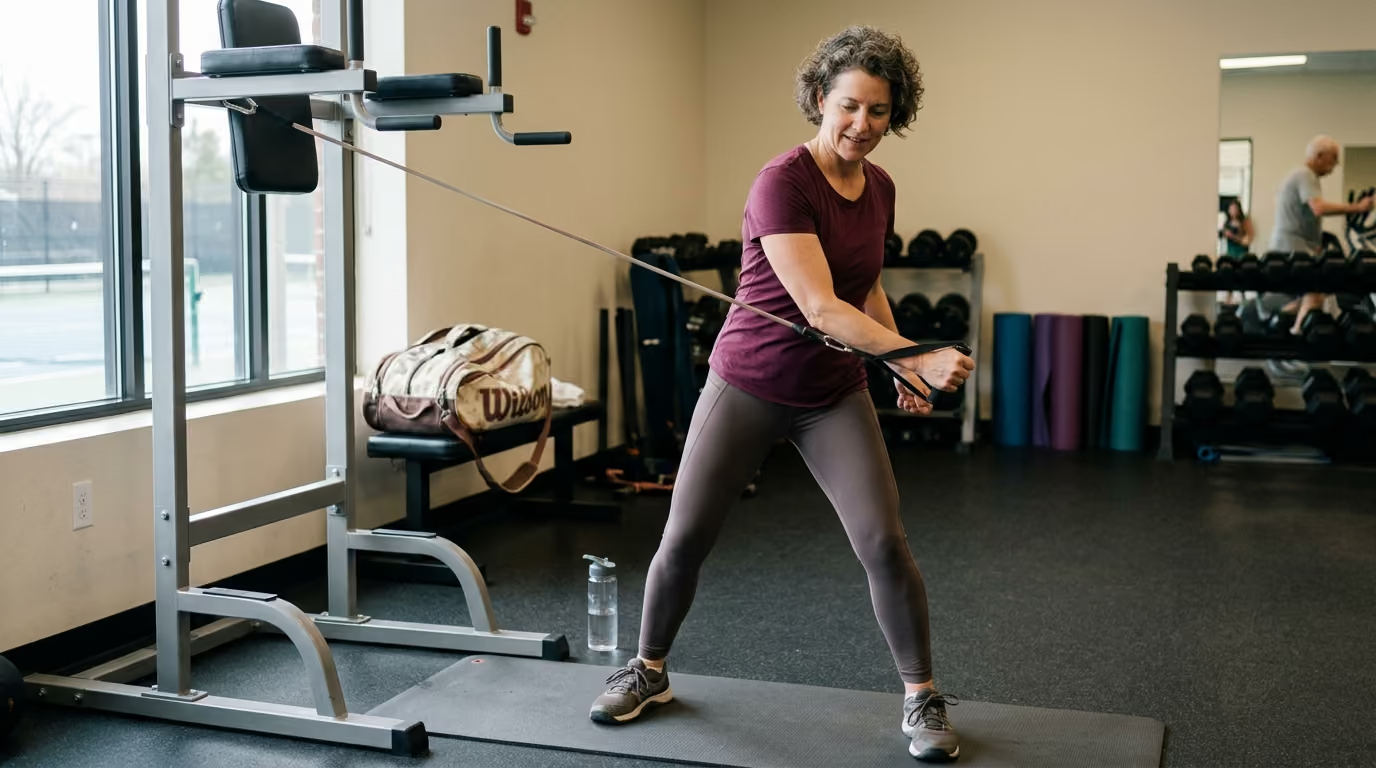

Targeted strength training builds rotational power and protects aging joints so mature athletes can excel at tennis, pickleball, and golf.





If you have searched online for why your knees ache after pickleball, why your golf swing loses distance every spring, or why your shoulder feels pinched after a tennis match, you are not alone. Most active adults over 40 notice that casual play is no longer enough to maintain their movement quality on the court, course, or mountain. The solution is not to play through discomfort or abandon the activities you enjoy. The definitive answer lies in building targeted physical capacities that protect your joints, restore dynamic power, and prepare your body for the unique demands of unilateral rotation.
Rotational and unilateral sports demand far more than basic cardiovascular fitness or traditional gym routines. Tennis, pickleball, golf, and alpine skiing require your body to produce force against the ground, transfer that energy through your hips and trunk, and express it through an implement or a turn. Just as importantly, these sports require you to brake suddenly, absorb heavy impact on one leg, and change direction without losing balance. When you train these specific qualities in a structured way, you safeguard your joint health, improve your agility, and remain competitive for decades to come.
To perform well in unilateral and rotational sports after 40, you must understand the physical demands these activities place on your muscular and skeletal systems. When you swing a racquet, drive a golf ball, or carve a ski turn, your body operates as a linked kinetic chain. Force begins at the feet as you press against the ground, travels upward through the ankles, knees, and hips, passes across the pelvis and trunk, and finally transfers into the upper limbs or edges of your skis. If any link in this chain lacks sufficient strength, mobility, or neuromuscular control, your performance drops and secondary tissues absorb excessive stress.
Maximal strength forms the foundation of this kinetic chain. In physical training, maximal strength is the highest amount of force you can voluntarily produce under specific conditions, often measured by a one-repetition maximum. Having higher strength reserves means that every submaximal sporting action, such as a lateral push-off or a standard groundstroke, requires a lower percentage of your total capacity. However, raw strength alone does not automatically create a faster serve or a longer drive. You must also train your nervous system to express that force rapidly.
This quality is known as the rate of force development, which measures how quickly your muscles can produce force from a relaxed state. In fast sports like pickleball or tennis, you rarely have more than two-tenths of a second to react, push off, plant your foot, or strike the ball. As we age, fast-twitch muscle fibers tend to atrophy faster than slow-twitch endurance fibers if they are not deliberately stimulated. Regular endurance activity and casual play cannot fully prevent this loss of speed. By incorporating deliberate, moderate-load power training, you stimulate these high-threshold motor units and preserve your reaction speed.
Equally critical is eccentric strength, which is the ability of your muscles and tendons to produce force while they are lengthening. Whenever you land from an overhead smash, stop abruptly after a sprint to the net, or resist compressive forces during a steep ski turn, your muscles are performing eccentric braking work. Deceleration is not a passive event; it is an active, trainable neuromuscular skill. Without adequate eccentric strength, stopping places excessive strain on the passive structures of your joints, such as the meniscus, labrum, and spinal discs.
General physical preparation builds broad qualities like overall muscle mass, basic balance, and cardiovascular health. Sport-transfer preparation, by contrast, organizes those general capacities so they translate directly into rotational power, agility, and joint resilience. For the athlete over 40, a complete conditioning architecture must target five distinct physical qualities:
You must develop the capacity to press into the ground with authority across both bilateral and unilateral stances. This involves training multi-joint patterns including squats, hinges, lunges, horizontal pulls, and vertical pushes. Building a solid strength base allows you to maintain stable body positions even when reaching at full extension.
Braking mechanics protect your joints from sudden trauma and chronic wear. Training this pillar involves controlled eccentric lowerings, landing mechanics, step-downs, and single-leg decelerations. Developing strong braking capabilities ensures that sudden stops on the court do not result in knee, ankle, or hip strain.
True rotational athleticism requires seamless energy transmission across the pelvis, spine, and shoulder girdle. Your trunk must be strong enough to transfer lower-body drive without collapsing or leaking force through unwanted spinal flexion. Training this pillar combines anti-rotation holds, anti-extension drills, and dynamic rotational throws.
Racquet sports and skiing demand continuous shifts in momentum across the frontal and transverse planes. You must train your ability to plant your outside foot, stabilize your center of mass, and instantly push off in a new direction. Drills include lateral shuffles, crossover steps, and controlled lateral bounds.
Your connective tissues must be conditioned to handle repetitive stresses without developing overuse syndromes. Tendons and ligaments adapt more slowly than cardiovascular fitness, requiring a gradual progression of training volume. Building tissue capacity prevents sudden spikes in court time from irritating the Achilles tendon, plantar fascia, or rotator cuff.
To explore how these foundational movements fit into a complete routine, read our evidence-based strength resources.
While all rotational activities share core athletic foundations, each sport imposes unique mechanical stresses that require targeted preparation.
Tennis requires explosive multidirectional sprints, rapid lateral braking, and repeated overhead service actions. The forehand stroke relies on a coordinated sequence of trunk rotation, horizontal shoulder adduction, and internal shoulder rotation. The kinetic chain must operate smoothly so the shoulder does not compensate for weak hip drive.
Furthermore, the tennis serve creates extreme eccentric demands on the posterior shoulder cuff during the deceleration phase of the follow-through. Players over 40 must develop strong upper-back and rotator cuff muscles to safely decelerate the arm after high-speed serves. Lower-body training should emphasize single-leg lateral stability and deep ankle mobility to support low groundstrokes and rapid split-step recoveries.
Pickleball takes place on a smaller court, which often gives players a false impression of low physical demand. In reality, the short distances require rapid reaction times, sudden lunges at the kitchen line, quick lateral steps, and abrupt reaching movements. Recent emergency department data demonstrates a dramatic rise in pickleball-related injuries among players over 60, with lower-extremity strains, fractures from falls, and tendon tears leading the statistics.
Preparing for pickleball requires prioritizing single-leg balance, lateral ankle stability, calf strength, and quad endurance for deep defensive stances. Players must train their ability to decelerate in tight spaces without losing balance or falling backward when chasing lobs. Shoulder and forearm endurance are also essential to protect the elbow and wrist from repetitive dinking and driving exchanges.
The modern golf swing produces high rotational torque across the pelvis and spine within a fraction of a second. Modern biomechanics emphasize creating separation between the pelvis and the thoracic spine during the backswing to maximize clubhead speed. If your hips or thoracic spine lack mobility, the lumbar spine is forced to rotate beyond its anatomical design, which often leads to lower back pain.
A well-designed golf strength program builds generous internal and external rotation in both hips, especially the lead hip. It develops thoracic mobility and pairs it with anti-rotation trunk strength to protect the lower back during the finish. Rotational medicine ball throws and single-leg hinge patterns build the ground-reaction force necessary to drive the ball farther with less physical effort.
Alpine skiing places sustained eccentric demands on your quadriceps, glutes, and calves. As you navigate uneven terrain, your legs must continuously absorb compressive forces while maintaining a stable edge angle. The challenge in skiing is managing fatigue, as most injuries occur late in the afternoon when leg strength and reaction times degrade.
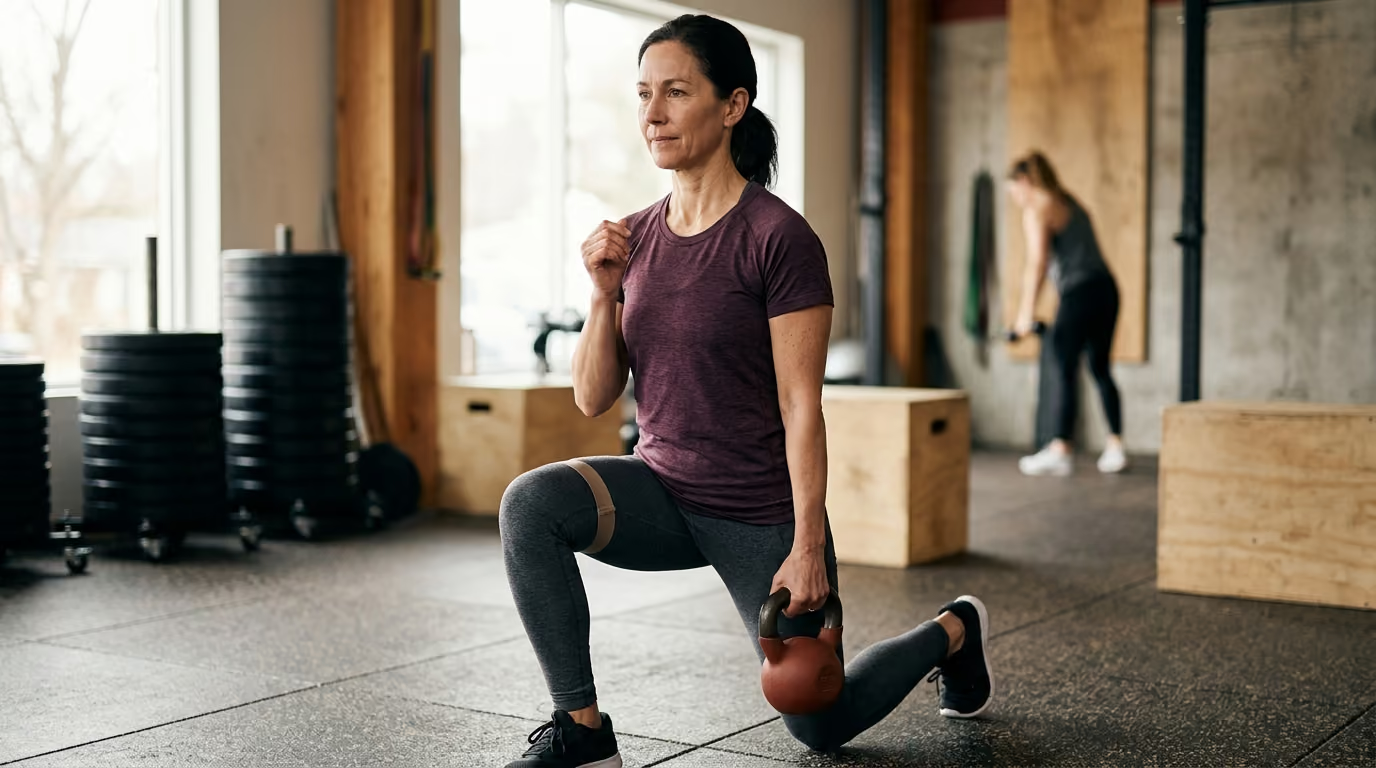
Preparation for the slopes must focus on high-volume eccentric lower-body endurance, single-leg stability, and lateral hip strength. Split squats, lateral step-downs, and rotational core holds prepare the body to resist fatigue and maintain sharp edge control across long mountain descents.
One of the most frequent mistakes made by active adults over 40 is treating fitness as purely cardiovascular while ignoring tissue capacity. Tissue capacity refers to the ability of muscles, tendons, ligaments, and bones to tolerate physical load without becoming inflamed or injured. While your heart and lungs can adapt to increased playing time in just a few weeks, your tendons and cartilage require months of gradual loading to strengthen their collagen matrix.
This mismatch often catches athletes off guard. When you feel energetic on the court, it is tempting to double your playing time, but your Achilles tendon or rotator cuff may not yet be prepared for that volume. Sports scientists monitor this balance by comparing your acute workload to your chronic workload. Acute workload represents the total volume and intensity of physical activity you have performed over the past week. Chronic workload represents your rolling average of training over the previous four to six weeks.
When your acute workload spikes significantly above your chronic baseline, your risk of tissue irritation rises. While tracking these ratios provides useful context, you do not need complex math to train safely. Instead, listen to key indicators such as morning joint stiffness, localized tendon pain that lingers for hours after playing, and declining movement quality.
A common issue among active professionals is the weekend warrior routine. Sitting at a desk for five consecutive days followed by four hours of intense tennis or golf on Saturday morning creates a sharp workload spike. To build resilient tissues, introduce small, consistent movement exposures throughout the working week:
Active travel presents unique physical challenges that test your conditioning and recovery systems. Traveling across time zones, sitting in tight airplane seats for long flights, and sleeping on unfamiliar mattresses can cause muscular stiffness and disrupt your balance. When you land and immediately head out to ski steep alpine runs or play 36 holes of golf, your body is in a vulnerable state.
Last winter in Chamonix, our team noticed something striking among recreational athletes. It was not the altitude that forced many peers back into the lodge by noon; it was a lack of rotational strength, poor deceleration capacity, and slow recovery from long travel. We often debate complicated recovery gadgets, yet we easily overlook the basic movement preparation required to enjoy demanding sporting trips. That experience reinforced how we approach training. True fitness is not about gym aesthetics, but about cultivating the physical capability and resilience needed to thrive on every adventure.
When planning active vacations, prepare your body at least eight weeks in advance. Gradually build your training volume so that multiple consecutive days on the court, course, or mountain do not overwhelm your muscular system. During transit, take short walks through terminals, perform seated ankle pumps to promote venous blood return, and stay well hydrated.
Upon reaching your destination, spend fifteen minutes on a dynamic mobility routine before heading straight to the first tee or the ski lift. Open up your hip flexors, activate your thoracic spine, and wake up your gluteal muscles with light bodyweight split squats. If you want to maintain peak energy across long itineraries, review our dedicated guide to adventure travel preparation.
Many training myths persist regarding fitness for athletes over 40. Addressing these misconceptions will help you train smarter and avoid unnecessary setbacks.
Sport develops coordination and uses your existing physical capacities, but it does not systematically build new tissue capacity or correct imbalances. In fact, repetitive play often reinforces side-to-side asymmetries and overworks specific joints without developing full-range strength. Targeted gym work provides the controlled loading your body needs to withstand the chaotic demands of competition.
Extensive research confirms that healthy adults over 40 can safely lift challenging loads when using sound technique and progressive overload. Lifting moderate-to-heavy resistance stimulates bone mineral density, strengthens tendon attachments, and protects muscle mass far more effectively than light high-repetition circuits. The key is selecting joint-friendly exercise variations that match your individual anatomy and training background.
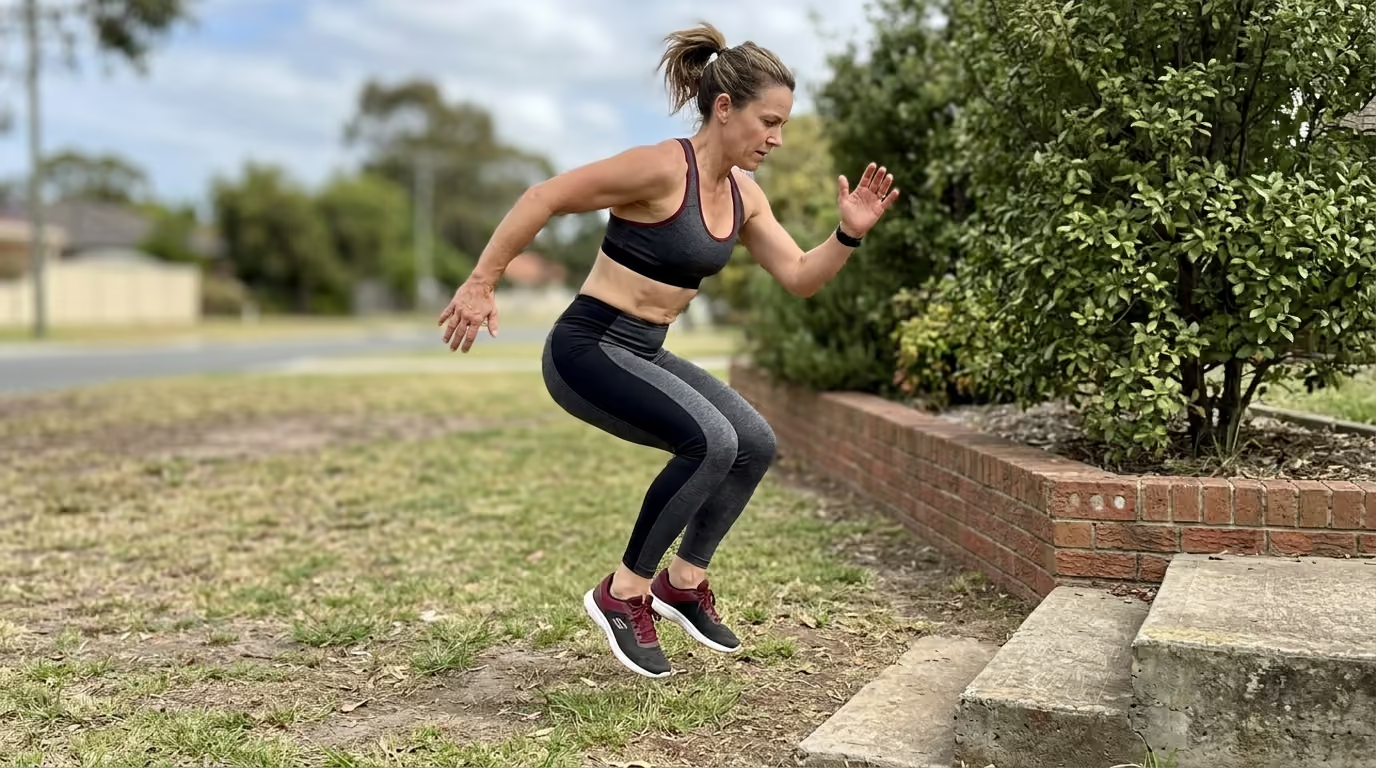
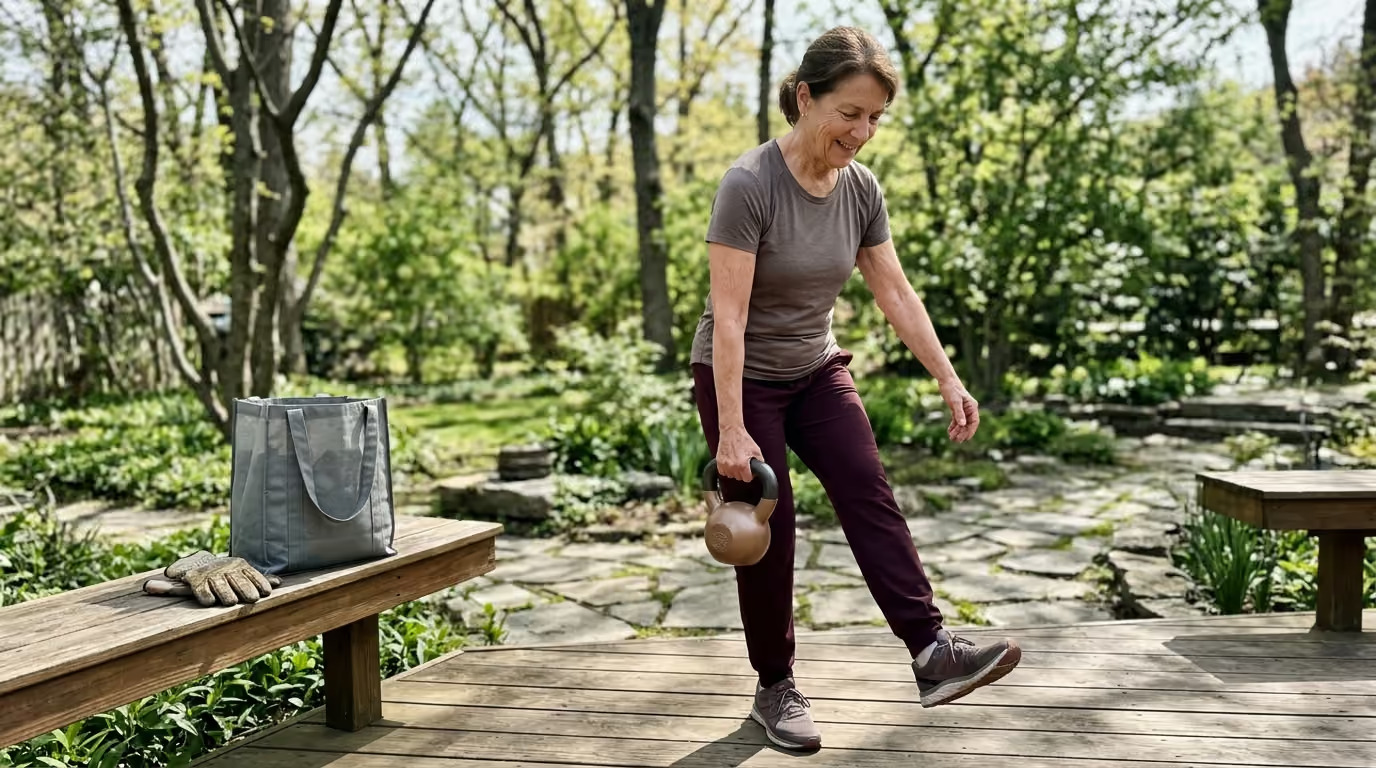
You do not need to perform aggressive box jumps or intense plyometrics to build athletic power. Power training simply means moving a moderate resistance as fast as possible during the concentric phase. You can safely build dynamic power using rotational medicine ball throws, kettlebell swings, sled pushes, and explosive step-ups.
Many fitness trends suggest that all spinal movement is harmful, promoting planks as the only safe core exercise. However, rotational athletes must be able to rotate through the thoracic spine while stabilizing the lumbar segment. A complete core program should include both anti-rotation holds and controlled rotational patterns to reflect real athletic movement.
Unilateral sports like tennis and golf are inherently asymmetrical. Expecting your dominant swinging side to match your non-dominant side in muscle mass and rotational mobility is unrealistic. The practical goal is ensuring both sides have sufficient strength, control, and pain-free range of motion to avoid overloading compensatory structures.
You do not need to spend ten hours a week in the gym to build resilient rotational power. Scientific guidelines show that performing challenging resistance training just twice a week produces significant gains in strength, power, and movement quality. By focusing on multi-joint movements and sport-transfer exercises, you can complete a highly effective workout in 45 minutes.
Always perform your explosive power exercises early in the workout when your nervous system is fresh. Keep the volume of power drills low, focusing entirely on high movement speed and clean landings rather than chasing fatigue. To learn more about balancing training stress with quality rest, visit our strategic recovery protocols.
Exercise scientists, physical therapists, and sports medicine organizations agree on key principles for training mature athletes. You should modify exercise selection to accommodate your joint history, prior injuries, and structural anatomy, rather than following rigid routines.
Joint wear does not mean you must avoid strength training. Resistance exercise stimulates synovial fluid production, which nourishes cartilage and strengthens the muscles supporting the joint. If deep squats cause knee irritation, switch to box squats, reverse lunges, or sled pushes. These alternatives build leg drive while keeping joint stress within a comfortable range.
Tendons require progressive, mechanical loading to maintain stiffness and spring-like function. If you have a history of Achilles or patellar tendon sensitivity, avoid high-speed plyometrics early in your training cycle. Begin with heavy, slow resistance training and isometric holds to stimulate collagen remodeling without irritating the tendon.
Overhead service motions and high-velocity racquet follow-throughs can strain the subacromial space. If overhead barbell pressing causes discomfort, replace it with landmine presses or half-kneeling dumbbell presses. Add chest-supported rows, face pulls, and prone trap raises to keep your upper back and rotator cuff strong and resilient.
For broader perspectives on staying durable, explore our collection of longevity and physical performance articles.
Building physical capacity does not require overhauling your daily life. Small, consistent actions performed every week create lasting improvements in your movement, power, and durability on the court, course, or mountain.
Stay connected for research and practical guidance on longevity, strength, recovery, energy and active living. New ideas to help you stay capable, curious and ready for more.


Explore practical guidance on strength, recovery, energy, travel and longevity for a life that stays active.
explore the Blog