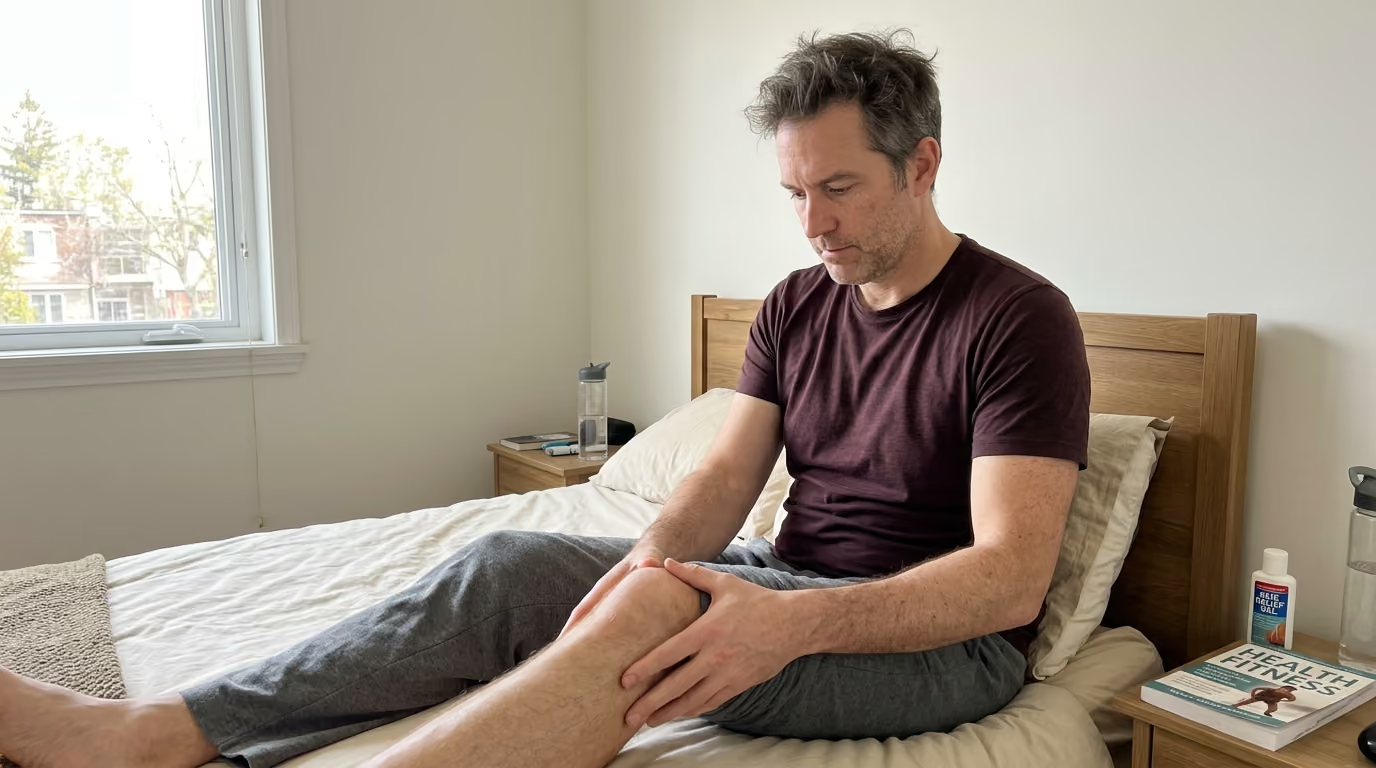

Seven sport categories require tailored physiological restoration strategies to manage tissue damage, metabolic depletion.





Why does recovery take so much longer after 40? If you have typed that question into a search bar after a punishing weekend tennis match or a heavy morning lift, you are not alone. Most active adults assume that midlife recovery requires a universal slowdown, but the scientific literature tells a very different story. This guide provides the definitive answer to how fatigue actually works across different sports and how to match your recovery strategy to the exact biological demands of your training.
Recovery is not an all-or-nothing switch that flips off on your fortieth birthday. Current research in sports science demonstrates that biological recovery depends far more on the specific mode of exercise than on chronological age alone. When exercise produces minimal structural tissue disruption, a healthy 45-year-old recovers at a rate remarkably similar to a 25-year-old.
Differences in recovery time emerge when training involves high muscular damage, unaccustomed eccentric loading, or high-impact collisions. Downhill mountain running, heavy barbell training to muscular failure, and rapid multi-directional court sports create structural and metabolic fatigue that require targeted interventions. A master athlete who feels completely refreshed 24 hours after a steady 50-mile road cycle may find themselves incapacitated for four days after an hour of aggressive downhill skiing.
A sophisticated recovery protocol must answer five fundamental questions. First, what specific type of fatigue was generated during the session? Second, which anatomical tissues and physiological systems took the brunt of the load? Third, how much time remains before your next demanding effort? Fourth, what is your current sleep, nutritional, and life-stress status? Finally, what objective and subjective signals indicate that you are ready to perform again?
Rather than following generic wellness advice or adopting extreme recovery routines, successful restoration requires matching your inputs to your outputs. By classifying sports by their primary fatigue mechanisms, you can apply targeted recovery strategies that protect your joints, restore energy systems, and maintain physical performance for decades to come.
To design an effective recovery strategy, you must first separate acute fatigue from residual fatigue. Acute fatigue is the temporary drop in power, speed, or force production that happens during or immediately following a workout. This acute drop stems from depleted cellular energy stores, metabolic by-product accumulation, and temporary neural inhibition.
Residual fatigue represents the lingering impairment that persists long after you step off the track or leave the gym. Residual fatigue shows up as reduced tendon stiffness, decreased rate of force development, impaired movement coordination, and suppressed morning motivation. For instance, repeated sprint sessions can depress neuromuscular output and subjective readiness for 48 hours or more.
Recovery is the physiological process of returning your neuromuscular, metabolic, hormonal, and psychological systems to their baseline state. Adaptation is the structural and functional improvement that occurs when adequate recovery follows a well-dosed training stimulus. If you aggressively blunt every natural inflammatory signal with extreme interventions, you may inadvertently compromise the very cellular adaptations you trained to achieve. The goal is recovery-adaptation coupling, which means clearing unnecessary systemic fatigue while allowing the natural biological signals for tissue repair to do their work.
Performance recovery and biological recovery rarely follow the same timeline. You might feel mentally energetic and free of muscle soreness while your deeper neuromuscular coordination and tendon stiffness remain compromised. Conversely, you might experience lingering muscular soreness even though your metabolic energy stores and maximal power output have fully returned.
Relying on a single metric, such as resting heart rate or subjective muscle tightness, provides an incomplete picture of your training readiness. Connective tissues, including tendons, ligaments, and articular cartilage, repair at a substantially slower rate than highly vascularized skeletal muscle. While muscle tissue benefits from rich capillary networks and rapid protein turnover, dense collagenous structures require more time to remodel after heavy mechanical loading.
Exercise-induced muscle damage involves microscopic disruptions to the sarcomeres within muscle fibers, accompanied by localized inflammation, cellular swelling, and temporary reductions in force output. This damage is driven predominantly by eccentric contractions, which occur when a muscle generates force while being forced to lengthen under load. Lowering a heavy dumbbell, absorbing ground impact while running downhill, braking into a deep lunge on a tennis court, and carving tight turns on a ski slope are all powerful eccentric actions.
Delayed-onset muscle soreness in active adults over 40 typically peaks between 24 and 48 hours following unaccustomed eccentric exercise. Full structural restoration and resolution of functional force deficits can take anywhere from three to five days depending on the total mechanical volume. If you mistake cardiovascular conditioning for structural tissue tolerance, you will consistently misjudge your post-exercise recovery timeline.
As the body matures, skeletal muscle can exhibit a phenomenon known as anabolic resistance. This term describes a subtle reduction in the muscle protein synthesis response to a given dose of dietary amino acids or resistance exercise. Anabolic resistance is most pronounced in sedentary populations, but masters athletes are not entirely immune to its effects.
Overcoming anabolic resistance does not require complicated supplementation. It simply means that older active adults must be more intentional with their daily protein distribution and total caloric energy availability. Consistent resistance training restores much of the muscle's sensitivity to amino acids. However, restricting calories too severely or skimping on protein intake compromises tissue remodeling and prolongs recovery across all athletic disciplines.
Every sport imposes a distinct combination of metabolic, mechanical, and neural stresses on the human body. Treating a long trail run, a heavy deadlift workout, and an afternoon of doubles tennis with the identical recovery routine leads to frustrating plateaus and overuse injuries. Exploring dedicated recovery and regeneration strategies allows you to customize your post-workout protocol based on the specific physiological stresses of your chosen activity.
Heavy resistance training places primary demands on local muscular structures, mechanical tension pathways, connective tissue insertions, and the central nervous system. The main drivers of post-lifting fatigue include high volume, training sets taken to absolute muscular failure, wide ranges of motion under load, and heavy eccentric lowering phases.
When you perform heavy compound movements, such as squats, overhead presses, and deadlifts, you induce significant mechanical strain on tendons and joint capsules. If you are balancing a busy career with an active lifestyle, structuring your strength and physical performance routine requires deliberate spacing between high-intensity sessions.
The recovery priorities for strength training center on distributed dietary protein to support muscle protein synthesis, sufficient total daily energy to prevent systemic catabolism, and adequate inter-session rest. High-load sessions targeting the same primary muscle groups should generally be spaced by 48 to 72 hours, allowing local contractile proteins and neural recruitment pathways to return to baseline.
Endurance disciplines, such as cycling, distance running, rowing, and cross-country skiing, generate a very different physiological profile. The dominant sources of fatigue in endurance training are glycogen depletion, fluid and electrolyte deficits, elevated thermal strain, prolonged cardiovascular demand, and cumulative skeletal impact.
In weight-bearing endurance activities like distance running, repetitive foot strikes create cumulative ground reaction forces that fatigue the lower-limb musculature and tendons. Furthermore, descending hills introduces an aggressive eccentric braking component that damages quadriceps fibers. Muscle damage from downhill running alters running economy for several days, forcing your heart and lungs to work harder at your usual training paces.
Endurance recovery mandates immediate and sustained carbohydrate replenishment to restore depleted liver and muscle glycogen stores. Fluid and sodium restoration must be matched to your individual sweat rate rather than based on arbitrary water targets. Low-intensity active movement, such as an easy spin on a stationary bike, can assist in restoring comfortable range of motion without adding further impact trauma.
High-intensity interval training, commonly known as HIIT, combines severe metabolic stress with rapid neuromuscular output. These workouts produce rapid phosphocreatine depletion, high glycolytic flux, significant metabolite accumulation, and acute sympathetic nervous system activation.
The recovery profile of high-intensity intervals depends heavily on the movement modality used during the session. Low-impact HIIT performed on an assault bike or rowing machine generates high cardiovascular and metabolic fatigue with minimal muscular micro-tears. In contrast, sprint interval training on a track or plyometric jumping drills impose massive eccentric deceleration and ground impact forces.
Repeated sprint protocols generate substantially greater neuromuscular depression and prolonged inflammatory signaling than steady-state conditioning. As an adult over 40, your primary recovery priority after sprinting or plyometric intervals is protecting the central nervous system and tendons. Rest intervals between challenging HIIT days should be conservative, ensuring you do not stack high-impact sprint stress on top of heavy lifting days.
Field sports like soccer, rugby, touch football, and lacrosse present a multifaceted recovery challenge. These sports combine prolonged aerobic running with repeated maximal sprints, sudden cutting maneuvers, rapid decelerations, and physical contact.
Match play in team sports causes profound intramuscular glycogen depletion across both slow-twitch and fast-twitch muscle fibers. Research examining soccer players demonstrates that muscle glycogen resynthesis can remain incomplete for up to 72 hours following a match. The continuous eccentric braking required during defensive cuts and sudden stops creates severe micro-trauma in the hamstrings, adductors, and calves.
Recovery for field sports must balance metabolic re-fueling with musculoskeletal protection. Aggressive post-match carbohydrate and electrolyte intake must be paired with tactical rotation and modified training volume early in the week. Prioritize restorative soft-tissue work and joint mobility while avoiding maximal sprint testing for at least two days after a full match.
Alpine skiing demands sustained isometric and eccentric quadriceps loading, high rotational forces through the knees, continuous trunk stabilization, and prolonged exposure to cold and altitude. Unlike many summer sports where muscle action is cyclical, skiing requires sustained, high-force knee flexion as you absorb terrain variations and resist centrifugal forces.
The downhill nature of skiing makes it an extraordinarily eccentric-heavy activity. Fit adults who possess exceptional cardiovascular endurance from cycling often find themselves completely immobilized after their first day on the mountain. The sustained lengthening under load, combined with cold temperatures that reduce tissue compliance, creates significant muscle damage.
Ski recovery begins with pre-trip eccentric strength preparation, but on-mountain recovery requires strict environmental and nutritional management. Cold air suppresses your natural thirst sensation, leading to subtle dehydration that thickens blood and impairs circulation to recovering limbs. Prioritize warm, carbohydrate-dense meals, active hip and ankle mobility routines in the evening, and adequate sleep to offset the combined stressors of altitude and physical exertion.
Tennis, squash, and pickleball feature explosive short-distance accelerations, sudden deceleration lunges, aggressive torso rotation, and repetitive unilateral upper-body impacts. While racket sports include natural pauses between points, the cumulative physiological strain is substantial.
The primary recovery challenges in racket sports stem from asymmetrical loading and repetitive tendon strain. The shoulder rotator cuff, wrist flexors, elbow common extensor tendons, patellar tendons, and Achilles tendons absorb high-velocity elastic energy on every shot and change of direction. Rotational power generated from the hips stresses the groin and lumbar spine in an asymmetric fashion.
Restoring the body after intense racket play requires structural rebalancing. Post-match priorities should include targeted mobility for thoracic spine rotation, eccentric calf stretching, and shoulder internal rotation restoration. Rehydration and carbohydrate intake are crucial during prolonged multi-set matches or multi-day tournament schedules to maintain reaction time and foot speed.
Many active adults over 40 do not stick to a single sport. Instead, they pursue a concurrent training model, combining barbell strength training, zone 2 cardiovascular sessions, weekend trail running, and recreational sports within the same week. The greatest risk in concurrent training is not the fatigue of any individual workout, but rather the cumulative collision of overlapping stressors.
Load collision occurs when you place two workouts that tax the same physiological structures too close together in your calendar. Performing a heavy squat workout on Monday evening followed by hill sprint intervals on Tuesday morning exposes your knee extensors and Achilles tendons to compounding eccentric micro-trauma before protein synthesis and cellular repair have occurred.
Managing mixed training demands a clear understanding of weekly load budgeting. Classify every workout by its tissue stress, metabolic profile, and neural intensity rather than its generic sport name. Ensure that your highest-priority quality sessions occur when you are freshest, and place your easy aerobic sessions between intense strength and sport workouts to support circulatory clearance without adding structural damage.
Understanding the physiology of recovery is valuable only when you can apply it to your actual weekly schedule. Let us examine how an active adult over 40 should manage recovery during common real-world physical challenges.
Consider a 48-year-old who runs regularly on flat suburban roads and decides to join friends for a strenuous two-day trail running retreat in the mountains. The routes involve steep ascents followed by long, rocky descents. Cardiovascularly, the runner feels comfortable on the climbs because their aerobic engine is well developed. However, the continuous braking forces during the long descents subject the quadriceps and patellar tendons to thousands of unaccustomed eccentric contractions.
If this runner relies solely on standard post-run stretching, they will likely wake up on Monday morning with severe quad stiffness and knee joint discomfort. A proactive recovery approach begins during the run by pacing the descents conservatively and avoiding bounding strides that amplify ground impact forces.
Immediately following the run, the priority shifts to replenishing glycogen and providing amino acids for muscle remodeling. Consuming a post-run meal with a three-to-one ratio of carbohydrates to protein within two hours kickstarts recovery.
Instead of sitting motionless in a car or cabin for the rest of the day, the runner should perform ten minutes of easy, unloaded cycling or gentle walking on flat ground to maintain local blood flow. Over the next 72 hours, high-impact running should be replaced with swimming or easy rowing while the eccentric muscle damage heals.
Imagine a 52-year-old executive who trains consistently in the gym with weights and cardio machines, flying out west for a four-day ski trip. On the first morning, excited by fresh powder, they ski aggressively from first chair to last without taking substantial breaks.
By the second afternoon, their quadriceps are burning, their reaction times are sluggish, and their movement coordination is visibly compromised. This is the precise window when most recreational ski injuries occur, as fatigued muscles fail to stabilize the knee joint against twisting forces.
To manage this multi-day physical demand, the athlete must treat the ski trip as an endurance event. Pacing on the first two days is critical; ending the ski day at 2:30 PM rather than pushing to the final lift preserves muscular reserve for the rest of the trip.
Post-ski recovery in the chalet should include active rehydration with electrolyte-rich fluids, a warm shower to promote peripheral blood vessel dilation, and fifteen minutes of restorative hip and ankle mobility work.
Spending time in an evening hot tub can provide comfort and muscle relaxation, but it should be kept to twenty minutes or less to avoid dehydration and sleep disruption. Protecting sleep quality by minimizing late-night alcohol intake ensures that the body can complete necessary hormone release and muscle repair before the next morning's first run.
A great deal of folklore surrounds the topic of recovery for mature athletes. Separating evidence-based physiological principles from marketing hype is essential for maintaining consistent progress and preventing burnout.
Many athletes believe that a workout is successful only if they experience intense delayed-onset muscle soreness the following day. This belief leads people to constantly rotate exercises, chase extreme fatigue, and pursue muscle damage for its own sake.
In reality, muscle soreness is simply a marker of novel mechanical strain, particularly eccentric loading. It is not a direct correlate of muscle growth, cardiovascular improvement, or functional capability. Constantly chasing severe soreness blunts your training frequency, increases injury risk, and impairs movement mechanics. The most productive training programs generate gradual, progressive performance adaptations with manageable, low-grade soreness.
Another common myth is that turning 40 causes an immediate, across-the-board collapse in your ability to recover from exercise. Active adults often internalize this narrative and prematurely abandon challenging physical pursuits.
Scientific reviews show that age-related recovery differences are surprisingly minor during familiar, low-damage aerobic activities. A well-conditioned 50-year-old cyclist or swimmer can often train with a frequency and volume that rivals younger peers. The age gap in recovery emerges primarily when training involves high-impact collisions, unaccustomed eccentric stresses, or severe total-body sleep and nutritional deficits. Midlife recovery is something you can actively influence through smart programming and disciplined recovery habits.
When systemic fatigue sets in, the instinct is often to remain completely sedentary on rest days, sitting on the couch for hours in the hope of speeding up tissue repair. While complete rest is necessary during acute illness or severe musculoskeletal trauma, total inactivity is rarely the fastest path to recovery from standard exercise fatigue.
Low-intensity active movement promotes blood flow, clears local metabolic by-products, maintains joint range of motion, and stimulates the parasympathetic nervous system. A gentle 20-minute walk in natural light, a relaxed swim, or a low-resistance spin on a stationary bike delivers oxygenated blood and nutrients to recovering tissues without creating new structural damage. Light activity also supports mental clarity and helps maintain healthy circadian rhythm patterns.
The wellness industry frequently promotes expensive recovery technologies, such as percussive massage guns, cold plunges, infrared saunas, and electrical muscle stimulators, as modern essentials for physical longevity.
While these modalities can offer modest temporary improvements in subjective soreness or relaxation, they represent only a tiny fraction of the total recovery equation. Using an infrared sauna or a massage gun cannot compensate for six hours of broken sleep, inadequate daily protein intake, or chronic dehydration. The primary drivers of tissue restoration will always be deep sleep, proper energy balance, targeted nutrition, and intelligent training design.
Optimizing your recovery does not require hours of complex daily rituals or radical lifestyle disruption. By focusing on the minimal effective dose of high-impact habits, you can achieve nearly all the benefits of advanced recovery science with minimal friction. To dive deeper into optimizing your nightly rest, examine our guides on recovery and sleep.
Sleep is the absolute bedrock of biological restoration. During slow-wave deep sleep and rapid eye movement phases, your body releases growth hormone, repairs micro-tears in skeletal muscle, consolidates motor learning from athletic practice, and restores neurotransmitter balance.
Adults over 40 should prioritize seven to eight and a half hours of continuous sleep opportunity each night. Keep your sleeping environment completely dark, quiet, and cool, ideally between 65 and 68 degrees Fahrenheit.
Limit caffeine intake after early afternoon, and avoid heavy alcoholic drinks close to bedtime. While alcohol can act as a sedative to put you to sleep, it severely fragments your sleep architecture and suppresses natural nocturnal tissue repair.
To overcome anabolic resistance and support continuous tissue remodeling, aim for a total daily protein intake between 1.6 and 2.2 grams of protein per kilogram of body weight, depending on your training volume.
Rather than consuming the vast majority of your protein in a single large evening dinner, distribute your intake across three to four meals throughout the day. Each meal should provide roughly 30 to 40 grams of high-quality protein containing a complete amino acid profile rich in leucine. This distributed pattern ensures a steady supply of building blocks for muscle protein synthesis and connective tissue support.
Carbohydrates are your body's primary high-octane fuel for intense strength training, sprinting, and endurance sessions. Chronic low-carbohydrate dieting combined with high-volume training elevates resting cortisol, impairs thyroid function, and prolongs muscle glycogen replenishment.
Scale your carbohydrate intake based on the physical demands of your day. On easy recovery days or light walking days, modest carbohydrate intake is sufficient. On days involving heavy lifting, interval training, or long endurance efforts, increase your carbohydrate intake around your training sessions to fuel performance and accelerate post-exercise glycogen restoration.
Proper hydration maintains blood plasma volume, supports cardiovascular efficiency, and facilitates nutrient delivery to recovering tissues. Dehydration of as little as two percent of your body mass can measurably impair power output, reaction time, and thermoregulation.
Weighing yourself before and after hot or prolonged workouts gives you an accurate estimate of your personal fluid loss. For every kilogram of body weight lost during exercise, consume approximately 1.25 to 1.5 liters of fluid paired with sodium over the following few hours.
Avoid the common mistake of drinking massive quantities of plain water without electrolytes, as this can dilute your blood sodium levels and trigger frequent urination without properly hydrating your cells.
Traveling across time zones for ski trips, mountain treks, or cycling adventures introduces environmental stressors that compound training fatigue. Managing these compounding variables ensures you arrive at your destination capable and ready to perform. To explore more strategies for active travel, review our dedicated resources on travel and adventure.
Aircraft cabin air is exceptionally dry, often maintaining humidity levels below fifteen percent. This dry environment accelerates respiratory water loss, thickening blood plasma and leaving you subtly dehydrated before your adventure even begins. Extended sitting in cramped seats also leads to blood pooling in the lower legs and stiffness in the hip flexors and lumbar spine.
During long flights, drink 250 to 350 milliliters of water with added electrolytes for every hour spent in the air. Wear medical-grade compression socks to support venous blood return and reduce lower-limb fluid accumulation. Stand up every 60 to 90 minutes to walk the aisle, perform gentle calf raises, and open up your hip flexors through gentle standing lunges.
Ascending to elevations above 6,000 feet imposes immediate physiological stress. The reduced partial pressure of oxygen forces your respiratory and cardiovascular systems to work harder during both exercise and rest. In cold mountain environments, you lose significant amounts of water vapor simply by breathing, while the cold air suppresses your sensation of thirst.
When arriving at high altitude, increase your baseline fluid and electrolyte intake by 500 to 1,000 milliliters per day. Keep your physical exertion modest on the first day to allow your autonomic nervous system and red blood cell dynamics to begin adjusting.
Limit alcohol intake during the first two evenings, as alcohol severely disrupts sleep architecture, amplifies altitude-induced headaches, and slows cellular rehydration.
Jet lag and circadian misalignment disrupt the hormonal rhythms that govern nocturnal tissue repair, digestion, and core body temperature regulation. When your circadian clock is desynchronized, your sleep efficiency plummets, impairing daytime reaction times and physical power.
Upon boarding an international flight, immediately set your watch to the local time of your destination. As soon as you land, seek out 20 to 30 minutes of natural outdoor sunlight to help reset your brain's central circadian pacemaker.
Align your meal times with the local schedule immediately, and perform a light, non-taxing movement session to signal to your peripheral muscle clocks that it is daytime. For more broad performance guidance, visit our main performance and fitness section.
The global sports medicine and exercise physiology community agrees that rigid, age-based recovery rules are outdated. Leading organizations, including the American College of Sports Medicine and the International Olympic Committee, emphasize an individualized, dynamic approach to athlete monitoring and load management.
Rather than taking a predetermined number of days off based solely on your birth year, utilize a simple four-signal readiness model before every demanding workout:
If all four signals look positive, you have a clear green light to execute your planned high-intensity or high-load session. If two or more signals are compromised, take an amber light approach: reduce your total working sets by 30 to 40 percent, stay several repetitions shy of failure, or substitute a high-impact run with a low-impact cycle.
If you experience focal joint pain, systemic illness, or severe physical exhaustion, treat it as a red light. Rest, perform gentle mobility, and allow your body to recover fully before applying another high-stress stimulus.
To translate these sport-specific recovery principles into immediate practical results, apply this simple checklist over the coming week:
Stay connected for research and practical guidance on longevity, strength, recovery, energy and active living. New ideas to help you stay capable, curious and ready for more.


Explore practical guidance on strength, recovery, energy, travel and longevity for a life that stays active.
explore the Blog