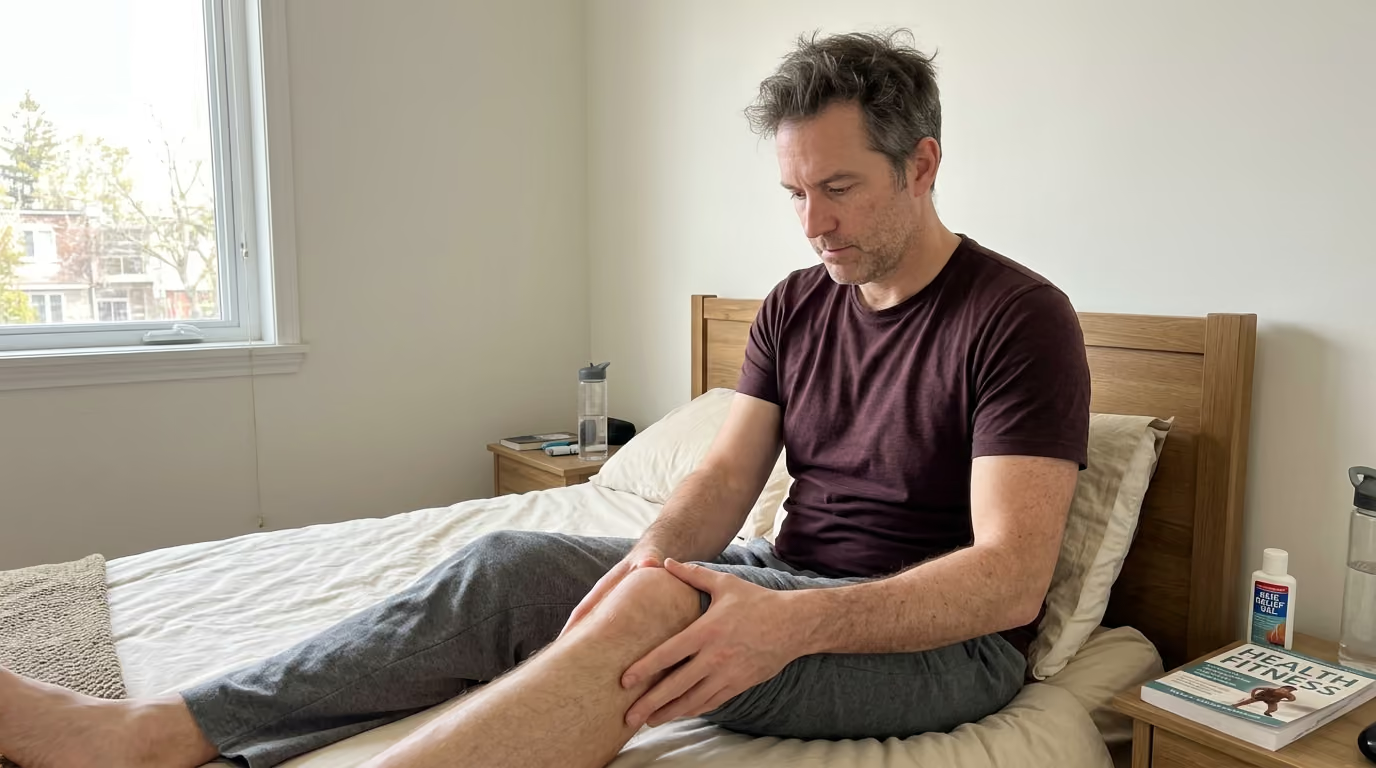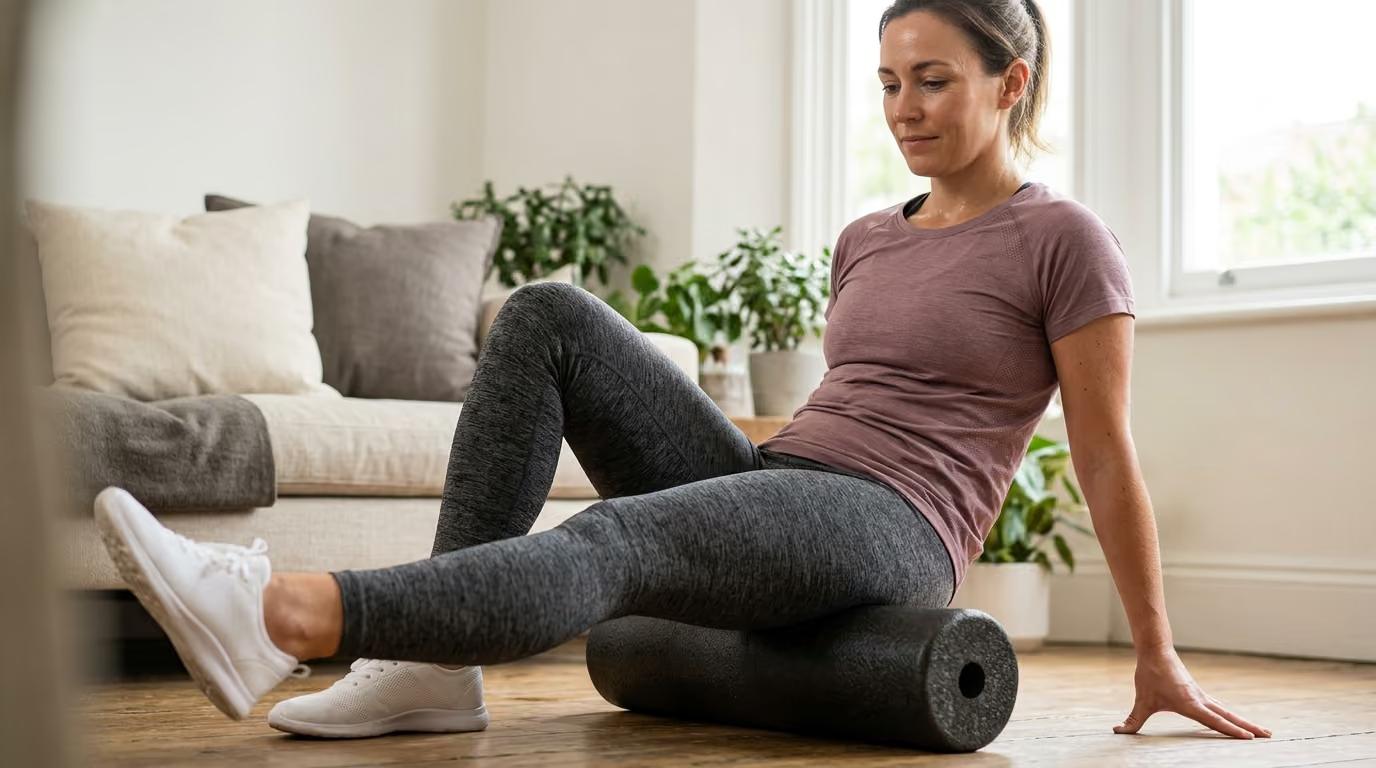

Foam rolling does not physically break up scar tissue but calms the nervous system to safely restore range of motion and relieve post-workout stiffness.





If you have ever searched online for how to relieve stiff muscles after training, you were likely told to buy a high-density foam roller and push through the pain. The fitness industry often promises that aggressive soft-tissue work breaks up scar tissue, flushes metabolic waste, and permanently resets muscle length. Yet when active adults over 40 apply intense pressure to sore limbs, they frequently end up with bruised tissues, aggravated joints, and little lasting change in how they move.
This guide provides a definitive, research-grounded approach to self-myofascial release. You will learn what the mechanical pressure actually accomplishes in your nervous system, how to select and apply the right tools, and when aggressive tissue work does more harm than good.
Self-myofascial release is a method of applying mechanical pressure to your own soft tissues using tools like foam rollers, massage balls, roller sticks, and percussion guns. It functions primarily as a neurological down-regulation and symptom-management tool rather than a structural remodeling instrument. When used correctly, it temporarily expands your joint range of motion and reduces the sensation of muscle soreness.
The primary value of tissue work is creating a short window of improved movement quality. According to a 2020 systematic review published by Skinner and colleagues, foam rolling produces a reliable, large acute increase in joint range of motion without sapping maximal strength or power. This makes it an effective preparatory strategy before lifting, running, or outdoor sports.
Tissue work should never replace the true pillars of systemic regeneration. SMR cannot substitute for sufficient sleep, adequate protein intake, progressive training load management, or targeted physical therapy. When you view self-myofascial work as an adjunct to evidence-based recovery and regeneration, you can use it to move with greater ease without wasting time on painful, counterproductive routines.
To use these tools effectively, you must understand the distinction between muscle tissue and fascia. Muscle tissue consists of contractile fibers that generate force and movement. Fascia is an uninterrupted web of connective tissue that wraps around and integrates muscles, nerves, blood vessels, and organs. Together, they form the myofascial system.
When you experience muscle tightness, it is rarely because the physical tissue has shortened like a shrunken wool sweater. Tightness is usually an active state of resting muscle tone regulated by your central nervous system. When the brain perceives mechanical overload, joint instability, fatigue, or threat, it increases neural drive to the area. This protective tension feels stiff and restrictive, but the underlying collagen fibers have not fused together.
Mechanical pressure from a foam roller or massage ball alters sensory feedback to your spinal cord and brain. Deep, slow pressure stimulates mechanoreceptors, such as Ruffini endings and Pacinian corpuscles, embedded within the myofascial layers. This input prompts the nervous system to decrease protective muscle tone and transiently alter local pain sensitivity.
The physical release you feel after rolling is primarily a neurological reset rather than a mechanical breakdown of scar tissue. Human fascia is remarkably strong and requires thousands of pounds of force to deform permanently. Foam rolling creates a temporary neurological window of reduced stiffness and improved comfort. What you do with that movement window through active mobility and strength work determines whether the change lasts.
Different tools apply mechanical forces across different surface areas and depths. Choosing the right tool depends on the anatomical target, your sensitivity, and your specific goal.
Standard foam rollers distribute body weight across a broad surface area. They are the most extensively studied self-myofascial tool in the sports science literature.
Smooth, medium-density rollers are ideal for broad muscle groups such as the quadriceps, hamstrings, and thoracic spine. Softer rollers allow your nervous system to relax without triggering protective guarding. High-density and deeply grooved rollers produce sharper, more localized pressure, but research has not shown them to produce superior mobility outcomes compared to smoother alternatives.
Massage balls provide localized, pinpoint pressure to tissues that a standard roller cannot isolate. They range from pliable tennis balls to dense lacrosse balls and specialized textured spheres.
These tools are well suited for the plantar surface of the foot, deep gluteal musculature, and the posterior shoulder complex. Because the contact area is small, you must control your applied body weight carefully. Forcing a hard rubber ball into sensitive structures can compress peripheral nerves and irritate underlying bursae.
Roller massage sticks consist of segmented rotating cylinders mounted on a rigid central shaft. They allow you to apply targeted pressure to your limbs using upper-body strength rather than supporting your entire body weight on the floor.
Sticks are practical for working the quadriceps, calves, and forearms while seated in a chair. They offer precise feedback because you can adjust the angle and force instantly with your hands. The main limitation is that you must avoid the temptation to bear down excessively on a single painful spot.
Percussion devices deliver rapid, repetitive mechanical strikes into soft tissue through an oscillating head. They provide a distinct sensory stimulus that can temporarily dampen pain perception and make muscles feel refreshed.
While popular, their scientific backing is younger and less robust than the literature on foam rolling. A 2024 review in sports medicine observed that while percussion therapy may assist short-term comfort and numerical jump markers, evidence is insufficient to prove it outperforms simpler tools for long-term recovery. Percussion guns should always be used on lower speed settings with broad attachments, keeping the head moving continuously across fleshy muscle bellies.
Self-myofascial release should follow a clear dose-response relationship. More pressure and longer duration do not equal faster tissue recovery.
The primary objective is to alter neural tone without causing localized trauma. For any targeted muscle group, spending 30 to 60 seconds of continuous, slow rolling is sufficient to achieve acute mobility gains.
Move the tool at a deliberate pace of roughly one inch per second. When you encounter a region of elevated tenderness, pause for 10 to 15 seconds while taking slow, diaphragmatic breaths. If the discomfort feels sharp, radiates, or causes you to hold your breath, decrease the pressure immediately. Two sets of 30 to 60 seconds per muscle group represent the standard ceiling for productive tissue work.
Pain is not a reliable indicator of therapeutic progress. When pressure exceeds a mild to moderate threshold, roughly a 4 or 5 on a 10-point discomfort scale, your nervous system responds defensively.
Excessive pressure triggers localized muscle contraction, elevated sympathetic nervous system arousal, and potential capillary damage. Bruising after soft-tissue work is a sign of tissue trauma, not a marker of successful release. Your goal is to coax the underlying musculature into relaxation through calm sensory input.
Passive rolling alone yields temporary results that typically fade within 10 to 30 minutes. To make your mobility improvements functional, immediately follow your tissue work with active, loaded movement through the newly accessible range.
If you roll your calves to address restricted ankle mobility, follow the rolling with standing calf raises through a full deficit and slow bodyweight squats. This process teaches your nervous system that the expanded joint range is safe, stable, and usable for sport. Pairing tissue work with active drills forms the foundation of long-term strength and physical performance.
Applying mechanical pressure requires anatomical precision. Follow these step-by-step techniques to address common areas of tightness while protecting vulnerable joints, nerves, and vessels.
The gastrocnemius and soleus complex frequently develops elevated tone from walking, running, and hill climbing. Improving soft-tissue compliance here can restore ankle dorsiflexion and relieve stress on the knee and Achilles tendon.
Spend 30 to 45 seconds per side. Never apply direct, heavy compression to the thin Achilles tendon itself or the soft crease directly behind your knee joint.
The quadriceps endure significant eccentric stress during downhill hiking, running, and heavy lower-body training. Targeted rolling helps restore comfortable hip extension and knee flexion.
Perform two passes of 45 seconds per leg. Avoid rolling directly over the patella bone or compressing the sensitive anterior hip capsule.
Stiff hamstrings are common among active adults who spend portions of the day seated before exercising. Light rolling reduces protective tone without overstretching the proximal tendon attachments.
Maintain gentle, steady pressure for 45 to 60 seconds. If you feel a sharp, electrical sensation near the sitting bone, shift the roller outward to avoid irritating the sciatic nerve.
The gluteus maximus, medius, and deep hip rotators generate propulsion and stabilize the pelvis during single-leg activities. A massage ball or firm roller helps address deep stiffness in the posterior hip.
Work the area for 45 seconds per side. Avoid pressing the tool directly into the hard bony ridge of the greater trochanter on the side of your hip or the sacrum at the base of your spine.
Many athletes attempt to aggressively roll the iliotibial (IT) band along the outside of the thigh to treat lateral knee pain. The IT band is a massive, rigid tendon-like sheet of fascia that cannot be rolled out or mechanically lengthened.
Direct compression of the bony lateral femur and the distal IT band often aggravates underlying bursae and periosteum. Focus your effort on the muscular attachments at the hip and the adjacent quadriceps muscle belly instead.
The plantar fascia supports the arch of your foot and absorbs heavy ground reaction forces during running and walking. Foot rolling stimulates local mechanoreceptors and provides relief after long days in rigid footwear.
Spend 60 seconds per foot. If you suffer from acute, inflammatory plantar fasciitis, avoid forceful digging directly into the painful attachment point at the front of the heel bone.
Sedentary postures and heavy pack carrying can restrict thoracic extension and rotation. Foam rolling the mid-back helps restore spinal mobility without straining the lower back.
Work the thoracic spine for 60 seconds. Never roll the unsupported lumbar curve of your lower back or the cervical vertebrae of your neck, as direct pressure can hyperextend these mobile spinal regions.
Tight pectoral muscles can pull the shoulder girdle forward, limiting overhead reach and rotational power during swimming, golf, and tennis. A massage ball placed against a smooth wall provides controlled relief.
Spend 30 to 45 seconds per side. Maintain clear space away from the front of the shoulder joint capsule, the armpit, and the soft tissues of your neck.
Structuring your tissue work appropriately around physical activity ensures you gain the intended benefits without creating excessive fatigue.
Before resistance training, trail running, or competitive sport, your goal is to reduce neural stiffness while priming the nervous system for high force output. Keep your tissue work brief, targeted, and dynamic.
Begin with a light general cardiovascular warm-up for three to five minutes to elevate core tissue temperature. Follow this with 30 to 45 seconds of moderate-paced rolling on one or two muscle groups that feel notably restricted. Immediately transition into dynamic joint mobility drills, such as hip openers, leg swings, and thoracic rotations. Complete your preparation with movement-specific activation sets at progressively higher loads.
This sequence takes advantage of the short-term mobility window created by SMR without dampening muscular power. Research from sports performance trials confirms that short pre-exercise rolling protocols enhance flexibility without diminishing subsequent sprinting speed or jumping height.
After demanding physical activity, your objective shifts toward down-regulating your sympathetic nervous system and easing post-exercise soreness. The emphasis should be on gentle, rhythmic application rather than aggressive tissue manipulation.
Begin with five minutes of easy active cool-down movement, such as flat walking or light cycling, to assist cardiovascular return. Move to a quiet space and spend 60 seconds rolling each major muscle group involved in the session. Maintain a slower rolling cadence and focus on complete, unhurried exhalations.
Post-exercise rolling does not clear lactic acid, which clears naturally via normal blood flow within an hour of exercise. Instead, it provides comforting sensory stimulation that can diminish the perceived severity of delayed-onset muscle soreness over the subsequent 48 hours. Wrap up your session by supporting your system through whole-food meals and quality rest, drawing on foundational practices from longevity and daily wellbeing.
Active travel, long-haul flights, and mountain adventures place unique physical demands on your musculoskeletal system. Prolonged sitting in cramped aircraft seats stiffens hip flexors, while multi-day trekking or alpine skiing overloads the lower extremities. Self-myofascial release provides a portable way to maintain physical readiness on the road.
When packing for international travel or adventure expeditions, leave bulky foam rollers at home. A single dense rubber massage ball or a compact, lightweight roller stick fits easily into carry-on luggage. These tools allow you to perform effective soft-tissue maintenance in hotel rooms, airport lounges, or mountain cabins without relying on specialized gym equipment.
After a long flight across multiple time zones, use a massage ball to release the plantar fascia and gluteal muscles before going for a brisk 20-minute walk in natural daylight. This combination stimulates sensory receptors in the feet, restores normal pelvic alignment, and resets circadian rhythms.
During multi-day adventure trips, such as trekking in the Alps or heli-skiing, spend five minutes each evening addressing your calves, quadriceps, and thoracic spine. This simple habit eases the accumulated muscular tension from continuous altitude changes and steep descents, keeping you ready for the next day on the mountain. For more strategies on staying physically capable during remote expeditions, explore our guides on travel and adventure performance.
While self-myofascial release is generally safe for healthy individuals, applying heavy mechanical pressure to compromised tissues can lead to significant clinical complications. An international Delphi consensus study led by Cheatham and colleagues established clear medical boundaries for foam rolling and related therapies.
Never apply mechanical pressure directly over open wounds, healing surgical incisions, or acute bone fractures. Rolling over an unstable skeletal injury or healing incision disrupts early tissue repair and can introduce infection.
Deep-vein thrombosis (DVT) is a critical contraindication. Applying mechanical compression or percussion to a limb containing a blood clot can dislodge the thrombus, potentially causing a life-threatening pulmonary embolism. If you experience unilateral leg swelling, localized heat, redness, or unexplained deep calf pain, seek emergency medical care immediately and avoid all forms of massage or rolling.
Direct tissue rolling is also contraindicated over sites of myositis ossificans, an uncommon condition where bone tissue forms inside a muscle belly following severe contusions. Aggressive mechanical pressure on these sites worsens heterotopic bone formation and accelerates local tissue damage.
Active adults taking prescription blood thinners or anticoagulants must exercise extreme caution. High-density rollers and high-powered percussion devices can cause extensive subcutaneous bleeding and intramuscular hematomas. If you take these medications, limit tissue work to light, broad strokes with soft tools.
Individuals with peripheral neuropathy or diminished skin sensation, common in diabetes, should avoid intense localized tools like massage balls. When sensory feedback is impaired, you cannot accurately judge applied pressure, dramatically increasing the risk of skin breakdown and deep tissue bruising.
Avoid direct, heavy pressure over areas of active joint inflammation, severe osteopenia, advanced varicose veins, and unstable spinal conditions such as severe spondylolisthesis. Always consult a licensed physician or physical therapist before introducing mechanical soft-tissue tools if you manage chronic vascular or orthopedic disorders.
More force is not better. A clinical case report published by Chen and colleagues documented severe rhabdomyolysis in an athlete following prolonged, aggressive use of a percussion massage gun on a single muscle group. Rhabdomyolysis occurs when damaged muscle tissue breaks down rapidly, releasing massive quantities of myoglobin into the bloodstream, which can cause acute kidney failure.
Warning signs of excessive tissue damage include severe, worsening muscle tenderness, localized swelling, profound muscular weakness, and dark, tea-colored urine. To avoid this risk, never park a vibrating percussion gun on a single spot for minutes at a time. Limit treatment to brief, sweeping passes across healthy, intact muscle tissue.
The fitness landscape is crowded with dramatic marketing claims regarding soft-tissue therapy. Dispelling these myths allows you to apply self-myofascial release with realistic expectations and maximum efficiency.
The belief that a foam roller can physically break apart dense collagen adhesions is biologically inaccurate. Human fascia and mature scar tissue are exceptionally dense, possessing a tensile strength comparable to soft steel. The mechanical forces generated by human body weight on a piece of foam are completely inadequate to physically deform or remodel scar tissue.
The immediate increase in flexibility you experience after rolling is driven by sensory mechanoreceptors signaling your central nervous system to reduce resting muscle tone. You are altering neural perception and tissue tolerance, not physically restructuring collagen networks.
Many athletes believe that agonizing pain is a prerequisite for effective recovery. In reality, intense pain triggers a protective sympathetic response, causing the body to brace and the targeted muscle to contract defensively.
Research indicates that mild to moderate discomfort produces the desired neuromuscular down-regulation without inducing tissue trauma. If a rolling session leaves you with bruised skin or causes you to clench your jaw, you have surpassed the therapeutic window and are causing unnecessary tissue irritation.
It is often claimed that rolling acts as a squeegee that pushes lactic acid out of tired muscles. This is physiologically impossible. Lactate produced during high-intensity exercise is a valuable fuel source that is rapidly cleared by your heart, liver, and neighboring muscle fibers through normal circulation, typically returning to baseline within an hour after exercise.
Foam rolling may help reduce the subjective sensation of soreness, but it does so by altering central pain processing and local neurovascular fluid dynamics, not by draining metabolic waste.
High-end massage guns are often marketed as complete warm-ups in a box. While 30 seconds of percussion therapy can temporarily reduce the feeling of stiffness, it does not elevate core body temperature, lubricate joint capsules with synovial fluid, or groove complex motor patterns.
A percussion gun can serve as an introductory step to ease local tightness, but it must always be paired with active mobility drills and progressive, loaded movement to prepare your body for the physical demands of training. You can explore additional structured warm-up frameworks across our full library of healthy aging and performance resources.
Use this practical checklist to integrate self-myofascial release into your weekly training schedule safely and efficiently.
Stay connected for research and practical guidance on longevity, strength, recovery, energy and active living. New ideas to help you stay capable, curious and ready for more.


Explore practical guidance on strength, recovery, energy, travel and longevity for a life that stays active.
explore the Blog