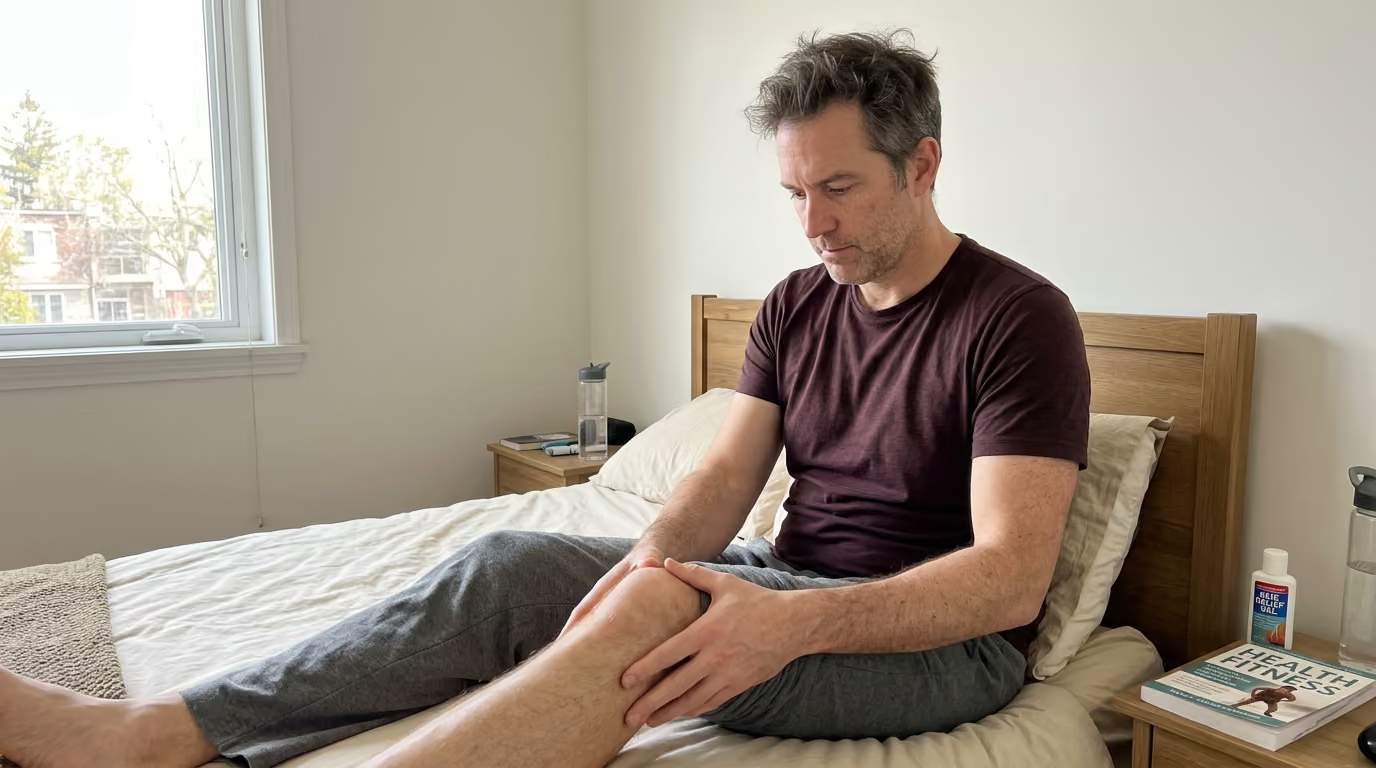

Athletic recovery is frequently viewed as an expensive indulgence, but practical post-workout routines and quick daily resets protect your body and maintain high performance.





You finish a grueling session, step out of the gym, and immediately rush into a conference call or an airport security line. Your heart rate remains elevated, your muscles are depleted of glycogen, and your nervous system stays locked in a heightened state of stress. Later that evening, you feel sluggish and stiff, wondering why your physical capacity is slipping despite consistent effort in the gym.
Most active adults do not suffer from a lack of discipline during their workouts. They struggle with the hours in between. When we treat recovery as an afterthought, fatigue accumulates silently across joints, metabolism, and cognitive focus.
Recovery is not an all-or-nothing indulgence requiring hours in a spa or expensive gadgets. It is a practical decision system that operates across three distinct time scales. By mastering five-minute transitions, structured post-exercise habits, and deliberate rest days, you can protect your joints, maintain high energy, and build lasting physical resilience.
True physiological recovery is the process of returning your body to full functional readiness after physical, cognitive, or environmental stress. It is not merely the absence of muscle soreness. You can have completely painless muscles while suffering from severe systemic fatigue, disrupted sleep architecture, and depleted hormonal reserves.
To build an effective routine, you must distinguish between three distinct recovery windows. Each window serves a specific biological purpose and requires a tailored approach.
The first horizon consists of five-minute resets. These brief micro-sessions reduce transition friction and downshift the autonomic nervous system immediately after a workout or a high-stress meeting. They prevent a jarring halt to physical activity and prepare your physiology for the next task.
The second horizon is post-workout recovery, which spans the first several hours after exercise. During this window, your primary objectives are rehydrating, replenishing glycogen stores, providing amino acids for tissue remodeling, and calming the nervous system.
The third horizon is the full rest day. This is a dedicated 24-hour period of reduced physical load designed to restore systemic energy availability, clear accumulated neurological fatigue, and support deep restorative sleep.
When you organize your habits around these three horizons, recovery becomes manageable. You no longer need to overhaul your entire lifestyle to see meaningful improvements in how you feel and perform.
Athletic restoration is multidimensional, involving sleep architecture, cellular hydration, energy availability, and psychological decompression. Research in exercise metabolism establishes that recovery is governed by four core pillars, known collectively as the 4R framework. Understanding these biological mechanisms allows you to choose the simplest, most effective intervention for any given day.
During vigorous exercise or extended travel, your body loses substantial volumes of water and essential minerals through sweat and respiration. Typical sweat rates range from 0.3 to 2.4 liters per hour, depending on ambient temperature, humidity, genetics, and exercise intensity. Elite endurance athletes in extreme environments have recorded sweat rates as high as 3.7 liters per hour.
When you lose more than two percent of your body mass through fluid loss, cardiovascular strain increases and physical performance drops noticeably. Dehydration reduces blood plasma volume, forcing your heart to beat faster to deliver oxygen to working muscles. Rehydration is not just about drinking water. It requires replacing sodium and other electrolytes so your cells can actually retain the fluid you consume.
Carbohydrates are the primary fuel source for high-intensity muscular contractions and central nervous system function. When you train, you deplete glycogen stored in your liver and skeletal muscle tissue. Restoring these reserves requires dedicated carbohydrate intake scaled to the intensity and duration of your training.
Energy availability refers to the amount of dietary energy remaining for basic physiological functions after accounting for the energy burned during exercise. When energy availability drops too low for too long, the body downregulates metabolic rate, hormone production, bone density remodeling, and immune defense. Refueling ensures your body has the raw energetic currency required to adapt to physical stress rather than break down.
Mechanical tension and eccentric muscle contractions cause microscopic disruptions in muscle fibers and connective tissue. High-quality dietary protein supplies the essential amino acids needed to stimulate muscle protein synthesis and repair damaged structures.
This repair process is not confined to a narrow, panicked thirty-minute window. Exercise increases anabolic sensitivity in skeletal muscle for at least 24 hours. Consuming sufficient high-quality protein across regular meals throughout the day provides a steady stream of amino acids for ongoing tissue remodeling.
The final pillar is rest, which encompasses sleep quality, circadian alignment, and parasympathetic nervous system reactivation. While training stimulates adaptation, the actual structural and neurological adaptations occur while you rest.
Without adequate sleep and low-stress intervals, your body remains in a catabolic state dominated by elevated cortisol and sympathetic tone. Systematic rest allows growth hormone secretion, cellular waste clearance in the brain, and psychological decompression.
To explore comprehensive protocols for nervous system balance, review our dedicated guide on recovery and regeneration strategies.
As we cross 40, biological margins for error become narrower. Sleep disruptions, slower tendon remodeling, and changes in metabolic efficiency mean that foundational lifestyle habits carry far more weight than any quick fix.
The National Sleep Foundation recommends seven to nine hours of nightly sleep for adults, and seven to eight hours for older adults. Yet data shows that active individuals frequently suffer from substantial sleep deficits. In a study of 338 athletes, 64 percent were classified as poor sleepers based on clinical sleep quality scores, and 21 percent reported significant daytime sleepiness.
The same research revealed that athletes naturally slept longer on designated rest days, increasing their sleep duration from roughly 8.0 hours on training days to nearly 8.6 hours on rest days. This increase was driven primarily by going to bed earlier.
Sleep extension has profound effects on physical comfort and pain tolerance. Research examining sleep-deprived individuals found that extending time in bed to 10 hours increased pain tolerance by 20 percent. Conversely, chronic sleep restriction roughly doubled sensitivity to muscle soreness and physical discomfort. Prioritizing an extra 45 minutes of sleep will do more for your physical readiness than any stretching routine or percussion device.
Optimizing your evening habits is essential for active longevity. You can read more about deep restorative rest in our section on sleep and recovery habits.
Drinking a generic amount of water each day is rarely sufficient for active adults. A far more accurate method involves tracking acute body mass changes during demanding workouts or warm-weather activities.
Weigh yourself immediately before a workout and immediately afterward in similar clothing, taking into account any fluid consumed during the session. If you have lost weight, that deficit is almost entirely water loss.
When your next demanding session is less than four hours away, sports medicine guidelines recommend consuming roughly 150 percent of the lost body mass, which equals 1.5 liters of fluid per kilogram lost. This fluid should contain sodium to facilitate fluid retention and prevent rapid urination. If your next workout is not until the following day, you can replace fluid losses more gradually with standard meals and water.
Refueling strategies must match your actual daily energy expenditure. The scientific consensus outlines specific daily carbohydrate targets based on training load:
For tissue repair, aim for 0.25 to 0.40 grams of high-quality protein per kilogram of body weight per meal. For an average-sized adult, this works out to roughly 20 to 40 grams of protein per feeding.
Pre-sleep nutrition can also support overnight tissue remodeling, especially after evening strength sessions. Clinical studies show that consuming 40 to 48 grams of slow-digesting casein protein roughly 30 minutes before sleep enhances overnight muscle protein synthesis and promotes greater long-term strength gains.
Additionally, daily supplementation with creatine monohydrate at roughly 0.1 grams per kilogram supports cellular energy regeneration, muscular force production, and glycogen replenishment.
For a deeper analysis of optimizing your daily intake, consult our detailed resource on nutrition and metabolism for performance.
A five-minute reset is a structured micro-routine designed to bridge the gap between high exertion and your normal daily routine. It is not intended to solve all physiological recovery needs. Its primary goal is to lower your heart rate, restore calm breathing, and prevent physical stiffness from setting in.
This template works effectively after any workout, long flight, or demanding work block:
Following heavy resistance training, your joints and spine have experienced significant compression and mechanical loading.
Begin with 60 seconds of relaxed walking around the gym floor. Spend the next two minutes performing unloaded hip hinges, gentle bodyweight squats, and quadruped thoracic rotations. Transition to one minute of slow diaphragmatic breathing while lying on your back with your feet elevated on a bench. Use the final minute to record your lifting numbers and prepare a post-workout protein meal.
Avoid aggressive, forced stretching immediately after lifting heavy weights. Your objective is simply to restore baseline resting muscle tone and normal joint circulation.
Endurance sessions create metabolic waste products and sustained cardiovascular strain.
Spend the first two minutes spinning on a stationary bike or walking at an easy pace. Use the third minute for standing calf stretches, ankle rotations, and gentle hip openers. Spend minute four focusing on deep nasal breathing to bring your heart rate below 100 beats per minute. In the final minute, begin sipping a carbohydrate and electrolyte beverage to start replacing fluids immediately.
Long hours spent in cramped airplane seats or cars lead to hip flexor stiffness, spinal compression, and sluggish circulation.
Immediately after deboarding or arriving at your hotel, find a quiet space. Spend two minutes walking at a brisk pace to restore systemic blood flow. Spend the next two minutes performing standing hip circles, alternating calf raises, and thoracic extensions with your hands behind your head. Use the final minute to drink a large glass of water and check local daylight exposure to align your circadian rhythm.
Cognitive stress triggers the same sympathetic fight-or-flight response as a demanding workout.
Step completely away from all digital screens. Spend the first two minutes walking outside or pacing comfortably in a quiet room. Spend minutes three and four performing slow shoulder rolls and neck releases while practicing box breathing: four seconds in, four seconds hold, four seconds out, four seconds hold. Use the final minute to identify the single most important task for your afternoon and drink a glass of water.
Your post-workout routine should never be one-size-fits-all. The urgency and composition of your recovery habits depend entirely on one critical variable: how much time you have until your next demanding physical session.
When you must perform twice in a single day, recovery becomes an active race against the clock. This scenario applies to multi-event competitions, double training days, or intense morning workouts followed by an active mountain trek.
Your immediate priorities are rapid rehydration and accelerated glycogen replenishment. Consume roughly 1.5 liters of fluid per kilogram of body weight lost during the first session, ensuring adequate sodium intake to retain those fluids.
Begin consuming carbohydrates within 30 minutes, aiming for approximately 1.2 grams of carbohydrate per kilogram of body weight per hour for the first four hours. Combine this with 0.3 to 0.4 grams of protein per kilogram to enhance muscle protein repair. Keep physical activity to an absolute minimum between sessions, staying off your feet in a cool, quiet environment.
Consider a practical example with a 70-kilogram individual who loses one kilogram of sweat during a morning workout and must train again that afternoon:
When you have a full day or more before your next workout, you do not need aggressive, rapid-fire protocols. Your body has ample time to restore glycogen and repair tissue through normal, balanced meals.
Eat a standard mixed meal containing high-quality protein, complex carbohydrates, and healthy fats within two hours of finishing your session. Replace your fluid losses steadily throughout the day by drinking water according to your thirst. Engage in light daily activities, such as walking or playing with your children, without worrying about rigid recovery timing. Focus your evening energy on getting to bed on time.
Training late in the evening presents a unique physiological dilemma. While exercise improves physical capacity, vigorous exertion within two hours of bedtime can elevate core body temperature and sympathetic nervous system activity, significantly disrupting sleep onset and sleep architecture.
If you must train late, dedicate at least 15 minutes to an extended cooldown. Use low-intensity walking and slow breathing to deliberately drop your heart rate. Consume a nutrient-dense, easily digestible meal that contains protein and moderate carbohydrates, avoiding heavy, high-fat foods that prolong digestion. Avoid all pre-workout supplements containing caffeine after 2:00 PM, and keep your bedroom temperature between 65 and 68 degrees Fahrenheit to help lower your core body temperature.
For specialized training guidance designed to keep you resilient as you age, visit our collection on strength and physical performance.
A dedicated rest day is not an excuse for complete, motionless immobility. In the scientific literature, a rest day is defined as a 24-hour period free from high-intensity physical stress. The goal is to facilitate systemic tissue repair, restore mental focus, and prepare your body for the upcoming training block.
Sports science research strongly recommends scheduling at least one complete rest day every week. Studies confirm that athletes consistently achieve longer sleep duration and better subjective recovery scores on these scheduled lower-load days.
A well-executed rest day follows a clear, relaxing rhythm from morning to evening:
After several days of heavy lifting, your central nervous system and connective tissues need a break from high axial loading.
Keep your physical activity limited to casual walking and light, bodyweight mobility drills. Do not perform high-volume bodyweight circuits or explosive plyometrics. Maintain your standard daily protein intake, spreading it across three to four meals, and consume sufficient carbohydrates to ensure muscle glycogen is fully replenished for your next lifting session.
Following long cycling, running, or rowing sessions, your primary needs are metabolic restoration and structural deloading for your feet and lower joints.
Consider a 15-minute easy spin on a stationary bike with virtually zero resistance, or take a flat walk on a soft surface like grass or a trail. This gentle movement encourages blood flow and lymph clearance without creating mechanical damage. If your body weight is still below baseline from a previous long workout, continue prioritizing fluids and sodium alongside carbohydrate-rich meals.
When professional deadlines and cognitive demands peak, your overall physiological capacity decreases. Forcing yourself through a brutal workout on such days often leads to overtraining or injury.
Treat high-stress workdays as systemic recovery opportunities. Cancel non-essential meetings and schedule brief five-minute walking breaks between calls. Avoid relying on excessive caffeine to mask fatigue, as this will only disrupt your sleep later that night. Make an early bedtime your non-negotiable priority for the day.
The fitness industry is filled with aggressive marketing for gadgets, supplements, and extreme protocols. Much of this hype distracts from the basic biological habits that actually drive recovery.
For decades, lifters believed that failing to drink a protein shake within 30 minutes of a workout ruined their muscle gains. Modern nutritional research has thoroughly debunked this myth.
While consuming nutrients soon after exercise is beneficial, muscle tissue remains highly sensitive to amino acids for at least 24 hours post-workout. Meeting your total daily protein and calorie requirements across regular, well-spaced meals is far more critical than rushing to consume a shake the second you drop a barbell.
Ice baths and cold plunges have gained immense popularity, but their use must be carefully targeted. While cold water immersion effectively reduces acute muscle soreness and perceived fatigue, it can actively blunt long-term muscular adaptations.
Research demonstrates that regular cold water immersion immediately following resistance exercise dampens the cellular signaling pathways responsible for muscle hypertrophy and strength gains. If your primary goal is building muscle and strength, avoid ice baths immediately post-workout. Reserve cold therapy for multi-event tournaments or extreme endurance events where immediate short-term recovery takes precedence over long-term adaptation.
Many people believe that intense stretching prevents delayed onset muscle soreness. However, extensive clinical reviews show that static stretching before or after exercise has virtually no meaningful effect on reducing muscle soreness over the subsequent 48 hours.
Stretching can temporarily improve joint range of motion and promote relaxation, but forcefully stretching an acutely damaged muscle can cause additional micro-trauma. Use gentle, active range-of-motion movements instead of aggressive static holds to improve comfort after hard training.
Drinking massive quantities of plain, distilled, or low-mineral water after heavy sweating can actually worsen dehydration. When you sweat, you lose both water and sodium.
Consuming large amounts of plain water without electrolytes dilutes the sodium concentration in your bloodstream. This triggers your kidneys to excrete water through urine, leaving you dehydrated despite drinking gallons of fluid. True cellular rehydration always requires a balance of fluid and electrolytes.
Active recovery is designed to stimulate circulation and promote relaxation, not create additional training fatigue. If your active recovery session causes heavy breathing, significant muscular fatigue, or excessive sweating, you are no longer recovering. You are simply performing another workout. Keep active recovery movements light, conversational, and genuinely restorative.
You do not need an elaborate, two-hour recovery protocol to stay healthy and perform at a high level. In fact, adding too many complex recovery tasks often creates unnecessary stress and schedule friction.
The most effective approach relies on the principle of the minimal effective dose. Identify your single biggest physiological deficit, address it with the simplest possible tool, and get on with your day.
To make smart decisions, organize your recovery interventions according to their proven physiological impact:
Never spend time or money on Tier 3 modalities if your Tier 1 foundation is broken. A twenty-minute massage or an expensive supplement cannot compensate for sleeping five hours a night and chronically under-eating.
Use these simple rules to determine your recovery priorities on any given day:
Travel and outdoor adventures place unique physical stresses on the body. Cabin pressure in airplanes, prolonged sitting, disrupted circadian rhythms, and sudden altitude changes all compound muscular fatigue.
Last winter in Chamonix, I noticed something striking. It was not the altitude that forced my peers into the lodge by noon, it was a lack of rotational strength and poor recovery from the flight. We spend so much time debating the perfect supplement stack, yet we neglect the basic foundational strength and simple recovery habits required to actually enjoy our travels. That trip changed how I approach fitness. I stopped training for aesthetics and started training exclusively for capability.
When you travel across time zones or head into the mountains, use a structured travel protocol to keep your body primed for adventure.
Airplane cabin air is exceptionally dry, accelerating respiratory water loss. Drink roughly 250 to 500 milliliters of water with added electrolytes for every three hours in the air. Avoid alcohol and excessive caffeine, both of which degrade sleep quality and worsen dehydration.
Stand up every 90 minutes to perform 20 seated ankle pumps, 10 standing calf raises, and gentle standing hip extensions in the aisle. This simple movement prevents venous blood pooling in the lower legs and keeps your spinal discs hydrated.
Upon arriving at your destination, do not head straight to the hotel bed for a long, unstructured nap. Instead, check into your room, change your shoes, and complete a brisk 15-minute outdoor walk.
Getting natural sunlight into your eyes sets your master circadian clock to the local time zone, suppressing daytime melatonin production. Drink a large glass of water containing electrolytes and eat a balanced, whole-food meal. Save your sleep for the local nighttime hours, aiming for at least eight hours in a cool, dark room.
For actionable strategies on staying capable and fit while exploring the world, read our articles on travel and adventure performance.
The broader sports medicine and exercise science communities share a strong consensus regarding recovery. Decades of peer-reviewed research validate several core truths:
When you build your daily routines around these proven scientific principles, you eliminate guesswork. You gain the confidence that your time and energy are invested in habits that genuinely enhance your physical capability.
To review more research-backed guides on functional health and longevity, visit the complete WealthAtPlay resources library.
Revisit these protocols whenever your lifestyle, training volume, or travel schedule changes significantly. You should review and adjust your recovery habits when:
True physical capability is built through consistent training combined with intelligent, repeatable recovery. Master the five-minute reset, fuel your body with precision after hard workouts, honor your full rest days, and you will maintain the strength and energy needed to live life on your own terms for decades to come.
Stay connected for research and practical guidance on longevity, strength, recovery, energy and active living. New ideas to help you stay capable, curious and ready for more.


Explore practical guidance on strength, recovery, energy, travel and longevity for a life that stays active.
explore the Blog