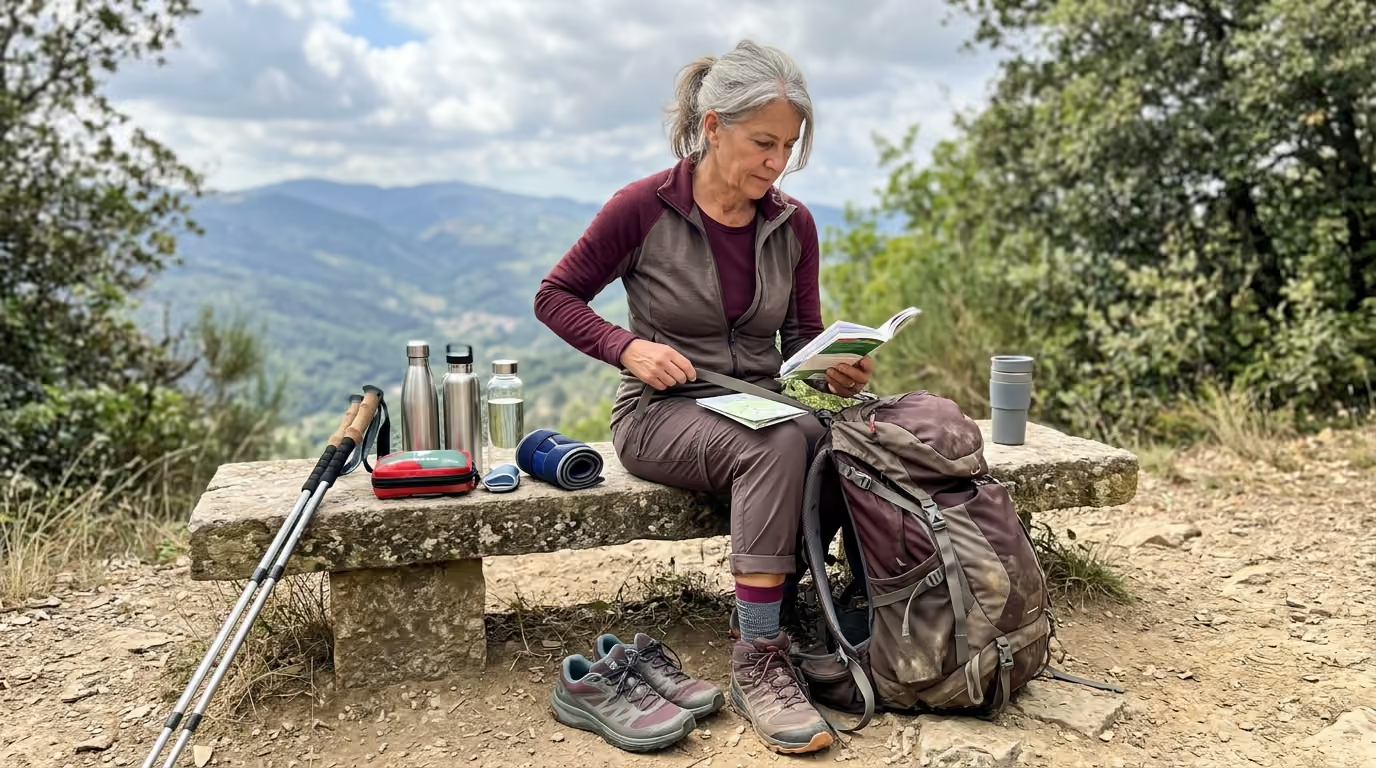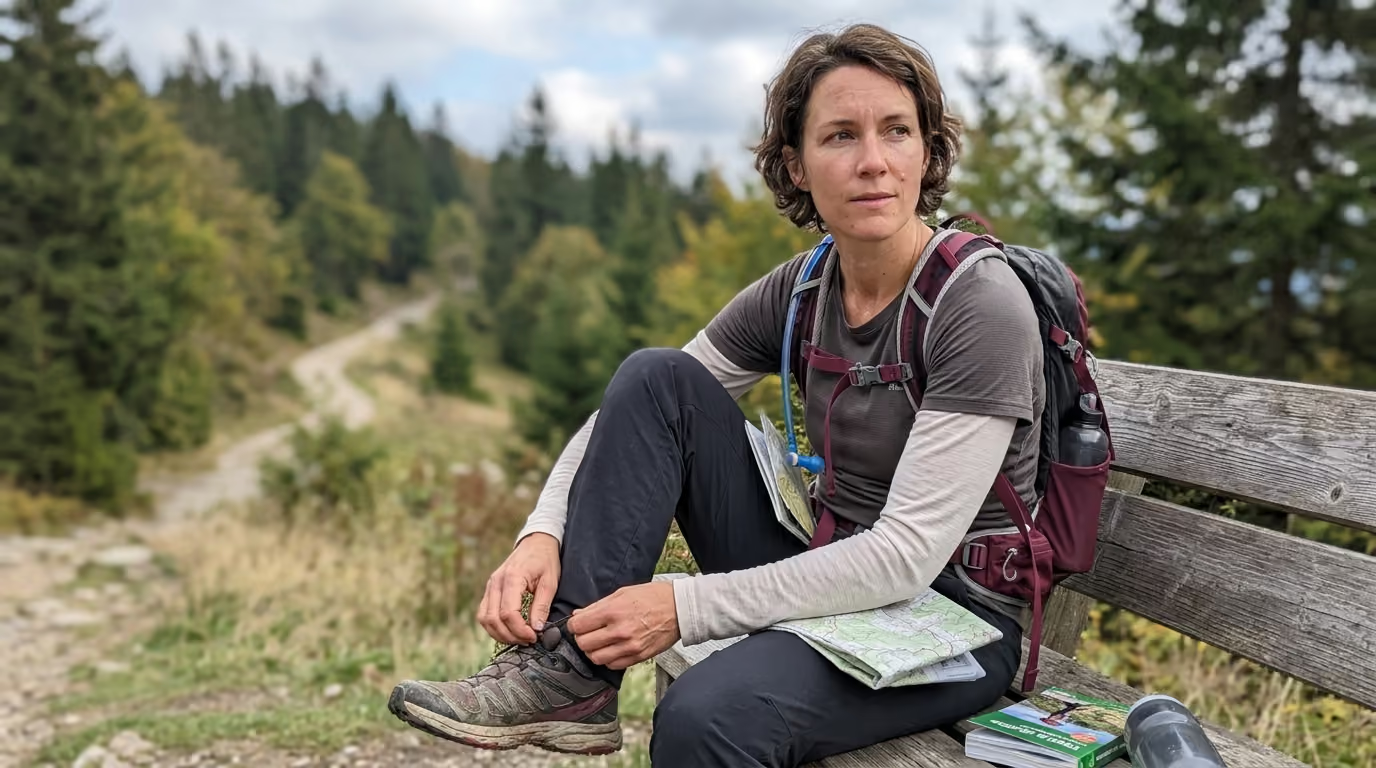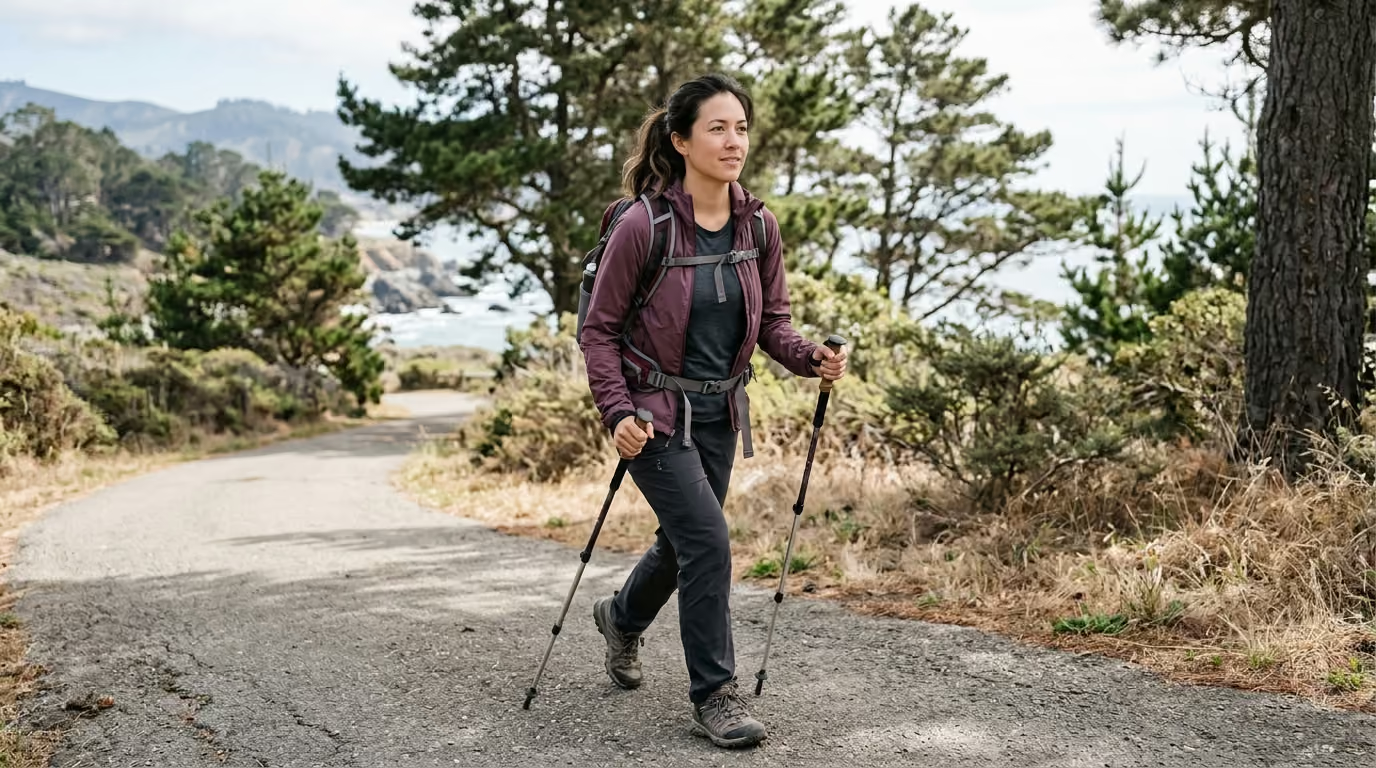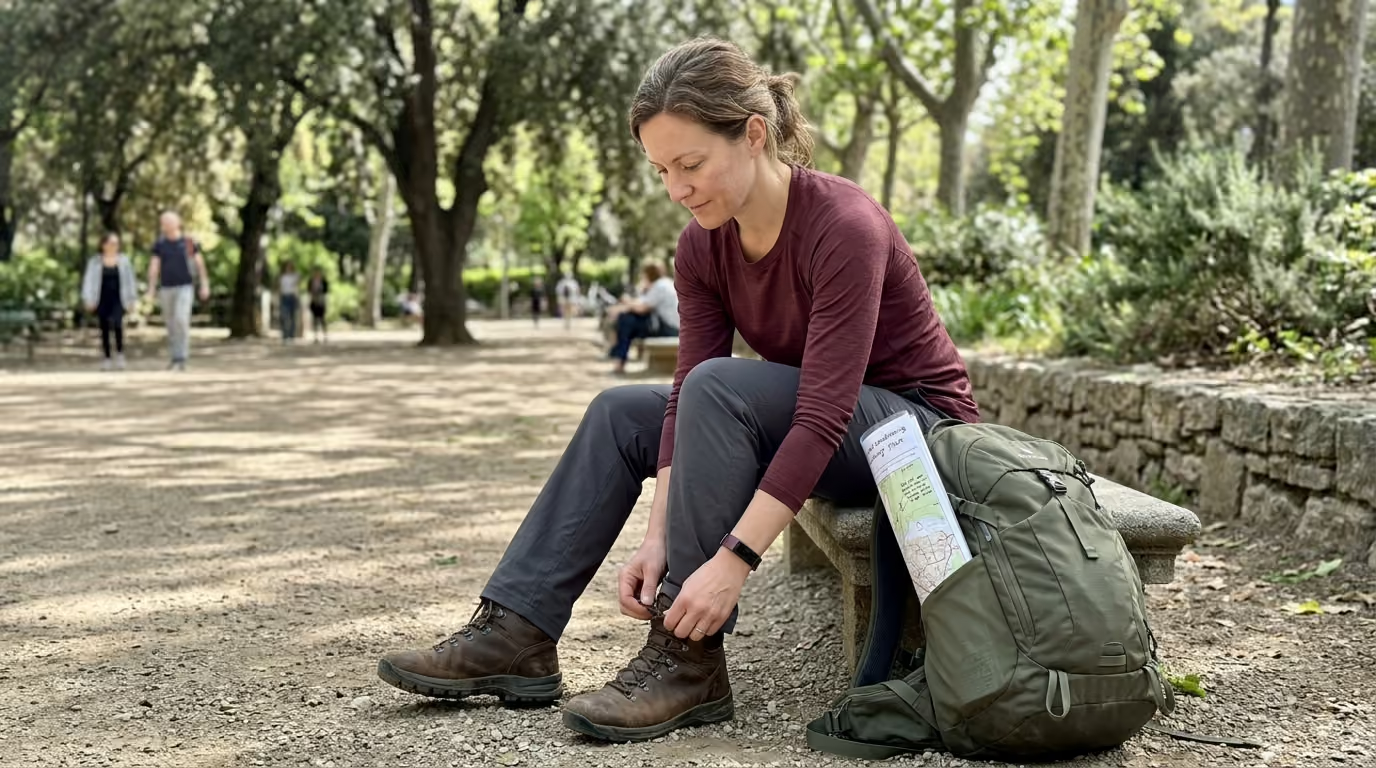

Walking-intensive travel conditioning combines progressive endurance training, targeted strength exercises, and structured multi-day walking rehearsal.





Walking-intensive travel conditioning is the deliberate preparation of muscles, joints, connective tissues, and aerobic capacity for multi-day pedestrian travel. It is not simply tracking daily steps on a smartwatch or logging elliptical sessions at the gym. A successful cultural trip through historic cities involves hours of upright standing, thousands of pavement impacts, stone staircases, and the added weight of daypacks. Building readiness requires progressive physical preparation that mirrors the exact physical demands of your destination.
This guide provides a comprehensive framework to prepare your body for demanding itineraries. You will learn the physiology of prolonged walking, the difference between movement volume and standing fatigue, and a progressive five-phase conditioning plan. We also cover luggage mechanics, footwear testing, active recovery between consecutive sightseeing days, and practical adjustments for travelers managing previous joint issues.
Many active adults assume regular gym workouts provide adequate fitness for a European walking tour or an extensive museum trip. When they arrive, they often experience unexpected lower back stiffness, sore arches, swollen ankles, and aching quadriceps by the third afternoon. Cardiovascular fitness does not automatically transfer to the specific tissue resilience required for prolonged urban walking.
Walking-intensive itineraries demand five distinct physical capacities that adapt at different rates:
Aerobic endurance allows you to walk continuously for hours while maintaining a sustainable pace and clear mental energy. You do not need the speed of a competitive athlete. You need the metabolic efficiency to walk several miles across an afternoon without feeling depleted before dinner.
Muscular endurance is the ability of the calves, quadriceps, hamstrings, glutes, and postural muscles to contract thousands of times per day. Every foot strike requires your lower leg and hip stabilizers to absorb force and propel you forward. When these muscles fatigue, extra stress shifts directly into the knee joints, plantar fascia, and lumbar spine.
Historic city centers, hillside villages, subway systems, and cathedral towers require substantial stair and hill climbing. Climbing demands concentric power from your glutes and calves. Descending requires eccentric braking from your quadriceps, which creates significantly more muscle soreness than flat walking.
Your skin, tendons, and plantar fascia must handle unfamiliar friction, pressure, and impact across hard stone and concrete surfaces. While cardiovascular fitness can improve quickly, dense connective tissues adapt more slowly to increased volume. Without gradual preparation, sudden jumps in walking volume create hot spots, blisters, and tendon irritation.
The definitive challenge of travel is consecutive-day volume. Completing a twenty-thousand-step day is relatively easy in isolation. Repeating that volume for five consecutive days while managing jet lag, rich meals, and interrupted sleep requires systematic physiological recovery. Building physical capacity allows you to wake up each morning ready for another full day of cultural exploration.
Step counts are a practical metric for tracking movement, but they tell an incomplete story about physical fatigue. A ten-thousand-step walk across a flat park in cool weather places very different demands on your body than seven thousand steps through a warm museum interspersed with three hours of standing. Travel conditioning must account for both dynamic walking steps and static standing time.
Static standing is an independent physical stressor. When you walk, the rhythmic contraction of your calf muscles acts as a secondary pump, helping return venous blood from your lower limbs toward your heart. When you stand still in museum galleries or transit queues, blood pools in the lower legs and feet, increasing hydrostatic pressure and local fatigue.
Research examining occupational standing demonstrates how quickly static postures create discomfort. A systematic review published in the journal Ergonomics found that clinically meaningful low-back symptoms typically develop after approximately 71 minutes of continuous prolonged standing. In individuals with preexisting postural sensitivities, symptoms emerged after just 42 minutes of static standing.
Static standing forces the postural muscles of your spine, pelvis, and feet to maintain continuous isometric tension. This constant load reduces local blood flow, leading to back stiffness and aching arches even when your total step count remains low. Travel preparation must deliberately train your tolerance for sustained time on your feet rather than focusing entirely on walking distance.
To design an effective conditioning plan, you should categorize your expected physical load across several variables:
Tracking these variables helps you understand the specific demands of your trip. You can review our in-depth performance guides to learn more about preparing your body for demanding physical pursuits.
Building travel capacity relies on the established exercise principle of progressive overload. The American College of Sports Medicine outlines the FITT-VP framework, which stands for frequency, intensity, time, type, volume, and progression. Applying this framework systematically prevents the overuse injuries that often occur when travelers increase their physical volume too quickly.
A complete travel preparation program progresses across five distinct phases.
The initial phase lasts one to two weeks and establishes an accurate picture of your current daily movement. Use a pedometer, smartphone, or wearable device to record your normal daily steps, longest continuous walk, and total stairs climbed. Record any minor aches, foot soreness, or morning stiffness that occurs during your regular routine.
Do not artificially inflate your activity during this phase. Understanding your genuine baseline allows you to progress safely without provoking joint inflammation or Achilles tendon strain. If your baseline average is four thousand steps per day, doubling that volume overnight increases injury risk.
Phase 2 spans two to four weeks and focuses on extending continuous time on your feet. Rather than trying to walk faster, keep your walking intensity moderate. You should be able to maintain a full conversation throughout the entire session without gasping for breath.
Structure your week with a combination of short baseline walks, one brisk outing, and a single extended long walk. Gradually increase the duration of this long walk by ten to fifteen minutes each week. Prioritize total continuous time over step counts, aiming to reach sixty to ninety minutes of uninterrupted walking.
Phase 3 lasts two to three weeks and introduces the specific environmental challenges of your destination. Once continuous flat walking feels routine, add gentle hills, outdoor stair flights, or uneven surfaces such as gravel and park paths.
Stair training develops the eccentric quadriceps strength needed for descending cathedral steps and subway stations. Begin by climbing and descending three to four flights of stairs during your regular walk, increasing the volume gradually over successive weeks. If you plan to carry a daypack while traveling, begin wearing it during these sessions with a light two-kilogram load.
Two to three weeks before departure, conduct full-dress travel rehearsals. This phase tests your complete travel system, including your primary walking shoes, technical socks, daypack, and hydration habits.
Schedule two consecutive days of substantial walking to simulate the reality of a multi-day itinerary. For example, complete a ninety-minute walk on Saturday followed by a sixty-minute walk with museum-style standing intervals on Sunday. This rehearsal exposes any shoe pressure points, seam friction, or lower back fatigue while you still have time to make equipment adjustments.
During the final week before travel, reduce your overall walking volume by thirty to forty percent while maintaining normal daily frequency. Avoid strenuous new workouts, aggressive hill sessions, or breaking in brand-new footwear during this period.
The goal of the pre-travel taper is arriving at your destination fully restored, with calm joints, hydrated tissues, and full glycogen stores. Use this week to finalize your footwear choices, pack your blister prevention kit, and rest.
Walking is a repetitive single-leg activity. With every stride, your entire body weight lands on a single foot, requiring dynamic stability from your ankle to your hip. Dedicated resistance training builds the structural integrity needed to absorb these forces day after day.
Integrating targeted resistance work from our strength and physical performance collection helps protect your joints against travel-related overuse injuries. Perform this compact strength routine two days per week alongside your walking progression.
Your calves absorb immense force during prolonged walking and uphill climbing. Perform straight-leg calf raises on a step to strengthen the gastrocnemius muscle, lowering your heels below the step for a full stretch. Follow with bent-knee calf raises to target the deeper soleus muscle, which provides critical endurance for long days on hard pavement.
Perform two to three sets of twelve to fifteen controlled repetitions. Focus on a slow two-second descent on every repetition to build resilient Achilles tendons.
Step-ups build functional strength in your gluteus maximus and quadriceps for climbing hills and stairs. Find a sturdy bench or step roughly twelve inches high. Step up driving through the heel of your lead foot, and avoid pushing off aggressively with your trailing toe.
Step-downs are equally vital because they train eccentric knee control. Stand on a low step and slowly lower your non-working heel toward the floor by bending your stance knee. Lower yourself over three slow seconds before returning to the start. Complete two to three sets of ten repetitions per leg.
Split squats build unilateral leg strength, hip mobility, and balance. Stand in a staggered stance and lower your back knee toward the floor until your front thigh is parallel to the ground. Keep your torso upright and your front foot planted firmly.
This movement strengthens the quadriceps while opening the hip flexors of the rear leg, countering the stiffness caused by long flights. Perform two sets of eight to ten repetitions per side with controlled movement.
The gluteus medius stabilizes your pelvis whenever you balance on one leg. Weak hip stabilizers allow the pelvis to drop during walking, increasing mechanical stress on the knees and lower back.
Perform lateral band walks or side-lying leg lifts to strengthen the hip abductors. Follow with double-leg or single-leg glute bridges, pressing through your heels to activate your glutes and hamstrings. Complete two sets of twelve to fifteen repetitions.
Carrying a daypack for six hours challenges your postural endurance. The dead-bug exercise and bird-dog movement build deep core stability without placing compressive loads on your lumbar spine.
Add farmer carries by walking fifty paces while holding a moderate dumbbell in each hand. Keep your shoulders back, chest proud, and ribs down to build the postural stamina needed for all-day sightseeing.
Footwear failure is the fastest way to derail a walking-heavy holiday. A minor friction hot spot on morning two can alter your walking mechanics, causing secondary knee or hip pain by afternoon four. Selecting and thoroughly testing your footwear system is a vital component of travel preparation.
A quality travel shoe requires several key characteristics:
Never take brand-new, untested shoes on a major trip. Break in your travel shoes across several weeks, including at least one continuous ninety-minute outdoor walk.
Socks are your primary defense against moisture and friction. Avoid pure cotton socks, which absorb and hold sweat against your skin, softening the epidermis and accelerating blister formation. Instead, select technical socks made from synthetic blends or lightweight merino wool that actively wick moisture away from your feet.
A military study published in Military Medicine demonstrated that over fifty-seven percent of recruits developed significant foot blisters during high-volume marching. Research in distance runners indicates that synthetic acrylic socks substantially reduce both the frequency and size of friction blisters compared to cotton.
To prevent friction issues during your trip, follow a practical foot care strategy:
Carrying external load fundamentally alters the biomechanics and metabolic cost of walking. Every kilogram added to your back or shoulder increases ground reaction forces, requiring greater muscular effort from your calves, quadriceps, and spinal erectors.
Scientific literature on load carriage shows that carrying external weight produces a predictable rise in energy expenditure. A comprehensive review published in Ergonomics demonstrated that metabolic expenditure increases approximately 7.6 watts for each additional kilogram carried during walking. Carrying a seven-kilogram daypack across an eight-hour sightseeing day significantly elevates your daily caloric and muscular demands.
Daypack design directly influences your perceived exertion and physical comfort. A biomechanical study published in Applied Ergonomics evaluated load carriage with and without backpack hip belts. The researchers found that utilizing an integrated hip strap significantly reduced oxygen consumption and lowered perceived exertion during walking trials.
The hip belt transfers a substantial portion of the pack weight from the delicate muscles of your neck and shoulders directly onto your pelvic girdle. When packing your daypack, position the heaviest items, such as water bottles and camera equipment, close to your spine and centered between your shoulder blades. Avoid loose, dangling straps that allow the pack to shift and pull you backward as you walk.
Distinguish carefully between transport loads and daily sightseeing loads:
Transport loads include large suitcases and primary travel backpacks used between airports, train stations, and hotels. Avoid carrying heavy duffel bags with single asymmetrical shoulder straps, which create uneven spinal compression and neck strain. Choose luggage with high-quality wheels, and practice lifting your packed suitcase up a flight of stairs at home to confirm you can handle it comfortably.
Your daily sightseeing pack should contain only essential items for that specific outing. Ruthlessly eliminate non-essential items, keeping the total pack weight under four to five kilograms whenever possible. If you need heavy guidebooks or maps, utilize digital versions on your smartphone to reduce physical weight.
Many adults planning significant travel have demanding professional and personal schedules that leave little time for multi-hour training walks. You can build substantial physical durability using a focused, time-efficient approach that emphasizes movement specificity.
The World Health Organization physical activity guidelines recommend a baseline of 150 to 300 minutes of moderate-intensity aerobic physical activity per week, alongside muscle-strengthening activities on two days. Meeting these baseline targets through purposeful daily habits provides strong foundational capacity for upcoming travel.
If your preparation window is limited to four to six weeks, focus your training on three high-yield physical habits:
Commit to a brisk twenty-to-thirty-minute walk every single day in your intended travel footwear. Walk at a purposeful pace where your breathing is elevated but you can still speak in complete sentences. This daily consistency conditions your lower leg tendons and foot skin to regular pressure and friction.
Incorporate stairs naturally into your existing daily routine. Bypass elevators and escalators at work, transit hubs, and shopping centers. Climbing four to six flights of stairs throughout your normal day builds functional quadriceps and calf strength without requiring dedicated gym time.
Schedule one progressively longer walk on the weekend, starting at forty-five minutes and increasing to seventy-five minutes. Wear your travel daypack loaded with three kilograms, and deliberately choose routes that include pavement, hills, and brief standing pauses.
This streamlined protocol delivers the majority of tissue adaptations required for successful sightseeing while easily fitting into a busy lifestyle. Adopting manageable movement practices supports overall health as outlined in our longevity and living well resources.
Travel conditioning does not end when your plane lands. How you structure your daily itinerary and manage recovery determines whether you feel energized throughout your journey or accumulate overwhelming fatigue. Active recovery techniques and sensible pacing allow your body to absorb daily physical volume without breaking down.
Effective recovery begins during the sightseeing day itself rather than waiting until you collapse into bed. Adopt proactive pacing strategies to keep muscular fatigue manageable:
Schedule intentional seated breaks before severe fatigue sets in. Plan a mid-morning coffee stop, a seated lunch, and an afternoon rest in a park or quiet café. Sitting for fifteen minutes every two hours allows lower leg fluids to redistribute and lets spinal muscles relax.
Avoid stacking high-fatigue venues consecutively. Alternate between standing-heavy museum visits and seated activities such as scenic boat tours, train journeys, or leisurely dining. If your morning involves three hours in an expansive art gallery, spend the afternoon on an outdoor walking route through open gardens where you can move at your own pace.
Warm weather magnifies the physical strain of walking itineraries. CDC travel health guidelines emphasize staying hydrated with non-alcoholic fluids, wearing lightweight, loose-fitting clothing, and planning strenuous outdoor walking during the cooler morning hours. When visiting warm destinations, spend the hottest midday hours exploring air-conditioned museums or resting at your hotel.
After a demanding day on your feet, take ten minutes in your hotel room to elevate your legs on pillows or against the headboard. This simple position assists venous return, reducing ankle swelling and foot heaviness. Perform gentle ankle circles and light calf stretching before going to sleep.
Prioritize consistent sleep to allow your muscles and connective tissues to repair. Learn more about post-travel recovery and sleep hygiene in our guide to recovery and sleep.
Structuring smart rest days into multi-week itineraries is equally important. After every three to four days of intense sightseeing, schedule a lower-demand day with minimal structured walking. Use this time for leisurely dining, relaxed transport, or simply enjoying your accommodations.
Review our complete library of travel and performance resources to help optimize your physical capability for international adventures.
Travelers with mild to moderate joint discomfort should focus on symptom-guided progression rather than rigid distance targets. Emphasize low-impact aerobic conditioning on flat, even surfaces and incorporate cycling or swimming to build cardiovascular capacity without joint pounding.
Strengthen the surrounding musculature using pain-free ranges of motion with step-ups, glute bridges, and straight-leg raises. Invest in highly cushioned travel footwear with supportive midsoles, and consider using lightweight trekking poles for trips involving uneven terrain, cobblestones, or steep descents.
Running provides exceptional cardiovascular fitness and muscular power, but it does not completely prepare you for all-day walking. Running involves a continuous flight phase with brief ground contact times, whereas walking requires sustained, low-load standing and continuous tissue pressure over many hours.
Runners often develop sore lower backs and stiff arches when transitioning to slow museum strolls and extended standing. Maintain your running base, but add one weekly long walk in your intended travel shoes, and practice standing intervals to prepare your postural muscles for static loads.
If a blister develops despite prevention efforts, clean the area thoroughly with mild soap and clean water or an antiseptic wipe. If the blister is intact, leave the roof of the skin in place to protect the underlying raw tissue from infection.
Apply a sterile hydrocolloid blister bandage directly over the clean, dry skin. Hydrocolloid dressings form a protective gel layer that cushions the area, reduces pain, and allows you to continue walking comfortably. If you notice signs of spreading redness, warmth, or increasing pain, seek local medical evaluation.
With a two-week window, you cannot safely rush a multi-month conditioning progression. Instead, prioritize specificity, equipment testing, and strategic itinerary management.
Immediately begin walking twenty to thirty minutes daily in the exact shoes and socks you plan to pack. Perform basic calf raises and sit-to-stands daily to prime your lower legs. Most importantly, edit your travel itinerary to include built-in rest periods, transit passes for hilly sections, and advance-booked museum tickets to eliminate standing in long queues.
Stay connected for research and practical guidance on longevity, strength, recovery, energy and active living. New ideas to help you stay capable, curious and ready for more.


Explore practical guidance on strength, recovery, energy, travel and longevity for a life that stays active.
explore the Blog