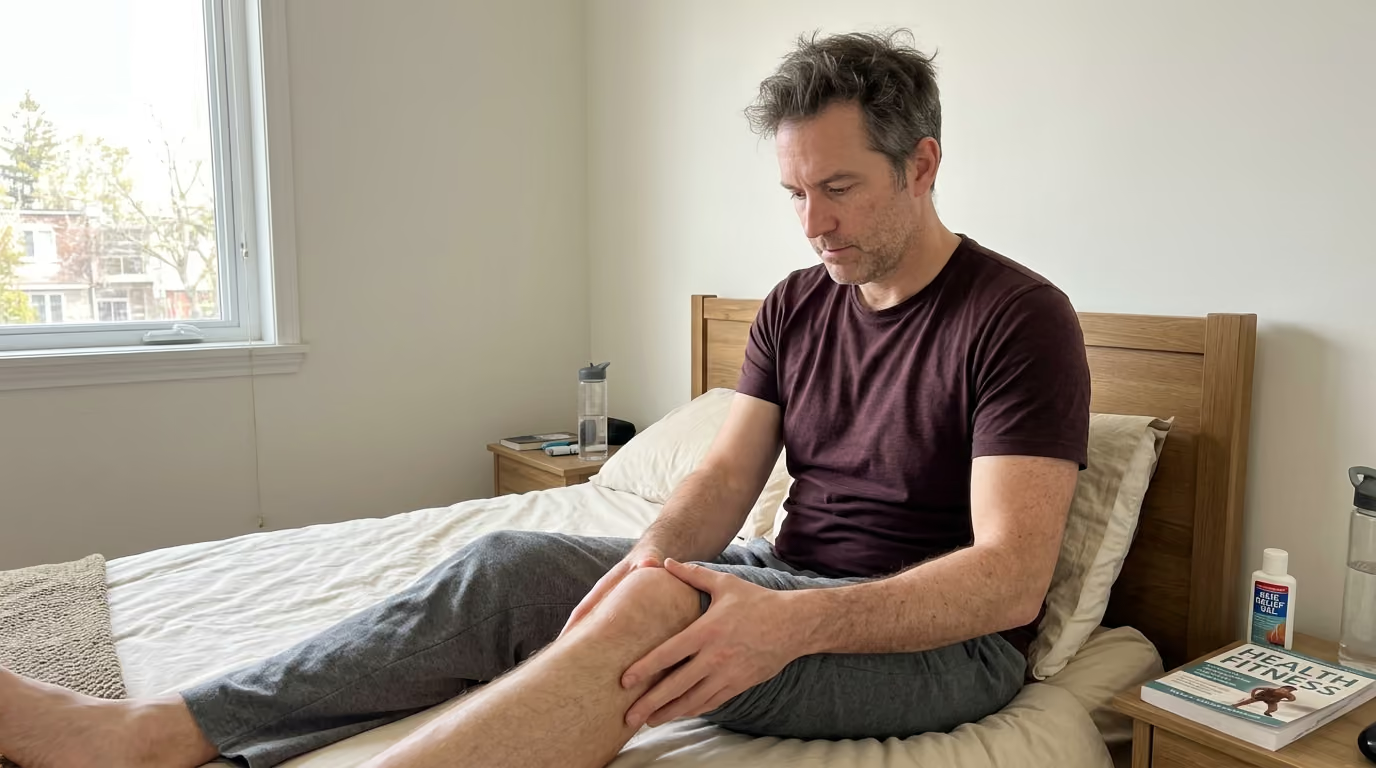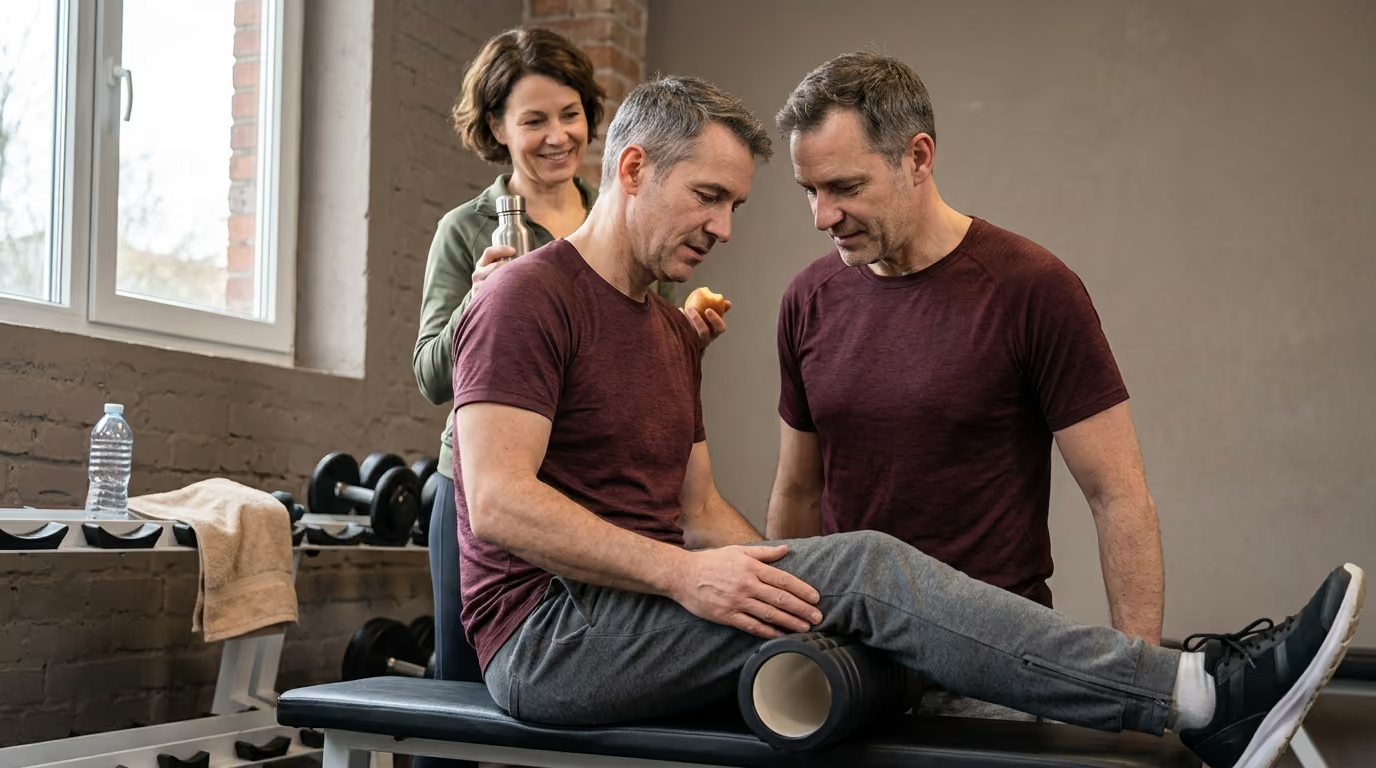

Lifelong strength and functional mobility remain fully achievable past midlife through targeted resistance training, optimized protein distribution.





Why does muscle recovery take so much longer after 40, and why does strength seem to slip away faster during breaks from the gym? If you have searched for answers to these questions, you are not imagining the shift. Muscle tissue, tendon compliance, and metabolic recovery rates change as the decades advance, but a decline in functional capacity is neither sudden nor irreversible. This comprehensive guide provides a definitive, research-backed blueprint to help active adults preserve muscle mass, build explosive power, protect joint mobility, and maintain independence for decades of adventure.
Preserving physical autonomy past midlife requires a clear distinction between four related physiological processes. Muscle recovery, muscle retention, muscle rebuilding, and functional resilience are distinct goals that demand distinct strategies.
Muscle recovery refers to the short-term restoration of work capacity, tissue tolerance, and neurological readiness following hard physical exertion, illness, travel, or disrupted sleep. Muscle retention is the ongoing preservation of muscle volume, baseline strength, and motor coordination during periods when your training frequency must temporarily decline. Muscle rebuilding is the deliberate, structured restoration of lean tissue and force output after an extended period of detraining or bed rest. Functional resilience is your physiological buffer. It is the reserve capacity that allows you to absorb physical shocks, hike difficult terrain, recover from unexpected setbacks, and avoid chronic joint injury.
To maintain physical independence, muscle must be viewed as an emergency metabolic and mechanical reserve rather than a cosmetic asset. Skeletal muscle powers everyday tasks such as climbing steep stairs, rising effortlessly from low chairs, carrying luggage, and stabilizing your joints when you slip on wet pavement.
The most effective framework for lifelong muscular health rests on a five-part foundational model:
Adults do not need to train to total exhaustion to preserve their physical capacity. However, they do need a regular, unambiguous signal that their muscles and nervous system remain essential.
Age-related muscle loss is not an abrupt cliff that you fall off on your fortieth birthday. Instead, it is a subtle, gradual reduction in physiological reserve that accelerates when paired with sedentary habits, poor protein intake, micro-injuries, or extended periods of bed rest.
To build an effective preservation strategy, you must separate several key physical capacities that decline at different rates:
Research demonstrates that muscle power declines significantly faster than maximal isometric or dynamic strength. Evidence indicates that lower-limb power is often a stronger predictor of fall risk and functional limitations than raw muscle mass or static strength alone. When you trip over a curb or lose your footing on a hiking trail, pure strength is rarely what saves you. Your nervous system must recruit fast-twitch motor units within milliseconds to plant your foot firmly and arrest your center of mass.
At the cellular level, older muscle tissue exhibits a phenomenon known as anabolic resistance. As we age, skeletal muscle requires a higher concentration of circulating essential amino acids, particularly leucine, to stimulate the mammalian target of rapamycin pathway and trigger muscle protein synthesis. In younger adults, a small serving of protein can trigger a robust muscle-building response. In adults past 40, that same modest dose may fall beneath the physiological threshold required to initiate meaningful tissue repair.
Fortunately, anabolic resistance is not a fixed barrier. Resistance training sensitizes skeletal muscle to dietary protein. When you combine progressive loading with adequate amino acid availability, older muscle tissue achieves protein synthesis rates comparable to younger tissue. The biological machinery remains fully capable of adapting when given the correct stimulus and substrate.
Understanding these biological shifts is essential for managing your recovery and regeneration strategies across every decade of life.
In medical literature, severe muscle loss combined with functional impairment is termed sarcopenia. The European Working Group on Sarcopenia in Older People defines low muscle strength as the primary indicator of sarcopenia, uses reduced muscle mass to confirm the condition, and categorizes poor physical performance as an indicator of severe functional decline.
To evaluate your baseline capacity, clinicians and exercise scientists use several validated functional screening benchmarks:
These metrics represent diagnostic screening baselines rather than goals for active adults. To build robust resilience, you should assess your physical capabilities across five distinct tiers:
Can you move your joints through their natural anatomical ranges under complete control? This tier requires performing a deep bodyweight squat, hip hinge, overhead reach, and lateral lunge without joint impingement, loss of balance, or acute pain.
Can you execute foundational movement patterns repeatedly without technical breakdown? This includes completing fifteen crisp, unassisted chair squats, carrying moderate loads across a room, and performing controlled bodyweight rows with steady breathing.
Can you express force rapidly when the environment demands it? This tier measures your ability to step quickly over an obstacle, sprint across a street before a light changes, or pop up rapidly from the floor.
Can you handle two to four challenging resistance sessions each week without lingering joint discomfort, debilitating muscle soreness, or systemic exhaustion? Sustainable progress depends on whether your recovery matches your training frequency.
Can you transfer your gym-based strength directly into outdoor adventure, sport, and demanding travel? This top tier encompasses hiking steep mountain trails with a loaded pack, navigating crowded airports while managing heavy luggage, skiing challenging terrain, and feeling capable in unpredictable environments.
Regularly auditing your movement helps identify weak links before they develop into chronic limitations. You can monitor your progress with the specialized testing protocols covered in measuring strength and physical performance.
Protein is the primary structural substrate required to rebuild contractile tissue, repair micro-trauma, and maintain immune function. Consuming standard baseline protein recommendations is often insufficient for active adults over 40 who want to preserve lean mass while training hard.
Authoritative clinical nutrition panels, including the PROT-AGE Study Group, recommend that healthy older adults consume 1.0 to 1.2 grams of protein per kilogram of body weight per day to maintain lean mass. For active adults engaged in regular exercise, the target rises to at least 1.2 to 1.5 grams per kilogram daily.
During periods of illness, injury, acute rehabilitation, or intentional fat loss, protein requirements increase further to 1.5 to 2.0 grams per kilogram of body weight. When physical activity is temporarily restricted, muscle protein breakdown can accelerate. Supplying ample amino acids helps protect against muscle wasting even when mechanical training loads are reduced.
If you weigh 80 kilograms, an intake of 1.4 grams per kilogram translates to roughly 112 grams of high-quality protein per day. Active individuals pushing training intensity can comfortably aim for 120 to 140 grams daily to support optimal recovery. Individuals with pre-existing kidney disease or specific metabolic disorders should coordinate their personal macronutrient ranges with a physician.
Many adults consume an unbalanced protein distribution, eating a minimal amount at breakfast, a moderate amount at lunch, and a heavy portion at dinner. This eating pattern leaves muscle tissue in a catabolic state for most of the morning and afternoon.
To overcome anabolic resistance, aim to distribute your daily protein across three or four meals, with each meal providing approximately 30 to 40 grams of protein. Each serving should supply roughly 2.5 to 3.0 grams of leucine, the essential branched-chain amino acid that acts as the biological switch for muscle protein synthesis.
High-quality whole food sources rich in essential amino acids include:
While whole foods should form the foundation of your diet, high-quality whey isolate or fortified plant protein powders offer convenient options when traveling or managing a busy schedule. You can read more about tailoring your daily fuel in our dedicated guides on nutrition and metabolism.
Resistance training is the most potent intervention available to preserve muscle mass, bone mineral density, and metabolic rate after 40. Without the mechanical tension produced by lifting loads, dietary protein alone cannot fully prevent age-related muscle decline.
The World Health Organization recommends muscle-strengthening activities involving all major muscle groups on two or more days per week. For active adults seeking genuine resilience, an intelligent training program must balance three distinct training stimuli: hypertrophy, maximal force, and explosive power.
Your weekly routine should be built around compound movements that train foundational human movement patterns:
Hypertrophy training builds muscle volume through moderate loads lifted close to muscular failure. Maximal strength training improves motor unit recruitment through heavier resistance. However, power training specifically targets the speed of muscular contraction.
A systematic review and meta-analysis of older adults found that power training significantly improved functional measures related to fall prevention, outperforming traditional slow-velocity strength training for dynamic tasks.
To train power safely without placing excessive stress on your joints, apply maximal intent to the concentric phase of moderate-load exercises:
Focus on moving the weight with explosive intent while maintaining strict technique. Keep volume low, resting one to two minutes between power sets to ensure full neurological recovery.
Life disruptions, business trips, holidays, and minor illnesses inevitably interrupt training. Understanding how your body responds to detraining helps you navigate these pauses without panic.
When you stop lifting, several physiological changes occur in sequence:
Fortunately, previously trained muscles retain a permanent biological advantage. During past periods of hypertrophy, muscle fibers recruit additional myonuclei from surrounding satellite cells. Research suggests that many of these newly acquired myonuclei remain inside the muscle fibers during periods of inactivity.
When you resume resistance exercise after an extended layoff, these retained myonuclei facilitate rapid protein synthesis. You rebuild lost strength and muscle mass significantly faster than someone training for the first time.
The relationship between your training consistency before a break and the duration of the interruption matters greatly. A brief two-week hiatus will not erase months of structured lifting. By maintaining your daily protein intake and performing light bodyweight movements during travel, you can preserve your functional base until you return to your standard gym routine.
Resuming training too aggressively after an illness, injury, or long vacation is a common cause of setbacks for adults over 40. Tendons, ligaments, and joint capsules adapt to mechanical stress slower than cardiovascular and muscular systems.
To rebuild physical capacity safely, use a four-phase return-to-activity progression.
The objective during this phase is to restore baseline range of motion, enhance local blood circulation, and awaken neuromuscular pathways without causing tissue damage.
This phase re-establishes movement mechanics, rebuilds local muscular endurance, and prepares connective tissues for heavier mechanical loads.
Once your movement quality is consistent, begin progressively overloading major movement patterns to restore absolute strength.
The final phase reintroduces velocity, multi-planar agility, and task-specific conditioning to prepare you for demanding physical activities.
Adjust your progression based on how your body feels and performs rather than adhering strictly to a calendar. You can learn more about structuring your training frequency in our comprehensive breakdown of sets, reps, and rest intervals.
Active travel, such as trekking in Patagonia, skiing the Alps, or sea kayaking in coastal fjords, places unique demands on musculoskeletal recovery. Traveling across multiple time zones disrupts circadian rhythms, which can reduce sleep architecture and elevate circulating cortisol.
At high elevations, lower oxygen availability increases respiratory water loss and metabolic strain. Without proactive recovery strategies, these environmental stressors can accelerate muscle breakdown and trigger severe fatigue.
To maintain strength and recover rapidly during demanding trips, apply these field-tested practices:
Integrating these simple habits allows you to tackle rigorous physical adventures without experiencing prolonged fatigue. For more strategies on staying capable abroad, explore our curated travel and adventure performance guides.
A clear understanding of longevity science requires separating physiological facts from widespread training myths.
Consuming protein powders or amino acid supplements without providing a mechanical stimulus will not preserve muscle mass or build functional strength. Protein supplies the raw bricks, but resistance exercise provides the construction signal. Research consistently shows that nutritional supplementation produces minimal functional improvement unless paired with progressive resistance training.
Lifting appropriately managed loads through controlled ranges of motion strengthens tendons, thickens articular cartilage, increases bone density, and reinforces joint stability. Indiscriminate maximal lifting with poor form poses risks, but sensible, progressive resistance training is one of the safest and most joint-protective activities available.
Power is defined as work divided by time. You do not need to perform high-impact box jumps to develop explosive power. Fast concentric movements against moderate resistance, such as explosive leg presses, rapid kettlebell hinges, and medicine ball throws, train the rate of force development without subjecting older joints to excessive landing stress.
Zone 2 cardiovascular exercise supports capillary density, increases mitochondrial volume, and enhances oxygen delivery to recovering muscle tissue. Muscle wasting only becomes a concern when excessive endurance volume is combined with inadequate caloric intake, insufficient protein, and a complete absence of resistance training.
Passive stretching can temporarily increase joint range of motion, but it does not develop dynamic joint stability or reactive motor control. Preventing a fall requires lower-limb strength, rapid stepping power, vestibular balance, and proprioceptive awareness. Stretching should complement, not replace, progressive strength and power work.
You can read more about balancing different exercise approaches in our analysis of healthy aging and living well.
The international scientific community agrees on the core requirements for preserving muscle and mobility into older age.
Major organizations, including the World Health Organization, the European Working Group on Sarcopenia in Older People, and the PROT-AGE Study Group, have established clear clinical consensus across several areas:
Building lasting physical resilience does not require extreme protocols or exhausting daily workouts. It requires a consistent, sustainable commitment to foundational strength, smart nutrition, and intentional recovery. Discover additional strategies for maintaining vitality in our library of longevity and living well resources.
Use this straightforward checklist to upgrade your muscle retention and recovery strategy starting today.
Stay connected for research and practical guidance on longevity, strength, recovery, energy and active living. New ideas to help you stay capable, curious and ready for more.


Explore practical guidance on strength, recovery, energy, travel and longevity for a life that stays active.
explore the Blog