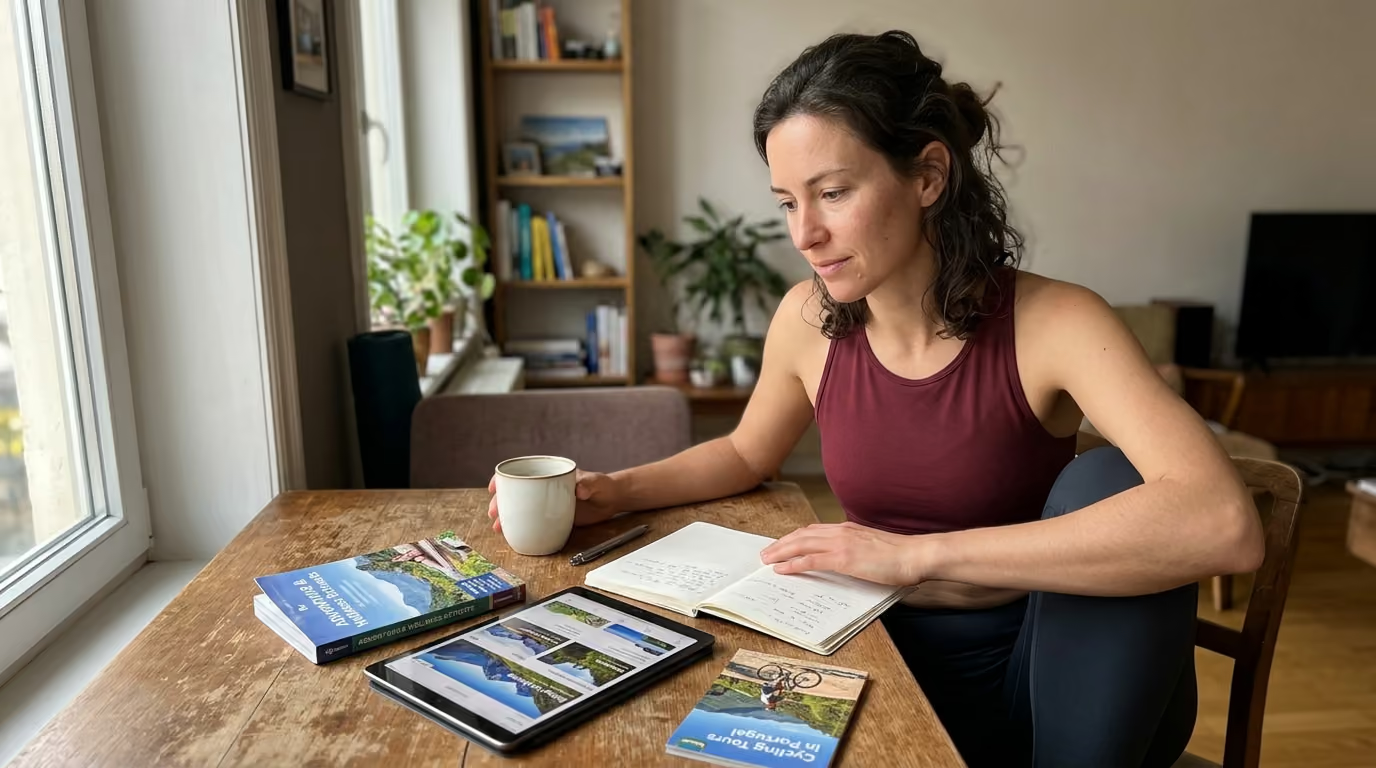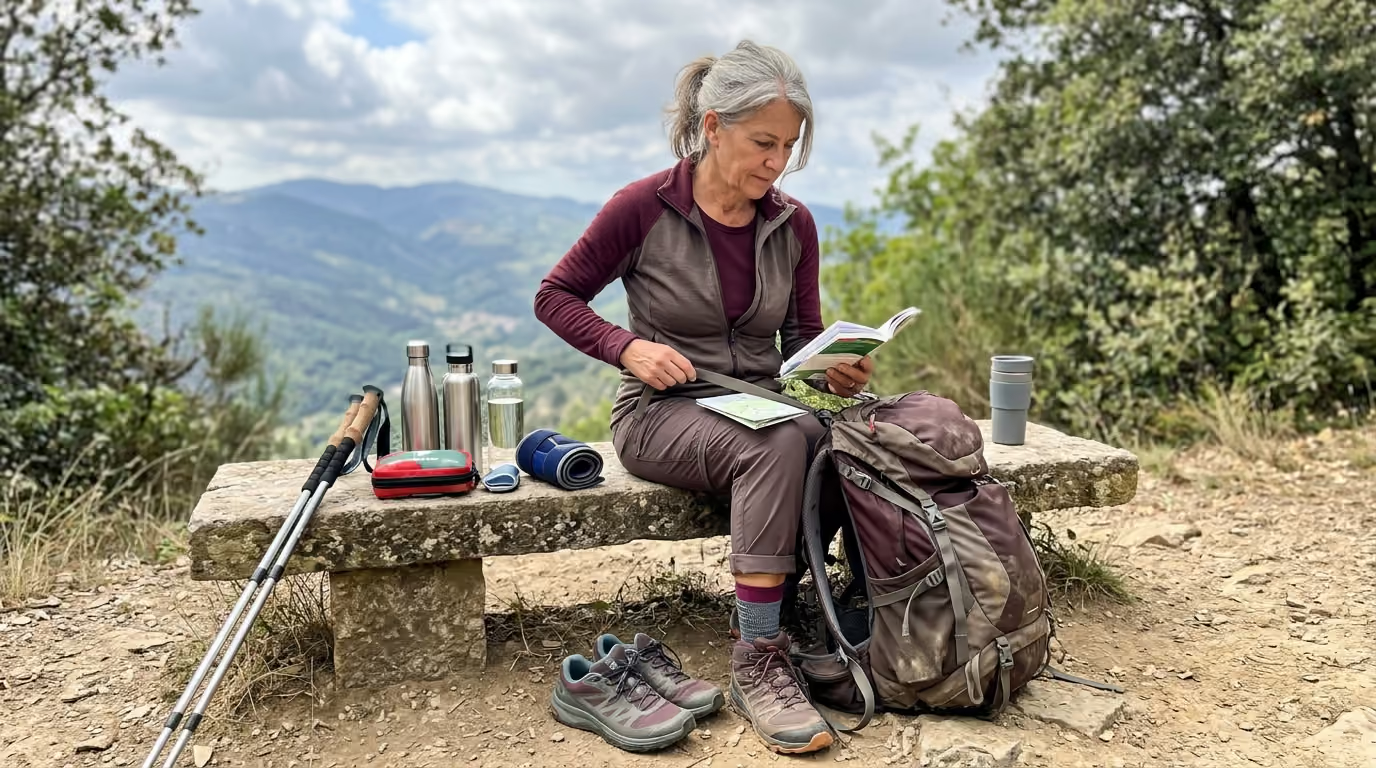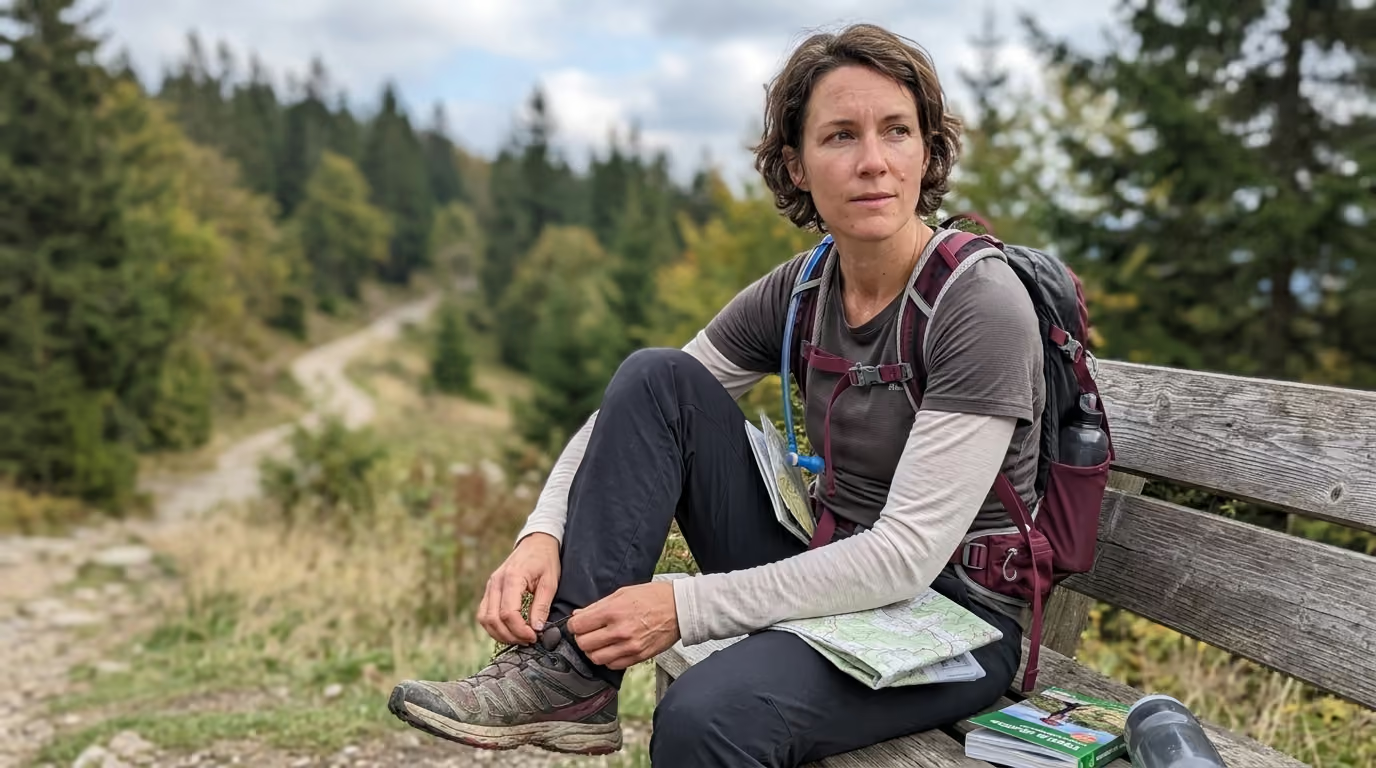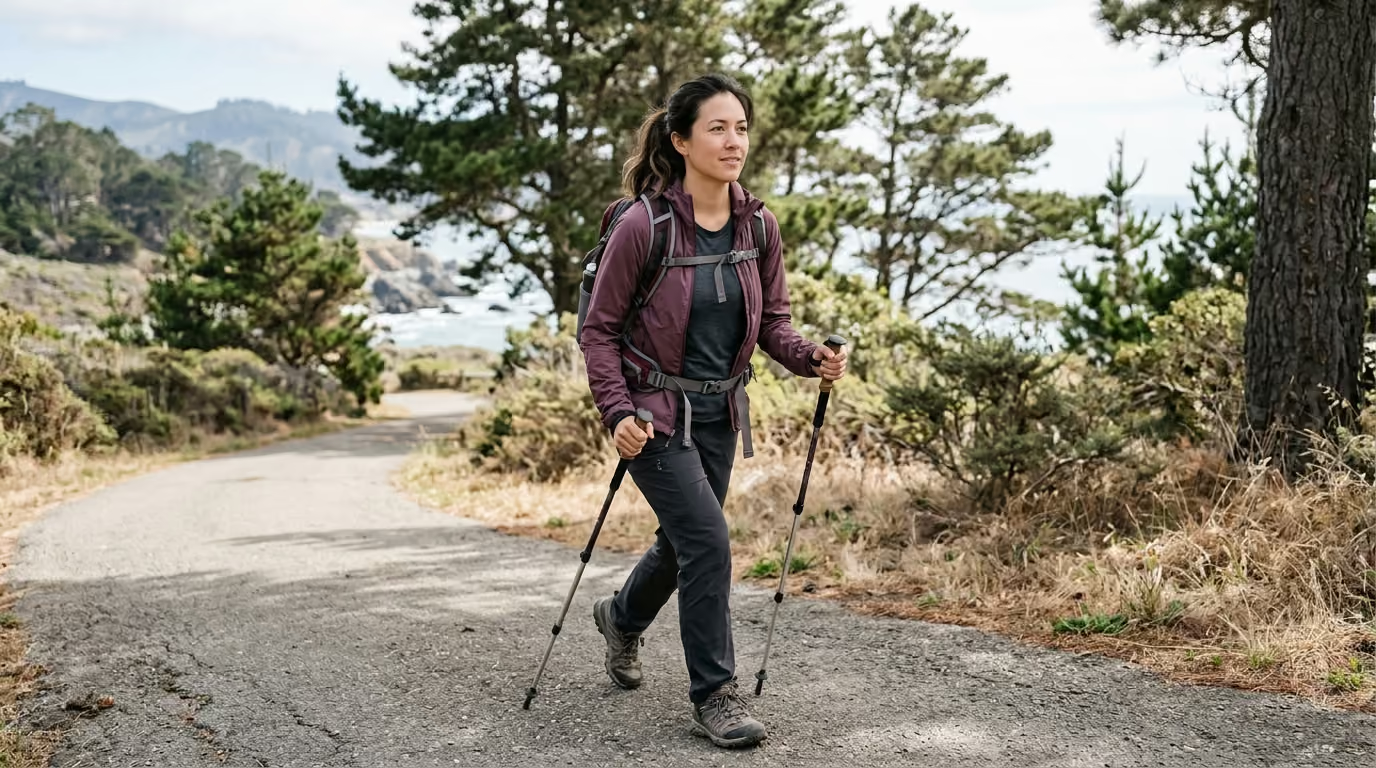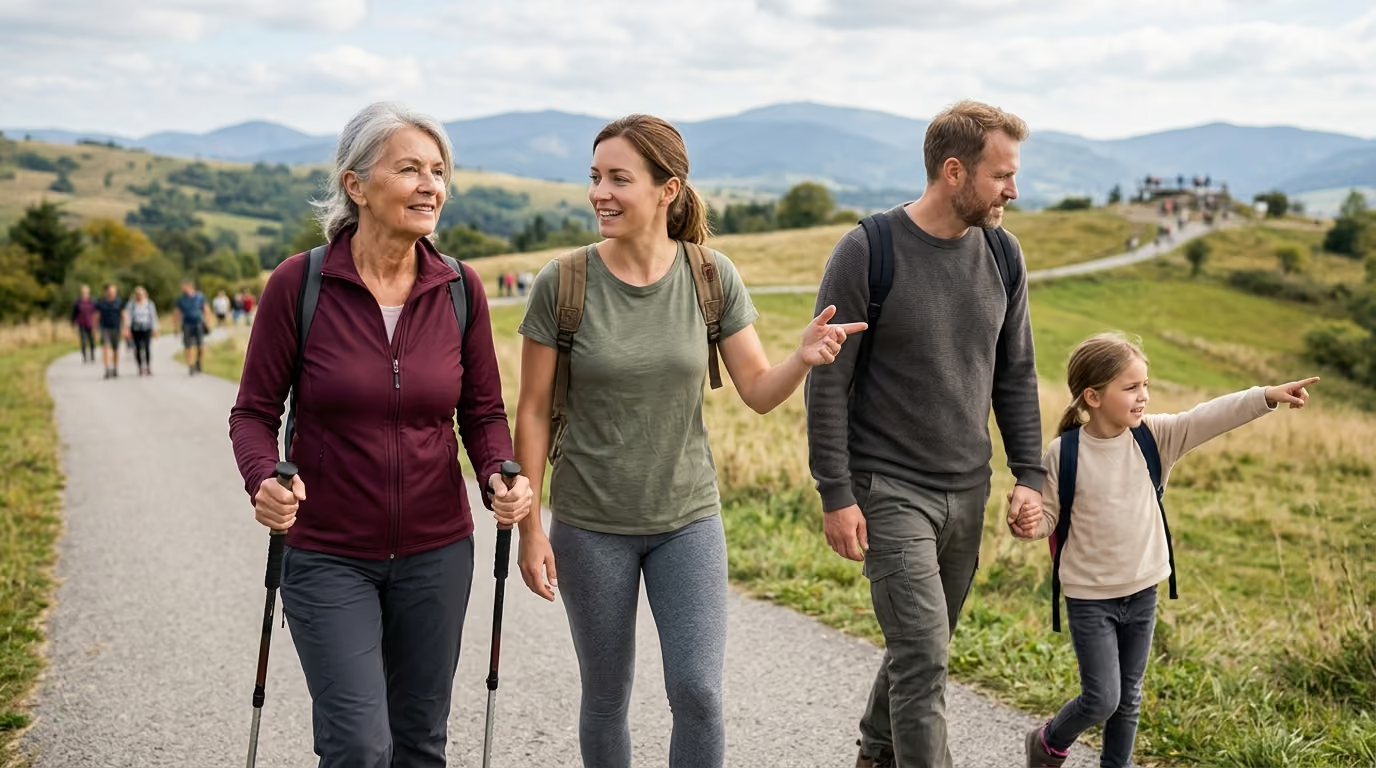

Multigenerational active travel planning combines physical capability assessments, modular daily itineraries, and environmental pacing strategies.





Breakfast on a sunlit terrace in the Italian Dolomites often reveals a familiar dilemma. One person scans the high ridgelines, eager for a demanding ten-mile alpine traverse. Another traveler looks forward to a gentle stroll through village markets and botanical gardens. A third reviews the day with quiet apprehension, wondering if steep cobblestones will aggravate a stiff knee.
When travelers of different ages and conditioning levels share a trip, good intentions can turn into friction. The conventional response is to force compromise by watering down the itinerary until nobody gets what they want. The fittest travelers feel held back, while those with lower capacity feel rushed, anxious, or burdensome.
A far better approach exists. Multigenerational active travel is not about choosing the easiest possible route. It is the deliberate design of a journey where individuals with varying physical capacities share meaningful experiences without being forced into identical workloads.
Successful group travel relies on four core pillars: shared time, optional intensity, predictable recovery, and supported independence. By shifting from age-based assumptions to capability-based planning, you can organize ambitious trips that protect personal goals, maintain physical well-being, and preserve family harmony.
Planning an active trip requires an understanding of how human physical capacity varies across individuals and life stages. Age alone is a poor predictor of how someone handles a trail, a cycling route, or a day of urban walking. Two people of the exact same age can display vastly different cardiovascular endurance, lower-body strength, joint tolerance, and balance.
Public health frameworks offer a useful starting point for understanding physical readiness. Guidelines from the World Health Organization recommend that all adults, including those aged 65 and older, accumulate at least 150 to 300 minutes of moderate-intensity aerobic activity per week, or 75 to 150 minutes of vigorous activity. In addition, the World Health Organization advises muscle-strengthening activities on two or more days per week. For older adults, the guidelines place special emphasis on multicomponent physical activity that incorporates balance and functional strength training on three or more days each week.
These benchmarks provide general health targets rather than specific travel prerequisites. Meeting weekly activity targets at home does not guarantee that a traveler can handle unfamiliar terrain, extreme heat, thin air, or consecutive long walking days. Travel introduces complex physical stressors that challenge the body differently than a routine gym workout or neighborhood walk.
Aerobic capacity determines how long someone can walk or pedal before metabolic fatigue sets in. However, functional strength and balance often dictate a traveler's confidence and safety on the road. Navigating cracked pavement, stepping off high curbs, descending loose gravel, or boarding a rocking ferry requires active stability and neuromuscular coordination.
When stability is compromised, the risk of falling increases significantly. According to the Centers for Disease Control and Prevention, more than 14 million older adults in the United States report falling each year. About 37 percent of those falls result in an injury that requires medical treatment or restricts daily activity. The Centers for Disease Control and Prevention also reports approximately 3 million emergency department visits annually among older adults due to fall-related injuries.
These statistics should not discourage active travel. In fact, a comprehensive review by the World Health Organization evaluating 64 randomized controlled trials found high-certainty evidence that regular exercise significantly reduces fall rates among older adults. The lesson for group trip planning is clear. Itineraries must account for surface stability, lighting, handrails, rest points, and footwear rather than relying solely on aerobic stamina.
To manage exertion across a diverse group, planners can use the simple "talk test" established by the Centers for Disease Control and Prevention. During moderate-intensity activity, a person can talk comfortably but cannot sing. During vigorous activity, an individual can only speak a few words before pausing for breath. Using this practical metric allows travelers to gauge their personal strain in real time without complex monitoring devices.
Effective planning begins long before flights are reserved. The most common mistake is asking a generic question like "How fit is everyone?" People often overstate their capacity out of pride, or underestimate their stamina out of caution. A precise itinerary requires a factual profile of practical travel capabilities.
To build an accurate assessment, evaluate four practical dimensions of movement:
Measure how long a traveler can walk on flat, paved ground before needing a seated break. A person who manages 90 minutes of continuous walking requires a very different daily structure than someone who needs a bench every 20 minutes.
Assess comfort with climbing and descending stairs, stepping onto high train platforms, and managing sustained uphill gradients. Downhill walking often places more mechanical stress on knees and hips than climbing.
Determine how each person manages uneven ground, wet cobblestones, loose gravel, exposed dirt paths, and unlit evening streets. Balance confidence directly influences walking speed and psychological fatigue.
Review past experiences with high temperatures, high humidity, cold mountain winds, motion sickness, and altitude. Identify any medication schedules that dictate meal timing or affect blood pressure and hydration.
When gathering this information, separate physical capacity from personal preference. Group members fall into four distinct categories for any given activity:
Distinguishing between these categories prevents overprotecting capable travelers while ensuring that genuine physical limits are respected. You can review our dedicated healthy aging and living well resources to learn more about maintaining long-term physical capacity for active travel.
Once capabilities are understood, the daily schedule must be organized to avoid conflict. The most effective structure is the Anchor and Orbit model. This framework keeps the group connected without forcing everyone into identical physical routines.
An Anchor is a fixed, shared event that requires minimal physical exertion. Anchors include a relaxed group breakfast, a long lunch at a countryside restaurant, an evening cooking class, or a scenic boat cruise. These events serve as the social foundation of the journey.
An Orbit is an independent activity that takes place between anchors. During an orbit, group members choose their own level of physical challenge based on personal interest and energy.
To make orbits work smoothly, every day should offer a three-tier activity menu:
This is the baseline experience designed to be accessible to nearly every member of the group. Examples include a guided walking tour through a flat historical district, a gentle valley walk on a paved trail, or an easy coastal cruise.
This option adds physical challenge for travelers seeking higher workloads. An extension might involve climbing the 300 steps of a cathedral tower, completing a steep five-mile ridge loop above the main trail, or renting a road bike for an extra climb.
This low-intensity option provides a rich cultural or sensory experience for travelers who need to rest their legs. Examples include visiting a local art gallery, relaxing in a thermal bath, exploring a covered food market, or reading in a quiet garden cafe.
The recovery alternative must never feel like an afterthought or a penalty. It should be an appealing, deliberate travel choice. When the group reunites at the next anchor, travelers share stories from their different paths, creating rich conversation rather than feelings of resentment or exclusion.
Building a balanced itinerary that incorporates these options requires deliberate physical preparation. Explore our strength and physical performance guides for training approaches that build real-world stamina before your departure.
Even the best itineraries face unexpected physical challenges once the trip begins. Managing group pace on the ground requires clear operational rules to prevent exhaustion, injury, and frustration.
The fundamental rule of mixed-ability travel is to set the group pace by the person with the lowest sustainable capacity, not the highest output. Forcing the least conditioned traveler to walk at their maximum effort causes rapid fatigue, elevated heart rates, and higher fall risk. Meanwhile, fitter travelers can easily burn extra energy by taking optional side loops, carrying a heavier daypack, or completing an extension before meeting the group.
Use effort levels rather than speed or distance to assess how the group is performing. A flat three-mile walk on smooth pavement requires minimal effort. That same distance on wet cobblestones in midday sun can push an older or unconditioned adult into significant distress. Check in regularly using the talk test to ensure everyone remains within a sustainable aerobic zone.
Distinguish between planned pauses and emergency stops:
When planned pauses are built into the schedule, travelers with lower stamina do not feel self-conscious about requesting a break.
Every demanding outing must also include a clear "no-shame turn-around" policy. Any traveler can decide to stop, turn back, or take a taxi back to the hotel at any point without debate or apology. Turning back should be treated as smart energy management rather than a failure. Ensure that exit points, local taxi numbers, and transit stops are identified before departing for the day.
Environmental conditions can transform a moderate walk into an exhausting physical challenge. When traveling with mixed generations, environmental stressors affect individuals differently based on age, cardiovascular conditioning, and acclimatization status.
Ascending to high elevations presents distinct physiological hurdles. Physical fitness does not prevent altitude illness. According to guidelines from the Centers for Disease Control and Prevention, travelers should avoid ascending directly from sea level to a sleeping elevation above 2,750 meters (approximately 9,000 feet) in a single day.
Above 2,750 meters, the Centers for Disease Control and Prevention recommends limiting increases in sleeping elevation to no more than 500 meters (1,600 feet) per day. In addition, an extra acclimatization day should be scheduled for every 1,000 meters of elevation gained.
The Centers for Disease Control and Prevention also advises avoiding alcohol and heavy physical exertion during the first 48 hours above 8,000 feet. If a group member develops symptoms of acute mountain sickness, such as headache, nausea, dizziness, or insomnia, they must not ascend to a higher sleeping altitude. If symptoms worsen, descent to a lower elevation is mandatory.
Exercising in high temperatures places significant strain on the cardiovascular system. While conditioned individuals dissipate heat more effectively, fitness does not eliminate the risk of heat exhaustion or heat stroke. Guidance from the Centers for Disease Control and Prevention notes that complete physiological heat acclimatization requires up to 10 days of gradual, repeated exposure.
When traveling to hot destinations, schedule active excursions during the early morning or late afternoon. Reserve the hottest midday hours for indoor dining, museum visits, or resting in air-conditioned spaces. Ensure reliable access to clean water, electrolyte replenishment, and clean public restrooms throughout the route.
Rain, wet leaves, ice, and loose gravel significantly degrade traction. For older adults or individuals with previous joint replacements, slippery surfaces create substantial anxiety and physical strain. Monitor local weather closely and establish clear cancellation thresholds for outdoor activities. Always have an indoor cultural alternative ready if conditions become unsafe.
Long-haul flights, prolonged train rides, and major time zone changes cause systemic fatigue and disrupt sleep patterns. The risk of stumbling increases when travelers are sleep-deprived and disoriented. Keep arrival days light by limiting physical demands to gentle neighborhood strolls and early, nourishing meals.
To optimize physical recovery between active days, incorporate proven restorative habits. You can learn more about sleep optimization and joint care by exploring our recovery and regeneration guides.
Planning multigenerational trips requires overcoming several pervasive myths that lead groups into logistical and interpersonal difficulties.
Many families assume that traveling together means spending every waking hour in the same room, vehicle, or trail group. Forcing identical daily activities often leads to quiet resentment or physical exhaustion. Shared morning breakfasts and evening dinners provide ample connection while allowing each traveler the freedom to choose their preferred daytime pace.
Electric bicycles provide valuable pedal assistance on hills, making cycling accessible to a broader range of abilities. However, an e-bike does not eliminate the need for basic cycling skills. Riders must still manage bicycle weight, execute sudden braking, navigate vehicle traffic, and maintain balance on gravel or uneven surfaces. An inexperienced rider on a heavy e-bike can face safety risks despite the electric motor.
The most conditioned athlete is often the worst choice for setting the daily pace. Highly fit individuals naturally perceive moderate inclines and brisk speeds as effortless, making it difficult for them to recognize subtle signs of fatigue in others. Group leadership should focus on route safety and logistical coordination, with the pacing set entirely by the traveler with the lowest sustainable capacity.
Viewing rest as lost time leads to compounded fatigue, increased irritability, and higher injury rates by the midpoint of a vacation. In reality, scheduled rest is essential infrastructure that keeps everyone functional. Low-intensity days spent exploring thermal spas, historic libraries, or scenic rail routes offer memorable cultural experiences while allowing muscles and joints to recover.
Assuming that older travelers only want sedentary bus tours is a major mistake. Guidelines from the World Health Organization emphasize that older adults benefit substantially from challenging aerobic and strength-building activities tailored to their functional abilities. The goal is not to eliminate challenge, but to ensure that the challenge matches the individual's preparation, joint tolerance, and recovery capacity.
Accessible travel extends far beyond wheelchair ramps. According to the United Nations Convention on the Rights of Persons with Disabilities, accessibility encompasses equal access to the physical environment, transportation, information, and public facilities. In a travel context, accessible design benefits everyone in the group, including tired walkers, parents managing gear, and individuals recovering from minor injuries.
When evaluating destinations, hotels, and excursions, verify specific operational details rather than relying on vague marketing terms like "easy" or "accessible":
Ask providers for the exact walking distance from the vehicle drop-off point to the attraction entrance. A museum may claim full accessibility, but reaching the front doors may require a quarter-mile walk across rough cobblestones without seating.
Confirm the presence, operational status, and interior dimensions of elevators. In historic hotels and transit stations, elevators may be tiny, out of service, or require climbing a short flight of stairs just to reach the elevator door.
Determine whether walking paths consist of smooth asphalt, packed dirt, loose river stones, or historic cobblestones. Uneven surfaces dramatically increase joint impact and balance demands.
Ensure that walking routes feature regular benches, shaded rest areas, and clean public restrooms. The availability of seating allows travelers with lower endurance to manage extended outings with confidence.
Encourage the use of supportive gear without stigma. Lightweight carbon-fiber trekking poles reduce knee impact during descents and provide stability on uneven trails. Braces, compression garments, and comfortable walking shoes should be viewed as standard equipment that optimizes performance.
For travelers who experience acute joint flares or fatigue, renting a lightweight mobility scooter or manual wheelchair for long museum visits preserves energy for the rest of the trip. To discover broader perspectives on active living, explore our complete library of healthy aging and performance articles.
To see how these principles operate in real-world environments, review these five practical case blueprints designed for common group dynamics.
The Challenge: Grandparents enjoy art and architecture but experience joint pain during prolonged standing. Parents want active exploration. Teenagers crave movement and excitement.
The Strategy:
The Challenge: One partner wants a strenuous alpine hike with significant vertical ascent. The other partner loves mountain scenery but prefers gentle, low-impact walks.
The Strategy:
The Challenge: Several family members want a long, fast road ride. Others enjoy cycling but lack hill-climbing fitness or confidence in traffic.
The Strategy:
The Challenge: A group visits the Rocky Mountains or the Alps, containing travelers with varying mountain experience and altitude tolerance.
The Strategy:
The Challenge: A traveler recovering from a recent knee surgery wants to join a family trip without risking re-injury or feeling like an anchor holding others back.
The Strategy:
You can review our practical travel and human performance resources to find additional frameworks for designing safe, memorable adventures across diverse environments.
Planning a successful multigenerational trip does not require exhaustive spreadsheets or rigid micro-management. By focusing on three high-leverage habits, you can eliminate most group travel conflicts while keeping planning simple.
Hold a single planning conversation before booking flights. Agree on three simple ground rules:
The words you use in the field set the emotional tone. Avoid judgmental phrases that create guilt or defensiveness. Use supportive, functional questions that focus on practical comfort:
Never schedule two high-demand physical days back to back. Use an alternating rhythm that balances energy expenditure:
By building rest directly into the trip architecture, you ensure that every traveler maintains consistent energy, stable mood, and physical resilience throughout the entire journey. If you need tailored guidance on designing an active itinerary, feel free to contact our team.
Authoritative medical and public health bodies share a broad consensus regarding physical activity, aging, and mobility:
The World Health Organization affirms that physical activity is vital across the entire human lifespan. Maintaining functional balance, muscular strength, and cardiovascular health directly supports independent mobility and quality of life. Regular multicomponent exercise provides proven protection against functional decline and accidental falls.
The Centers for Disease Control and Prevention emphasizes that relative effort matters more than absolute speed or distance. Monitoring physical exertion through practical tools like the talk test allows individuals to exercise safely within their personal aerobic capacity. When traveling in challenging environments, gradual acclimatization to heat, cold, and altitude is essential for preventing acute illness.
The United Nations and global tourism bodies emphasize that accessible travel is a universal design principle that benefits all travelers. Ensuring clear wayfinding, step-free access, reliable transportation, and regular resting infrastructure creates an inclusive travel environment where people of all generations can participate fully.
When these scientific insights are integrated into trip planning, active travel ceases to be a source of family tension. It becomes a shared celebration of capability, exploration, and connection.
Review this guide whenever you begin planning a new journey with a partner, family group, or mixed-ability travel party. Revisit these frameworks before selecting lodging, finalizing daily routes, or purchasing equipment.
A well-designed trip does not measure success by the number of miles logged or peaks summited. The true measure of a great journey is returning home with shared memories, healthy bodies, and relationships that are stronger than when you departed.
Stay connected for research and practical guidance on longevity, strength, recovery, energy and active living. New ideas to help you stay capable, curious and ready for more.


Explore practical guidance on strength, recovery, energy, travel and longevity for a life that stays active.
explore the Blog