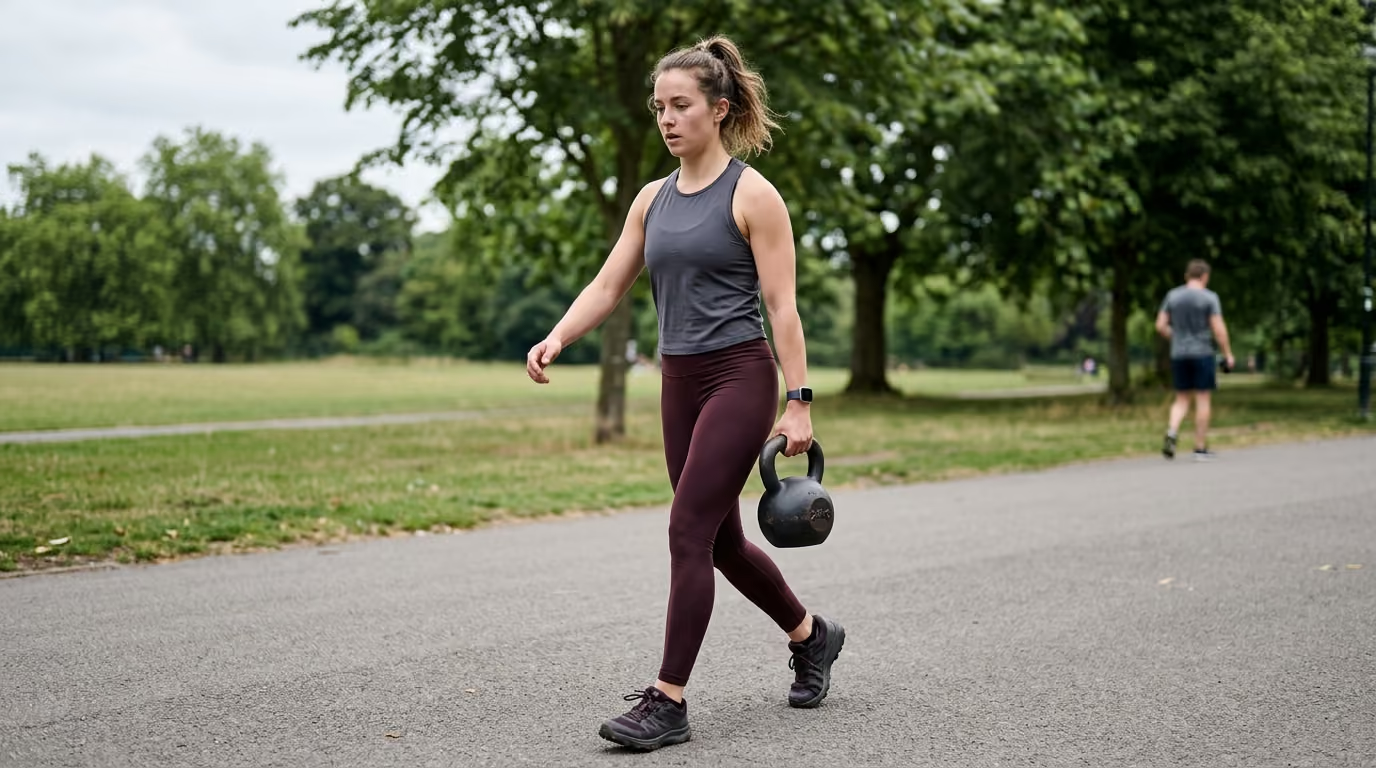

Unshakable core stability and real-world durability develop quickly when you master essential loaded carry variations, proper walking mechanics, and smart programming strategies.





Imagine walking through a crowded train station in Zurich with a heavy piece of luggage in one hand and a weekend duffel in the other. Your body must constantly balance shifting loads while stepping over platform edges, dodging commuters, and maintaining an upright posture. This simple real-world demand exposes the true nature of physical resilience. True strength is not just about what you can lift while lying on a padded bench. It is about how well you stabilize, carry, and control weight while moving across the earth.
Loaded carries are among the most practical movements in human performance. At its core, a loaded carry is simple: you pick up a meaningful weight and walk with it while maintaining control. This basic action connects force production, grip endurance, breathing mechanics, and dynamic core stability into one unified movement pattern. For active adults who value hiking, skiing, traveling, and staying capable for decades, carries build the foundational durability that traditional machine exercises cannot replicate.
Many training programs isolate muscles on fixed tracks or rely entirely on stationary exercises. While stationary lifts build isolated strength, they miss the dynamic challenge of locomotion. Every step you take under load forces your nervous system to adjust to changes in balance and center of mass. By integrating structured carries into your routine, you develop a robust frame that transfers directly to mountain trails, airport terminals, and daily life.
To build true physical longevity, we must understand how to select, execute, and progress these exercises safely. This guide breaks down the science of locomotion under load, examines key variations from farmer walks to suitcase carries, and provides clear programming frameworks. Whether your goal is improving athletic performance, protecting your lower back, or staying physically independent, loaded carries provide an efficient path forward.
A loaded carry is a resistance exercise in which a person supports an external load while walking through space. Unlike a stationary lift, a carry combines force production with continuous locomotion. The weight can be held at your sides, positioned at your chest, racked at your shoulders, or supported overhead. Regardless of the implement used, the goal remains consistent: maintain structural alignment while moving smoothly from one foot to the other.
The defining training feature of a carry is dynamic linkage. When you walk, your body constantly alternates between single-leg support and double-leg support. As your weight shifts onto one leg, your trunk, pelvis, and hips must coordinate instantly to prevent your spine from collapsing or twisting. Research published in the International Journal of Exercise Science by Ellestad and colleagues in 2024 demonstrates that moving under load produces significantly higher trunk muscle activation than simply standing still with the same weight. Walking adds a dynamic coordination challenge that static holds cannot fully duplicate.
This relationship explains why two carries with identical absolute weight can feel completely different. Carrying two equal kettlebells at your sides distributes weight evenly across your frame. Carrying a single kettlebell on one side introduces an asymmetrical pull that forces the opposite side of your torso to work twice as hard. Raising that same weight to your shoulder or overhead shifts your center of mass upward, increasing the stability demands on your hips and spine.
Carries also train what strength coaches call functional stiffness. Functional stiffness is the ability of your muscles to brace and protect your joints while your limbs produce movement. When you carry a heavy load, your abdominal wall, back extensors, and deep spinal stabilizers contract together. This co-contraction turns your torso into a rigid cylinder, allowing efficient transfer of power from your feet to the ground without leaking energy or stressing vulnerable spinal discs.
Traditional strength training often divides movements into isolated planes of motion. Real life, however, requires your body to resist forces in multiple planes simultaneously. Loaded carries teach your nervous system to control sagittal, frontal, and transverse forces while you breathe and walk. This multi-planar stability is essential for joint longevity and athletic resilience.
To understand why carries are so effective, we must look at how the spine, pelvis, and hips interact during locomotion. When you walk without weight, your pelvis naturally rotates and tilts in small, controlled arcs. When you add a heavy load, gravity amplifies these forces. If your stabilizing muscles lack sufficient endurance, your pelvis will drop, your spine will bend sideways, and your walking pattern will deteriorate.
In 2009, Dr. Stuart McGill and his research team published a landmark biomechanical study in the Journal of Strength and Conditioning Research examining strongman carrying events. They analyzed muscle activation, spinal loading, and hip torque using electromyography and computer modeling. The researchers discovered that carrying heavy loads challenged the body linkage system in ways that standard gym exercises simply could not match. The carrying tasks required high levels of torso muscle co-contraction to stabilize the spine and support the pelvis.
The suitcase carry is one of the clearest examples of this mechanism in action. When you hold a heavy dumbbell in your right hand, gravity pulls your torso to the right into lateral flexion. To remain upright, the longissimus, multifidus, and external oblique muscles on your left side must fire vigorously. The 2024 Ellestad study confirmed this effect, showing that suitcase carries produced nearly double the muscle activation in the contralateral longissimus compared to symmetrical farmer carries. Contralateral external oblique activation reached 33 percent of maximum voluntary contraction, rivaling the activation seen during standard planks.
Another critical muscle involved in loaded walking is the quadratus lumborum, located deep in the lower back. McGill and his colleagues showed that the quadratus lumborum plays a decisive role in stabilizing the pelvis during the single-leg stance phase of a carry. When your left foot leaves the ground, your left hip wants to drop. The quadratus lumborum and the hip abductors on the standing side work together to keep the pelvis level. This coordinated action protects the lumbar spine from harmful shear forces.
Carries also improve gait mechanics by highlighting compensations. When trainees attempt to walk with loads that are too heavy, they often shorten their stride, hike their hips, or hold their breath. Learning to walk with smooth, repeatable steps under moderate load trains the nervous system to maintain optimal posture under stress. This capacity translates directly to better walking mechanics in everyday life, especially when navigating uneven terrain or carrying heavy equipment.
Different carry variations place unique demands on your muscular and skeletal systems. By adjusting the position of the weight, you can target specific physical qualities, ranging from raw grip strength to upper back endurance. Below are the primary carry variations, along with practical guidelines for executing each one with clean mechanics.
The farmer carry is the most fundamental and accessible variation. In this movement, you hold two equally weighted implements, such as dumbbells, kettlebells, or specialized farmer handles, at your sides while walking forward. Because the weight is distributed symmetrically, the farmer carry allows for the highest absolute loading of any handheld variation.
This exercise places a massive demand on your grip, trapezius, and posterior chain. As you walk, your shoulder blades must remain retracted and depressed to keep the weights from swinging. The farmer carry reinforces whole-body tension and teaches you to brace your core while maintaining a normal breathing rhythm. It serves as the baseline carry for developing general strength, work capacity, and hip stability.
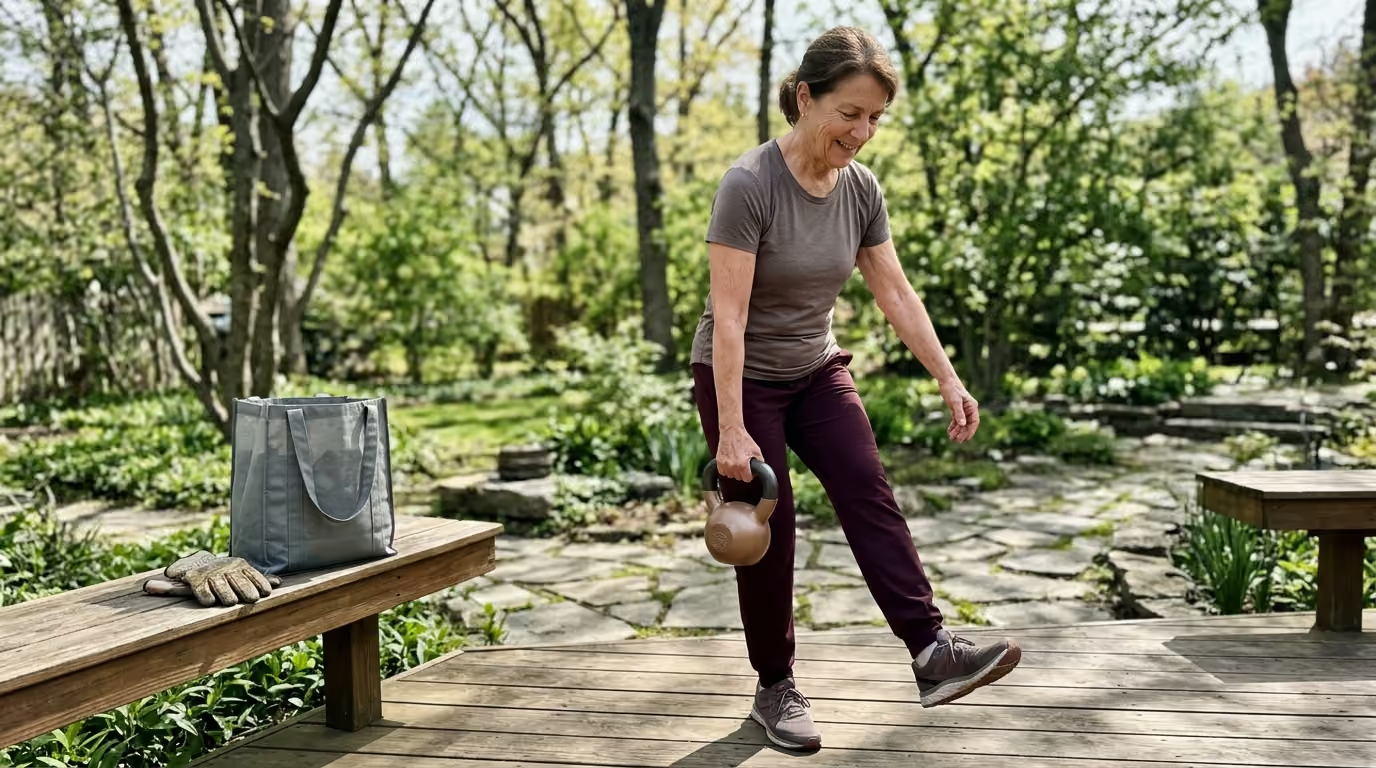
The suitcase carry utilizes a single weight held in one hand, leaving the other hand empty. This asymmetrical setup immediately creates a frontal-plane stability challenge. Your body must work hard to resist lateral flexion and keep your shoulders level.
When performing a suitcase carry, avoid leaning away from the weight to make the walk easier. Your torso should remain upright, with your shoulders squared and your stride symmetrical. The suitcase carry is exceptional for training the lateral stabilizers of the trunk, the deep pelvic muscles, and unilateral grip strength. It is an indispensable tool for correcting side-to-side imbalances and preparing for single-handed carrying tasks in daily life.
The front-rack carry positions the load near the front of your shoulders. You can perform this using two kettlebells with the handles tucked against your chest, two dumbbells, a barbell, or a heavy sandbag. Raising the load higher on your torso shifts your center of mass upward and forward, significantly increasing the demand on your upper back and abdominal wall.
Anterior load research archived by the National Institute for Occupational Safety and Health examined the biomechanics of carrying loads at different heights. The study, led by Anderson and colleagues in 2007, showed that carrying loads at shoulder height produced significantly higher thoracic erector spinae and anterior deltoid activity than carrying loads at elbow height. Front-rack carries force you to maintain thoracic extension while resisting forward collapse. They also challenge your ability to breathe deeply while your rib cage is under compression.
The overhead carry represents the most demanding variation for shoulder stability and thoracic posture. In this movement, you press one or two weights overhead and lock your arms out while walking forward. The weight must remain stacked directly above your wrists, elbows, shoulders, and hips.
Overhead carries demand excellent shoulder mobility, upward scapular rotation, and anti-extension core control. If your abdominal muscles fail to brace, your rib cage will flare upward, causing your lower back to arch excessively. This exercise is not suitable for individuals with active shoulder impingement or limited overhead range of motion. For healthy athletes, however, light overhead carries build unmatched stability in the rotator cuff and shoulder girdle.
Once you have mastered the foundational carries, specialty variations offer advanced training stimuli. These include offset carries, bear-hug carries, and yoke walks:
The hands and forearms are often the first point of failure during a loaded carry. In the 2024 Ellestad study on carry mechanics, researchers had to exclude a participant simply because their grip gave out before the target distance was completed. While grip fatigue can sometimes limit trunk training, developing robust hand strength is one of the most valuable benefits of regular carry training.
Grip strength is widely recognized in clinical research as a reliable biomarker of overall vitality and biological resilience. A firm grip reflects a well-conditioned nervous system and sufficient muscular density throughout the upper body. When your fingers clamp tightly around a heavy handle, a phenomenon known as muscle irradiation occurs. The strong contraction in your hands signals the muscles in your forearms, upper arms, shoulders, and rotator cuff to co-contract, creating a more stable base for the entire upper extremity.
Many modern gym exercises bypass the grip entirely by using padded machines, straps, or guided tracks. Over time, this creates a disconnect between the strength of your large prime movers, such as your legs and back, and the small stabilizing muscles of your hands and wrists. Loaded carries bridge this gap by forcing your grip to support every pound your body moves.
If grip strength limits your ability to train your core or legs during carries, you can adjust your approach. You can perform shorter walks with heavier weights to target grip power directly, or use moderate weights over longer distances to build grip endurance. For sessions where the primary goal is maximum trunk conditioning, using lifting straps on very heavy farmer carries can occasionally allow you to challenge your hips and spine without stopping early due to finger fatigue.
Functional strength means having the physical capacity to meet the demands of real-world environments without pain or premature exhaustion. When you hike up a steep mountain path with a loaded backpack, your body performs a continuous carry over thousands of uneven steps. When you ski through variable snow conditions, your trunk must absorb dynamic forces while maintaining control over your lower body.
Last winter in Chamonix, I noticed something striking. It was not the altitude that forced my peers into the lodge by noon, it was a lack of rotational strength and poor recovery from the flight. We spend so much time debating the perfect supplement stack, yet we neglect the basic foundational strength required to actually enjoy our travels. That trip changed how I approach fitness. I stopped training for aesthetics and started training exclusively for capability.
When you spend hours sitting in a cramped airplane seat, your hip flexors tighten and your postural stabilizers become inactive. Arriving at an alpine destination and immediately tackling physical terrain without a solid strength base is a recipe for joint strain. Loaded carries provide the exact antidote to this travel fatigue. They wake up the dormant stabilizers of the hips, reset upright posture, and restore the dynamic trunk control needed for active adventure.
On mountain trails, steps are never uniform. You must constantly adjust your stride length, step over roots, and stabilize your pack when your foot slips slightly on loose rock. Carries prepare your body for these sudden shifts. By teaching your core to brace while your legs move independently, carries build the lateral hip stability that protects your knees and ankles from awkward twisting injuries.
For those who enjoy global travel, functional carry capacity makes every journey more comfortable. Handling heavy rolling bags over Venetian bridges, lifting luggage into overhead bins, and walking long distances through sprawling terminals become effortless tasks. You build physical independence that allows you to participate in active excursions, remote treks, and outdoor pursuits with total confidence.
To learn more about optimizing your physical capabilities for the trail and the slopes, browse our strength and physical performance library.
Despite their growing popularity, loaded carries are frequently misunderstood in mainstream fitness circles. Trainees often make critical errors in programming and execution that limit their progress or increase injury risk. Below are five common misconceptions that need clarification.
The most widespread mistake is loading an implement so heavily that your walking mechanics fall apart. If a heavy farmer carry causes you to shorten your stride into a frantic shuffle, shrug your shoulders up to your ears, or lean back to counter the weight, the load is too heavy. A successful carry requires smooth, controlled locomotion. The optimal weight is the heaviest load you can manage while maintaining clean posture, normal step cadence, and controlled breathing.
Some enthusiasts claim that loaded carries make traditional core exercises like planks obsolete. The scientific literature paints a more nuanced picture. In the 2024 Ellestad study, farmer carries produced significantly higher activation in the longissimus and multifidus muscles of the back compared to planks. However, traditional front planks generated substantially higher electromyographic activation in the rectus abdominis, averaging roughly 50 percent of maximum voluntary contraction compared to just 10 percent during the farmer carry. Carries and floor-based core exercises serve complementary purposes and should both be included in a well-rounded program.
Trainees are often told to lock their torso into an immovable block during suitcase carries. In reality, normal human gait requires a subtle degree of motion in the pelvis and rib cage. Attempting to eliminate every millimeter of movement creates artificial stiffness that interferes with natural walking mechanics. The true objective during a suitcase carry is resisting excessive lateral collapse, not freezing your body in place. You want controlled, resilient stability that permits natural joint articulation.
The fitness industry often hypes water-filled logs, unstable slosh pipes, and unbalanced sandbags as superior to standard weights. While awkward implements offer unique coordination challenges, they also limit the absolute amount of weight you can safely move. Stable implements like barbells, trap bars, and heavy dumbbells allow for predictable, progressive overload that builds raw structural strength. Unstable implements should be viewed as supplementary coordination tools rather than complete replacements for traditional weights.
Many people believe that bracing as hard as possible protects the spine under any circumstance. However, Dr. McGill's strongman research revealed an important caveat. In exercises like the heavy yoke walk, the combination of extreme external load and intense muscular co-contraction generated some of the highest spinal compression forces ever recorded in laboratory settings. Bracing stabilizes the spine, but massive loads still transfer high compressive forces through your discs. Heavy carries must be programmed intelligently with adequate recovery between sessions.
To explore how focused rest and tissue repair support heavy strength training, read our guide on structured recovery protocols.
You do not need to spend hours each week carrying weights across the gym to reap substantial benefits. Because loaded carries demand high muscular tension and involve the entire body, a small, focused dose delivers remarkable results. The goal is consistent, high-quality exposure rather than exhaustive fatigue.
For most active adults over 40, performing carries two to three times per week provides an ideal stimulus. You can integrate carries at the end of a traditional resistance training session as a functional finisher, or pair them with mobility work on active recovery days. Focus on one primary carry variation per session to ensure clear technical execution.
When structuring your sets, choose between distance-based and time-based parameters. Distance prescriptions work best when you have access to open space, such as a turf strip or an outdoor track. Carrying weights for 20 to 40 meters allows you to focus on movement precision and step quality. If you train in a crowded gym or a hotel fitness center with limited floor space, time-based intervals of 30 to 45 seconds are equally effective.
Progress your carries by changing only one variable at a time. Start by mastering the movement pattern with a manageable load. Next, gradually increase the distance or duration of the carry while keeping the weight constant. Once you can complete the target distance with pristine posture, increase the load by small increments. Avoid the temptation to increase both weight and distance in the same session.
If you are returning from an extended break or recovering from joint irritation, begin with static holds before adding locomotion. A static suitcase hold, standing upright with a weight in one hand for 30 seconds, allows you to build lateral core endurance without the balance demands of walking. Once you can hold the position effortlessly, begin taking slow, deliberate steps forward.
To discover additional practical training frameworks designed for long-term health, explore our broader performance and fitness strategies.
Maintaining functional physical capacity while traveling does not require an elite athletic facility. In fact, loaded carries are among the easiest strength exercises to perform in minimal hotel gyms, rental accommodations, or outdoor environments. Adapting your training on the road ensures your joints stay healthy and your postural endurance remains sharp.
Most hotel fitness centers carry a basic rack of dumbbells. With a single pair of moderate dumbbells, you can perform an exceptional farmer carry workout by simply walking back and forth across an empty aerobics room or along a quiet corridor. If only mismatched weights are available, you can perform offset carries or single-arm suitcase walks. Walking with an uneven load in a hotel gym challenges your trunk stabilizers and keeps your workouts engaging.
If you have no gym access at all, you can use your travel luggage as resistance. A well-packed suitcase or a loaded duffel bag serves as an effective implement for suitcase carries and bear-hug walks. Carrying your duffel bag across a hotel courtyard or up several flights of stairs creates an excellent functional conditioning session that requires zero specialized equipment.
Performing a short carry session after a long flight helps reverse the physical stiffness caused by hours of sitting. A brief session consisting of three light sets of suitcase carries and front-loaded walks re-engages your glutes, fires up your postural muscles, and decompresses your hips. This quick routine prepares your body for active days of skiing, hiking, or city walking.
For more insights on keeping your physical capabilities high while seeing the world, check out our resources on travel and active adventure.
The broad scientific and coaching communities agree on the fundamental value of loaded carries. While academic research continues to explore exact muscle activation patterns, several core principles have achieved widespread consensus among exercise physiologists and top strength coaches.
First, loaded carries are recognized as a premier tool for developing dynamic trunk stiffness. Unlike static core exercises that isolate the abdominal wall in a single position, carries teach the body to stabilize the spine against multi-directional forces during cyclic locomotion. This integration is essential for human movement, making carries a cornerstone of modern athletic preparation and injury prevention protocols.
Second, the literature clearly shows that carries should complement, rather than replace, traditional multi-joint lifts. Squats, deadlifts, and presses build foundational force production, while carries train the linkage systems that transfer that force through the torso and extremities. Integrating both modalities creates a balanced physical structure that resists breakdown over time.
Third, experts emphasize that technique and postural integrity must govern all carry programming. Electromyographic data and spinal loading studies confirm that carrying excessive weight with compromised mechanics places unnecessary stress on spinal structures. By prioritizing movement quality, selecting the appropriate carry variation for your goals, and applying progressive overload gradually, you build lasting physical capability that supports an active lifestyle.
If you wish to explore our comprehensive library of research-backed training guides, visit our complete index of resource guides.
Return to this guide whenever you update your seasonal training routine, prepare for an ambitious adventure trip, or notice that your posture and walking endurance need improvement. Regular review ensures that your technique remains sharp and your programming stays aligned with your long-term longevity goals.
Building functional capability is an ongoing journey of consistent, deliberate effort. By picking up heavy weights and moving with purpose, you forge a durable body that allows you to explore the world with confidence and vitality for decades to come.
Stay connected for research and practical guidance on longevity, strength, recovery, energy and active living. New ideas to help you stay capable, curious and ready for more.


Explore practical guidance on strength, recovery, energy, travel and longevity for a life that stays active.
explore the Blog