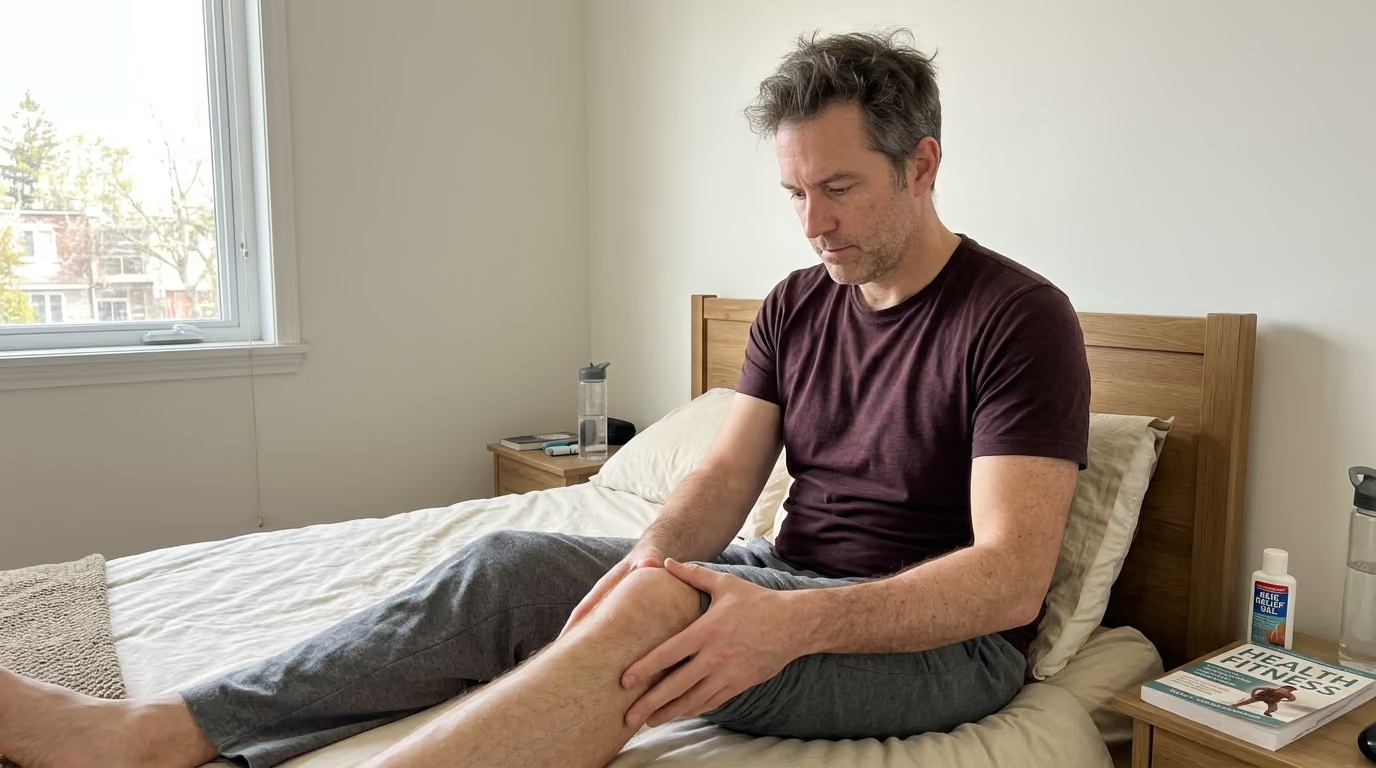

Three hundred percent faster recovery claims often rely on weak data, requiring active adults to evaluate study designs and real functional outcomes carefully.





You finish a demanding mountain hike or an intense morning strength session, and your muscles feel heavy. Later that afternoon, an advertisement appears on your screen promising a new supplement, wearable device, or therapy that claims to accelerate cellular recovery by three hundred percent. The product features glowing testimonials, scientific diagrams, and an official stamp claiming it is clinically proven.
Knowing what to believe in the modern wellness market can feel impossible. The answer is neither blind faith in marketing nor total cynicism toward scientific progress. A mature approach requires calibrated judgment. Calibrated judgment means matching your confidence in a claim to the quality, relevance, and transparency of the evidence behind it.
Recovery is not a single, uniform biological event. It describes many distinct outcomes, including the return of muscular power, the reduction of soreness, the restoration of nervous system readiness, and tissue remodeling. A tool or supplement can improve one of these outcomes while doing nothing for the others, or even blunting your long-term training adaptations.
To evaluate any recovery claim, you must translate commercial marketing into testable questions. You must check whether the studied outcome matches your personal goals, assess whether the study design was truly rigorous, and weigh the intervention against simple, cost-free alternatives like sleep and nutrition. Mastering this skill protects your financial resources, your time, and your physical capability.
The commercial fitness industry thrives on vague terminology. Marketing campaigns use words that sound scientific but lack specific definitions. To judge a product fairly, you must translate marketing claims into precise research questions.
When a brand claims a product accelerates recovery, you must ask what specific outcome is returning faster. You should clarify whether the product restores peak power, reduces muscle tenderness, or simply alters blood flow. You also need to know what baseline the product is being compared against, whether that is passive rest or active movement.
When a label claims to reduce inflammation, you need to identify which inflammatory markers are changing. You must also determine whether lowering that marker actually improves physical function or relieves symptoms. Acute inflammation is a required biological signal for muscular adaptation, meaning that suppressing it constantly can reduce long-term progress.
When a company highlights improved circulation, ask whether that physiological shift produces a measurable performance benefit. Increasing local blood flow or skin temperature does not automatically mean your muscles repair faster. Plausible mechanisms are interesting, but they do not prove a practical real-world result.
When packaging states that a product is clinically proven, you must check the original study. You should verify whether researchers tested the exact commercial formulation, at the exact recommended dose, in a population that matches your age and activity level. Many commercial products cite research on a single raw ingredient tested in a laboratory dish, which does not prove the finished product works in active adults.
When marketing materials claim a product is FDA approved, check the regulatory reality. In the United States, the Food and Drug Administration generally does not evaluate or approve structure and function claims on dietary supplements before they go to market. A manufacturer can state that a capsule supports muscle recovery without submitting clinical proof to regulatory authorities for premarket review.
Every legitimate recovery claim must specify five fundamental elements:
If a product does not specify these details, the claim is incomplete. You can learn more about evidence-based methods on our recovery and regeneration resource portal.
To evaluate research, you must understand what researchers actually measure. Scientific studies generally divide recovery into three broad categories: subjective sensations, objective physical performance, and biological surrogate markers. Each category provides different information, and none tells the whole story on its own.
Subjective outcomes include self-reported muscle soreness, perceived fatigue, joint stiffness, sleep quality ratings, and mental readiness to train. These outcomes matter because how you feel directly influences your motivation, comfort, and willingness to stay active.
However, subjective ratings are easily influenced by expectations, the prestige of the brand, and the ritual of using a sophisticated product. A major Cochrane systematic review found that placebo treatments produce modest improvements in patient-reported pain, but negligible changes in objective health outcomes. When a treatment feels good, part of that benefit often comes from the care and attention surrounding the routine rather than a unique physiological mechanism.
Objective performance outcomes measure real physical capability. These include maximal isometric force, vertical jump height, sprint speed, cycling power output, joint range of motion, and balance metrics.
These tests are valuable because they show whether your muscles and nervous system have actually restored their capacity to perform work. Objective tests are more resistant to personal bias than self-reported soreness questionnaires. However, they can still be influenced by participant motivation, warm-up quality, and unfamiliarity with the test protocol. A product that makes your legs feel less sore twenty-four hours after exercise might still leave your explosive jumping power impaired.
Surrogate markers are indirect physiological variables measured in blood, saliva, or muscle tissue. Common examples include serum creatine kinase, blood lactate, C-reactive protein, interleukins, cortisol, and heart rate variability.
Markers are helpful in laboratory research, but they become problematic when marketers present them as definitive proof of recovery. An intermediate biological change does not guarantee a meaningful real-world benefit. Guidance from the Food and Drug Administration notes that surrogate endpoints are only valid when research firmly proves they predict clinical outcomes.
Creatine kinase serves as a clear example. This enzyme leaks into the bloodstream when muscle fibers experience microscopic damage. A treatment might reduce circulating creatine kinase levels in a laboratory blood draw without producing any measurable improvement in muscular strength, joint mobility, or athletic speed. You should always prioritize real physical capability over isolated blood markers.
The final category covers long-term outcomes, such as annual injury rates, training consistency, cardiovascular improvements, and muscular hypertrophy. These outcomes require weeks, months, or years of study.
An intervention that provides temporary relief right after exercise might harm long-term tissue adaptation. For example, regularly using high-dose ice baths immediately after heavy strength sessions can reduce long-term muscle growth by blunting natural signaling pathways. Immediate comfort does not always equal long-term progress.
When a brand shares a scientific study, you do not need an advanced academic degree to assess its value. You only need a structured approach to spot common methodological flaws.
Randomized controlled trials are designed to ensure that treatment groups are comparable from the start. Randomization balances known and unknown baseline characteristics between the participants receiving the intervention and those in the control group.
However, randomization alone does not guarantee a high-quality study. Problems frequently occur when participants drop out unevenly, when investigators know who received the real treatment, or when researchers measure outcomes inconsistently. Cochrane evaluates the risk of bias across five specific areas: the randomization process, deviations from intended interventions, missing outcome data, measurement of the outcome, and selective reporting of results.
Blinding means keeping participants, practitioners, and data analysts unaware of who is receiving the active treatment. This prevents expectations from distorting the results.
Blinding is straightforward with oral capsules, where a sugar pill can look and taste identical to an active supplement. It is extremely difficult with recovery devices that create obvious physical sensations. A participant immediately knows whether they are sitting in freezing water, receiving a percussive massage, or wearing tight compression garments.
When participants know they are receiving the active therapy, their expectation of recovery naturally rises. This expectation inflates subjective scores like perceived soreness and readiness. When reviewing studies on recovery hardware, pay close attention to whether the researchers blinded the objective outcome assessors who recorded the physical measurements.
Rigorous clinical trials use intention-to-treat analysis, which includes all randomized participants in the final data, regardless of whether they completed every session. This preserves the balance created by randomization and reflects real-world conditions.
Some studies switch to per-protocol analyses, reporting data only from the participants who adhered perfectly to the protocol. This approach introduces bias, because people who stick with a challenging routine often differ in baseline motivation, health habits, and physical resilience from those who drop out.
The published scientific literature does not contain every study that has ever been conducted. Trials that show positive, exciting results are far more likely to be published by academic journals than trials showing no benefit.
The World Health Organization has highlighted that a substantial proportion of clinical trials remain unreported, creating systemic bias in healthcare literature. When a company references two small studies showing their product works, several other negative trials may be sitting unpublished in corporate filing cabinets.
To spot selective reporting, check if the study was registered in an open public trial registry before participant enrollment. Compare the primary outcomes listed in that original registry document against the final published paper. If a study set out to measure muscular power, found no difference, and ended up highlighting a minor secondary questionnaire score in the abstract, you should view the findings with skepticism.
When you try a new recovery protocol and feel significantly better the next day, it is natural to credit the product. However, human physiology is dynamic, and personal experience can easily mislead you without a controlled reference point.
Placebo effects are not imaginary, and they do not mean a person was foolish. The sensory experience of unboxing a premium tool, setting a timer, and resting quietly creates a positive biological response.
A comprehensive meta-analysis published in the European Journal of Pain examined one hundred and eighty-six clinical trials and found that over half of the total treatment effect across studies was attributable to contextual factors rather than the specific physical intervention. The attention of a coach, the belief in a technology, and the dedicated time spent resting all combine to lower nervous system arousal and reduce pain perception.
Contextual benefits are real, but you should not pay exorbitant prices for them if the device itself provides no unique physiological advantage over quiet rest.
Physical fatigue and muscle soreness follow a predictable natural timeline. Delayed-onset muscle soreness usually peaks within twenty-four to forty-eight hours after unaccustomed exercise and resolves on its own over the following days.
People tend to apply expensive recovery treatments at the exact moment their soreness feels worst. When the discomfort naturally subsides twenty-four hours later, they mistakenly attribute the improvement to the product. In statistics, this is known as regression to the mean. Extreme physical states naturally drift back toward baseline levels over time, with or without commercial intervention.
To understand the value of any recovery method, you must distinguish between two separate questions:
If a low-cost, low-risk tool makes you feel refreshed purely through expectation and relaxation, using it may still be enjoyable. However, if an expensive device makes extraordinary scientific claims that fail under controlled testing, you are paying a premium for basic physiological relaxation that you could achieve for free.
Examining real-world recovery tools illustrates why evidence must be broken down by specific outcomes, timing, and individual goals. The scientific answer for popular modalities is rarely a simple yes or no.
Cold water immersion is widely used by competitive athletes and fitness enthusiasts. Marketing claims frequently state that ice baths flush toxins, erase inflammation, and dramatically speed up systemic recovery.
A comprehensive Cochrane review analyzing seventeen small clinical trials found consistent evidence that cold water immersion reduces delayed-onset muscle soreness at twenty-four, forty-eight, and seventy-two hours compared with passive rest. If your immediate goal is to reduce perceived muscular pain after an intense sporting event, cold water immersion provides a measurable benefit.
However, broader performance research paints a more complex picture. A systematic review on recovery modalities revealed that cold water immersion can improve short-term endurance recovery, but may temporarily reduce sprint and jump performance when tested within one to two hours. The cold temperature stiffens connective tissues and reduces nerve conduction velocity until the body rewires its baseline temperature.
Furthermore, when applied consistently after resistance training, cold water immersion suppresses the cellular signaling pathways responsible for muscle repair and hypertrophy. If you are training to build strength and lean muscle mass, regular post-workout ice baths work against your goals. Cold water is an effective tool for short-term pain relief during high-density competition, but a poor choice for long-term strength building.
Graduated compression tights and sleeves are heavily promoted for travel, post-workout recovery, and athletic endurance. The advertised benefits range from enhanced venous return to the elimination of cellular waste products.
When researchers aggregate the data, the findings depend entirely on the outcome being evaluated. A meta-analysis published in Sports Medicine found that compression garments offer small to moderate benefits for reducing subjective muscle soreness and restoring muscular power indicators. The physical pressure provides external sensory feedback that appears to alter pain perception and support joint comfort.
Conversely, a systematic review focused on endurance athletes found very low-certainty evidence that compression garments enhance subsequent running or cycling endurance performance. The garments did not alter clearance rates of metabolic byproducts in a clinically meaningful way.
The nuanced conclusion is that compression garments can be a comfortable, low-risk tool for reducing post-exercise soreness and improving physical comfort, but they will not turn you into a more efficient endurance athlete overnight. Exploring our performance and fitness articles will help you place these tools into proper perspective.
Marketing campaigns often exploit common logical fallacies. Learning to recognize these patterns protects you from overvalued wellness trends.
Personal testimonials are the most common marketing tool in the wellness industry. An athlete or friend describing their personal success with a product sounds genuine and persuasive.
However, individual experience cannot isolate the variables that drove the outcome. Natural biological healing, concurrent changes in sleep or diet, regression to the mean, and the placebo effect all happen simultaneously. A personal story demonstrates that someone felt better, but it cannot prove that the specific product caused the improvement.
When a brand shares a research paper showing a statistically significant benefit, consumers assume the effect must be large and transformative. In scientific research, statistical significance merely means the observed difference was unlikely to be caused by random sampling error alone under the study's specific conditions.
A study might find a statistically significant reduction in muscle soreness that amounts to a two-millimeter shift on a one-hundred-millimeter visual scale. While mathematically significant, that microscopic difference is completely unnoticeable in daily life. You should always look for the absolute effect size and the smallest worthwhile change rather than focusing solely on small p-values.
Marketers often point to biological mechanisms as definitive proof of efficacy. They will show that a supplement increases nitric oxide production or reduces a specific inflammatory protein in a test tube.
As established by regulatory bodies, a biological marker is only meaningful if it directly predicts real functional recovery. Increasing cellular energy in a petri dish does not guarantee that your leg strength will return faster after a demanding workout. The logical chain from biological pathway to real-world physical capability must be tested and proven directly in living human beings.
Many consumers assume that because a recovery compound comes from a plant, herb, or natural mineral, it is inherently safe and free from adverse effects. This belief is entirely incorrect.
Natural botanical extracts can cause digestive distress, interact poorly with prescription cardiovascular medications, or place stress on liver enzymes. Furthermore, because dietary supplements do not face mandatory premarket safety testing by government regulators, third-party contamination with unlisted ingredients remains a real risk. Natural does not automatically mean safe, gentle, or effective.
You do not need an elaborate recovery laboratory to stay active, capable, and pain-free. A practical approach focuses on high-impact fundamentals while using a simple mental filter to judge new products.
Before spending money on specialized recovery hardware or exotic supplements, make sure your baseline habits are firmly established. The overwhelming majority of physical recovery is driven by four primary pillars:
If these four baseline pillars are neglected, no massage gun, cold tub, or recovery capsule can bridge the physiological gap. You can review practical lifestyle strategies across our healthy aging and longevity articles.
When you encounter an unfamiliar recovery tool or supplement, run the claim through this five-step checklist before making a purchase:
First, translate the claim into concrete terms. Identify the exact product, the dose or duration, the specific physical outcome, and the timeline. If the marketing language relies on abstract terms like revitalizes, balance, or cellular detoxification, set it aside.
Second, categorize the primary outcome. Determine whether the seller is promising subjective comfort, objective physical strength, an intermediate blood marker, or long-term injury reduction. Give the greatest weight to outcomes that measure real-world functional capacity.
Third, inspect the quality of the supporting research. Check whether the studies were conducted on living human beings of your demographic profile rather than isolated cells or animals. Look for independent randomized controlled trials that compare the product against a credible control group.
Fourth, quantify the absolute magnitude of the benefit. Look past relative percentages that sound impressive and check the actual numerical difference. Ask yourself if the measured improvement is large enough to impact your daily active life.
Fifth, calculate the total cost and trade-offs. Weigh the retail price, the time required to use the product, and any potential safety risks against the realistic benefit. If an intervention is expensive, time-consuming, and supported only by weak evidence, your resources are better invested elsewhere.
Demanding active travel introduces environmental stressors that compound physical muscular fatigue. Long-haul flights, circadian disruption, high altitude, and sudden changes in terrain challenge your systemic recovery capacity.
Last winter in Chamonix, I noticed something striking. It was not the altitude that forced my peers into the lodge by noon, it was a lack of rotational strength and poor recovery from the flight. We spend so much time debating the perfect supplement stack, yet we neglect the basic foundational strength required to actually enjoy our travels. That trip changed how I approach fitness. I stopped training for aesthetics and started training exclusively for capability.
When preparing for challenging trips, marketing campaigns often target active travelers with portable recovery gadgets, circulation boots, and jet lag remedies. Evaluating these claims using scientific principles prevents you from packing heavy, ineffective gear.
Long flights cause fluid accumulation in the lower limbs due to prolonged sitting and cabin pressure changes. In this specific scenario, graduated compression socks provide a clear, mechanistically sound benefit. They physically assist venous return, reduce lower leg swelling, and improve comfort upon landing. This is a practical application where the physical mechanism directly matches a measurable real-world need.
Conversely, carrying delicate electronic recovery hardware into remote environments often adds unnecessary stress, luggage weight, and charging logistics for minimal physiological return. A short walk in natural daylight, targeted mobility work on stiff hips, deliberate hydration, and prioritizing a solid night of rest will do far more to restore your physical readiness than an expensive portable device. For more expedition strategies, browse our travel and human performance resources.
To build the structural resilience needed for demanding physical travel, pairing smart recovery with a dedicated resistance program is essential. Developing robust movement patterns protects your joints far better than passive modalities. You can learn how to structure your training through our comprehensive strength and physical performance guides.
When you strip away commercial incentives, the broader medical and sports science consensus on physical recovery is straightforward and consistent. Recovery is not something you purchase in a bottle or plug into an electrical outlet. It is an internal biological process that your body executes naturally when provided with the proper resources and environment.
Major sports science institutions agree that passive rest alone is often inferior to active recovery. Low-intensity movement, such as walking, light cycling, or gentle swimming, increases local tissue perfusion without adding mechanical fatigue. This gentle movement assists natural lymphatic clearance, reduces perceived stiffness, and promotes mobility without interrupting ongoing cellular adaptations.
The scientific consensus also agrees that nutritional timing and macronutrient sufficiency outweigh specialized recovery supplements. Consuming high-quality protein containing essential amino acids within a few hours of training reliably stimulates muscle protein synthesis. Replenishing muscle glycogen stores through whole food carbohydrates ensures energy availability for subsequent activities.
Finally, researchers consistently agree that the autonomic nervous system governs the pace of physical regeneration. Techniques that shift your body out of a sympathetic state and into a parasympathetic state accelerate systemic restoration. Dedicated nasal breathing exercises, spending quiet time in natural environments, social connection, and high-quality sleep remain the most reliable recovery tools ever studied.
Revisit this framework whenever you consider investing in an expensive recovery device, when a new supplement brand appears in your media feed, or when an upcoming expedition demands peak physical readiness. Approaching wellness claims with calibrated judgment ensures you invest your energy into strategies that genuinely support your strength, mobility, and independence.
Stay connected for research and practical guidance on longevity, strength, recovery, energy and active living. New ideas to help you stay capable, curious and ready for more.


Explore practical guidance on strength, recovery, energy, travel and longevity for a life that stays active.
explore the Blog