
Maintaining fitness while traveling does not require full gym access, as targeted bodyweight movements and resistance bands effectively sustain strength.





Most travelers believe that maintaining strength on the road requires either access to a fully equipped commercial gym or an exhausting hour of daily discipline. This assumption causes many capable adults over 40 to abandon their physical routines entirely the moment they step onto an airplane. In reality, physical decline during travel does not stem from the lack of a barbell. It stems from the complete interruption of basic movement patterns, neuromuscular tension, and joint articulation.
Travel fitness is fundamentally an exercise in continuity rather than complete routine replication. When you travel for business or adventure, your primary goal is to preserve physical capacity, joint mobility, and neuromuscular power without adding unmanageable fatigue. Maintaining these attributes requires far less time and equipment than most people assume. By applying structured, evidence-informed training principles to compact spaces, you can protect your hard-won physical baseline in fifteen to thirty minutes per day.
This comprehensive guide details how to preserve functional performance across hotel rooms, corporate lodging, and remote destinations. Drawing on current exercise physiology, it compares the physical stimulus of resistance bands, bodyweight training, hotel gyms, and outdoor conditioning. You will learn how to design minimal effective workouts that fit into unpredictable itineraries while keeping your body capable, resilient, and ready for whatever your destination demands.
Physical capacity declines along predictable physiological lines when normal movement ceases. For adults over 40, the most rapid losses occur in neuromuscular power and fast-twitch muscle recruitment, followed by joint mobility and aerobic endurance. Power, defined as the ability to produce force rapidly, declines at roughly twice the rate of maximal strength as we age. When prolonged sitting in aircraft seats or conference rooms replaces dynamic movement, the nervous system quickly downregulates explosive muscle firing.
Maintaining power is essential for everyday resilience, balance recovery, and sports performance. Climbing steep cobblestone streets, stabilizing your footing on uneven terrain, or hoisting heavy luggage overhead all depend directly on neuromuscular coordination and velocity. When training in a hotel room, you must include exercises that challenge muscle contraction speed alongside traditional strength work. Even simple modifications, such as accelerating out of the bottom of a bodyweight squat, help preserve these critical pathways.
Joint stiffness during travel is rarely caused by actual muscle shortening. Instead, prolonged static postures reduce synovial fluid circulation and increase resting muscle tone around the hips, spine, and shoulders. Extended sitting places the hip flexors in a chronically shortened state while keeping the gluteal muscles inactive. This combination alters pelvic mechanics, increases load on the lumbar spine, and restricts thoracic spine extension. Simple mobility drills restore normal movement quality by actively taking joints through their complete range of motion under muscular control.
Understanding intensity is vital when managing workout volume alongside travel stress. Rather than relying on complex heart rate monitors, travelers can use the practical Repetitions in Reserve (RIR) framework and the Rate of Perceived Exertion (RPE) scale. RIR measures how many additional, technically sound repetitions you could complete before reaching muscular failure.
To maintain baseline strength while traveling, keeping sets around two to three repetitions in reserve delivers an adequate training stimulus without generating debilitating muscle soreness. Combining this with an RPE target of six to eight on a ten-point scale ensures your sessions stimulate muscle retention without compromising your energy for daytime obligations.
Travelers seeking to preserve their physical capacity can review our comprehensive framework for strength and physical performance to understand long-term conditioning strategies.
Selecting the right training mode depends on your lodging environment, luggage capacity, and trip duration. No single modality is universally superior. Instead, each offers specific advantages and limitations for maintaining physiological qualities on the road.
Hotel gyms provide the most direct way to load muscles with external resistance. When functional machines, cable systems, or adjustable dumbbells are present, they allow for precise progressive overload and predictable muscle tension. A 2026 network meta-analysis published in sports science literature evaluated 102 trials with over 4,700 older adults. The researchers found that machine-based training produced the largest overall strength increases compared to no exercise, followed closely by free weights and elastic resistance.
The primary limitation of hotel gyms is their unpredictability. Many properties offer poorly maintained equipment, dumbbells that stop at twenty pounds, or spaces dominated by outdated treadmills. When a well-equipped hotel gym is available, prioritize compound exercises that are difficult to load heavily in a bedroom, such as loaded Bulgarian split squats, heavy dumbbell rows, and Romanian deadlifts.
Heavy-duty looped resistance bands and handles are the most versatile strength tools for active travelers. They weigh less than two pounds, fit into carry-on luggage, and enable horizontal and vertical pulling patterns that are nearly impossible to perform with bodyweight alone. Research reviewing elastic resistance training across 28 clinical studies confirmed that elastic bands produce significant improvements in muscular endurance, functional capacity, and joint flexibility comparable to conventional weights.
Bands possess unique physics that travelers must accommodate. Unlike free weights, which provide constant gravitational resistance, bands demonstrate variable elastic resistance. The tension increases progressively as the band stretches, making the movement easiest at the bottom and hardest at peak contraction. To maximize their effectiveness, perform repetitions with a slow, controlled lowering phase, or add a brief pause at peak contraction to ensure sufficient muscular recruitment throughout the entire range of motion.
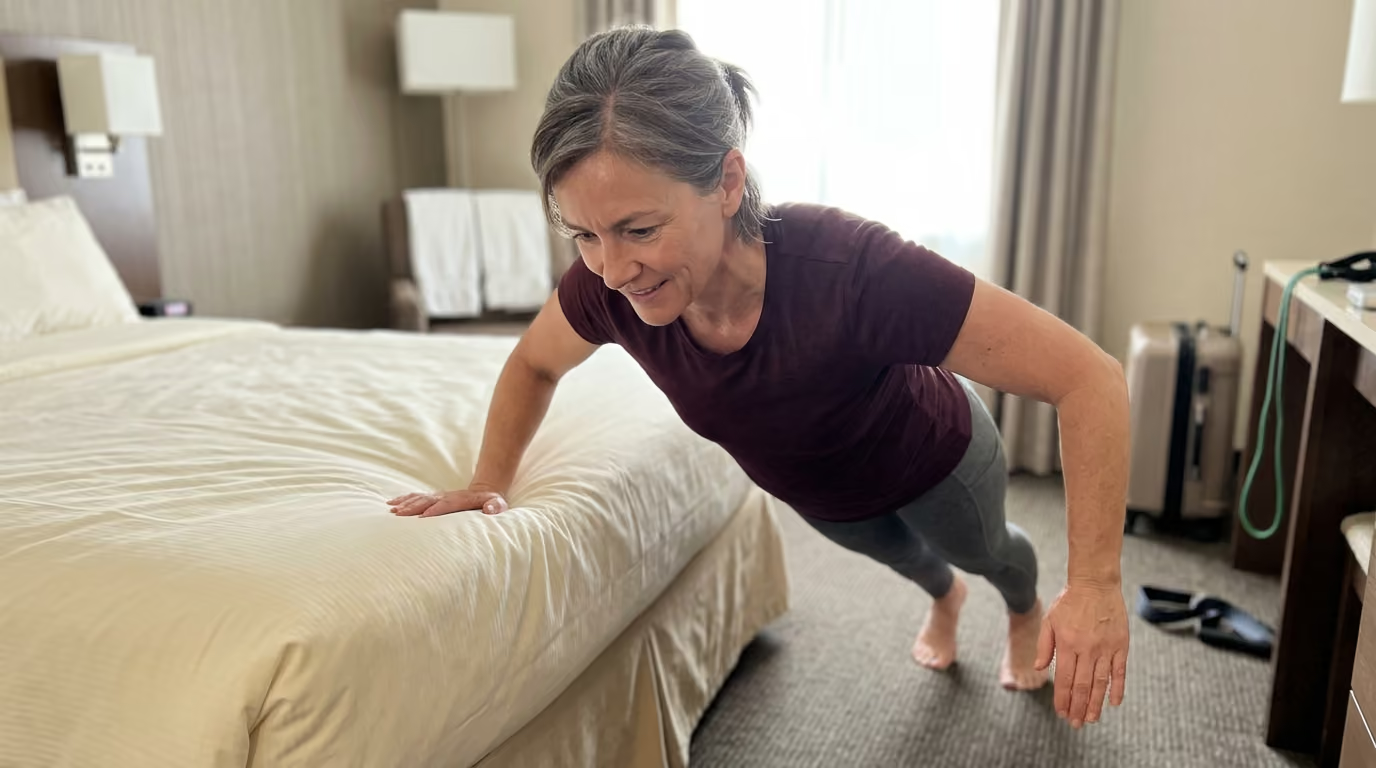
Bodyweight exercises require zero equipment and can be performed in any room with two square yards of open floor space. Calisthenic movements such as push-ups, single-leg hinges, reverse lunges, and side planks preserve fundamental movement patterns and core stability. The network meta-analysis noted earlier demonstrated that bodyweight training produces moderate-to-large strength adaptations in mature adults, establishing it as a proven foundation for physical maintenance.
The primary constraint of bodyweight training is the challenge of loading pulling movements and lower-body strength. Without a pull-up bar, training the latissimus dorsi, rhomboids, and rear deltoids requires mechanical creativity. Furthermore, a standard bodyweight squat may not provide enough resistance for a well-conditioned adult. You can overcome these limitations by transitioning to unilateral variations, such as single-leg skater squats, and slowing down the eccentric phase of each repetition.
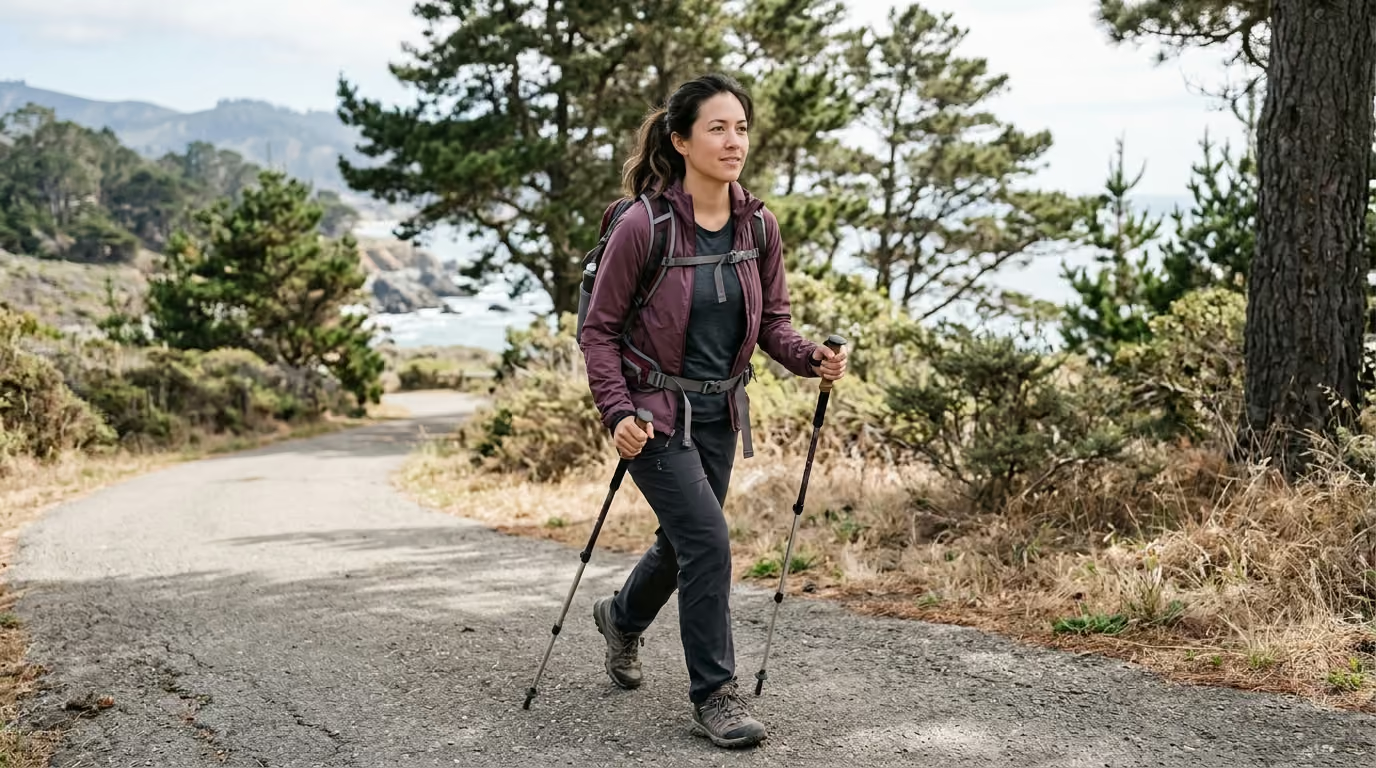
Walking is the most accessible aerobic conditioning tool available during travel. It carries minimal orthopedic recovery costs, requires no specialized facilities, and integrates naturally with transit and city exploration. Research published in metabolic health journals shows that breaking up prolonged sitting with frequent, light-intensity walking breaks significantly improves acute glucose and insulin regulation compared to continuous sitting.
You can adjust walking intensity to challenge cardiovascular capacity without high-impact running. Walking up steep urban grades, taking public stairs two at a time, or maintaining a brisk four-mile-per-hour pace elevates the heart rate into zone two endurance territory. Incorporating purposeful walking throughout travel days maintains aerobic baseline fitness while clearing lower-body venous pooling caused by prolonged air travel.
Hotel swimming pools offer a non-impact conditioning environment that unloads weight-bearing joints while providing continuous fluid resistance. A systematic review of aquatic exercise trials involving older adults found that pool-based training improves lower-body strength, joint mobility, and functional balance. The hydrostatic pressure of water also aids circulation, assisting in the reduction of travel-induced lower-leg edema.
Pool workouts do not require advanced competitive swimming strokes. Travelers with joint stiffness can perform continuous water jogging, walking lunges against water resistance, or high-tempo pool walking intervals. These movements provide an excellent cardiovascular and mobility workout without placing high eccentric loads on the hips, knees, or feet.
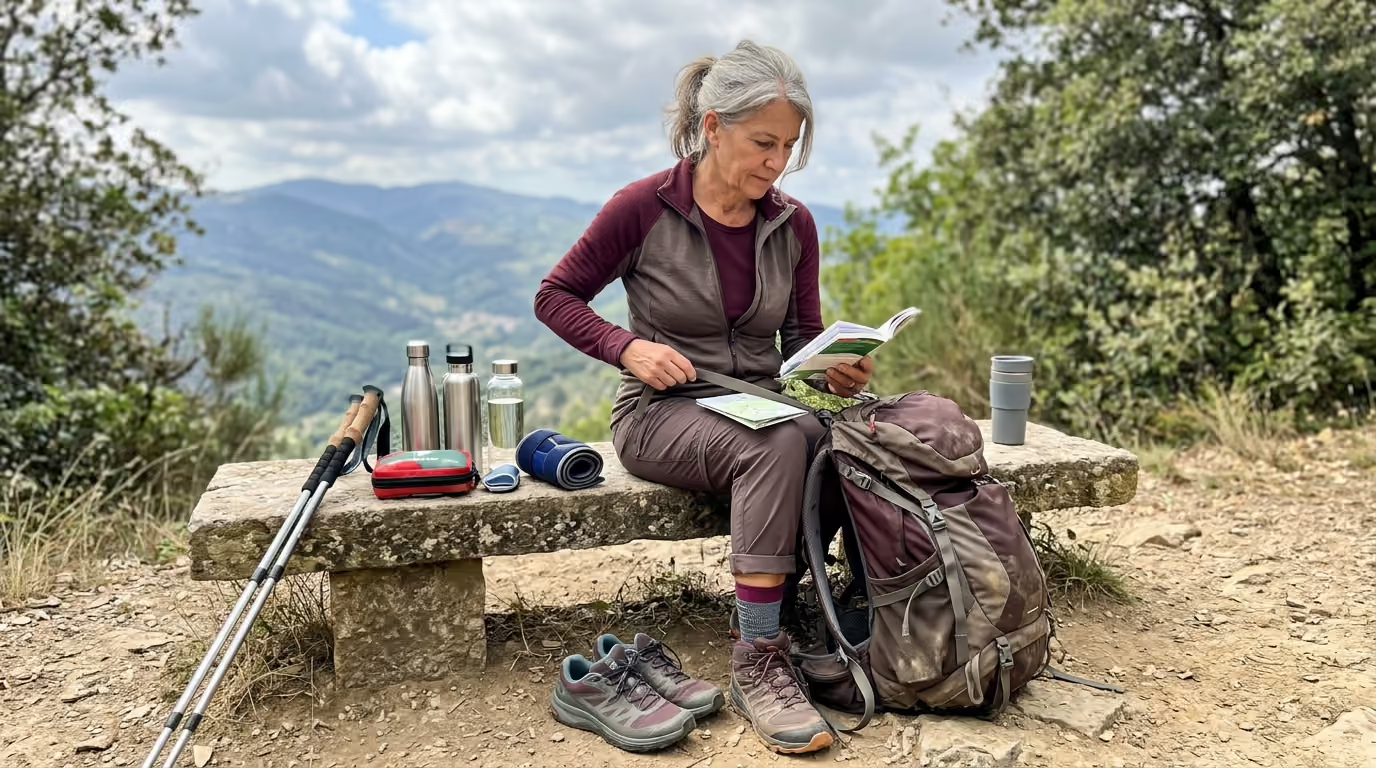
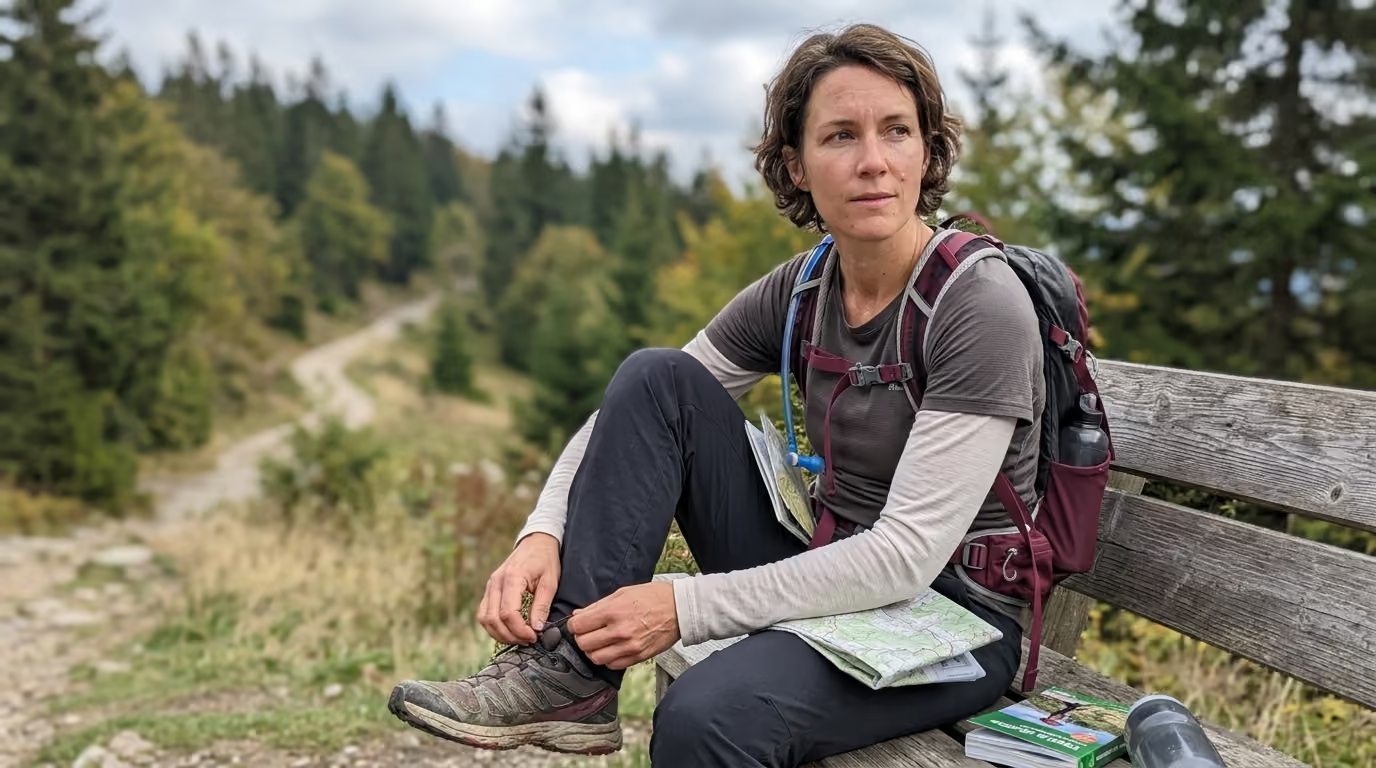
Engaging in outdoor recreation turns the local destination into a functional training environment. Trail hiking, open-water paddling, coastal walking, and urban cycling challenge balance and multi-planar stability far more than flat indoor surfaces. These environments demand rapid lateral adjustments and continuous core stabilization, helping maintain the dynamic balance skills that decline with age.
The primary consideration with outdoor training is managing environmental variables. Changes in altitude, humidity, trail steepness, and ambient temperature increase cardiovascular strain. When exercising outdoors in unfamiliar terrain, start conservatively. Reduce your normal training pace for the first two days to allow your cardiovascular and thermoregulatory systems to adapt.
To discover practical methods for pairing destination environments with structured training, review our detailed guide on travel and human performance.
A complete travel strength session does not require dozens of complicated exercises. Instead, focus on six fundamental movement patterns: knee-dominant, hip-dominant, horizontal push, horizontal pull, vertical push or pull, and trunk stabilization. Master the space-efficient variations below to target all major muscle groups using minimal equipment.
Lower-body knee-dominant exercises develop quadriceps strength, patellar tendon durability, and single-leg balance. In tight spaces, bilateral bodyweight squats can be progressed to unilateral split squats to double the effective training load on the working leg.
Hip-dominant movements recruit the posterior chain, including the hamstrings, gluteus maximus, and lumbar stabilizers. These muscles undergo prolonged elongation and neurological inhibition during extended plane and car travel.
Pushing movements preserve chest, anterior deltoid, and tricep strength while building active shoulder stability. Varying your hand placement and body angle changes the mechanical load without requiring external weights.
Pulling exercises maintain mid-back thickness, rear shoulder health, and spinal posture. Because horizontal and vertical pulling are difficult to replicate with bodyweight alone, looped resistance bands serve as the premier travel tool for these patterns.
Core training on the road should prioritize resisting spinal motion rather than performing repetitive crunches. Isometric anti-rotation, anti-extension, and loaded carries build a durable, fatigue-resistant midsection.
Active travelers can explore our library on performance fitness to learn more about exercise progressions and core stability.
Business travel and packed vacation itineraries often leave little time for long training sessions. Rather than skipping workouts entirely, apply the principle of the minimum effective dose. A short, focused stimulus delivers enough neuromuscular and metabolic signaling to prevent detraining while fitting easily into a hectic day.
The World Health Organization physical activity guidelines recommend 150 to 300 minutes of moderate aerobic activity weekly, alongside muscle-strengthening exercises on two or more days. On demanding travel days, you can break this weekly target down into small, daily movement blocks. Fifteen minutes of structured bodyweight work combined with purposeful walking between meetings protects your physical baseline.
Structure your short training blocks using a reliable four-layer architecture. This framework ensures you address preparation, strength, conditioning, and recovery within a single streamlined session.
To enhance your systemic recovery during demanding travel, examine our resources on recovery and sleep to support tissue repair and maintain mental sharpness.
Misinformation around travel fitness often leads to either skipped workouts or unneeded physical strain. Separating exercise science from common workout myths allows you to train with confidence on the road.
Many people assume a training session must last an hour to provide meaningful physiological value. This belief causes travelers with only twenty minutes to spare to skip their workouts entirely. In reality, short bouts of resistance training that challenge muscles within two to three repetitions of technical failure maintain muscular cross-sectional area and neuromuscular drive. Consistency over months and years matters far more than single-session duration.
Walking is an exceptional recovery tool and aerobic activity, but it does not supply the mechanical tension needed to maintain muscular strength, bone mineral density, or upper-body mass. The physical stress of walking is predominantly low-load and repetitive. You must supplement walking with dedicated resistance exercises that challenge the upper body, core, and lower-body joints through deep ranges of motion.
Some experienced lifters view resistance bands as light rehabilitation tools incapable of building real strength. However, systematic reviews confirm that heavy looped bands provide substantial mechanical overload when performed with disciplined tempo, full ranges of motion, and unilateral variations. By adjusting band thickness and stretch distance, you can generate significant muscular fatigue without transporting heavy iron.
Some travelers believe a workout is only effective if it leaves them severely sore the next morning. However, intense delayed-onset muscle soreness during travel interferes with long walking days, athletic activities, and flight comfort. Your travel training should leave you energized, loose, and physically ready for the day, not stiff and exhausted.
Improvising heavy workouts using unstable hotel room furnishings presents serious safety risks. Towel racks, shower curtain rods, lightweight office chairs, and rolling desks are not designed to support dynamic human body weight. Never anchor high-tension resistance bands to hollow-core doors or unbolted nightstands. Confine your bodyweight anchor points to the floor, structural pillars, or verified solid door frames using commercial door-anchor attachments.
Different travel environments present distinct physiological stressors. Adjusting your training approach based on your itinerary, time zones, and lodging conditions helps you stay consistent without accumulating excess fatigue.
Corporate business travel often involves back-to-back meetings, client dinners, and prolonged desk work. The primary hazards here are mental fatigue and extended sedentary time. In this environment, morning room circuits lasting twelve to fifteen minutes are ideal. Completing your workout before breakfast protects your exercise habit from unexpected schedule changes and late-running evening commitments.
Cross-meridian flights cause physical dehydration, joint stiffness, and circadian disruption. After landing from a long flight, avoid attempting a high-intensity workout to technical failure. Your central nervous system is already stressed from sleep disruption, elevating your injury risk.
Instead, prioritize a thirty-minute outdoor walk in natural daylight followed by gentle, flowing mobility exercises. Exposure to morning sunlight resets your suprachiasmatic nucleus, aligning your circadian rhythm with the local time zone while light physical movement clears spinal stiffness.
Ascending to elevations above 6,000 feet reduces the partial pressure of oxygen, placing higher demands on your cardiovascular system. During your first forty-eight hours at altitude, reduce workout volume and intensity by thirty to forty percent. Focus on controlled bodyweight circuits, gentle hiking, and deep diaphragmatic breathing. Once your body acclimatizes, you can progressively return to your standard training volume.
When your trip centers around demanding sports like skiing, hiking, surfing, or cycling, your destination activities provide plenty of daily volume. In this setting, your room training should support your primary sport rather than add heavy fatigue. Focus your hotel sessions on joint mobility, calf and ankle durability, and upper-body pulling exercises that counter the forward-leaning postures of cycling and hiking.
For further insights on managing long-term physical capacity and vitality, explore our articles on longevity and living well.
The following four routines provide structured workouts that can be completed in fifteen to thirty minutes across diverse travel environments.
Perform this circuit as a continuous sequence. Move smoothly from one exercise to the next with 30 seconds of rest between movements. Complete three full rounds for an efficient full-body stimulus.
Perform this session as an alternating upper and lower-body workout. Complete 3 sets of each exercise pair before moving on to the next, resting 45 seconds between sets.
When you have access to a hotel fitness facility with dumbbells and an adjustable bench, use this time-efficient full-body routine. Perform 3 sets of 8 to 10 repetitions for each movement, keeping 2 repetitions in reserve on every set.
Use this interval workout outdoors or on a hotel treadmill to train cardiovascular conditioning and clear travel stiffness without high joint impact.
The broader scientific community shares a clear consensus regarding physical activity and long-term vitality. The World Health Organization, the American College of Sports Medicine (ACSM), and global public health organizations emphasize that physical exercise is essential for maintaining independence, bone density, metabolic health, and cognitive function across your lifespan.
Current guidelines recommend that all adults accumulate at least 150 to 300 minutes of moderate-intensity aerobic exercise, or 75 to 150 minutes of vigorous aerobic work, each week. In addition, adults should perform muscle-strengthening activities involving all major muscle groups at least two days per week. For adults over 40, the evidence strongly supports including multi-component training that integrates balance, functional coordination, and power development alongside strength and endurance.
The ACSM emphasizes progressive overload, multi-joint compound movements, and regular velocity-focused training to preserve physical function as we age. In travel contexts where traditional free weights are absent, you can achieve this stimulus through elastic resistance, bodyweight leverage, and single-leg exercises. What matters most for lifelong vitality is the continuous, regular application of physical effort, rather than the specific setting where that effort takes place.
Before beginning any new vigorous exercise program while traveling, consider your individual health profile. The ACSM preparticipation screening framework advises travelers with known cardiovascular, metabolic, or renal conditions, or those experiencing symptoms like chest tightness, dizziness, or unusual shortness of breath, to seek medical guidance before starting high-intensity exercise. Safe, consistent exercise tailored to your personal physical capacity provides the surest path to enduring health and capability.
Maintaining your physical strength and independence on the road requires only modest space, basic tools, and a consistent commitment to movement quality.
Stay connected for research and practical guidance on longevity, strength, recovery, energy and active living. New ideas to help you stay capable, curious and ready for more.


Explore practical guidance on strength, recovery, energy, travel and longevity for a life that stays active.
explore the Blog