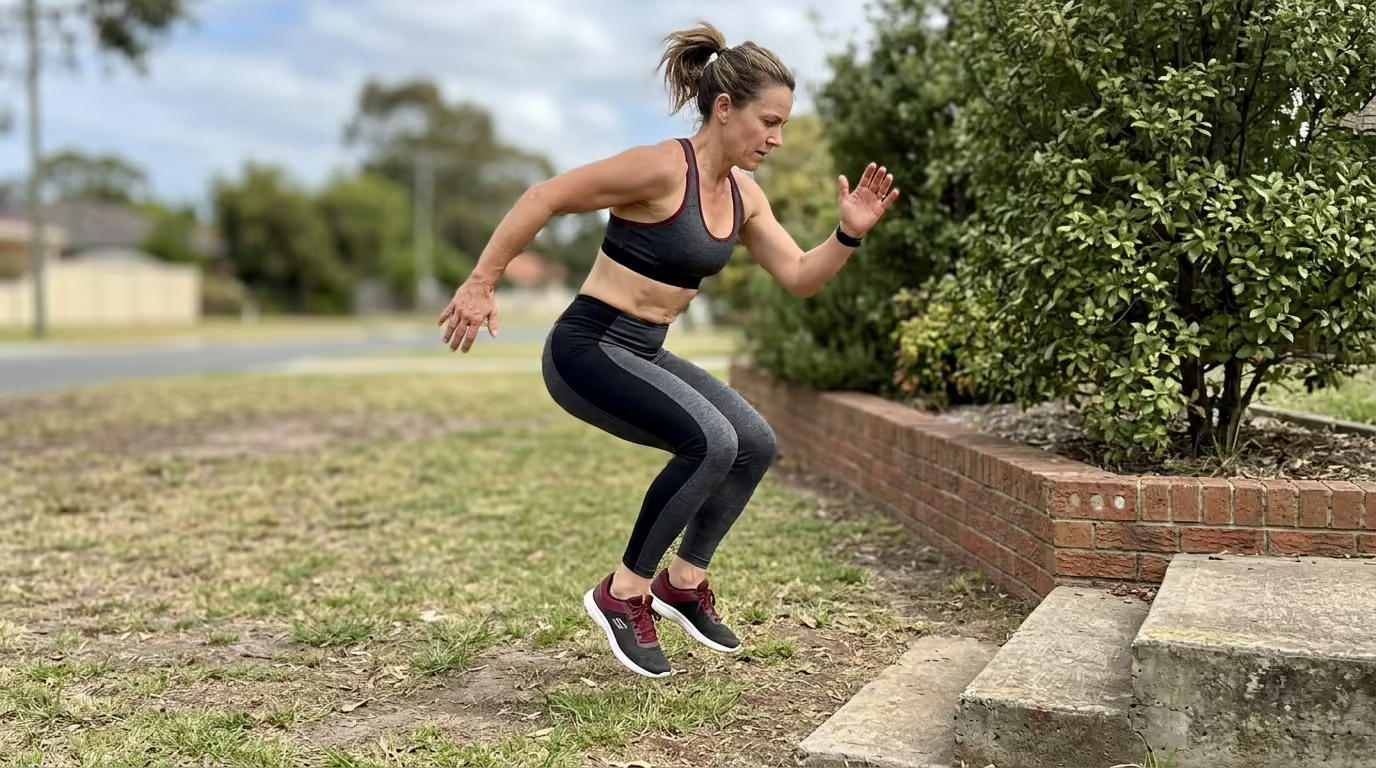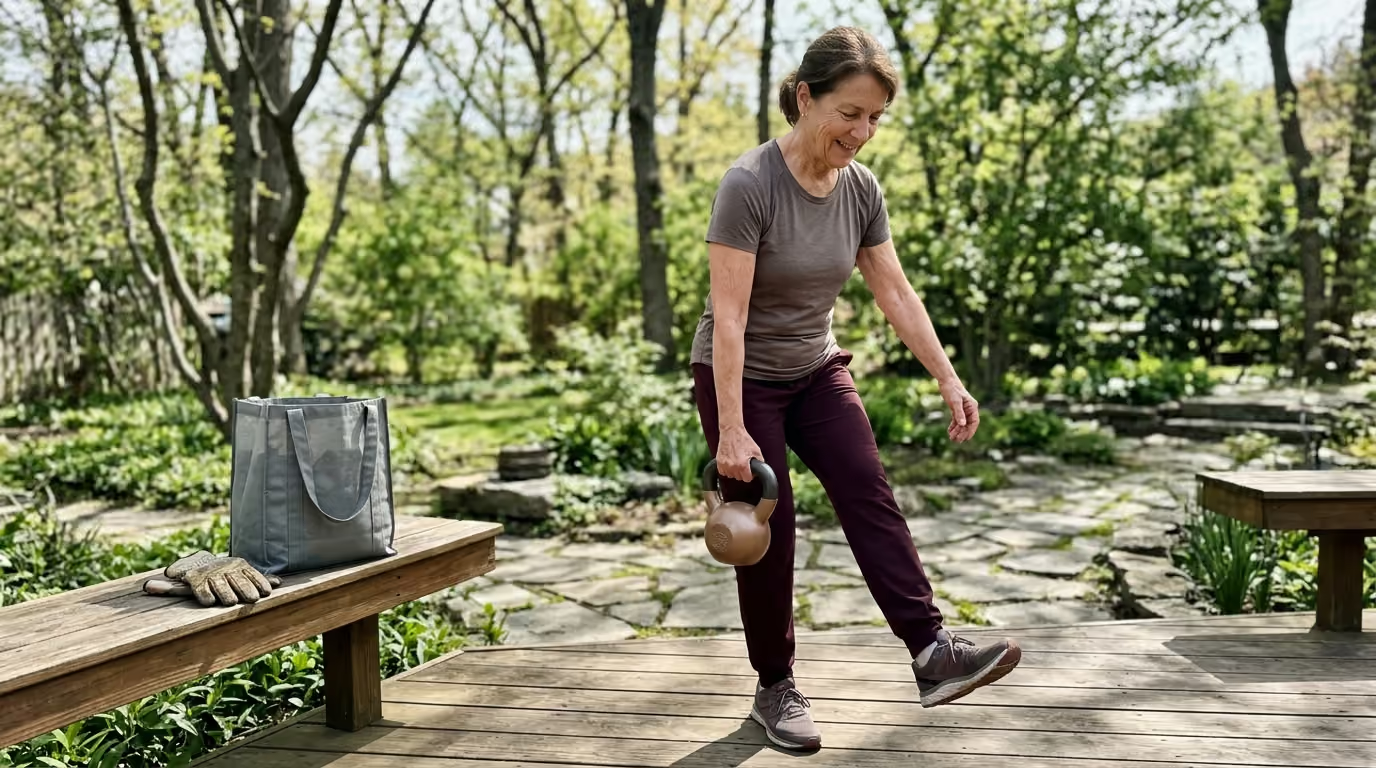

Steep descents and uneven trails demand resilient foot mechanics, calf endurance, and tendon stiffness to maintain balance and avoid strain.





You pack your bags for a week of hiking in the Dolomites or skiing the high bowls of the Alps. Your cardiovascular engine is ready, and your major muscle groups have been conditioned in the gym. Yet, three miles down a steep rocky descent or two hours into variable afternoon snow, an unexpected weakness appears. Your arches burn, your lower calves tighten into solid knots, and your ankles feel unsteady over loose stones.
This breakdown is rarely a failure of general cardiovascular fitness or overall desire. It is almost always a mismatch between the capacity of your lower leg and the physical demands of your adventure.
The human foot contains 26 bones, 33 joints, and over one hundred muscles, tendons, and ligaments. Together with the ankle and lower leg, it forms the sole point of contact between your body and the terrain. When you walk, run, scramble, or ski, every pound of force generated by your hips must pass directly through this complex network. Maintaining this system after age 40 requires more than generic calf raises or casual stretching. It demands a structured approach to tissue capacity, foot control, and dynamic balance.
Maintaining lower leg capability after 40 is not about fighting chronological age. It is about closing the gap between tissue capacity and mechanical demand. An active adult who regularly hikes, runs, or skis places substantial rotational and impact loads on the lower extremities. When the intrinsic muscles of the arch, the deep soleus muscle, and the ankle stabilisers lose conditioning, the body compensates. These compensations often manifest as knee irritation, hip tightness, plantar fascia discomfort, or unsteady balance on uneven trails.
The foot and ankle complex functions as a dynamic spring rather than a rigid pedestal. It must be mobile enough to conform to rough ground, yet stiff enough to propel your body forward efficiently. A robust training plan addresses five distinct physical layers: tissue capacity, foot core control, usable mobility, sensorimotor balance, and sport-specific power.
You do not need hours of daily rehabilitation to achieve lasting resilience. A focused investment of ten to fifteen minutes, two to three times per week, creates durable tissue capacity. By building strong calves, active arches, and responsive toes, you preserve agility, enhance movement efficiency, and protect your physical independence across decades of active travel. For a broader perspective on maintaining physical capability throughout your life, read our guide to healthy aging and longevity.
To build a resilient lower leg, you must first understand how its biological components interact under load. The system is divided into intrinsic structures, extrinsic muscles, connective tissues, and sensory networks.
The intrinsic foot muscles originate and insert entirely within the boundaries of the foot itself. These include the abductor hallucis, flexor hallucis brevis, flexor digitorum brevis, and quadratus plantae. These deep muscles act much like the local stabilizing muscles of your lumbar spine. They modulate the height and stiffness of your medial longitudinal arch during every step.
When your heel strikes the ground, these muscles allow the arch to elongate slightly to absorb impact. As you roll forward onto your toes, they contract to stiffen the arch, turning your foot into a rigid lever for propulsion. A 2024 study published in the Journal of Foot and Ankle Research noted that intrinsic foot muscle strength and morphology decline with age, showing a direct correlation with decreased limits of functional stability. When these local stabilizers lose strength, the superficial connective tissues, such as the plantar fascia, absorb excess mechanical stress.
Extrinsic muscles originate in the lower leg and cross the ankle joint via long, durable tendons. The posterior compartment contains the gastrocnemius and the soleus, which join together to form the thick Achilles tendon. The lateral compartment houses the fibularis longus and brevis, which control side-to-side ankle stability and prevent rollover sprains.
The anterior compartment is dominated by the tibialis anterior, which lifts the foot during the swing phase of walking to prevent tripping. The deep posterior compartment houses the tibialis posterior, a critical muscle that supports the arch and resists excessive inward rolling. These large muscles generate the substantial forces required for uphill climbing, rapid deceleration, and high-velocity running.
The big toe, known clinically as the hallux, plays an outsized role in human locomotion and balance. During the final push-off phase of gait, the hallux carries up to twice the load of the lesser toes. It anchors the medial column of the foot, allowing the windlass mechanism to tighten the plantar fascia and lock the midfoot bones together.
Research shows that reduced toe grip strength is an independent predictor of impaired balance and functional decline in older populations. If your big toe cannot press firmly into the ground, your body shifts its weight laterally, forcing the smaller outer toes to handle excessive loads. This mechanical deviation frequently leads to lateral ankle strain, knee rotation, and wasted energy during propulsion.
Your feet are sensory organs as much as structural foundations. The soles of your feet contain thousands of specialized mechanoreceptors that detect skin stretch, pressure distribution, and vibration. These receptors feed real-time positional data to your central nervous system, which coordinates balance adjustments in milliseconds.
When you spend decades in heavily cushioned, restrictive footwear, this sensory feedback loop can become muffled. Systematic reviews indicate that targeted foot and ankle training improves balance partly by re-sensitizing these neural pathways, rather than solely by building muscular force.
In fitness discussions, mobility and stiffness are often treated as direct opposites. In the foot and ankle complex, they are cooperative partners. A healthy foot requires sufficient dorsiflexion mobility to allow the shin to travel forward over the toes without lifting the heel early.
Simultaneously, the foot requires high torsional stiffness to transmit force without collapsing through the midfoot. The goal of training is never maximal joint laxity or absolute rigidity. The true objective is context-appropriate stiffness, where your foot adapts softly on landing and transforms instantly into a powerful spring upon push-off.
The calf complex is often treated as a single aesthetic muscle group, but it contains two distinct engines with completely different biomechanical profiles.
The gastrocnemius is a two-joint muscle that crosses both the knee and the ankle. It is composed largely of fast-twitch muscle fibers, making it ideal for jumping, sprinting, and rapid force production. Because it crosses the knee, it is placed on stretch when your leg is straight and goes slack when your knee bends.
The soleus sits deep beneath the gastrocnemius and crosses only the ankle joint. It is dominated by slow-twitch, fatigue-resistant muscle fibers. The soleus works continuously during upright standing, walking, and running, generating up to eight times your body weight in force during high-speed movement.
Crucially, because the gastrocnemius is slacked when your knee is bent, the soleus handles almost the entire plantar-flexion workload during bent-knee activities. Hiking up steep slopes, skiing in a flexed stance, and descending rough mountain trails depend heavily on soleus capacity. If you only perform standing calf raises, you leave this critical postural engine undertrained.
The Achilles tendon is the thickest and strongest tendon in the human body. It stores elastic energy during the landing phase of gait and returns that energy during push-off, dramatically reducing the metabolic cost of running and walking.
As we age past 40, tendon tissue naturally experiences changes in collagen alignment, hydration, and cellular turnover. Tendons thrive on progressive mechanical loading. Heavy, slow resistance training stimulates collagen synthesis, increases tendon cross-sectional stiffness, and improves load tolerance.
According to clinical practice guidelines from the Journal of Orthopaedic & Sports Physical Therapy, progressive mechanical loading remains the gold standard for restoring tendon health and capacity. Loading protocols should incorporate eccentric, concentric, isometric, and heavy slow-speed resistance tailored to personal tolerance.
A comprehensive lower-leg program develops four distinct qualities:
Building these four qualities ensures that your ankles remain stable at the end of a long day of outdoor activity, when fatigue is highest and injury risk peaks. Explore our dedicated resources on strength and physical performance to learn how to structure full-body strength programs.
Before starting a focused training cycle, assess your baseline foot and ankle capacity. These functional screens highlight unilateral asymmetries, range-of-motion limitations, and sensory deficits.
Stand barefoot on one foot near a wall for balance support, touching the wall with only the fingertips of one hand. Keep your standing knee completely straight. Rise onto the ball of your foot through a full range of motion, pausing briefly at the top before lowering under control.
Perform as many smooth, non-bouncing repetitions as possible at a cadence of two seconds up and two seconds down. Repeat the test on the other leg, and then perform a second round on both sides with the knee flexed to roughly 30 degrees.
Target Benchmarks:
Place a measuring tape on the floor perpendicular to a smooth wall. Position your bare foot alongside the tape, facing the wall. Step back with the opposite leg into a comfortable lunge stance.
Keeping your front heel glued to the floor, drive your front knee directly over your second toe toward the wall. Measure the maximum distance your big toe can move away from the wall while your knee still touches the wall without your heel lifting.
Target Benchmarks:
Stand barefoot on a firm, flat surface with your hands placed lightly on your hips. Lift one foot off the floor, keeping it near your standing ankle without allowing the legs to touch. Hold this position motionless for 30 seconds while looking straight ahead.
If this is manageable, repeat the test while gently turning your head from side to side at a steady pace. Advanced movers can attempt the test with eyes closed, maintaining a safe environment with a countertop or sturdy chair within arm's reach.
Target Benchmarks:
Stand comfortably with both feet flat on the floor, pointing straight ahead. Without moving your ankles or shifting your body weight, attempt to lift your big toes off the floor while keeping the four smaller toes pinned firmly to the ground.
Next, reverse the movement: press your big toes down with intent while lifting the four smaller toes toward the ceiling. Finally, attempt to spread all five toes apart as wide as possible without curling them into the floor.
Target Benchmarks:
Rather than randomly selecting exercises, organize your lower-leg training into five distinct, progressive layers. This systematic approach ensures that every tissue develops sufficient capacity before being exposed to high-velocity sports and demanding terrain.
The first layer builds the raw structural capacity of the muscular and connective tissues to handle load without injury. Focus on slow, controlled resistance exercises that load the calf muscles, Achilles tendons, anterior shin muscles, and lateral stabilizers.
Exercises in this layer include seated and standing calf raises, wall-supported tibialis raises, and band-resisted ankle eversion. You should emphasize full range of motion, deliberate eccentric tempo, and adequate resistance.
Layer two develops active neuromuscular control over the arch and toes. It trains your nervous system to stabilize the foot structure actively rather than relying entirely on passive shoe cushioning or rigid orthotics.
Primary movements include the short-foot exercise, big-toe presses, and conscious tripod grounding during standing tasks. The emphasis is on motor precision, subtle muscle contraction, and endurance rather than maximal fatigue or cramping.
This layer restores functional ankle dorsiflexion, midfoot articulation, and big-toe extension. Instead of passive, static stretching, focus on active mobility through loaded movement.
Key exercises include loaded split-stance knee drives, deficit calf raises with a deep bottom stretch, and kneeling big-toe extension holds. Research demonstrates that loaded eccentric movements provide meaningful improvements in usable joint range while simultaneously strengthening the surrounding tissues.
Layer four connects foot control with systemic balance, visual input, and vestibular function. It conditions your body to make micro-adjustments in joint position rapidly, preventing minor balance disruptions from turning into falls or sprains.
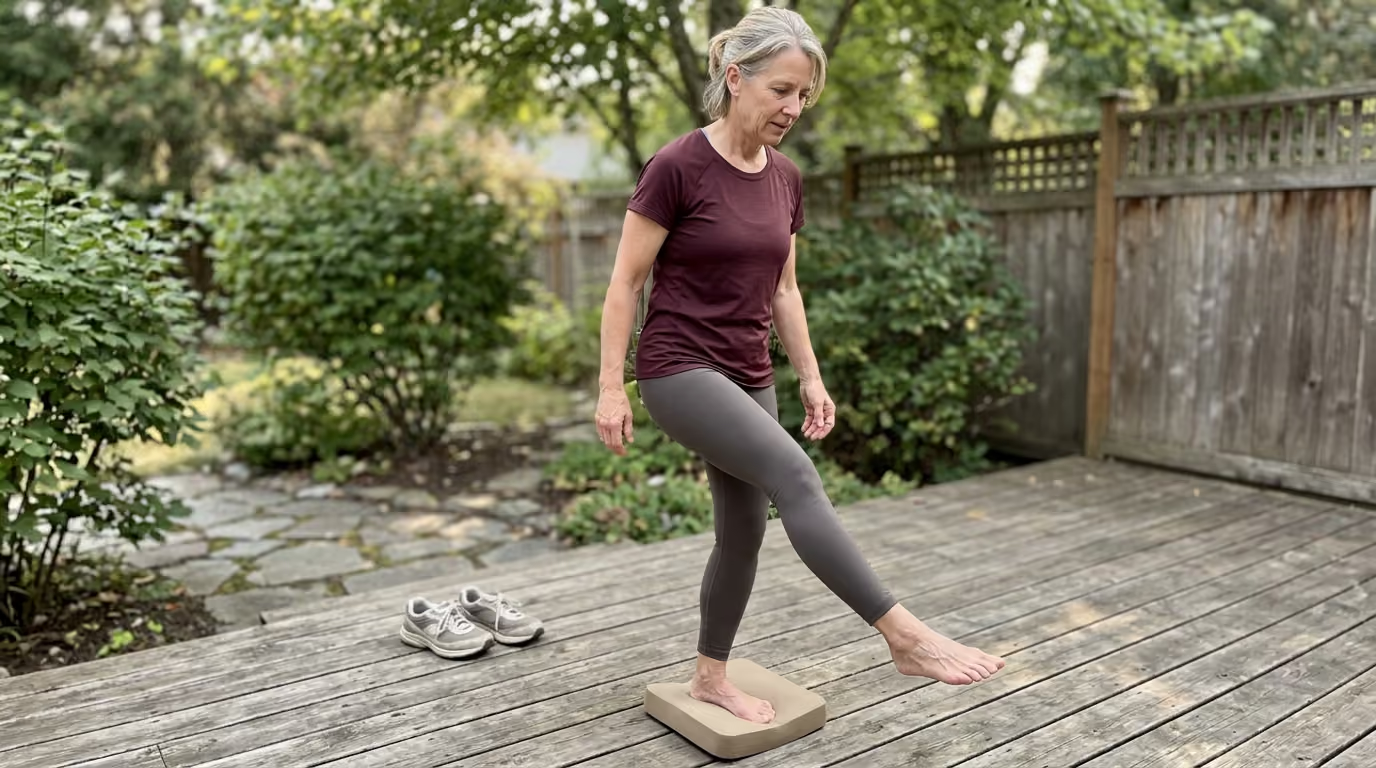
Exercises include single-leg reaching patterns, standing on compliant foam surfaces, multidirectional weight shifts, and reactive balance drills. These drills challenge your sensory mechanoreceptors to communicate clearly with your brain under varying physical conditions.
The final layer prepares your lower extremities for the high impact and rapid deceleration forces of actual adventure sports. It bridges the gap between controlled gym exercises and the unpredictable demands of outdoor trails, ski slopes, and urban exploration.
Movements in this layer include low-amplitude pogo hops, lateral skater bounds, controlled step-downs, and downhill braking drills. Introduce these exercises only after you establish a solid foundation in layers one through four.
Integrate these essential movements into your weekly strength sessions to develop resilient feet and ankles.
The short-foot exercise targets the intrinsic arch stabilizers, specifically the abductor hallucis and flexor digitorum brevis.
Execution:
Coaching Cue: Imagine pulling a piece of paper upward under your arch without clawing the floor with your toe tips.
This drill rebuilds independent neural control of the big toe, restoring late-stance propulsive mechanics.
Execution:
Coaching Cue: Keep your ankle joint steady and prevent your knee from twisting inward to create artificial movement.
This fundamental exercise builds peak calf force, strengthens the Achilles tendon, and improves ankle stability.
Execution:
Coaching Cue: Avoid rolling onto the outside edges of your feet at the top; drive force through the base of the big toe.
This movement isolates the soleus muscle by taking the gastrocnemius out of its primary force-producing position.
Execution:
Coaching Cue: Keep the movement slow and deliberate; avoid bouncing out of the bottom stretch position.
Training the tibialis anterior ensures balanced lower-leg mechanics, improves toe clearance, and absorbs downhill landing forces.
Execution:
Coaching Cue: The further your feet are placed away from the wall, the more demanding the exercise becomes.
These movements strengthen the fibularis complex and the tibialis posterior, protecting against lateral rolling injuries on uneven trails.
Execution:
Coaching Cue: Move smoothly through a full range of motion; avoid jerky, momentum-driven movements.
This dynamic balance drill challenges foot stability while your center of mass shifts in multiple directions.
Execution:
Coaching Cue: Your standing knee should track smoothly over your second toe without collapsing inward during reaches.
Last winter in Chamonix, I noticed something striking. It was not the altitude that forced my peers into the lodge by noon, it was a lack of rotational strength and poor recovery from the flight. We spend so much time debating the perfect supplement stack, yet we neglect the basic foundational strength required to actually enjoy our travels.
That trip changed how I approach fitness. I stopped training for aesthetics and started training exclusively for capability. When your lower leg and foot complex lacks endurance, the consequences show up immediately across demanding outdoor activities.
To discover more strategies for staying capable during demanding trips, read our comprehensive guides in the travel and adventure section.
Downhill walking places substantial eccentric demands on the lower extremities. As your foot strikes descending terrain, your tibialis anterior must contract eccentrically to lower the forefoot softly, preventing painful foot-slap. Simultaneously, your soleus and quadriceps work to brake your descending mass.
If your soleus fatigues prematurely, your shin collapses forward too rapidly, transmitting excessive shear forces directly into your knee joint. Furthermore, when intrinsic foot muscles tire after several miles, the arch flattens, causing your toes to slide forward and jam against the front of your hiking boots. Building bent-knee calf capacity and intrinsic foot endurance prevents these common trail issues.
Unlike road running on predictable asphalt, trail running presents a constantly shifting surface of roots, rocks, and off-camber slopes. Each foot strike requires rapid sensory assessment and instantaneous adjustments in subtalar stiffness.
The fibularis muscles on the outer ankle must react in milliseconds to stabilize the joint when stepping on loose gravel. If your sensorimotor system has not been trained on varied surfaces, your muscles react too slowly, increasing the risk of ankle sprains. Incorporating single-leg balance work, multi-planar reaches, and lateral bounds develops the neuromuscular speed required to navigate technical singletrack safely.
Alpine ski boots lock the ankle joint into a rigid, forward-leaning position. Many skiers mistakenly believe that because the boot is stiff, ankle and foot strength matter little on the mountain. In reality, modern skiing requires continuous, subtle pressure modulation through the sole of your foot to initiate turns and carve clean arcs.
Your soleus and deep foot muscles work isometrically for minutes at a time to maintain a stable, athletic stance against the stiff tongue of the boot. When these tissues fatigue, skiers compensate by leaning backward into their boots, placing excessive strain on their quadriceps and knees while reducing ski control. Targeted soleus endurance and lateral hip conditioning allow you to maintain an active forward stance from the first morning chairlift to the final descent.
Active travel presents unique physical stressors that can compromise foot and ankle function before your adventure even begins. Long-haul international flights, extended walking on unforgiving cobblestone streets, and carrying heavy luggage combine to create sudden demand spikes.
Prolonged sitting in pressurized airline cabins impairs venous blood return from the lower legs, resulting in fluid accumulation around the ankles and feet. This localized swelling reduces joint mobility, numbs sensory mechanoreceptors, and leaves tendons feeling stiff and unresponsive.
To counteract travel-induced stiffness, perform seated calf raises, ankle circles, and toe spreads every 60 minutes during long flights. Immediately upon arriving at your destination, spend five minutes barefoot in your hotel room performing the short-foot exercise and knee-to-wall dorsiflexion lunges. This simple habit clears fluid retention, wakes up dormant mechanoreceptors, and prepares your lower legs for exploring new terrain.
Exploring historic cities like Rome, Kyoto, or Edinburgh often involves logging 15,000 to 20,000 daily steps on hard stone surfaces. Unlike natural soil trails, which offer natural compliance, cobblestones and paved walkways deliver repetitive, unyielding impact forces.
If you attempt high-volume city walking in unstructured casual shoes without adequate intrinsic foot strength, your arches will quickly fatigue. Alternate your walking footwear every other day to vary the pressure points on your feet. Spend two minutes each evening rolling the soles of your feet over a firm massage ball to release tension in the plantar fascia and intrinsic muscles.
Footwear acts as a primary interface between your biology and the physical world. Rather than viewing shoes as rigid corrective devices, treat them as mechanical load-management tools that can be adjusted based on the task.
When evaluating footwear for walking, training, hiking, or travel, assess these five core design variables:
A systematic review published in the Journal of Foot and Ankle Research showed that transitioning to minimalist footwear can increase intrinsic foot muscle cross-sectional area by 7% to 10% and boost strength by 9% to 57% in healthy adults. Another controlled study found that eight weeks of simple walking in minimalist shoes produced foot-muscle adaptations comparable to a structured foot-strengthening exercise program.
However, these findings do not justify an abrupt, complete switch to minimalist shoes for active adults over 40. Removing all shoe cushioning and drop suddenly transfers massive mechanical loads directly onto your Achilles tendons, calves, and metatarsal bones. If your tissues are unconditioned, this abrupt transition can lead to Achilles tendinopathy, plantar fasciitis, or metatarsal stress fractures.
A safe, progressive transition protocol spans several months:
Navigating foot and ankle training requires filtering out popular fitness myths and oversimplified rehabilitation trends.
While ankle strength is essential, balance is a complex system involving the visual system, inner-ear vestibular organs, hip stabilizers, trunk control, and sensory mechanoreceptors. You can possess tremendous calf strength and still exhibit poor balance on uneven ground if your sensorimotor processing is sluggish. Balance training must include visual challenges, head movements, and multi-directional reaches alongside pure resistance loading.
When people experience tight ankles, their instinctive reaction is to perform static calf stretches against a wall. A comprehensive meta-analysis revealed that prolonged calf stretching produces only small, often clinically insignificant increases in ankle dorsiflexion of roughly two to three degrees.
Stiffness is often caused by joint capsule restrictions, muscular weakness at end range, or protective neural tension. To restore lasting ankle mobility, combine active mobility drills with loaded, full-range eccentric resistance exercises, such as deficit calf raises.
Arch height is largely determined by structural bone anatomy and genetics, not muscular strength. A high arch can be rigid, inflexible, and poor at absorbing impact, transmitting excessive force into the knees and hips. Conversely, a lower arch can be strong, dynamic, and fully capable of stiffening effectively during push-off. The goal of training is not to alter your passive skeletal structure, but to build dynamic control, tissue tolerance, and active muscular support across whatever natural arch shape you possess.
While intrinsic foot training improves balance and arch control, systematic reviews indicate that it does not consistently resolve active plantar heel pain or severe tendinopathy on its own. Persistent foot pain is a multifactorial issue influenced by training volume errors, metabolic health, recovery status, and tissue irritability. Addressing persistent pain requires a comprehensive plan of load management, progressive tendon loading, and professional clinical evaluation, rather than simply adding more toe curls.
Standing on soft foam pads, wobble boards, or balance domes is a popular gym trend. While these unstable surfaces challenge balance, they significantly limit the absolute muscular force you can apply. You cannot load your calf muscles or Achilles tendons with sufficient resistance on an unstable platform to build true tissue strength.
Build your foundational strength on stable, solid ground using heavy resistance, and reserve unstable surfaces for specific, low-load sensorimotor coordination drills. To refine your overall exercise programming, read our in-depth articles on energy, recovery, and fitness.
You do not need to overhaul your lifestyle or spend hours performing tedious exercises to develop resilient lower legs. By weaving simple foot drills into daily habits and performing two targeted strength sessions each week, you can build lasting tissue capacity.
Perform this focused circuit twice per week, either at the end of your regular strength workouts or as a standalone session.
After completing demanding hikes, long runs, or intense lower-leg workouts, prioritize proper tissue recovery. Adequate sleep, balanced nutrition, and gentle soft-tissue mobilization support collagen synthesis and tendon remodeling. To optimize your post-exercise routine, explore our expert resources on recovery and sleep strategies.
Every active adult brings a unique medical and training history to the table. Modify your foot and ankle programming if you present with any of the following clinical considerations:
Clinical Warning Signs: If you experience sudden sharp joint pain, noticeable swelling, morning stiffness that worsens over multiple weeks, inability to bear weight, or a distinct popping sensation in your lower leg, stop self-directed exercise and consult a qualified physical therapist or sports physician.
The scientific community broadly agrees on several fundamental principles regarding lower-extremity health in active adults:
Bookmark and review this guide whenever you prepare for a seasonal shift in your physical activity. Revisit these self-assessments and exercise protocols:
Building resilient feet and strong ankles requires patience, progressive loading, and consistent practice. By investing a few minutes each week into the foundation that supports every step you take, you ensure that your body remains strong, agile, and ready for your next great adventure.
Stay connected for research and practical guidance on longevity, strength, recovery, energy and active living. New ideas to help you stay capable, curious and ready for more.


Explore practical guidance on strength, recovery, energy, travel and longevity for a life that stays active.
explore the Blog