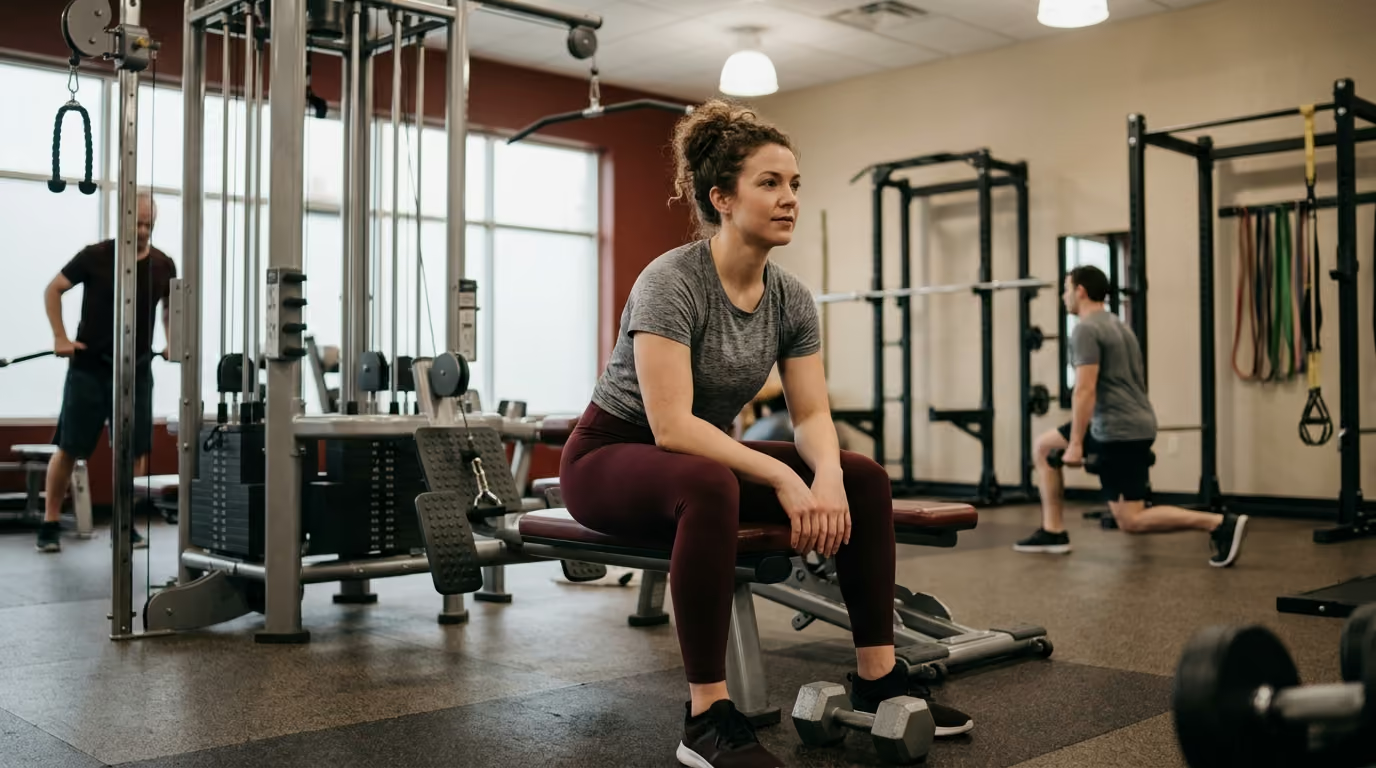

Optimal strength, athletic performance, and joint longevity emerge when systematically matching movement variations to individual biomechanics.





Why do your knees ache after barbell squats while your training partner thrives on them? You have likely searched online for the single best exercise to build strength, protect your joints, or maintain athletic power. The internet usually offers rigid dogma, insisting that everyone must perform the same handful of barbell lifts.
The truth is simpler and far more useful. Exercise selection is an engineering problem. It is the process of matching a specific physical stimulus to your unique body, current goals, and available equipment.
When you understand how to evaluate movements based on joint angles, fatigue costs, and movement mechanics, you no longer need to guess. You can build a training routine that develops genuine physical capability, whether you are preparing for a backcountry ski trip or maintaining independence for decades to come.
Exercise selection should never be a popularity contest. Choosing a movement because a champion athlete performs it ignores the reality of individual anatomy, injury history, and training goals. A useful framework begins by asking three questions about any prospective exercise. What is its explicit purpose? Which tissues or capacities does it target? How complex is it to perform with consistent technique?
These questions form the foundation of the Efficiency, Safety, and Comfort Analysis Method. An exercise is only as good as the physiological adaptation it creates. If a movement causes joint pain or creates disproportionate systemic fatigue, it fails the efficiency test. The best exercise is the one that delivers the highest training stimulus with acceptable technical demand and manageable fatigue.
To select movements intelligently, you must understand the distinction between a movement category and an exercise variation. A movement category describes a fundamental pattern, such as a knee-dominant press, a hip hinge, a horizontal push, or a loaded carry. An exercise variation is the specific tool and posture you select to train that pattern. If a barbell back squat irritates your hips, you do not abandon knee-dominant training. You simply select a front squat, safety-bar squat, split squat, or leg press to achieve the same muscular adaptation.
Every movement you perform creates a specific balance between stimulus and fatigue. Stimulus refers to the mechanical tension and metabolic stress that signal your body to adapt. Fatigue includes muscle damage, connective tissue strain, and central nervous system depletion. An intelligent program prioritizes exercises with a high stimulus-to-fatigue ratio. This approach ensures you stimulate strength and muscle growth without spending days recovering in discomfort.
The primary reason to train in the gym is to improve your capacity outside of it. Transfer describes how gains made during resistance training improve real-world physical performance. Whether your goal is sprinting across a tennis court or carrying heavy luggage through an international terminal, transfer relies on the principle of dynamic correspondence.
Dynamic correspondence means an exercise matches the target activity in key mechanical ways. These include the direction of force production, the range of motion, the type of muscular contraction, and the rate of force development. However, an exercise does not need to mimic your sport perfectly to be valuable. General strength training builds the force capacity of muscles and tendons. Specific drills then teach your nervous system to express that force rapidly during complex movements.
Muscles adapt to mechanical tension across a wide spectrum of intensities. Research indicates that loads ranging from 30 percent to 90 percent of your one-repetition maximum can stimulate muscle hypertrophy when sets are taken close to muscular failure. However, building maximal strength requires heavier loads, generally around 80 percent of your maximum. Heavier resistance trains the nervous system to recruit high-threshold motor units and coordinate muscle groups under heavy strain.
The relationship between muscle length and adaptation adds another dimension to exercise selection. Training a muscle at longer lengths, where it is fully stretched under load, often stimulates robust adaptations. For instance, a Romanian deadlift loads the hamstrings in a lengthened position, building resilience near end-range hip flexion. Choosing exercises that challenge muscles across their full functional excursion supports both joint stability and functional capacity. You can learn more about structuring these training inputs inside our guide to applied physical performance methods.
Choosing the right exercise requires a structured sequence of decisions. Following a systematic process prevents you from defaulting to familiar habits that may no longer serve your body.
Never choose an exercise without identifying the adaptation you want. Are you trying to build maximal bilateral force, increase muscle tissue, improve rate of force development, or build joint resilience? An objective like building leg strength is too vague. A clearer objective is developing knee-extensor force without placing compressive stress on the lumbar spine. Clear goals narrow your exercise choices immediately.
Determine what restricts your current performance. If your squat stalls halfway up, the issue might be quadriceps strength, trunk stiffness, or poor balance. If you struggle to accelerate during sport, you may lack horizontal force production or reactive tendon stiffness. Distinguishing between a capacity deficit, a movement skill deficit, and a tissue tolerance deficit ensures you select an exercise that solves the real problem.
Match your outcome to a fundamental movement pattern:
If your goal is maximal strength, select stable exercises that allow heavy loading and precise technical replication. If your goal is power, select lighter, explosive movements that allow rapid acceleration through the entire range of motion. For power work, movement speed and technical precision are critical. You should terminate power sets before fatigue degrades your velocity.
Every exercise has a learning curve and a coordination cost. High-complexity movements, such as barbell Olympic lifts, require significant technical skill and neural energy. Low-complexity movements, such as chest-supported machine rows, allow you to train a target muscle to fatigue without balance limitations. Use complex movements when coordination is your goal, and simple movements when muscular fatigue is your goal.
Your skeleton dictates your mechanics. An individual with long femurs and a short torso will naturally lean forward during a barbell back squat. This forward lean increases demand on the lower back while reducing focus on the quadriceps. Elevating the heels on wedges or switching to a safety-bar squat alters the mechanics. It keeps the torso upright and directs tension onto the quadriceps. Adjust the exercise to fit your skeleton rather than forcing your skeleton into a rigid template.
Exercise selection must respect your joint health. If an exercise causes sharp pain or joint irritation that lasts into the next day, modify it. You can adjust the load, reduce the range of motion, change the grip angle, or choose a different movement within the same category. For example, replacing a flat barbell bench press with a neutral-grip dumbbell press often resolves anterior shoulder discomfort while preserving chest and triceps loading.
Your training environment dictates your options. A boutique hotel gym might lack heavy barbells, but it often provides dumbbells, cables, and adjustable benches. A skilled lifter knows that a heavy dumbbell Bulgarian split squat can deliver the same leg stimulus as a barbell squat. Adapt your exercise selection to the tools at hand without compromising your training target.
Every exercise takes a toll on your systemic recovery capacity. Heavy deadlifts and back squats create significant axial loading on the spine and tax the central nervous system. If your week already includes demanding trail running, tennis, or professional travel, choose supported or unilateral exercises. Chest-supported rows and belt squats build strength without overwhelming your systemic recovery budget.
When an exercise becomes uncomfortable or impractical, you do not need to rewrite your entire program. You only need to substitute the specific movement. The key is knowing which variables must remain fixed and which variables can change.
The non-negotiable objective of knee-dominant training is developing force through knee and hip extension. The negotiable features include spinal loading, foot placement, and implement type.
The primary objective is loading the posterior chain, specifically the gluteal muscles, hamstrings, and spinal extensors. The negotiable features include starting height, knee bend, and load position.
The goal is building pressing force through the pectorals, anterior deltoids, and triceps. The negotiable features include grip width, wrist orientation, and plane of movement.
The goal is building retraction and depression strength in the scapular stabilizers and latissimus dorsi. The negotiable features include torso support, grip orientation, and unilateral versus bilateral execution.
Vertical movements develop overhead shoulder stability and upper back width. When shoulder mobility restricts overhead pressing, angled variations offer an effective substitute.
How you order your exercises within a single workout determines which adaptations your body prioritizes. Research consistently shows that strength gains are greatest in the exercises performed at the start of a session. Hypertrophy, by contrast, is less sensitive to exercise order, provided the overall set volume and effort are sufficient.
Place your most important movement first. If your primary goal is building single-leg stability for mountain hiking, begin with Bulgarian split squats when your nervous system is fresh. If you want to maintain upper-body pressing power, place your dumbbell bench press ahead of your accessory lifts.
A well-designed strength session should follow a clear sequence:
Managing your weekly training schedule requires balancing your strength sessions with other physical activities. If you run, cycle, or play court sports, avoid high-volume lower-body training immediately before intense endurance work. Research on concurrent training recommends separating hard endurance sessions and heavy strength sessions by 6 to 24 hours whenever possible. This separation prevents residual fatigue from compromising your force output and reduces overall injury risk.
Volume is another critical variable. The American College of Sports Medicine suggests approximately 10 to 20 weekly sets per muscle group as an effective target for muscular development. However, for active adults balancing career, family, and outdoor pursuits, the lower end of that range often produces outstanding results. Two to three challenging working sets per exercise are usually enough to maintain and build functional capacity. Learn more about optimizing your recovery timeline in our dedicated guide to rest, regeneration, and sleep strategies.
Applying this decision framework becomes intuitive when you look at specific athletic scenarios. Here are five practical examples of how to tailor exercise selection to individual needs.
A 48-year-old recreational skier wants to build leg strength for winter trips. When performing conventional barbell back squats, his long femurs force an excessive forward lean. This posture causes lower-back tightness and fails to challenge his quadriceps effectively.
The Solution: Replace the back squat with a safety-bar squat performed with heels elevated on small wedges. The heel elevation reduces the required ankle dorsiflexion, allowing the knees to travel forward over the toes while keeping the torso upright. To build additional quadriceps capacity without spinal load, add leg presses with a narrow, low foot placement. The result is improved leg strength and zero lower-back discomfort.
A 52-year-old traveler experiences sharp anterior shoulder discomfort when lowering a barbell to his chest during flat bench presses. Magnetic resonance imaging shows mild rotator cuff fraying, but no surgical tears.
The Solution: Shift from the fixed internal rotation of the straight barbell to a neutral-grip dumbbell press on a low incline. The neutral grip opens the subacromial space, eliminating pinching during the bottom transition. Pair this with chest-supported dumbbell rows to strengthen the middle trapezius and rhomboids. This change maintains pressing strength while improving overall shoulder mechanics.
A marathon runner needs to maintain hip and core strength during peak mileage weeks without accumulating crippling muscle soreness or joint fatigue.
The Solution: Eliminate high-eccentric, novel exercises that cause prolonged muscle damage. Replace heavy barbell Romanian deadlifts with isometric single-leg back extensions and supported trap-bar deadlifts using moderate loads. Use chest-supported rows and farmer carries for upper-body posture and grip. This approach preserves force production and tendon stiffness while keeping the legs fresh for running workouts.
A 44-year-old club golfer wants to increase swing speed. Traditional bodybuilding routines have made him feel stiff through his midsection, and heavy squats leave his hips feeling tight.
The Solution: Shift the focus from slow bilateral strength to multi-planar force transfer. Introduce standing landmine rotations, split-stance cable chops, and lateral medicine ball scoop throws. Replace bilateral back squats with heavy step-ups and lateral lunges. This builds single-leg drive and rotational stiffness through the hips and trunk, directly transferring to clubhead speed.
An active consultant spends three days a week on the road. Hotel fitness centers rarely have heavy barbells or specialized lifting platforms.
The Solution: Use a time-efficient full-body circuit based on bodyweight and dumbbells. Combine dumbbell Bulgarian split squats, flat dumbbell floor presses, single-arm dumbbell rows, and bodyweight side planks. This workout requires minimal space and equipment, while matching the mechanical stimulus of a full-scale gym session.
Fitness culture is filled with dogmatic rules that confuse trainees and lead to avoidable injuries. Examining these misconceptions through a scientific lens helps you make rational choices.
Popular fitness media often claims that certain lifts, such as the conventional deadlift or back squat, are mandatory for everyone. No single exercise is essential. Your unique hip anatomy, limb proportions, and joint health determine how an exercise affects your body. The human body recognizes tension, joint angles, and mechanical work, not the brand name of an exercise.
Multi-joint compound movements are exceptionally time-efficient. However, isolation exercises serve a vital purpose in a mature training plan. An isolated exercise allows you to load a specific muscle, such as the hamstring or lateral deltoid, without fatiguing the entire body. If a weak muscle group limits your performance, an isolation movement can solve the problem with surgical precision.
Changing exercises every week under the guise of confusing your muscles is counterproductive. Muscle tissue responds to progressive mechanical overload, not novelty. When you change exercises too frequently, initial strength gains come entirely from neural motor learning rather than muscular adaptation. Select reliable movement variations and stick with them for 8 to 12 weeks to build meaningful strength before introducing changes.
Training through a full, pain-free range of motion generally produces superior hypertrophy and joint mobility. However, demanding a full range of motion regardless of pain or joint mechanics is a mistake. If your hips pinch at the bottom of a deep squat, forcing that depth can cause joint inflammation. Shortening the range slightly or using an elevated box allows you to load the target muscles safely while you work on underlying mobility limitations.
Performing strength exercises on unstable surfaces, such as balance boards or inflatable discs, significantly reduces your force output. Instability forces your nervous system to focus on balance rather than muscular recruitment. If your goal is to build strength and power, lift from a stable base. Train balance and dynamic stability through unilateral exercises, agility drills, and outdoor sport rather than balancing on rubber balls.
You do not need to spend ten hours a week in a weight room to maintain exceptional strength and joint integrity. A streamlined approach focusing on high-value movements can deliver the vast majority of physical adaptations in minimal time.
The key to an efficient session is eliminating junk volume. When you select high-yield exercises that match your anatomy, you can achieve a complete training stimulus with just three to four movements per workout. Perform two to three working sets per exercise, focusing on progressive overload and precise form.
A two-day or three-day full-body split works best for time-pressed individuals. Each session includes one knee-dominant or hip-dominant movement, an upper-body push, an upper-body pull, and a core or unilateral exercise. This structure keeps session times under 45 minutes while ensuring every major movement pattern receives adequate weekly stimulation.
Focus on quality of effort rather than quantity of exercises. By training within one to two repetitions of muscular failure and resting adequately between sets, you maximize the mechanical stimulus of every repetition. This approach leaves you energized for travel, recreation, and daily life rather than chronically exhausted from the gym. You can discover more about balancing your fitness routines with demanding lifestyles inside our collection of performance and fitness resources.
Training for capability proves its value when you step out of the gym and into demanding real-world environments. Physical independence means having the strength and endurance to handle challenging terrain, unexpected travel delays, and long days of outdoor sport without breaking down.
Last winter in Chamonix, I noticed something striking. It was not the altitude that forced my peers into the lodge by noon, it was a lack of rotational strength and poor recovery from the flight. We spend so much time debating the perfect supplement stack, yet we neglect the basic foundational strength required to actually enjoy our travels.
That trip changed how I approach fitness. I stopped training for aesthetics and started training exclusively for capability.
When you prepare for mountain environments or active travel, your exercise selection must emphasize deceleration capacity and multi-planar stability. Downhill hiking and skiing place immense eccentric stress on the quadriceps and patellar tendons. If you only train concentric strength, your legs will fatigue rapidly on the slopes. Adding slow, controlled eccentric step-downs and Bulgarian split squats prepares your tendons for the impact forces of mountain terrain.
Rotational strength and trunk stiffness protect your spine when navigating uneven surfaces with a heavy pack. Exercises like the Pallof press, suitcase carries, and half-kneeling cable chops build a resilient midsection that transfers force efficiently between your lower and upper body. These movements ensure that long flights and rough trails do not result in lower-back spasms or hip stiffness. For comprehensive strategies on staying resilient during international journeys, review our insights on travel and adventure preparation.
The broader sports science community agrees on several fundamental principles regarding resistance training and exercise selection. Major organizations, including the American College of Sports Medicine and the National Strength and Conditioning Association, emphasize that resistance training is essential for preserving muscular strength, metabolic health, and physical autonomy throughout life.
A large-scale meta-analysis examining over 7,700 participants demonstrated that structured strength training reduced sports injury risk to less than a third of baseline levels. Furthermore, the researchers found that every 10 percent increase in strength-training volume correlated with a reduction in injury risk of over four percentage points. Resistance training strengthens connective tissues, improves bone mineral density, and increases the structural resilience of muscles against strain.
The scientific literature confirms that no single exercise holds a monopoly on building strength or muscle tissue. Research demonstrates that multi-joint and single-joint exercises can both be utilized effectively within a well-rounded program. What matters most is the consistent application of progressive overload, sufficient training effort, and adequate recovery between sessions.
Consensus reviews also highlight that exercise variation should be introduced systematically rather than randomly. Introducing minor biomechanical variations, such as altering grip widths or foot positions, exposes tissues to diverse loading vectors without sacrificing motor learning. Building a sustainable training routine requires balancing progressive strength targets with individual anatomical tolerance. You can explore more research-backed frameworks for longevity in our guide to healthy aging and living well.
Take immediate control of your exercise selection by auditing your current routine this week. Use this practical checklist to refine your workout plan:
Stay connected for research and practical guidance on longevity, strength, recovery, energy and active living. New ideas to help you stay capable, curious and ready for more.


Explore practical guidance on strength, recovery, energy, travel and longevity for a life that stays active.
explore the Blog