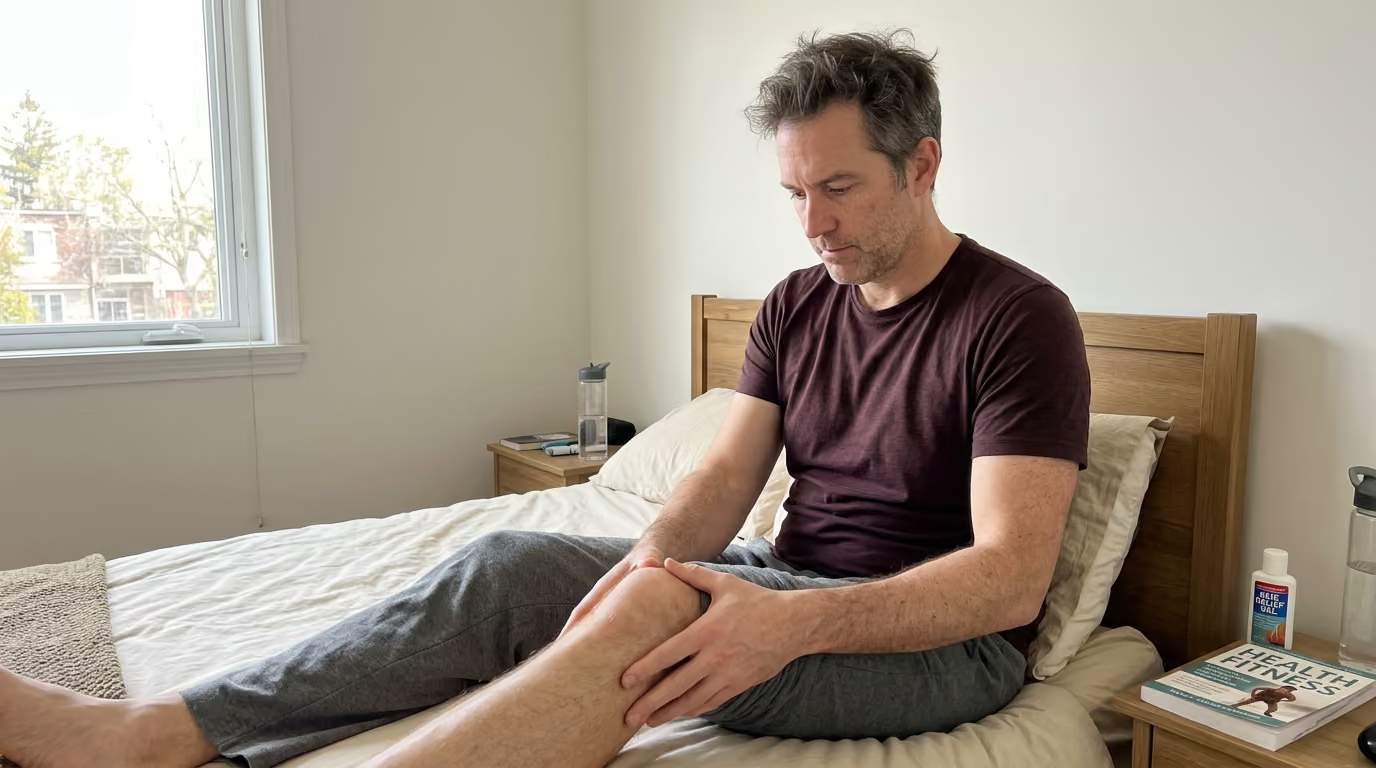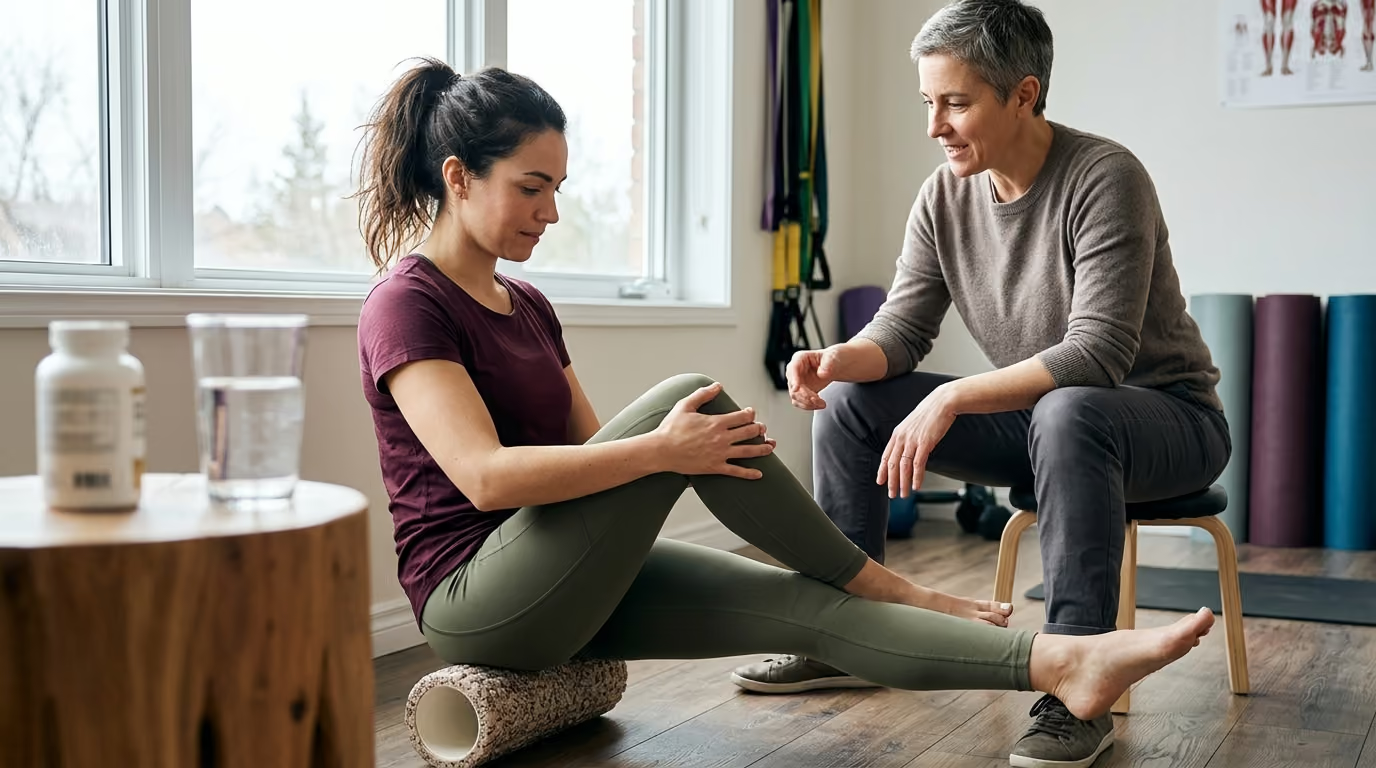

Stronger tendons, resilient joint cartilage, and improved tissue repair rely on evidence-based collagen supplementation, targeted nutrient timing.





Many athletes assume that dietary protein works uniformly across all bodily tissues. They drink a standard whey protein shake, log their strength workout, and expect their tendons and ligaments to adapt at the exact same speed as their biceps or quadriceps.
Human biology does not operate that way. Connective tissues possess an entirely distinct cellular architecture, blood supply, and collagenous matrix compared to skeletal muscle.
Connective tissues adapt slowly to physical demands. Tendons, ligaments, and articular cartilage experience a fraction of the blood flow delivered to muscle tissue. For active adults over 40, understanding this biological distinction is critical for long-term physical independence.
Oral collagen and gelatin supplements have attracted intense interest in recent years. This guide breaks down the clinical research, clarifies what the science actually supports, and outlines how to support connective tissues without extreme protocols.
To understand how nutritional strategies support connective tissue, one must examine the extracellular matrix. Collagen is not a single, uniform compound. It is a diverse family of structural proteins that provides tensile strength, resilience, and scaffolding throughout the entire musculoskeletal system.
Tendons and ligaments are living structures rather than inert biological ropes. They contain specialized cells known as tenocytes and ligament fibroblasts. These cells continuously monitor mechanical tension and regulate the balance between matrix creation and breakdown.
Different tissues depend on distinct types of collagen fibers to withstand mechanical stress.
Type I collagen is the primary structural protein in the human body. It forms thick, organized parallel bundles capable of handling enormous tensile strain. Tendons, which transmit muscular force directly to bone, consist predominantly of type I collagen fibrils.
Ligaments also depend on type I collagen for structural integrity. Their fiber alignment is less uniform than that of tendons because ligaments must stabilize joints against multidirectional forces.
Type II collagen exists primarily in tissues exposed to compressive loads, especially articular cartilage. In healthy joint cartilage, type II collagen accounts for nearly 80 percent of the total collagen structure. This network holds proteoglycans like aggrecan, which draw water into the tissue to absorb shocks during movement.
Type III collagen consists of narrower, more compliant fibers. It appears alongside type I collagen in skin, blood vessels, and early-stage healing tissues. When an Achilles tendon or rotator cuff suffers micro-damage, tenocytes initially lay down a flexible type III collagen matrix. Over subsequent months of mechanical loading, the body gradually remodels this temporary framework into organized type I collagen bundles.
Muscle protein synthesis responds rapidly to feeding and resistance training. A balanced meal containing complete proteins stimulates muscle protein synthesis within hours, driven by the amino acid leucine.
Connective tissues operate on a fundamentally slower biological timeline. Tendons and ligaments receive significantly less blood flow than skeletal muscle fibers. Their metabolic turnover takes weeks and months rather than hours and days.
A dedicated runner or lifter can build noticeable muscular capacity while their connective tissues are still adapting. This timeline mismatch explains why active adults frequently experience tendon irritation when ramping up training volume too quickly.
Mechanical loading serves as the primary biological switch for connective tissue remodeling. Without physical tension across the tendon or ligament, circulating amino acids will not adequately stimulate matrix protein synthesis. Nutrition provides the raw building blocks, but physical movement tells the cells where and how to construct the new matrix.
When selecting nutritional support for joint and tendon resilience, it is essential to distinguish between the various physical forms of collagen available. The market contains several distinct preparations with different molecular weights and digestive behaviors.
Gelatin is collagen derived from animal connective tissue that has been partially broken down through heat. It retains a large molecular weight and forms a firm gel when mixed with cold liquids. Gelatin has served as the foundational substance in several landmark connective-tissue research studies.
Hydrolyzed collagen, often called collagen peptides, undergoes enzymatic processing to break long protein chains into short peptide fragments. These smaller chains dissolve instantly in hot or cold liquids and digest rapidly in the gastrointestinal tract.
From an amino acid perspective, high-grade gelatin and hydrolyzed collagen peptides offer virtually identical nutritional profiles. Both supply high concentrations of glycine, proline, and hydroxyproline. The choice between them often comes down to culinary convenience and digestive preference.
Native or undenatured type II collagen represents an entirely different therapeutic category. This preparation preserves the intact 3D triple-helix structure of collagen derived from chicken sternum cartilage.
Unlike hydrolyzed peptides, native type II collagen is taken in tiny milligram doses, typically around 40 milligrams daily. It does not act as an amino acid building block. Instead, it works through an immune-mediated mechanism in the gut-associated lymphoid tissue called oral tolerization.
This process helps calm inflammatory responses directed against joint cartilage, making it useful for joint discomfort rather than direct structural tendon rebuilding.
Standard dietary proteins like whey, beef, poultry, and eggs are prized for their high essential amino acid content, particularly leucine. Complete proteins directly trigger the mTOR pathway to drive muscle protein synthesis.
Collagen features an unusual amino acid composition. It is exceptionally rich in glycine, proline, and hydroxyproline, which form the repeating tripeptide units of the structural triple helix. However, collagen contains very little leucine and lacks the essential amino acid tryptophan.
Collagen should never replace complete dietary protein sources. An active adult pursuing comprehensive recovery and tissue regeneration resources requires complete proteins for muscle maintenance alongside specialized amino acid pools for connective-tissue repair.
Scientific interest in collagen supplementation has expanded beyond cosmetic claims into athletic performance and musculoskeletal rehabilitation. Evaluating this research requires separating human clinical outcomes from short-term laboratory markers.
The foundational human study regarding collagen timing and tissue synthesis was conducted by Dr. Keith Baar and colleagues in 2017. The researchers evaluated eight healthy male participants across a randomized crossover design.
Participants consumed either a placebo, 5 grams of gelatin, or 15 grams of gelatin, each combined with roughly 50 milligrams of vitamin C. One hour after consumption, participants performed six minutes of intermittent rope skipping to load their lower-body tendons.
Blood samples revealed that the 15-gram gelatin condition produced a significant spike in circulating glycine, proline, and hydroxyproline. More importantly, circulating levels of amino-terminal propeptide of type I collagen (PINP), a primary biomarker of collagen synthesis, increased by 153 percent above baseline in the 15-gram group.
In a laboratory model using engineered human ligaments, the serum collected from participants in the 15-gram condition significantly increased ligament collagen content and mechanical tensile strength. This proof-of-concept trial demonstrated that supplying collagen precursors prior to exercise enhances collagen-synthesis markers.
Biomarker spikes in blood do not automatically prove that tendons become stronger over months of training. Recent clinical trials have addressed this gap by evaluating actual tendon properties over extended periods.
A 2024 human study examined resistance-trained men performing high-intensity workouts. Ingesting 30 grams of hydrolyzed collagen prior to exercise stimulated whole-body collagen synthesis to a greater degree than lower doses or a non-protein control.
Building on these acute findings, a 2025 controlled trial tracked young athletes through a 12-week high-intensity resistance training program. Participants who ingested 30 grams of hydrolyzed collagen combined with vitamin C prior to workouts achieved greater increases in patellar tendon cross-sectional area, structural stiffness, and Young's modulus compared to the training-only control group.
These findings indicate that pairing collagen peptides with progressive resistance training can enhance the structural adaptation of load-bearing tendons in active individuals.
Chronic tendon irritation, such as Achilles or patellar tendinopathy, involves matrix disorganization, microvascular changes, and pain rather than an acute inflammatory tear.
A controlled clinical pilot study evaluated individuals suffering from chronic Achilles tendinopathy. The intervention paired a structured calf-strengthening and return-to-running program with specific collagen peptides taken twice daily.
The group receiving collagen alongside targeted loading experienced faster reductions in pain and an earlier return to running than the exercise-only group. The nutritional supplement acted as an adjunct to physical rehabilitation rather than a standalone cure.
A comprehensive 2026 systematic review analyzed the broader literature on direct tendon and ligament tears. The authors identified six eligible clinical studies involving tears, surgical reconstructions, and chronic tendinopathies.
The review noted promising signals for reduced pain and improved joint function. However, it also emphasized that the existing literature remains limited by varied formulations and small sample sizes.
Collagen supplements support the cellular environment during structured rehabilitation, but they cannot magically stitch torn fibers back together without medical care and gradual mechanical loading.
Clinical trials evaluating collagen for joint health and cartilage discomfort have yielded consistent, positive data regarding symptom relief.
A major 2026 evidence synthesis examined 16 systematic reviews and 113 randomized controlled trials encompassing nearly 8,000 participants. The analysis found high-certainty evidence that daily collagen supplementation produces modest, statistically significant reductions in joint pain and stiffness among individuals with knee osteoarthritis.
Earlier clinical trials administering 10 grams of hydrolyzed collagen daily over six months showed similar improvements in functional WOMAC scores and quality of life. In some trials using advanced magnetic resonance imaging, researchers noted improvements in cartilage proteoglycan density.
These symptom improvements should be framed accurately. Oral collagen does not regenerate completely worn cartilage or reverse end-stage bone-on-bone osteoarthritis. Instead, it appears to support joint comfort, reduce friction-related irritation, and allow active individuals to maintain consistent physical movement.
The extracellular matrix of the dermis consists primarily of type I and type III collagen fibers, elastin, and hyaluronic acid. As adults age, natural dermal collagen synthesis declines, leading to reduced skin thickness, decreased elasticity, and slower wound recovery.
A comprehensive 2025 systematic review evaluated 25 randomized controlled trials on oral collagen supplementation for skin health. The researchers found consistent improvements in skin hydration, measured dermal elasticity, and superficial wrinkle depth compared to placebo controls.
Vitamin C acts as an essential cofactor within dermal fibroblasts, assisting in the enzymatic stabilization of new collagen strands. Combining collagen peptides with a balanced diet provides nutritional support for skin resilience, especially for outdoor athletes exposed to sun, wind, and dry mountain air.
The physiological rationale for collagen supplementation depends heavily on strategic nutrient timing and the presence of essential biochemical cofactors. Connective tissues lack the extensive capillary networks found in skeletal muscle, meaning they rely heavily on mechanical fluid movement to draw in circulating nutrients.
When an individual consumes hydrolyzed collagen or gelatin, blood levels of key amino acids peak roughly 30 to 60 minutes after ingestion.
When you load a tendon through resistance training, jumping, or brisk walking, the collagen matrix undergoes a cycle of fluid compression and relaxation. This mechanical pumping action draws fluid and circulating amino acids from surrounding tissues directly into the tendon matrix.
Consuming your collagen supplement approximately 30 to 60 minutes before a targeted training session aligns peak nutrient availability with mechanical loading. Taking collagen at random times during the day still supplies useful amino acids, but aligning it with exercise maximizes the localized delivery of these building blocks.
Vitamin C is biochemically mandatory for collagen biosynthesis. Within the fibroblast and tenocyte, specific enzymes named prolyl hydroxylase and lysyl hydroxylase chemically modify the amino acids proline and lysine.
This enzymatic hydroxylation allows procollagen peptide chains to fold tightly into a stable triple helix. Without adequate vitamin C, newly synthesized collagen strands remain structurally unstable and are quickly broken down by the cell.
Vitamin C also acts as a potent tissue antioxidant, protecting developing fibroblasts from excessive oxidative stress during demanding training blocks.
High doses of vitamin C are entirely unnecessary for this pathway. Clinical studies demonstrate that 50 to 100 milligrams of vitamin C, roughly the amount found in a single orange, provides sufficient enzyme saturation to optimize collagen synthesis.
The marketing surrounding joint and recovery supplements contains frequent exaggerations. Separating scientific reality from commercial hype protects active adults from wasted effort and unrealistic expectations.
A transient spike in a blood marker like PINP indicates that the body has increased its production of collagen precursors. It does not prove that a chronic Achilles tendinopathy has completely resolved or that an injured anterior cruciate ligament has regained mechanical strength.
Biomarkers provide valuable mechanistic clues in clinical laboratories. However, real-world recovery must be measured through functional capacity, pain-free range of motion, and tissue tolerance under load.
No dietary supplement possesses an internal navigation system. When you consume collagen, your digestive tract breaks the protein down into individual amino acids, dipeptides, and tripeptides.
These molecules enter the general bloodstream and are distributed wherever the body requires structural repair. You cannot force ingested collagen to travel exclusively to a single sore shoulder or knee.
Instead, targeted mechanical loading serves as the signal that encourages local tenocytes to draw in these systemic precursors and build new structural matrix.
Consuming collagen powder while resting entirely on the couch will do very little for tendon stiffness or ligament stability. Connective tissues require physical strain to initiate remodeling.
Tenocytes respond directly to mechanical tension through a process called mechanotransduction. Physical loading signals the cell nucleus to produce collagen-building enzymes.
Nutritional strategies support this process, but they cannot replace a properly structured strength and rehabilitation program.
Cartilage possesses exceptionally limited regenerative capacity due to its avascular nature. While systematic reviews confirm that collagen peptides reduce osteoarthritis pain and stiffness, this does not mean worn cartilage regrows to its youthful state.
Claiming that a powder can reverse advanced joint degeneration is biologically inaccurate. Collagen supplements should be viewed as a valuable tool for soothing joint discomfort and preserving remaining tissue function alongside sensible nutrition and metabolism strategies.
Because collagen protein powders dissolve effortlessly into morning coffee and smoothies, some active adults use them as their primary post-workout protein source. This is a physiological mistake.
Collagen is virtually devoid of tryptophan and contains minimal leucine, the primary branched-chain amino acid responsible for initiating muscle protein synthesis. Using collagen to meet your daily muscle-building protein targets will shortchange your muscular recovery. Treat collagen as a targeted connective-tissue supplement, not a muscle-building staple.
Active adults over 40 frequently demand exceptional durability from their connective tissues. Whether preparing for an alpine ski trip, a wilderness trekking expedition, or a competitive tennis season, connective-tissue preparation determines how well your body tolerates repeated physical stress.
Downhill skiing, backcountry touring, and mountain hiking place heavy eccentric demands on the patellar tendons and knee ligaments. The continuous deceleration required on steep descents generates significant mechanical strain across the quadriceps tendon and patellar tendon complex.
To prepare connective tissues for an upcoming ski season, integrate a targeted tendon-loading routine into your autumn training schedule.
Thirty to sixty minutes before performing lower-body resistance training, consume 15 grams of hydrolyzed collagen peptides paired with a citrus fruit or a low-dose vitamin C supplement. Focus your workout on slow eccentric leg presses, Spanish squats, and Bulgarian split squats.
This protocol supplies circulating amino acids while using heavy, controlled loading to stimulate patellar tendon stiffness and load tolerance. When you hit the slopes, your connective tissues will be far better prepared to absorb the repetitive forces of mountain terrain.
Multi-day wilderness hiking involves thousands of repetitive foot strikes over uneven, rocky terrain. This repetitive loading tests the resilience of the Achilles tendon, the plantar fascia, and the stabilizing ligaments of the ankle joint.
When preparing for demanding active travel and adventure pursuits, tissue tolerance must be built gradually over months.
A practical preparation routine involves taking 10 to 15 grams of collagen peptides alongside your morning breakfast before embarking on a weighted rucking or hill-walking session. The combination of sustained bodyweight loading with available amino acid building blocks reinforces the Achilles tendon and plantar fascia.
For multi-day treks, packing individual single-serving packets of collagen peptides ensures you can maintain this connective-tissue support routine at remote base camps or alpine huts.
Long international flights and extended train journeys impose sustained immobility on the lower back, hips, and knees. Sitting in a cramped aircraft cabin for eight to twelve hours reduces fluid circulation throughout the spinal discs and lower-limb joints, leaving active travelers feeling exceptionally stiff upon arrival.
To counteract these travel-induced aches, focus on rapid joint mobilization combined with adequate hydration.
Upon arriving at your destination hotel, consume a serving of collagen peptides with a tall glass of water and a source of vitamin C. Follow this immediately with fifteen minutes of active joint mobility work, including deep bodyweight squats, hip openers, and ankle circles.
This simple movement sequence restores synovial fluid flow to compressed cartilage and delivers amino acids to tissues stiffened by hours of travel immobility.
Achieving the physiological benefits of collagen supplementation does not require complicated schedules, expensive proprietary mixtures, or excessive dosages. A straightforward, consistent protocol delivers optimal results without disrupting your daily routine.
When shopping for a collagen supplement, keep your criteria simple and focused on verified quality:
The clinical literature provides clear guidelines regarding effective daily intakes for different recovery goals:
Here is how three active adults can incorporate these evidence-based principles into their normal routines.
A 48-year-old trail runner experiences persistent stiffness and mild discomfort in the lower Achilles tendon each morning.
A 52-year-old recreational lifter wants to maintain squatting strength without aggravating his patellar tendons.
A 61-year-old traveler loves walking European cities but experiences mild knee aching and stiffness after long days on cobblestones.
The broader sports science and sports nutrition communities have reached a clear, balanced consensus regarding collagen and connective-tissue recovery.
Collagen and gelatin supplements are safe, highly bioavailable, and biologically plausible nutritional tools. When consumed in dosages of 10 to 15 grams alongside vitamin C roughly 30 to 60 minutes before physical activity, they reliably increase circulating amino acid precursors and stimulate short-term collagen synthesis markers.
However, the scientific consensus firmly rejects viewing collagen as a standalone cure. It cannot instantly heal full tendon tears, replace surgical repair when structural disruption occurs, or regrow worn articular cartilage in degenerated joints.
The primary driver of connective-tissue remodeling will always be intelligent, progressive mechanical loading. Nutrition provides the necessary substrate, but physical movement provides the command.
When integrated thoughtfully into an active lifestyle focused on healthy longevity and living well, collagen supplementation serves as an effective, practical adjunct for preserving joint resilience and maintaining lifelong physical capability.
Consistent daily habits paired with progressive movement form the true foundation of lifelong joint health and physical freedom.
Stay connected for research and practical guidance on longevity, strength, recovery, energy and active living. New ideas to help you stay capable, curious and ready for more.


Explore practical guidance on strength, recovery, energy, travel and longevity for a life that stays active.
explore the Blog