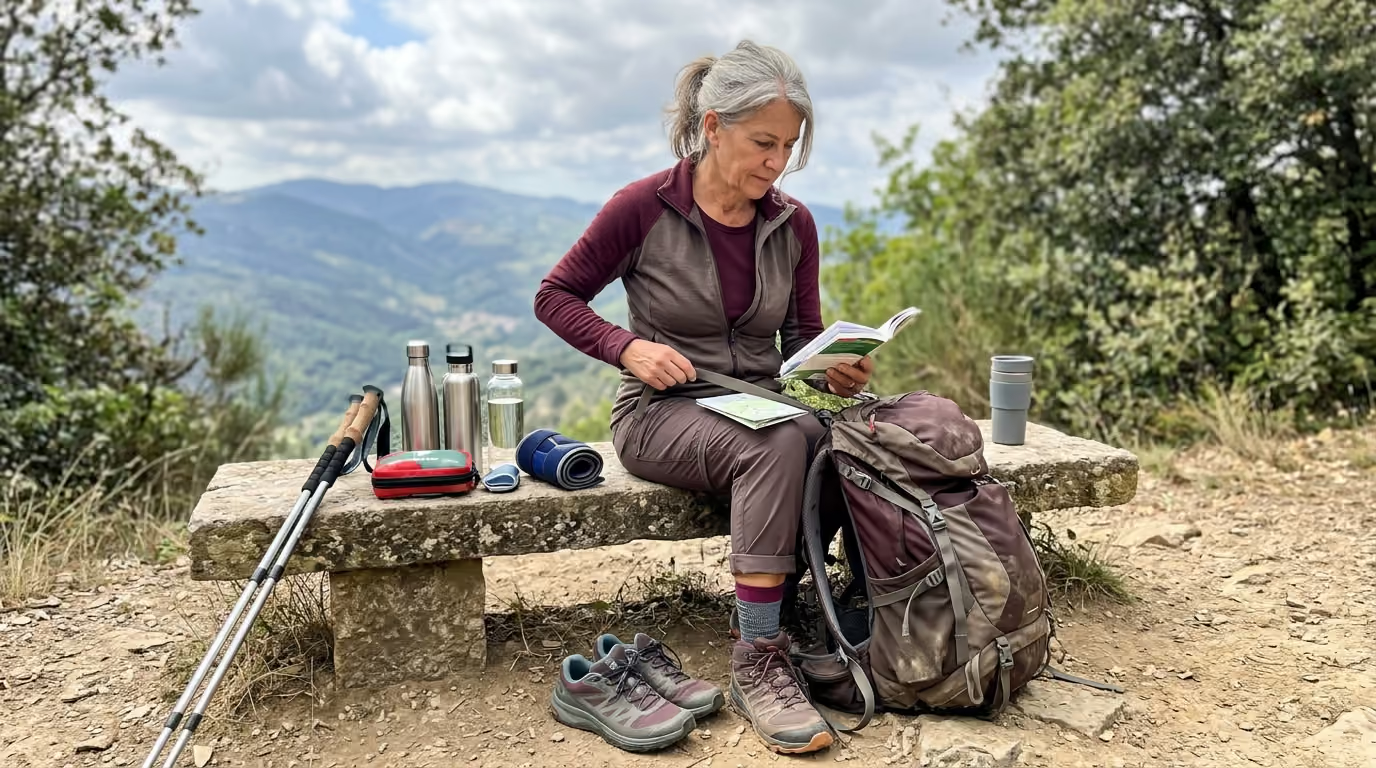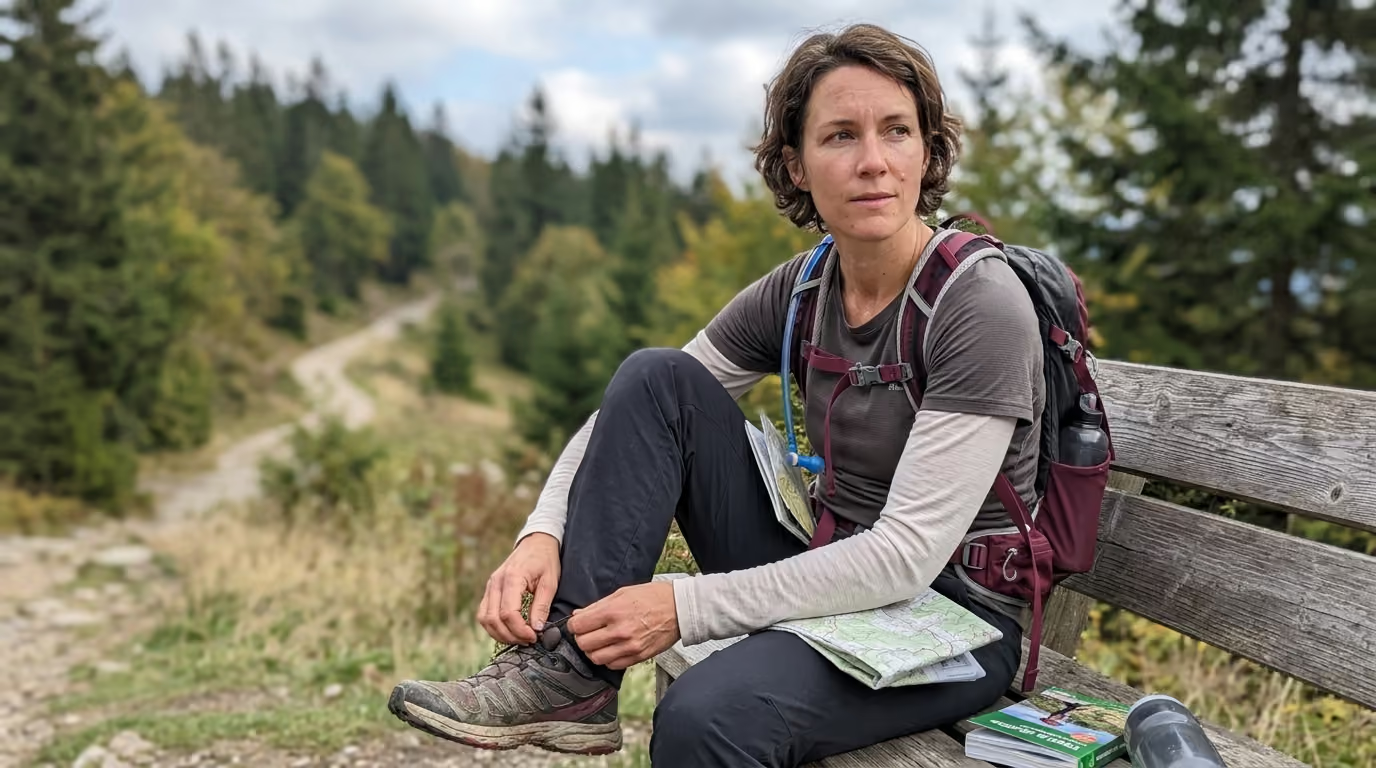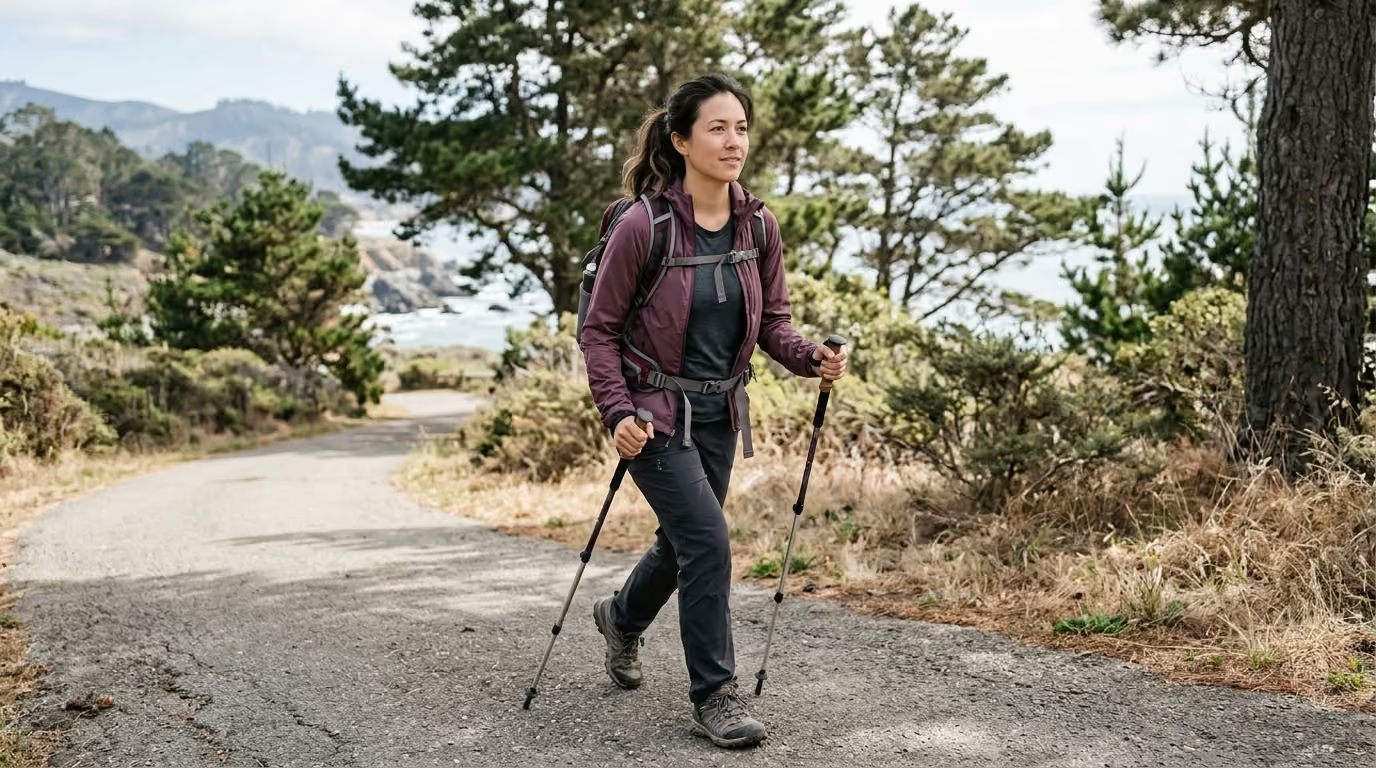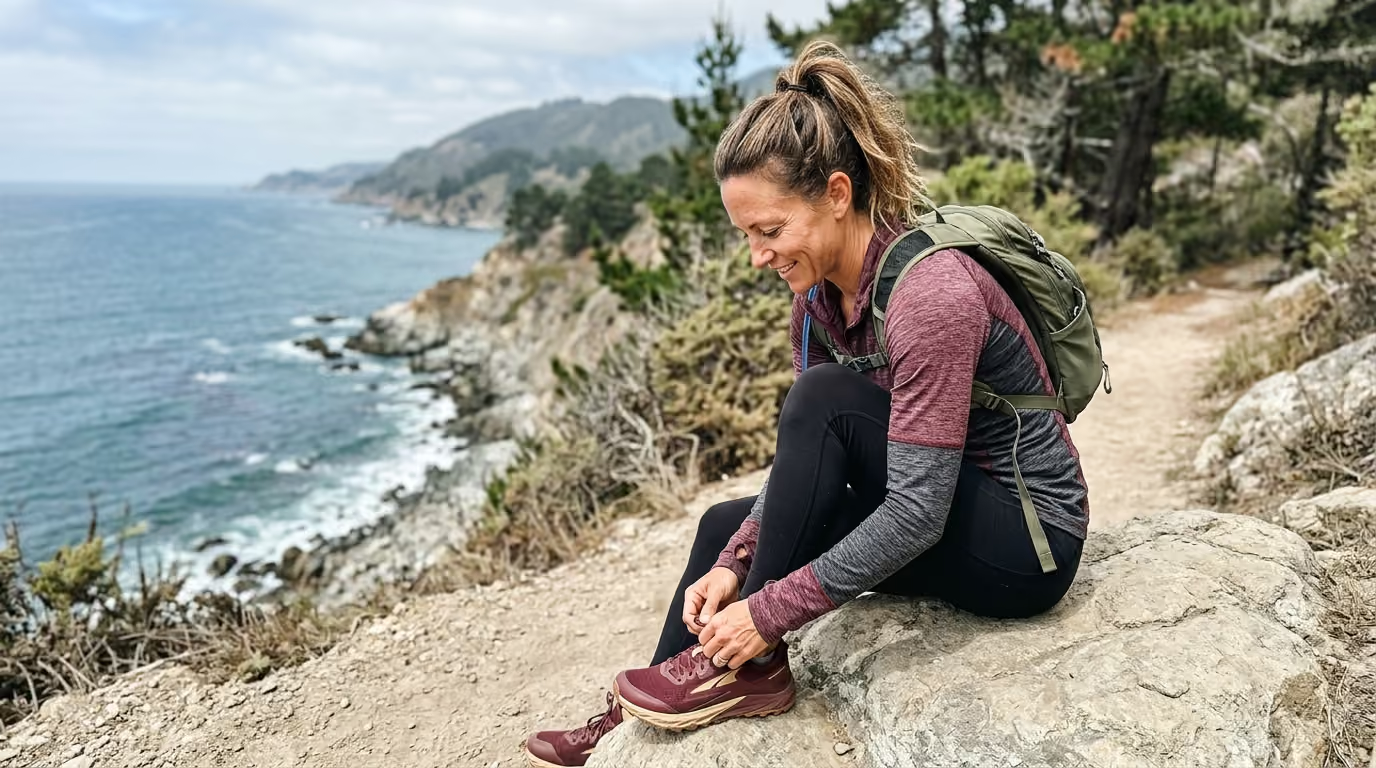

Active travel provides a practical way to maintain fitness and build aerobic endurance without spending hours inside a traditional gym.





An active vacation is not a grueling fitness boot camp. It is also not an unstructured lapse in your physical development. When planned with purpose, travel serves as a strategic training block that substitutes conventional gym routines with purposeful, low-stress movement.
Many active adults over 40 view travel as a threat to their fitness consistency. They worry that a week away from barbells, rowing machines, or structured intervals will undo months of hard work. In reality, structured travel offers an ideal environment for purposeful deloading, aerobic base building, and movement variety.
By viewing your itinerary through the lens of human performance, you can return home restored rather than depleted. You will preserve your hard-earned physical capacity while experiencing new environments on foot, by water, or across mountain trails. This comprehensive guide outlines the science of travel-based conditioning, practical movement strategies, environmental management, and structured transition protocols.
Your physiology does not distinguish between a gym-based treadmill session and four hours of walking across an unfamiliar city. The cardiovascular system, muscular tissues, and metabolic pathways simply respond to total work, intensity, and duration. When you travel, you shift your mechanical loading patterns away from repetitive gym motions toward varied, natural movement.
Research on vacation movement patterns reveals significant shifts in daily physical behavior. A study on 24-hour movement behaviors found that individuals naturally increased light physical activity and moderate-to-vigorous physical activity during vacations. At the same time, their daily sedentary time dropped by an average of 29 minutes, and daily sleep increased by 21 minutes. This spontaneous redistribution of time creates an optimal physiological environment for tissue repair and aerobic accumulation.
Short periods of altered training do not cause rapid loss of muscle mass or cardiovascular capacity. Research in male adolescent athletes demonstrated that three full weeks of detraining caused no meaningful decline in muscle thickness, muscular strength, or athletic performance. Furthermore, a 2024 study showed that completing just one resistance training session every two weeks preserved 90 to 95 percent of previously developed muscle mass, strength, and aerobic power over a three-month period.
Short trips also induce positive metabolic shifts when physical activity is sustained. A controlled study examining a seven-day activity vacation showed marked improvements in metabolic parameters and regulatory adipokines. Participants engaging in daily Nordic walking, mobility exercises, or walking golf demonstrated favorable changes in triglycerides, fasting glucose markers, high-density lipoproteins, and inflammation regulators like adiponectin. Travel can actively enhance metabolic health when movement is consistent.
The primary risk during travel is not muscle loss, but unmanaged fatigue. Long days on foot, disrupted sleep schedules, unfamiliar food, heat, and elevation can dramatically raise your internal training load. Understanding how to manage recovery and sleep while traveling ensures that novel movement stimulates adaptation rather than systemic exhaustion.
A successful active vacation begins with a single, clearly defined physiological priority. Attempting to build maximum strength, set cardiovascular personal records, and walk twenty miles a day will lead to breakdown. Select one of four primary travel training objectives before planning your itinerary.
Use this objective when you are coming off a demanding training block, managing joint irritation, or feeling mentally stale. The goal is to drop total neurological and mechanical strain while maintaining frequent, low-intensity movement.
Priorities for tissue restoration:
This objective ensures you dissipate systemic fatigue. You give connective tissues time to heal without becoming stagnant or sedentary.
This objective suits runners, cyclists, and fitness enthusiasts who want to build a deep cardiovascular base without high orthopedic impact. Travel provides natural opportunities to accumulate hours of low-intensity aerobic work through hiking, city walking, and recreational paddling.
Priorities for aerobic base accumulation:
Building a base this way supports mitochondrial health and capillary density. It creates an aerobic engine that enhances your work capacity upon returning home.
Choose general conditioning if your goal is broad physical resilience rather than sport-specific peak performance. This approach reflects World Health Organization guidelines, which emphasize combining regular aerobic activity with multi-joint muscle strengthening and minimal sedentary time.
Priorities for general physical conditioning:
This approach maintains functional readiness across all major movement patterns. It keeps your joints mobile and muscles engaged without demanding access to specialized equipment.
This objective applies when you have an upcoming competition, race, or athletic event within a few weeks of your return. You cannot afford a complete loss of movement specificity, but you still want to enjoy your travel experience.
Priorities for sport-specific maintenance:
A runner might include one short session of light strides on grass. A master lifter might perform two short, submaximal full-body sessions in a hotel gym to maintain motor coordination.
The American College of Sports Medicine uses the FITT-VP framework to structure effective exercise prescriptions. This framework considers Frequency, Intensity, Time, Type, Volume, and Progression. When traveling, you must adapt these variables to accommodate unexpected external loads.
In a normal home routine, your training load is predictable. You know the exact weight on the barbell, the pace of the treadmill, and the duration of your rest periods. During travel, hidden stressors alter your physiological response to exercise.
Key variables affecting your travel load include:
To manage these variables, apply the replace-not-add principle. If your day involves four hours of walking through historic districts, do not add a five-mile hotel treadmill run in the morning. Let the walking serve as your aerobic volume for the day.
If you plan an afternoon mountain hike, drop your morning resistance training session. Counting all physical activity prevents accidental overtraining. It ensures your travel remains restorative rather than destructive.
Every physical activity carries a distinct physiological benefit and a unique mechanical cost. Understanding these trade-offs allows you to select activities that complement your training history.
Urban walking is the foundation of travel-based cross-training. It provides continuous, low-intensity aerobic conditioning that stimulates circulation, aids digestion, and burns glycogen without stressing the central nervous system.
The hidden load of city walking comes from hard surfaces. Walking twenty thousand steps on concrete and cobblestones places substantial cumulative strain on the plantar fascia, Achilles tendons, and calves. Wear supportive footwear with adequate cushioning, and incorporate calf stretches and foot mobility work at the end of each day.
Hiking provides exceptional cardiovascular conditioning while challenging your balance and stabilizer muscles. Ascending hills develops gluteal and hamstring strength, while negotiating uneven terrain builds ankle resilience.
The primary mechanical stress of hiking occurs during descents. Walking downhill requires continuous eccentric contractions from the quadriceps. This eccentric load can cause significant delayed onset muscle soreness in travelers who are not accustomed to downhill movement. Use trekking poles to reduce knee joint forces, and keep initial mountain outings short.
Swimming, ocean paddling, and kayaking offer superb non-impact cardiovascular conditioning. They take pressure off weight-bearing joints while building upper-body muscular endurance and thoracic spine mobility.
The risk in water sports comes from rapid volume increases. A traveler who rarely swims can quickly develop rotator cuff irritation or neck stiffness after an aggressive hour in the pool or ocean. Keep swimming sessions interval-based, maintain relaxed mechanics, and avoid swimming to utter exhaustion in open water.
Engaging in local tennis, padel, golf on foot, or beach volleyball brings playfulness and multi-directional agility into your routine. These sports demand lateral movement, deceleration, rotational power, and hand-eye coordination.
The primary danger of recreational sports is unplanned intensity. Competitive instincts can cause adults over 40 to sprint, cut, and dive before their connective tissues are warm. Spend ten minutes performing dynamic warm-up drills before playing, and avoid playing hard matches immediately after long travel flights.
Applying cross-training concepts to real travel requires practical, flexible planning. Below are four real-world itineraries showing how different vacation styles translate into structured physical development.
This itinerary suits travelers spending seven to ten days exploring historic European cities on foot. The primary objective is tissue restoration and aerobic volume accumulation.
This structure allows you to log fifteen thousand to twenty thousand steps daily without breaking down your joints.
This trip focuses on building an aerobic base through hiking, trail walking, and open-water activities.
This progression balances demanding eccentric trail days with non-impact water recovery, preventing overuse injuries in the lower back and knees. For travelers interested in structured physical preparation for rugged terrain, our guide on strength and physical performance covers specific pre-trip conditioning methods.
This itinerary leverages swimming, bodyweight training, and sand walking to restore mobility and unload spine compression.
The non-impact nature of water training makes this itinerary an ideal deload for lifters and runners who carry chronic joint aches.
Family vacations often involve fragmented schedules, making structured workouts impractical. This approach embeds movement into family activities without creating personal exhaustion.
By treating daily family outings as functional conditioning, you eliminate the guilt of missing the gym while remaining fully present with your family.
To ensure your travel serves your long-term fitness goals, you must avoid several widespread misconceptions about vacation movement.
Many people assume that because walking is low intensity, it carries zero risk of overuse. In truth, walking twenty thousand steps per day on hard pavement in unsupportive sandals or thin fashion shoes places massive repetitive stress on the lower extremities.
If your feet and calves begin aching, treat it as a genuine training load. Switch shoes, seek softer walking surfaces, and reduce your mileage for a day.
Skipping your normal gym workouts does not mean your body is resting. A trip involving four hours of sleep per night, heavy alcohol consumption, dehydration, and twelve hours of continuous sightseeing creates severe systemic stress.
A true deload lowers total physiological strain. If your travel schedule is packed with high-stress logistics and physical demands, your nervous system and immune system will return home depleted.
Anxiety over missed gym sessions causes many travelers to force unnecessary workouts into busy itineraries. The scientific literature confirms that muscular adaptations are remarkably resilient.
Detraining research consistently proves that strength and muscle mass remain intact for up to three weeks of complete rest after a solid training block. Taking a week away from heavy weights will not diminish your progress, and it often allows nagging tendon issues to resolve.
Swimming, rowing, and cycling eliminate joint impact, but they can still impose massive cardiovascular and metabolic demands. An intense hour of open-water swimming against ocean currents can generate more central fatigue than a heavy squat workout. Match the intensity of your low-impact cross-training to your stated vacation objective.
Many active adults return from vacation feeling guilty about indulgent meals or missed workouts. They immediately attempt an aggressive, high-volume training week to compensate.
Research tracking post-vacation movement habits shows that physical activity naturally dips and sedentary behavior rises immediately following travel. Jumping straight into heavy training while dealing with post-travel fatigue and jet lag dramatically increases injury risk.
You do not need an elaborate fitness center to preserve your strength, power, and mobility while traveling. Applying a minimal effective dose provides sufficient neuromuscular stimulation to maintain physical readiness with minimal time commitment.
Research indicates that completing a brief resistance session once every one to two weeks preserves muscular strength and size. For a one-week or two-week trip, two 15-minute bodyweight sessions are all that is required.
Perform this full-body sequence twice during a seven-day trip. Move through the exercises as a circuit, resting 60 seconds between movements. Complete two to three total rounds.
This compact routine maintains motor unit recruitment, keeps connective tissues resilient, and preserves core stability. It leaves you with the rest of your day to enjoy your destination. To explore broader training strategies that balance strength and cardiovascular conditioning, review our resource on performance and fitness.
Traveling often exposes your body to unaccustomed environmental challenges. Failing to account for climate and altitude can quickly turn a beneficial cross-training trip into an emergency.
Exercising in hot, humid climates places severe demands on your thermoregulatory and cardiovascular systems. Blood is diverted to the skin for cooling, which elevates heart rate at any given workload.
According to guidance from the Centers for Disease Control and Prevention (CDC) on environmental hazards for travelers, physiological heat acclimatization requires roughly one to two weeks of progressive exposure. Unacclimatized travelers should sharply reduce exercise intensity and duration during their first week in hot climates.
Practical heat management rules:
Ascending to elevations above 8,000 feet decreases oxygen availability, driving up resting heart rate, breathing frequency, and fluid loss through respiration.
CDC guidance on high-altitude travel states that acute acclimatization requires three to five days. The CDC recommends engaging only in mild physical activity during your first 48 hours at high elevation. Avoid flying directly from sea level to a sleeping altitude above 9,000 feet whenever possible.
Practical altitude management rules:
For those planning rugged wilderness excursions or high-elevation treks, our dedicated section on travel and adventure provides further practical preparation protocols.
Crossing multiple time zones disrupts your internal circadian clocks, impairing muscle protein synthesis, digestion, cognitive sharpness, and physical reaction time.
Do not attempt a hard training session after an overnight flight. Instead, prioritize early morning natural sunlight exposure at your destination, which helps reset your central circadian pacemaker. Spend your arrival day engaging in light, rhythmic walking, stay hydrated, and eat meals aligned with the local time zone.
The broader sports science and public health consensus offers reassuring principles for active travelers. Leading authorities agree on four foundational concepts regarding physical maintenance and travel.
First, public health organizations, including the World Health Organization, emphasize that all movement counts toward health and longevity. Replacing sedentary time with light or moderate activity of any type provides profound cardiovascular, metabolic, and neurological benefits. You do not need formal gym machinery to satisfy your body's biological requirement for physical movement.
Second, exercise science researchers agree that detraining is a slow process for recreational athletes. Short-term reductions in volume or complete pauses of seven to fourteen days do not lead to meaningful atrophy or strength loss. The fear of immediate regression is physiologically unfounded.
Third, the American College of Sports Medicine confirms that cross-training successfully maintains aerobic capacity and muscular endurance while lowering sport-specific overuse risks. Alternating movement modalities distributes mechanical stress, helping older athletes sustain longevity in their primary disciplines.
Finally, researchers studying concurrent training emphasize that interference effects between strength and endurance occur primarily at extreme volumes. Moderate walking, casual swimming, and recreational hiking during a vacation will not blunt muscular strength adaptations or impair metabolic function.
How you return to your home routine is just as important as how you manage your vacation. Many injuries occur during the first week back from travel when athletes attempt to resume peak volume immediately.
Follow a structured, three-step re-entry framework during your first week home:
During your first three to four days back, re-establish your normal weekly schedule without matching your previous loads. If you normally lift four days a week, complete all four sessions, but keep the sessions brief and non-taxing.
Reduce your working sets by roughly 30 to 40 percent during your first week back. If your program calls for five working sets of an exercise, perform three sets. This reminds your neuromuscular system of the motor patterns without causing debilitating soreness.
Keep all resistance sets two to three repetitions shy of muscular failure during your first week home. Save maximal lifts, high-speed sprints, and exhaustive interval work for your second week back, once your sleep quality, hydration, and nutritional routines have fully stabilized.
Applying this graduated re-entry ensures that you convert the restorative benefits of your active vacation into sustained, long-term performance gains.
Reduce your total step count immediately by utilizing public transit, ferries, or taxis for non-essential transit. Perform gentle hamstring and hip flexor stretches, elevate your legs against a wall for ten minutes in your room, and roll the arches of your feet over a chilled water bottle. Ensure you are not wearing completely flat, unsupportive footwear on hard pavement.
Yes, provided that the vacation reduces your specific accumulated fatigue. If you are burned out from heavy barbell lifting or intense running, a week of relaxed walking, swimming, and mobility serves as an ideal deload. However, if your trip involves exhausting mountain treks, heavy packs, and severe sleep restriction, it is not a true deload and will add to your total physiological fatigue.
Focus on eating quality protein sources at every meal to support muscle maintenance, and consume ample colorful local produce. Drink plenty of water throughout the day, especially when walking in warm climates. Enjoy local culinary traditions without stress, keeping portion sizes reasonable so you maintain steady energy for daytime physical activities.
In most cases, no. Walking fifteen thousand steps across a day provides substantial aerobic volume and muscular work for your lower body. Adding an unnecessary treadmill run or leg workout on top of that volume can cause excessive fatigue. If you wish to exercise in the hotel, focus on a brief ten-minute upper-body or core mobility routine.
Stay connected for research and practical guidance on longevity, strength, recovery, energy and active living. New ideas to help you stay capable, curious and ready for more.


Explore practical guidance on strength, recovery, energy, travel and longevity for a life that stays active.
explore the Blog