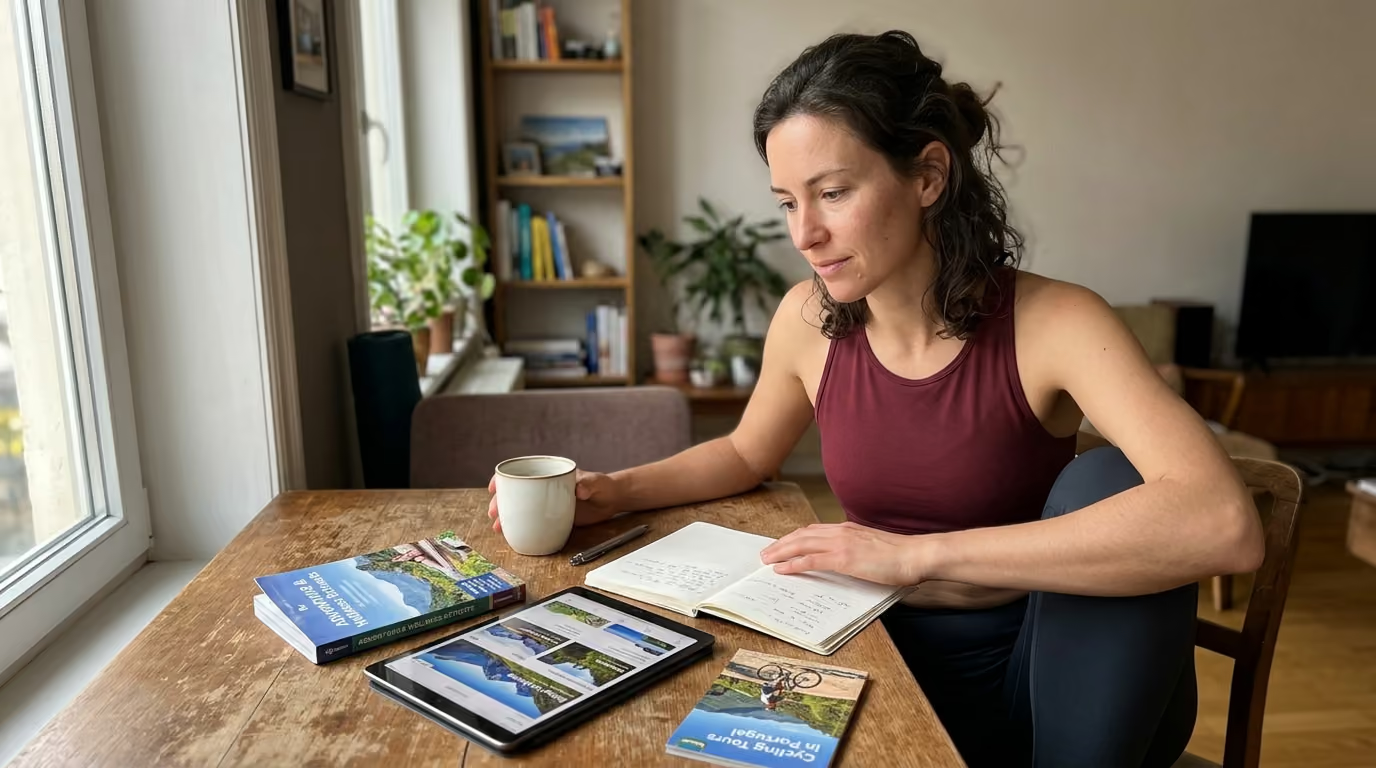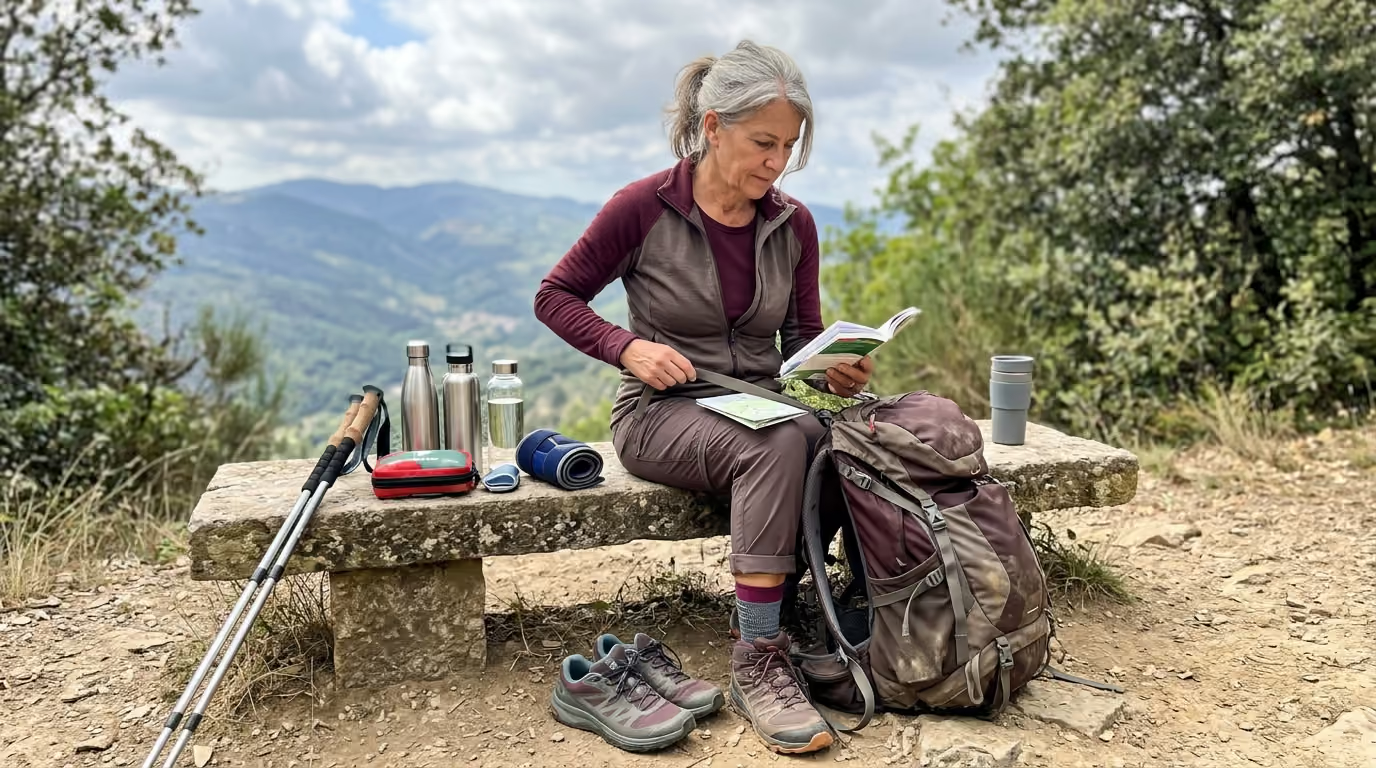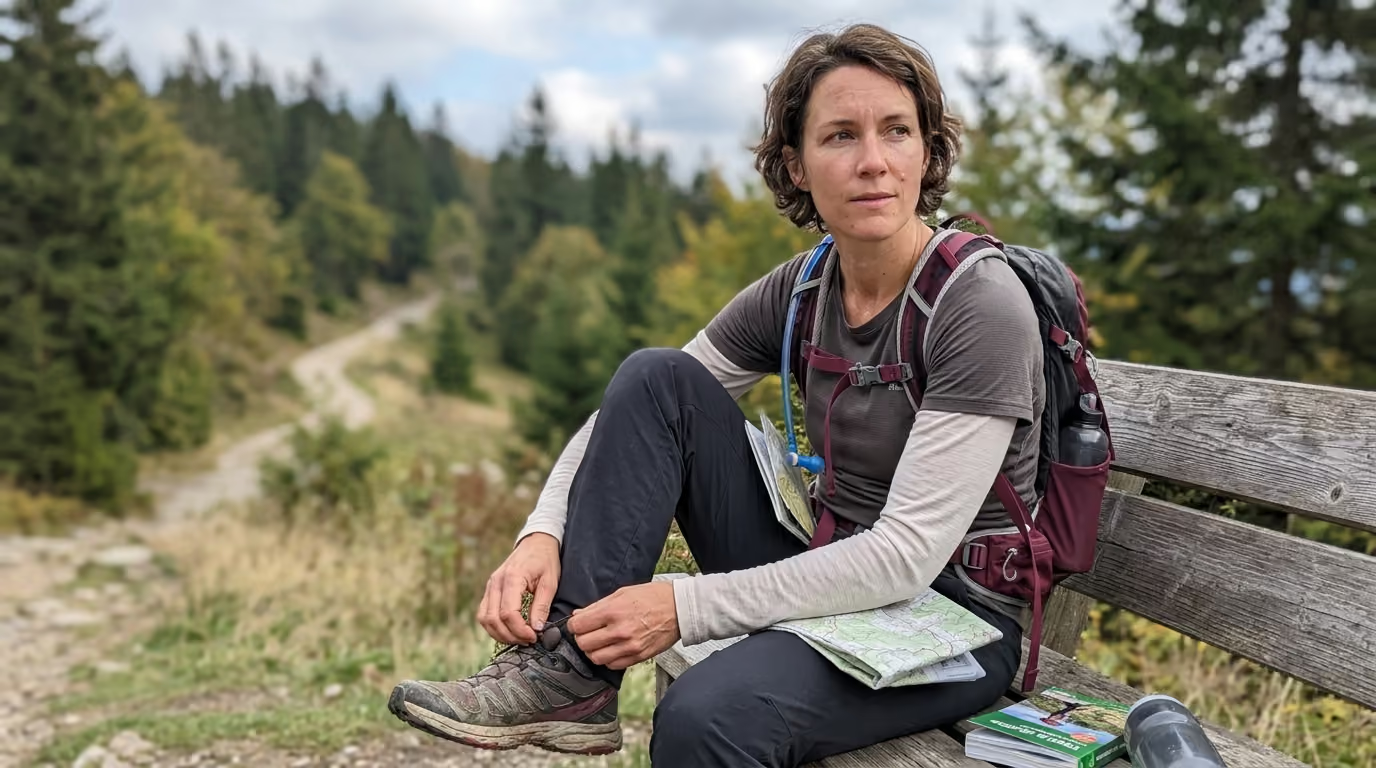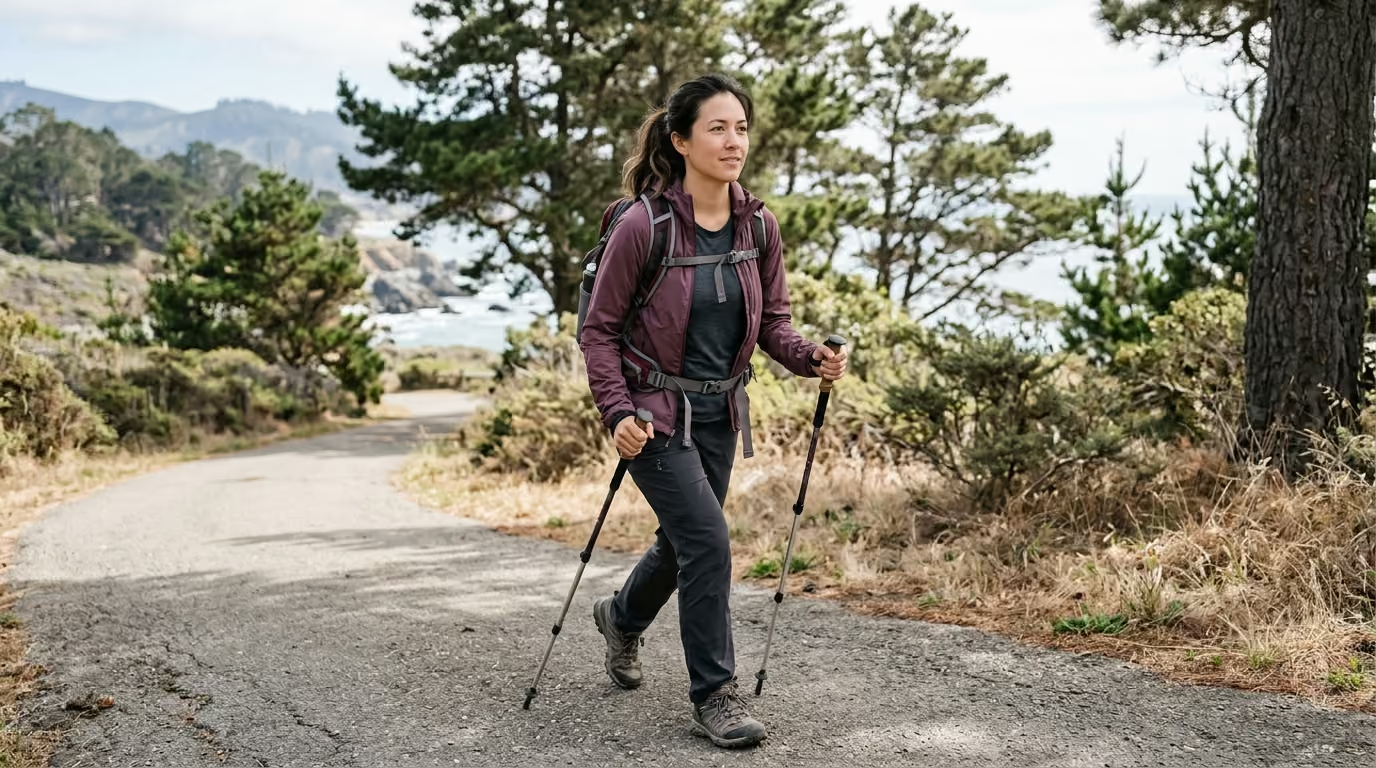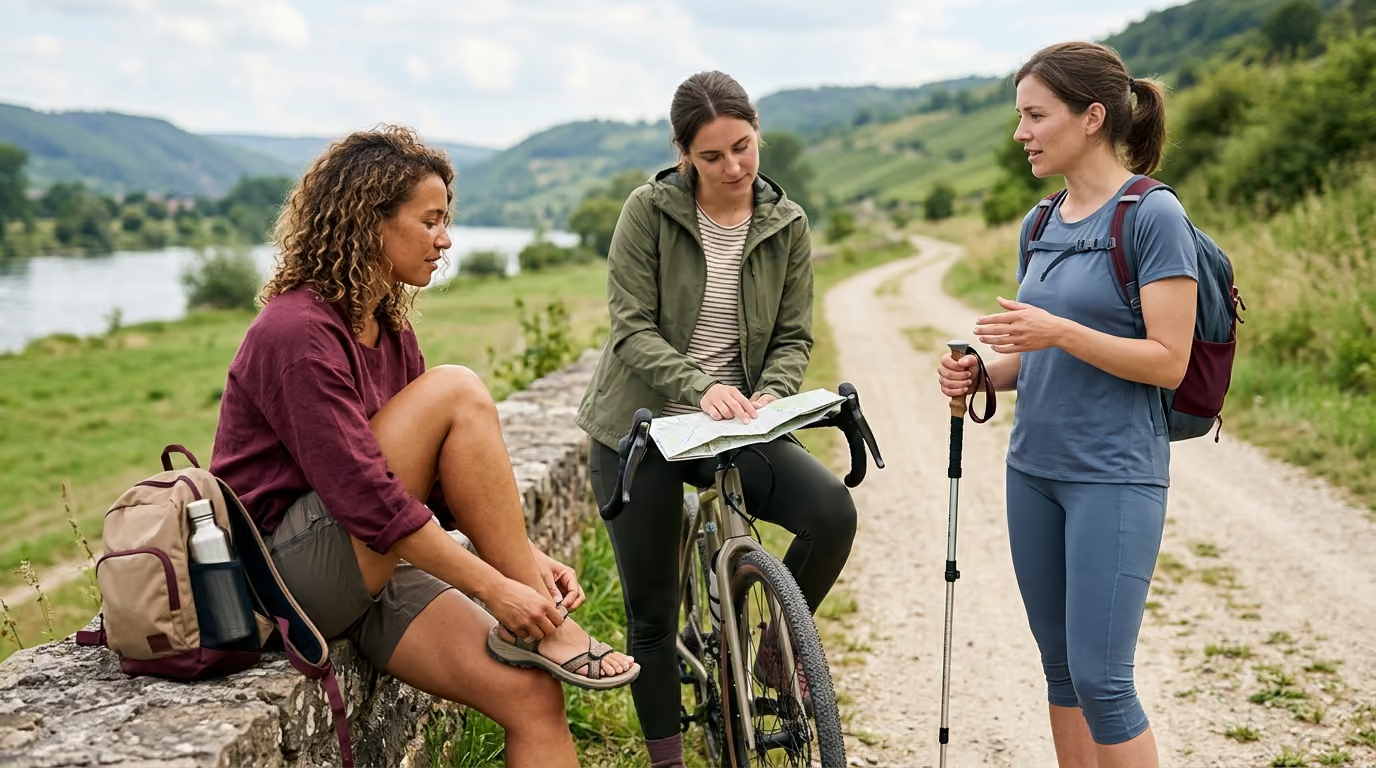

Different active travel formats impose distinct cardiovascular, mechanical, and neuromuscular demands, helping adventurers match specific vacation.





You spend months training in a modern gym, logging steady miles on a treadmill, and feeling confident in your physical readiness. Then you arrive in an ancient hilltop village in southern Europe. Within forty-eight hours, your knees ache from irregular cobblestones, your calves burn from steep stone stairs, and your lower back feels strained from handling luggage on train platforms. The cardiovascular fitness was there, but the specific mechanical demands of the environment were entirely unexpected.
Active travel is not a single, uniform category. It represents a dynamic combination of planned exercise, incidental movement, environmental stress, logistical friction, and recovery capacity. A walking tour across historic European capitals stresses your feet and connective tissues through hours on concrete. In contrast, an off-road cycling tour through rolling countryside demands sustained balance, rapid reaction times, and upper-body stability while minimizing joint impact.
Choosing the right active holiday is not about finding the most strenuous option available. Instead, the goal is matching an itinerary to your current physical capacity, balance, recovery speed, and joint health. The ideal trip provides an enjoyable training stimulus without exceeding your body's threshold for injury or exhaustion.
Understanding how different travel formats challenge your physiology allows you to plan adventures that keep you capable, mobile, and energized for decades to come.
The concept of active aging centers on preserving the physiological assets that keep you independent and adventurous. These assets include cardiovascular endurance, muscular power, joint mobility, static and dynamic balance, and the capacity to recover from physical stress. Meaningful travel experiences can serve as an exceptional stimulus for these systems by demanding varied, real-world movement patterns.
Public health organizations have established clear baselines for maintaining physical capacity as we age. The World Health Organization recommends that adults accumulate 150 to 300 minutes of moderate-intensity aerobic physical activity weekly, or 75 to 150 minutes of vigorous-intensity aerobic physical activity, alongside muscle-strengthening exercises on two or more days per week. For older adults, guidelines explicitly emphasize multicomponent physical activity that prioritizes functional balance and strength training on three or more days each week to enhance functional capacity and prevent falls.
An active trip easily fulfills and often exceeds these baseline targets. However, calculating the physical cost of a journey requires looking beyond simple daily mileage. The total physiological load of any trip is a product of duration, intensity, movement frequency, environmental conditions, and carried weight.
To evaluate a trip accurately, you must distinguish between the different types of stress placed on your body:
Cardiovascular load represents the work demanded of your heart and lungs. It is driven primarily by pace, sustained incline, altitude, ambient heat, and total duration. When hiking uphill in high temperatures, your body must direct blood flow to working muscles while simultaneously pumping blood to the skin for cooling. This dual demand raises your core temperature and perceived exertion, increasing the cardiovascular challenge even at a modest walking pace.
Mechanical load refers to the physical forces absorbed by your bones, joints, ligaments, tendons, and muscular structures. This stress spikes with ground impact forces, steep downhill descents, irregular trail surfaces, flights of stairs, and heavy luggage carriage. Downhill hiking, for instance, imposes heavy eccentric contractions on the quadriceps and patellar tendons, creating substantial muscle damage without requiring high cardiovascular output.
Neuromuscular load encompasses the demands placed on your central nervous system, balance mechanisms, spatial awareness, and reaction speed. Navigating wet rocks across a stream, skiing down variable snow, or maneuvering a bicycle through village traffic requires constant neuromuscular adjustments. High neuromuscular demand can cause systemic central fatigue even when your heart rate remains comfortably low throughout the day.
Travel exposes your body to external stressors that compound physical fatigue. Heat, humidity, cold winds, high altitude, intense ultraviolet radiation, unfamiliar cuisine, circadian disruption, and motion all require physiological adaptation. If your itinerary does not allow sufficient sleep and nutrition to match these stressors, recovery debt accumulates rapidly, degrading balance, coordination, and physical performance.
Investigating travel and human performance strategies helps clarify how these distinct physical stresses interact during international journeys.
Different travel formats distribute cardiovascular, mechanical, and neuromuscular stresses in entirely different ways. Evaluating each format across these dimensions ensures that you select an adventure tailored to your body's strengths and limitations.
Walking tours are among the most controllable and accessible forms of active travel. They allow travelers to accumulate large volumes of low- to moderate-intensity aerobic activity while immersing themselves in urban culture, art, and history.
The physical demand of a walking tour is defined by repetitive, low-impact lower-limb endurance and prolonged standing. While cardiovascular intensity remains low to moderate, the mechanical load on the feet, Achilles tendons, calves, and lumbar spine is surprisingly high. Standing on hard marble museum floors or traversing uneven stone pavements for several hours creates constant isometric tension in the postural muscles of your lower back and hips.
Walking tours provide frequent, distributed aerobic exercise that supports metabolic health and joint circulation. Brisk walking serves as an ideal moderate-intensity activity that maintains walking tolerance and functional stamina. Navigating curbs, steps, and varying urban surfaces offers subtle balance practice without excessive orthopedic impact.
The primary hazards of walking tours stem from cumulative volume and hard surfaces. Common complaints include plantar fasciitis, metatarsalgia, Achilles tendon irritation, calf tightness, and low-back fatigue. Blisters from friction and swelling can quickly derail an itinerary. Travelers often underestimate the physical cost of standing still during guided talks, which creates more postural fatigue than continuous walking.
Walking tours are ideal for travelers who can comfortably stay on their feet for several hours, manage occasional flights of stairs, and prefer self-paced days. They suit individuals seeking consistent, low-barrier physical activity with immediate access to resting spots, cafes, and public transport.
Trekking elevates traditional walking into a demanding wilderness experience, combining extended duration with uneven topography, variable weather, and remote terrain.
Trekking generates substantial cardiovascular, mechanical, and neuromuscular loads. Ascent demands sustained aerobic output and leg power, while descent creates intense eccentric muscle loading on the quadriceps and hips. Uneven trails require continuous micro-adjustments from the stabilizing muscles of the ankles and feet. Carrying a backpack shifts your center of gravity, placing additional demands on your core and spinal stabilizers.
Trekking serves as a comprehensive functional workout. It builds muscular strength in the glutes, thighs, and calves while enhancing bone density through weight-bearing impact. Navigating roots, rocks, and mud enhances proprioception, joint stability, and mental focus. Prolonged outdoor exposure provides robust psychological restoration and cardiovascular conditioning.
Falls represent the primary injury risk on trekking expeditions. Among hikers aged 50 to 70, trail falls account for roughly half of all emergency assistance calls, with cumulative fatigue, dehydration, and unstable ground acting as frequent contributors. Environmental stressors multiply these hazards. High temperatures increase core heat strain, while cold, wind, and rain degrade grip strength and manual dexterity. High altitude introduces the risk of acute mountain sickness, requiring conservative ascent profiles.
Trekking is best suited for active adults with consistent hiking experience, strong balance, robust lower-body strength, and healthy joints. It requires the ability to navigate uneven surfaces with confidence and the resilience to handle changing mountain weather.
Cycling holidays provide high-volume aerobic conditioning while sparing your lower-body joints from the repetitive ground impact forces of walking and running.
Cycling is characterized by high cardiovascular demand paired with low joint impact. It requires sustained power output from the quadriceps, hamstrings, and glutes, alongside static postural endurance from the neck, shoulders, and lower back. Maintaining balance at low speeds, steering through corners, and braking on descents impose distinct neuromuscular and coordination demands.
Cycling offers exceptional cardiorespiratory benefits and functional leg endurance without pounding your hips, knees, or ankles. Regular road and gravel riding enhances lower-body strength, metabolic efficiency, and spatial awareness. The integration of modern e-bikes allows riders of varying fitness levels to conquer hilly terrain, smooth out headwinds, and match the pace of faster companions while still achieving meaningful aerobic exercise.
The central hazard of cycling is the risk of traumatic crashes and collisions. Across international databases, older cyclists face a significantly higher risk of serious injury or hospitalization from falls and traffic accidents compared to younger riders. Mechanical failures, sudden braking on loose gravel, unfamiliar traffic patterns, and fatigue on technical descents can lead to dangerous spills. Prolonged seated posture can also trigger neck stiffness, hand numbness, and saddle soreness.
Cycling trips suit individuals with established riding experience, good dynamic balance, sharp reaction times, and absolute confidence in mounting, dismounting, and emergency braking. They are ideal for travelers who want to cover substantial distances through rural landscapes without high orthopedic impact.
Alpine skiing is a dynamic mountain sport that combines speed, technical skill, cold environments, and high-intensity muscular efforts.
Downhill skiing imposes high mechanical, muscular power, and neuromuscular demands. It relies on intense, isometric and eccentric contractions of the quadriceps, hips, and core to control turns and absorb terrain variations. While skiers spend considerable time resting on chairlifts, the active descent involves short bouts of vigorous physical effort. Skiing demands acute visual tracking, rapid reflexive balance, and precise edge control.
Alpine skiing delivers powerful training for the lower body, enhancing muscular power, core stability, and agility. It challenges balance mechanisms and spatial orientation in ways that few gym exercises can replicate. Research suggests that recreational alpine skiing offers robust cardiovascular and psychosocial benefits for older adults when approached with appropriate technical control and preparation.
High speeds, slippery surfaces, changing snow conditions, and collisions create substantial injury risks. Skiers over 55 show distinct vulnerability to specific orthopedic injuries, particularly tibial plateau fractures and ligament tears around the knee joint. Cold temperatures reduce muscle elasticity and nerve conduction velocity, while bulky equipment makes walking across icy resort stairs and pathways hazardous. Fatigue late in the afternoon frequently causes breakdowns in technique that lead directly to falls.
Ski holidays are appropriate for individuals with prior skiing experience, sound bone density, excellent leg strength, and reliable balance. Skiers should be capable of getting up independently after a fall on snow and possess the discipline to stop when fatigue begins to compromise their form.
Cruises are frequently viewed as passive vacations, but the physical environment of a modern vessel offers remarkable versatility for active adults.
The physical load of a cruise is highly customizable. A large ship offers expansive opportunities for low-impact incidental movement, including walking long corridors, climbing multi-deck staircases, and utilizing onboard fitness centers and pools. However, ship motion introduces a constant balance challenge that engages deep core and ankle stabilizers, even when walking at a leisurely pace down interior hallways.
Cruises offer an exceptionally stable, predictable environment for physical conditioning. You have continuous access to private resting quarters, temperature-controlled workout facilities, lap pools, and diverse dining options. A cruise provides an ideal base for structured walking programs and graded shore excursions, allowing you to calibrate your physical output each day without logistical complications.
Motion sickness is a frequent concern that can lead to dehydration, nausea, and disorientation. Medications used to manage sea motion can cause sedation, which can impair balance and increase fall risk. Crowded public spaces increase exposure to infectious illnesses such as norovirus and respiratory infections. Furthermore, shore excursions can present sudden physical spikes, involving long waits on concrete piers, unstable tender boat transfers, and hurried walking over uneven terrain.
Cruises suit travelers seeking complete control over their physical exertion. They are ideal for individuals recovering from joint procedures, those managing variable daily energy, and multigenerational groups with vastly different fitness capacities.
Understanding dedicated recovery and regeneration strategies ensures you make the most of rest days between active excursions.
A safari provides an extraordinary wilderness adventure, but its physical profile is often misunderstood. It pairs low amounts of continuous exercise with high environmental and logistical demands.
The physical challenge of a classic safari is dominated by prolonged seated travel over rough, unpaved terrain. Bumpy game drives subject the spine, neck, and core to continuous low-frequency vibrations and sudden jolts. Walking is typically restricted to short, guided bush walks or camp transit. Despite low cardiovascular requirements, safaris impose heavy systemic fatigue driven by early morning departures, high heat, dust, and circadian disruption.
Safaris encourage outdoor engagement, sensory immersion, and profound cognitive relaxation. Walking safaris, when offered, provide focused, low-speed movement over natural ground that challenges balance, ankle mobility, and situational awareness. The experience fosters deep psychological restoration by removing daily urban stressors.
Environmental hazards dominate the safari experience. Sun exposure, heat stress, and dry dust can accelerate dehydration and fatigue. Tropical destinations carry risks of insect-borne infections, particularly malaria and yellow fever, requiring dedicated prophylaxis and bite prevention. Remote wilderness locations mean that emergency medical care and evacuation may require hours or days to organize. Extended sitting in safari vehicles can also exacerbate chronic lower-back pain and hip stiffness.
Safaris are well suited to travelers with stable spinal health, tolerance for bumpy vehicle rides, and the ability to handle early mornings and warm weather. They suit adventurers who value wildlife observation and outdoor solitude over high-intensity cardiovascular workouts.
Beach vacations offer unmatched flexibility, allowing you to shift effortlessly between deep relaxation and demanding coastal activities.
Movement along the coast introduces unique physical surfaces. Walking or jogging on loose dry sand increases energy expenditure significantly compared to firm pavement, heavily taxing the calves, feet, and hip stabilizers. Water activities such as swimming, ocean kayaking, paddleboarding, and snorkeling engage the upper body, core, and cardiovascular system without any joint impact forces.
Coastal environments support joint-friendly conditioning. Swimming and water-based exercise provide excellent aerobic workouts that decompress the spine and alleviate stress on arthritic knees and hips. Sand walking strengthens the intrinsic muscles of the feet and improves dynamic balance. The flexible structure of a beach holiday makes it easy to alternate active mornings with restorative, restful afternoons.
High heat and intense ultraviolet radiation are the primary environmental risks of coastal travel. Sunlight reflecting off water and white sand accelerates skin damage and increases the risk of heat exhaustion. Ocean activities involve risks from strong tides, hidden currents, shorebreak waves, and submerged rocks. Furthermore, walking barefoot on soft, sloping sand can cause acute strain in the Achilles tendons, plantar fascia, and ankles for unconditioned travelers.
Beach holidays suit individuals seeking joint-friendly cross-training, flexible daily schedules, and low-impact movement. They are ideal for travelers who enjoy swimming, water sports, and leisurely, self-paced physical activity in warm environments.
The practical value of each format depends on how its unique physical stresses match your personal capabilities:
To build the structural resilience needed for these various trip formats, you can review focused guidance on strength and physical performance to prepare your body well before departure.
Travelers often rely on intuitive assumptions when planning an active itinerary. Unfortunately, several widespread misconceptions can lead to poor trip selection, injury, or severe exhaustion.
Many travelers equate low orthopedic impact with total safety. While cycling and swimming eliminate repetitive ground impact, they introduce entirely different risk profiles. Cycling carries the danger of high-speed traumatic collisions and falls, which represent a significant cause of serious injury among older adults. Swimming in open water demands strong water confidence, breath control, and cardiovascular reserves, with risks of currents and sudden fatigue. You must evaluate the complete safety environment of an activity, not just its impact on your joints.
Logging consistent workouts on an elliptical machine, stationary bike, or treadmill builds an excellent cardiovascular foundation. However, indoor machines cannot replicate the eccentric muscle strain of descending a rocky mountain trail, the balance required on uneven cobblestones, or the core strength needed to manage heavy luggage. Functional readiness requires specific exposure to the surfaces, gear, and environmental elements you will face on your journey.
Amassing high daily step totals is a wonderful health habit, but it provides an incomplete picture of physical stress. Ten thousand steps accumulated on flat, air-conditioned mall floors represent a fraction of the physiological load created by six thousand steps across steep hills, slick mud, and stone stairs in hot weather. Elevation, surface stability, temperature, and carried weight fundamentally alter the cost of every step.
E-bikes have revolutionized active travel by democratizing cycling across hilly landscapes. However, an electric motor only assists with forward propulsion. It does not steer, balance, or stop the bicycle for you. E-bikes are substantially heavier than traditional bicycles, making them more difficult to manage at slow speeds, mount, dismount, and stop quickly on downhill descents. Riders still require sound bike-handling skills, acute spatial awareness, and proper braking technique.
Helmets are critical protective gear that reduce the severity of direct head impacts. However, wearing a helmet does not make a skier invulnerable to high-velocity collisions, knee ligament tears, or tibial fractures caused by twisting falls. True safety on the ski slopes comes from skiing under control, choosing groomed terrain that matches your current skill, and ending your session before fatigue degrades your technique.
A persistent myth in mountain travel is that drinking massive quantities of water cures or prevents acute mountain sickness. While maintaining normal hydration is essential at high elevations, overhydrating does not accelerate acclimatization and can trigger a dangerous drop in blood sodium levels known as hyponatremia. The only proven methods for preventing high-altitude illness are gradual ascent, adequate rest days, and appropriate medical prophylaxis when indicated.
Assuming a cruise requires zero physical effort can leave travelers unprepared for sudden spikes in activity. Navigating massive modern ships can easily involve several miles of walking and dozens of flights of stairs daily. Furthermore, participating in guided shore excursions often requires prolonged standing in security queues, climbing in and out of tender boats, and keeping pace with group walking tours over challenging surfaces.
Selecting the perfect active holiday requires an objective evaluation of your physical capabilities, limitations, and personal preferences. Follow this five-step process to ensure your next adventure fits your body perfectly.
Begin by auditing your current, everyday movement habits over the past month. Rather than focusing on what you did five years ago, evaluate what your body reliably tolerates right now:
Every individual possesses a primary limiting factor that dictates how their body responds to travel stress. Identifying your specific constraint allows you to choose an itinerary that protects your vulnerable systems while challenging your strengths:
Tour operators routinely market trips using daily averages, such as "an average of five miles per day." However, averages conceal the critical peak days that often dictate whether a trip is enjoyable or exhausting. Always scrutinize the most demanding days of the proposed itinerary:
A well-matched active trip should satisfy the next-day test: you must be able to complete the day's physical agenda and wake up the following morning capable of performing at least eighty percent of that effort again. If an itinerary requires an exertion level so extreme that you need two days of bed rest to recover, the physical load is excessive for a multi-day trip. Moderate, expected muscle tiredness is normal; persistent joint inflammation, altered gait, dizziness, and profound systemic fatigue indicate an unsustainable physical mismatch.
An exceptional active itinerary always includes built-in flexibility. Unpredictable events, such as a rolled ankle, a poor night of sleep, or sudden bad weather, should never ruin your entire journey. Ensure your trip incorporates practical alternatives:
You can learn more about curating memorable journeys tailored to your lifestyle by reviewing our comprehensive collection of travel and adventure articles.
Proper pre-trip physical preparation and smart daily recovery habits will significantly enhance your stamina, comfort, and safety during any active holiday.
Begin conditioning your body for the specific physical demands of your chosen journey at least two months prior to departure:
Managing your physical output during the trip ensures that fatigue does not accumulate to dangerous levels:
A recovery day during an active holiday does not require remaining motionless in a hotel room. Gentle, active recovery stimulates blood circulation, eases muscular tension, and accelerates tissue repair:
Public health research confirms that engaging in regular physical movement during your middle and older years yields immense physiological and psychological rewards. Regular aerobic, strength, and balance exercise directly reduces the risk of cardiovascular disease, preserves bone mineral density, sharpens cognitive function, and helps maintain independent mobility.
Public health analyses demonstrate that the broad health benefits of activities like walking and cycling substantially outweigh their potential injury risks across adult populations. This benefit-to-risk ratio becomes even more favorable as we age, because the long-term health risks associated with a sedentary lifestyle accumulate far more rapidly than the temporary risks of exercise-related accidents.
However, scientific literature also emphasizes the critical importance of risk management. Traumatic cycling crashes, downhill trail falls, ski-related fractures, high-altitude complications, and severe heat illnesses represent real medical hazards that require careful planning. The consensus across sports medicine and travel health organizations is clear: older adults should eagerly embrace active travel, provided the chosen format matches their established physical conditioning, skill level, and medical profile.
By respecting your body's current baseline and selecting the right travel format, you can confidently traverse the world, embrace grand adventures, and return home stronger, healthier, and fully energized.
Revisit this comparative guide whenever you begin planning a new international journey, when recovering from an injury or joint procedure, or when transitioning to a different travel format that places new physical demands on your body. Matching your itinerary to your physiology ensures that every journey supports your vitality, health, and lifelong independence.
Stay connected for research and practical guidance on longevity, strength, recovery, energy and active living. New ideas to help you stay capable, curious and ready for more.


Explore practical guidance on strength, recovery, energy, travel and longevity for a life that stays active.
explore the Blog