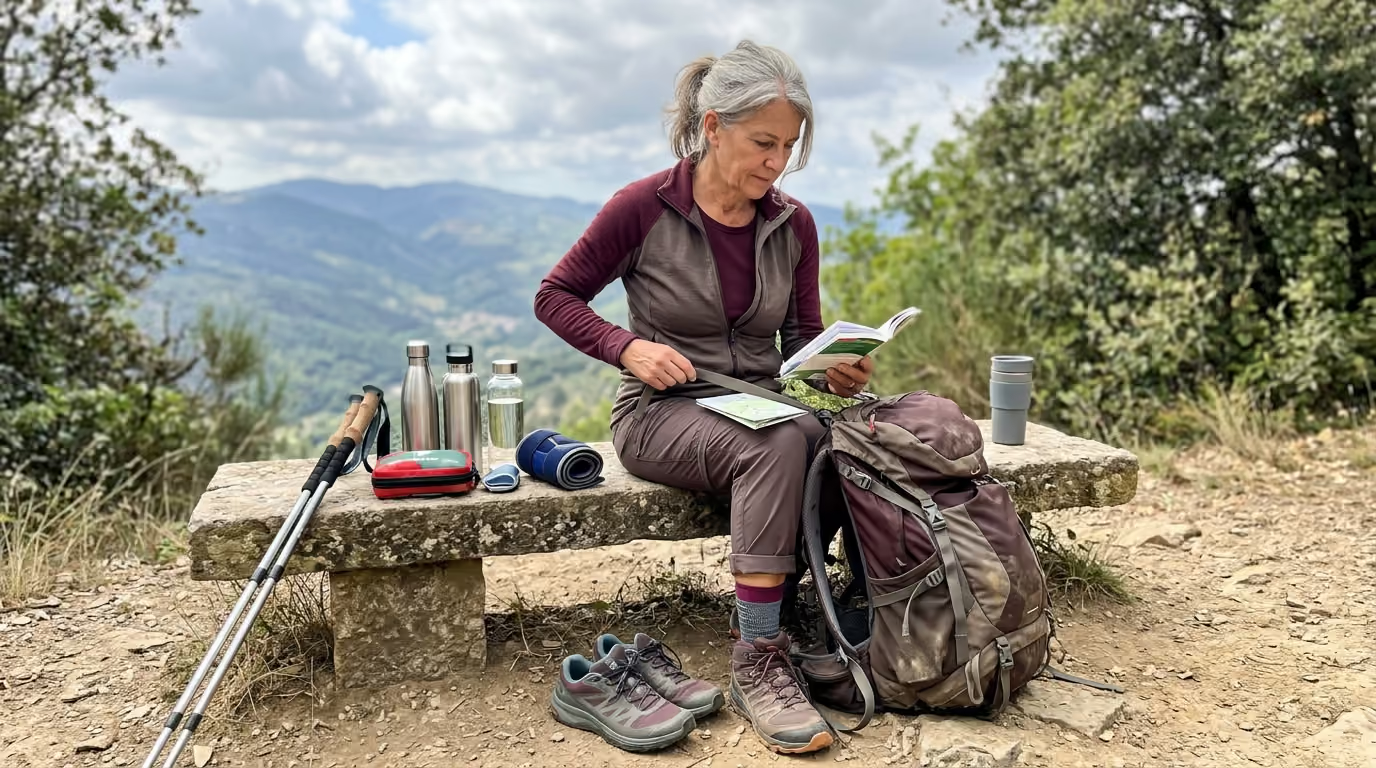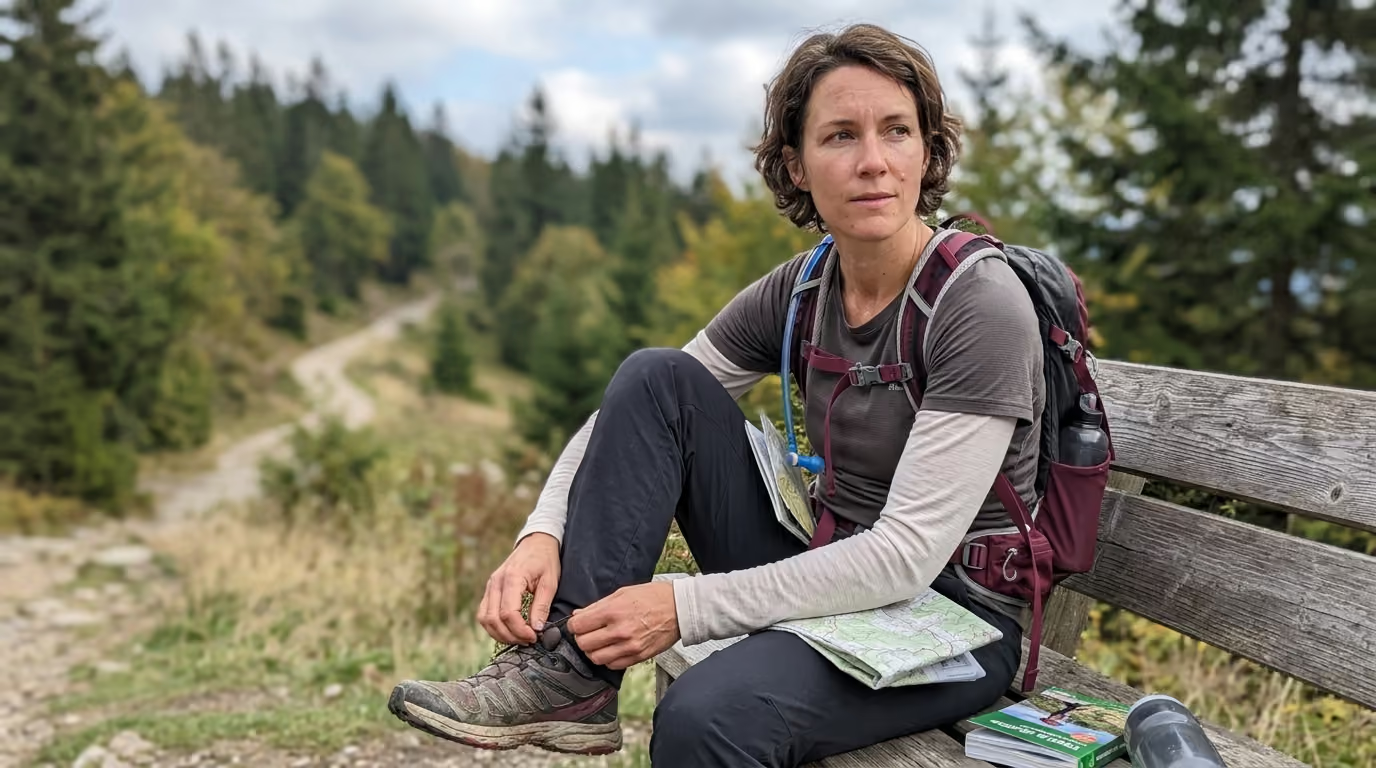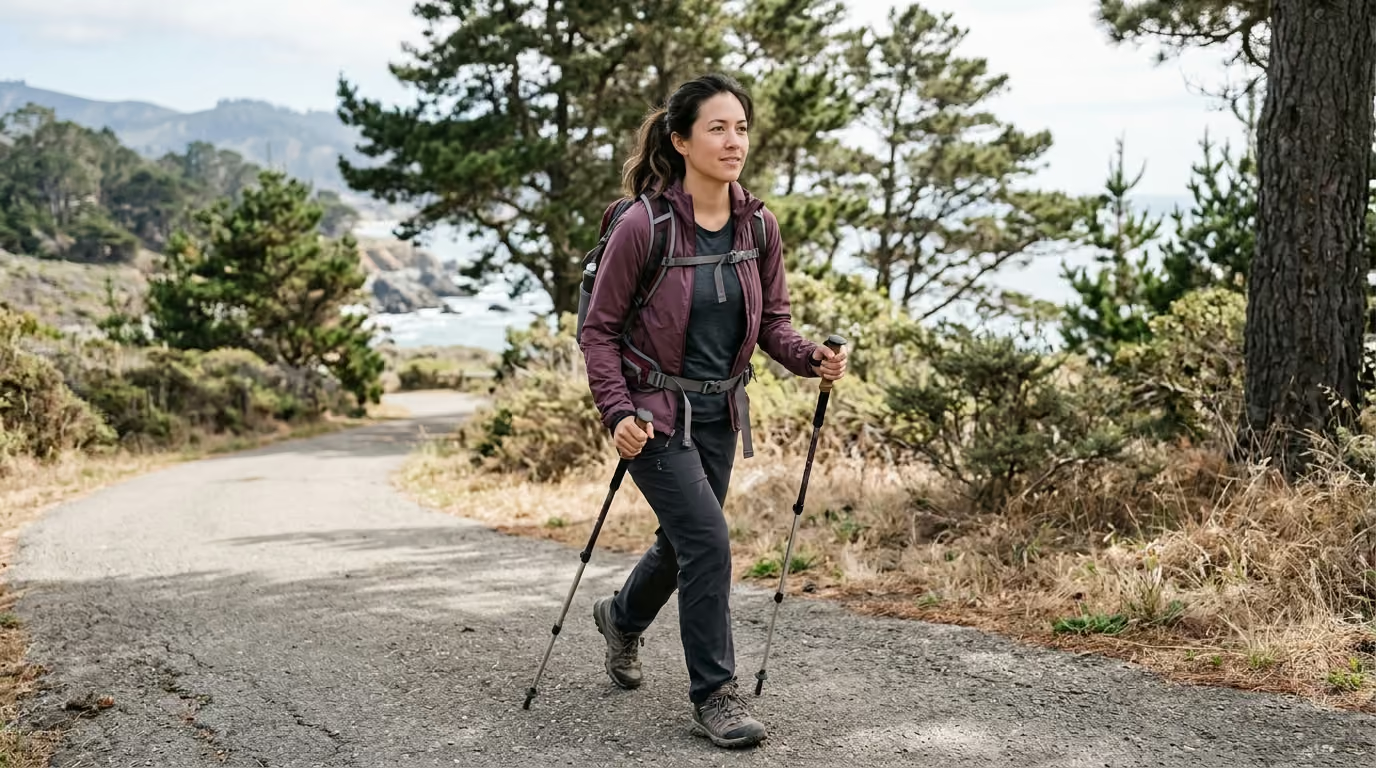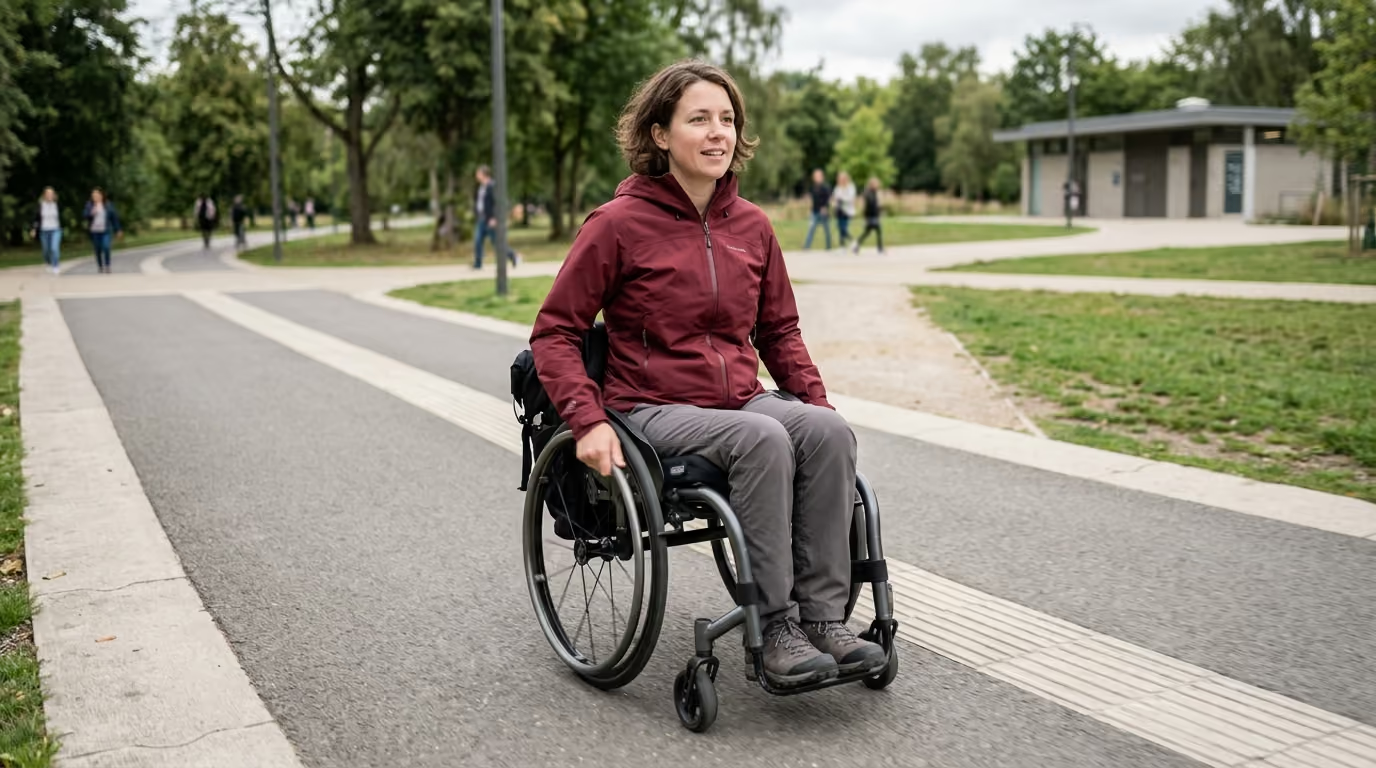

Three essential planning pillars help active adults audit travel routes, protect mobility equipment, navigate transit, and safely maintain outdoor.





You have planned a journey across the rolling hills of Tuscany or through the maritime villages of Maine. Months before departure, an unexpected meniscus tear, an arthritic flare, or a sudden change in cardiovascular stamina alters your physical baseline. The instinct for many active adults is to cancel the itinerary entirely, assuming that outdoor adventure requires peak physical condition.
Active travel does not belong solely to the uninjured or the perfectly mobile. Travel capacity exists along a dynamic continuum that shifts across a lifespan. With the right systems, detailed route verification, and structured energy management, changing physical capacity does not mean surrendering your curiosity.
This guide provides a comprehensive framework for active journeys when mobility changes. You will learn how to audit travel routes, communicate with transport providers, protect vital equipment, and pace daily exertion. Whether managing a temporary fracture, chronic joint pain, or aging-related shifts in balance, this guide keeps you moving purposefully through the world.
Accessible active travel is the practice of designing demanding journeys around your current physical capacity while eliminating hidden logistical friction. A trip succeeds or fails based on the unbroken continuity of the travel chain. If an airline damages a mobility aid, or a hotel entrance requires an unassisted staircase, the entire journey breaks down.
Effective planning relies on three foundational pillars:
By focusing on functional capability rather than limitation, active adults can continue to experience meaningful outdoor and cultural challenges. The goal is not to eliminate physical effort. The goal is to ensure that every ounce of effort is spent on the experience itself rather than wasted on preventable architectural barriers.
Mobility is not a static identity. It is a fluid physiological state that fluctuates based on fatigue, joint health, neurological function, environmental demands, and age. According to the World Health Organization, approximately 1.3 billion people, or 16 percent of the global population, experience significant disability.
Mobility limitations also scale naturally with chronological age. Research published in physical therapy literature shows that mobility limitations affect roughly 1.0 percent of individuals aged 15 to 24, but climb to 20.6 percent among adults aged 65 and older. These shifts often involve subtle reductions in single-leg balance, diminished quadriceps power, altered gait symmetry, or reduced joint lubrication after prolonged sitting.
Preserving physical activity during periods of limited mobility is critical for long-term health. The landmark Lifestyle Interventions and Independence for Elders (LIFE) study demonstrated that a structured physical activity program reduced the risk of major mobility disability by 18 percent compared to health education alone. The study reported a hazard ratio of 0.82 for major mobility disability and 0.72 for persistent mobility disability over 2.6 years. Maintaining regular movement protects your future independence.
Physical activity guidelines from the Centers for Disease Control and Prevention (CDC) recommend at least 150 minutes of moderate-intensity aerobic activity per week for adults with chronic conditions or disabilities, alongside two days of muscle-strengthening work. For adults over 65 with balance concerns, the World Health Organization recommends multicomponent physical activity emphasizing balance and strength on three or more days per week. Travel can serve as a powerful vehicle for meeting these targets when planned with precision.
Physical benefits extend beyond musculoskeletal metrics. A scoping review on adaptive outdoor physical activity for adults with mobility limitations found consistent improvements in mood, mental clarity, and perceived vitality. Engaging with natural landscapes provides restorative sensory engagement. Adapting an adventure is not a compromise; it is an active investment in your ongoing longevity and living well.
Many travelers make the mistake of planning around a medical diagnosis. Knowing that you have osteoarthritis or a lumbar disc issue does not help a boat captain or a hotel concierge assist you. Effective planning requires translating your physical reality into specific functional capabilities.
An individual accessibility profile defines your exact operating boundaries. It establishes what you can achieve independently, what you can perform with assistance, and which environmental barriers present safety risks.
Begin by measuring your continuous walking distance on flat, paved ground before pain or fatigue alters your gait. A distance of 400 meters on a flat surface may shrink to 100 meters on an incline or broken cobblestones. Measure your standing tolerance in minutes, as standing in a stationary security line often demands more muscular endurance than continuous walking.
Record your ability to handle elevation changes. Can you climb five standard steps with a secure handrail? Can you descend steps without knee instability? Quantifying these specific metrics prevents ambiguous assumptions during booking.
Assess how you transfer between different surfaces. This includes moving from a seated position to standing, getting in and out of low vehicles, and transferring to a shower seat or marine vessel. Identify which side of your body provides greater stability during lateral transfers.
Carrying capacity must also be audited. A traveler might walk 500 meters unencumbered, but experience severe lower back compression when pulling a 15-kilogram rolling suitcase. Clarifying whether you need luggage assistance allows you to allocate physical reserves to the journey itself.
Physical capacity is heavily influenced by external stressors. Heat can accelerate neuromuscular fatigue, while cold often increases joint stiffness and connective tissue discomfort. High altitude reduces oxygen delivery to working muscles, shortening your endurance window.
Track what happens after a day of moderate physical exertion. Do you experience delayed joint swelling, localized pain, or systemic fatigue that requires a full day of rest? Recognizing your recovery timeline is essential for structuring sustainable itineraries.
The greatest hazard in accessible travel is vague marketing language. Words such as "accessible," "step-free," "walkable," and "gentle" carry no universal technical meaning. A hotel may advertise an accessible room that requires navigating three steps to reach the elevator. A trail may be labeled "easy" yet feature a 14 percent continuous gravel grade.
You must replace subjective adjectives with verifiable physical measurements. When researching accommodations, transportation providers, and activity operators, request exact specifications.
To evaluate an environment accurately, request clear answers to the following architectural factors:
Do not rely solely on telephone assurances from central booking agents. Ask the local on-site property manager to provide real-time photographs or short smartphone videos of the entrance, the bathroom, and the route connecting the lobby to the room.
A destination cannot be judged by its entrance alone. The route-level verification method audits the complete path of travel between critical nodes. An accessible hotel room is useless if the path to the dining room features an unramped sunken salon.
Trace the sequence of movement from the vehicle drop-off zone to the reception desk, the elevator bank, the guest room, the dining facilities, and the street exit. Ensure that every transition along this path provides continuous step-free passage, adequate lighting, and resting points.
Applying these rigorous vetting principles protects your energy and ensures uninterrupted travel and adventure across diverse environments.
Legal standards for accessibility vary across international borders. In the United States, Title III of the Americans with Disabilities Act (ADA) requires lodging facilities to identify accessible features in detail, allow reservations of specific accessible rooms, and hold those rooms off general inventory.
In international jurisdictions, standards align with different legal frameworks, such as the European Standard EN 301 549 or the United Nations Tourism recommendations based on ISO 21902:2021. Understanding local standards helps you determine when accessibility is legally mandated and when it requires direct, individualized negotiation with property operators.
Long-distance transit often represents the most physically demanding component of an active journey. Navigating vast airport terminals, enduring cramped seating, and managing luggage can deplete energy reserves before the vacation begins. Approaching transit with strategic systems preserves physical capacity for your destination.
Prioritize the least fatiguing connection rather than the shortest theoretical flight time. An itinerary with a slightly longer layover in an airport with reliable assistance services is superior to a tight 45-minute sprint between distant terminals.
Under the U.S. Department of Transportation Air Carrier Access Act (ACAA), airlines must provide free, prompt assistance to passengers with disabilities between the terminal entrance, security checkpoints, departure gates, and aircraft seats. Similar protections exist in Canada under the Canadian Transportation Agency and in the European Union under Regulation (EC) No 1107/2006.
When arranging air travel, communicate using unambiguous functional language. State clearly whether you can walk short distances down an aircraft jet bridge, whether you require an aisle chair to reach your seat, and whether you can manage steps independently. Request that your mobility device be gate-checked and returned to the aircraft door upon arrival, rather than routed to standard baggage claim.
Mobility equipment is a customized physical extension of the traveler. If an airline damages a manual wheelchair, walking frame, or power scooter, your independence and safety are immediately compromised. Protecting equipment requires rigorous documentation and proactive risk management.
Create a comprehensive equipment dossier before departure. This dossier should contain the make, model, dimensions, and exact weight of your device. Include clear manufacturer documentation regarding battery chemistry, distinguishing between non-spillable dry-cell batteries and lithium-ion power units.
Before handing equipment over to airline ground crews, remove all detachable components. Pack cushions, joystick controllers, footrests, and delicate headrests into your carry-on luggage. Attach bilingual handling instruction tags directly to the frame, clearly indicating freewheel levers and lifting points. Photograph the device from multiple angles at the gate immediately before transfer.
When organizing ground transportation, verify that vehicles can accommodate both the traveler and their assistive equipment safely. Standard rideshare vehicles often lack trunk clearance for rigid-frame manual wheelchairs or heavy mobility devices.
For European and Asian rail networks, confirm platform accessibility in advance. Many high-speed rail operators require 24 to 48 hours notice to deploy platform boarding ramps and assign dedicated wheelchair spaces. Research station elevator statuses on municipal transit applications to avoid getting trapped on subterranean platforms.
Physical capacity on the road depends heavily on pacing. Travelers often encounter an early surge of enthusiasm, overexert themselves during the first 48 hours, and spend the remainder of the journey dealing with joint flare-ups or exhaustion. Preventing this cycle requires a deliberate energy budget.
Think of your daily stamina as a finite pool of physical currency. Every flight of stairs, hour spent standing in a museum, and mile navigated over uneven terrain draws from that balance.
Structure your daily activities using an intuitive traffic-light framework to regulate exertion:
In the Green Zone, your joints feel stable, pain is well-managed, and mental focus is sharp. You can proceed with your planned primary activity for the day. This might involve a two-hour guided walk through an archaeological park or a scenic coastal trail segment.
In the Amber Zone, you notice subtle warning signs: joint stiffness, reduced balance precision, dragging feet, or dull muscular aching. When you enter this zone, implement planned adaptations immediately. Shorten your walking route, transition to an accessible shuttle, sit down for a thirty-minute hydration break, or transfer gear to a companion.
The Red Zone indicates acute physiological strain, sharp joint pain, dizziness, or profound physical exhaustion. Pushing through this state dramatically increases your risk of falls and soft-tissue injury. When the Red Zone is reached, cease physical exertion, return to your lodging, and focus on physical recovery.
To maintain high energy levels throughout an extended itinerary, limit each day to one primary physical demand. A primary demand is an activity that requires substantial walking, standing, or environmental navigation, such as visiting a vast gallery or completing an adaptive cycling excursion.
Pair that single primary demand with low-demand, highly restorative experiences. Spend the afternoon taking a scenic boat cruise, enjoying a long lunch in a quiet piazza, or resting in your room. This pacing prevents the compounding fatigue that ruins multicomponent trips.
Extended transit and static postures can cause muscular deconditioning and joint stiffness. Integrating simple, low-load exercises into your morning and evening routines maintains tissue tolerance and neuromuscular coordination. These movements require no specialized gym facilities and can be performed in any hotel room:
These simple drills support strength and physical performance without depleting the physical reserves needed for active sightseeing.
Outdoor adventure should never be viewed as an all-or-nothing endeavor. With modern adaptive equipment, modified route selections, and skilled guiding, complex natural environments become accessible to travelers with varied physical capacities.
Focus on the core experience you wish to achieve. Whether your goal is to experience wild marine environments, ascend to a mountain viewpoint, or explore dense forest ecosystems, there is almost always an adaptable pathway to achieve that outcome.
Hiking with changing mobility requires evaluating trail surfaces and topography with precision. Look for trails engineered with crushed stone, compacted gravel, or wooden boardwalks that offer firm, unyielding footing.
Inquire about the availability of all-terrain mobility devices. Many national parks and outdoor centers now provide access to specialized equipment, such as the Hippocampe or the Mountain Trike. These devices feature balloon tires and rugged suspension systems that navigate roots, sand, and rocky paths easily.
When planning hiking routes, opt for out-and-back profiles rather than committing loop trails. An out-and-back route allows you to turn around at any moment if energy levels fluctuate, eliminating the stress of being caught miles from a trailhead.
Water-based activities provide exceptional low-impact movement opportunities for individuals with joint pain, balance issues, or lower-limb injuries. Buoyancy eliminates compressive forces on the spine and lower extremities while allowing cardiovascular conditioning.
When booking kayak, canoe, or small boat tours, assess the launch mechanism. Look for operators that utilize accessible floating docks, specialized transfer benches, or adaptive outriggers that provide vessel stability. For beach-based entries, verify the presence of temporary access mats, such as Mobi-Mats, which allow mobility aids to roll across soft sand down to the water line.
Always clarify how re-boarding works in the event of an unexpected swim. Ensure that the tour provider has trained staff and mechanical aids to assist with water-to-boat transfers without relying on unassisted vertical ladder climbs.
Adaptive cycling offers tremendous range and cardiovascular engagement. Options include recumbent foot-powered tricycles, which eliminate balance demands, handcycles for travelers with lower-extremity limitations, and electric-assist tandem cycles that allow partners to share the work.
In alpine environments, adaptive ski schools offer specialized instruction using mono-skis, bi-skis, and four-track systems. These programs allow individuals with spinal injuries, amputations, or neuromuscular conditions to experience downhill skiing alongside friends and family. Verify that instructors hold credentials from recognized adaptive sporting organizations, such as the Professional Ski Instructors of America (PSIA) or equivalent national bodies.
Exploring these outdoor options enriches your life and reinforces the value of dedicated travel and human performance protocols.
Navigating the world with changing mobility requires unlearning several common assumptions. These myths often lead travelers into frustrating logistical traps or discourage them from traveling altogether.
A common assumption is that an environment without stairs is inherently easy to navigate. However, a step-free route that features a continuous eight percent incline over 800 meters can demand far more cardiovascular and muscular exertion than a short flight of five steps. Long corridors, heavy manual push doors, and thick carpeting can turn a step-free environment into an exhausting obstacle course.
Many travelers believe accessible travel is limited to paved cruise ship docks and sanitized urban bus tours. In reality, adaptive adventure travel is a rapidly growing field. With specialized trail chairs, adaptive rafts, accessible safari vehicles, and four-wheel-drive equipment, remote wilderness access is achievable. Adventure is defined by engagement and personal challenge, not by adherence to conventional movement patterns.
Travel companions often try to help by pushing a wheelchair without asking, carrying every bag, or speaking to service staff on the traveler's behalf. This well-intentioned over-assistance can erode the traveler's independence and confidence. Clear communication is critical: companions should ask before assisting, allow the traveler to dictate the pace, and let the traveler direct their own transfers and interactions.
When dealing with a sprain, tendonitis, or a minor fracture, travelers often assume they must remain stationary in a hotel room. Unless strictly contraindicated by a medical provider, maintaining light, pain-free movement accelerates tissue healing, supports circulation, and reduces the risk of deep vein thrombosis during travel. Adapting your movement is almost always superior to complete immobilization.
Executing an accessible active journey does not require carrying hundreds of pounds of gear or planning every minute with clinical rigidity. By focusing on a small set of high-leverage interventions, you can eliminate most logistical failures and physical setbacks.
Focus on these essential practices to streamline your journey:
Rather than exchanging lengthy emails with reservations staff, arrange a five-minute video call with an on-site manager. Have them walk the smartphone camera from the parking area to the room, through the bathroom door, and into the shower enclosure. This single step eliminates 90 percent of arrival surprises.
Whenever possible, book direct flights to eliminate connecting hubs. Terminal transfers are where luggage is lost, mobility devices are damaged, and physical reserves are depleted. If a connection is unavoidable, build in at least a three-hour window to navigate assistance logistics calmly.
If you travel with a mobility device, carry an ultralight repair kit in your carry-on luggage. This should contain:
This compact kit allows you to resolve minor mechanical issues without hunting for specialized medical supply shops in an unfamiliar city.
Build a non-negotiable two-hour recovery window into every afternoon. Use this time for physical decompression, targeted mobility drills, gentle tissue therapy, or sleep. Protecting this window ensures you enter the evening refreshed and ready for dinner or cultural activities.
These focused habits provide a reliable foundation for recovery and regeneration in any environment.
To see how these principles function in the field, consider a 58-year-old traveler recovering from knee surgery who wants to experience the rugged beauty of the Scottish Highlands. The itinerary combines remote coastal scenery, historic castles, and local cuisine while accommodating limited weight-bearing tolerance and fluctuating knee swelling.
The traveler selects a central, modern hotel in Fort William that features zero-threshold entries, an elevator, and a spacious walk-in shower with grab bars. Rather than changing accommodations every night, the traveler uses this single property as a fixed base for day trips, eliminating the physical strain of frequent packing and luggage transfers.
Day trips are structured around scenic driving routes along Glen Nevis and the Great Glen. Activities are selected based on precise trail data: the traveler chooses firm, crushed-stone paths that offer level grades and frequent wooden benches. Dual carbon-fiber trekking poles are used to redistribute 15 to 20 percent of ground reaction forces away from the recovering knee joint.
When visiting historic sites such as Eilean Donan Castle, the traveler audits the access pathway in advance. Recognizing that the castle interior requires climbing narrow spiral staircases, the traveler decides to explore the fully accessible visitor center, the paved perimeter bridge, and the courtyard viewpoints. This preserves the visual and cultural experience without placing the recovering knee in an unsafe, high-torque environment.
At the conclusion of each afternoon excursion, the traveler implements a structured recovery routine. The knee is elevated above heart level for thirty minutes while cold compression wraps are applied to manage exercise-induced swelling. The traveler performs gentle, pain-free range-of-motion heel slides on the bed to maintain synovial fluid circulation.
By adhering to this systematic approach, the traveler completes an ambitious international journey, builds physical confidence, and returns home with improved mobility rather than an acute physical setback.
The global medical, rehabilitation, and sports science communities agree that physical mobility limitations should not be an automatic barrier to active travel and outdoor recreation.
Major international health organizations, including the World Health Organization and the Centers for Disease Control and Prevention, emphasize that regular physical activity is vital for individuals with disabilities and chronic conditions. Preserving cardiovascular endurance, functional strength, and balance through adapted activity reduces the secondary complications of immobility, improves psychological resilience, and extends functional lifespan.
Leading accessibility researchers and universal design experts emphasize that true access requires a systems-level perspective. Accessibility is not a luxury or a special accommodation; it is an essential component of modern infrastructure. Organizations such as UN Tourism and the International Organization for Standardization (ISO) continue to establish clear international benchmarks (such as ISO 21902:2021) that guide destinations toward seamless, barrier-free tourism services.
The consensus across disciplines is straightforward: when travel environments are accurately audited, transit logistics are managed proactively, and physical demands are tailored to individual capacity, active adventure becomes an accessible, lifelong reality.
Revisit this guide whenever you experience a change in your physical capacity, such as recovering from an acute orthopedic injury, managing a new joint replacement, or noticing shifts in your baseline balance and stamina. Review these auditing frameworks and transit protocols before booking international travel, especially when venturing to remote regions or older historic destinations.
Changing mobility is simply an engineering problem to be solved with smart systems, accurate measurements, and proactive design.
Stay connected for research and practical guidance on longevity, strength, recovery, energy and active living. New ideas to help you stay capable, curious and ready for more.


Explore practical guidance on strength, recovery, energy, travel and longevity for a life that stays active.
explore the Blog