
A sports-medicine editorial argues muscular strength is a key clinical risk marker. Learn how grip and chair-stand tests help active adults preserve independence.





On September 24, 2026, Monmouth University reported a major development in preventative healthcare. Tamara Rial-Faigenbaum, Ph.D., co-authored a compelling editorial in the British Journal of Sports Medicine. The publication argues that muscular weakness should be treated as a clinically relevant risk marker. Furthermore, the authors state that strength assessment should become a routine part of standard healthcare.
For affluent adults who value travel and sport, physical independence remains a top priority. Maintaining the capability to ski challenging mountains or navigate remote hiking trails requires proactive planning. Aerobic fitness has traditionally dominated conversations around cardiovascular health and longevity. However, this new editorial emphasizes that muscular strength is just as critical for long-term resilience.
The authors explicitly connect low muscle strength with several severe clinical concerns. These concerns include chronic health conditions, impaired physical function, and premature mortality. Despite the clear importance of muscular force production, strength is still often overlooked in routine clinical assessments. Medical professionals frequently prioritize cardiovascular metrics while ignoring functional vulnerability entirely.
To solve this measurement gap, the editorial introduces the strength-risk continuum. This clinical concept is designed to help identify low strength before it compromises daily life. It provides a standardized way for physicians to view muscular fitness during a typical patient visit. By tracking these numbers, active adults can better preserve their physical capability over time.
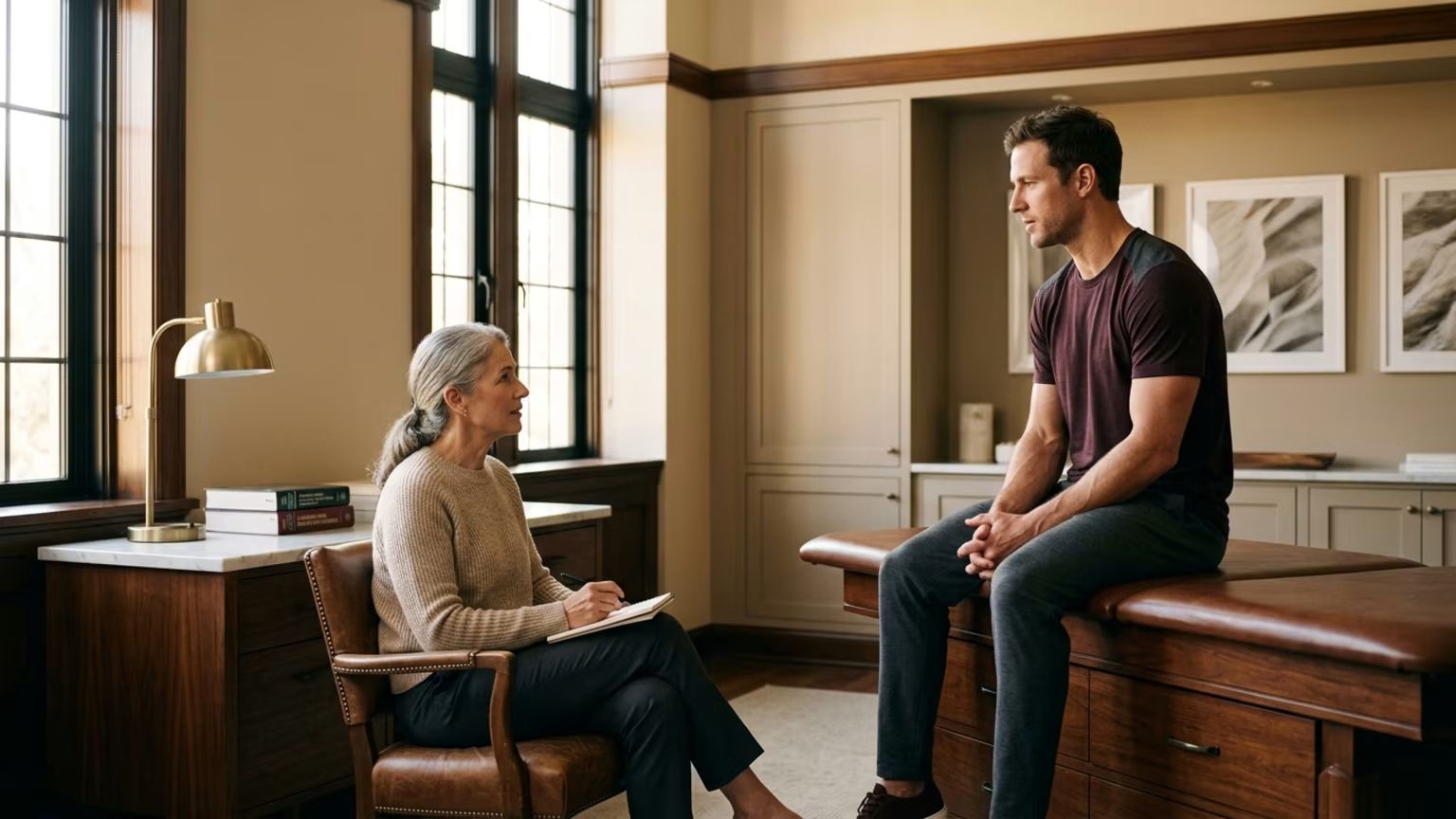
The proposed strength-risk continuum is intended to be used alongside relatively simple clinical tests. Medical professionals can rely on handgrip dynamometry and chair-to-stand testing to gather accurate data. These accessible assessments eliminate the need for expensive or complex laboratory equipment during standard visits. Consequently, they offer a highly practical method for tracking functional decline.
A 2026 systematic review and meta-analysis provides substantial context for these clinical recommendations. The available research summary indicates that the review evaluated evidence from 155 cohort studies. Ninety-four of those studies were specifically included in the final meta-analysis. This large volume of observational data highlights the broad health implications of maintaining muscular capability.
The meta-analysis revealed striking differences between the highest and lowest handgrip-strength groups. Individuals in the highest strength groups were associated with lower odds of multiple negative health outcomes. The reported associations included an odds ratio of 0.73 for cardiovascular disease and 0.79 for type 2 diabetes. These figures suggest a strong correlation between basic muscular force and metabolic health.
The review also highlighted significant associations regarding cognitive and physical longevity. When comparing the highest with the lowest handgrip-strength groups, researchers noted lower odds for neurological conditions. They reported odds ratios of 0.57 for disability, 0.57 for cognitive decline, and 0.62 for dementia. Interestingly, just a 5-kilogram increase in handgrip strength was associated with lower risk across most examined conditions.
Lower-body power testing yielded similarly compelling associations within the reviewed data. Better performance on the five-repetition chair-stand test was linked to lower odds of type 2 diabetes and musculoskeletal impairment. It was also associated with lower odds of disability, depression, and dementia. However, the review characterized the overall quality of evidence as ranging from very low to moderate.
Because the evidence is largely observational, these simple strength tests offer prognostic potential rather than diagnostic certainty. They do not establish that a low handgrip score directly causes a particular disease. A 2026 European Association of Preventive Cardiology scientific statement provides further guidance on clinical application. It describes the European Working Group on Sarcopenia in Older People 2 approach as widely applied in research.
Under this EWGSOP2 approach, clinicians can identify low muscle strength using either grip strength or the chair-stand test. Confirmation of actual sarcopenia then requires documented evidence of low muscle quantity or quality. This sequential pathway ensures that patients receive a comprehensive evaluation before receiving a formal diagnosis. However, different clinical groups still rely on varying diagnostic thresholds.
A separate 2026 comparison of sarcopenia definitions highlights an unresolved standardization problem in the medical community. The EWGSOP2, the Asian Working Group for Sarcopenia 2, and the Sarcopenia Definitions and Outcomes Consortium differ substantially. They use different conceptual frameworks and operational cutoffs to define muscle weakness. Therefore, active adults should view test results as personal trend markers rather than universal pass or fail grades.
The editorial advocating for routine strength measurement features an international author group. This team includes highly respected experts from Brazil, Spain, and the United States. Their collective professional position is that strength testing must evolve beyond its current limitations. They believe it should move from being primarily a rehabilitation metric to a clinically meaningful indicator.
Dr. Rial-Faigenbaum clarified the true objective behind advocating for these routine medical assessments. She stated the goal is to shift health assessments so that “muscular fitness is viewed as an essential marker of a person’s risk for functional decline and adverse health outcomes.” Her objective is not simply to encourage more gym training for aesthetic purposes. Instead, it is to formally integrate muscular fitness into medical risk identification.
Her accompanying phrase captures the core implementation argument of the entire editorial perfectly. She noted that “What doesn’t get measured, doesn’t get managed.” This specific phrase is an advocacy statement rather than documented proof that measurement alone improves physical outcomes. Still, it highlights the practical necessity of establishing a clinical baseline for muscular capability.
Tracking these metrics allows clinicians to respond appropriately to signs of physical decline. The case for routine measurement is strongest when testing leads to a targeted clinical response. This response might include a formal medical evaluation, a nutrition review, or progressive resistance training. Understanding how consistent strength training secures lifelong independence and travel capability begins with gathering accurate baseline data.
Active adults must understand how this clinical guidance impacts real life preparation and daily function. Being able to cycle, swim, or run long distances demonstrates excellent cardiovascular capacity. However, aerobic endurance does not necessarily answer how well you can rise from a chair or safely produce force. Treating strength as a separate health dimension ensures you maintain total bodily capability.
Travel recovery and demanding sports require robust muscular endurance and raw physical power. Maneuvering heavy luggage through a crowded airport terminal demands reliable grip strength and core stability. Recovering your balance on an uneven cobblestone street requires immediate leg power and joint control. These everyday travel tasks mirror the exact functional demands measured by the chair-to-stand clinical test.
For affluent travelers planning demanding alpine sports, these metrics serve as a crucial early warning system. Altitude adjustment and sustained energy during skiing depend heavily on your baseline muscular resilience. A pre-season or pre-trip strength assessment can serve as an excellent conversation starter with your physician. It helps gauge your physical preparation, although it should not be treated as a guarantee against injury.
It is important to remember that grip strength and chair-stand performance are influenced by multiple outside factors. Variables including joint pain, poor technique, physical fatigue and motivation can affect your test scores significantly. The available research supports their utility as clinical risk markers but does not establish perfect diagnostic isolation. If you notice unexplained weakness or declining performance, you should always seek professional medical evaluation.
You should pair any clinical strength testing with function-specific physical goals relevant to your lifestyle. Focus on maintaining the ability to lift gear overhead, climb steep stairs, and step onto uneven ground safely. WealthAtPlay recommends incorporating active leisure routines alongside progressive resistance work for optimal results. The evidence clearly supports the importance of strength assessment without demanding a complete lifestyle overhaul.
Understanding how aerobic and muscular fitness preserve brain structure provides another compelling reason to maintain balanced training. While the cardiovascular system supports endurance, muscular strength provides the mechanical foundation for an active lifestyle. Routine assessments help ensure neither system is neglected as we age. Monitoring both aspects allows you to enjoy demanding travel itineraries with total confidence.
If a routine clinical assessment reveals a lower than expected strength score, do not panic. Use the result as motivation to adjust your weekly training volume or consult with a qualified exercise professional. A lower score simply indicates an opportunity to improve your physical resilience before your next adventure. Taking action early is the key to maintaining lifelong mobility and functional independence.
Ask a qualified clinician for a baseline grip-strength or chair-stand assessment to ensure you maintain the force production necessary for decades of uninterrupted travel and sport.
Stay connected for research and practical guidance on longevity, strength, recovery, energy and active living. New ideas to help you stay capable, curious and ready for more.



Explore practical guidance on strength, recovery, energy, travel and longevity for a life that stays active.
explore the Blog