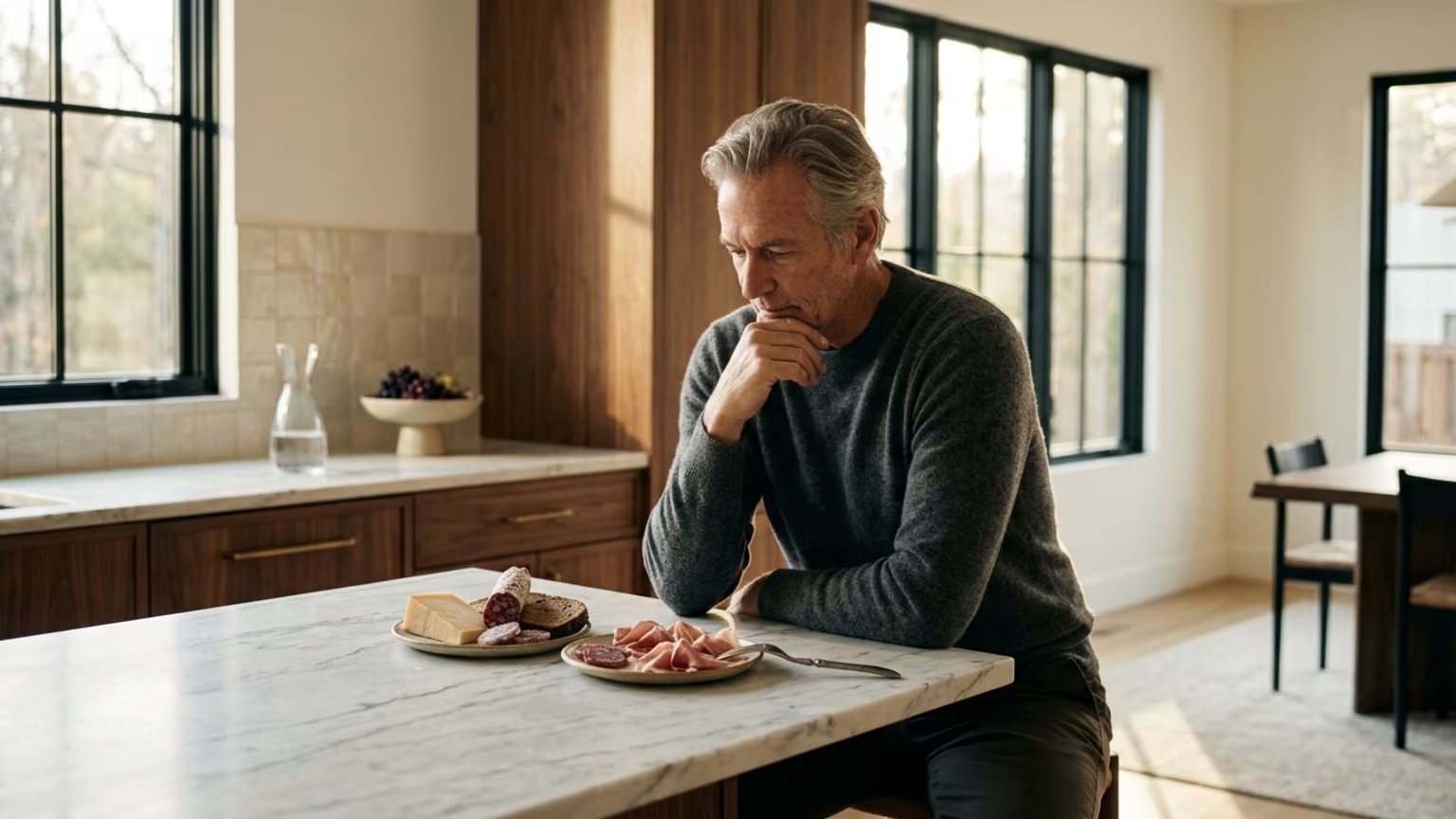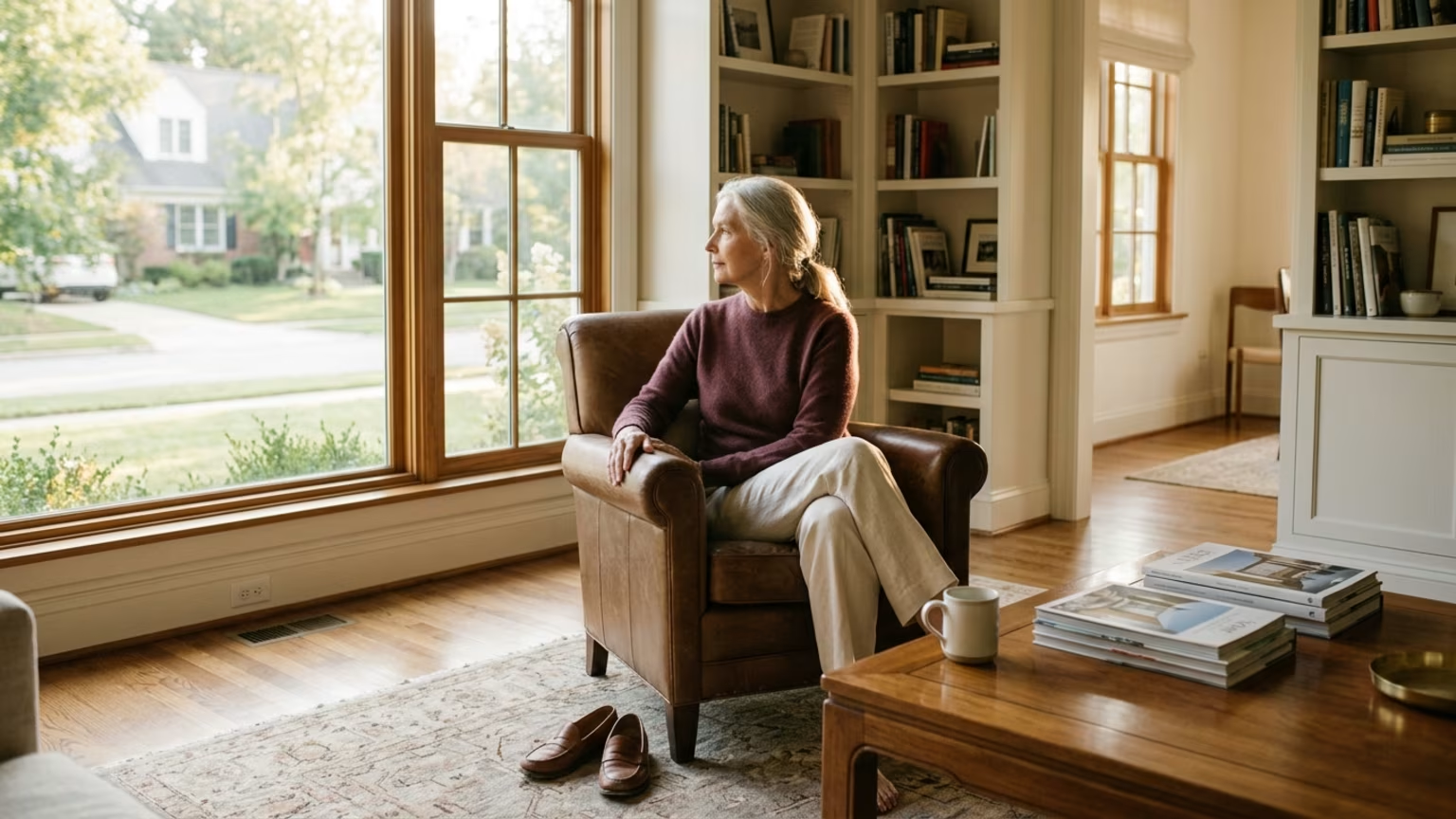

A 17% drop in physical activity among healthy adults proves step counts aren't enough. WealthAtPlay explains how to build real-world capacity instead.





A recent University of Jyväskylä study found that physical-activity energy expenditure dropped by an average of 17% over four years in healthy adults aged 75 to 85. This matters because remaining in good physical condition today does not automatically protect your future mobility. You cannot simply trust your smartwatch to safeguard your physical independence over the long term.
Stop letting an arbitrary daily step count dictate your approach to healthy aging. Obsessing over extreme tracking protocols and basic movement data ruins your active lifestyle. It forces you to sacrifice real-world capability for clinical numbers that lack practical context. You are trading the joy of physical freedom for an illusion of control.
Mainstream wellness culture relentlessly promotes simplistic daily targets. We are told to hit a specific number of steps to maintain our health. However, this trend fails active adults who actually want to stay capable for travel and sport. A basic step counter only records displacement, which means it completely ignores the actual physical demand of your daily life.
The researchers at the University of Jyväskylä proved this point by using a more comprehensive measurement approach. They assessed activity in free-living conditions using wearable sensors that combined body movement and heart-rate information. The study used thigh-worn movement sensors and heart-rate monitoring to estimate physical-activity energy expenditure during daily life. Joona Neuvonen, a doctoral researcher at the University of Jyväskylä, explained that heart-rate monitoring can identify physically demanding daily tasks.
These demanding tasks include lifting and carrying objects. A simple movement sensor could easily miss these forms of physical effort. If you only track your steps, you might think you are maintaining your fitness while your actual physical capacity steadily declines. This explains why the participants experienced a 17% decline in activity despite starting in generally good physical condition.
The contrast between heart-rate monitoring and basic movement tracking reveals a critical lesson for older adults. Different technologies measure entirely different aspects of our daily physical activity. A stable daily step count does not necessarily mean you have stable physical capacity. A decline in your exercise tolerance or heart-rate response will not show up in a simple daily movement total.
The study relied on data from the AGNES cohort, which followed approximately 300 community-dwelling adults. These participants were living independently rather than residing in institutional care. For active adults in their 40s, 50s and 60s, these findings offer a critical warning. Maintaining mobility requires a deliberate plan rather than blind faith in a wearable device.
Stressing over pristine laboratory metrics actually detracts from the goal of enjoying your life. The original paper was published in the European Review of Aging and Physical Activity in 2026. The researchers measured preferred walking speed using a laboratory-based six-minute walk test. They found that participants who walked faster were, on average, more physically active in their daily lives than slower walkers.
However, optimizing your routine just to pass a clinical walking test is a massive mistake. Neuvonen cautioned that laboratory-measured walking speed may not fully reflect everyday mobility. Environmental barriers and opportunities heavily influence how people move in daily life. A person might perform perfectly on a structured walking test but still reduce their real-world activity.
Real life involves steep hills, poor weather, heavy traffic and uneven terrain. When you obsess over controlled metrics, you often lose the rugged capacity needed for actual adventure. A perfect six-minute walk score means very little if a fear of falling keeps you from hiking. It means nothing if you lack the confidence to navigate a busy international airport.
The cost of this extreme optimization is a narrower life. You might avoid challenging environments simply because they disrupt your controlled routine or your perfectly calibrated recovery scores. Healthy aging should be judged by your ability to manage daily life without assistance. Preserving the capacity to move through the unpredictable world requires practical resilience, not just impressive clinical data.
The study team emphasized that changes in physical functioning are closely linked to age-related changes in physical activity. Slower walking speed does not completely explain the steep decline in overall movement. Instead, physical activity and functional ability influence one another in a highly complicated way. When you narrow your focus to optimizing a single lab metric, you ignore this complex relationship.
The WealthAtPlay approach offers a much simpler alternative to obsessive tracking. You can achieve superior results by proactively training across multiple physical domains. This strategy requires far less mental energy than micromanaging your daily step count. The goal is to build a resilient physical base well before independence becomes difficult to maintain.
Your daily life demands more than just forward motion. You need progressive resistance work for the legs, hips, upper body and grip. This allows you to comfortably carry luggage, lift grandchildren and manage heavy doors. Two or more resistance-training sessions a week provide the foundation for long-term capability.
Prioritize safe technique and the ability to squat, hinge, push and pull. You can read more about how this connects to overall capability in our guide on The Four Pillars of Physical Independence After 40. Strength training ensures your muscles can handle the unexpected demands of a busy schedule. It protects your joints and preserves your fundamental capacity to move.
Do not wait until travel becomes tiring before you begin a structured resistance program. Start building your strength while you still feel fully capable and energetic. A clinician or qualified exercise professional can help you determine the appropriate intensity and progression. This ensures you build muscle safely without risking an unnecessary injury.
Aerobic capacity is essential for sustained activities like walking, cycling, swimming or rowing. Combine comfortable endurance work with limited higher-intensity efforts if medically appropriate. This ensures you have the cardiovascular reserve to handle long travel days or demanding sports. Rather than maximizing a single performance number, focus on maintaining enough energy for recreational challenges.
If you travel frequently, this reserve is critical for managing the physical strain of long distance travel. A strong aerobic base allows you to recover faster from disrupted sleep and jet lag. It gives you the stamina to navigate a new city on foot without feeling exhausted. You build this capacity by staying consistent with your favorite endurance activities.
Balance practice is often neglected until a problem arises. You should train stability using single-leg control, directional changes and uneven-surface practice. Train this capacity before it becomes an issue, using support when necessary. Navigating a cobblestone street in Europe requires dynamic stability that a treadmill simply cannot build.
Dedicated balance training and physical independence go hand in hand for active adults. When you trust your balance, you naturally choose to engage in more demanding physical activities. You are less likely to avoid hiking trails or challenging sports out of fear. This confidence directly supports your overall activity levels and your long-term mobility.
The University of Jyväskylä researchers described preferred walking speed as a relatively simple indicator of physical functioning. Walking requires the coordinated contribution of strength, balance, cardiovascular capacity and motor control. Treat your comfortable walking pace as a useful functional marker rather than a diagnostic verdict. If your walking speed slows, use that as a prompt to investigate fatigue, pain or reduced confidence.
Physical-activity energy expenditure reflects the energy used through ordinary movement during everyday life. This includes running errands on foot, climbing stairs, gardening and taking breaks from sitting. Break up long sitting periods with mobility routines and basic household tasks. This practical accumulation of effort does far more for your health than an isolated hour at the gym followed by complete physical inactivity.
We must remember that the 300 community-dwelling adults in the AGNES cohort started out in generally good condition. Yet, they still faced an average 17% decrease in physical-activity energy expenditure over just four years. This striking decline proves that looking healthy today does not guarantee functional freedom tomorrow. It reminds us that true capability requires a proactive approach to movement.
The University of Jyväskylä study offers a clear warning against assuming that current fitness guarantees future activity. The most defensible strategy is not to chase a specific walking speed or an arbitrary step goal. You must build a resilient physical base well before your independence becomes difficult to maintain. Your long-term freedom depends on preserving the physical abilities that support the life you want to continue living.
A wearable device that counts your steps might offer a neat summary of your day. However, it cannot replace the multidimensional physical reserve you need to thrive. When you face a steep mountain trail, a delayed flight or a demanding tennis match, your step count will not save you. Are you building the varied physical capacity required to fully experience the world, or are you just settling for good numbers on a screen?
Stay connected for research and practical guidance on longevity, strength, recovery, energy and active living. New ideas to help you stay capable, curious and ready for more.


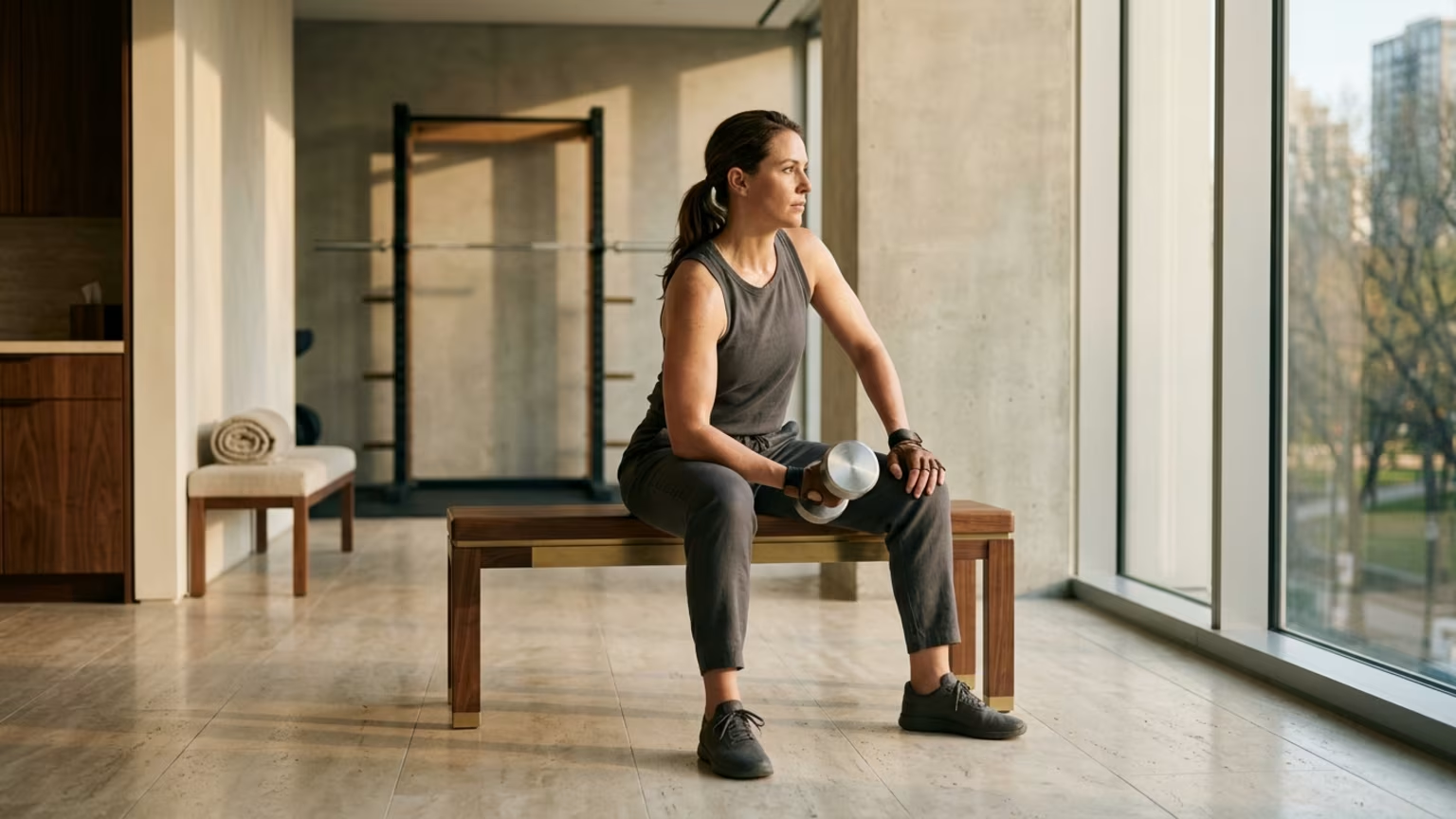
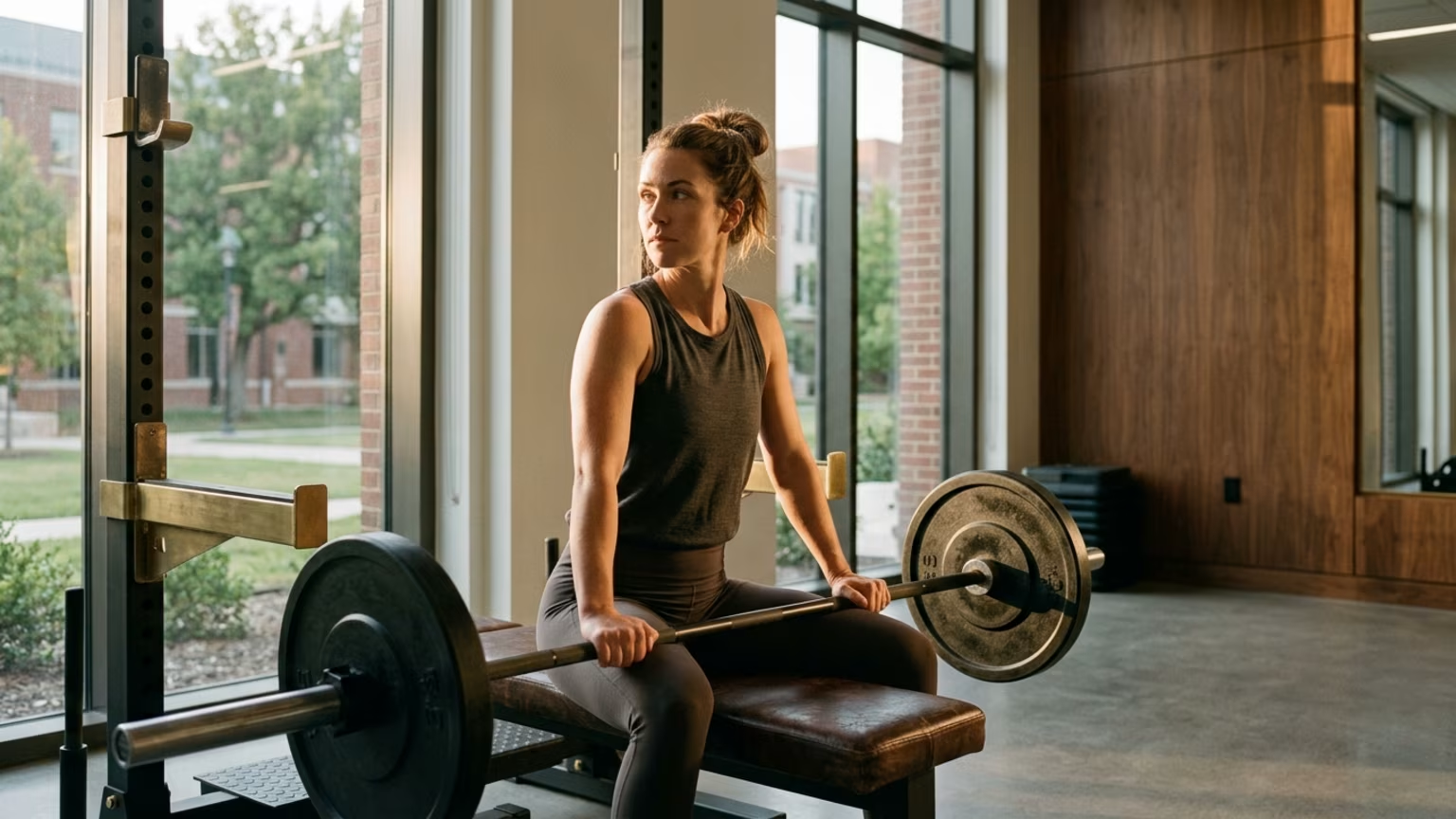

Explore practical guidance on strength, recovery, energy, travel and longevity for a life that stays active.
explore the Blog