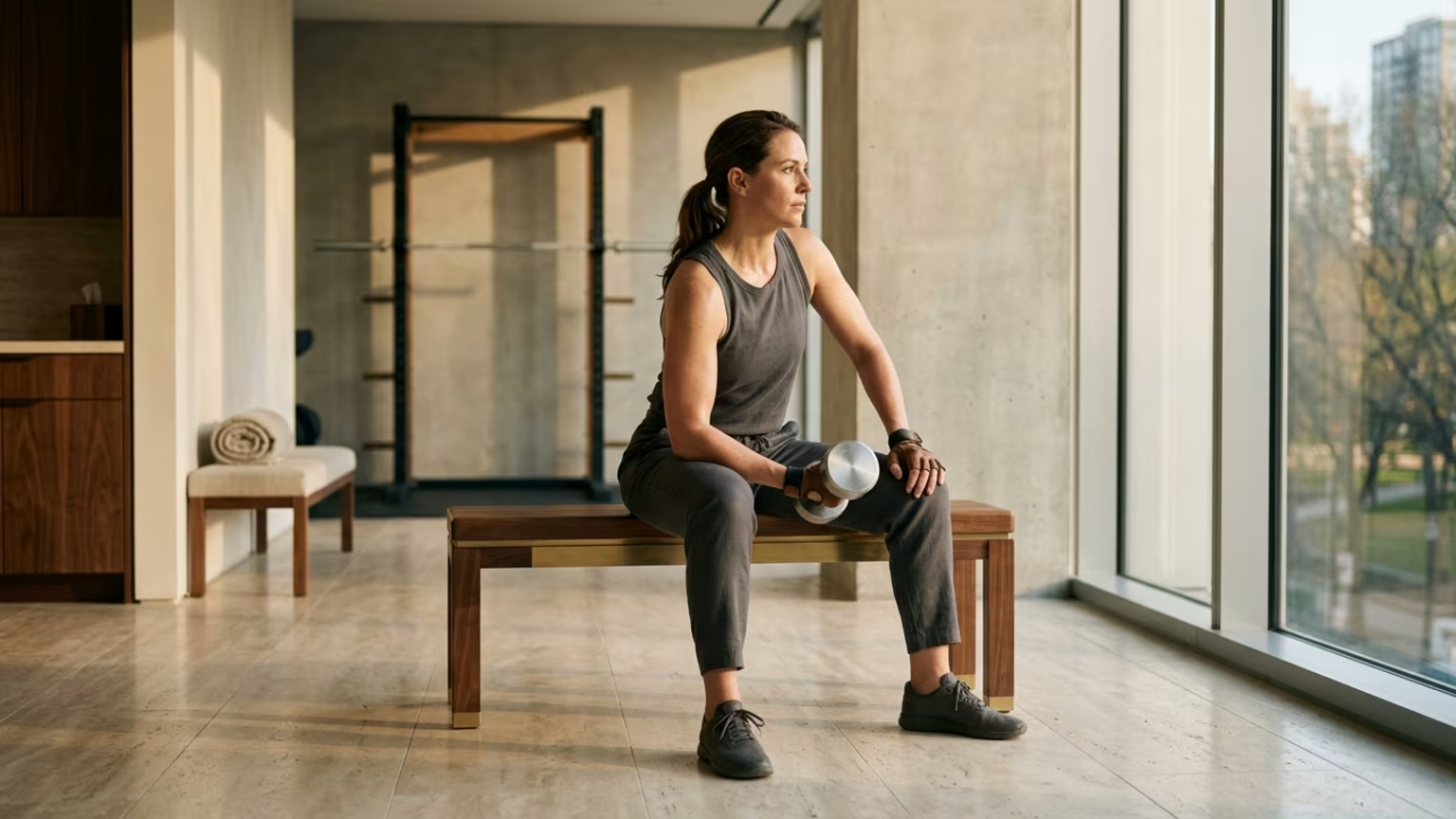

A new article from Health Time explains how tracking heart rate variability can guide daily recovery decisions and outlines strategies to improve overnight metrics.





Monitoring overnight physiology is becoming a standard practice for active adults who want to protect their physical independence and sustain their energy. On September 4, 2026, Health Time published “What Does HRV Actually Tell You to Maximize Recovery”, an article credited to their editorial team and validated by their quality assurance process. The guidance frames biometric tracking as a manageable tool for the active adult rather than a clinical obsession. It positions heart rate variability as a practical trend signal that can inform daily decisions about physical readiness and rest.
Heart rate variability measures the variation in milliseconds between successive heartbeats. It acts as an indirect signal of autonomic nervous system regulation and current physical condition. Two people with a resting heart rate of 60 beats per minute can have completely different beat variation. This beat to beat difference reveals how well the body is handling physical and mental demands.
Health Time emphasizes that there is no universal target number for this metric. Readings vary widely based on age, sex, fitness level and personal circumstances. A single low reading should not automatically trigger alarm or drastic schedule changes. Instead, active adults should compare their numbers against a personal baseline rather than generic app ranges.
The measurement window also heavily dictates the usefulness of the data. Overnight readings are influenced by sleep stage and body position. Recent exercise, meals, alcohol and stress also impact the selected sampling period. A morning reading is altered by the additional hours elapsed since waking or training. Health Time recommends taking consistent measurements overnight or immediately after waking under comparable conditions.
Wrist based optical sensors might lose accuracy compared to chest straps during vigorous exercise. However, relaxed morning measurements remain highly dependable for building a personal baseline. Establishing this baseline requires tracking the data over time and relying on a seven day rolling average. This approach smooths out daily fluctuations and provides a clearer picture of recovery status.
Short term metrics like RMSSD reflect rapid parasympathetic changes in the nervous system. SDNN acts as a broader measure influenced by longer term and circadian factors. Tracking these specific trends provides a clearer window into how well your body adapts to physical strain. Building an effective routine means prioritizing consistent rest and regeneration habits to support these physiological signals.
The wellness sector is moving toward advanced wearable readiness systems. These systems combine heart rate variability with sleep data, resting heart rate and respiratory measures. They also incorporate training load and subjective feedback for a complete picture. This shift is particularly useful for people managing repeated stressors rather than a single workout.
A midlife athlete combining business travel with high intensity training can use a downward trend to adjust their schedule. Monitoring total stress load helps separate travel fatigue from training fatigue. A low reading can result from disrupted sleep, emotional stress or dehydration. Travel disruption, measurement inconsistency and a hard workout also drive the numbers down.
Health Time notes that the metric commonly falls one to two days before users feel ill or excessively fatigued. This makes the data a valuable early warning system for long journeys and altitude adjustments. After flights or unusually high work stress, a low reading usually reflects the total accumulated stress load.
In our experience, “After a grueling thirty hour transit to Tokyo, I realized my old strategy of just powering through was no longer working. I felt foggy for three days. I started digging into circadian biology and realized that timing my light exposure and fasting during the flight could completely shift my recovery.”
“Now, I never board a long haul flight without a precise schedule for when to eat and when to put on an eye mask. It is the difference between losing a week of your trip and hitting the ground running.” Managing total travel stress aligns with our comprehensive approach to mitigating jet lag during long journeys.
Evening alcohol consumption is a highly controllable variable that directly impacts overnight physiological recovery. Health Time states that eliminating evening alcohol avoids an average 22-millisecond drop in overnight metrics. The publication also claims that this suppressive effect can persist for four to five days. Travelers can compare alcohol free nights with drinking nights using their own baseline to test this variable.
A reported real world study from Finland observed 4,098 working adults during their ordinary daily lives. The study found a precise dose response relationship between alcohol and overnight recovery metrics. Recovery declined by 9.3 percentage points after low alcohol intake. It fell by 24 percentage points after moderate intake and 39.2 percentage points after high intake compared with alcohol free nights.
This alcohol related suppression was particularly apparent during the first three hours of sleep. The reduction occurred consistently across all observed fitness levels and sexes. Such data makes evening alcohol a measurable personal variable for athletes tracking their recovery before important activity. This evidence reinforces the importance of evaluating alcohol consumption alongside longevity goals.
Active interventions can also support better autonomic regulation and nervous system balance. Health Time recommends practicing resonance breathing at approximately six breaths per minute for 10 to 20 minutes daily. This simple practice before bed can acutely increase vagal activity and support longer term physiological trends.
The article references a 2023 systematic review linking lower metrics with anxiety, alongside a meta analysis of 223 studies supporting resonance breathing. The primary goal should be relaxed breathing rather than forceful inhalation, breath holding or chasing a high wearable score. Treat this slow breathing technique as a low cost focused breathing practice to calm the nervous system before sleep.
Despite the popularity of wearable tech, high readings do not guarantee readiness for maximal exercise. Health Time cautions that higher numbers are not always better. Arrhythmias can artificially elevate the readings, which is a crucial consideration for older athletes utilizing consumer wearables. Persistent concerns or sudden changes warrant a proper clinical evaluation rather than relying on an app.
It is important to remember that beat variation is not a direct measurement of overall recovery. It primarily reflects aspects of autonomic regulation. The relationship between autonomic activity, muscle damage, glycogen status and psychological fatigue is complex. Treating every daily decline as overtraining could lead to unnecessary rest and stagnation.
Conversely, ignoring a persistent downward trend could lead to compounding fatigue and burnout. The evidence does not justify treating guided programming as inherently superior to a well designed fixed training plan. A recent review notes that two 2021 systematic reviews found no significant advantage for guided endurance training. These reviews found no significant advantage in VO₂max or endurance performance over predefined training plans.
Wearables are becoming useful for personalization, but their recommendations still require sound human judgment. The metric is most effective when used as a simple traffic light to support daily decision making. A stable reading alongside good sleep supports completing a planned intense session. A sustained decline combined with elevated resting heart rate and poor sleep is a rational reason to choose active recovery.
Health Time advises seeking medical evaluation when readings remain persistently low despite improved lifestyle habits. Meaningful baseline improvements from lifestyle changes can take four to eight weeks or even eight to 12 weeks to materialize. The device should complement consistent sleep, sensible progression and adequate nutrition.
Active adults should treat heart rate variability as a personalized feedback loop to modulate intensity and protect rest without letting a wearable device dictate their entire lifestyle.
Stay connected for research and practical guidance on longevity, strength, recovery, energy and active living. New ideas to help you stay capable, curious and ready for more.



Explore practical guidance on strength, recovery, energy, travel and longevity for a life that stays active.
explore the Blog