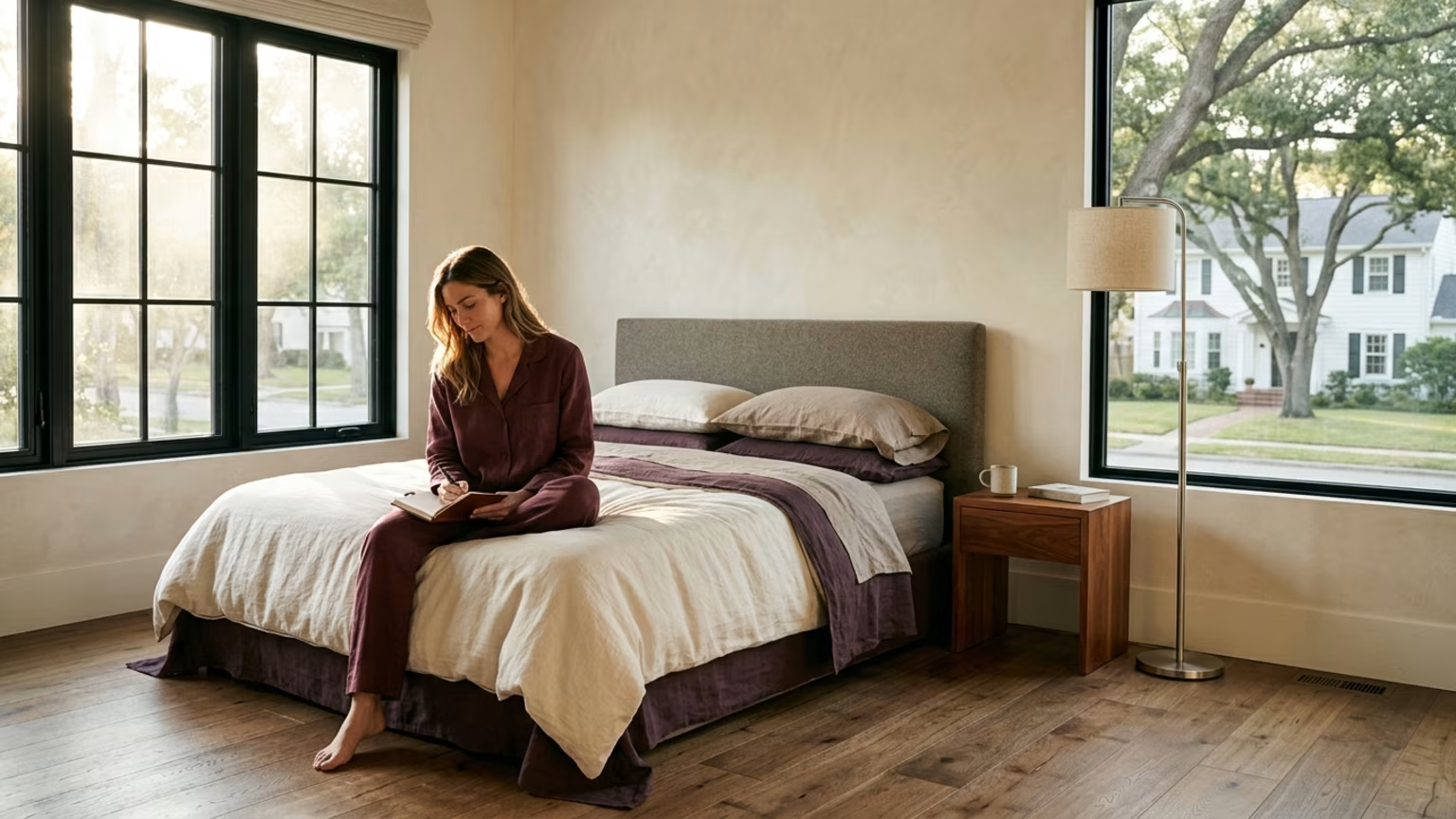

Learn how sleep restriction therapy uses a fixed wake time and clinical sleep tracking to consolidate fragmented rest and improve recovery for active adults.





Sleep restriction therapy is not simply an endurance test for the tired; it is a precise clinical mechanism used to force fragmented rest into a consolidated block of efficient recovery. For years, medical professionals have observed that people instinctively stay in bed longer after a poor night of rest. This natural reaction often backfires by further diluting the sleep drive. When you spend hours tossing and turning, your brain learns to associate the bed with wakefulness and frustration.
This behavioral therapy deliberately curtails your time in bed to match the exact number of hours you are actually sleeping. By concentrating your sleep opportunity into a smaller window, the protocol builds intense sleep pressure. This built-up pressure helps you fall asleep faster and stay asleep longer. Rise Science recently updated a comprehensive guide on September 6, 2026, detailing exactly how this process works.
Co-authored by RISE co-founder Jeff Kahn and reviewed by sleep medicine physician Dr. Chester Wu, the publication clarifies that the goal is not to reduce your biological need for rest. Instead, the intervention recalibrates your internal schedule to maximize sleep efficiency. For adults dealing with chronic insomnia, this structured compression is a powerful tool to rebuild a healthy relationship with rest.
For active adults over 40, efficient sleep is the absolute foundation that sustains physical independence, frequent travel, and demanding outdoor pursuits. As we age, sleep architecture naturally shifts, often resulting in more frequent nighttime awakenings and lighter sleep stages. This fragmentation directly degrades the recovery needed to bounce back from a long mountain hike or a demanding multi-day business trip. Addressing chronic insomnia through structured therapy offers a clear path to restoring that lost resilience.
The American Academy of Sleep Medicine describes cognitive behavioral therapy for insomnia, commonly known as CBT-I, as the first course of treatment for adults with chronic sleep issues. A comprehensive 2020 clinical practice guideline published in the Journal of Clinical Sleep Medicine by Jack Edinger and colleagues supports this clinical standard. Sleep restriction therapy serves as a core component of this broader CBT-I framework. However, accessing this optimal standard of care remains notoriously difficult for many patients.
An American Academy of Sleep Medicine podcast page notes that access to CBT-I is frequently limited by high costs and a shortage of trained professionals. For affluent adults managing packed schedules, finding time for weekly clinic appointments is often completely impractical. This reality makes digital and hybrid delivery models highly attractive. Modern platforms can provide a structured approach to consistent sleep habits without the logistical friction of traditional in-person medical visits.
By utilizing digital tools, driven individuals can systematically target their insomnia and maintain their high-performance lifestyles. Rather than reaching for prescription medications, they can rely on a behavioral protocol that actively rewires their rest patterns. Rise Science notes that they offer access to a sleep psychologist, a digital program, or movement between those options. The cost depends entirely on the individual plan, offering a flexible solution for those with demanding travel schedules.
The most efficient way to apply sleep restriction therapy relies on disciplined tracking rather than adopting extreme wellness routines. The process begins with a simple sleep diary to accurately estimate your average total sleep time over several days. You do not base your schedule on how tired you feel or how many hours you simply wish to sleep. Instead, you establish a fixed wake time that anchors your entire daily schedule.
From that fixed wake time, you count backward using your average sleep duration to determine your new restricted bedtime. According to the published rule highlighted by Rise Science, the absolute minimum sleep window is set at five hours. The original protocol for this therapy did not go below 4.5 hours. The published rule uses this strict minimum to prevent dangerous levels of exhaustion during the early phases of treatment.
Once your designated sleep window is established, your focus shifts entirely to tracking your sleep efficiency. Sleep efficiency is calculated by dividing the time you spend asleep by the total time you spend in bed. When your sleep efficiency reaches 85 percent over a period of approximately five days, the minimal effective dose allows for a careful protocol adjustment. The sleep window is then expanded in careful 15-minute increments.
This slow, methodical expansion ensures that sleep remains heavily consolidated even as you spend slightly more time in bed. Rise Science emphasizes that the decision to widen or narrow the window requires individualized clinical judgment. This hybrid approach ensures the protocol remains a structured medical intervention rather than a casual home experiment. Tracking your physical baseline during these adjustments provides highly valuable feedback on how your body adapts to the new schedule.
A frequent error in addressing insomnia is assuming that spending more time resting will eventually lead to more sleep. People often attempt to compensate for a poor night by going to bed hours early, which only dilutes their sleep drive and worsens overall fragmentation. Conversely, aggressively compressing a sleep schedule without professional oversight is equally problematic and potentially dangerous. Rise Science clearly warns that readers should not independently choose a drastically shortened sleep window.
Rise Science points out that a qualified clinician must establish the initial starting window and carefully review the ongoing sleep diary. The clinician uses this data to determine the exact moment to expand or narrow the resting schedule. Another common mistake is expecting this therapy to massively increase your total hours of rest. A review of standalone sleep restriction evidence, based on four methodologically adequate trials, found moderate to large effects on sleep onset latency and sleep efficiency.
However, the review found only a small effect on total sleep time. The intervention makes sleep significantly denser, but it does not necessarily make it longer. Failing to anticipate short-term fatigue is another significant trap for busy adults. The early phase of sleep restriction can noticeably increase daytime impairment.
Rise Science summarizes a laboratory study involving 16 people with well-defined insomnia who completed four weeks of this specific therapy. In that study, objectively measured total sleep time dropped 91 minutes below baseline on the first night. By the eighth night, it remained 78 minutes below baseline, and it sat 69 minutes below baseline on night 22. During parts of this acute treatment period, the study found increased reaction time lapses, slower reaction times, and higher Epworth Sleepiness Scale scores.
Because sleep loss directly impacts performance, anyone operating machinery or participating in demanding sports must exercise extreme caution. While Rise reports that these impairment measures returned to baseline by three months, the initial adjustment period requires careful management. A later driving simulator study found no significant changes in simulated driving performance or reaction time during the acute phase. Yet, participants in that later simulator study kept their total sleep time roughly steady, and the lack of a control group limits the broader applicability of those findings.
Another clinical mistake is relying solely on basic sleep hygiene while ignoring underlying medical conditions. The American Academy of Sleep Medicine publicly recommends that adults obtain at least seven hours of sleep each night. They suggest maintaining consistent bedtimes, creating a dedicated wind-down routine, and spending 30 to 60 minutes away from screens before bed. While these practices support healthy sleep preparation, they are absolutely not a substitute for formal cognitive behavioral therapy.
Standard sleep restriction protocols may also require modification for individuals with chronic pain, chronic fatigue, or limited mobility. For those whose mobility is limited, Rise Science describes a technique called counter control. This involves remaining in bed while sitting upright and avoiding a sleeping posture when leaving the bed is impractical. Furthermore, untreated sleep apnea can cause a sleep schedule to stall entirely.
A clinician must identify these complicating factors during an initial assessment to ensure the therapy is safe and effective. Rise also cites a randomized trial of 150 postmenopausal women comparing two sessions of sleep restriction against six sessions of full CBT-I. The odds of excessive sleepiness after the restricted sessions were no different from the odds of not becoming sleepy, and they were no worse than after full therapy.
By deliberately compressing the time spent in bed to match actual sleep duration, sleep restriction therapy forces the body to consolidate fragmented rest into a powerful, efficient block of recovery. Instead of viewing the bed as a battleground for wakefulness and frustration, active adults can use structured clinical schedules to rebuild a natural, effortless drive for deep rest.
Stay connected for research and practical guidance on longevity, strength, recovery, energy and active living. New ideas to help you stay capable, curious and ready for more.



Explore practical guidance on strength, recovery, energy, travel and longevity for a life that stays active.
explore the Blog