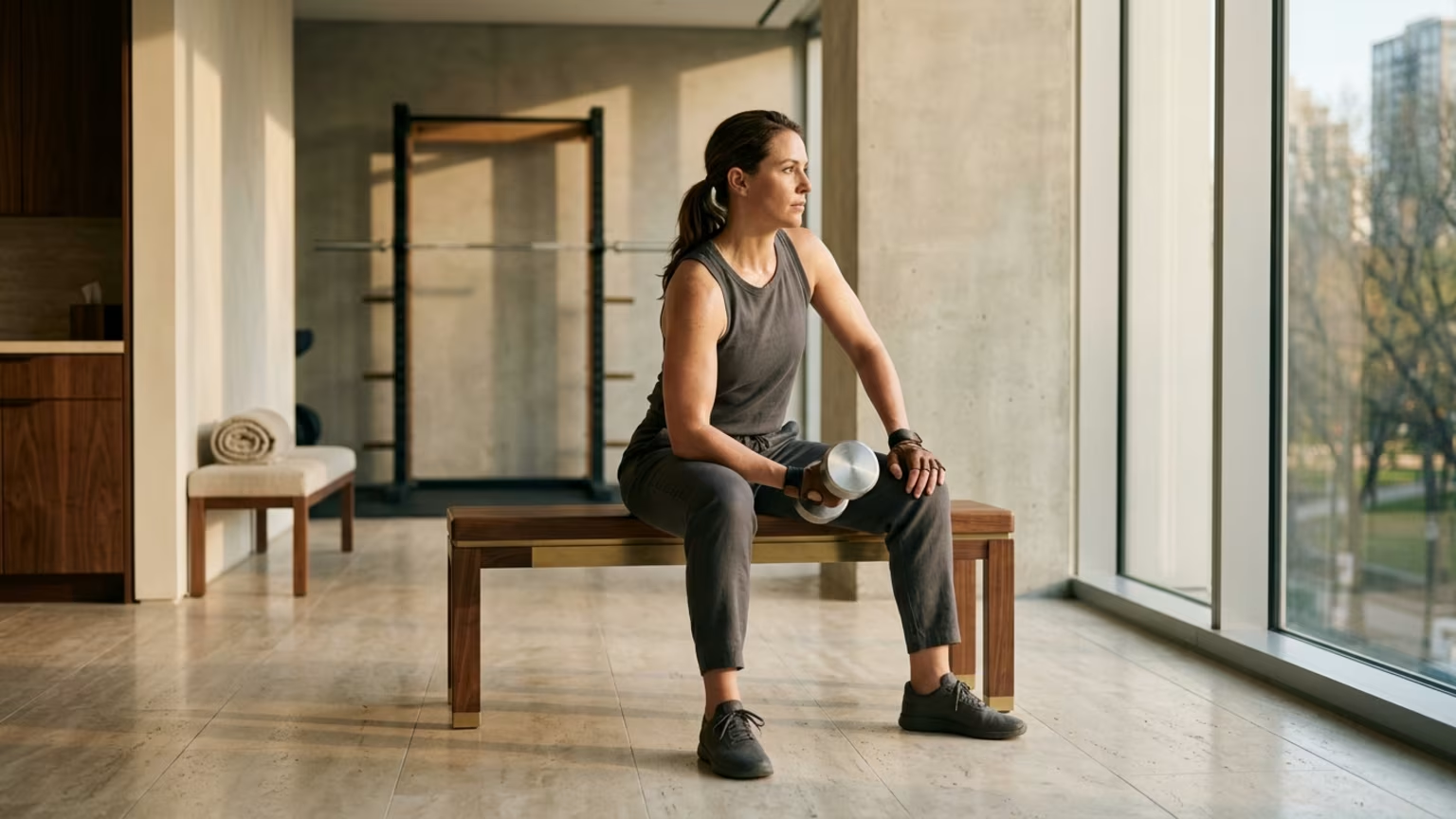
A Phys.org report explains why sleep pressure and circadian timing diverge. Learn why physical exhaustion does not guarantee sleep during demanding travel.





On October 2, 2026, a report in Phys.org highlighted how circadian timing can leave people completely exhausted but biologically unready to sleep. This spaceflight research offers a critical perspective for affluent, active adults who want to preserve their physical independence and capability. When you travel for rigorous outdoor sports or high-stakes commitments, your internal clock often dictates your readiness far more than your sheer physical fatigue. Understanding this biological reality clarifies why a grueling day of travel does not automatically guarantee a restful night. Slower recovery after demanding days is a common frustration for active adults over forty.
The Phys.org report explains a fundamental mismatch between two very powerful influences on human sleep patterns. Sleep pressure builds steadily the longer someone remains continuously awake and active. Concurrently, the circadian clock helps determine the exact periods when the brain actually expects to sleep. That divergence is precisely why someone can feel physically depleted yet struggle to rest if their internal clock is actively signaling daytime.
Spaceflight makes this biological disconnect unusually visible for researchers studying human performance. A spacecraft orbiting Earth roughly every 90 minutes passes through about 16 sunrises and sunsets in a single 24-hour period. This rapid light cycle completely disrupts the regular light and dark cues that people on Earth typically experience. Without those stable environmental anchors, astronauts face significant challenges in aligning their rest with their actual fatigue levels.
Astronauts have traditionally been allowed about eight and a half hours for daily sleep opportunities. Despite this allocation, the report notes that they often obtain only about six to six and a half hours across different types of missions. The article says research aboard the International Space Station linked daily sleep of six hours or less with measurable reductions in vigilant attention. This cognitive decline highlights the real consequences of misaligned rest schedules.
NASA continues to study this phenomenon closely to improve human capability in demanding environments. During the Artemis II lunar flyby mission in April 2026, NASA used wrist-worn movement and sleep monitors. The Artemis Research for Crew Health and Readiness study examined sleep and activity alongside cognition, behavior, and team performance. Observations extended across training, the mission itself, and the subsequent recovery period on Earth.
WealthAtPlay routinely translates this kind of complex longevity and performance research into practical guidance. Active adults who want to stay strong, sharp, mobile, and capable for longer can learn a great deal from these extreme environments. By studying how professionals manage intense physiological demands, you can better prepare your own body for the stresses of global travel. Understanding why tracking personal biometric trends helps active adults manage travel and training loads is part of this broader educational approach.
We provide clear guidance grounded in credible research to help you maintain your everyday wellbeing. The spaceflight data underscores that sleep opportunity is simply not the same as sleep actually obtained. The reported gap between hours allowed and hours achieved is an approximate pattern across different mission types. It is not a claim that every single astronaut experiences the exact same outcome.
For the performance-minded traveler, treating tiredness and sleep readiness as related but distinct concepts changes how you approach post-travel recovery. After a long international flight or a demanding day of altitude adjustment, feeling exhausted does not mean your body is biologically aligned with your destination. You must actively manage your surrounding environment rather than simply waiting for sleep to arrive. The Phys.org article notes that coordinating exercise, meals, tailored lighting, and work schedules can help offset some negative effects of sleep loss and circadian disruption.
Managing these cues carefully helps you maintain sustained energy during sports like skiing or hiking in new time zones. These adjustments serve as vital management strategies rather than absolute guarantees of adequate sleep. As you prepare for demanding physical days, it is critical to prioritize restorative habits. Maintaining a consistent sleep schedule matters for healthy aging when your normal routines are heavily disrupted by travel.
Active adults who value travel, sport, and adventure often face slower recovery times after particularly demanding days. The spaceflight research reminds us that this slower recovery is a complex biological process involving your internal timing. WealthAtPlay focuses on capability and performance rather than just extending lifespan, which means prioritizing high-quality rest that actually restores your strength. When you cross time zones, managing your schedule is just as crucial as managing your muscular fatigue.
The research also highlights that popular recovery interventions require careful scrutiny before you rely on them. Phys.org reports that NASA was testing pink noise delivered through a headband during a four-hour daytime sleep opportunity. In a preliminary study of 14 healthy adults, researchers found no difference from the control condition in sleep inertia or vigilant attention during the first 40 minutes after waking. This null result illustrates why proposed sleep countermeasures need rigorous testing rather than being assumed effective.
Environmental adjustments also come with distinct trade-offs that active adults should carefully weigh. The report describes blue-enriched white light as a way to support alertness and circadian synchronization during scheduled waking hours. Conversely, NASA-supported presleep lighting testing found greater melatonin production but impaired color discrimination. This suggests that altering your environment to support sleep as the ultimate recovery tool for amateur endurance athletes might have unintended effects on specific visual tasks.
Understanding which longevity technologies and strategies are actually worth attention remains a core challenge for many informed adults. The pink noise and specialized lighting studies demonstrate that many heavily marketed interventions offer nuanced, highly context-dependent results. WealthAtPlay connects health and performance science directly to everyday wellbeing, sport, and travel. We prefer realistic steps grounded in credible research over simplistic claims of instant recovery.
Travelers must also prepare for the persistent physiological challenge of shifting daily schedules. A four-person crew in NASA’s yearlong CHAPEA Mars simulation was scheduled in late September 2026 to transition to a new routine. They were planned to move from a standard 24-hour Earth schedule to a Martian sol of about 24 hours and 40 minutes. Repeated adjustment of sleep and wake timing remains a persistent scheduling challenge that mirrors the realities of international travel.
When sleep is compromised, many active adults turn to chemical stimulants to sustain their physical performance. The Phys.org report says caffeine can protect some aspects of performance when sleep-deprived astronauts need to stay alert. However, it can also actively interfere with the sleep needed for performance the following day. This creates a difficult balancing act when managing your long-haul travel recovery during important athletic trips.
Instead of converting astronaut sleep figures into a rigid personal target, use this spaceflight research as a flexible planning lens. The reported mission averages describe highly trained individuals in very specific spaceflight settings. They do not establish an appropriate sleep duration or a validated performance threshold for an individual civilian traveler. Focus on managing your personal exposure to light, timing your meals appropriately, and scheduling your activity to match your unique recovery needs.
We believe in practical application over extreme optimization or rigid tracking protocols. Focusing on one practical action at a time is often the best way to improve your recovery habits. Rather than attempting a complete lifestyle overhaul before a major international trip, you should gradually adjust your meal timing and light exposure. This pragmatic approach fits far more naturally into a demanding schedule than highly restrictive clinical protocols.
Active adults crossing time zones should coordinate their meals, exercise, and light exposure to intentionally manage their internal clocks rather than relying on physical exhaustion alone to secure restorative sleep.
Stay connected for research and practical guidance on longevity, strength, recovery, energy and active living. New ideas to help you stay capable, curious and ready for more.




Explore practical guidance on strength, recovery, energy, travel and longevity for a life that stays active.
explore the Blog