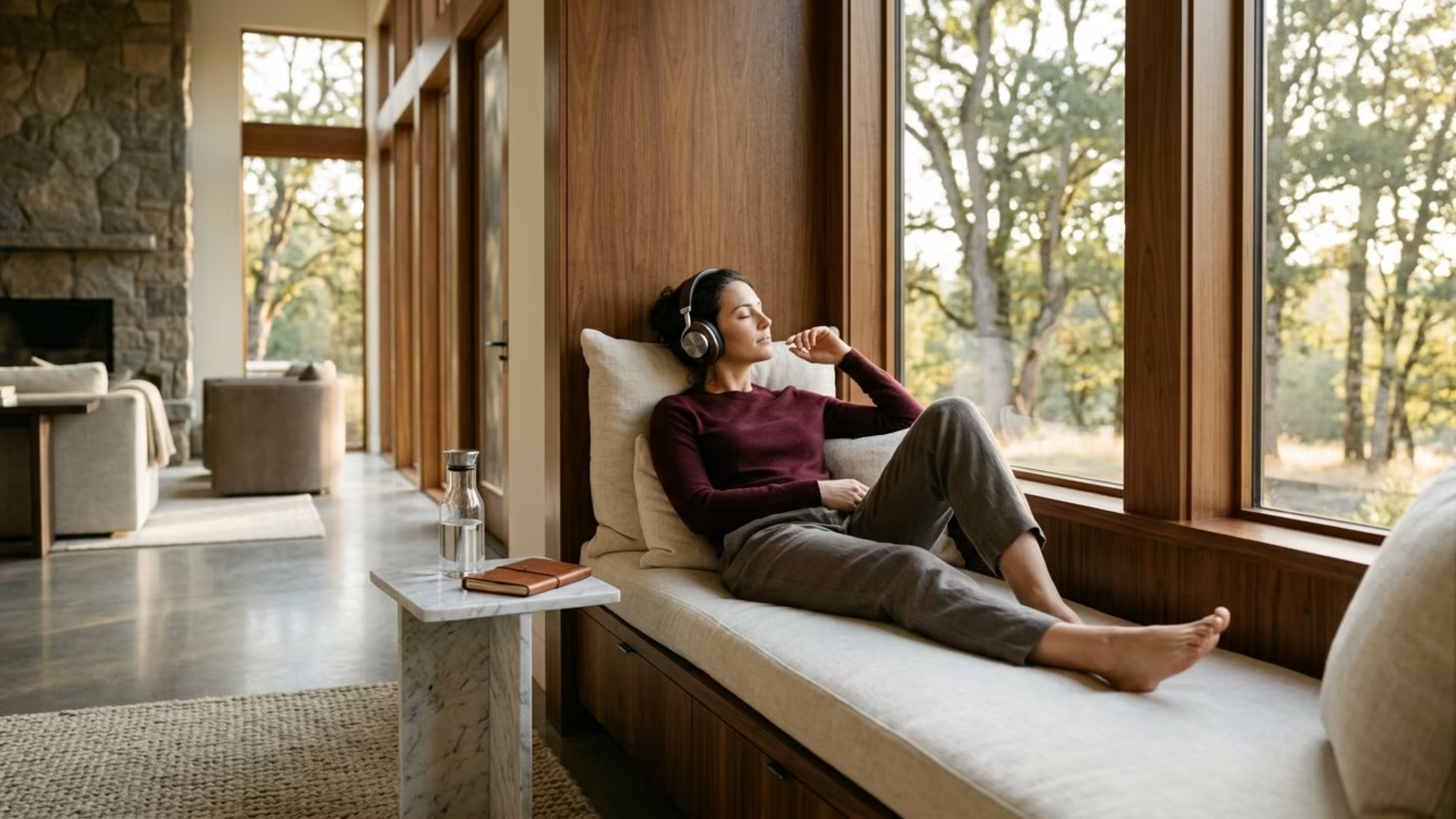

A 2026 Northwestern Medicine study shows how 20-minute restorative music sessions can rapidly restore energy and reduce tension after demanding physical days.





On September 20, 2026, new research in Frontiers in Psychology revealed how structured auditory environments might rapidly restore depleted mental reserves. A Northwestern Medicine study evaluated a wellness initiative that used 20-minute restorative music sessions to help 724 healthcare workers recharge. Active adults who balance demanding work schedules with international travel and rigorous sports need efficient ways to recover. Maintaining peak physical capability requires strategies that fit into narrow time windows between demanding events.
This preliminary research suggests that a highly specific, low-stimulation audio break could serve as a practical tool for regaining focus. We rely on science to optimize our routines for lasting independence and vitality. Finding a fast, non-pharmacological recovery method offers a significant advantage for those navigating high-stress days. High-performance travel and consecutive days of athletic exertion take a toll on the nervous system.
Whether you are navigating multiple time zones or tackling a multi-day hiking route, your cognitive and physical energy reserves deplete rapidly. The search for effective, time-efficient recovery methods often leads to complex protocols or unnecessary supplements. Translating this scientific data into straightforward actions is essential for active adults. By manipulating your acoustic environment for a short duration, you may be able to significantly shift your subjective energy levels.
The Northwestern Medicine wellness initiative tested a highly controlled auditory intervention. Researchers evaluated 724 healthcare workers, a group that included 493 Northwestern Medicine providers. The participant pool featured 60 neurology-department faculty members alongside residents and students. It also included 171 psychiatric social workers.
These individuals took part in approximately 20 minutes of restorative music within a quiet, dimly lit setting. Physicians and neurology participants utilized prerecorded material for their sessions. Meanwhile, psychiatric social workers attended separate live viola sessions supplemented by prerecorded music. The musical selection was highly intentional and focused on Clinically Designed Improvisatory Music combined with Slow Irish Airs.
The compositions emphasized slow tempos of approximately 50 to 70 beats per minute. They featured simple rhythms and tonal stability. The compositions also included meandering melodies, gradual pitch transitions, and periods of silence. The primary goal was to create a predictable, low-arousal auditory environment for the listener.
Only 51 of the 724 participants completed the voluntary post-session surveys. This represents a 7.0 percent response rate, meaning the results are preliminary and subjective. However, among those survey respondents, average self-reported energy increased from 56 percent before the session to 83 percent afterward. This constitutes a 27-percentage-point increase in perceived energy levels.
Survey respondents also reported positive emotional effects at a rate of 84 percent. Furthermore, decreased tension was noted by 86 percent of those surveyed. Improved pleasure or contentment reached 84 percent, while improved overall energy hit 86 percent. The statistical analysis of the paired energy responses produced a highly significant result.
Researchers noted a Wilcoxon signed-rank result of W = 13.5, p < 0.0001, and r = 0.85. The likelihood of recommending the restorative-music intervention was notably high at 95 percent. Similarly, the likelihood of recommending the recuperation room itself stood at 97 percent. These figures suggest a strong acceptance of the protocol among those who chose to report their experiences.
A separate 2026 study reported by Medical Xpress provides additional physiological context for this concept. That research examined 120 healthy volunteers exposed to a time-pressured arithmetic stress task. The scientists compared the effects of relaxing music against soothing water sounds during the recovery phase. The music group reportedly showed faster reductions in heart rate and sweating.
They also demonstrated a greater improvement in positive mood and lower cortisol levels than the water-sound group. This separate stress-recovery study found unique benefits when music was played after the stressful task rather than before it. This specific acoustic structure helps minimize cognitive processing demands. Applying the right intervention at the right time is crucial.
The Northwestern Medicine research team emphasized the minimal effort required by their intervention. Corresponding author Dr. Borna Bonakdarpour noted that the session was deliberately passive rather than instructional. "They just lay down and listen," he stated. Bonakdarpour described the approach as fundamentally different from guided meditation.
It does not require participants to follow strict instructions or actively regulate their attention. This passive nature is crucial for individuals who are already experiencing high cognitive loads. First author Pariya Salehi echoed this sentiment regarding the method's simplicity. She suggested the intervention's appeal may lie in its slowness and in allowing people to simply sit and listen.
This contrasts sharply with the active mental work required by many common mindfulness techniques. When you are mentally fatigued, engaging in an active psychological exercise can sometimes feel like another demanding task. Northwestern Medicine's Clara Takarabe observed that healthcare workers face ongoing stress, grief, and trauma. She argued that recovery approaches requiring little additional workload could be highly valuable for demanding professions.
Dr. Ryan Donaghy, a neurologist who participated while he was a medical resident, offered his own perspective. He said the music helped listeners focus on subtle changes in the sound and become immersed in the experience.
Understanding how to implement this research is essential for active adults who travel frequently. Managing travel fatigue requires reliable strategies to optimise rest and recovery for mental performance. The protocol observed in these studies translates easily to the demands of international flights and rigorous sports. You can schedule a protected 20-minute listening interval after a demanding travel day, a long hike, or a major competition.
You only need noise-isolating headphones and a quiet, dim room to replicate the core environment. Selection of the right audio is critical for achieving the desired low-arousal state. You should choose slow, non-urgent melodies with tempos around 50 to 70 beats per minute. A favorite upbeat playlist will likely fail to produce the necessary calming effect.
The goal is to find predictable, meandering music that features gradual transitions and periods of silence. Proper execution of this rest period directly supports fitness foundations for lasting energy. Timing your listening sessions correctly can significantly impact your recovery from acute stressors. The Medical Xpress research suggests that listening during recovery after a stressful event is highly effective.
Instead of trying to pre-emptively calm down before a difficult physical task, employ this protocol afterward. If you finish a demanding morning of alpine skiing, use this 20-minute strategy before your next activity. Adjusting to higher altitudes during ski trips or mountain treks places unique stress on the body. Your heart rate naturally increases as it works to deliver oxygen in thinner air, leading to faster physical fatigue.
Engaging in a 20-minute restorative music session can help manage this physiological stress response. The calming auditory environment encourages a slower resting heart rate, assisting your system as it acclimatizes. This targeted relaxation can be far more effective than simply sitting in a noisy, distracting lodge. Maintaining stamina during endurance sports requires efficient recovery and dedicated focus on energy and mental performance during your downtime.
When you take a break during a long hike, your nervous system often remains in a heightened state of alert. Utilizing noise-isolating headphones to listen to slow, simple rhythms helps shift your body out of that sympathetic nervous state. This allows your energy reserves to replenish more effectively for the next physical push. Managing these transitions well is key to maintaining your stamina throughout a full day of activity.
Frequent travelers adjusting to new time zones frequently battle sensory overload. Navigating busy airports and managing complex itineraries depletes your cognitive reserves rapidly. A quiet 20-minute session immediately upon arrival provides a targeted break from a highly demanding schedule. It acts as a controlled micro-break to help regulate your nervous system.
By prioritizing this brief recovery window, you can support your body's transition into a new environment. It is vital to treat restorative music as a short recovery experiment rather than a clinical cure. The temporary increase in perceived energy will not replace the need for quality sleep. It does not replace proper recovery days or medical care for clinically significant fatigue.
The Northwestern study's researchers themselves called for larger controlled studies using validated wellbeing and burnout measures. The small 7.0 percent response rate means these findings should be viewed cautiously. However, as a low-burden tool, this 20-minute protocol offers immense practical value. Active adults need reliable, non-pharmacological methods to reset their focus and physical readiness.
Incorporating a short, targeted period of calming music helps bridge the gap between demanding activities. It provides a structured moment of pause that supports long-term physical capability. Finding efficient ways to recharge ensures you can maintain an adventurous and independent lifestyle.
Schedule a 20-minute session of slow, calming music in a dim room immediately after your most demanding physical or travel challenges to accelerate your subjective energy recovery.
Stay connected for research and practical guidance on longevity, strength, recovery, energy and active living. New ideas to help you stay capable, curious and ready for more.




Explore practical guidance on strength, recovery, energy, travel and longevity for a life that stays active.
explore the Blog