
New sleep advice favors dimmer evenings and consistent routines, with practical implications for travel and sport and clear limits to the evidence.





On October 31, 2026, Men’s Fitness published Shawn Stevenson’s practical advice on evening light and consistent sleep. For active adults who value the freedom to travel and stay physically capable, the message is about priorities: protect the conditions for sleep before assuming another workout is the answer. The article presents practitioner advice rather than a newly announced clinical trial.
Stevenson argues that a strong training plan can deliver disappointing results when sleep is regularly curtailed. His recommendations center on natural daylight early in the day, dimmer evening lighting, consistent sleep and wake times, and sufficient time in bed. The most useful starting point is also the simplest: reconsider the lighting during the final part of your evening.
Men’s Fitness describes a controlled laboratory experiment involving eight healthy participants. Researchers exposed them to different intensities of narrowband blue LED light late at night and found dose-dependent melatonin suppression. In plain language, the strength of the light exposure affected the size of the biological response.
That finding gives Stevenson’s advice a scientific rationale without turning it into a rigid rule. The relevant issue is not merely whether a screen was present. The experiment concerned a particular kind of light at different intensities during a particular part of the night.
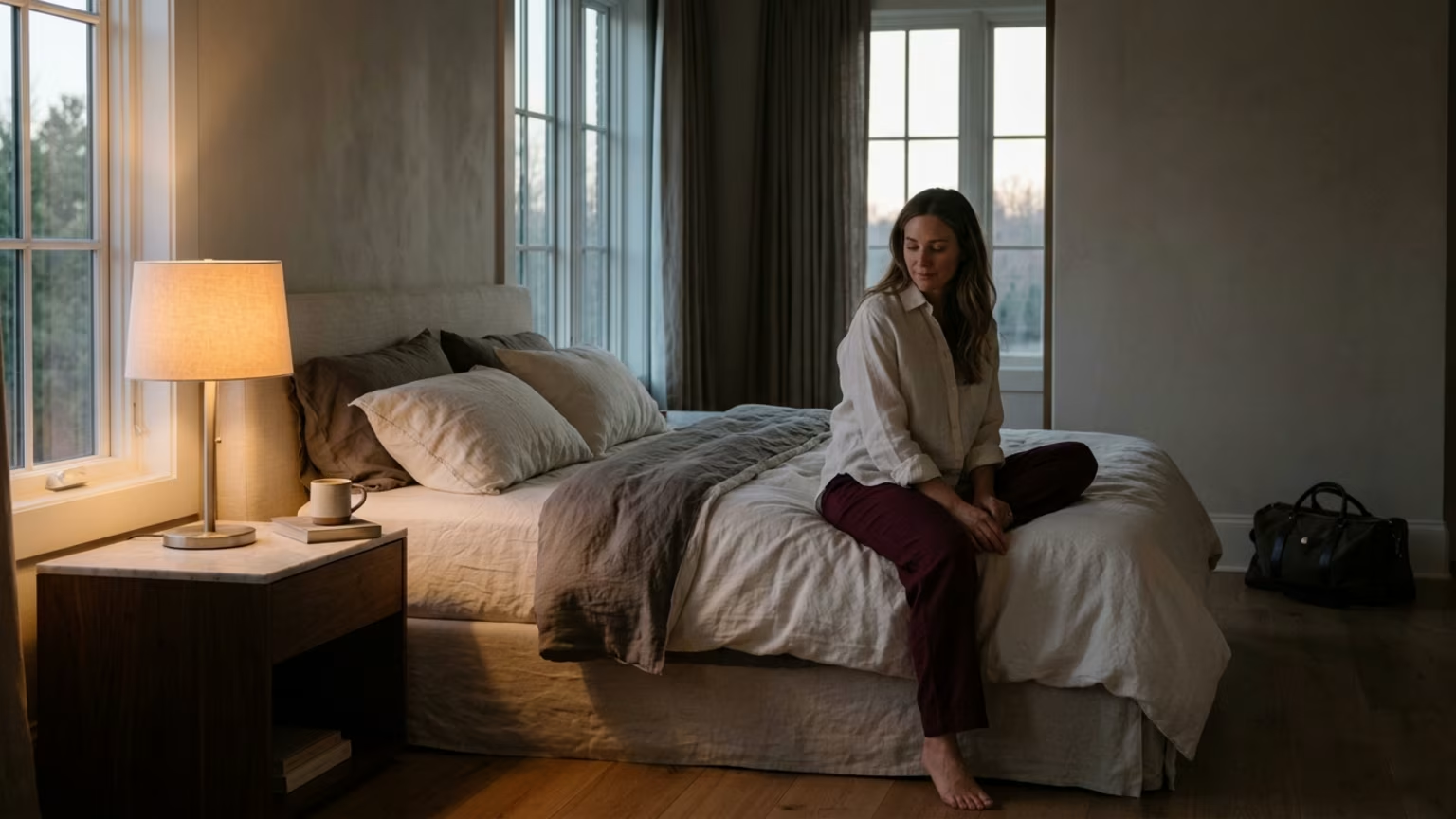
Stevenson translates that concern into a suggested 30-to-60-minute artificial-light curfew before bed. As reported by Men’s Fitness, this means turning screens off or stepping away from them while dimming bright overhead lighting. It is an evening habit rather than a new piece of recovery equipment.
The coverage does not identify the light study’s authors or publication and does not provide its full methods, exposure levels, or duration. It also reports no direct trial showing that Stevenson’s specific curfew improves sleep or training recovery. The proposed window is therefore a practical recommendation rather than a proven universal threshold.
The article explicitly cautions that the small laboratory experiment does not establish that every brief phone glance will disrupt sleep. Those distinctions belong together: the biological finding supports taking late-night lighting seriously without making occasional screen use a cause for alarm. A measured response is more useful than treating the evening as a test you can fail.
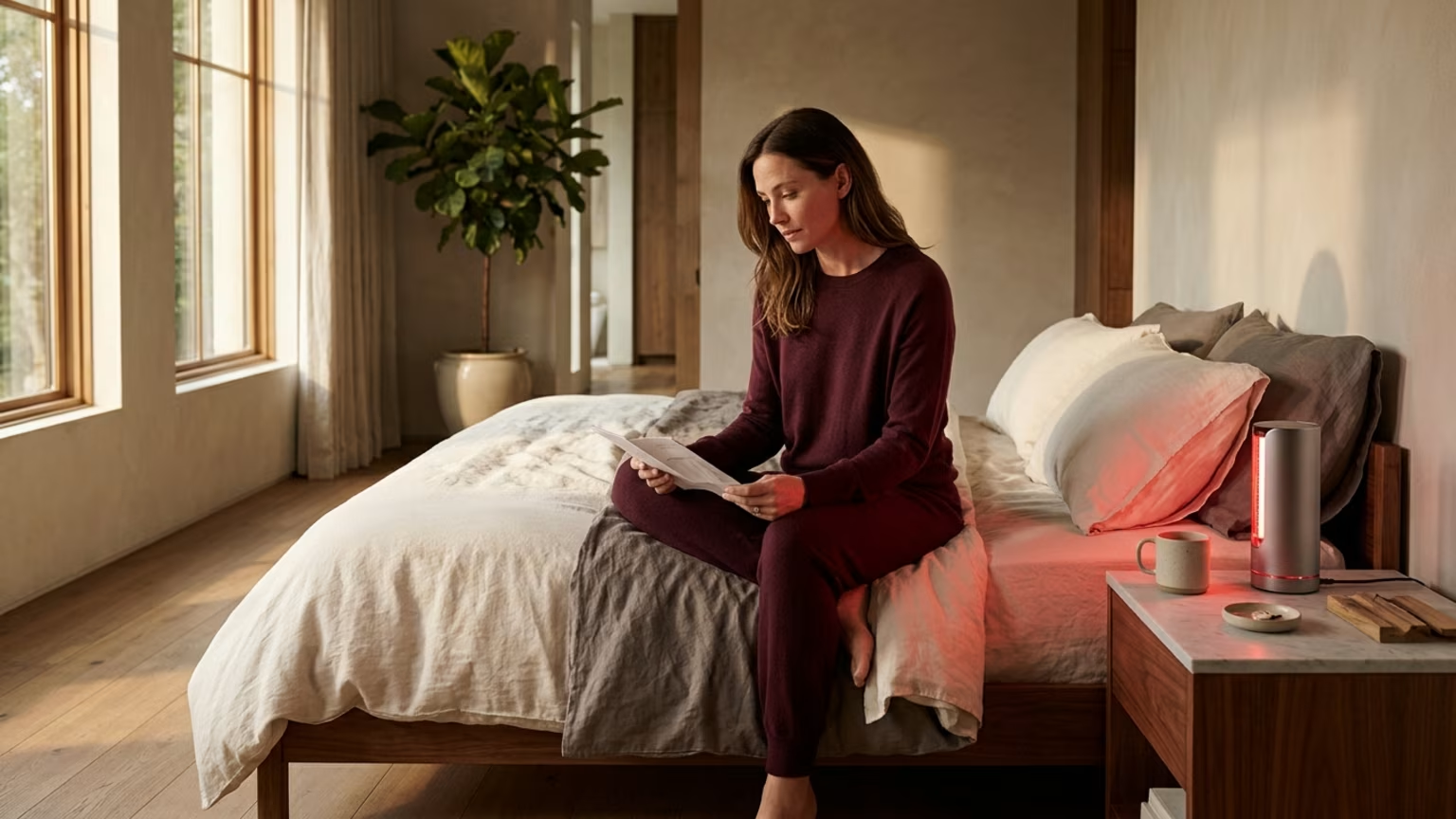
The recommendation is broader than putting down a phone. Stevenson also advises dimming bright overhead lighting, which makes the room itself part of the wind-down routine. Focusing only on the screen would leave out part of his advice.
For an active adult with a full calendar, that offers a manageable place to begin. Rather than redesigning the entire day, give the final stretch of the evening a different setting. The action remains the same whether the evening follows a training session or a quiet dinner: lower the lighting and set screens aside.
The suggested window can provide a place in the schedule for that change. It does not need to become another performance score or a reason to monitor every minute. The useful question is whether the evening has room for a repeatable transition toward bed.
This also keeps the recommendation in proportion. A dimmer room is one element of Stevenson’s advice, not a replacement for sufficient time in bed. Following a light curfew while repeatedly cutting the night short would miss the larger point of the article.
Stevenson places the light curfew alongside regular sleep and wake times. That matters editorially because a memorable headline can make one small habit appear to be the whole story. His broader recommendation is about a repeatable pattern rather than a single nightly maneuver.
Morning daylight belongs to that same pattern in his advice. The practical emphasis is on daylight earlier and dimmer lighting later, with adequate time reserved for bed. There is no need to add a more elaborate routine to communicate those priorities.
For readers balancing work and sport, the question is where sleep sits in the calendar. Is it given a place of its own, or is it whatever remains after everything else? That is the planning tension behind making sleep regularity fit an active life.
The evening-light habit is a useful entry point because it is specific. Keep the attention there first rather than turning the advice into a complete lifestyle overhaul. The surrounding schedule should support that habit rather than become another complicated project.
For travel, Stevenson’s advice shifts attention toward what happens around the itinerary rather than adding another recovery task. The research summary’s practical implication is to protect enough time in bed and return to a consistent schedule where feasible. Extra training is not presented as compensation for sleep that has been cut short.
That is relevant when a trip includes late events or demanding departure times. The planning question is straightforward: where does the evening wind-down fit? Giving it a place in the itinerary makes the sleep recommendation concrete without requiring a special travel protocol.
The same light-reduction habit can be considered away from home. Its purpose remains simple: step away from screens and dim bright lighting during the proposed pre-bed period. There is no need to make the travel version more elaborate than the version used at home.
Trips across time zones also involve a separate planning question. Keep time-zone scheduling and travel preparation distinct from this advice about evening habits. That separation helps preserve a clear role for each decision instead of asking one light-curfew recommendation to organize the entire journey.
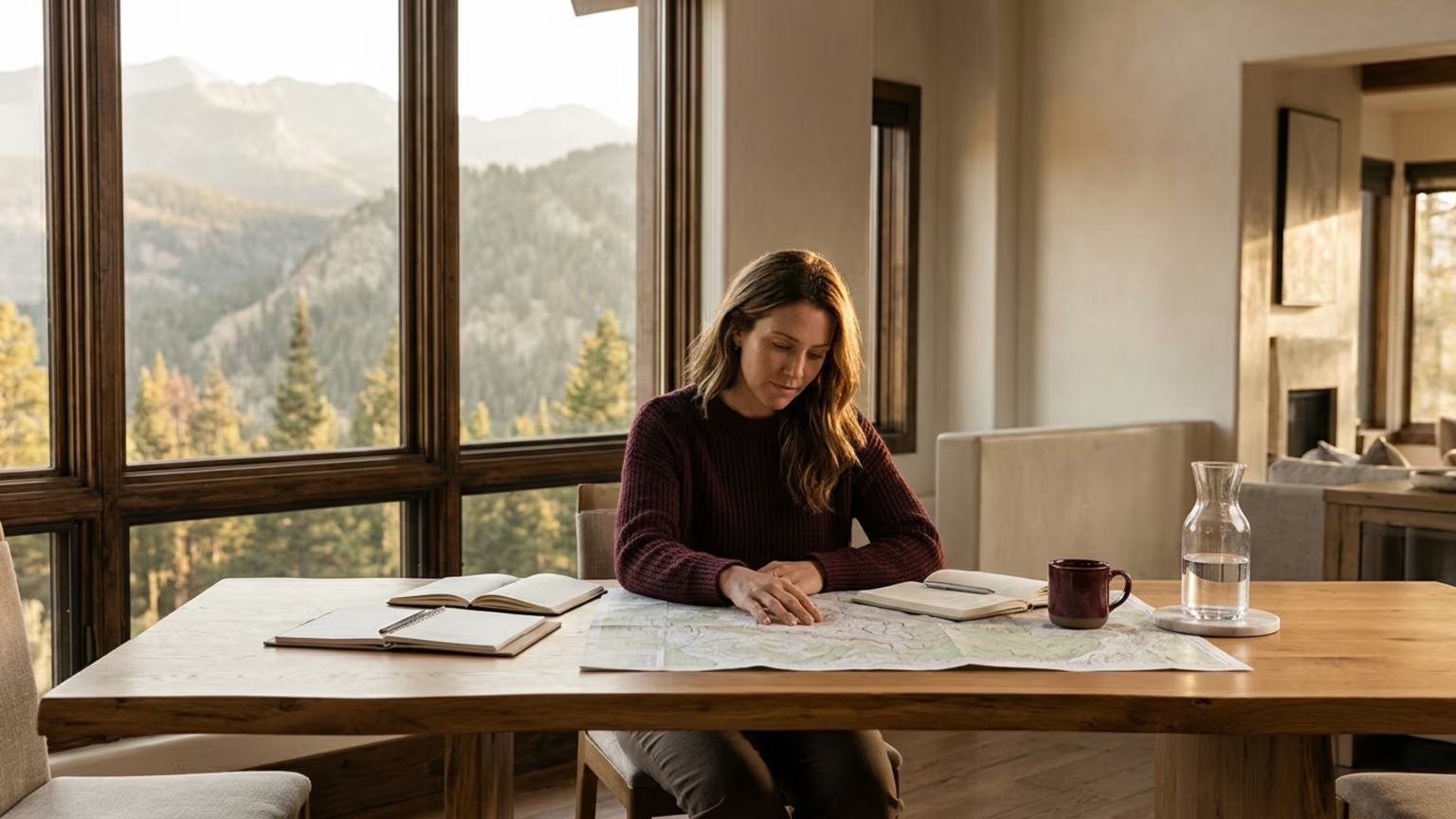
For a holiday built around walking or outdoor activity, the useful adjustment is to include the evening in the plan. Booking the activity is only one decision. Reserving time for bed is another, and Stevenson’s advice asks that it not become an afterthought.
For a skiing or hiking trip, the practical implication is a change in priorities rather than a promise of extra endurance. Stevenson’s argument asks readers to consider sleep before adding more work to an already demanding schedule. The focus is preparation for repeated active days rather than simply fitting in another session.
That distinction is especially useful when training competes directly with time in bed. If adding a workout repeatedly pushes bedtime later, the trade-off deserves attention. In Stevenson’s framing, a strong plan on paper does not make curtailed sleep irrelevant.
This is not an argument against ambition. It is an argument for including recovery in the definition of a well-planned active life. The broader question of balancing recovery with the next workout belongs alongside decisions about what to train and when.
The evening-light recommendation offers one concrete place to act on that principle. Keep the change modest and repeatable: a dimmer setting with screens set aside before bed. That is closer to the advice reported in Men’s Fitness than adding another demanding routine in pursuit of recovery.
For an active life built around travel and sport, the sensible adjustment is to make dimmer evenings part of a consistent sleep routine before assuming that more training will solve a recovery problem.
Stay connected for research and practical guidance on longevity, strength, recovery, energy and active living. New ideas to help you stay capable, curious and ready for more.



Explore practical guidance on strength, recovery, energy, travel and longevity for a life that stays active.
explore the Blog