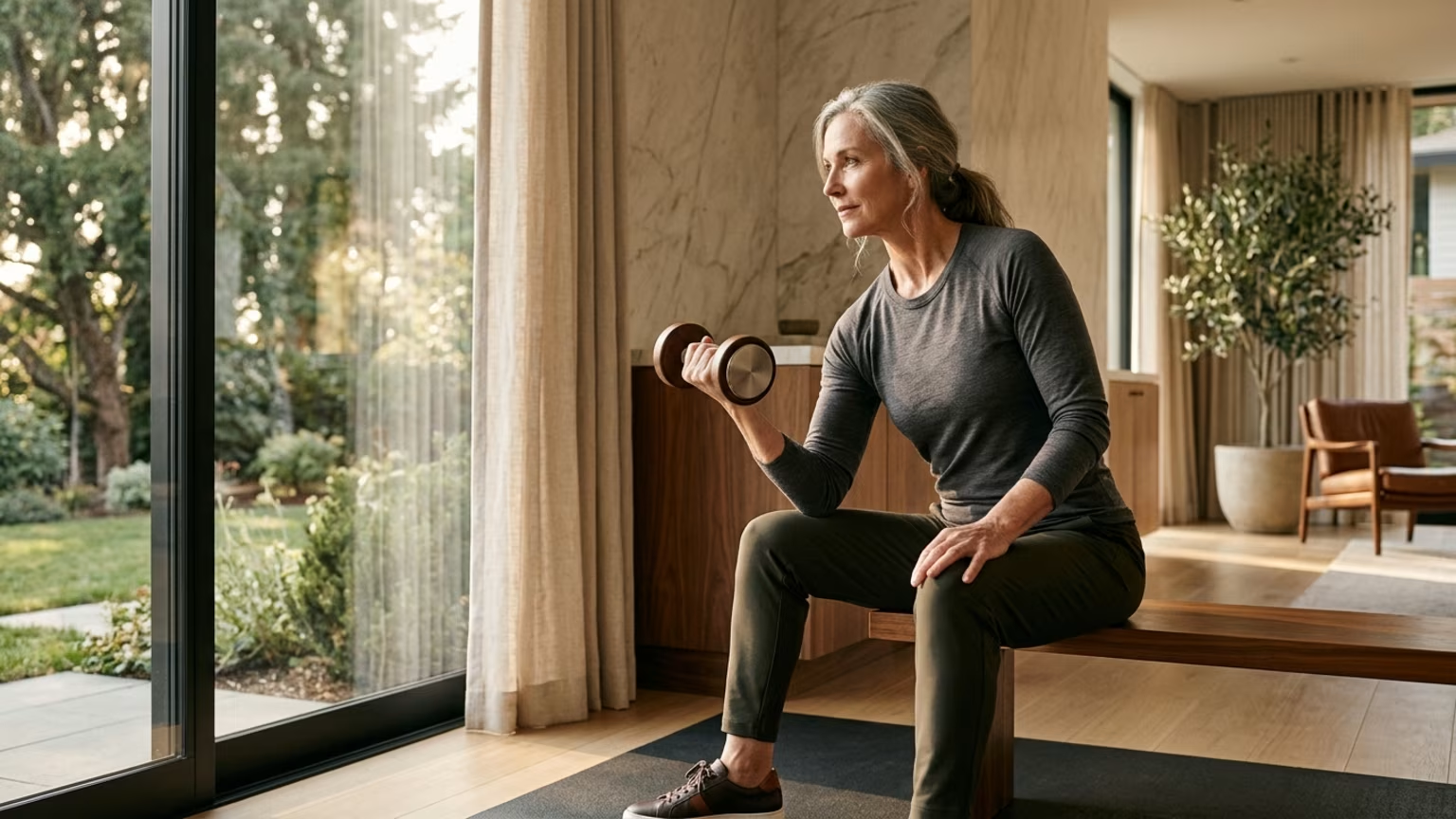

A newly announced NIH-funded clinical trial explores how older adults can preserve skeletal muscle mass and physical independence during weight management.





On September 11, 2026, the University of Alabama at Birmingham announced a new clinical trial supported by a five-year, $3.7 million National Institutes of Health grant. The planned study will target adults ages 50 to 75 who face both obesity and elevated risks of sarcopenia. This age related decline in muscle mass and quality represents a significant threat to your physical independence and travel ambitions. For active adults, finding the right way to manage weight without sacrificing vital strength remains a central challenge of healthy aging.
The University of Alabama at Birmingham uses a Sequential Multiple Assignment Randomized Trial design to investigate muscle preservation. This structure allows researchers to adjust treatments according to a participant’s individual response over time. The study will initially randomize participants to one of two distinct calorie restricted diets. Participants will follow either a high protein diet or a standard protein diet during the first phase of the program.
All enrolled participants will receive intensive behavioral obesity treatment based on the State of Slim weight management program. This structured framework was originally developed by clinical experts Holly Wyatt and James Hill. The behavioral component consists of weekly group sessions designed to run for 16 weeks. Following this intensive period, participants will attend monthly maintenance sessions for nine months to support their long term habits.
After eight weeks, researchers will adaptively assign participants who are not responding optimally to new interventions. These individuals will receive either protein supplementation or supervised resistance training exercise. The trial seeks to determine which specific combination and sequence of interventions can maximize weight loss. Crucially, the researchers want to limit the excessive loss of lean tissue that often accompanies reduced calorie intake.
The demographic need for this personalized approach to obesity care is substantial and growing rapidly. The university says that nearly 39 percent of Alabama adults currently have obesity. The prevalence is even higher among adults ages 45 to 64, reaching 43.6 percent in that specific group. Furthermore, more than one-third of the Alabama population is currently between the ages of 50 and 75.
The comprehensive trial will be conducted at the university's Wellness, Health And Research Facility. This location receives dedicated support from the Center for Engagement in Disability Health and Rehabilitation Sciences. The Metabolism Core and the Nutrition Obesity Research Center also provide specialized resources for the study. Additional critical support comes directly from the Behavioral and Clinical Interventions Core.
The broader study team includes recognized experts like Tapan Mehta and Adele Fowler. Katie Ellison and James Friedman also serve as key members of the research group. Together, this team aims to answer questions that directly impact how we age. Their ongoing work could soon inform how active adults structure their own longevity programs.
When older adults reduce their calories or take weight loss medication, they often lose crucial lean mass alongside fat. A 2026 expert consensus report states that roughly 25 to 45 percent of lost weight may come from lean mass. This exact proportion naturally varies by the specific intervention, the studied population, and the measurement method utilized. Losing a quarter of your weight loss as lean tissue directly impacts your physical capabilities.
It is important to recognize that this announcement describes a planned study rather than a completed clinical trial. No findings are yet available to prove that the proposed high protein diet preserves muscle better than standard treatments. The university announcement does not provide the trial’s sample size, recruitment status, or exact eligibility criteria. It also omits the specific demographic requirements and the projected enrollment timeline.
Furthermore, preserving lean mass does not necessarily mean preventing every single reduction in fat-free mass. Body composition measurements can include water, glycogen, connective tissue, and other non-muscle components. Therefore, readers should distinguish skeletal muscle outcomes from broader lean mass outcomes when evaluating weight loss research. The current trial lists both skeletal muscle and lean tissue as outcomes, but it does not yet describe the specific measurement methods.
The new trial is led by Drew Sayer, an assistant professor in the university’s Department of Family and Community Medicine. Sayer described the preservation of lean mass as a major issue in current obesity research. He pointed out that this challenge is becoming more visible as more people begin using modern obesity medications. He emphasized that the issue is particularly important for older adults who already have reduced muscle mass and strength.
Sayer warned that excessive reductions in muscle and strength could severely impair functional capacity. This loss of physical ability could ultimately offset some of the practical benefits of losing weight and improving cardiometabolic health. According to Sayer, higher protein diets and resistance exercise may influence skeletal muscle protein synthesis and breakdown through complementary mechanisms. The planned trial is uniquely designed to test whether those strategies work better in particular sequences.
Maintaining skeletal muscle is the foundation of your ability to enjoy demanding travel and recreational sports. The trial specifically intends to assess strength, physical function, and independence in addition to weight and lean tissue. For active adults, your body weight is only one narrow measure of treatment success. True health is measured by your ability to carry heavy luggage, hike steep trails, and recover from strenuous physical activity.
After a grueling thirty hour transit to Tokyo, I realized my old strategy of just powering through was no longer working. I felt foggy for three days. I started digging into circadian biology and realized that timing my light exposure and fasting during the flight could completely shift my recovery.
Now, I never board a long haul flight without a precise schedule for when to eat and when to put on an eye mask. It is the difference between losing a week of your trip and hitting the ground running. Similarly, properly managing your lean mass preserves the physical stamina required for extended travel and activity. When you travel to high altitudes, your skeletal muscle serves as your primary metabolic engine.
Without adequate strength, even minor adjustments to new climates and time zones become significantly more difficult. Higher protein intake is not automatically appropriate for every person undertaking a new nutrition program. Adults with kidney disease, complex medical conditions, or medication related dietary restrictions require specialized clinical guidance. You should discuss specific protein targets and resistance training with a qualified clinician before making substantial lifestyle changes.
While the University of Alabama at Birmingham program has not yet published results, current literature offers clear baseline guidance. The 2026 expert consensus report confirms that adequate high quality protein combined with individualized resistance exercise can help maintain muscle mass. A recent review recommends approximately 1.2 to 1.6 grams of protein per kilogram of body weight per day for muscle maintenance. It is highly recommended to distribute this high quality protein thoughtfully across your daily meals.
These protein targets help form the longevity plate required for a capable and independent lifestyle. Resistance training is also widely identified as a cornerstone of muscle preservation during intentional fat loss. Utilizing an evidence-based strength program can help you maintain crucial lower body power for hiking and skiing. You should prioritize these functional outcomes over simple changes on the bathroom scale.
Focusing on function is the most practical test for any active adult attempting to manage their weight. The real measure of success is whether a program helps maintain the strength needed to walk through airports and climb steps. If you are preparing for a ski season or a demanding cycling trip, maintaining your physical stamina is essential. Evaluating your health through this functional lens ensures that your daily routines directly support your larger life goals.
Adults using weight loss medication should actively ask their clinicians how muscle mass and strength will be monitored. You must track your dietary intake and physical function to ensure you are not compromising your mobility. Furthermore, resistance training always requires careful individualization to match your specific medical needs. Adults with joint pain, cardiovascular disease, or balance limitations may need medical clearance and professional supervision.
To safeguard your physical capability and independence, you should treat muscle preservation and function as primary goals alongside any targeted weight management protocol.
Stay connected for research and practical guidance on longevity, strength, recovery, energy and active living. New ideas to help you stay capable, curious and ready for more.



Explore practical guidance on strength, recovery, energy, travel and longevity for a life that stays active.
explore the Blog