New sports-medicine guidance reveals how active adults can prevent transition injuries during winter sports through targeted strength work and acclimatization.





On September 24, 2026, The Gazette published new sports-medicine guidance outlining how active adults should prepare for fall and winter activities. The report addresses the physical shock that happens when we move directly from summer routines into demanding winter sports. Dr. Michael Holmboe, an orthopedic surgeon at CommonSpirit Health, explains that this sudden shift frequently exposes the lower back, knees and ankles to unexpected stresses. For independent adults planning mountain trips, this new framework shifts the focus away from general fitness toward specific lower-body control.
The primary challenge of winter sports preparation is that cardiovascular endurance alone cannot protect the joints on unpredictable terrain. Uphill walking builds stamina, but it neglects the muscular firing patterns required for sudden directional changes. The Gazette article emphasizes that balance, core stability, leg power and lateral movement control are critical for skiers and snowboarders. When we lack this specific physical conditioning, our joints absorb the heavy forces that our muscular system should be managing.
To address this specific gap, practitioners recommend targeting single-leg stability and controlled deceleration during the fall. The medical guidance suggests prioritizing controlled downhill walking over strictly uphill hikes for trail preparation. Additionally, lunges, step-downs, lateral movements and single-leg squats help condition the body for complex mountain environments. These focused exercises specifically develop the balance and directional control needed to navigate uneven terrain safely.
A practical way to structure this preparation is by applying the FITT framework. This acronym stands for frequency, intensity, time and type of exercise. Using this framework provides a clear structure for monitoring progression and safely increasing the training dose over time. The goal is a gradual progression of physical capability rather than compressing all winter conditioning into occasional weekend sessions.
The broader healthy-aging literature supports treating muscle health as a highly modifiable factor related to disability prevention. It calls for multicomponent exercise programs that address more than one physical capacity at a time. This approach ensures older athletes maintain the complex movement patterns required for mountain independence.
The mountain environment itself also dictates a significant biological response during strenuous activity. In cold, dry mountain air, humans can lose substantial amounts of fluid without ever realizing they are sweating. Relying on thirst alone in these challenging environments is an unreliable strategy that can lead to sudden fatigue. Proper nutritional readiness is equally important, as the research highlights the need for carbohydrates to replenish glycogen and protein to support muscle recovery.
Dr. Holmboe clearly outlines why general cardiovascular fitness does not automatically translate to mountain readiness. He notes that winter activities place "very different demands on the body" compared to our standard summer pursuits. These distinct mechanical demands explain why abrupt seasonal transitions often result in compromised physical capacity and unwanted joint strain.
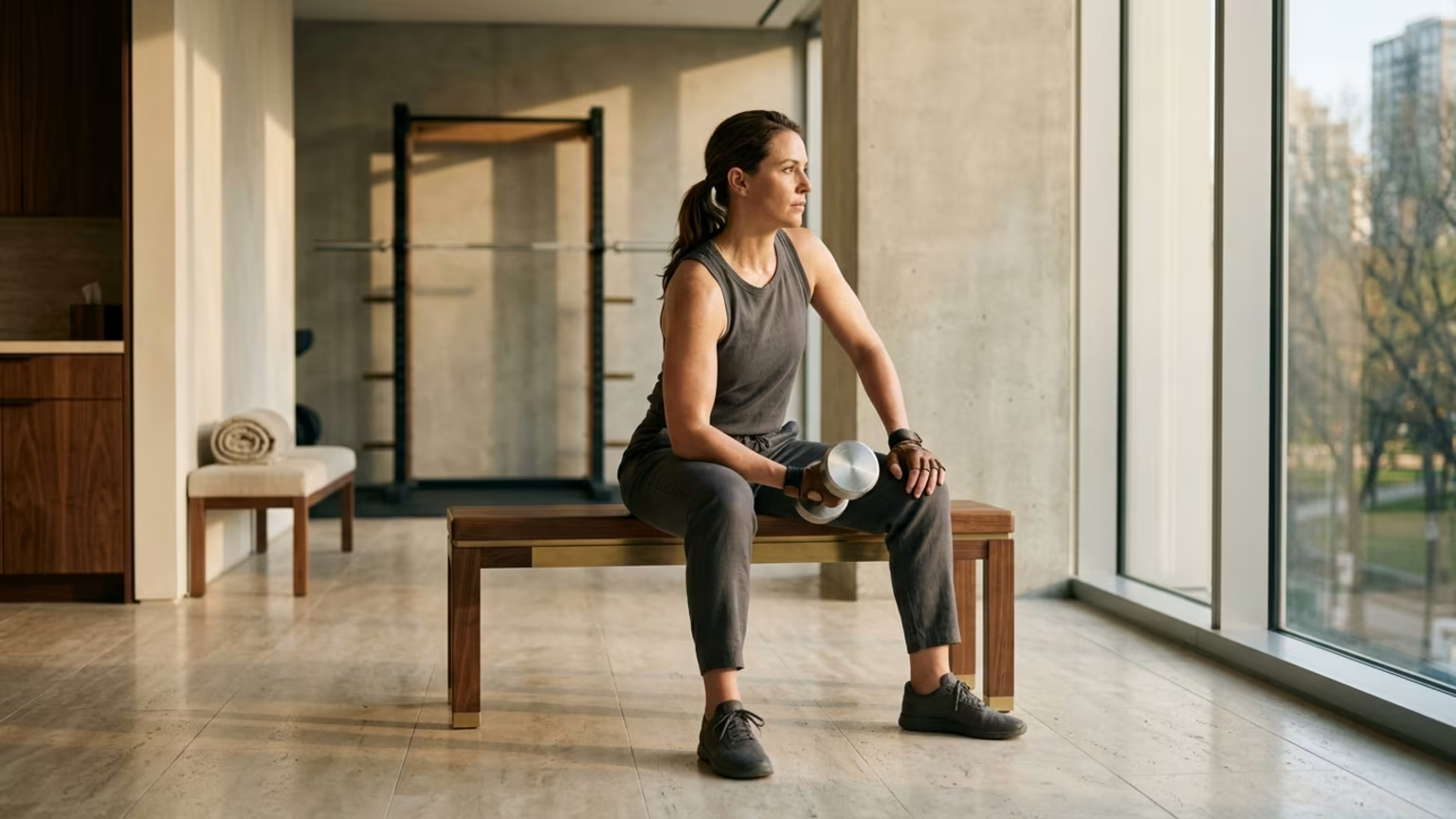
Fortunately, preparing for these specific mechanical stresses is highly achievable for active adults. According to Holmboe, committing to 20 to 30 minutes of targeted strength work two or three times per week can make a "meaningful difference" in performance. This manageable frequency makes it entirely possible to maintain capability without overhauling an existing lifestyle. Incorporating a proper strength training routine specifically develops the physical resilience needed for sustained athletic independence.
When planning winter mountain travel, integrating recovery directly into the itinerary is just as critical as the physical preparation. After a grueling thirty hour transit to Tokyo, I realized my old strategy of just powering through was no longer working. I felt foggy for three days before utilizing circadian biology to restructure my travel recovery completely. Now, I never board a long haul flight without a precise schedule for when to eat and when to put on an eye mask. It is the difference between losing a week of your trip and hitting the ground running.
This same structured approach to rest and recovery applies directly to demanding ski vacations. Holmboe describes sleep as one of the most vital recovery tools available to athletes. He emphasizes sleep, hydration, nutrition and gradual progression when a ski trip introduces a sudden increase in strenuous activity. Managing your rest through a deliberate sleep optimization plan ensures your muscular system recovers properly between demanding sessions.
High-altitude environments demand an even more calculated approach to travel planning. A 2026 travel-medicine review recommends that travelers sleep below 2,800 meters on their first day of high-altitude travel. The guidance limits sleeping-altitude increases to no more than 500 meters per day while adding an acclimatization day after each 1,000 meters of ascent. Travelers must actively monitor for symptoms of altitude illness, halting their ascent if mild symptoms develop and descending for severe symptoms.
The altitude literature emphasizes that dehydration can mimic or worsen altitude-illness concerns. This reality makes the warning about unnoticed fluid loss particularly important for mountain travelers. Understanding proper hydration for travel helps prevent the subtle dehydration that compromises physical capability at elevation. Combining structured acclimatization with intentional drinking schedules is the best strategy for maintaining high-altitude performance.
Mountain weather conditions can shift dramatically over just a few hours. This volatility makes adaptable clothing systems an absolute necessity for outdoor safety and sustained comfort. The Gazette article recommends a comprehensive layered approach including moisture-wicking base layers, insulating sweaters, waterproof outerwear and waterproof footwear. Proper moisture management is a safety priority because damp skin can quickly contribute to frostbite in freezing conditions.
Additional protective gear like hand warmers, toe warmers, balaclavas, sunscreen and proper helmets round out the necessary equipment list for cold-weather activities.
The physical demands of winter extend well beyond recreation and into daily maintenance tasks like shoveling snow. To protect the lower back during snow removal, guidance suggests using a suitably sized shovel and taking much smaller loads. Practitioners advise pushing the snow whenever possible, bending through the hips and knees and keeping the heavy load close to the body. Instead of twisting the spine to throw snow, always reposition your feet to face the new direction safely.
To maintain physical capability and avoid transition injuries this winter, active adults should prioritize short, targeted strength sessions while strictly managing altitude acclimatization and structured recovery during mountain travel.
Stay connected for research and practical guidance on longevity, strength, recovery, energy and active living. New ideas to help you stay capable, curious and ready for more.





Explore practical guidance on strength, recovery, energy, travel and longevity for a life that stays active.
explore the Blog