
Restorative sleep requires biological alignment rather than complex tracking gadgets, optimizing circadian timing, sleep architecture, recovery habits.





True sleep optimization is not the obsessive pursuit of perfect wearable scores, nor is it spending nine hours in bed trying to force unconsciousness. It is the deliberate alignment of your biological clocks, sleep pressure, and daily routines to support physical capacity and mental clarity. This guide examines the physiological machinery of human rest, cuts through common tracking errors, and provides practical strategies for active adults who demand exceptional vitality across every decade of life.
Sleep optimization is often misunderstood in contemporary wellness culture. Many people treat it as an endless checklist of expensive gadgets, blackout stickers, and complex supplement stacks. In reality, physiological recovery relies on four interacting systems that dictate how well your body restores itself each night.
The first system is sleep opportunity, which represents the total amount of time you allocate for rest. If you give yourself only six hours in bed, even flawless physiology cannot extract eight hours of cellular restoration.
The second system is sleep ability, which is your biological capacity to initiate and maintain continuous sleep. This capacity often changes as we age past forty, influenced by shifting hormone levels and nervous system tone.
The third system is circadian timing, which determines when your central pacemaker in the brain expects you to sleep. Aligning your schedule with this internal rhythm ensures that hormones like melatonin and cortisol peak at the right moments.
The fourth system is sleep quality and continuity. This reflects how consolidated your sleep cycles are, and whether your brain moves smoothly through its required physiological stages without frequent micro-arousals.
Optimizing these four systems creates profound improvements in daytime alertness, training capacity, and long-term metabolic health. Adults aged 18 to 60 generally require at least seven hours of restful sleep per night on a regular basis. Consistently hitting this threshold preserves cardiovascular integrity, supports cellular repair, and maintains high cognitive function.
It is also vital to distinguish your observed sleep duration from your actual sleep need. Sleep duration is simply the number of hours you logged on a given night. Sleep need is the biologically determined requirement for stable mood, immune defense, and peak physical output. This requirement varies from person to person, carries an inherited genetic component, and often expands during demanding athletic blocks or periods of high stress.
Sleep is not a passive shutdown of consciousness. It is an active, highly coordinated biological process characterized by distinct shifts in brain waves, endocrine output, thermoregulation, and cardiovascular tone.
Human sleep is organized into repeating ninety-minute cycles composed of non-rapid eye movement (NREM) and rapid eye movement (REM) stages. The American Academy of Sleep Medicine classifies these stages into N1, N2, N3, and REM.
N1 is the light, transitional phase between wakefulness and sleep where muscle tone relaxes. N2 represents stable, consolidated baseline sleep characterized by unique brain rhythms known as sleep spindles and K-complexes. These neural patterns protect the sleeping brain from external noises and initiate memory consolidation.
N3, often called slow-wave or deep sleep, is the period of profound physical repair. During N3, delta brain waves dominate, blood pressure drops, breathing steadies, and the pituitary gland releases pulses of human growth hormone. This stage facilitates muscle repair, tissue remodeling, and immune system calibration.
REM sleep is characterized by rapid eye movements, temporary skeletal muscle paralysis, and vivid dreaming. The brain is metabolically active during REM, processing emotional experiences, integrating complex motor skills, and strengthening creative problem-solving pathways.
No single stage operates in isolation as the sole source of recovery. Deep slow-wave sleep occurs primarily during the first third of the night, while REM dominates the final hours before waking. Attempting to artificially maximize one specific stage usually destabilizes the entire architecture of the night.
Human sleep timing is governed by the two-process model, which balances homeostatic sleep pressure against circadian rhythmicity.
Process S represents homeostatic sleep pressure. From the moment you wake, a chemical byproduct called adenosine accumulates in your basal forebrain. The longer you remain awake, the higher this chemical pressure climbs, creating an intense biological drive to sleep. When you enter slow-wave sleep, your brain clears this accumulated adenosine, resetting your sleep pressure for the following day.
Process C represents your circadian timing system, driven by the suprachiasmatic nucleus in the hypothalamus. This master clock operates on an approximate 24-hour cycle, synchronizing body temperature, cortisol secretion, blood pressure, and alertness.
During normal conditions, Process C increases its alerting signal throughout the late afternoon to counterbalance the rising sleep pressure of Process S. In the late evening, this alerting signal drops sharply, opening the biological sleep gate. Misalignment between these two forces explains why you might feel exhausted after a long workday yet suddenly experience a burst of wakefulness late in the evening.
One of the most compelling frontiers in healthy aging is the discovery of the glymphatic system. This specialized waste-clearance network uses cerebrospinal fluid to flush metabolic byproducts out of the central nervous system.
During wakefulness, glial cells remain expanded, restricting fluid flow through brain tissue. During deep NREM sleep, these interstitial spaces expand by up to sixty percent, allowing cerebrospinal fluid to wash through the tissue rapidly. This nocturnal rinse clears potential neurotoxins, including amyloid-beta and tau proteins.
While research into human neurodegenerative prevention remains active and evolving, preserving consolidated slow-wave sleep appears to be a fundamental requirement for maintaining long-term neurological health. Understanding these foundational mechanics makes it easier to appreciate the value of dedicated recovery and sleep strategies across your lifespan.
The relationship between regular sleep duration and all-cause mortality follows a clear U-shaped curve in extensive epidemiological research. Population-level meta-analyses consistently show that the lowest risk of premature mortality sits around seven to eight hours of sleep per night.
When sleep duration drops consistently below seven hours, health risks rise measurably. A comprehensive meta-analysis of prospective cohort studies demonstrated that each one-hour reduction below seven hours increases all-cause mortality risk by approximately six percent. Conversely, sleeping longer than nine hours regularly is also statistically correlated with higher mortality.
However, long sleep must be interpreted with clinical nuance. Pathological long sleep is often a marker of underlying health issues such as chronic inflammation, depression, cardiovascular disease, or undiagnosed sleep apnea. Chronic short sleep directly causes biological damage, whereas habitual long sleep is frequently a symptom of an underlying systemic challenge that warrants investigation.
Regularly obtaining fewer than seven hours of sleep exerts profound stress on the cardiovascular and metabolic systems. Sleep restriction elevates evening sympathetic nervous system activity, increases baseline cortisol levels, and disrupts normal blood pressure dipping during the night. Over time, this sustained autonomic activation damages the vascular endothelium and accelerates arterial stiffening.
Metabolic health also suffers rapidly under sleep debt. Restricting sleep to five hours per night for just one week reduces peripheral insulin sensitivity by up to thirty percent in healthy adults.
Sleep deprivation disrupts the appetite-regulating hormones leptin and ghrelin. Leptin signals fullness, while ghrelin stimulates hunger. When sleep is curtailed, circulating leptin drops while ghrelin climbs, driving intense cravings for calorie-dense carbohydrates and altering the reward centers in the brain.
From a cognitive perspective, sleep loss degrades attention, reaction time, working memory, and emotional regulation. When you are chronically tired, your risk tolerance shifts, motor coordination deteriorates, and executive function falters. For active individuals, adequate sleep is a primary defense against accidents, poor nutritional choices, and inconsistent training habits. It forms the ultimate bedrock for all your broader longevity and biohacking resources.
Physical exercise creates a potent stimulus for adaptation, but the actual structural improvements in muscle, tendon, and cardiovascular capacity happen during sleep. Active adults over forty face different physiological realities than twenty-year-olds. Tissue turnover is slower, baseline inflammation can linger longer, and joint structures require deliberate recovery management.
Athletes require significantly more sleep opportunity than sedentary individuals. Demanding physical activity increases musculoskeletal damage, depletes glycogen stores, strains the immune system, and places high demands on the central nervous system.
Systematic reviews examining athletic performance interventions confirm that extending nighttime sleep duration yields the most reliable improvements in speed, power, accuracy, and reaction time. Increasing total time in bed by sixty to ninety minutes during heavy training blocks enhances glycogen resynthesis and accelerates soft-tissue repair.
Consider an active individual preparing for a week of high-altitude trekking in the Swiss Alps or multi-day backcountry skiing. These activities demand sustained eccentric muscle contractions, intense metabolic output, and sharp cognitive focus in challenging terrain.
If this adventurer enters the expedition with accumulated sleep debt, their perceived exertion will spike dramatically on the first ascent. Reaction time on technical descents will slow, increasing the risk of acute musculoskeletal injury. By deliberately expanding their sleep window to eight or nine hours in the weeks leading up to the trip, they build physiological reserves that protect against fatigue and accelerate daily adaptation.
When organizing your daily schedule around sport, training timing plays a central role in sleep quality. Exercise increases core body temperature, stimulates sympathetic nervous system activity, and elevates heart rate. For many individuals, vigorous cardiovascular intervals or heavy lifting within two hours of bedtime can delay sleep onset by keeping core temperature elevated.
However, there is no universal cutoff that applies to every athlete. If your only window for exercise is the evening, moderate training that does not leave you hyper-aroused is far superior to skipping physical activity entirely. The key rule is simple: never consistently sacrifice necessary sleep opportunity to fit in a workout. Sleep is an essential component of the training load, not a competitor to it.
Naps can serve as a tactical tool to augment recovery when nighttime sleep is unexpectedly compromised. A brief afternoon nap of twenty to thirty minutes provides a transient reduction in homeostatic sleep pressure, boosting alertness and motor skill performance without causing grogginess.
However, naps should not be used as a permanent band-aid for an inadequate nighttime schedule. Long naps taken late in the afternoon can steal necessary sleep pressure from the coming night, creating a frustrating cycle of late-night insomnia followed by daytime exhaustion. Aligning your rest with your physical output allows you to pursue ambitious performance and fitness goals safely throughout every stage of life.
Many high-performing adults inadvertently undermine their sleep architecture through seemingly benign daily habits. Understanding how common lifestyle choices alter sleep physiology allows you to make targeted adjustments without overhauling your entire routine.
Alcohol is one of the most common sleep disruptors in modern society. While a glass of wine or a cocktail can induce relaxation and speed up sleep onset, its downstream physiological effects on sleep quality are profoundly negative.
Alcohol acts as a central nervous system depressant, enhancing GABAergic tone and inducing sedation. However, sedation is not restorative physiological sleep. As your liver metabolizes the alcohol during the first half of the night, a sharp rebound effect occurs in the sympathetic nervous system.
A comprehensive systematic review revealed that even low to moderate alcohol intake (one to two standard drinks) delayed the onset of REM sleep and significantly reduced total REM duration. High doses destroyed sleep continuity entirely, causing frequent micro-awakenings, increased night sweats, and reduced slow-wave stability.
Furthermore, alcohol acts as a muscle relaxant, causing the soft tissues in the upper airway to collapse more easily. This dramatically worsens snoring and increases the frequency of obstructive breathing events, leaving you feeling unrefreshed the next morning.
Eating heavy meals close to bedtime places intense demands on the gastrointestinal system that directly conflict with the biological requirements of sleep.
Digestion raises your metabolic rate and increases core body temperature. When you consume a rich, high-fat or high-protein dinner right before bed, your body is forced to divert significant blood flow to the digestive tract rather than initiating peripheral heat dissipation. This process can trigger gastroesophageal reflux, disrupt autonomic balance, and delay sleep onset.
Clinical sleep guidance consistently suggests allowing two to three hours between your final substantial meal and your intended bedtime. If you finish a hard late-evening workout and need fuel, opt for a small, easily digestible snack containing complex carbohydrates and light protein rather than a massive, rich dinner.
Caffeine is a powerful adenosine receptor antagonist. It does not eliminate the biological need for sleep; it simply masks adenosine accumulation by binding to the same neural receptors without activating them.
The average half-life of caffeine in healthy adults ranges from five to seven hours, with an even longer quarter-life. This means that a double espresso consumed at 4:00 PM could leave twenty-five percent of that caffeine actively blocking adenosine receptors in your brain at midnight.
Individual caffeine clearance varies substantially based on liver enzyme genetics (specifically the CYP1A2 gene pathway), age, and hormonal status. A practical personal experiment involves establishing an early caffeine cutoff, such as 12:00 PM or 2:00 PM, and observing whether your latency to fall asleep and nighttime heart rate stability improve over a two-week period.
The human circadian cycle is intimately linked with core body temperature fluctuations. To initiate sleep, your core temperature must drop by approximately one to two degrees Fahrenheit. This drop is facilitated by peripheral vasodilation, where blood vessels in your hands, feet, and face open up to radiate heat away from your core.
A bedroom that is too warm prevents this critical heat exchange, resulting in restless, fragmented sleep. Keeping your bedroom comfortably cool, ideally between 65 and 68 degrees Fahrenheit (18 to 20 degrees Celsius), supports this natural physiological cooling curve.
Taking a warm bath or shower sixty minutes before bed is a counterintuitive yet highly effective tool. The warm water dilates peripheral blood vessels, causing rapid heat dumping from your core once you step out into the cooler room. Pair this thermal control with breathable natural bedding, complete light blackout curtains, and low ambient noise to create an optimal restorative sanctuary.
For worldly adults who regularly cross multiple time zones for business or leisure, jet lag represents a severe disruption to biological performance. Jet lag occurs when your internal circadian clocks in the brain and peripheral organs remain synchronized with your departure city while external environmental cues demand immediate adaptation to a new local time.
The severity of circadian disruption depends primarily on the number of time zones crossed and the direction of flight. Traveling eastward requires you to advance your internal clock (going to bed earlier), which the human circadian system finds inherently more difficult than delaying the clock during westward travel.
A reader recently asked me if they needed to start a complicated, three hour morning routine they saw online. I told them absolutely not. When I looked at the research they referenced, the actual benefits were marginal compared to simply getting eight hours of sleep and lifting heavy things twice a week. It is incredibly easy to get distracted by the top one percent of optimization and forget that the foundation is where all the real longevity gains are made.
To master long-haul transitions, follow a clear, structured sequence before, during, and after your flight:
Before departure, begin shifting your sleep and wake times toward the destination schedule by thirty to sixty minutes per day if your itinerary permits. Protect your sleep quality aggressively in the days leading up to the trip. Boarding an international flight with pre-existing sleep debt magnifies the physiological stress of the journey.
During transit, set your watch to the destination time zone the moment you step onto the aircraft. Align your inflight meals and rest periods with that new schedule. Stay well hydrated with water and electrolytes, as the low humidity of aircraft cabins causes subtle volume depletion that worsens jet lag symptoms. Avoid alcohol entirely during transit, as it exacerbates dehydration and fractures inflight rest.
Upon arrival, immediately anchor yourself to local environmental cues. The single most potent tool for resetting the master circadian clock is bright light exposure. The human circadian phase-response curve dictates that morning light exposure advances your body clock, while evening light delays it.
If you have traveled eastward across several time zones, seek bright outdoor sunlight in the destination morning and early afternoon. If you have traveled westward, expose yourself to late afternoon sunlight to push your clock later. Combine this timed light exposure with a brisk outdoor walk and a protein-rich meal aligned with local dining hours.
Supplemental melatonin is often misused as a general sedative. Melatonin is primarily a chronobiotic, which means it serves as a biological timing signal rather than a heavy sleep inducer.
When crossing five or more time zones eastward, taking a low dose of melatonin (between 0.5 mg and 3 mg) approximately thirty to sixty minutes before your target bedtime in the new time zone can significantly accelerate circadian realignment. Incorrectly timing melatonin during the destination morning can accidentally shift your clock in the wrong direction. Always consult a healthcare provider before initiating melatonin protocols if you have underlying medical conditions or take prescription medications.
For short international journeys lasting fewer than seventy-two hours, attempting full circadian adaptation is often counterproductive. Shifting your master clock halfway to the new zone only to force it back two days later creates double the physiological stress.
In these specific scenarios, maintaining your home-base sleep hours, meal timing, and light patterns as closely as possible preserves cognitive sharpness for key meetings or athletic events. Planning your calendar around smart travel and adventure pursuits ensures that your global lifestyle never compromises your vitality.
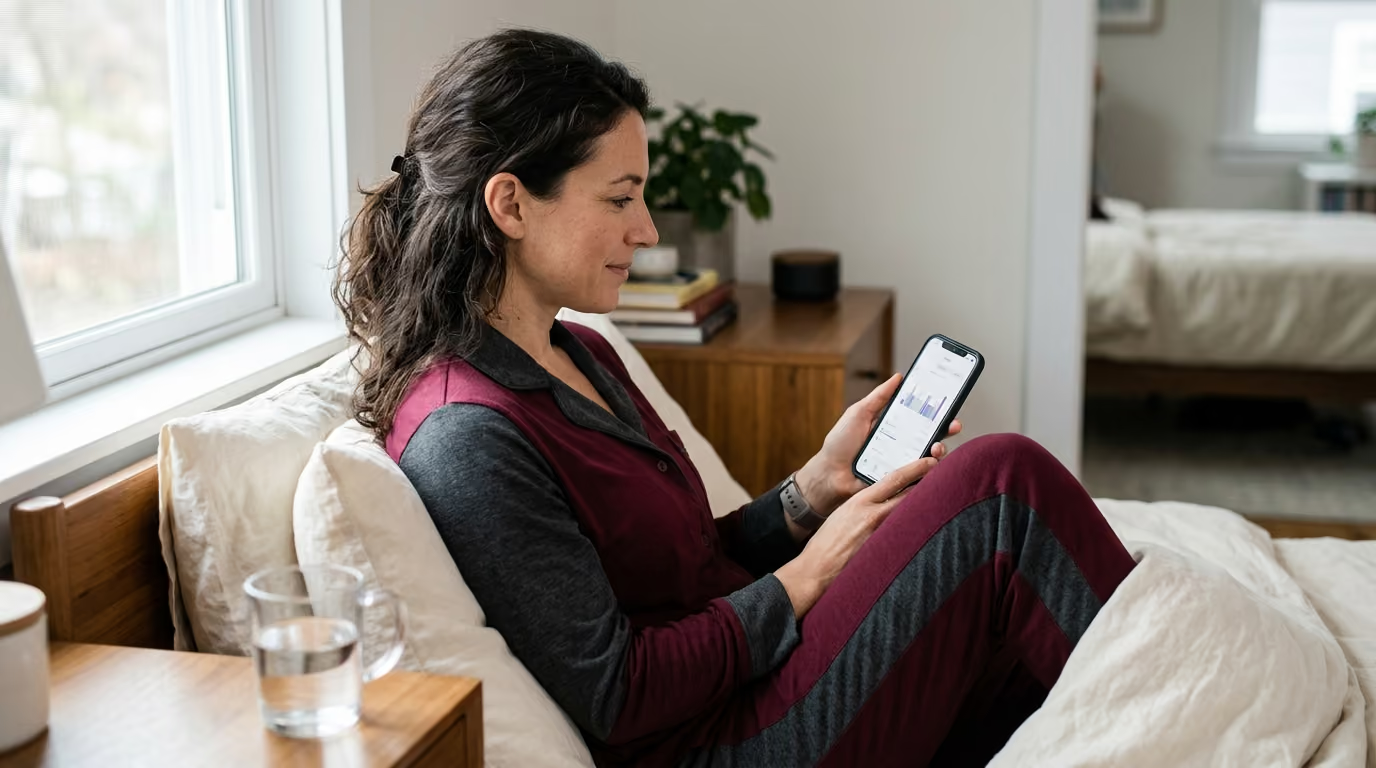
The explosion of consumer wearable technology has given active adults unprecedented access to their physiological data. However, it has also generated widespread confusion, false assumptions, and unnecessary anxiety regarding normal sleep biology.
Consumer smartwatches, rings, and bands are valuable tools for tracking macro-level trends over weeks and months. However, they do not measure brain waves directly and cannot replace clinical polysomnography.
Clinical polysomnography monitors electroencephalography (EEG), electromyography, eye movements, and respiratory effort to establish exact sleep stages. In contrast, consumer wearables use algorithms based on movement, heart rate variability, skin temperature, and photoplethysmography.
Validation studies consistently show that while consumer trackers exhibit high sensitivity for detecting whether you are asleep or awake, their specificity for differentiating between light, deep, and REM sleep is modest. Most consumer devices systematically overestimate total sleep time and underestimate wakefulness after sleep onset. Becoming anxious because your wearable reported only forty minutes of deep sleep is counterproductive, as the device may simply have misclassified stable N2 sleep.
A growing number of active adults suffer from orthosomnia, an unhealthy preoccupation with achieving a perfect sleep score on a digital dashboard.
This tracking anxiety can trigger a destructive feedback loop. A person wakes up feeling refreshed, checks their device, sees a poor readiness score, and immediately experiences psychological distress. They may spend excessive time lying motionless in bed trying to improve their statistics, which ultimately weakens the conditioned association between the bed and rapid sleep onset.
Treat your wearable data as a broad directional compass, not an absolute daily grade. If your device reports a low recovery score but your subjective energy, mental focus, and physical strength feel exceptional, trust your lived physiology over an algorithm.
The idea that every human being requires an identical eight-hour block of sleep is biologically inaccurate. Adult sleep needs exist on a bell curve dictated by genetics, age, health status, and physical output.
While the medical consensus identifies seven hours as the minimum healthy baseline for most adults, some individuals thrive on seven hours and fifteen minutes, while others require eight hours and forty-five minutes to maintain optimal cognitive performance. Striving to force yourself to stay in bed for an arbitrary eight hours when your body is fully rested after seven and a half can cause sleep fragmentation and early morning restlessness.
Basic sleep hygiene advice (such as keeping the room dark and avoiding screens) is useful for optimizing healthy sleep, but it is rarely sufficient to resolve chronic clinical insomnia.
Chronic insomnia is maintained by conditioned cognitive hyper-arousal and maladaptive behavioral habits that develop over months. The gold-standard, evidence-based first-line treatment for chronic insomnia is Cognitive Behavioral Therapy for Insomnia (CBT-I). CBT-I utilizes proven techniques such as stimulus control, sleep restriction therapy, and cognitive restructuring to systematically restore the brain's natural sleep drive.
Optimizing your sleep does not require spending hours managing complex protocols or purchasing dozens of biohacking tools. You can achieve over ninety percent of all available recovery benefits by mastering a few simple, high-return behavioral fundamentals.
Focus on implementing this streamlined, step-by-step framework to maximize your nightly rest with minimal daily friction:
Choose a realistic wake-up time that comfortably accommodates your work, family, and athletic commitments across both weekdays and weekends. Waking up at approximately the same time every day stabilizes your circadian phase and ensures that homeostatic sleep pressure builds consistently throughout your waking hours. Small shifts of thirty to forty-five minutes on weekends are completely fine, but avoid massive two-hour variations that trigger social jet lag.
Step outside into natural daylight within thirty to sixty minutes of waking. Aim for ten to fifteen minutes on bright sunny mornings, or twenty to thirty minutes on overcast days. This strong photons-to-retina signal activates the suprachiasmatic nucleus, suppresses lingering melatonin, elevates morning cortisol appropriately, and sets an internal timer for natural melatonin release approximately fourteen hours later.
Establish a strict caffeine boundary by cutting off all coffee, pre-workouts, and caffeinated teas at least eight to ten hours before your target bedtime. Shift your dinner schedule so that your final substantial bite of food occurs at least two to three hours before lying down. Reserve alcohol for occasional celebratory contexts rather than using it as a nightly nightcap, and keep it separated from your bedtime.
Set aside thirty to forty-five minutes before bed to disconnect from high-stress work emails, urgent news cycles, and intensely stimulating entertainment. Dim the overhead lights in your living space and switch to low-level ambient lamps to signal your brain that the day is ending. Use this quiet period for light reading, mobility work, a warm shower, or conversation.
Ensure your bedroom is dark, quiet, and cool. Use high-quality blackout shades or a comfortable eye mask to eliminate unwanted light. Lower your thermostat into the mid-sixties Fahrenheit and choose breathable natural fabrics for your sheets and sleepwear. Reserve your bed strictly for sleep and intimacy, training your nervous system to associate your mattress with immediate relaxation.
By executing these high-ROI behaviors consistently, you create the biological conditions for deep, uninterrupted restoration without adding unnecessary complexity to your daily life. This reliable physical foundation is essential for sustaining energy and mental performance year after year.
While individual longevity influencers often debate extreme micro-protocols on social media, the broader international scientific and medical community shares a solid consensus on sleep health fundamentals.
Authoritative bodies including the American Academy of Sleep Medicine, the Sleep Research Society, the European Sleep Research Society, and the Centers for Disease Control and Prevention share several core conclusions:
Consensus 1: Regular sleep duration below seven hours per night is unequivocally associated with adverse health outcomes across adult populations. These outcomes include heightened risks of cardiovascular disease, hypertension, type 2 diabetes, obesity, impaired immune function, clinical depression, and increased rates of all-cause mortality.
Consensus 2: Sleep is an active, highly organized biological state composed of distinct NREM and REM cycles that serve irreplaceable physiological and neurological functions. Recovery cannot be reduced to a single sleep stage; overall continuity and architectural integrity matter most.
Consensus 3: The daily light-dark cycle is the primary synchronizer of human circadian rhythms. Timed light exposure, consistent daily schedules, and stable social timing are the most potent non-pharmacological tools for maintaining circadian alignment.
Consensus 4: Consumer wearable devices provide useful general metrics for longitudinal trend monitoring and lifestyle awareness, but they cannot replace laboratory polysomnography for diagnosing sleep disorders or precisely quantifying sleep stages.
Consensus 5: Sleep hygiene education alone is insufficient as a stand-alone therapy for chronic insomnia. Cognitive Behavioral Therapy for Insomnia (CBT-I) remains the primary, evidence-based standard of care for persistent insomnia disorders in adult populations.
Medical experts also emphasize the necessity of seeking professional clinical evaluation when persistent red flags arise. If you experience loud habitual snoring, witnessed pauses in breathing during the night, waking up gasping for air, restless sensations in your legs, or severe daytime sleepiness despite spending eight hours in bed, consult a board-certified sleep specialist. Underlying medical conditions such as obstructive sleep apnea are highly treatable, and resolving them will deliver profound, immediate improvements to your health and vitality.
Do not lie in bed watching the clock or checking your phone, as this creates anxiety and conditions your brain to associate the bed with frustration. If you remain awake for more than twenty minutes, get out of bed quietly and move to a dimly lit room. Engage in a relaxing, low-stimulation activity such as reading a book or listening to calming music until you feel drowsy again, then return to bed.
Weekend catch-up sleep can reduce acute subjective sleepiness and transiently lower sleep pressure, but it does not completely undo the metabolic, cardiovascular, and cognitive consequences of chronic weekday sleep restriction. Furthermore, sleeping in late on Saturday and Sunday shifts your circadian phase later, making it difficult to fall asleep on Sunday night and creating social jet lag on Monday morning. Prioritize protecting a consistent seven-hour window every night.
Ordinary fatigue usually resolves with a few consecutive nights of extended rest, whereas sleep apnea produces persistent, unrefreshing sleep regardless of time spent in bed. Common indicators of obstructive sleep apnea include loud chronic snoring, morning dry mouth or headaches, waking up with a gasping sensation, and extreme daytime grogginess. If you observe these symptoms, request a comprehensive home sleep apnea test or laboratory polysomnography from your physician.
Blue-blocking glasses can help reduce circadian-disrupting light exposure if you are required to work on bright screens late into the evening. However, they are not a universal shield that permits infinite late-night screen use. The psychological stimulation and cognitive engagement of working or scrolling late at night can delay sleep onset through nervous system arousal, independent of the specific light wavelengths reaching your eyes.
Stay connected for research and practical guidance on longevity, strength, recovery, energy and active living. New ideas to help you stay capable, curious and ready for more.


Explore practical guidance on strength, recovery, energy, travel and longevity for a life that stays active.
explore the Blog