
Camino de Santiago organizer Alberto Lence warns that midlife movement and strength training are crucial to securing active travel independence in later life.





On September 14, 2026, an interview in the Spanish publication Infobae revealed a candid observation from Camino de Santiago excursion organizer Alberto Lence. Lence argues that people who are inactive at 50 or 60 may struggle to remain independent at 70 or 80. For the active adult who values physical independence, this is a clear reminder that our future mobility depends entirely on the movement habits we establish today. The ability to join demanding excursions later in life is not accidental. It is a direct result of consistent physical preparation in our middle years.
Our travel ambitions often involve challenging environments. We want to hike rugged coastlines, navigate historic cities on foot and carry our own gear without hesitation. Lence suggests that multi-day walking capacity is built slowly over time, rather than acquired suddenly before a major trip. Attempting a rigorous itinerary for the first time in later life is a risky strategy. Instead, we must treat everyday movement as practical training currency for the decades ahead.
The clinical evidence broadly supports the value of combining aerobic activity with strengthening and balance-oriented work. The Infobae interview stresses that walking works best as part of a broader foundation that includes strength, balance, coordination and mobility. While walking builds an excellent aerobic base, it is not a complete exercise plan on its own. Handling uneven ground or climbing steep stairs requires distinct functional capacities that walking alone cannot provide.
Current healthy aging research is increasingly evaluating multicomponent programs. A 2026 systematic review of 12 trials involving 928 older adults with sarcopenia examined these diverse training methods. Researchers found that these home programs improved strength, physical performance, balance and overall quality of life. While these specific studies often involve older adults with muscle loss rather than healthy people in their forties, the underlying biological mechanism is relevant for all active adults.
Preserving the ability to move freely requires targeted stress on the muscular system. A 2026 network meta-analysis of 42 trials involving 3,728 adults with sarcopenia echoed this need for targeted training. The analysis found that resistance exercise performed strongly across several muscle-health outcomes. Tai Chi-based combined interventions were also associated with favorable effects on muscle function and overall physical performance in older adults at risk of functional decline. While effects on muscle mass remained uncertain, these interventions improved coordination and control.
The broader sector trend is shifting firmly toward functional capacity. Researchers are measuring practical outcomes like gait speed, Timed Up and Go performance and chair-stand performance. These metrics directly reflect our ability to perform daily tasks and travel confidently. While improvements in these tests do not conclusively establish a robust reduction in actual falls, one evidence summary reported a 23 percent lower pooled fall rate with exercise. The same summary noted that the effect of resistance-only programs remained uncertain, highlighting the need for a varied approach.
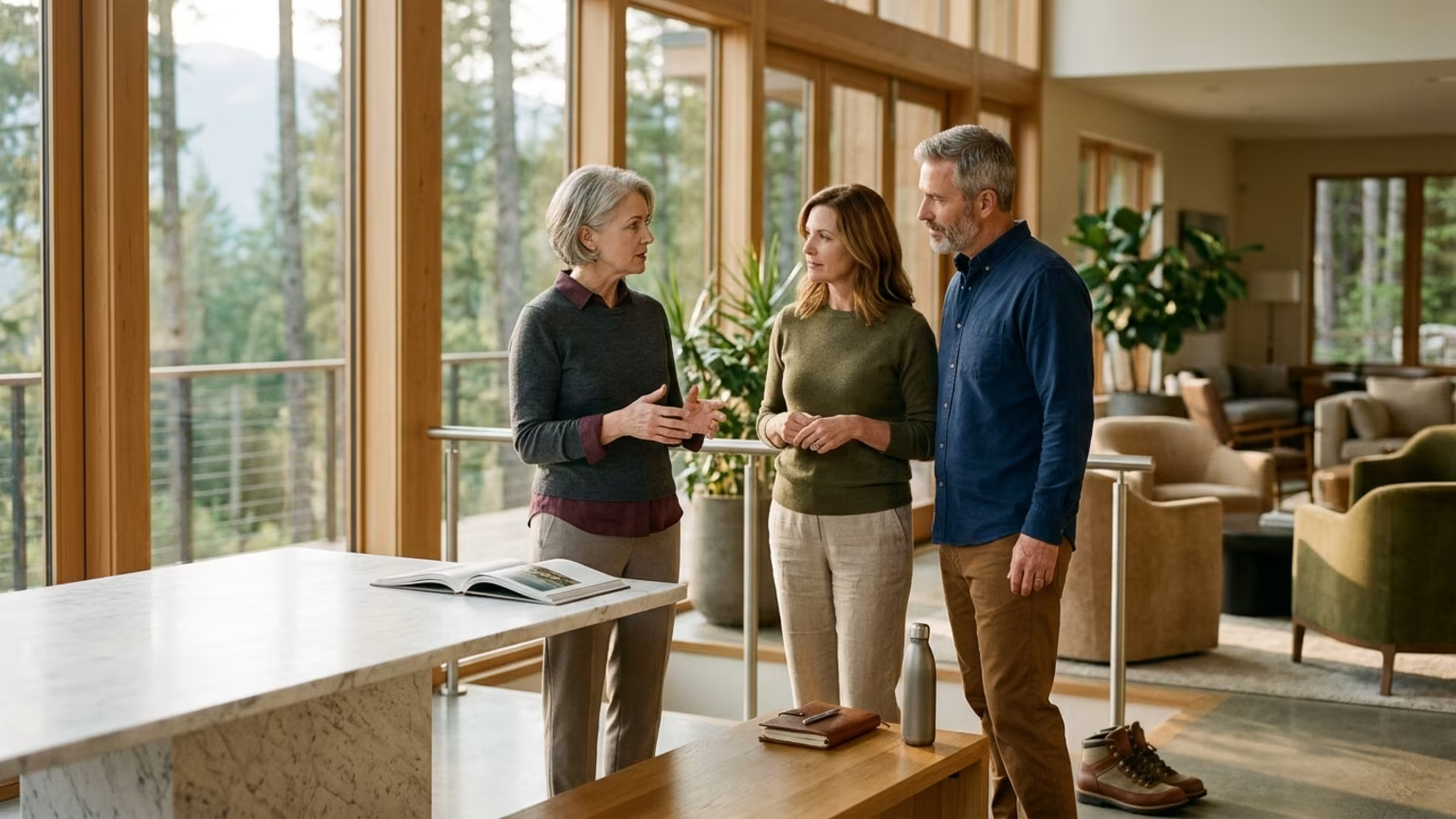
Lence bases his insights on years of observing groups navigate the demanding stages of the Camino de Santiago. His most direct warning is firmly stated in the interview: “If your parents are 50 or 60 and do not walk, they will not be independent when they are 70 or 80.”
This observation is best treated as an experienced excursion organizer’s professional opinion. It is not a validated prediction that applies universally to every single individual. However, Lence says he has seen some 75- and 80-year-olds walk more than 25 kilometers per day for several days. These highly capable older hikers generally shared a long-standing habit of walking or participating in other physical activities. They did not achieve this endurance by cramming for their trip.
The functional framing of this interview is highly relevant for travelers. It directly connects basic exercise with carrying luggage, using stairs, recovering from a low chair and completing multi-day walking itineraries. We must view these basic human movements as the fundamental building blocks of our future travel capabilities.
A lack of physical preparation compounds the stress of any demanding journey. After a grueling thirty hour transit to Tokyo, I realized my old strategy of just powering through was no longer working. I felt foggy for three days. I started digging into circadian biology and realized that timing my light exposure and fasting during the flight could completely shift my recovery. Now, I never board a long haul flight without a precise schedule for when to eat and when to put on an eye mask. It is the difference between losing a week of your trip and hitting the ground running.
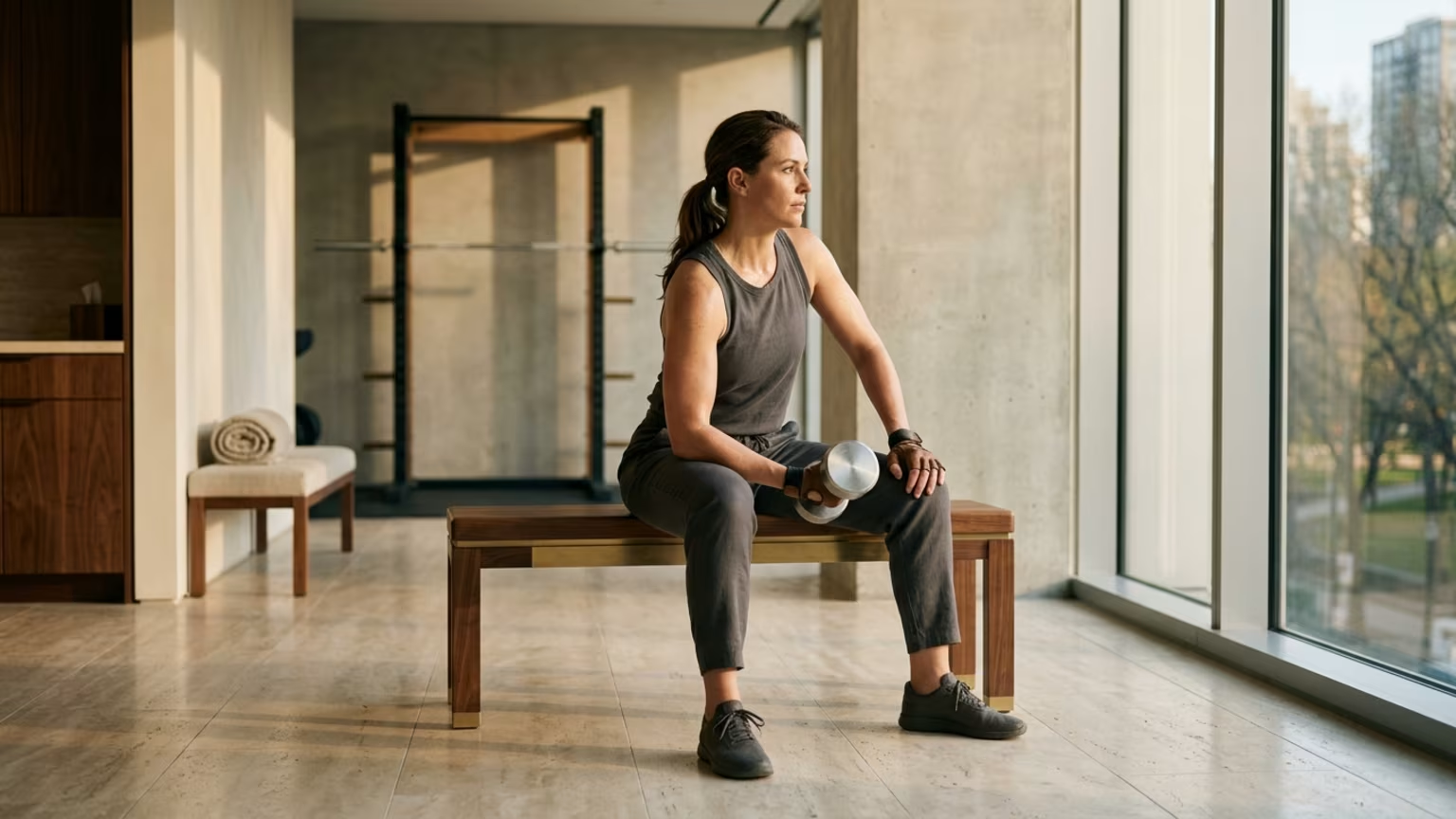
Just as strategic scheduling prevents severe jet lag, consistent strength training secures lifelong independence on the ground. When your legs and core are strong, your recovery after a long day of sightseeing or skiing accelerates dramatically. You do not wake up the next morning dreading a steep descent or a heavy daypack. Preparing for demanding travel means training the specific functional tasks your itinerary will actually require.
This preparation is especially critical for altitude adjustment and sustained energy during sports. A robust aerobic base improves the efficiency of your oxygen delivery. When you arrive at a high altitude destination, a well conditioned cardiovascular system manages the thinner air more effectively. If you combine this with strong legs from resistance training, you reduce the muscular fatigue that often ruins a mountain trip. You preserve your energy for the activities you traveled to enjoy.
Skiing and hiking demand distinct physical capabilities that require targeted preparation. Skiing requires eccentric strength to absorb the forces of downhill turns, while hiking requires stability on uneven trails. If you only walk for exercise, your legs may burn out quickly on the slopes. Integrating balance training and physical independence strategies prepares your nervous system for these dynamic demands. Your daily recovery improves because your muscles are conditioned to handle high impact stress.
We must adopt a sensible approach to building this physical capacity. CDC guidance uses 150 minutes of moderate activity or 75 minutes of vigorous activity per week as a general benchmark, adjusted for health circumstances. Someone preparing for a rigorous holiday should not abruptly increase distance or introduce heavy strength work without a plan. You must gradually progress toward your trip demands instead of using the longest planned day as a starting point. Rushing this process often leads to preventable injuries that sideline your travel plans entirely.
Measuring practical capability is much more useful than obsessing over step counts alone. You should evaluate your comfortable walking duration, your tolerance for steep stairs and your ability to carry luggage. These practical metrics map directly to your real world readiness. Focusing on walking for travel fitness as a holistic practice builds a reserve of stamina for any global adventure.
Active travelers should treat consistent daily movement and targeted strength work as lifelong investments to ensure they can confidently navigate demanding global terrain for decades to come.
Stay connected for research and practical guidance on longevity, strength, recovery, energy and active living. New ideas to help you stay capable, curious and ready for more.



Explore practical guidance on strength, recovery, energy, travel and longevity for a life that stays active.
explore the Blog