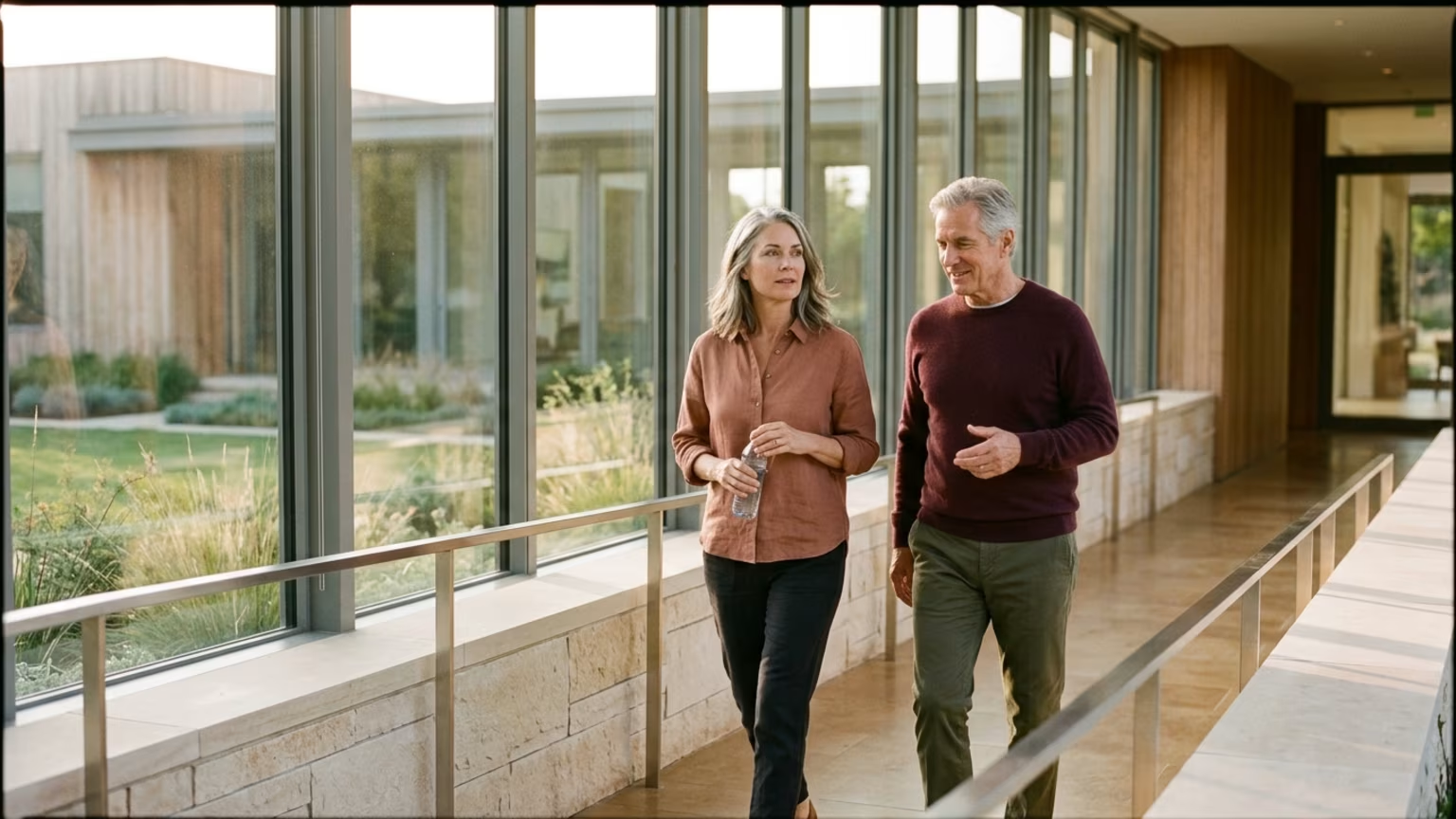

A UK Biobank analysis reveals how maintaining cardiorespiratory fitness lowers cardiovascular risk. Learn why small VO₂ max improvements protect healthy aging.





An annual drop of just 1 mL/kg/min in estimated VO₂ max is associated with a 33% higher cardiovascular disease risk compared to remaining stable. That single metric reframes how we view physical performance over time. We can no longer rely on the athletic conditioning of our youth to protect our health today.
Here are three surprising data points from a recent UK Biobank analysis that redefine healthy aging:
A UK Biobank analysis published in the European Journal of Preventive Cardiology examined how aerobic capacity changes impact longevity. The study included 11,530 adults aged 40 to 73 years. Medscape reported that participants had a mean age of 56.5 years and were 50.6% men. These individuals completed two cardiorespiratory fitness assessments approximately 4.3 years apart.
Fitness was estimated from heart rate responses during a submaximal cycle test rather than direct respiratory gas analysis. Researchers then tracked this cohort for a median of 14.0 years after the first assessment. Over this extensive follow up period, 921 participants developed incident cardiovascular disease. Additionally, 119 participants died from cardiovascular causes.
The analysis revealed that cardiovascular risk progressively decreased as fitness improved and increased as fitness declined. The researchers found an approximately linear dose response relationship. There was no evidence of a threshold below which fitness changes had no association with health outcomes. Those who improved their fitness by at least 1 mL/kg/min per year had a 16% lower risk of cardiovascular disease than those whose fitness remained stable.
Conversely, participants whose fitness declined by the same amount experienced a 33% higher cardiovascular disease risk. Each annual increase of 1 mL/kg/min in estimated VO₂ max was associated with a 15% lower risk of incident cardiovascular disease. This improvement carried a hazard ratio of 0.85 and a 95% confidence interval of 0.75 to 0.96. The same annual increase was tied to a 34% lower risk of cardiovascular mortality.
That mortality statistic showed a hazard ratio of 0.66 and a 95% confidence interval of 0.51 to 0.87. Medscape highlighted that participants with the steepest fitness declines faced a 33% higher risk of incident cardiovascular disease. Meanwhile, those with the greatest gains achieved a 26% lower risk of incident cardiovascular disease. These profound associations remained after adjusting for baseline fitness, physical activity levels, body mass index change, and genetic predisposition to cardiovascular disease.
The researchers cautioned that their findings represent an observational analysis rather than absolute proof of causation. Although their statistical models adjusted for multiple potential confounders, residual confounding cannot be entirely ruled out. Furthermore, the analysis relied on just two fitness assessments to calculate an annualized change. Two measurements identify a broad direction of change, but they cannot fully capture seasonal training shifts or sudden injury related interruptions.
We often read clinical studies as abstract spreadsheets rather than practical blueprints for daily life. Yet these specific metrics manifest vividly when we travel, play sports, or navigate demanding environments. "Last winter in Chamonix, I noticed something striking. It was not the altitude that forced my peers into the lodge by noon, it was a lack of rotational strength and poor recovery from the flight."
"We spend so much time debating the perfect supplement stack, yet we neglect the basic foundational strength required to actually enjoy our travels. That trip changed how I approach fitness. I stopped training for aesthetics and started training exclusively for capability." Maintaining your cardiorespiratory stamina ensures you can handle the physical toll of demanding adventures.
A declining VO₂ max is not merely a number for your physician to monitor annually. It is the underlying reason a long layover feels exhausting or a mild hike leaves you completely drained. The UK Biobank analysis serves as a stark reminder that aerobic decline is a progressive loss of physical freedom. When we let our cardiorespiratory fitness slip, we slowly shrink the boundaries of our active lives.
Preserving your aerobic capacity gives you a vital physiological buffer for unpredictable travel conditions. For adults who want to sustain an independent lifestyle, relying on historical fitness is a dangerous strategy. You must focus on maintaining or nudging up your current capabilities year after year. Understanding your cardiovascular health risks provides a clear picture of what you must improve before your next major trip.
Turning this rigorous data into actionable habits does not require a highly extreme training protocol. The study authors emphasized regular moderate to vigorous physical activity as the primary strategy for improving cardiorespiratory fitness. Public health guidance cited by the Saudi Ministry of Health provides a very clear baseline for active adults. They recommend completing at least 150 minutes of moderate aerobic activity per week.
Alternatively, you can perform 75 minutes of vigorous activity weekly to support your aerobic system. This public health guidance also suggests up to 300 minutes of moderate activity for additional benefits. Furthermore, they recommend muscle strengthening activity involving major muscle groups on at least two days per week. You can build a sustainable routine by combining brisk walking, hotel gym cycling, and consistent strength sessions.
If your travel schedule is heavy, you must prioritize maintaining your fitness through short, effective interventions. A quick rowing session or a brief bodyweight circuit can preserve your capacity when a full workout is impossible. The researchers suggested that clinicians could use repeated submaximal fitness tests to monitor patient trajectories. You can apply this same logic by using a consistent wearable device to track your own estimated VO₂ max trends.
If your measured fitness does not improve as expected, the researchers noted you might benefit from a more individualized exercise prescription. This could involve structured or supervised training to break through a frustrating plateau. However, you must always approach vigorous training with appropriate caution and awareness. Adults with known cardiovascular or metabolic conditions may warrant medical screening before undertaking strenuous training.
The ACSM advises that sedentary people beginning intense exercise should carefully evaluate their medical readiness. This screening guidance also applies to people aged 45 or older who are beginning vigorous activity. Never ignore warning signs like unexplained breathlessness, chest pain, or palpitations when pushing your physical limits. A gradual, sustainable approach ensures you can stay active without suffering unnecessary setbacks or serious injuries.
The ultimate objective of tracking aerobic data is not to boast about a high VO₂ max score. The true value lies in maximizing the number of highly capable, independent years we get to experience. When we aim for an annual improvement of just 1 mL/kg/min, we build a formidable shield against cardiovascular decline. This physiological resilience translates directly into a broader, richer, and more adventurous life.
Looking back at that snowy afternoon in Chamonix, the contrast between the skiers on the mountain and those resting indoors was unforgettable. The individuals who stayed outside were simply the most conditioned for the demands of the environment. A stable or improving cardiorespiratory trajectory is the invisible engine that powers enduring vitality. By keeping our aerobic capacity strong, we guarantee that we remain fully prepared for whatever challenges lie ahead.
Stay connected for research and practical guidance on longevity, strength, recovery, energy and active living. New ideas to help you stay capable, curious and ready for more.



Explore practical guidance on strength, recovery, energy, travel and longevity for a life that stays active.
explore the Blog