
Stop stressing over sleep stages. Learn which fitness tracker metrics actually matter for active adults who want better recovery without the anxiety.





You wake up feeling completely rested, reach for your phone, and see a red sleep score glaring back at you. Suddenly, your energy evaporates before you have even poured your morning coffee. Stop tracking your specific sleep stages because you are ruining your mornings for data you cannot actually use. Obsessing over a proprietary algorithm only creates anxiety without offering a reliable path to better recovery.
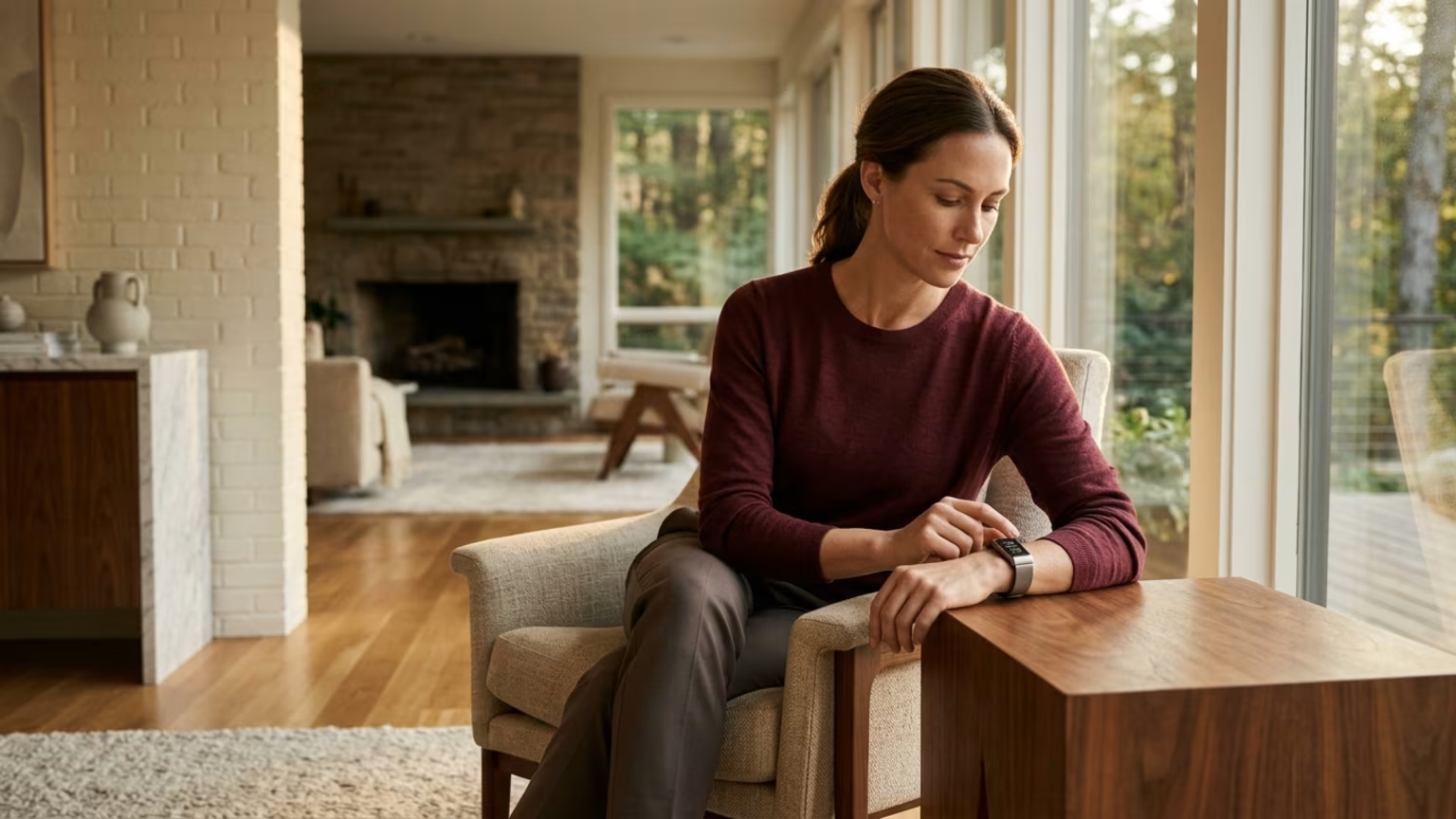
Wearable companies want us to believe they can monitor our brains accurately from our wrists. Tom’s Guide recently pointed out that these devices infer deep and REM sleep from movement and heart rate. They do not measure actual brain activity like clinical polysomnography does. Treating these consumer estimates as medical facts is a common mistake for active adults trying to optimize their daily routines.
Because smartwatches sit on the wrist, they rely heavily on heart rate variability and motion sensors to guess what your brain is doing. This indirect measurement method explains why they excel at telling if you are moving but fail at mapping complex neurological states.
Validation research shows exactly where this modern technology struggles on a practical level. A 2024 validation study summarized by Empatica found that three consumer wearables achieved at least 95% sensitivity for distinguishing sleep from wake. However, their four-stage classification sensitivity varied wildly from approximately 50% to 86% depending on the specific device. In that same comprehensive study, the Apple Watch overestimated light sleep by an average of 45 minutes and underestimated deep sleep by 43 minutes compared with polysomnography.
The measurement discrepancies continue to appear across multiple recent scientific evaluations. A 2025 meta-analysis of 24 studies involving 798 participants found statistically significant differences between consumer trackers and laboratory polysomnography. As reported by APPI News, average differences included 16.85 minutes for total sleep time and 4.69 percentage points for sleep efficiency. The same analysis found average differences of 2.57 minutes for sleep latency and 13.26 minutes for wake after sleep onset.
These frequent measurement gaps create distinct problems for highly driven and health conscious individuals. Researchers have noted that consumer sleep technologies may contribute to sleep-related anxiety. This modern phenomenon is sometimes termed orthosomnia. When we place absolute faith in a wrist gadget, we ignore the natural fluctuations of our own biology.
When we let a wearable dictate our physical readiness, we lose touch with our own physical intuition. A low proprietary sleep score might not match your subjective recovery or actual capacity at all. If you skip a scheduled mountain hike because of a red number on a screen, you are sacrificing actual capability for an imperfect algorithm. That hyper-focus on data detracts from the true goal of enjoying travel, sports, and your hard earned independence.
The mental toll of trying to perfectly optimize rest often backfires on busy individuals. Active adults over 40 already manage demanding careers, complex family logistics, and ambitious physical pursuits. Adding a layer of performance pressure to your night routines only creates friction where you desperately need ease. The resulting mental stress often makes it much harder to fall asleep the following night.
Many driven professionals already deal with high stakes decisions during the day. When they apply that same rigorous scrutiny to their sleep data, they turn a biological necessity into another stressful performance metric. This approach directly undermines the relaxed state required for optimal physiological repair. You cannot force your body into a perfect deep sleep cycle by worrying about it.
After a grueling thirty hour transit to Tokyo, I realized my old strategy of just powering through was no longer working. I felt foggy for three days. I started digging into circadian biology and realized that timing my light exposure and fasting during the flight could completely shift my recovery.
Now, I never board a long haul flight without a precise schedule for when to eat and when to put on an eye mask. It is the difference between losing a week of your trip and hitting the ground running.
That shift from tracking every single minute of sleep to managing my overall schedule made all the difference. When you are crossing multiple time zones, your tracker will inevitably give you terrible scores for a few days. If you panic over those estimates of deep sleep, you will just add stress to an already demanding environment. Active adults need to maintain endurance fitness while traveling by supporting performance rather than creating unnecessary clinical obsession.
Instead of agonizing over estimated REM cycles, simplify your approach to prioritize what actually moves the needle. Tom’s Guide recommends starting with total sleep time and the consistency of bedtime and wake-up time. The American Academy of Sleep Medicine recommends that adults regularly obtain at least seven hours of sleep per night, although individual needs and medical circumstances vary. Use total sleep time as your foundational baseline before attempting to analyze anything else.
Schedule regularity is proving to be just as important as the total hours you log each week. A 2024 prospective UK Biobank study found that sleep regularity was a stronger predictor of mortality risk than sleep duration in that cohort. A later perspective in Sleep summarized the association as a 20% to 48% lower all-cause mortality risk for more-regular sleepers compared with the least-regular group. Maintaining a steady schedule is a highly practical alternative that achieves most of your recovery goals with minimal effort.
Heart rate metrics should also be viewed through a wide lens rather than a daily microscope. Tom’s Guide advises following personal resting-heart-rate and HRV trends to gauge your recovery. Research describes HRV as a window into autonomic and cardiovascular regulation. A single depressed HRV reading can easily result from simple dehydration, a tough workout, or minor travel fatigue.
For worldly adults who train regularly, resting heart rate provides highly individualized context. Regular aerobic training can gradually lower resting heart rate over time, which is a fantastic sign of cardiovascular efficiency. Conversely, an unusual rise above your normal range may coincide with poor recovery or impending illness. By watching these trends over weeks, you learn to pace yourself intelligently.
HRV is another powerful metric that requires a calm and steady perspective. Because HRV reflects personal physiology and varies with training load, it should never be compared directly between people. Your baseline is the truly relevant standard that matters for your daily health. If your HRV departs from your baseline for several consecutive days, it might be time to prioritize rest.
You should always compare daily readings against your established multi-day baseline. Several nights of shorter sleep combined with an unusual resting-heart-rate rise may justify reducing intensity or adding some recovery time. These metrics are prudent decision aids rather than absolute medical diagnoses. They can help you build fitness foundations for lasting energy after 40 without overcomplicating your lifestyle.
Fitness trackers offer helpful contextual signals, but they are tools rather than strict medical authorities. Repeated short sleep or pronounced daytime sleepiness should always be discussed with a qualified clinician rather than managed solely through a wearable dashboard. Remember that why a single score should not rule your real life becomes obvious when you prioritize lived experiences over laboratory numbers.
The most sophisticated longevity and performance strategies always return to basic human fundamentals. No wearable device can fully capture the complex interplay of your mood, your physical soreness, and your mental drive. When you learn to integrate simple data trends with your own bodily awareness, you become much more resilient. You stop reacting to single data points and start managing your overall capacity.
Your physical capacity is best measured by how you feel on a rugged trail, a local tennis court, or a walking tour in a brand new city. Will you let a wearable algorithm dictate your day, or will you use basic trends to support a rich, capable life? Start tonight by setting a consistent bedtime, ignoring the detailed stage data, and waking up ready to move.
Stay connected for research and practical guidance on longevity, strength, recovery, energy and active living. New ideas to help you stay capable, curious and ready for more.



Explore practical guidance on strength, recovery, energy, travel and longevity for a life that stays active.
explore the Blog