
Sustainable vitality and lasting physical energy after 40 stem from strengthening aerobic capacity, structural resilience, endurance.





Why do I feel exhausted after 40 despite sleeping eight hours?
It is one of the most common searches among active, ambitious adults in their fourth and fifth decades. You might eat clean, guard your sleep schedule, and maintain a reasonable routine, yet the mid-afternoon fog and evening sluggishness still settle in. The answer to this problem is rarely another supplement or extreme regime. Real, sustainable vitality is a direct reflection of physical capacity.
Physical energy is not a single biological currency. It is the functional interaction between your aerobic engine, your muscular strength, your explosive power, your muscular endurance, and your cognitive resilience. When any of these systems degrades, ordinary tasks claim a higher percentage of your maximum resources. By rebuilding these four core physical foundations through intelligent, measured training, you lower the daily cost of living and unlock dependable mental and physical stamina.
The sensation of having abundant energy is rooted in a simple physiological calculation. Perceived daily effort equals the total demands of your life divided by your available capacity. When your functional capacity is low, carrying luggage through a terminal or climbing three flights of stairs requires a high percentage of your maximum effort. That high output burns through glycogen, strains your cardiovascular system, and floods your brain with fatigue signals.
When you raise your capacity, those exact same tasks demand only a fraction of your ceiling. A stronger chassis and a larger aerobic engine mean you operate in an easy physiological gear all day long. Research shows that chronic exercise reduces fatigue, improves perceived energy, and supports subjective vitality. Randomized controlled trials demonstrate that moderate exercise lasting at least six weeks reliably boosts daily vitality scores.
Between ages 30 and 80, typical adults experience a 30 to 50 percent loss in muscle mass and strength. After age 50, strength loss accelerates to roughly 12 to 14 percent per decade without intervention. Aerobic capacity, measured as maximal oxygen uptake or VO2max, drops by approximately 8 to 11 percent per decade across middle age. This decline is not an inevitable fate, but it explains why daily tasks slowly feel more draining.
Your muscular system acts as an endocrine organ, a shock absorber, and a metabolic sink. Loss of type II fast-twitch muscle fibers specifically reduces how quickly you can generate force. When these fast fibers atrophy, your nervous system must recruit more muscle units just to perform light tasks. This recruitment pattern drives early central fatigue, leaving you drained by mid-afternoon. Building physical capacity reverses this process, reducing systemic strain and preserving mental sharpness throughout demanding days.
Developing this resilient physical engine requires an understanding of how distinct physical qualities support overall stamina. You can learn more about how physical capability shapes daily drive within our performance and fitness resources.
To construct lasting vitality, you must address four specific physical domains. Treating fitness as simply burning calories or completing sweaty workouts fails to build the comprehensive physiological armor needed after 40.
Aerobic capacity describes your body's ability to take in, transport, and utilize oxygen to produce cellular energy. It dictates how well your mitochondria generate adenosine triphosphate without accumulating fatiguing metabolic byproducts. When your aerobic base is broad, your heart pumps more blood per stroke, your capillary density increases, and your muscles clear metabolic waste efficiently.
This engine operates across different physiological zones:
Low- and moderate-intensity work forms the foundation of cellular stamina. It expands mitochondrial volume and makes daily movement effortless. Vigorous sessions challenge your stroke volume and oxygen extraction, raising the absolute ceiling of what your cardiovascular system can handle.
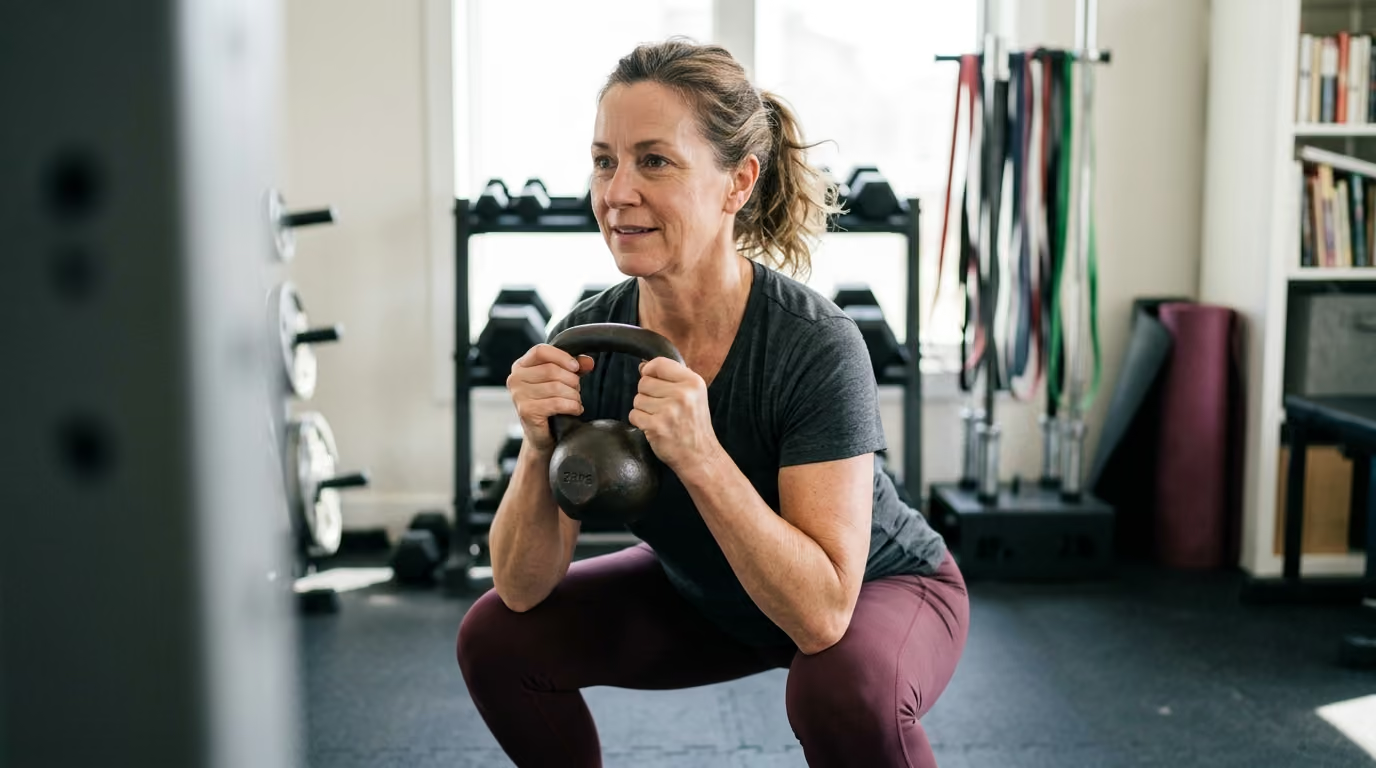
Muscular strength is the maximum force your muscles can generate against resistance. It provides the foundation for joint stability, bone density, posture, and real-world utility. In daily life, strength manifests as absolute strength, relative strength, and functional strength.
Relative strength, the force you generate relative to your body weight, is vital for daily energy. If you weigh 80 kilograms and have weak hip extensors, standing from a low sofa requires significant effort. If you possess strong glutes and quadriceps, that same movement is effortless. Functional strength ensures you can hinge, pull, push, and carry without stressing passive joint structures. A robust muscular chassis protects you from the continuous micro-trauma that causes persistent ache, inflammation, and physical fatigue.
Muscular power is force produced quickly, defined mechanically as force multiplied by velocity. While strength is about how much load you can move, power is about how rapidly you can produce force. A person can possess impressive absolute strength while still moving slowly.
Power is essential for quick reactions, balance recovery, climbing stairs at a brisk pace, and navigating uneven mountain trails. Fast-twitch type II muscle fibers, which govern power production, decline faster with age than slow-twitch fibers. When you lose power, your body becomes sluggish when reacting to trips or unexpected loads. Training power teaches your central nervous system to fire motor units rapidly, creating a springy, dynamic physical sensation.
Muscular endurance is the ability of your muscles to repeat submaximal contractions or sustain continuous tension over time. It is distinct from aerobic capacity. A runner may have an exceptional cardiovascular engine but lack the postural muscular endurance to sit upright or carry a backpack without fatigue.
Muscular endurance supports:
This capacity depends on local muscular vascularization, mitochondrial density within specific muscle groups, and metabolic efficiency. When muscular endurance is high, your postural muscles resist sagging, your neck and shoulders remain relaxed, and your physical battery lasts until bedtime.
Physical fitness directly influences your cognitive performance, attention span, and emotional resilience under pressure. The brain consumes approximately 20 percent of your resting metabolic energy. When physical tasks demand excessive effort, cognitive stamina suffers as mental resources divert to manage physical stress.
Scientific research shows a clear link between structured training and specific cognitive domains. Resistance training consistently improves working memory, verbal learning, and spatial memory span. Progressive resistance training performed once or twice weekly has been proven to improve selective attention and conflict resolution in older adults. Furthermore, structured exercise stimulates brain-derived neurotrophic factor, which supports neuronal health and synaptic plasticity.
The relationship between exercise and brain function is nuanced. Exercise does not automatically cure cognitive decline, and benefits vary depending on training mode, duration, and baseline health. Systematic reviews confirm that concurrent aerobic and resistance training provides superior benefits for executive function and cognitive flexibility compared to sedentary habits.
Physical capacity provides cognitive resilience through three primary mechanisms:
By training your body, you create a physiological buffer that protects your mind from mental fatigue. Active professionals seeking to optimize their focus can review our dedicated energy and focus guides for targeted mental performance protocols.
You cannot manage what you do not measure. Evaluating your physical capacities provides a baseline to guide your training progression without guessing. These practical assessments require minimal equipment and offer reliable insight into your movement capacity.
Before performing any physical assessment, ensure you are free from acute musculoskeletal injuries, chest discomfort, or unmanaged cardiovascular issues. Stop any test immediately if you experience dizziness, joint pain, or shortness of breath.
This protocol measures functional submaximal aerobic capacity. Find a flat, measured path, such as an outdoor track or a quiet hallway. Walk as far as you comfortably can in six minutes without running.
Record the total distance covered, your heart rate at completion, your perceived exertion on a 1 to 10 scale, and the time it takes your breathing to return to normal. Healthy adults over 40 typically cover between 500 and 700 meters. Tracking this distance every twelve weeks reveals whether your aerobic foundation is expanding.
The chair-rise assessment evaluates lower-body functional strength and dynamic power. Use a sturdy, armless chair with a seat height of approximately 43 to 45 centimeters. Sit with your arms crossed over your chest and feet flat on the floor.
Stand up completely and sit down five times as quickly as possible while maintaining control. Time the test from the initial movement to the fifth standing position. Completing five repetitions in under 10 seconds indicates good lower-body power and functional capacity. A time greater than 12 seconds highlights a need for dedicated leg strength and speed development.
Grip strength provides a reliable proxy for total-body force transfer and neuromuscular function. Using a calibrated hand dynamometer, stand tall with your arm by your side and squeeze the handle with maximal effort for three seconds.
Perform two attempts on each hand and record the highest score. For men over 40, values between 40 and 50 kilograms indicate healthy functional strength. For women over 40, values between 25 and 35 kilograms reflect solid force production. If you lack a dynamometer, a timed dead hang from a pull-up bar offers practical feedback on grip endurance.
This test measures functional trunk stability, grip stamina, and postural endurance. Select a pair of dumbbells or kettlebells totaling approximately 40 to 50 percent of your body weight for men, or 30 to 40 percent for women.
Pick up the weights, stand tall with shoulders packed, and walk at a normal pace on a flat surface. Record the distance you can cover before your posture breaks or your grip fails. Covering 50 meters with solid posture and controlled breathing indicates robust real-world muscular endurance.
Quantitative fitness data should align with your subjective experience. Track your daily energy across three simple metrics for two weeks:
If your physical test scores rise while your subjective afternoon energy improves, your training volume is well balanced. If your physical numbers climb but your daily energy crashes, you are likely under-recovering.
Improving energy after 40 requires avoiding popular fitness traps that drain vitality instead of building it.
Many adults believe that cardiovascular exercise is the only way to build energy. They spend hours on treadmills or stationary bikes, neglecting resistance training. While aerobic work supports mitochondrial health, excessive cardio without strength training accelerates muscle loss.
Lacking strength makes ordinary physical tasks feel heavier. If you have the aerobic engine of a runner but weak legs, climbing stairs remains costly. A balanced approach pairs cardiovascular work with progressive resistance training to keep the chassis as capable as the engine.
The belief that every workout must leave you exhausted is counterproductive after 40. High-intensity training creates a large sympathetic nervous system load. When combined with professional pressure, travel, and family commitments, frequent maximal workouts deplete your systemic reserves.
Training for energy requires leaving one to two repetitions in reserve on most strength sets. Your aerobic work should primarily remain at a conversational pace. The goal of training for longevity is stimulation, not annihilation.
Many active adults avoid explosive training, fearing joint injury. However, power declines nearly twice as fast as maximum strength as we age. Avoiding all rapid movements accelerates the loss of fast-twitch muscle fibers, leaving you physically slow.
Power training does not require heavy Olympic lifts or aggressive plyometrics. Light medicine ball throws, fast bodyweight squats, and rapid cable rows safely preserve neuromuscular speed without stressing joints.
A normal body mass index does not guarantee functional fitness. An individual can carry low body fat while possessing poor aerobic capacity and low muscle mass. This condition leaves a person with minimal physical reserve. Focus on performance capacities, such as strength, movement quality, and stamina, rather than weight alone.
Readers seeking to optimize their daily recovery can explore our comprehensive recovery and sleep guides to balance training stress with deep cellular regeneration.
You do not need to spend ten hours a week in the gym to build extraordinary physical capacity. A well-designed routine delivers substantial benefits with three to four hours of total weekly training. The key is consistency, progressive overload, and high movement quality.
The World Health Organization recommends 150 to 300 minutes of moderate aerobic activity, or 75 to 150 minutes of vigorous activity weekly, paired with muscle-strengthening exercise on two or more days. For an active adult over 40, we can structure this into a balanced weekly framework.
Your resistance workouts should focus on fundamental multi-joint movement patterns. These movements recruit maximum muscle mass and translate directly into daily activities.
A balanced session includes:
Perform two to three working sets per exercise, keeping two repetitions in reserve. Select loads that allow 6 to 10 repetitions for strength, and 10 to 15 repetitions for muscular endurance.
Include your power work at the beginning of your resistance sessions, immediately after your warm-up when your nervous system is fresh.
Effective, low-impact power exercises include:
Keep the volume low, performing three to five sets of three to five repetitions. Focus entirely on movement velocity. Rest for 60 to 90 seconds between sets to ensure each repetition is explosive.
Your aerobic work should follow an 80/20 distribution. Approximately 80 percent of your cardiovascular time should sit in moderate, conversational zones, while 20 percent challenges your top end.
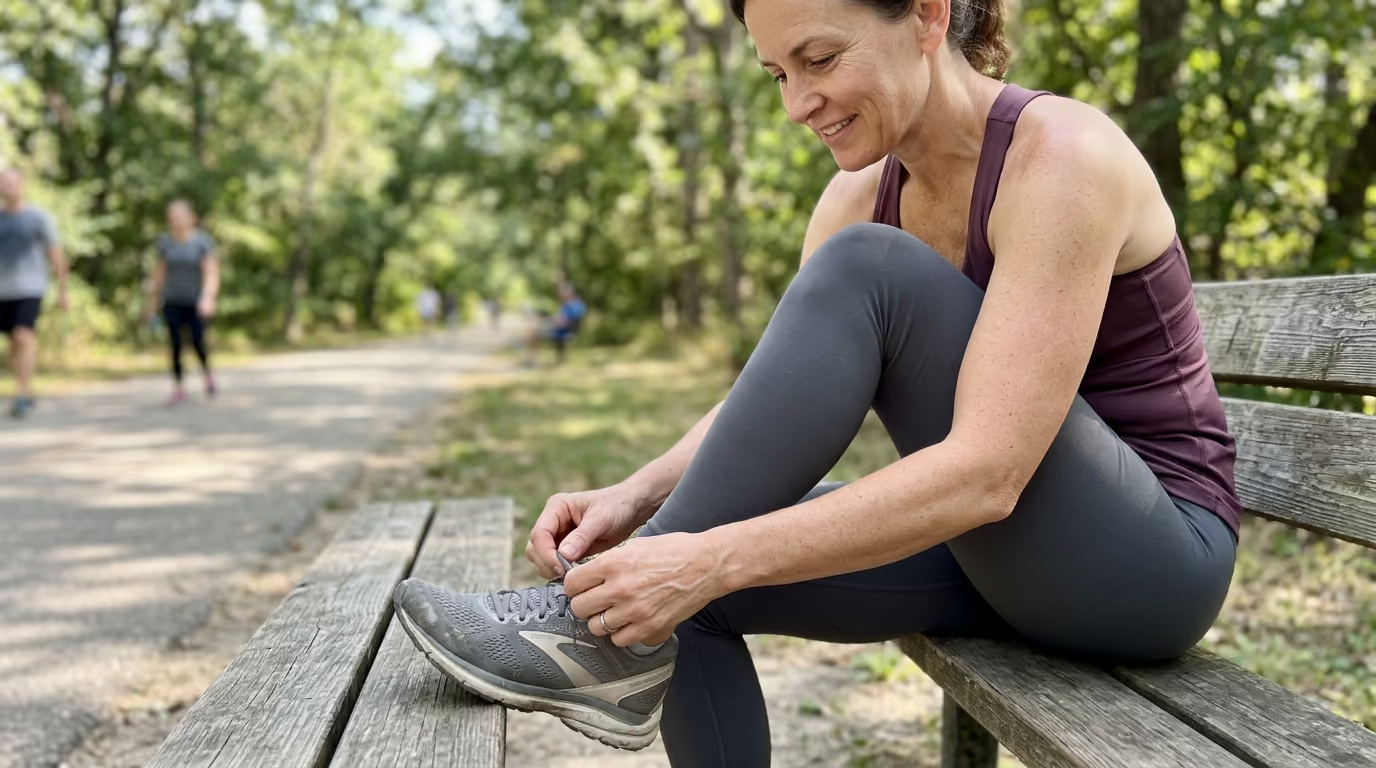
Use brisk walking on an incline, outdoor cycling, rowing, or swimming for your base aerobic work. For your interval work, perform short intervals, such as one minute of hard effort followed by two minutes of easy recovery, repeated five to six times. This simple combination builds mitochondrial density while expanding cardiac output.
For a deeper look into structured strength protocols designed for long-term physical durability, read our dedicated strength and physical performance library.
The ultimate return on physical capacity is experienced outside the gym. Worldly adults value their ability to travel effortlessly, hike alpine trails, ski demanding terrain, and navigate international transit without physical breakdown.
Hiking at altitude over steep terrain demands all four physical pillars. Ascending a mountain trail requires continuous aerobic output and local muscular endurance in the calves, quadriceps, and glutes. Descending steep, rocky paths requires eccentric knee strength and rapid ankle power to adjust to shifting gravel.
When your physical foundations are prepared, hiking becomes an immersive pleasure rather than a painful struggle for oxygen. Your joints stay protected by your muscular chassis, and your recovery between climbing days is rapid.
Downhill skiing demands sustained isometric leg strength, rapid power output to absorb terrain changes, and robust core stability. A skier with poor muscular endurance fatigues by mid-day, leading to poor form and increased injury risk.
By building powerful leg extensors and trunk stability in the gym, you maintain strong edge control through late-afternoon slush. You return to the lodge energized for dinner rather than exhausted and nursing sore knees.
Long-haul travel places quiet but severe physical stress on the body. Prolonged sitting tightens hip flexors, stresses the lumbar spine, and slows venous blood return. Moving heavy luggage through sprawling airports requires grip strength, shoulder stability, and functional carries.
A resilient cardiovascular system clears metabolic fatigue faster following long flights. Strong postural muscles prevent the back stiffness and neck aches commonly triggered by cramped airplane seats. You arrive at your destination ready to explore immediately rather than losing two days to travel fatigue.
Travelers looking to enhance their transit stamina and recovery can consult our travel and human performance guides for specialized pre-flight and post-flight routines.
Building lasting energy is a progressive process that requires steady application. Use this simple checklist to establish your physical foundations starting this week.
Stay connected for research and practical guidance on longevity, strength, recovery, energy and active living. New ideas to help you stay capable, curious and ready for more.


Explore practical guidance on strength, recovery, energy, travel and longevity for a life that stays active.
explore the Blog