
Power training after 50 is gaining attention. See how controlled speed fits alongside strength work and what the evidence means for active travel.





On October 24, 2026, a Parade article republished by Yahoo Health highlighted power training as an option for people over 50. For anyone who values independent travel and active holidays, the central idea deserves attention: being strong and being able to use strength quickly are different qualities.
The report describes lighter weights lifted faster while maintaining control. It also reports a vascular-function advantage in a University of Missouri study comparing that approach with heavier and slower lifting. The useful takeaway is to consider power alongside conventional strength work rather than treating the report as a reason to abandon an established routine.
Strength concerns producing force. Power adds the ability to produce it quickly. As the Parade report explains, that distinction matters when a movement requires a rapid response rather than a deliberate effort.
Chris Gagliardi is an American Council on Exercise scientific education content manager quoted in the article. He explains that muscular power is distinct from strength because speed matters. The report uses standing from a chair and catching yourself after a trip as examples of why rapid force production has everyday relevance.
That makes power a useful concept for readers whose goals extend beyond lifting a heavier weight. The question becomes whether training reflects both the force a movement requires and how quickly that force must be available. This is a capability-focused way to think about exercise rather than a search for a more exhausting workout.
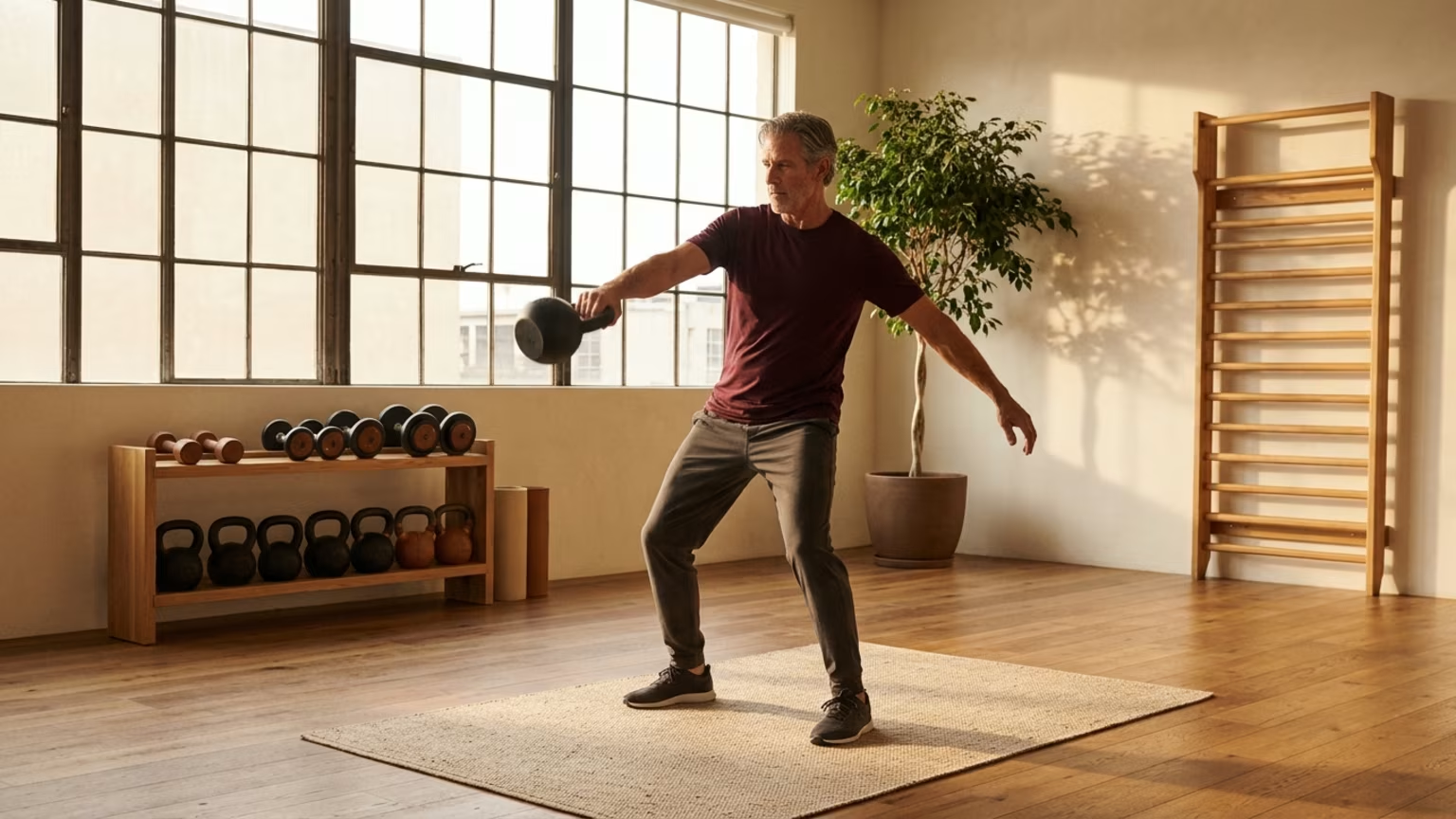
The article's practical description is straightforward: use a lighter load for a familiar movement and lift quickly with control before lowering slowly. The emphasis is on deliberate speed during the lifting phase. Control remains part of the movement throughout.
For an existing training plan, the sensible frame is strength and power considered together. Power work becomes another quality to consider within that plan rather than a competing training philosophy.
According to Yahoo Health's Parade report, a University of Missouri study compared 16 weeks of lighter-load high-speed power training with slower training using heavier weights. The lighter and faster group showed greater improvements in vascular function.
Vascular function concerns how blood vessels work. That makes the reported result interesting beyond the usual conversation about lifting performance. Here, the comparison concerned a blood-vessel outcome rather than simply how much weight participants could move.
The finding gives researchers and active adults a reason to pay attention to training speed. It also helps explain why this report discusses power as more than a tool for athletic performance. Its practical significance depends on understanding the finding within the evidence surrounding it.
Separate Yahoo Health coverage describes an American College of Sports Medicine resistance-training update drawing on 137 systematic reviews involving more than 30,000 participants. That coverage reports benefits for muscle mass and strength as well as functional performance across the evidence summarized.
The same article summarizes a 2026 meta-analysis of 16 studies involving 801 adults aged 60 and older. It reports improvements in muscle mass, strength, and functional performance. Among the movement-speed approaches analyzed, maximal intended movement velocity showed the strongest functional-performance results.
In plain language, the intention to move quickly received attention alongside the resistance itself. That supports taking movement speed seriously when discussing physical capability. It also places the newer report within a broader conversation about how resistance training is performed.
A 2026 umbrella review in BMC Geriatrics offers related context. Across its synthesis of exercise and nutrition interventions, exercise-based fall prevention had the most consistently supported downstream clinical evidence. For readers focused on independence, that is a reason to keep the broader exercise picture in view.
The vascular study is available here through a news account. That account does not provide the sample size, specific vascular measurements, effect sizes, or full methods. Its reporting therefore leaves the size and durability of the benefit unclear alongside its clinical importance. It does not establish that heavier lifting is harmful or that the result applies to every adult over 50.
The American College of Sports Medicine update and the meta-analysis are also described through secondary coverage. The broad review figures belong to that wider evidence base rather than to the University of Missouri study. They should not be used to make the vascular comparison appear larger or more definitive.
Gagliardi associates power loss with falls, frailty, and functional decline. Association does not establish that a particular power-training routine prevents falls. A systematic review record summarized by PEDro found some links between strength or power measures and balance but characterized cause-and-effect evidence as weak. The BMC Geriatrics umbrella review also noted mixed methodological confidence and limitations involving overlapping reviews and varied clinical populations.
Finally, the report's chair-standing and trip-response examples are functional illustrations rather than measured outcomes from the vascular comparison. These sources do not establish faster travel recovery or better altitude adjustment. They also do not demonstrate greater sustained energy during hiking or skiing.
For an active holiday, the useful planning question is whether your preparation considers responsive movement as well as sustained effort. Power brings attention to the first part of that question. It gives you a way to discuss quick force production rather than judging every session by weight lifted or time spent exercising.
The chair-standing example offers a simple connection to travel: getting out of a seat and continuing your day is an ordinary expression of physical independence. The report's example of responding to a trip shifts the focus toward a brief movement demand. These are more relevant reference points for many readers than competitive lifting targets.
For hiking or skiing, place that thinking within a broader plan for strength and endurance. Power is one part of the preparation conversation. Sustained effort remains a separate consideration rather than something to judge by how quickly a weight moves.
A useful way to read this news is through the movements you want to retain. Standing confidently and responding promptly are different goals from completing a long day outdoors. Keeping those goals distinct makes the report easier to apply without asking one training approach to do everything.
The practical adjustment is therefore modest: review the role of movement speed within your existing preparation. There is no need to reorganize an entire sporting holiday around a fitness headline.
For adults already doing conventional resistance training, the report supports considering power work as a complement. Its examples use familiar movements rather than requiring complex lifts. Chair stands appear as a bodyweight option.
The article's practical model has three features:
These features explain the approach without turning a news report into an individualized workout. They also offer a focused topic for a conversation with a qualified trainer: how controlled speed might fit movements already present in your routine.
The report advises prioritizing good form and considering a certified trainer when new to lifting. It also recommends consulting a doctor before beginning a new routine, particularly for people with heart conditions or joint and balance concerns. Personal exercise choices belong with qualified guidance rather than a generic prescription based on age.
For someone who already trains, the most useful next consideration is one element of the routine rather than a complete overhaul. Keep the existing strength framework in view while discussing whether a controlled power component fits its purpose. The article's emphasis remains on appropriate execution rather than speed at any cost.
It is also sensible to keep this discussion connected to how recovery fits your strength routine. A new training quality belongs within the life and activities you want to support. It need not become another pursuit of exhaustion.
Treat controlled power work as a considered addition to established strength training, with qualified guidance shaping personal choices and your wider routine still supporting the demands of travel and sport.
Stay connected for research and practical guidance on longevity, strength, recovery, energy and active living. New ideas to help you stay capable, curious and ready for more.


Explore practical guidance on strength, recovery, energy, travel and longevity for a life that stays active.
explore the Blog

