
Texas State University researchers are investigating the biological reasons behind the healthspan gap between women and men. Learn how these biological differences dictate personalized travel recovery and sport performance.





On September 24, 2026, Texas State University announced that researchers are studying why females and males differ in lifespan and healthspan. The project arrives as active adults increasingly recognize that preserving physical independence requires highly precise strategies. Men and women simply do not experience physical decline in identical ways over time. For those who want to continue skiing steep terrain or traveling the globe, understanding these biological differences is absolutely essential.
The central issue driving the Texas State University research is the stark gap between lifespan and healthspan. Lifespan measures the total years a person lives, whereas healthspan measures the years spent in good physical condition. Demographics consistently show that women generally outlive men across the globe. However, women often spend more of those additional years managing age related diseases and physical limitations.
A 2026 Boston Consulting Group analysis puts clear numbers to this global demographic disparity. The analysis reports that women globally outlive men by roughly five years. Despite this apparent longevity advantage, BCG estimates that women spend about 25 percent more of their lives in poor health. Living a longer life is only beneficial if those extra years are spent with true physical capability and independence.
The statistics within the United States paint a similarly stark picture for aging adults. BCG estimates that women in the United States spend 13.7 years in poor health. By comparison, men in the United States spend approximately 11.1 years in poor health. This represents a difference of about 2.6 years where physical independence, travel capability, and daily mobility could be severely compromised.
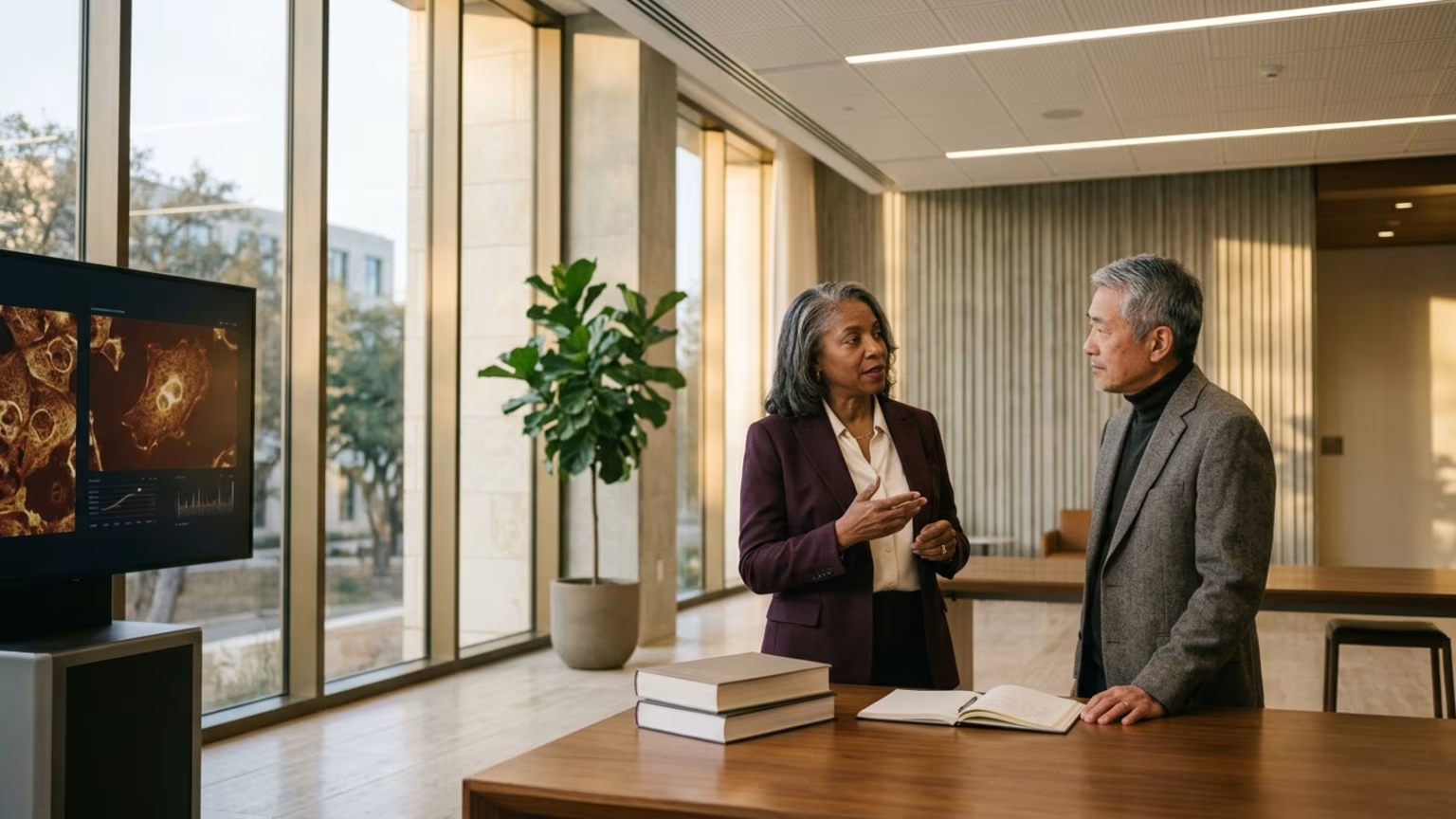
Peggy Biga, Ph.D., serves as a professor and chair of the Department of Biology at Texas State. She leads a research team investigating these healthspan disparities through comparative animal biology. Her team is studying young and old female and male fish to uncover foundational mechanisms. They are carefully examining how genetic makeup, physical sex traits, and environmental conditions directly influence the aging process.
The research team involves multiple dedicated scientists working to understand these complex biological mechanisms. The Texas State team includes doctoral students Ireen Lin and Abby Quimby. Technician Yoli Lemus Saldivar is also an integral part of this important scientific effort. Together, they are gathering data that challenges the outdated assumption of a universal human aging process.
This project is part of a broader, National Science Foundation funded program focused on biology. The program is called the Integration Initiative: Sex, Aging, Genomics, and Evolution, or IISAGE. This initiative examines sex specific aging across the animal kingdom using massive biological datasets. Researchers plan to compare the fish data with aging studies involving insects, reptiles, birds, and mammals.
IISAGE intends to build foundational knowledge about biological aging mechanisms rather than focusing strictly on a single disease. Researchers will utilize advanced computational tools and machine learning to identify hidden evolutionary patterns. The university also says Biga received NSF support for a Genomics and Epigenomics of Aging workshop. This targeted workshop is planned for the 34th International Plant and Animal Genome Conference in 2027.
Assuming that a single health protocol works equally for both sexes is increasingly unsupported by clinical science. A 2026 peer reviewed mouse study clearly illustrates how biological sex dramatically alters responses to longevity interventions. Researchers suppressed growth hormone receptor signaling in mice beginning in middle age. This targeted intervention extended the maximum lifespan in female mice by an impressive 12 percent.
The results for male mice in the exact same experiment were noticeably different. The reported median survival extension in male mice was only 7 percent. Furthermore, this 7 percent increase did not even reach statistical significance in that specific experiment. These findings highlight exactly why generalized health recommendations often fail to deliver expected results for every individual.
These biological realities are also supported by recent findings in the field of immunology. A 2026 review reports that male and female immune systems differ significantly across the entire life course. These functional immune differences persist well after menopause, influencing susceptibility to infection and responses to targeted immunotherapies. This biological complexity underscores the importance of monitoring organ specific aging research when building a performance plan.
Dietary interventions also require a highly personalized approach based on your specific metabolic baseline. A separate 2026 study reported that stronger adherence to healthier diet quality scores was consistently associated with slower epigenetic aging. However, understanding exactly how these dietary strategies interact with your sex and environment remains a crucial step. Addressing the hidden protein shortfall in older adults must involve tracking your own unique nutritional responses over time.
The Texas State findings suggest that our external environmental conditions interact deeply with our specific biology. This interaction becomes immediately obvious when we cross time zones or shift altitudes rapidly during international travel. After a grueling thirty hour transit to Tokyo, I realized my old strategy of just powering through was no longer working. I felt foggy for three days, and my physical capability dropped significantly.
I started digging into circadian biology and realized that timing my light exposure and fasting during the flight could completely shift my recovery. Now, I never board a long haul flight without a precise schedule for when to eat and when to put on an eye mask. It is the difference between losing a week of your trip and hitting the ground running. We must build our travel protocols around our own unique biological responses to environmental stress.
This personalized approach is especially crucial during major hormonal and biological transitions. Active women planning high altitude treks should always factor their specific life stage into their demanding travel schedules. Managing travel performance during hormonal transitions requires intelligent strategic planning rather than simply resting more. Your recovery timeline will inevitably shift based on how your immune system and metabolism respond to travel fatigue.
Athletic performance and sustained energy depend heavily on proactively addressing your specific physiological needs. The healthspan gap highlighted by the Texas State project shows that women and men face distinctly different physical challenges over time. Men might experience faster cardiovascular declines, while women might face higher risks of prolonged joint mobility issues. Both scenarios require highly targeted physical preparation to maintain capabilities for adventure.
Skiing long days in the backcountry demands serious muscular endurance and rapid overnight recovery. Preserving this capability means explicitly acknowledging how your specific body responds to accumulated physical stress on the mountain. You cannot rely on a generic fitness plan designed for a completely different biological profile or age group. Monitoring functional markers like aerobic capacity and joint mobility provides a much better picture of your actual readiness.
Implementing precise recovery tactics is the absolute key to maintaining high energy throughout a demanding week. If hiking a steep trail leaves you exhausted for several days, your baseline recovery strategy needs immediate attention. Employing targeted recovery strategies for active women or men requires knowing your specific starting point. You must align your training volume directly with your actual physiological capacity to recover and adapt.
Midlife provides the perfect critical window to establish a highly personalized health baseline. Routine medical checkups are useful, but they do not capture the functional metrics needed for a highly active lifestyle. Active adults must track their muscle power, sleep quality, and the ability to sustain strenuous physical effort. The IISAGE project specifically examines how genotype and environment interact, and we should apply a similar analytical mindset to our health.
You should discuss age appropriate and risk appropriate screening with a trusted, functionally focused clinician. Ensure your medical team thoroughly understands your specific performance goals for sports, adventure, and global travel. A practical physical program should always preserve the capabilities most directly connected to your long term independence. Customizing your approach based on rigorous science ensures your performance plan matches your unique biological reality.
Active adults must reject generic longevity advice and build personalized performance protocols based entirely on their specific biological stage and recovery needs.
Stay connected for research and practical guidance on longevity, strength, recovery, energy and active living. New ideas to help you stay capable, curious and ready for more.




Explore practical guidance on strength, recovery, energy, travel and longevity for a life that stays active.
explore the Blog