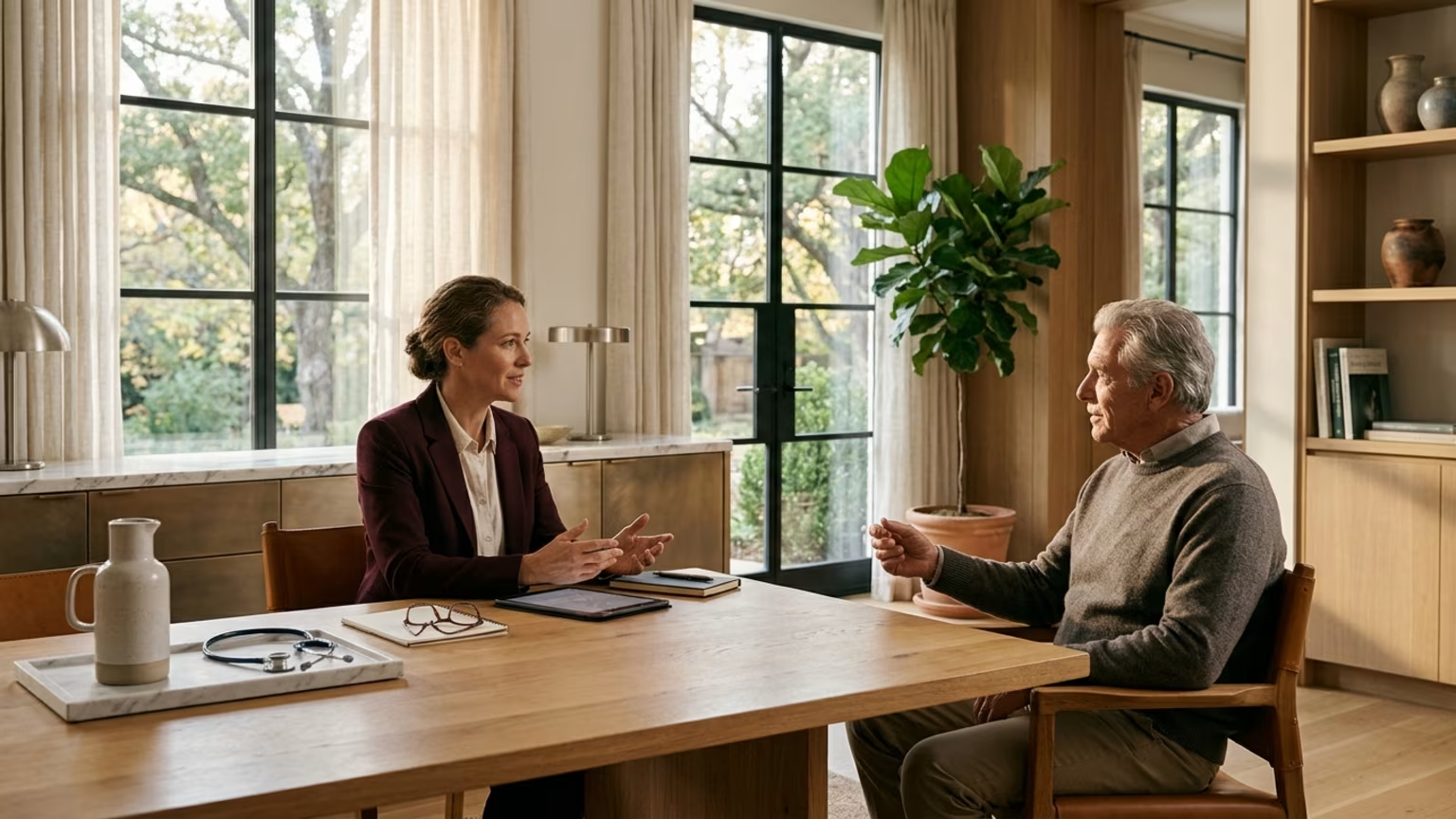

A Unity Health neurologist reframes stroke prevention around independence, with established care taking priority over unvalidated longevity claims.





On October 27, 2026, Unity Health Toronto published an article describing neurologist and researcher Dr. Gustavo Saposnik’s proposal to organize stroke prevention around biological aging and independence. For an active adult who values travel and time outdoors, the relevance is straightforward: prevention should serve the life you want to keep living.
Saposnik’s emphasis is on more years without disability rather than simply more years alive. The practical measures remain familiar: managing blood pressure and LDL cholesterol alongside activity, diet and sleep. What changes is the reason for bringing them together.
A cardiovascular review can feel abstract when the conversation ends with a laboratory result. Connecting that review to future independence gives it a more tangible purpose, whether your priority is hiking abroad or managing everyday life on your own terms.
According to Unity Health’s account, Saposnik argues that chronological age does not necessarily reflect the condition of someone’s arteries or their cardiovascular risk. A birthday tells you how long you have lived. It does not describe every aspect of your health.
His proposal brings familiar risk factors into a shared conversation about aging and capability. Rather than viewing blood pressure and cholesterol as unrelated problems, he suggests considering how they fit into the broader goal of preserving function.
The article also describes his view that a stroke may be a sign of accelerating biological aging rather than only an isolated vascular event. This is the central idea being proposed: a wider perspective on prevention rather than a different name for an individual test result.
Separate October 2026 reporting in Newsweek described research from the University of Cincinnati. Researchers found that adults aged 20 to 54 were almost twice as likely to have a stroke as around three decades earlier. That finding adds context to concern about stroke across adulthood, but it does not test Saposnik’s biological-aging proposal.
Unity Health reports that Saposnik and Argentine stroke neurologist Dr. Conrado Estol co-authored a paper on this approach. The measures described in the article are established prevention priorities rather than a new longevity product.
The account lists:
The useful distinction is between the framework and the work. Biological aging supplies the wider perspective. The practical work remains attention to measurable cardiovascular risks and sustainable habits.
For someone already interested in staying capable, this is a reason to connect those subjects rather than keep them in separate compartments. Exercise belongs in the same conversation as cardiovascular care, even when the motivation for exercising is a walking holiday or another ski season.
It also connects with the wider question of how activity, nutrition and sleep fit together. The appeal is coherence: familiar health priorities organized around a personally meaningful goal.
Unity Health presents an expert’s proposed framing, not evidence that the framing itself adds disability-free years. Biological aging is not established here as a replacement for conventional risk assessment. The reported exercise and sleep quantities are also not individualized targets for every reader; personal decisions belong with qualified care.
Saposnik cautions that evidence for biological-age tests, whole-body MRI screening and longevity products remains limited. That distinction matters when a compelling idea about aging is used to promote a purchasable test or service.
Wearables have a separate evidence boundary. Unity Health reports that no major trial has yet shown that smartwatch screening reduces stroke rates. The article describes an atrial-fibrillation alert Saposnik received during a flight that was later attributed to aircraft motion and vibration, illustrating how false alarms can cause anxiety.
The article also leaves the co-authored paper’s title and publication venue unspecified. And this is a prevention discussion rather than a study of flight recovery, altitude adjustment or sports endurance. Its practical relevance should therefore be understood through risk management and independence rather than immediate performance benefits.
Saposnik describes longevity science as an “organizing principle” for stroke prevention. In Unity Health’s account, his preferred outcome is more years lived without disability.
That is a useful shift in emphasis for an audience that values capability. The goal is not merely to collect favorable measurements. It is to keep the freedom to choose where you go and how you spend your days.
His interest also extends to making prevention easier to carry out. Unity Health describes practical nudges such as booking follow-up by default and making blood-pressure targets visible to both clinician and patient.
The important idea is follow-through. Information becomes more useful when the next review is clear and both people understand what they are working toward. For the reader, this offers a practical bridge between a broad ambition to age well and an ordinary clinical appointment.
A hiking itinerary or ski holiday gives independence a recognizable shape. You want to take part in the day rather than organize everything around limitations. Saposnik’s framing places that ambition behind the less glamorous business of cardiovascular prevention.
For travel recovery and sustained energy during sport, the practical relevance is organizational. Keep the underlying prevention plan connected to the life it is meant to support. A trip can provide a meaningful reason to maintain continuity rather than treat health care and adventure as unrelated projects.
Consider the questions an active traveler already cares about: Will I remain able to manage my own arrangements? Can I continue choosing physically engaging holidays? Will I retain the freedom to travel without relying on others for ordinary tasks?
These are expressions of the disability-free years Saposnik wants prevention to prioritize. They also provide a useful lens for planning travel around long-term capability.
There is no need to turn every holiday into a health project. The more grounded interpretation is to give routine prevention a stable place in ordinary life, with travel and sport supplying the motivation rather than a reason for an extreme protocol.
This also changes the conversation about readiness. Recent activity is one part of the picture you bring to a clinician. Your blood pressure and cholesterol remain relevant subjects even when your calendar includes regular hiking or skiing.
The most useful action supported by this coverage is a focused conversation with a clinician about measurable cardiovascular risks and a sustainable prevention plan. Keep that conversation centered on one task: making the plan clear enough to follow and review.
A few questions can give the discussion structure:
These questions reflect the article’s emphasis on visible targets and follow-up. They avoid turning a broad longevity ambition into an open-ended search for more measurements.
For an active traveler, it is reasonable to explain what independence means in concrete terms. That might be continuing to hike or managing a demanding itinerary. Those priorities give the conversation personal meaning without substituting for clinical judgment.
The resulting plan should belong to your actual life. If regular time away matters to you, that is useful context to bring into the discussion about continuity and follow-up. The objective is a routine that remains understandable when everyday circumstances change.
This is a modest adjustment rather than a lifestyle overhaul. It puts one clear clinical conversation ahead of a larger collection of disconnected health intentions.
Make clinician-guided cardiovascular prevention a consistent part of your routine, with the independence needed for future travel and sport as its purpose.
Stay connected for research and practical guidance on longevity, strength, recovery, energy and active living. New ideas to help you stay capable, curious and ready for more.




Explore practical guidance on strength, recovery, energy, travel and longevity for a life that stays active.
explore the Blog

