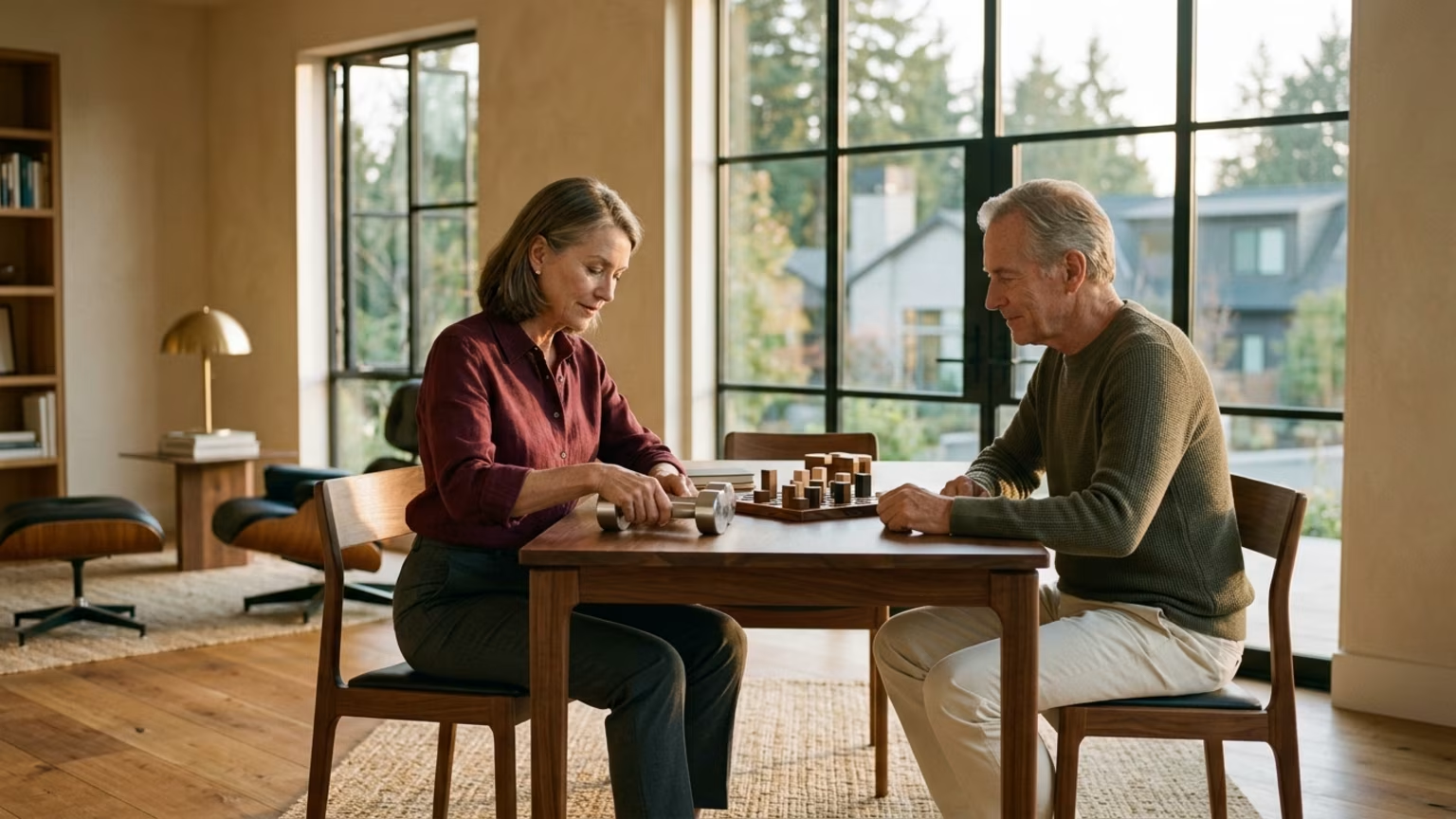

A new four-year study shows strength training and cognitive games lower dementia risk for older adults. Learn why simple walking might not be enough.





An active professional paces a sterile hotel room at midnight to hit an arbitrary step count. A smartwatch buzzes with a hollow digital victory. We are trading genuine physical capability for simple compliance. Stop treating passive walking as the ultimate shield for your aging brain.
Obsessing over daily step counts might provide a false sense of security. This tracking habit allows us to ignore the dynamic challenges our minds actually need. Real cognitive resilience requires complex physical problem solving rather than mindless repetition. Active adults must look beyond basic metrics to preserve their independence.
Mainstream wellness advice often prescribes simple walking to preserve long-term health. A joint team from Nippon Sport Science University and the University of Tsukuba recently challenged this passive approach. The researchers followed older adults living in Kasama for up to four years to examine dementia outcomes. Their findings were published in the August issue of Geriatrics & Gerontology International.
The researchers surveyed participants' lifestyle and health conditions in June 2013. They later assessed typical exercise activities in August 2017 and tracked dementia outcomes through July 2021. The study included five specific exercise categories. The researchers evaluated calisthenics and walking alongside golf. They also tracked strength training and a combined group for gateball and park golf.
Of the 5,074 participants, 430 developed dementia during the follow-up period. This represented an 8.5% proportion of the study population. The analysis adjusted for multiple demographic and health variables. Researchers accounted for age and sex alongside economic status and education. They also factored in sleep duration, depression, body mass index, and chronic illness.
When they looked at the results, the differences between exercise types were staggering. Compared with people who reported no exercise, participants who performed strength training had a 74% lower relative risk of developing dementia. The study reported no statistically significant difference in dementia risk for participants who walked or performed calisthenics. A proper strength training protocol for healthy aging clearly does more than build muscle.
The research team provided compelling biological theories to explain these results. They suggested that strength training could support cognitive health by improving cerebral blood flow. A robust vascular system delivers vital nutrients to brain tissues during heavy physical exertion. The team also proposed that resistance exercise might promote the release of substances involved in nerve growth.
Stressing over extreme optimization often detracts from the goal of enjoying travel and sports. Many capable adults skip challenging games because they want to guarantee a certain aerobic duration. This hyper-focus on basic endurance can rob you of activities that demand true cognitive engagement. The Japanese study highlighted this exact capability cost.
Participants who played gateball or park golf had a 32% lower dementia risk than non-exercisers. The researchers described these games as activities requiring more than simple locomotion. Players must judge a target, plan their movement, and control a club accurately. These games involve complex motor control that forces the brain to solve spatial problems in real time.
The social nature of these activities likely matters just as much as the physical effort. The researchers proposed that group interaction might have contributed to the observed association for gateball and park golf. A 2024 dementia-prevention review identified 14 potentially modifiable risk factors for cognitive decline. That review estimated that as many as 45% of dementia cases could theoretically be prevented or delayed if all factors were eliminated. Physical inactivity, social isolation, and depression were all listed among relevant dementia-risk considerations.
Other observational data supports the value of cognitively demanding participation. One Japanese study of 4,575 adults aged 65 and older found lower odds of cognitive decline among current golfers. That study was cross-sectional and could not establish that golf caused the benefit directly. However, it points toward a clear and compelling pattern. Thorough preparation for racquet and rotation sports provides mental challenges that basic jogging simply lacks.
We must acknowledge the nuances within this observational research. Healthier people with stronger social networks may have been more likely to choose strength training or gateball initially. The follow-up period was four years, which researchers described as relatively short for studying a slowly developing condition. Despite these limitations, the broader evidence supports a comprehensive lifestyle approach over a single exercise modality.
You do not need to adopt an extreme protocol to secure these benefits. The World Health Organization recommends that older adults undertake 150 to 300 minutes of moderate-intensity aerobic activity per week. Alternatively they suggest 75 to 150 minutes of vigorous-intensity aerobic activity. This aerobic foundation must be paired with muscle-strengthening activity at least twice weekly. The WHO-aligned framework treats aerobic activity and muscle strengthening as complementary components of healthy aging.
We must also look at broader scientific reviews to understand the full picture. A review of 17 randomized trials in adults aged 60 and older examined resistance training. This analysis found that resistance exercise improved working memory and cognitive flexibility compared with control conditions. However, the review did not show an advantage over other forms of exercise when directly compared.
Another 2026 review of 18 randomized trials involving 1,365 older adults reported similar nuance. That review noted benefits for working, immediate, and short-term memory from resistance training. Yet it found no significant overall benefit for verbal or delayed memory. A separate review of 12 randomized trials involving 2,557 healthy adults aged 65 and older found that combined aerobic-and-resistance training improved global cognition.
A practical WealthAtPlay alternative achieves massive results with a much simpler approach. Treat strength training as a core part of your long-term health plan rather than a cosmetic afterthought. You can safely build physical resilience by prioritizing safe technique and gradual progression. You simply need to challenge your muscles consistently to trigger the biological responses that support your brain.
Do not abandon walking just because this specific study found no significant association. Walking remains a low-barrier aerobic foundation that fits easily into a busy travel schedule. Instead of walking alone, combine your aerobic movement with activities that require decisions, precision, and balance. Balancing concurrent training and cognitive work creates a powerful stimulus for your nervous system. Add a weekly game of tennis, golf, or a dynamic group activity to your routine.
When you look at your weekly schedule, ask yourself what you are actually preparing for in the long run. Are you simply trying to hit an arbitrary step count, or are you building the capacity to travel and play? The research is clear that your brain needs resistance, complex movement, and social connection to thrive. A brain-supportive active lifestyle should combine ordinary aerobic movement with progressive strength work and cognitively engaging games.
Actionable Takeaway: Schedule two focused strength sessions this week and replace one solo walk with a socially engaging sport.
Stay connected for research and practical guidance on longevity, strength, recovery, energy and active living. New ideas to help you stay capable, curious and ready for more.





Explore practical guidance on strength, recovery, energy, travel and longevity for a life that stays active.
explore the Blog