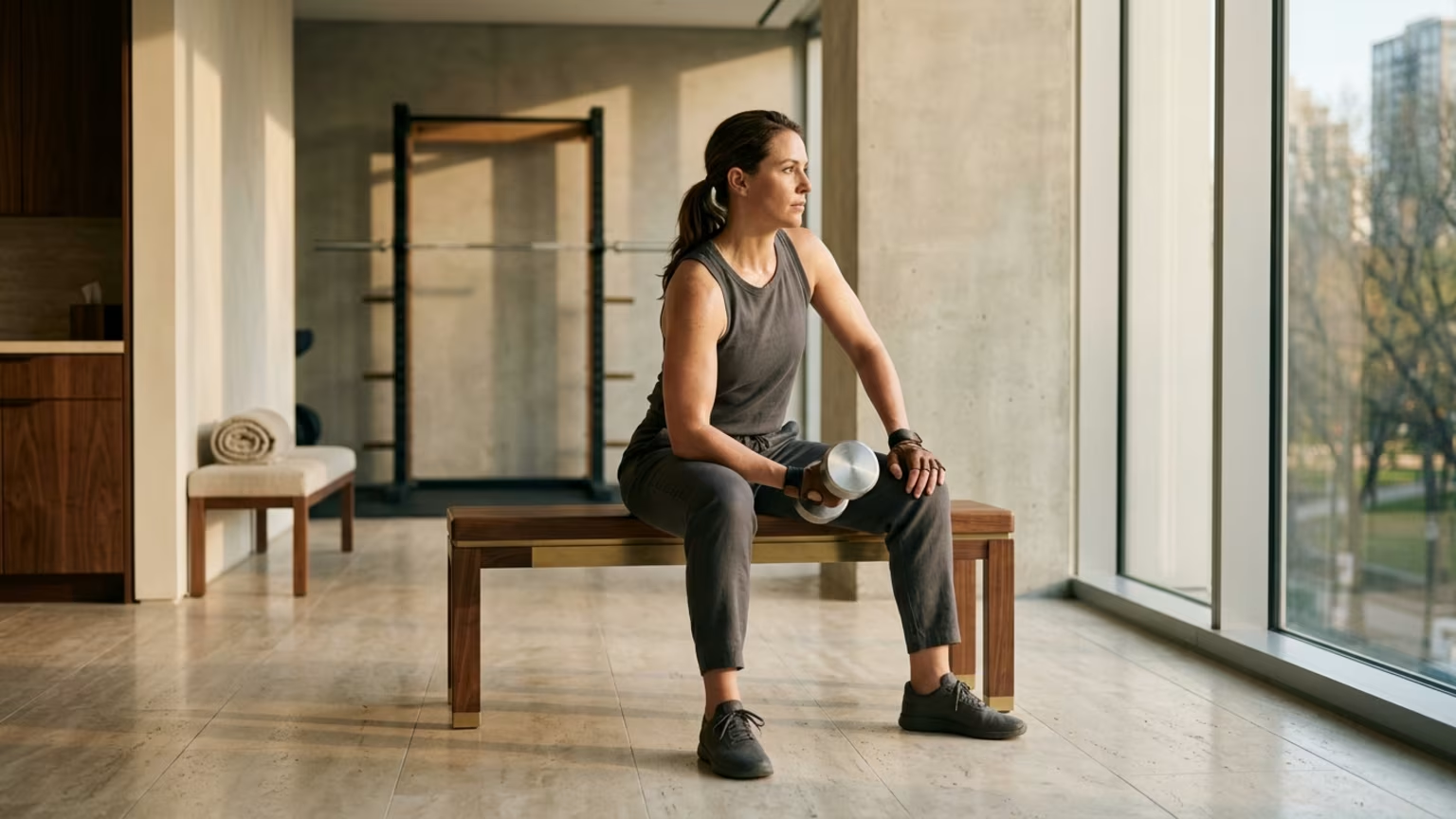

A 2026 review outlines practical daily protein targets for postmenopausal women, highlighting 20-25g meal anchors and consistent resistance training.





On September 19, 2026, a recent review from the Munster Menopause Clinic translated a European expert consensus into a practical daily protein target for postmenopausal women. The guidance suggests aiming for approximately 1.0 to 1.2 grams of protein per kilogram of body weight per day. For active adults focused on maintaining their physical capabilities, this consensus provides a clear and achievable nutritional benchmark. Rather than relying on extreme diets, the review emphasizes simple structural adjustments to daily meals alongside regular physical activity.
The Munster Menopause Clinic review highlights that daily protein totals are only part of the equation for healthy aging. The consensus suggests consuming roughly 20 to 25 grams of high-quality protein at each main meal instead of eating most of it in a single large dinner. This meal-based approach provides repeated opportunities to stimulate muscle protein synthesis throughout the day. Spacing out your intake makes the overall daily target much easier to achieve while traveling or managing a busy schedule.
Protein provides the necessary building materials, but your muscles still require a mechanical stimulus to adapt and grow over time. Health New Zealand guidance recommends completing at least two muscle-strengthening sessions per week as part of an active lifestyle through menopause. A recent review echoes this standard, stating that adults and older adults should train all major muscle groups at moderate or greater intensity at least two days per week. LIPS Healthcare notes that protein supplementation alone does not reliably increase muscle mass or strength in healthy older adults.
Small clinical trials illustrate why nutritional targets should not be viewed as a standalone solution for preserving strength as you age. One trial involving 55 healthy postmenopausal women compared protein intake and exercise over a 12-week period. The training groups improved their strength significantly, while protein without training did not improve body composition. In that same trial, combined protein plus training was not superior to training alone for the primary headline strength outcomes. The evidence consistently shows that lifting weights builds substantial power, and adequate dietary protein simply supports that physical work.
A separate 10-week study of 47 postmenopausal women compared intakes of approximately 0.8 versus 1.2 grams of protein per kilogram of body weight per day during a training program. Both groups improved their strength over the course of the study. The higher-protein group showed small additional changes in selected walking tests, but they did not achieve superior strength or lean-mass quality. These results suggest that while meeting a daily protein benchmark for active adults is helpful, the mechanical work of training remains the primary driver of physical capability.
The suggested intake range is a practical starting point rather than a universal requirement for every active adult. The ESPEN Expert Group recommends that healthy older adults consume at least 1.0 to 1.2 grams of protein per kilogram of body weight per day. However, they also identify a higher range of 1.2 to 1.5 grams per day for older adults who are malnourished or at risk due to acute or chronic illness. This distinction is important for individuals managing demanding physical recovery, dealing with an unexpected illness, or facing specific health challenges.
A clinical nutrition source notes that protein prescriptions should always be individualized according to factors including renal function, body size, acute illness, and treatment goals. Body weight calculations provide a helpful baseline, but they may need adjustment for specific medical contexts. Anyone managing kidney disease, significant chronic illness, or a medically restricted diet should discuss their specific protein targets with a clinician. Your nutritional strategy must align with your overall health status and treatment objectives.
Applying these nutritional targets can fundamentally change how you recover from demanding travel and outdoor pursuits. For a woman weighing 70 kilograms, the baseline range equates to approximately 70 to 84 grams of protein per day. Dividing that total into three main meals of roughly 20 to 25 grams ensures a steady supply of nutrients for muscle recovery during long days of hiking or skiing. This structured approach helps prevent the physical fatigue that often accompanies sudden increases in altitude, changes in climate, or increased daily activity volume.
In our experience, unstructured eating during travel often derails physical performance and leaves you feeling depleted. After a grueling thirty hour transit to Tokyo, our old strategy of just powering through was no longer working. We felt foggy for three days before adjusting our approach to long-haul travel. We started digging into circadian biology and realized that timing our fasting and meals during the flight could completely shift our recovery. Now, we never board a long haul flight without a precise schedule for when to eat and when to put on an eye mask.
Anchoring your travel days with 20 to 25 grams of high-quality protein per meal keeps your physical recovery on track even when crossing multiple time zones. You can easily find eggs, dairy products, fish, or poultry to meet these practical targets in hotels or transit lounges. Maintaining this consistent nutritional intake helps your body repair the minor wear and tear caused by heavy luggage, long walks through terminals, and cramped seating. When you pair this reliable eating strategy with early bone adaptation from your weekly resistance training, your physical resilience improves dramatically.
The combination of structured meals and deliberate movement creates a powerful foundation for sustained independence. By focusing on simple protein anchors at breakfast, lunch, and dinner, you remove the guesswork from your daily nutrition. This straightforward approach allows you to spend less time tracking specific macronutrients and more time enjoying your active pursuits. True physical capability requires a balance of adequate recovery resources and consistent mechanical challenge.
Active postmenopausal women should aim to distribute approximately 1.0 to 1.2 grams of protein per kilogram of body weight evenly across three daily meals while maintaining at least two weekly resistance training sessions.
Stay connected for research and practical guidance on longevity, strength, recovery, energy and active living. New ideas to help you stay capable, curious and ready for more.





Explore practical guidance on strength, recovery, energy, travel and longevity for a life that stays active.
explore the Blog