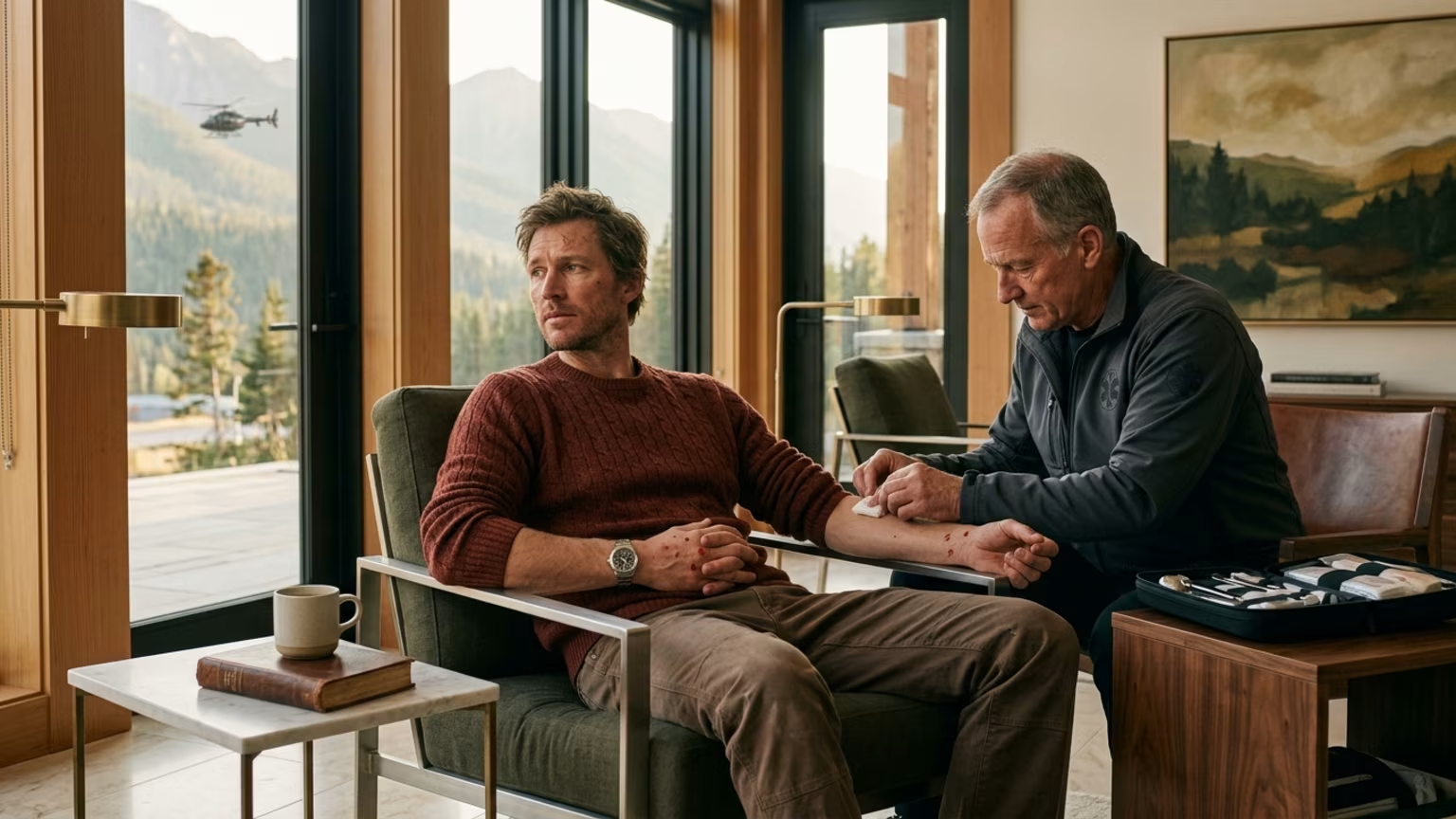

Physical fitness cannot solve a backcountry medical emergency. Study critical preparedness lessons from a recent helicopter rescue in British Columbia.





Technical skill and exceptional physical fitness are entirely useless against a hidden insect nest. The backcountry demands absolute preparation, yet many active adults overlook the smallest hazards. Maintaining your baseline strength is crucial for outdoor adventures. However, this reality forces a critical question for older athletes venturing into remote terrain. How do I prepare for a medical emergency when my physical capabilities can no longer solve the problem?
We often think of mountain safety exclusively in terms of rockfall and weather. A recent incident near Vancouver proves that microscopic amounts of venom can change a trip instantly. Two women had completed a demanding climb at Redoubt Wall near Loggers Creek. This is a fully vertical rock-climbing area east of Howe Sound along British Columbia’s Sea to Sky corridor.
They were descending through steep terrain when one climber stepped directly on a wasp nest. The 33-year-old woman rapidly developed a systemic allergic reaction with hives across her body. Lions Bay Search and Rescue requested assistance from North Shore Rescue after it became clear that the climber could not safely hike out. Heavy tree canopy required rescuers to be flown in before the patient could be prepared for extraction. The climber ultimately required no further medical treatment, according to the New York Times account.
The climber disturbed a hidden hazard during a routine descent. Wasps can nest underground or inside trees and logs in remote terrain. This makes ordinary trail surfaces and forest margins potentially dangerous. The initial report suggested the climber suffered more than 100 stings. Rescuers later estimated that she may have sustained between 12 and 20 stings.
This event illustrates how easily a routine activity can shift into a survival scenario. The person who disturbs a nest is generally at the greatest risk of sustaining multiple stings. Maintaining situational awareness is vital, even when you are on a familiar descent. These hidden nests are a definitive hazard that require constant vigilance.
The exact number of punctures is rarely the most critical factor in a backcountry rescue. Rescuers emphasized that the systemic allergic reaction is the primary medical issue. The climber required a complex technical rescue because she experienced widespread hives and could not safely walk. Warning signs of a serious reaction include widespread hives, breathing difficulty, dizziness, faintness, and vomiting. The body's biological reaction to the venom dictates the true urgency of the response.
The climber ultimately needed no further medical treatment after her extraction. However, a favorable outcome should not imply that widespread hives are safe to manage without medical evaluation. Her inability to walk out independently highlights the debilitating nature of a severe allergic response. Fitness and technical skill do not replace proper medical preparation in the backcountry.
Many experienced hikers incorrectly assume that uneventful past stings guarantee future safety. Carolyn Kelly-Smith of Lions Bay Search and Rescue explicitly warned against this dangerous assumption. She noted that multiple stings increase the risk of a systemic reaction even if you have never reacted badly before. A capable traveler must still prepare for a sudden immune response. Building true physical independence means acknowledging your vulnerabilities alongside your strengths.
The immediate priority during a swarm is to move quickly away from the nest. You should not stop to swat at individual insects. Wasps do not lose their stingers after an attack, allowing them to strike repeatedly. Once you are completely clear of the area, you can assess everyone for injuries. You must also avoid sending anyone back through the same hazardous area.
A coordinated group response is critical during any sudden insect swarm. Everyone must act decisively to minimize the total amount of venom injected. Panic and disorganized swatting will only prolong the exposure time for the entire team. Moving swiftly as a unified group is your best immediate defense.
The New York Times reported that backcountry hikers should always have an epinephrine auto-injector available. This is absolutely critical if you have a known insect venom allergy. You must teach your partners where the medication is stored and how to administer it. A person experiencing severe dizziness or breathing trouble may not be able to self-administer life-saving medication.
Carrying the right medical equipment is only half of the preparation equation. You must also maintain the physical dexterity and presence of mind to use it properly. Storing emergency medication at the very bottom of a packed rucksack is a critical mistake. Immediate accessibility is paramount when airway swelling or severe dizziness begins.
The trapped climber had taken antihistamines before help arrived. A ground rescue team still brought emergency medical supplies, including epinephrine, in case her condition deteriorated. You should also consider your environmental clothing choices carefully. Rescuers advise wearing pants, long sleeves, or bug nets in wasp-prone areas to limit exposed skin.
A backcountry medical issue can rapidly become a complex logistical extraction. The climber at Redoubt Wall was trapped beneath heavy forest canopy in highly restrictive terrain. Rescuers had to be inserted by helicopter before the patient was hoisted from the mountain. She was then transferred to British Columbia Emergency Health Services for detailed assessment and treatment.
A separate report indicated that the exact same swarm also attacked responding personnel. Another group of hikers was reportedly stung when they passed through the area approximately an hour later. This detail suggests that a disturbed nest remains a highly active hazard for subsequent hikers. Rescue teams must often navigate these ongoing threats while managing technical extractions.
This was reportedly the second helicopter rescue in the same area in 2026 involving hikers swarmed by wasps. On July 30, a hiker heading toward Elsay Lake was reportedly stung more than 20 times. Rescuers successfully treated that hiker and evacuated the group by helicopter. Maria Masiar said Lions Bay Search and Rescue began tracking reports along the corridor due to unusually high wasp activity. She attributed this increased insect activity to a mild winter and an early spring.
Medical preparedness requires the exact same intentional planning as your basic travel logistics. The need for precise biological planning becomes far more apparent as we travel further from home. My own approach to demanding trips completely shifted after a harsh lesson. After a grueling thirty hour transit to Tokyo, I realized my old strategy of just powering through was no longer working.
I felt foggy for three days. I started digging into circadian biology and realized that timing my light exposure and fasting during the flight could completely shift my recovery. Now, I never board a long haul flight without a precise schedule for when to eat and when to put on an eye mask. It is the difference between losing a week of your trip and hitting the ground running.
Whether you are planning for intense jet lag or mapping out remote extraction points, having a rigid plan is critical. You must integrate your adventure travel safety protocols long before leaving the trailhead. A thorough exit plan includes your designated route back, defined communication methods, and possible extraction zones. This foundational level of forethought ensures that you remain capable and confident in demanding wild spaces.
Many outdoor athletes rely on outdated assumptions about insect encounters and emergency medical management. Following bad advice in isolated terrain can turn a manageable incident into a severe crisis. You should explicitly ignore these three common misconceptions when planning your next expedition.
Antihistamines are useful, but they cannot independently stop a severe systemic allergic reaction. The rescued climber had taken antihistamines, yet a ground team still deployed with epinephrine. Widespread hives, severe dizziness, and breathing difficulty require urgent and specialized medical intervention. Relying solely on basic allergy pills in remote terrain is a deeply flawed strategy.
Stopping to fight off attacking insects only increases your physical exposure to venom. Wasps can sting repeatedly, and lingering near a disturbed nest invites further aggressive strikes. The most effective tactical action is immediate and rapid movement away from the hazard. You can safely evaluate the medical situation once you are well outside the immediate threat area.
Your biological immune system can change over time, making previous uneventful stings an unreliable metric. Rescuers warn that multiple punctures can trigger a severe response in nearly anyone. You cannot base your mental fitness and risk assessment entirely on your historical hardiness. True capability comes from preparing for the exact conditions you face today. Developing a progressive travel fitness plan must include planning for medical contingencies.
Managing risks in remote environments requires highly objective preparation rather than simple optimism. A minor physical misstep off a trail can quickly escalate into a complex logistical extraction challenge. Maintaining your autonomy in the backcountry means anticipating these rapid shifts in circumstance. Keep these core principles firmly in mind when planning your next remote route.
We build our physical capacity so we can experience the world entirely on our own terms. Sometimes, the most demanding test of that capacity is knowing how to handle the sudden threats we cannot control. True wilderness mastery is simply the quiet confidence that you are ready for whatever the trail reveals.
Stay connected for research and practical guidance on longevity, strength, recovery, energy and active living. New ideas to help you stay capable, curious and ready for more.





Explore practical guidance on strength, recovery, energy, travel and longevity for a life that stays active.
explore the Blog