
Demanding adventure travel seems out of reach after forty, but building deliberate physical capacity and joint stability preserves complete backcountry independence.





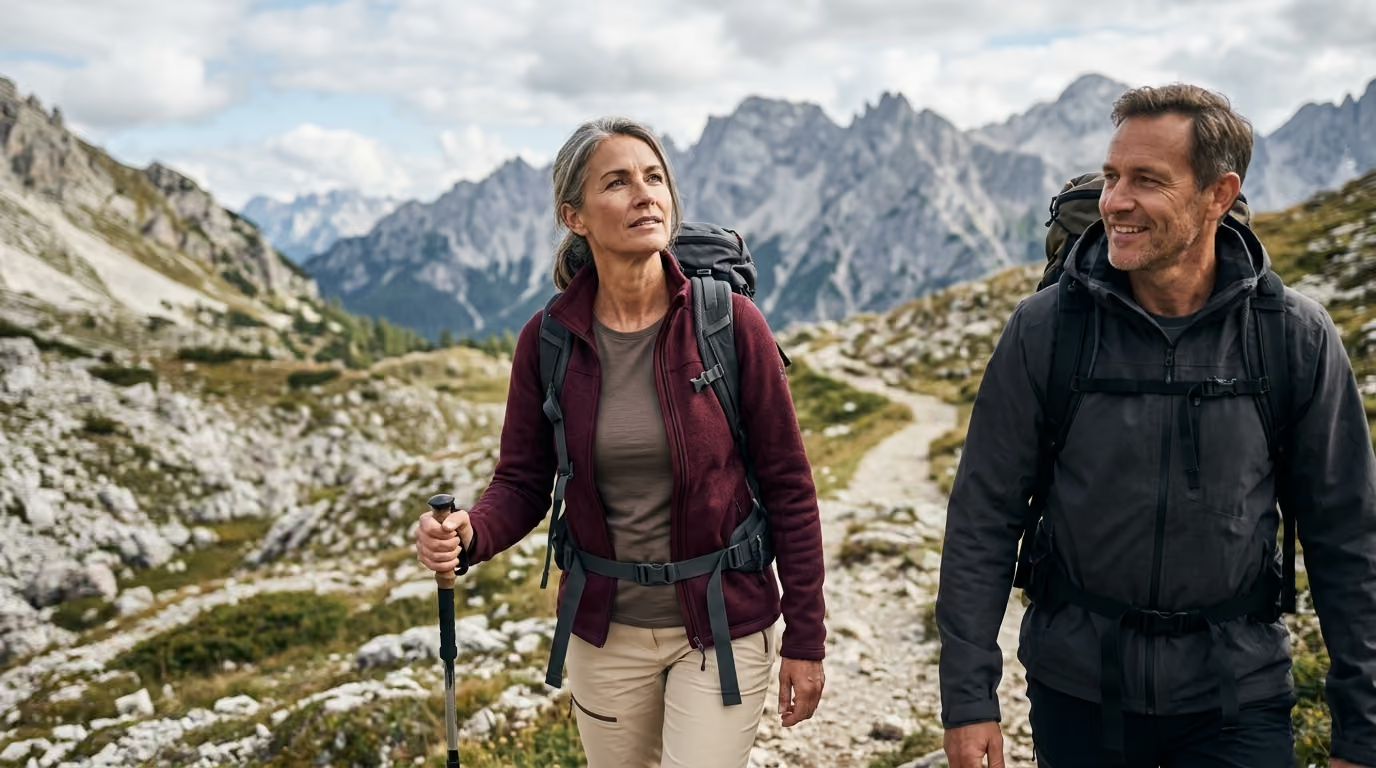
You are standing at the base of a steep descent in the Italian Dolomites. The afternoon sun is beginning to dip behind limestone spires, your knees feel slightly tender from five hours of climbing, and there are still three miles of loose gravel between you and the valley floor. Twenty years ago, you might have jogged down without a second thought. Today, your mind calculates the joint load, your hydration level, the grip on your boots, and how you will feel tomorrow morning.
This calculation is not a sign of decline. It is an exercise in capacity management. Adventure travel in midlife and beyond is fundamentally about matching route demands with your physiological reserves, medical reality, and environmental conditions.
Staying capable in demanding environments requires intentional preparation. By shifting your focus from rigid athletic feats to building broader physical margins, you can hike remote ranges, cycle coastal passes, ski alpine bowls, and navigate foreign cities with complete autonomy.
Physical capability after 40 is defined by your functional margins rather than your chronological age. Chronological age simply counts years, while functional age reflects your active balance, leg strength, cardiovascular endurance, and recovery rate. When you travel, environmental stressors such as heat, humidity, altitude, and cold consume your physiological reserves faster than standard daily routines.
A successful expedition relies on preparing your body for specific movement patterns, managing environmental exposure, and respecting early physiological stop signals. Older travelers do not need to restrict themselves to passive tours. Instead, they need wider safety margins built through structured training, conservative hydration and nutrition strategies, proper clothing systems, and realistic daily itineraries.
The central challenge of active travel after 40 is managing physiological reserve. Reserve capacity represents the gap between your baseline physical effort and your absolute maximum output. When you walk around your neighborhood, you operate at a low percentage of your maximum capacity. In remote terrain, bad weather, heavy packs, and steep gradients quickly deplete that remaining buffer.
Research from the World Health Organization emphasizes that maintaining multicomponent physical activity reduces functional decline and fall risks in older adults. Multicomponent fitness includes five distinct elements:
As we age, power and balance decline faster than pure aerobic capacity. A traveler may possess the lung capacity to walk for six hours but lack the fast-twitch muscle recruitment needed to catch a slip on wet scree.
Furthermore, downhill movement introduces eccentric muscle contractions, where muscle fibers lengthen under load. Descending stairs or steep trails generates intense eccentric force across the quadriceps and patellar tendons. Without specific conditioning, this loading creates significant microscopic muscle damage, leading to severe stiffness that peaks two days later.
Cardiovascular and thermoregulatory efficiency also shift over time. Sweating mechanisms, skin blood flow, and thirst perception can become less responsive in extreme climates. Cardiovascular health guidelines note that underlying arterial stiffness or subclinical disease requires careful workload management in extreme heat or cold. You can read more about these principles in our guide to healthy aging and living well.
A safe adventure begins weeks before you pack your bags. The Centers for Disease Control and Prevention recommends that travelers schedule a dedicated pre-travel consultation four to six weeks prior to departure. This clinical review evaluates chronic conditions, immunization needs, destination-specific risks, and daily prescription regimens.
Medications require careful scrutiny before demanding trips. Certain blood pressure medications, including beta-blockers and diuretics, alter fluid balance, heart rate response, and heat dissipation. Non-steroidal anti-inflammatory drugs can stress renal function when combined with heavy sweating or altitude exposure. Travelers should review their entire medication list with a physician and never adjust doses independently.
Alongside medical clearance, you should conduct a practical functional self-assessment at home:
A structured twelve-week training cycle builds the physical foundation required for rugged itineraries. You can learn more about building resilient movement patterns in our strength and physical performance section.
The initial month establishes baseline tissue tolerance and movement quality. Focus on brisk walking for thirty to forty-five minutes daily, targeting moderate intensity where conversation is possible. Introduce two weekly resistance sessions emphasizing squats, step-ups, hip hinges, calf raises, and core stabilization.
Dedicate ten minutes three days per week to balance drills, such as single-leg stands, tandem walking, and barefoot stability exercises. Incorporate dynamic mobility work for the ankles, hips, and upper back. Practice handling technical gear, such as setting trekking pole lengths or testing bicycle pedal clips.
During the second month, adjust your workouts to mirror the demands of your itinerary. Introduce hills, outdoor stairs, or steep incline treadmill sessions to condition the lower body for elevation changes. Add weighted step-downs to build eccentric strength in the quadriceps for mountain descents.
Wear your intended hiking boots or approach shoes during these sessions to condition your feet and identify pressure points early. Carry your planned day pack, starting with five pounds and gradually increasing to your target expedition weight. Practice your mid-workout fueling and hydration routines to verify digestive comfort under exertion.
This phase tests your endurance across consecutive days of activity. Schedule back-to-back training days, such as a long Saturday hike followed by a moderate Sunday cycling ride. This sequence trains your muscles, joints, and nervous system to perform under residual fatigue.
Test your complete clothing layering system in variable weather conditions to ensure breathability and comfort. Rehearse map reading, offline GPS navigation, and satellite communication devices. Confirm that your nutrition, hydration, and sleep routines allow you to wake up recovered each morning.
The final week reduces physical training volume while maintaining movement quality. Cut your workout durations by fifty percent, keeping movement light and fluid without testing maximum efforts. Avoid introducing new exercises, equipment, or aggressive physical challenges right before departure.
Prioritize deep sleep, balanced nutrition, and thorough packing logistics. Organize your medical documentation, travel insurance details, and emergency evacuation plans. Review your destination weather forecasts and finalize alternative routes for severe weather days.
Environmental conditions amplify the physical stress of any activity. Managing environmental exposure requires systematic planning rather than toughing it out.
Ascending to altitudes above 8,000 feet reduces the barometric pressure and the effective oxygen available per breath. The Centers for Disease Control and Prevention notes that while acclimatization improves sleep, comfort, and submaximal endurance, your maximal physical performance remains lower at altitude than at sea level. Fitness does not prevent altitude illness; a marathon runner can develop acute mountain sickness just as easily as an untrained individual if they ascend too quickly.
Acclimatization requires gradual exposure. When traveling above 8,000 feet, limit your daily sleeping elevation gain to 1,000 to 1,600 feet per day, and include a dedicated rest day every three to four days. Monitor yourself for symptoms of acute mountain sickness, which include throbbing headache, fatigue, dizziness, loss of appetite, and nausea.
Forced overhydration does not prevent altitude illness and can trigger dangerous electrolyte imbalances. Drink to satisfy normal thirst and monitor your urine color to ensure it remains pale yellow. If symptoms of altitude illness worsen, stop your ascent immediately; if symptoms fail to resolve, descend to a lower altitude without delay.
Heat stress forces the cardiovascular system to redirect blood flow away from working muscles toward the skin surface for cooling. High humidity limits sweat evaporation, dramatically increasing internal heat storage during moderate exertion.
In hot and humid regions, schedule your most demanding physical activities for early morning hours before solar radiation peaks. Wear loose-fitting, lightweight, light-colored clothing made from technical synthetic fibers or lightweight merino wool. A wide-brimmed hat shields the head and neck, substantially reducing radiant heat absorption.
Hydration in hot climates must balance fluid and mineral intake. The Wilderness Medical Society points out that drinking pure water in massive quantities during prolonged sweating can dilute blood sodium, causing exercise-associated hyponatremia. Consume fluids containing electrolytes, or pair plain water with lightly salted snacks, pretzels, or balanced meals. Never use concentrated whole salt tablets, which irritate the stomach lining and cause vomiting.
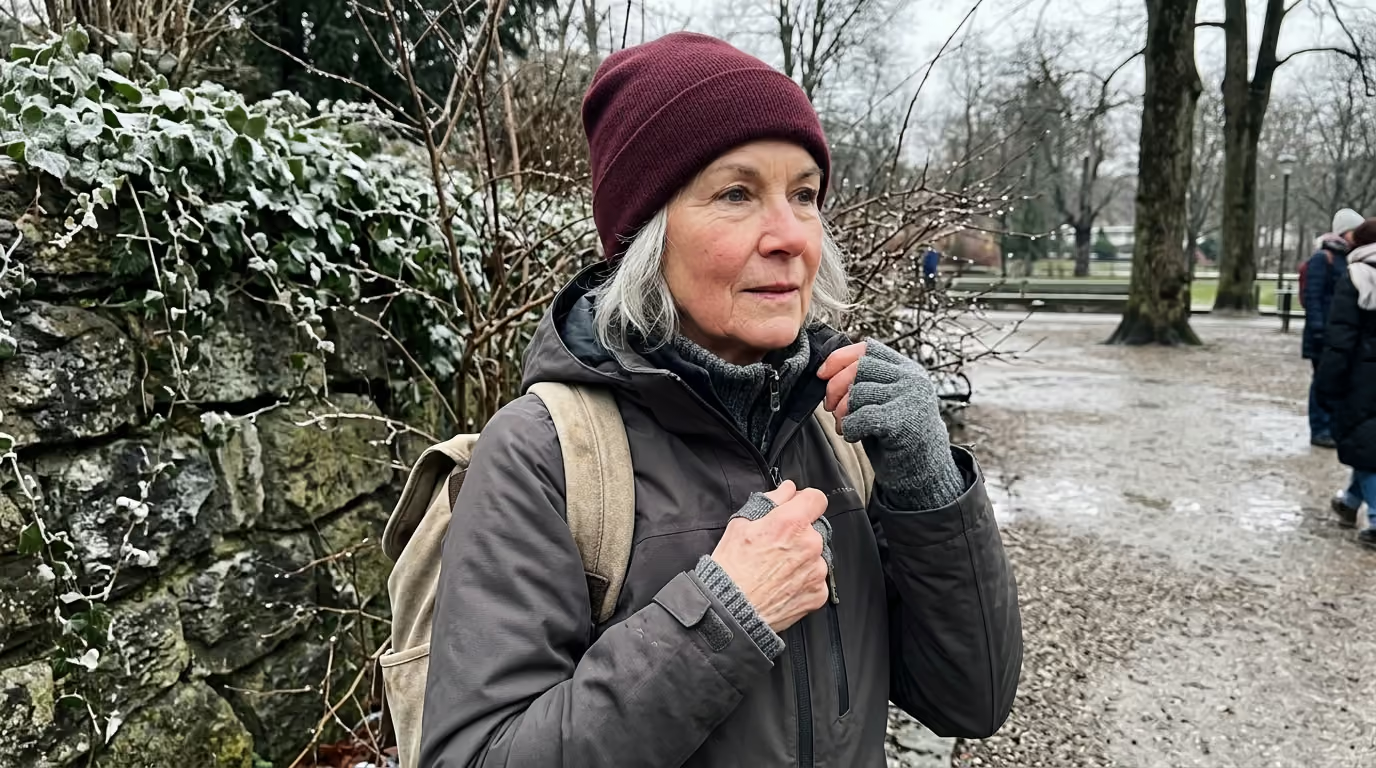
Cold environments demand strict protection against heat loss through conduction, convection, and moisture accumulation. Wet clothing conducts heat away from the body roughly twenty-five times faster than dry clothing. The primary rule of cold-weather travel is to manage sweat production and stay completely dry.
Implement a three-part technical layering system:
Remove your insulating mid-layer before you begin a steep ascent to avoid sweating through your clothing. Put your warm layers back on immediately when you stop to rest, as body temperature drops rapidly once movement ceases. Protect your extremities with windproof gloves, insulated hats, and warm, dry socks.
Different adventure disciplines present unique biomechanical demands and risk profiles for adults over 40.
City travel often involves hidden physical demands, including tens of thousands of steps across concrete sidewalks, uneven cobblestones, museum marble, and subway stairs. Walking on hard pavement generates continuous ground reaction forces that accumulate across multiple days.
Wear supportive, broken-in walking shoes with generous cushioning and structured arch support. Incorporate planned seated breaks at cafés, parks, or transit stops every ninety minutes. Treat uneven historic paving, wet curb cuts, and crowded railway stations as technical terrain that requires your full visual attention.
Develop a three-option itinerary for every city day: your preferred full walking route, an abbreviated walking loop, and an itinerary that uses public transit. If severe jet lag or fatigue sets in, use elevators, trams, or taxis to preserve your energy and balance.
Mountain hiking requires sustained cardiovascular output during ascents and intense eccentric muscular control during descents. Downhill walking places significant compressive stress on the knees, hips, and lumbar spine.
Use adjustable trekking poles to redistribute weight from your lower extremities into your upper body. Poles improve balance on loose scree, assist with river crossings, and reduce knee strain on long descents by up to twenty percent. Adjust pole lengths so your elbows rest at a ninety-degree angle when walking on flat ground, shortening them for ascents and lengthening them for descents.
Establish a firm turnaround time before leaving the trailhead, independent of whether you reach the summit or viewpoint. Never allow photo stops, minor navigation checks, or slow initial pacing to consume the daylight buffer needed for a safe return.
Cycling provides low-impact cardiovascular conditioning while covering significant distances through rural landscapes. However, cycling requires sustained cervical spine extension, wrist support, and rapid balance adjustments on changing road surfaces.
Ensure your bicycle setup fits your biomechanics properly, adjusting saddle height, reach, and handlebar stack to avoid lower back and neck strain. Practice shifting gears and operating hand brakes smoothly on flat ground before tackling mountainous routes. Always wear a properly fitted, modern helmet and high-visibility clothing.
Electric assist bicycles (e-bikes) provide excellent pacing flexibility, allowing travelers of varying fitness levels to journey together. However, e-bikes are significantly heavier than traditional bicycles and travel at higher average speeds. Practice emergency braking and tight turns on an e-bike before heading into heavy traffic or descending steep mountain roads.
Alpine and cross-country skiing require rapid balance reactions, strong core stability, and high isometric leg endurance. Cold temperatures and flat lighting can impair balance and reaction times.
Condition your legs with squats, lunges, and lateral hops for at least eight weeks before your ski trip. Take conservative warm-up runs on gentle terrain each morning to gauge snow conditions, visibility, and muscle readiness. Stop skiing in the early afternoon before physical exhaustion compromises your form and control.
Wear high-quality UV-blocking goggles to prevent snow blindness and maintain terrain contrast in changing light. Avoid alcohol consumption during the ski day, as it impairs motor coordination, slows reaction times, and accelerates body cooling.
Kayaking, canoeing, stand-up paddleboarding, and open-water swimming involve exposure to currents, sudden wind shifts, and cold water temperatures. Cold shock can incapacitate a strong swimmer in minutes if the water temperature is below sixty degrees Fahrenheit.
Always wear an approved, properly fitted personal flotation device when paddling, boating, or operating on open water. A personal flotation device keeps your head above water if you become injured, fatigued, or disoriented by cold shock. Never equate pool swimming endurance with open-water capability, where waves, tides, and currents alter the energy required.
Check local tide tables, wind forecasts, and marine safety advisories before launching. Paddle with a partner, carry a waterproof communication device attached to your body, and identify alternative shoreline exit points along your route.
Long-haul transit creates physiological strain that can compromise the first few days of your journey. Prolonged sitting in pressurized cabins, dry air, disrupted circadian rhythms, and missed meals drain physical reserves before your adventure even begins. Explore our field-tested approaches to travel and human performance to maintain peak conditioning on the road.
After a grueling thirty hour transit to Tokyo, I realized my old strategy of just powering through was no longer working. I felt foggy for three days. I started digging into circadian biology and realized that timing my light exposure and fasting during the flight could completely shift my recovery. Now, I never board a long haul flight without a precise schedule for when to eat and when to put on an eye mask. It is the difference between losing a week of your trip and hitting the ground running.
To maintain physical resilience across long journeys, integrate these travel habits:
Review our dedicated guides on recovery and sleep and nutrition and metabolism to optimize your daily energy while traveling.
Several persistent myths prevent active adults from preparing effectively for adventure travel.
Cardiovascular conditioning provides an excellent foundation, but it does not make you immune to environmental stressors. A marathon runner can suffer heat exhaustion or acute mountain sickness just as quickly as a recreational walker if environmental conditions are ignored. True capability relies on pacing, environmental awareness, and respecting physiological limits.
Drinking beyond your thirst can be just as dangerous as dehydration. Over-consuming plain water during long physical exertion dilutes serum sodium levels, which can cause exercise-associated hyponatremia. The safest approach is drinking to natural thirst, consuming balanced electrolytes, and monitoring urine color.
Total immobility on rest days can increase joint stiffness and delay recovery. An effective active recovery day includes light walking, gentle mobility work, gentle stretching, wholesome nutrition, and quality sleep. Gentle movement promotes circulation, clearing metabolic byproducts and maintaining tissue suppleness.
Experiencing persistent joint pain that alters your gait is not a badge of honor. Pushing through acute joint pain or biomechanical compensation significantly raises your risk of falls, tendon damage, and long-term injury. Minor aches should be addressed immediately with rest, route adjustments, trekking poles, or proper footwear.
High-end gear, ultralight carbon poles, and satellite communicators enhance safety, but they cannot compensate for poor physical preparation. A lightweight pack does not replace strong leg muscles, and a GPS unit cannot save you from physical exhaustion on a mountain ridge. Rely on your physical training first and use gear to support your established baseline.
You do not need to spend twenty hours a week in a gym to prepare for an active adventure. A focused, minimal effective training routine fits into a busy professional life while delivering substantial physical improvements.
Commit to three key sessions each week:
Prioritize single-leg stability exercises, such as single-leg deadlifts with light weights or single-leg balance on an unstable cushion. These brief drills build the ankle, knee, and hip stability needed to handle loose scree, boat decks, and slick city streets. This efficient routine builds the strength and balance required for demanding itineraries.
The most important survival skill on any expedition is knowing when to stop, modify your route, or turn around. Establish objective stop rules before you set out, when your judgment is free from fatigue or schedule pressure.
Monitor yourself and your companions for these warning signs:
If you observe these red flags, stop your activity immediately. Seek shelter, add warm layers, hydrate with electrolytes, or begin a controlled descent. Never let a prepaid tour, a summit ambition, or group expectations push you past clear physiological warning signs.
Adventure travel after 40 is a rewarding pursuit that combines physical capability with worldly appreciation. By viewing your travels through the lens of capacity management, you can continue taking on rugged, inspiring journeys for decades to come.
Approach your physical preparation with steady consistency, respect the power of natural environments, pack with precision, and listen to your body's early signals. The rewards are immense: mountain vistas, coastal paths, vibrant historic quarters, and the deep confidence that comes from moving through the world on your own terms.
When planning your next major expedition, revisit this guide twelve weeks before departure to audit your baseline conditioning, review your climate-specific gear, and structure your training progression. Travel far, prepare thoroughly, and keep your physical margins wide.
Stay connected for research and practical guidance on longevity, strength, recovery, energy and active living. New ideas to help you stay capable, curious and ready for more.


Explore practical guidance on strength, recovery, energy, travel and longevity for a life that stays active.
explore the Blog