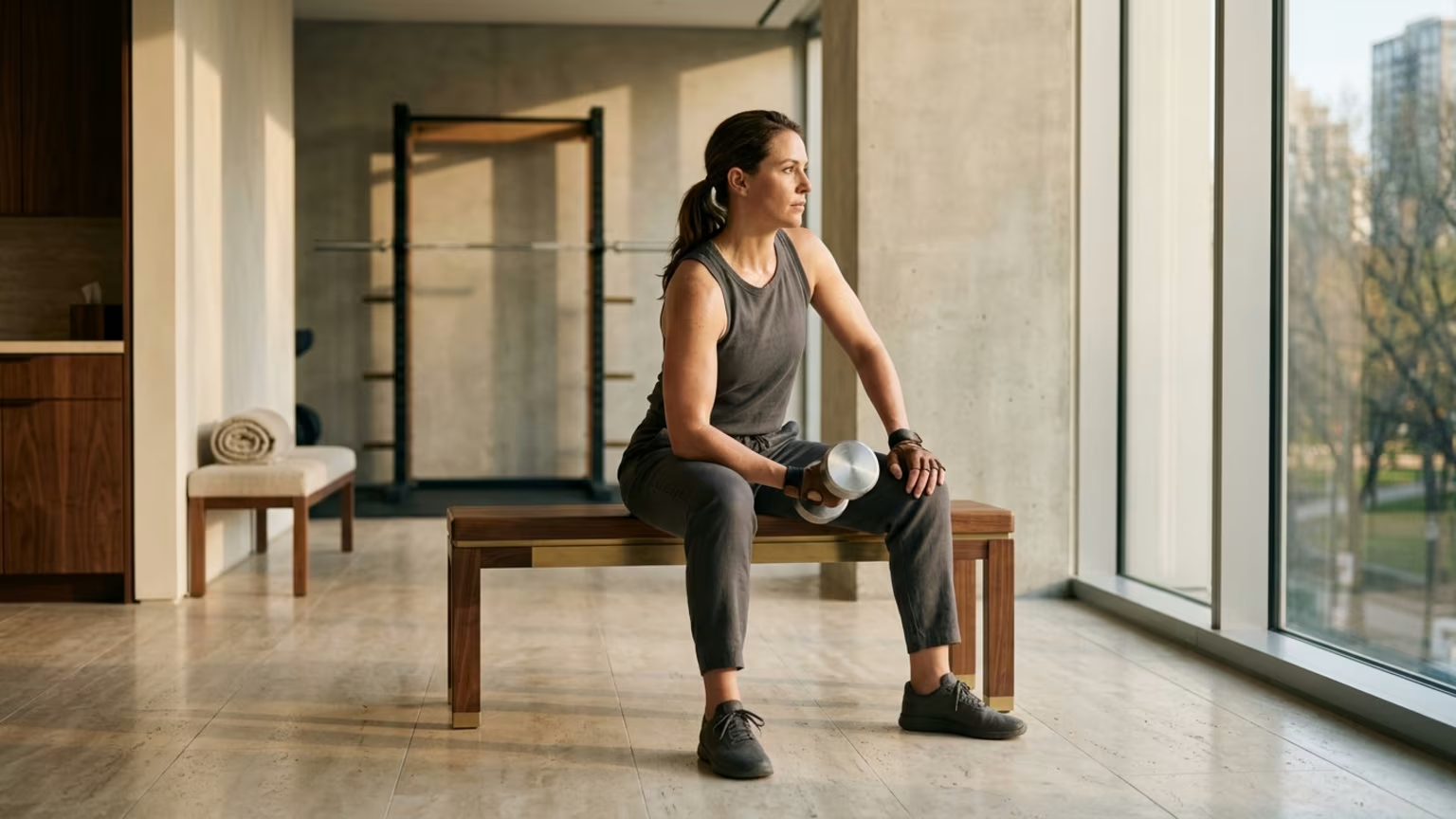
Plant protein can build muscle just as effectively as animal protein when daily intake reaches 1.6 g/kg. Learn how active adults over 40 can optimize fueling.





You do not need to eat a steak every night to maintain your physical capability as you age. The long-standing belief that plant protein is inherently inferior for building muscle is a misunderstanding of dosage rather than biology. When total daily intake is sufficiently high, plant sources can support strength and muscle remodeling just as effectively as animal products.
For decades, nutrition science operated on the assumption that animal proteins were the unquestionable gold standard for human performance. This premise made sense based on the early data. Animal proteins typically contain higher concentrations of leucine per serving, which acts as a primary trigger for muscle repair. Because early research often tested small, standardized servings across all protein types, plant-based meals consistently failed to reach the required amino acid threshold.
Researchers were comparing small doses of plant and animal proteins, assuming equal weight meant equal stimulus. We now know that the plant versus animal question is largely a dose debate. Lower results from plant sources often reflect lower total protein intake rather than an inherent inability to support muscle growth. When you only consume a small amount of food, the slight amino acid deficit in plant sources becomes a limiting factor.
However, when total daily intake reaches optimal levels, those minor differences in amino acid density matter significantly less. An August 29, 2026 article by FitChef presents a synthesis of five peer-reviewed studies regarding protein sources. FitChef reports that its synthesis of 43 randomized controlled trials found no meaningful muscle difference between plant and animal protein at about 1.6 g/kg/day. This data set involved more than 1,500 people, yielding a pooled standardized mean difference of negative 0.02.
The principal study cited by FitChef is the 2025 Reid-McCann systematic review and meta-analysis published in Nutrition Reviews. However, the interpretation of that meta-analysis requires careful attention to detail. A secondary summary of the Reid-McCann analysis reports a small muscle-mass advantage for animal protein, driven mainly by non-soy, single-source plant proteins. This secondary summary noted a standardized mean difference of negative 0.20, with a 95 percent confidence interval of negative 0.37 to negative 0.03.
Despite this small variance in measured mass, the secondary summary reports no significant plant-animal difference in strength or physical performance. This distinction between sheer size and actual capability is critical for active adults. Muscle mass is only one component of healthy aging, as physical function dictates your ability to travel, play sports, and remain independent. The fact that plant proteins can maintain equivalent strength and performance is highly encouraging for those adopting plant-forward diets.
In our experience, practical function matters far more than theoretical maximization. A reader recently asked me if they needed to start a complicated, three hour morning routine they saw online. I told them absolutely not. When I looked at the research they referenced, the actual benefits were marginal compared to simply getting eight hours of sleep and lifting heavy things twice a week. It is incredibly easy to get distracted by the top one percent of optimization and forget that the foundation is where all the real longevity gains are made.
Focusing on adequate total intake is that foundation. FitChef translates the evidence into a practical target of about 1.6 g/kg/day and, for adults over 40, larger meals of roughly 40 grams or more. For an adult weighing 75 kilograms, this approach requires roughly 120 grams of total daily protein. FitChef describes the relevant leucine target for plant-forward meals as approximately 2.4 to 3 grams per serving.
Achieving this threshold often requires larger servings when relying on plant-based foods, especially if you are eating single-source plants instead of strategic blends. As we age, our bodies develop a slight resistance to anabolic signals. One recent study reported that 20 grams of a plant-protein blend was insufficient to raise muscle-protein synthesis in older men. FitChef addresses this by recommending larger meals of roughly 40 grams or more for older adults.
This precise threshold is a practical interpretation rather than a universal rule, but it highlights the need for deliberate meal planning. For masters athletes and active adults in their fifties and beyond, simply grazing on low-protein snacks throughout the day is no longer an effective strategy for preserving tissue. Strategic food choices can bridge the gap beautifully. FitChef reports that soy matched milk protein for muscle building across 17 head-to-head trials.
Furthermore, in the small trial cited by FitChef, a wheat-corn-pea blend produced a similar acute muscle-protein-synthetic response to milk protein in 24 young men. While results from young men do not automatically apply to every demographic, they demonstrate how blending plant proteins can mimic the amino acid profile of dairy. For active travelers, protein concentrates offer a reliable way to hit these targets when local food options fall short.
FitChef says the evidence is stronger for protein concentrates than for whole-food plant diets and reports a deficit in seven whole-food comparisons. Those seven trials yielded a standardized mean difference of negative 0.51. When navigating airport lounges or foreign hotels, relying solely on whole foods can make hitting your daily targets frustratingly difficult. Mixing a shelf-stable pea or soy protein powder into your morning routine is a simple strategy for preserving muscle during travel.
Reading nutrition labels becomes a critical skill when designing plant-forward meals for performance. You must account for both the total protein yield and the specific amino acid profile. Pairing these thoughtfully designed meals with progressive resistance training is absolutely essential. The cited research compares muscle adaptation in the context of controlled training interventions, meaning that eating adequate protein alone will not preserve tissue if you are not actively challenging your muscles.
Strength training provides the necessary stimulus, while the protein supplies the recovery materials. Broader lifestyle factors also play a massive role in healthy aging and performance. In an observational EPIC-Norfolk analysis, higher total, animal, and plant protein intakes were each associated with lower odds of sarcopenic obesity. The study tracked 14,816 middle-aged and older men and women.
This reinforces the idea that getting enough total protein matters more than stressing over the precise origin of every single gram. Protecting your physical capability is fundamentally about consistent nourishment and mechanical tension. It is also worth noting how dietary patterns influence other recovery compounds. FitChef reports that plant-based athletes increased creatine stores by 76 percent compared with 35 percent in omnivores on the same 5 gram daily dose.
This suggests that athletes eating predominantly plant-based diets may experience distinct physiological responses to certain nutritional strategies. Because plant foods contain almost no naturally occurring creatine, those following a vegan or vegetarian diet have significantly more room to absorb supplemental doses.
Maintaining physical independence requires consistent habits, adequate total nutrition, and regular resistance training. Whether those foundational materials come from a farm or a field is a matter of personal preference and practical design. The evidence shows that a deliberately constructed plant-based approach can successfully fuel an active, capable life well past your fourth decade. True longevity is simply the quiet result of executing the basics with intention.
Stay connected for research and practical guidance on longevity, strength, recovery, energy and active living. New ideas to help you stay capable, curious and ready for more.





Explore practical guidance on strength, recovery, energy, travel and longevity for a life that stays active.
explore the Blog