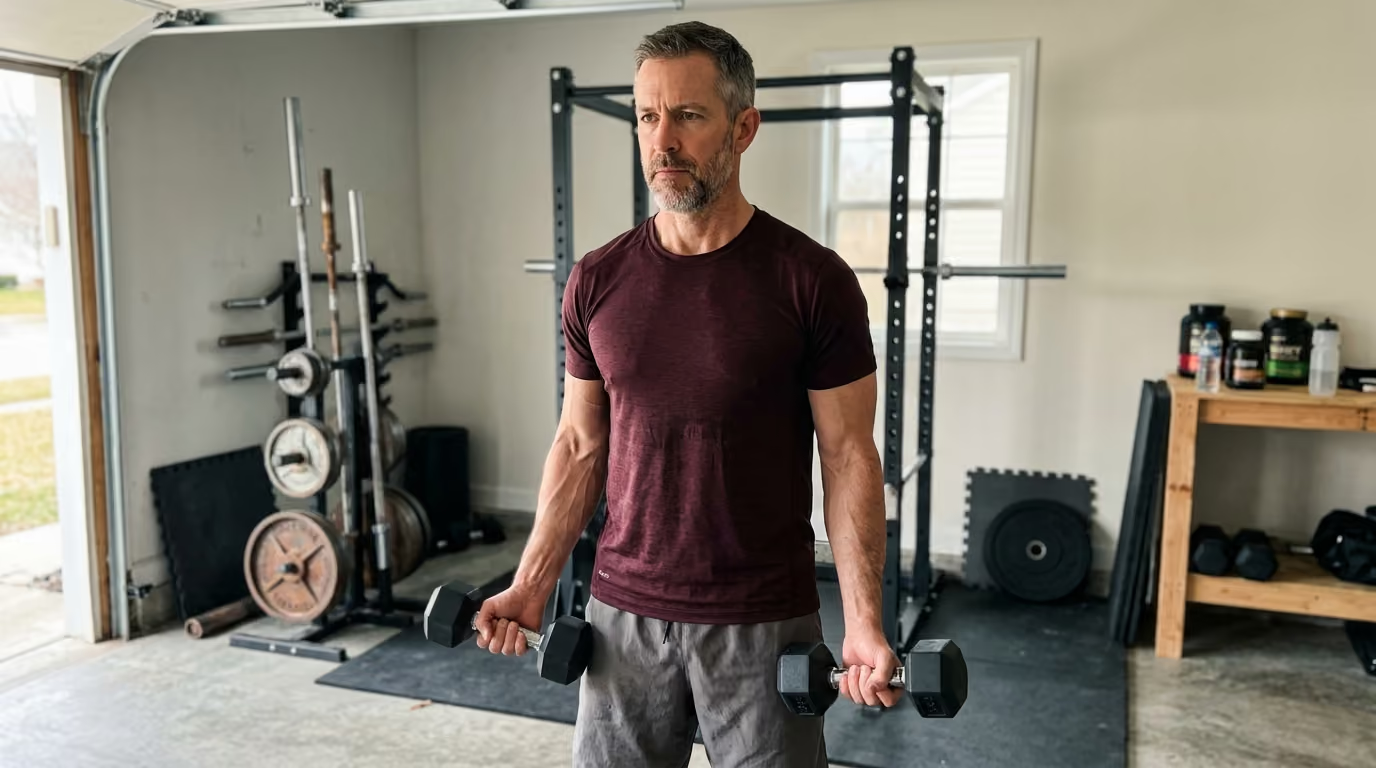

Lifting weights in your forties and beyond counteracts natural muscle loss to protect joint health, daily mobility, and physical independence.





Building and preserving muscle after 40 is not a frantic attempt to recapture youth, nor is it merely about cosmetic appearance. It is the deliberate construction of physical capacity, metabolic stability, and structural resilience for decades of active living.
Many adults assume that muscle loss is an unalterable consequence of the calendar. The science shows something far more empowering. Age-related muscle loss is driven largely by physical inactivity, suboptimal nutrition, and inadequate training stimulus, all of which remain under your control.
This comprehensive guide details the physiological changes that occur with midlife aging and outlines the precise training frameworks needed to sustain strength. You will learn how to optimize protein intake, program for explosive power, navigate previous injuries, and protect your functional freedom for a lifetime of adventure.
The human body reaches its peak skeletal muscle mass and maximal strength between the ages of 30 and 35. After this window, physiological changes begin to alter physical capacity if deliberate countermeasures are not taken. Population data indicates that adults lose roughly 3 to 8 percent of their muscle mass per decade after age 30.
After age 50, the rate of muscle loss can accelerate to 1 to 2 percent per year. Concurrently, muscle strength can decline at a rate of 12 to 15 percent per decade. These numbers represent population averages rather than a mandatory personal destiny.
Physical inactivity, chronic disease, hormonal fluctuations, joint pain, and inadequate nutrition can accelerate this loss. Conversely, consistent resistance training preserves muscle fibers and maintains motor unit activation well into advanced age. Understanding these shifts requires distinguishing between several related physical qualities.
Sarcopenia is an age-associated skeletal muscle disorder characterized by the loss of muscle strength, muscle quantity or quality, and functional capacity. The European Working Group on Sarcopenia in Older People, known as EWGSOP2, places low muscle strength at the absolute center of sarcopenia identification.
The clinical framework follows three clear stages:
Clinicians assess these parameters using validated clinical metrics. The EWGSOP2 guidelines identify low handgrip strength as less than 27 kilograms for men and less than 16 kilograms for women. Functional screening thresholds also include a gait speed of 0.8 meters per second or slower, and a five-repetition sit-to-stand time exceeding 15 seconds.
A healthy adult in their 40s does not need to obsess over clinical sarcopenia. However, understanding that strength is the primary metric reinforces why lifting weights is essential for lifelong independence.
Many adults confuse skeletal muscle mass with lean body mass. Skeletal muscle mass refers specifically to the contractile tissue attached to bones that generates voluntary movement. Lean body mass encompasses all non-fat tissue, including skeletal muscle, internal organs, bone density, connective tissues, and total body water.
A common scan like bioelectrical impedance or dual-energy X-ray absorptiometry can register shifts in hydration or glycogen storage as changes in lean mass. For instance, a long flight or a low-carbohydrate diet can cause water loss that looks like muscle loss on a commercial scale.
Researchers frequently evaluate appendicular skeletal muscle mass, which isolates the muscle tissue located in the arms and legs. Tracking performance, movement quality, and physical measurements provides a far clearer picture of functional progress than relying solely on raw scale weight.
Skeletal muscle supports three distinct but overlapping physical qualities: mass, strength, and power. Muscle mass is the physical volume and cross-sectional area of the muscle fibers. Strength is the ability of those fibers and the nervous system to exert maximal force against external resistance. Power is the capacity to produce force rapidly.
These three qualities decline at noticeably different speeds as we grow older. Muscle power deteriorates nearly twice as fast as raw muscle strength. This loss of rapid force development occurs because fast-twitch motor units atrophy faster than slow-twitch fibers when not challenged.
Loss of power directly impairs your ability to react to a sudden trip on a trail or rise quickly from a low seat. A comprehensive training program must address muscle size, force output, and movement speed rather than focusing exclusively on muscle hypertrophy.
Functional reserve represents the surplus physical capacity an individual holds beyond the demands of everyday tasks. If climbing a flight of stairs requires 80 percent of your maximal lower-body strength, that task will feel exhausting and unsustainable. If progressive training increases your capacity so that the same climb requires only 35 percent of your maximal strength, your daily fatigue drops dramatically.
A deep functional reserve protects against unexpected life disruptions. A severe illness, an extended hospital stay, a lengthy business trip, or a minor joint sprain can temporarily limit physical activity. Adults with high baseline strength can weather several weeks of forced rest without crossing the threshold into physical dependence. Developing this physiological cushion is one of the greatest investments you can make in your healthy aging and living well journey.
True physical independence requires the capability to move through the world with confidence and poise. High-performance travel, outdoor recreation, and daily life place varied physical demands on the musculoskeletal system. Maintaining robust muscle tissue ensures your joints remain protected when navigating unpredictable terrain or managing heavy luggage.
Consider a week of backcountry hiking or an international ski trip. These activities require sustained eccentric leg strength to manage downhill descents without knee pain. They demand rotational torso stability to maintain balance on uneven surfaces and carrying capacity to haul gear over long distances.
Without targeted training, connective tissues stiffen and muscle fibers lose their elasticity. Resistance training reinforces bone mineral density, thickens tendons, and enhances proprioceptive awareness, ensuring you remain resilient across demanding environments.
Outdoor adventures require multiple physical qualities operating simultaneously. When traversing rocky trails, your stabilizing muscles around the ankles, hips, and spine must fire instantaneously to adapt to shifting ground. A well-conditioned neuromuscular system responds within milliseconds to stabilize joints before a slip causes an acute ligament strain.
Downhill skiing illustrates this principle clearly. Absorbing turns across variable snow conditions requires continuous, high-load eccentric quadriceps contractions and powerful hip abduction.
If your quadriceps lack capacity, fatigue sets in within two runs, shifting mechanical stress directly into the knee joint capsules. By prioritizing strength and physical performance during your weekly gym sessions, you build the durable muscular armor necessary to spend full days in the mountains without breakdown.
Beyond high-altitude expeditions, physical strength dictates how easily you navigate standard daily environments. Lifting a heavy suitcase into an overhead luggage compartment requires overhead pressing strength, shoulder stability, and core bracing. Getting up off the floor while playing with children or working in the garden demands single-leg driving power and hip mobility.
When a person lacks sufficient muscle mass, ordinary physical tasks begin to feel like maximal athletic events. Routine activities accumulate excess fatigue, leaving less energy for personal passions, professional projects, and spontaneous adventures. Consistent strength training lowers the relative exertion of every daily task, preserving your vitality for the activities you enjoy most.
Conflicting fitness advice often prevents adults over 40 from establishing a productive strength routine. Extreme workout trends, outdated bodybuilding lore, and exaggerated marketing claims create unnecessary confusion. Dismantling these myths is essential for building a sustainable, long-term training practice.
The belief that muscle loss is an inevitable, uncontrollable slide is flatly contradicted by modern exercise physiology. While baseline hormonal levels and cellular protein turnover shift with age, skeletal muscle tissue retains remarkable plasticity throughout the human lifespan.
Clinical research demonstrates that individuals in their 70s, 80s, and 90s can achieve meaningful muscle hypertrophy and dramatic strength gains when exposed to progressive resistance training. Aging changes the speed of recovery, but it does not remove your ability to adapt to a smart physical stimulus.
A widespread misconception suggests that effective strength training requires heavy barbell squats, bench presses, and deadlifts. While these compound barbell lifts are exceptionally effective tools, they are not strictly mandatory for building muscle or improving functional capacity.
Mechanical tension on muscle fibers can be generated through dumbbells, cable systems, selectorized resistance machines, and bodyweight variations. If past orthopedic issues or anatomical proportions make a specific barbell movement uncomfortable, alternative exercises can provide the exact same hypertrophic stimulus with far less joint irritation.
The culture of intense, high-volume workouts often leads older adults straight into overuse injuries and chronic systemic fatigue. The human body does not grow during the workout itself; it adapts and rebuilds during the recovery hours that follow.
Exceeding your current recovery capacity produces diminishing returns and elevates systemic inflammation. Modern resistance training guidelines emphasize that modest training volumes, executed with high technical quality and progressive overload, produce superior long-term results compared to exhausting marathon workouts.
Training to absolute muscular failure, the point where a repetition cannot be completed despite maximal effort, is not required for muscle growth. Taking sets to absolute failure creates disproportionate central nervous system fatigue and dramatically increases the recovery time required between sessions.
Research demonstrates that stopping sets one to three repetitions short of failure delivers virtually identical muscle building signals while protecting connective tissue. This strategy maintains joint health and allows you to train consistently week after week without accumulating debilitating soreness.
Some lifting enthusiasts claim that aerobic exercise blunts muscle growth and leads to tissue catabolism. While excessive endurance volume can create an interference effect if nutrition is neglected, moderate cardiovascular conditioning supports muscle preservation.
Aerobic capacity expands capillary density within skeletal muscle, improving the delivery of oxygen, amino acids, and nutrients to working tissues. A well-conditioned cardiovascular system accelerates waste clearance between high-intensity sets and speeds whole-body recovery between training days. The World Health Organization recommends combining strength training with regular cardiovascular activity for optimal long-term health and vitality.
Relying exclusively on a standard bathroom scale to evaluate physical progress is deeply misleading. When an adult begins an intelligent resistance program, they frequently gain dense skeletal muscle while simultaneously reducing visceral and subcutaneous fat stores.
During this body recomposition phase, total body mass on the scale may remain completely flat for months. Yet your waistline shrinks, posture improves, athletic performance climbs, and joint stability increases. Assess your progress through training logs, physical measurements, clothing fit, and functional milestones rather than scale weight alone.
Achieving tangible improvements in muscle mass and strength does not require living in the gym. The minimal effective dose is the smallest amount of structured physical stimulus required to trigger positive biological adaptation. For busy adults managing professional careers, family commitments, and travel schedules, understanding this baseline ensures consistent progress.
Global health authorities, including the World Health Organization, recommend that adults perform muscle-strengthening activities involving all major muscle groups on at least two non-consecutive days per week. For older adults, guidelines emphasize adding balance and coordination training to enhance functional stability and reduce fall risks.
Moving from zero days of resistance training to two focused sessions per week yields the largest relative leap in strength and metabolic health you will ever experience.
A complete and efficient resistance training program should cover ten foundational movement categories rather than isolating individual muscles. Structuring your routine around functional patterns ensures comprehensive full-body development while keeping workouts brief and athletic:
To implement the minimal effective dose, execute two full-body workouts each week, separated by 48 to 72 hours of recovery. Each session should take approximately 45 minutes and incorporate three to five well-chosen exercises performed with focused intensity.
Workout A can combine a knee-dominant lift, a horizontal press, a horizontal pull, and a loaded carry. For example, you might perform three sets of goblet squats, three sets of dumbbell bench presses, three sets of chest-supported rows, and three rounds of suitcase carries.
Workout B can feature a hip-dominant movement, a vertical pull, an incline or overhead press, and a core stability exercise. A straightforward routine could include three sets of Romanian deadlifts, three sets of lat pulldowns, three sets of incline dumbbell presses, and three sets of Pallof presses.
Perform each working set for 8 to 12 controlled repetitions, resting two minutes between efforts. By focusing on perfect execution and consistent effort, this minimalist structure delivers over 80 percent of the total benefits available from strength training.
A resistance training routine only produces continuous physical adaptations if the training stimulus evolves over time. The human body adapts quickly to mechanical stress; performing the identical workout with the same weights month after month will eventually halt progress. Progressive overload must be introduced systematically without compromising joint integrity or overwhelming your systemic recovery capacity.
The American College of Sports Medicine, known as ACSM, outlines clear progression models for resistance training. For muscular hypertrophy, targeting approximately 10 weekly sets per major muscle group provides a solid reference framework.
For maximal strength development, working with heavier loads around 80 percent of your one-repetition maximum across two to three sets per exercise builds neurological efficiency. For muscle power, using moderate loads between 30 and 70 percent of one-repetition maximum, moved with maximal explosive intent during the lifting phase, trains rapid motor unit recruitment.
Double progression is the safest, most reliable method for advancing your training without risking joint strain. Instead of attempting to add weight to the bar every single week, double progression establishes a target repetition bracket, such as 8 to 12 repetitions per set.
You begin with a weight you can lift for 8 clean, controlled repetitions. You keep that exact same weight across subsequent workouts until you can successfully complete all prescribed sets at the upper limit of 12 repetitions with pristine form.
Once you achieve this benchmark, you increase the load modestly by 2 to 10 percent, which naturally drops your performance back to the lower end of the bracket. You then spend the next several weeks building your repetitions back up to 12 before increasing the load again.
Many lifters make the mistake of believing that adding weight is the only valid form of progression. For adults over 40, advancing through alternative training variables is often far kinder to joints while providing an exceptional stimulus for muscle growth:
Repetitions in reserve, or RIR, is an intuitive autoregulation tool used to calibrate training intensity. It measures how many additional, technically sound repetitions you could have performed before reaching absolute failure.
An RIR of 3 means you finished the set knowing you could have completed three more clean repetitions if pushed to the limit. An RIR of 1 means you were right on the edge of failure, with only a single remaining repetition in the tank.
For adults over 40, keeping the majority of working sets between 1 and 3 RIR provides the optimal balance between maximum muscle stimulation and joint safety. Training at an RIR of 2 stimulates virtually the exact same degree of muscle hypertrophy as training to total failure, but generates a fraction of the joint stress and systemic exhaustion.
Life outside the gym directly affects your physical capacity on any given day. Poor sleep, international flights, emotional stress, and minor illnesses reduce your nervous system's ability to generate high forces. Autoregulation is the practice of adjusting your daily training volume and load based on real-time physiological readiness.
If you arrive at the gym feeling sluggish, stiff, and stressed, forcing yourself to hit pre-planned personal records is a recipe for injury. Instead, execute a minimum effective session by reducing your working sets from three down to one or two, or lowering your working weights by 10 percent while maintaining pristine form.
Preserving the behavioral habit of movement while matching volume to your daily recovery capacity keeps you consistent over years. Prioritizing structured recovery and sleep routines accelerates muscle repair, balances hormone levels, and restores neuromuscular readiness between demanding training sessions.
Resistance training provides the mechanical spark that signals muscle tissue to adapt, but nutrition provides the raw structural materials required for synthesis and repair. As we age, our bodies experience a phenomenon known as anabolic resistance. Skeletal muscle tissue becomes less sensitive to the muscle-building signals generated by protein intake, requiring higher relative amounts of amino acids to stimulate muscle protein synthesis effectively.
Adequate total energy intake is equally vital. Attempting to build or maintain muscle while existing in an aggressive, chronic calorie deficit leads to muscle protein breakdown and fatigue. Optimizing your nutrition and metabolism ensures your body operates in an anabolic environment where muscle tissue is preserved, body fat is managed, and physical energy remains abundant.
Standard governmental daily recommendations for protein are frequently set at minimal levels designed simply to prevent outright deficiency in sedentary individuals. For active adults over 40 who lift weights, these baseline targets are insufficient for preserving optimal muscle mass and physical function.
The PROT-AGE Study Group recommends that healthy adults over 65 consume at least 1.0 to 1.2 grams of protein per kilogram of body weight per day, with targets rising to at least 1.2 grams per kilogram for those who are physically active. For active adults pursuing muscle retention, lean tissue growth, and athletic performance, the International Society of Sports Nutrition recommends a broader range of 1.4 to 2.0 grams of protein per kilogram of body weight daily.
For an individual weighing 80 kilograms (roughly 176 pounds), this equates to a daily intake of approximately 112 to 160 grams of high-quality dietary protein.
Consuming your entire daily protein quota in a single evening meal is far less effective than distributing your intake evenly throughout the day. Muscle protein synthesis operates like a biological switch that requires a specific threshold of essential amino acids, particularly the amino acid leucine, to turn on fully.
The ISSN nutrient timing framework highlights the value of protein pacing. This involves consuming moderate meals containing 20 to 40 grams of high-quality protein spaced roughly every three to four hours.
An active adult might consume 30 grams of protein at breakfast, 35 grams at lunch, 25 grams in an afternoon snack, and 40 grams at dinner. This consistent distribution repeatedly elevates muscle protein synthesis throughout the day, maximizing tissue repair.
To hit these daily targets, build your meals around nutrient-dense, complete protein sources that deliver a robust profile of essential amino acids:
Managing caloric intake requires balancing the dual goals of maintaining lean muscle tissue and preventing excess visceral fat accumulation. When attempting to reduce body fat, avoid severe, crash diets that slash calories drastically.
Aggressive deficits compromise training intensity, accelerate muscle wasting, and disrupt endocrine balance. Instead, establish a modest caloric deficit of 300 to 500 calories below your maintenance level while keeping daily protein intake at the higher end of the recommended range.
If your primary objective is building new muscle mass, aim for a conservative caloric surplus of roughly 200 to 300 calories above maintenance. This modest surplus supplies the metabolic energy required to synthesize new muscle tissue without causing unwanted fat gain, supporting both your body composition and long-term cardiovascular health.
While whole food remains the foundation of your nutritional plan, certain dietary supplements provide verified, research-backed support for muscle preservation. The most thoroughly studied and proven supplement for strength and physical performance is creatine monohydrate.
Creatine increases intramuscular phosphocreatine stores, which accelerates the regeneration of adenosine triphosphate during short bursts of high-intensity muscular effort. Clinical meta-analyses in older adults demonstrate that combining creatine supplementation with resistance training produces greater increases in lean tissue mass and significant improvements in upper- and lower-body strength compared to lifting alone.
A standard daily dose of 3 to 5 grams of pure creatine monohydrate is safe, affordable, and highly effective for supporting physical performance and muscle retention.
A generic, one-size-fits-all training program ignores the vital differences in an individual's training age, orthopedic history, and current biological capacity. An executive stepping into the weight room for the first time at 48 requires a vastly different starting plan than a lifelong competitive marathoner or an adult recovering from knee surgery. Personalizing your program ensures steady progress while avoiding setbacks.
For the adult who is completely new to structured strength training, the primary objective is motor learning, connective tissue conditioning, and establishing a consistent workout habit. Beginners make rapid initial strength gains through neural adaptations, as the central nervous system learns how to coordinate motor units efficiently.
Start with two full-body workouts per week, utilizing stable, easily controlled exercise variations. Avoid jumping directly into complex barbell lifts that require high technical proficiency.
Focus on supported machine presses, chest-supported rows, goblet squats to a box, and light dumbbell Romanian deadlifts. Keep the intensity conservative, finishing every set with an RIR of 3 to 4.
The goal during the first eight weeks is not maximal muscular fatigue; it is building movement confidence, reinforcing joint integrity, and developing the skill of strength.
Experienced lifters and masters athletes over 40 face a different challenge. They possess high neuromuscular efficiency and can lift substantial loads, but their joints, cartilage, and central nervous system require longer recovery windows than they did in their twenties. Continuing to pursue high-volume, heavy training without planned fatigue management often leads to chronic tendinopathy and performance plateaus.
Intermediate and advanced trainees benefit from structured training splits spread across three or four sessions per week. Utilizing an Upper Body and Lower Body split or an alternating Push-Pull-Legs rotation allows sufficient training volume per muscle group while providing 72 hours of recovery before hitting the same movement pattern again.
Experienced athletes should cycle through planned training blocks, alternating between phases of strength, hypertrophy, and power development. Furthermore, incorporating deliberate deload weeks every four to six weeks resets systemic recovery, allowing connective tissues to remodel fully.
Returning to the gym after a prolonged period of inactivity, illness, or orthopedic rehabilitation requires extreme patience and a systematic, staged progression. The biggest mistake adults make when returning to exercise is attempting to lift the weights they handled months or years prior. Connective tissues lose tolerance to high mechanical loads quickly, and tendon adaptations lag behind muscular memory.
Follow a structured six-phase return-to-training ladder:
If an exercise triggers sharp, pinpoint joint pain, immediately modify the movement. Adjust the grip angle, alter the stance width, reduce the range of motion, or substitute a joint-friendly variation, such as switching from a barbell back squat to an elevated split squat. Pain is valuable biological feedback; work around joint irritation while keeping the surrounding musculature challenged.
Frequent travel and high-performance adventure place distinct physiological stresses on the body. Long-haul flights, irregular sleep schedules, altitude shifts, and disrupted eating patterns create systemic inflammation and disrupt circadian rhythms. A robust musculoskeletal system serves as an active metabolic and circulatory buffer against travel-related fatigue.
Skeletal muscle acts as a primary storage site for glycogen and systemic water, helping to stabilize blood glucose levels and maintain hydration during transit. When you sit in a pressurized airplane cabin for ten hours, physical inactivity reduces muscular venous return, leading to lower-extremity fluid accumulation and stiffness.
Having strong, conditioned lower-body musculature enhances the muscle-pump action that circulates blood and lymphatic fluid, reducing post-flight heaviness and expediting physical recovery.
Engaging in targeted physical movement upon arrival in a new time zone is one of the most effective tools for realigning your internal biological clocks. Skeletal muscle contains its own peripheral circadian oscillators that respond directly to mechanical contraction and nutrient intake.
After a grueling thirty hour transit to Tokyo, I realized my old strategy of just powering through was no longer working. I felt foggy for three days. I started digging into circadian biology and realized that timing my light exposure and fasting during the flight could completely shift my recovery.
Now, I never board a long haul flight without a precise schedule for when to eat and when to put on an eye mask. It is the difference between losing a week of your trip and hitting the ground running. Pairing that circadian strategy with a bodyweight workout upon arrival immediately signals to your peripheral tissues that it is time to be active and alert.
Executing a simple, full-body resistance circuit in your hotel room elevates your core body temperature, stimulates blood flow, clears metabolic waste, and resets neuromuscular tone. When combined with natural sunlight exposure, this short training session dissolves transit fatigue and prepares you for demanding travel and adventure itineraries.
Across the medical and exercise science literature, a powerful consensus has emerged regarding the role of skeletal muscle in healthy aging. Muscle tissue is no longer viewed merely as an organ of physical locomotion; it is recognized as a central endocrine and metabolic organ critical for metabolic health, immune resilience, and functional longevity.
The World Health Organization, the American College of Sports Medicine, the National Institute on Aging, and leading clinical gerontology organizations worldwide are unanimous in their guidance. Progressive resistance training is a mandatory component of adult healthcare, essential for preserving functional independence, preventing chronic metabolic disease, and maintaining quality of life.
When skeletal muscle contracts against resistance, it synthesizes and secretes hundreds of specialized signaling peptides known as myokines. These muscle-derived cytokines enter the bloodstream and exert profound anti-inflammatory effects throughout the body.
Myokines communicate directly with adipose tissue, the liver, the brain, and the cardiovascular system. They enhance systemic insulin sensitivity, stimulate fat oxidation, support brain-derived neurotrophic factor for cognitive health, and dampen chronic low-grade systemic inflammation.
Maintaining muscle mass transforms your body into an active biochemical shield against metabolic dysfunction, type 2 diabetes, and cardiovascular decline.
By approaching resistance training as a fundamental longevity practice, you cultivate a body capable of navigating demanding physical challenges, international travel, and daily adventures with total confidence and vitality.
You can absolutely synthesize brand-new skeletal muscle tissue well beyond your 40s, 50s, and 60s. While baseline testosterone, growth hormone, and cellular recovery rates change compared to your early twenties, the biological machinery for muscle protein synthesis remains highly responsive to mechanical tension.
When you apply progressive overload through structured resistance training and consume adequate dietary protein, your body adapts by adding new contractile proteins and expanding muscle fiber diameter.
Joint pain during exercise is a clear signal to modify the movement pattern, not to abandon resistance training entirely. First, examine your exercise selection and mechanics; swapping a straight barbell for dumbbells or a cable machine allows your joints to follow natural anatomical pathways.
Second, reduce the load and increase the repetition range to 12 to 15 controlled repetitions, focusing on a slow three-second lowering phase. Finally, ensure you are properly warming up the surrounding musculature and incorporating joint-mobility drills before your working sets.
Balancing strength work with endurance or court sports requires managing total weekly training volume and scheduling your sessions intelligently. Avoid placing heavy lower-body lifting sessions immediately before high-intensity running or competitive match play.
A practical strategy is performing two focused, full-body resistance sessions per week on non-consecutive days, leaving two to three days for your cardiovascular and sporting passions. Ensure you increase your total caloric and carbohydrate intake to match your energy expenditure, preventing your endurance work from undermining muscle recovery.
Explosive power training is completely safe and highly beneficial for older adults when introduced systematically. Power training does not mean performing dangerous, uncontrolled ballistic movements with heavy weights.
Begin by building a solid foundation of basic strength and movement stability for at least eight weeks. Once your technique is established, introduce power training using light medicine ball throws, rapid sit-to-stands, or moving the lifting phase of a light machine press as quickly as technically possible while maintaining complete control.
Stay connected for research and practical guidance on longevity, strength, recovery, energy and active living. New ideas to help you stay capable, curious and ready for more.


Explore practical guidance on strength, recovery, energy, travel and longevity for a life that stays active.
explore the Blog