

Protein and fiber play complementary roles in perimenopause nutrition. Learn how to pair them in meals for active days and travel.





On September 27, 2026, Good Housekeeping published a report arguing that protein and fiber are partners in perimenopause nutrition rather than rivals. Written by registered dietitian Lauren Manaker, the article offers a useful perspective if you want to stay strong enough for demanding trips and active weekends. The question is not which nutrient deserves your loyalty. It is how to make room for both in meals that fit your life.
For an active woman in midlife, that framing shifts attention from a single nutrient to the whole meal. A breakfast built only around its protein content may overlook the fiber-rich foods that the report also recommends. The practical adjustment is modest: pair a protein source with plant foods rather than redesigning your entire eating pattern.
Good Housekeeping describes protein as supporting muscle maintenance and repair, mobility, satiety and bone health. Those roles matter when your goal is physical independence rather than simply changing the number on a scale. In practical terms, the article connects protein with the tissues and functions that help you remain capable.
Fiber has a different job in the report. Good Housekeeping describes it as supporting digestion and gut bacteria, while noting that soluble fiber can slow sugar absorption. Think of the distinction as support for muscle and other tissues on one side, with support for digestion and the way sugar is absorbed on the other.
That is why the comparison is not a contest. Protein does not make fiber-rich foods irrelevant, and fiber does not replace protein's role in muscle maintenance. The sources favor a meal that includes both rather than a winner-takes-all approach.
Registered dietitian Liz Shaw explains in the Good Housekeeping article that estrogen has a role in how the body handles blood sugar and stores fat. She also links estrogen with maintaining muscle and bone. This helps explain why the report discusses several nutrition priorities together during perimenopause instead of reducing the conversation to protein alone.
Mayo Clinic Press adds a related point in its coverage of protein and fiber: the combination can support fullness and steadier energy. That gives the pairing a practical meaning beyond nutrient totals. Meals can be considered for how they support the hours ahead as well as how much of a single nutrient they contain.
This is expert-informed nutrition coverage, not a new clinical trial. Good Housekeeping does not cite named scientific studies or set a protein target. It reports that most women fall short of a recommended 25 grams of fiber daily. That figure provides context for its emphasis on fiber rather than a personal prescription.
The report also qualifies possible links between fiber and inflammation, mood or hormonal balance. Research on the gut microbiome's relationship with estrogen processing is still developing. Mayo Clinic Press's article is general nutrition coverage rather than a perimenopause-specific study. Neither report establishes effects on travel recovery or performance at altitude.
Registered dietitian Toby Amidor says in Good Housekeeping that protein and resistance training “work as a team.” Her explanation is that protein alone cannot prevent muscle loss. The report therefore pairs its nutrition discussion with strength-focused movement rather than treating food as a substitute for it.
This fits a broader approach to maintaining capability: keep nutrition connected with activity instead of asking one habit to do everything. The report's message is more coherent when the meal and the movement remain in the same picture.
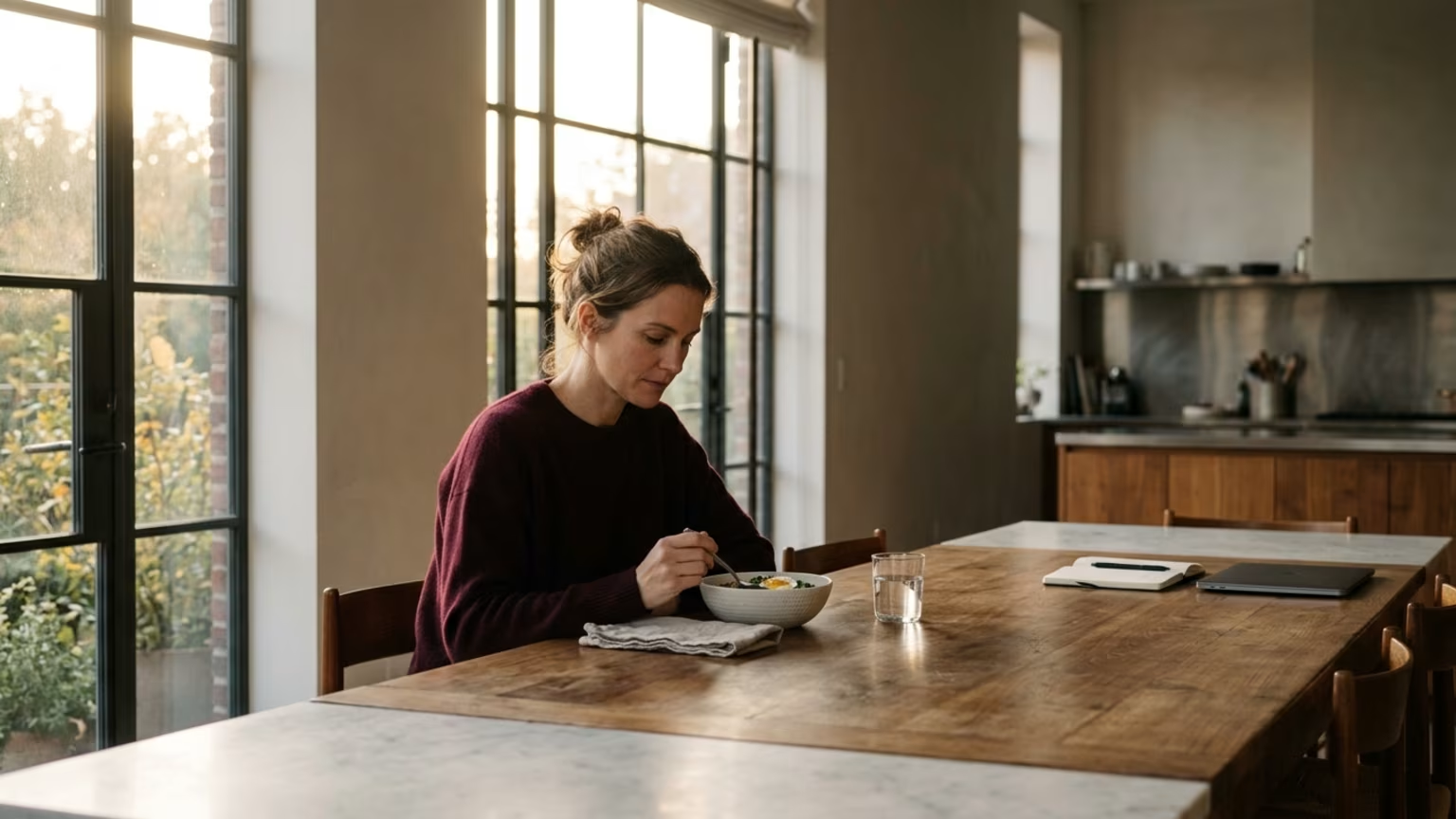
Good Housekeeping's examples make breakfast an uncomplicated place to put the idea into practice. The action is to choose a protein source and include a fiber-rich plant food in the same meal. There is no need to turn breakfast into a nutrient competition or a more elaborate project.
When choosing among these options, focus on the combination rather than declaring one breakfast the best. Each illustrates the report's central approach using ordinary foods. The examples are useful whether breakfast is at home or chosen from a hotel menu.
You can also keep the decision contained to that meal. Changing breakfast does not require replacing everything in the kitchen or adopting an entirely new food identity. For a busy midlife routine, one repeatable pairing is a clearer starting point than a long list of nutrition rules.
For readers thinking about individual needs, a qualified clinician or dietitian can help turn broad guidance into a personal plan. Questions about protein needs through midlife belong in that wider conversation. The point of the report is to bring fiber into the picture, not to make every meal a calculation.
For a hiking holiday or a ski trip, the most useful application is the meal before the activity. Mayo Clinic Press's emphasis on fullness and steadier energy gives you a reason to look beyond a breakfast's protein content alone. A hotel breakfast is a practical place to use the same combinations you would consider at home.
Eggs with spinach and whole-grain toast translate the report's advice into a familiar choice. So does Greek yogurt with berries and chia seeds when those foods are available. The travel decision is simply to keep both parts of the meal visible instead of letting the protein source crowd out plant foods.
At another meal, Good Housekeeping offers lentil soup with roasted vegetables as an example of combining the nutrients. Its suggested fiber sources also include beans, oats, lentils and whole grains. Nuts and seeds are part of that list too.
These options connect the nutrition discussion with an actual itinerary. If the plan is a day on walking trails or ski slopes, meal selection is something you can arrange before the activity begins. Treat the pairing as part of ordinary preparation rather than as a specialized performance strategy.
Good Housekeeping advises increasing fiber gradually and drinking plenty of water. Applied to travel planning, that favors making the pairing part of your regular meals rather than attempting a wholesale change around a departure date. Choose a familiar example from the report and let it become part of the routine.
That is also consistent with WealthAtPlay's focus on realistic guidance for staying capable. Our nutrition coverage for active living keeps the discussion connected to strength and everyday wellbeing. A practical meal choice deserves attention without needing to become the center of the trip.
For an active midlife routine, pair a protein source with fiber-rich plant foods in regular meals, add fiber gradually and keep strength-focused movement alongside nutrition.
Stay connected for research and practical guidance on longevity, strength, recovery, energy and active living. New ideas to help you stay capable, curious and ready for more.




Explore practical guidance on strength, recovery, energy, travel and longevity for a life that stays active.
explore the Blog

