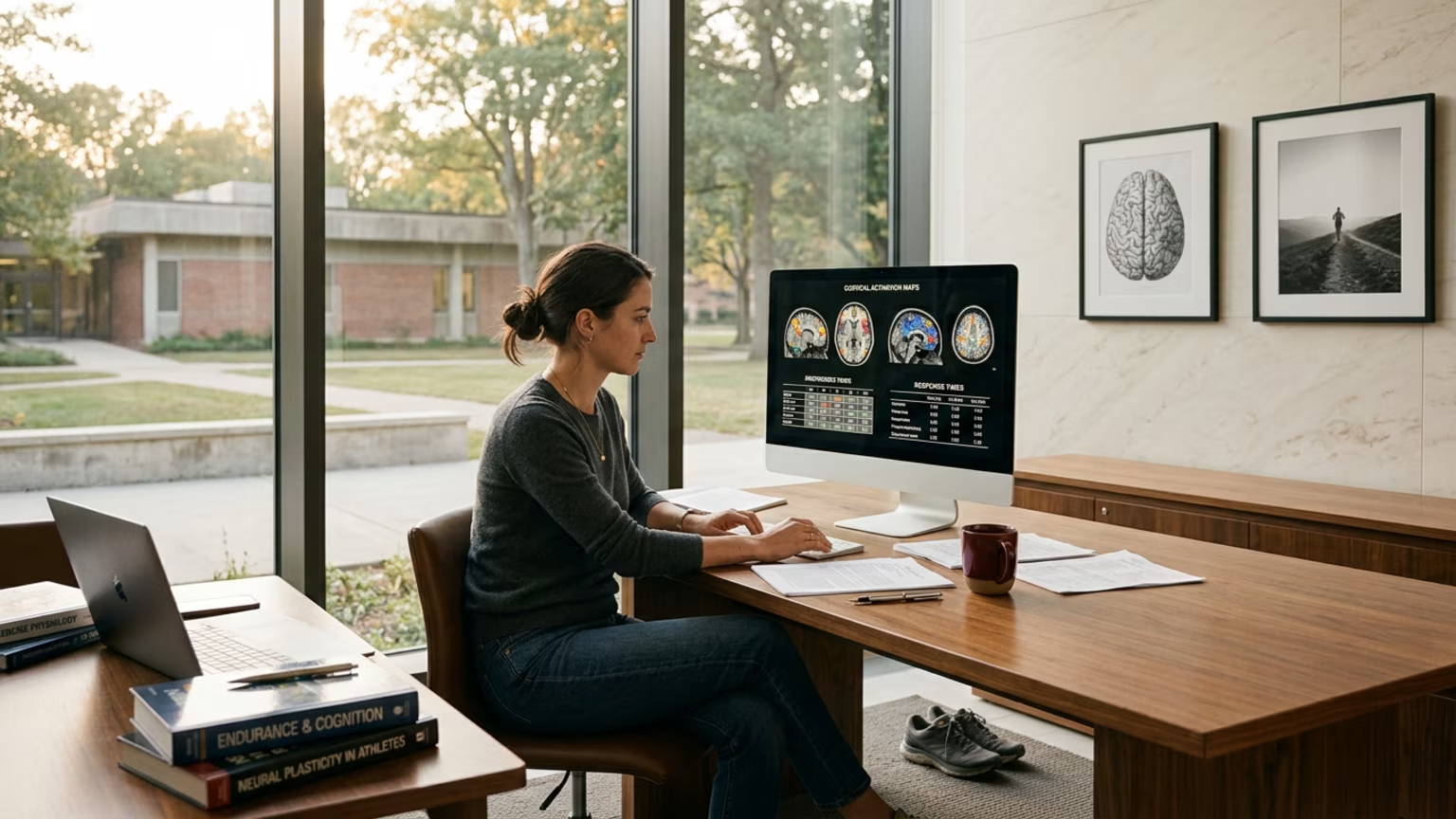

A 2026 University of Victoria dissertation reveals that prolonged endurance running alters cognitive effort, response consistency, and working memory.





On September 14, 2026, a new neuroscience dissertation defense at the University of Victoria revealed how prolonged endurance running uniquely alters cognitive performance and brain activity. Katherine Boere presented this research to address a significant blind spot regarding exercise lasting more than 90 minutes. Most previous academic work has primarily examined exercise bouts lasting less than 60 minutes. For active adults who value physical independence and regularly participate in demanding outdoor pursuits, this new evidence offers a highly relevant perspective. We often assume that an extended physical session clears the mind and sharpens our senses uniformly. However, this defense suggests that extreme endurance efforts create highly specific trade-offs between physical speed, neural effort, and complex decision-making capabilities. Our team at WealthAtPlay frequently evaluates how long-duration stressors affect active adults. Understanding these specific cognitive limits is essential for anyone pushing their physical boundaries.
The University of Victoria research utilized electroencephalography alongside established behavioral tasks to monitor athletic participants. This methodological combination allowed the researchers to track subtle neural changes that simple performance scores often miss. The first experiment asked a group of trained adults to complete a demanding two-hour treadmill run. Researchers assessed the athletes before the exercise began and monitored them continuously throughout a 24-hour recovery window. Interestingly, working-memory accuracy on a standard 2-back task did not change after the session.
Despite the stable accuracy metrics, the electroencephalography readings showed a distinct and important shift in underlying neural activity. Frontal theta power increased significantly one hour after the treadmill session ended. The dissertation interprets this specific increase in frontal theta as a biological marker of heightened cognitive effort. This indicates that the participants maintained their performance levels only because their brains worked significantly harder to execute the exact same tasks. The mental cost of the physical effort was essentially invisible in the raw scores but obvious in the neural data.
The second experiment moved the research from the treadmill to the field by testing athletes before and after a 50-kilometer ultramarathon. After finishing the grueling ultramarathon, the athletes demonstrated noticeably faster reaction times. A faster response might sound like a clear improvement in mental sharpness for an active individual. However, the comprehensive data revealed that these faster responses were 14% more variable than before the race began. Faster average speeds did not equate to consistent or well-controlled cognitive performance.
Post-race brain scans provided further essential insight into this discrepancy. The post-race measures showed specific reductions in the N2 and P3 event-related potentials. The dissertation associates these specific neural signals with inhibitory control and attentional allocation. In practical terms, an athlete might be quicker to react but possesses less neurological capacity to filter distractions or halt impulsive decisions. A separate meta-regression analysis highlights similar complexities in exercise science. That analysis found cognitive performance was impaired overall during exercise, with a mean effect size of -0.14, although this impairment was concentrated in the first 20 minutes of effort.
A third experiment focused on female participants completing a full marathon. These athletes faced both low-load and high-load working-memory tasks before and after their exhausting race. Similar to the ultramarathon runners, their baseline reaction times became faster following the event. However, their accuracy declined specifically on the highly demanding high-load 3-back task. The frontal theta readings increased during both the low-load and high-load conditions, pointing again to a massive increase in required cognitive effort.
The dissertation clearly links these cognitive changes to a runner's energetic context and overall fueling strategy. Lower carbohydrate intake during racing was strongly associated with greater cognitive effort. Additionally, a longer race duration compounded the neurological strain placed on the runners. The researchers reported that a risk of chronic low energy availability actually predicted measurable declines in working-memory accuracy. Proper nutrition is clearly not just a requirement for muscle stamina.
A fourth experiment within the same defense examined reward sensitivity around marathon running. While reaction times did not change at the group level in this specific test, neural sensitivity to feedback increased after the race. The researchers measured this sensitivity through a specific metric called reward positivity. Ultimately, the dissertation presents these conclusions as tentative, noting that cognitive changes depend heavily on exercise duration, task demands, and overall energy status.
The neurological strain of a massive physical event shares surprising similarities with the fatigue of international travel. After a grueling thirty hour transit to Tokyo, I realized my old strategy of just powering through was no longer working. The extended physiological stress left me feeling foggy for three days. I felt disconnected from my usual physical capability and unable to focus properly. I started digging into circadian biology to understand why my brain was struggling so much after long periods of travel.
I realized that timing my light exposure and fasting during the flight could completely shift my recovery. Now, I never board a long haul flight without a precise schedule for when to eat and when to put on an eye mask. It is the difference between losing a week of your trip and hitting the ground running. Just as travel fatigue required a targeted biological intervention, recovering from a long hike or ski day requires deliberate cognitive management. You cannot simply expect your brain to perform flawlessly after hours of high-altitude exertion.
If you spend your weekends hiking, skiing, or cycling, you must learn to separate speed from reliability. You might feel highly alert as you finish a challenging alpine descent or a long trail run. However, this research shows that your actual capacity for impulse control and complex problem solving is likely reduced. You should schedule your most demanding decisions carefully. Avoid reviewing complex travel logistics, managing difficult professional problems, or making major financial choices immediately after a long physical session.
You must also treat your ongoing fueling strategy as a primary tool for cognitive preservation. The University of Victoria findings link poor carbohydrate intake directly to increased cognitive effort and reduced working memory. This is why mastering your longevity trade-offs framework involves proper nutritional planning alongside physical training. You should work with a qualified professional to ensure you have enough energy availability for your chosen activities.
Your post-workout plans should always account for a temporary reduction in mental bandwidth. Protecting your brain function requires just as much strategic planning as protecting your physical joints. If you regularly train for extended periods, applying an endurance sport and mental performance guide can help properly structure your overall recovery. Furthermore, learning how to maintain endurance fitness while traveling will ensure your cognitive and physical systems remain robust across different environments.
Active individuals should separate perceived speed from cognitive reliability after long efforts, deferring high-stakes decisions while using strategic carbohydrate fueling to protect their mental bandwidth.
Stay connected for research and practical guidance on longevity, strength, recovery, energy and active living. New ideas to help you stay capable, curious and ready for more.





Explore practical guidance on strength, recovery, energy, travel and longevity for a life that stays active.
explore the Blog